标签: Asia

亚洲

  • Taiwan opposition leader heads to China in what she calls a ‘journey for peace’

    Taiwan opposition leader heads to China in what she calls a ‘journey for peace’

    TAIPEI, Taiwan — In a significant development that marks the first visit by a Taiwanese opposition leader to mainland China in 10 years, Kuomintang chairwoman Cheng Li-wun departed Taipei Tuesday for a trip to mainland China, accepted an official invitation from Chinese President Xi Jinping. Cheng frames her trip as a peace-seeking mission amid long-running cross-Strait tensions, as Beijing maintains its sovereign claim over the self-governing island and has repeatedly refused to rule out the use of military force to assert control.

    The well-timed trip comes weeks ahead of a scheduled Beijing summit between Chinese President Xi Jinping and former U.S. President Donald Trump, adding an extra layer of geopolitical significance to cross-Strait and U.S.-China relations. Ahead of her departure, Cheng stressed to waiting reporters at Taipei International Airport that all possible efforts must be made by both sides to avoid conflict and pursue every available opening to advance cross-Strait peace.

    Cheng emphasized that the core goal of her visit is to demonstrate to the global community that desire for peace is not limited to one side of the Taiwan Strait. “Through this journey for peace, I believe the world will see more clearly the sincerity and determination of the Communist Party of China Central Committee to resolve all outstanding differences between the two sides through peaceful dialogue and people-to-people exchange,” she added.

    A small crowd of both supporters and critics gathered at the Taipei airport, holding contrasting signs and chanting competing slogans as Cheng prepared to depart, reflecting the deep domestic divides in Taiwan over cross-Strait engagement policy.

    The visit unfolds against a backdrop of heightened tensions between Beijing, Washington, and the current ruling government in Taipei. In December of the relevant year, the Trump administration announced a $10 billion arms sales package to Taiwan, including medium-range missiles, howitzers, and reconnaissance drones — a move that drew sharp criticism and anger from Beijing.

    Under Beijing’s one-China policy, all diplomatic partners of China are barred from maintaining official formal relations with Taipei. The U.S. remains Taiwan’s most powerful informal ally and primary arms supplier, and the controversial arms sale is expected to be a top agenda item during the Xi-Trump summit in Beijing.

    During a February phone call between Xi and Trump, the Chinese leader made clear that “Taiwan will never be allowed to separate from China,” according to an official readout of the conversation released by the Chinese government at the time. He also urged the U.S. to exercise extreme caution when handling Taiwan arms sales issues, repeating Beijing’s long-standing position that the Taiwan question is the most sensitive and critical issue at the core of U.S.-China relations.

    In recent months, Beijing has ramped up military pressure on Taiwan, deploying warplanes and naval vessels near the island on an almost daily basis and holding two large-scale joint military exercises around its borders. The most recent major exercise, held in December immediately following the announcement of the U.S. arms sale, included coordinated live-fire drills involving air force, navy, and long-range missile units. The U.S. State Department responded at the time by condemning the drills, saying they unnecessarily raised regional tensions and calling on Beijing to halt its military pressure campaign against Taipei.

    Beijing currently refuses all official engagement with Taiwan’s sitting President Lai Ching-te, whom it labels a dangerous separatist pushing for permanent separation from the mainland. Cheng’s trip also coincides with a domestic political standoff in Taipei, where the opposition-controlled legislative yuan has blocked attempts by Lai’s government to pass a $40 billion special defense budget aimed at upgrading the island’s defense capabilities.

  • US ban on Chinese fixed spy cameras led to a rising drone threat

    US ban on Chinese fixed spy cameras led to a rising drone threat

    For nearly two decades, Chinese-manufactured security cameras from major firms like Hikvision and Dahua Technology have quietly permeated critical infrastructure, government buildings and military installations across North America, Europe and dozens of nations worldwide. Marketed as affordable, high-quality public safety and traffic monitoring tools, these devices have long been suspected of serving a secondary purpose: enabling state-aligned surveillance that critics warn erodes national sovereignty and enables digital control. What was once a quiet challenge of embedded fixed surveillance has now evolved into a more mobile, harder-to-detect threat, according to national security analysts, following successive bans on Chinese camera technology by Western governments.

    The roots of the current espionage landscape stretch back to China’s 2003 launch of its Safe City program, a domestic initiative that built a nationwide network of internet-connected cameras integrated with facial recognition, license plate tracking and artificial intelligence to enable large-scale social and political control. In the decades that followed, China exported this entire surveillance ecosystem to more than 25 countries across Africa, Asia, the Middle East and Latin America, with Hikvision and Dahua serving as the primary hardware suppliers. Even as late as 2018, long after security concerns were first raised, a sole-source contract for Hikvision cameras at the U.S. Embassy in Kabul, Afghanistan, raised urgent questions about embedded vulnerabilities in Chinese hardware. Investigations soon revealed that both Hikvision and Dahua cameras built with backdoor access that allowed unauthorized remote access, effectively opening a gateway for foreign hackers to infiltrate networked surveillance systems.

    What began as a concern over compromised cameras at a single diplomatic outpost quickly expanded into a full-blown national security issue for the U.S. It was revealed that Chinese-manufactured cameras had been deployed across dozens of U.S. military bases and federal government facilities, creating a widespread surveillance risk. By 2019, the U.S. passed the National Defense Authorization Act (NDAA), which mandated the removal of all Hikvision and Dahua equipment from federal facilities, and banned new purchases of the technology for government use. Other Western nations followed with similar restrictions.

    But the ban triggered an unexpected shift in how Chinese-linked espionage operates, the report by former U.S. Deputy Under Secretary of Defense Stephen Bryen reveals. In place of fixed cameras that can be identified and removed, China has increasingly turned to unmanned aerial vehicles (drones) to conduct surveillance on sensitive Western sites. This shift aligns almost perfectly with the timeline of U.S. restrictions: a sharp rise in unauthorized drone incursions over military and critical infrastructure sites began immediately after the 2019 camera ban went into effect.

    Recent high-profile incursions underscore the scale of the new threat. In March 2026, repeated unauthorized drone flights were recorded over Barksdale Air Force Base in Louisiana during the loading of B-52 bombers for a deployment linked to operations in Iran. Just weeks earlier, unidentified drones were spotted over Fort McNair in Washington, D.C. — home to senior U.S. defense and diplomatic officials — triggering White House emergency meetings and elevated security protocols. In 2023, Langley Air Force Base, the headquarters of the U.S. Air Force’s Air Combat Command, recorded 17 consecutive nights of unauthorized drone flights over its flight line, with swarms of up to 15 drones, some as large as small cars, documented. Even as far back as 2019, dozens of unidentified drones shadowed a U.S. Navy warship fleet off the coast of Southern California for weeks, with investigators ultimately linking the incursion to a Hong Kong-flagged cargo vessel. Across the U.S. in late 2024, the Pentagon confirmed that hundreds of unauthorized drone incursions were recorded over sensitive defense sites in a two-month window, even as thousands of other drone flights were authorized by the FAA.

    Beyond the shift to drones, the past year has revealed how vulnerabilities in Chinese surveillance hardware have been exploited by Western intelligence agencies themselves in operations abroad. In Venezuela, where Hikvision and Dahua cameras built a nationwide surveillance network for the Nicolas Maduro regime, U.S. Cyber Command pre-loaded malware into the camera network years in advance, creating hidden “shadow administrator” accounts that allowed real-time surveillance of Maduro in the lead-up to Operation Absolute Resolve. U.S. intelligence was able to track every detail of Maduro’s daily movement, residence, travel schedule, and even identify his personal pets, according to comments by Joint Chiefs of Staff Chairman General Dan Caine in early 2026.

    A similar operation unfolded in Iran, where Israeli intelligence hacked a vast network of Chinese-supplied cameras across Tehran to track senior Iranian regime leaders. By mapping movement patterns of bodyguards and drivers via cameras on residential streets, parking lots and shift change locations, Israeli analysts were able to pinpoint the schedule of Iran’s Supreme Leader Ali Khamenei, enabling a strike that killed Khamenei and other top leaders in February 2026. Hikvision and Dahua cameras are the most widely deployed surveillance hardware across Iranian cities, where the regime used Chinese technology to build what analysts call a “digital iron curtain” for internal control; a third Chinese firm, Tiandy, supplied specialized low-light facial recognition cameras to the Iranian Revolutionary Guard Corps.

    The high-profile compromises of Chinese surveillance systems in Venezuela and Iran have triggered internal upheaval within China’s top surveillance firms. In April 2026, reports emerged that Chinese authorities had arrested 300 Hikvision employees on allegations of espionage-related failures, according to reporting from Chinese-Canadian dissident journalist Sheng Xue, who has long documented China’s export of surveillance technology. The arrests come after waves of mass layoffs and corporate restructuring at Hikvision in 2024 and 2025, which were initially attributed to financial pressures, though analysts now suspect internal political purges linked to the failures of Chinese surveillance and defense technology in overseas operations. It is widely reported that Chinese leadership is alarmed by the repeated compromise of Chinese-supplied systems, raising questions about ongoing internal accountability for the breaches.

    For the United States, the threat remains far from resolved. While the federal government has moved to remove banned Chinese cameras from military and government facilities, millions of previously imported Hikvision and Dahua cameras remain in use by private businesses, commercial property owners and non-government organizations across the country. Even more concerning is the prevalence of Chinese-designed components hidden in domestic-branded products: the 2026 compliance challenge centers on Chinese-built Systems on a Chip (SoC) and firmware that appear in third-party cameras, which still carry the same security vulnerabilities. In early April 2026, the Federal Communications Commission proposed expanding existing restrictions to implement a full ban on all imports of Hikvision and Dahua-related equipment, moving beyond the existing ban on new models to cover all imports.

    The rise of drone-based surveillance has created an entirely new set of challenges that the U.S. has yet to address. Modern low-cost drones can be linked to satellite communications networks like Starlink, enabling high-resolution 4K video streaming and high-speed data transfer from anywhere in the country. Drones can not only capture imagery of sensitive installations, but also detect unsecure mobile phone signals from base personnel, harvest personal and professional data from those devices, and even plant spyware that enables long-term tracking of service members. Even for unclassified mobile devices, the data available — including names, contact information, travel schedules, and photos of personnel — creates significant long-term counterintelligence risks.

    Ironically, the successful push to remove vulnerable fixed Chinese cameras has cleared the way for a more agile, harder-to-counter threat. “We are just at the beginning of the drone war here at home,” Bryen argues, noting that the Pentagon has yet to develop a comprehensive national strategy to counter repeated unauthorized incursions. As drones can be launched from remote locations, hidden in cargo, and operated by cross-border teams, the threat is expected to grow in coming years as restrictions on Chinese fixed surveillance technology continue to expand globally.

  • Bangladesh conducts emergency measles vaccinations as outbreak kills more than 100 children

    Bangladesh conducts emergency measles vaccinations as outbreak kills more than 100 children

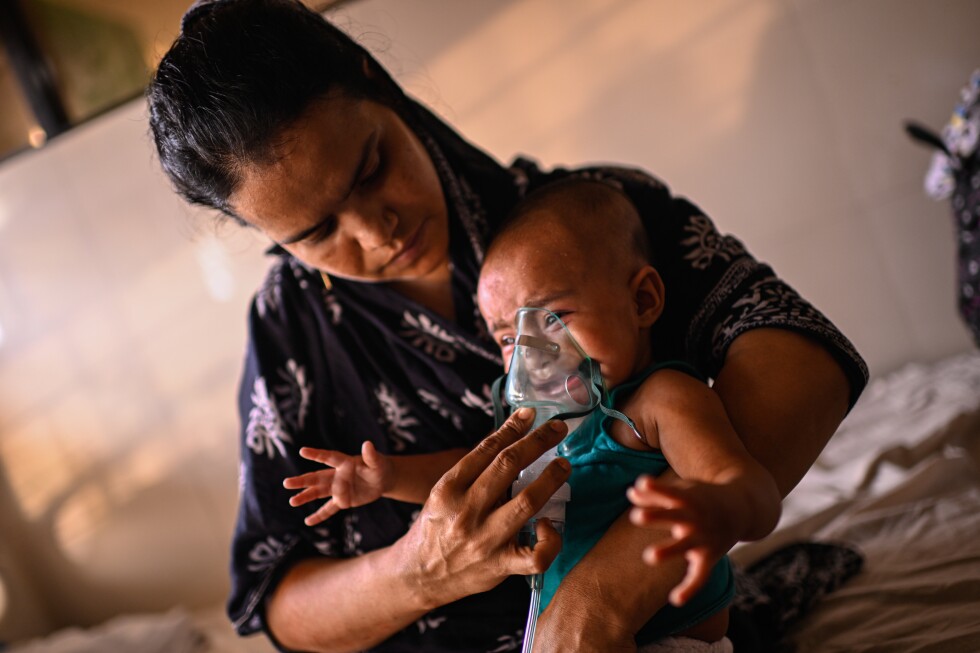
    A deadly measles outbreak that has claimed the lives of more than 100 children in less than a month has prompted Bangladesh to roll out an urgent immunization campaign, as public health authorities work to contain the fast-spreading infection. In a collaborative effort between the Bangladeshi government and global health partners including the World Health Organization (WHO), UNICEF, and Gavi, the Vaccine Alliance, the campaign began Sunday targeting children between 6 months and 5 years old across 18 high-risk districts. The initiative will expand to all regions of the country in phased stages starting next month, according to a joint official statement.

    As of mid-March, Bangladeshi health officials have recorded more than 7,500 suspected measles cases, with over 900 confirmed infections in the South Asian nation of 170 million people. Rana Flowers, UNICEF’s representative in Bangladesh, emphasized the organization’s deep alarm over the sharp surge in cases, which disproportionately endangers the country’s youngest and most medically vulnerable populations. “This resurgence highlights critical immunity gaps, particularly among zero-dose and under-vaccinated children, while infections among infants under nine months, who are not yet eligible for routine vaccination, are especially alarming,” Flowers said.

    Per WHO guidelines, measles is an extremely contagious airborne viral illness that triggers fever, respiratory distress, and a distinct full-body rash. The infection can lead to severe life-threatening complications, particularly for young children. Widespread vaccination is the only effective way to halt transmission, but WHO data notes that 95% population coverage is required to achieve herd immunity and stop sustained spread.

    Bangladesh’s current Health Minister Sardar Mohammed Sakhawat Husain told Parliament Monday that the current outbreak stems from systemic mismanagement and failures by previous administrations. He alleged that the ousted government of former Prime Minister Sheikh Hasina, followed by the interim administration led by Nobel Peace Prize winner Muhammad Yunus, failed to maintain adequate vaccine stockpiles, leading to shortages that affected measles vaccines and six other routine childhood immunizations. The ongoing immunization program was further disrupted by the country’s recent period of political upheaval: Hasina was removed from office in a mass popular uprising in 2024, and Yunus’s interim government only transferred power to a newly elected administration after February’s general election.

    Public health officials are now urging parents to seek immediate hospital care for any child showing suspected measles symptoms, warning against self-treatment with unregulated medications from local shopkeepers. F. A. Asma Khan, deputy director of Dhaka’s Infectious Diseases Hospital, stressed that any child experiencing a high fever above 38.3°C (101°F) should be evaluated by professional medical staff immediately. “Instead, they must take the child to a hospital as soon as possible, because our medical officers are capable of providing proper basic treatment,” Khan said.

    Bangladesh has made significant progress in childhood immunization over the past four decades: following the launch of a national mass immunization campaign in 1979, the country raised full immunization coverage from just 2% to 81.6% today. Still, UNICEF warned in a 2023 report that despite these gains, stark immunization disparities remain across different population groups and regions, leaving millions of children at risk of vaccine-preventable diseases like measles.

  • Trump, top officials detail US operation to rescue airman in Iran

    Trump, top officials detail US operation to rescue airman in Iran

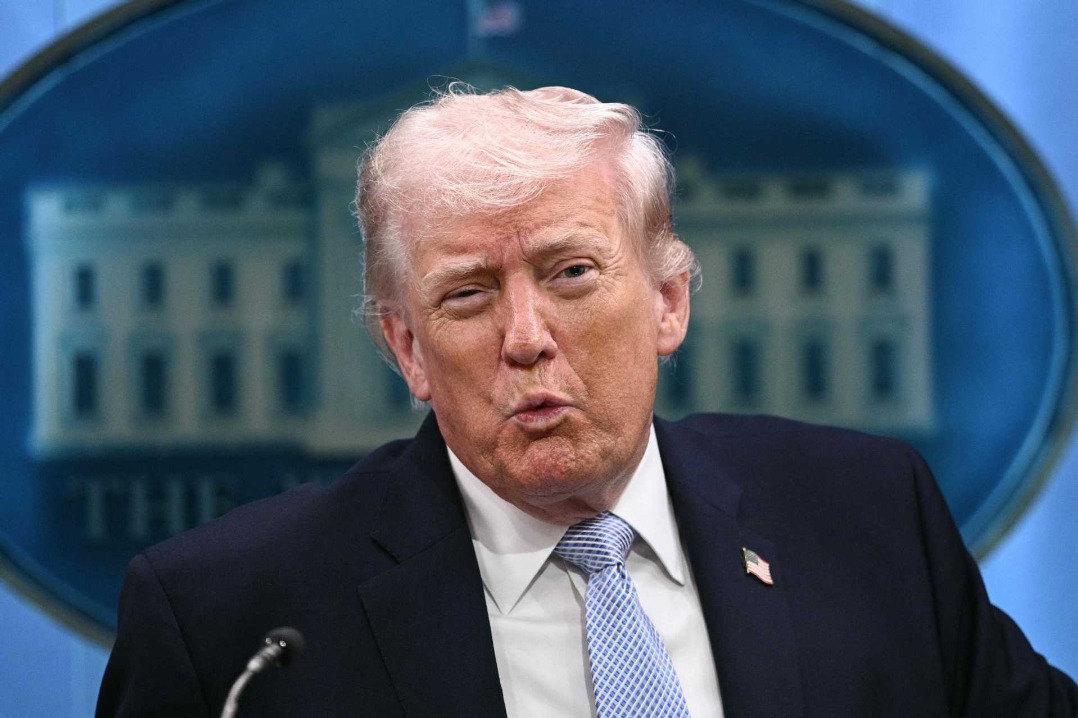
    WASHINGTON — In a Monday press briefing at the White House, former President Donald Trump has publicly outlined the full scope of a daring U.S. military search-and-rescue operation that recovered an American airman stranded inside Iranian territory, confirming that the mission relied on a deployment of up to 155 aircraft and included the deliberate destruction of stranded U.S. cargo planes to prevent sensitive technology from falling into Iranian hands.

    Trump told reporters the rescued pilot suffered serious, life-altering injuries during the incident. When pressed for additional details about the stranded aircraft, the president confirmed that U.S. forces destroyed the disabled planes, which carried sensitive communications infrastructure and cutting-edge anti-missile technology. After the initial aircraft were disabled, he added, the remainder of the extraction operation shifted to lighter, more maneuverable aircraft that could navigate Iranian airspace and terrain with greater speed and a lower risk of detection.

    The high-stakes mission faced internal pushback from some military advisors, Trump acknowledged, with many warning the operation put hundreds of service members at risk of death. “Hundreds of people could have been killed,” he said. “So we had people that were within the military that said this is not wise, and I understood that. But I decided to do it.”

    Chairman of the Joint Chiefs of Staff Dan Caine expanded on the role of U.S. air support during the mission, explaining that an A-10 Warthog aircraft that sustained damage over Iran on Friday was part of a specialized “Sandy” close air support mission designed explicitly for rescue operations. The aircraft’s sole task was to position itself between the stranded airman, advancing rescue teams and incoming hostile fire from Iranian forces. Caine confirmed the A-10 was struck multiple times by Iranian anti-aircraft fire, but the pilot managed to steer the damaged plane out of Iranian territory before ejecting safely over territory held by allied forces. “The plane had only one job: Get to the survivor, bring the rescue force forward, and put themselves between that survivor on the ground and the enemy,” Caine told reporters.

    Central Intelligence Agency Director John Ratcliffe detailed the agency’s critical role in locating the missing airman, saying the CIA leveraged a network of on-the-ground human intelligence assets and advanced surveillance technologies to pinpoint the aviator’s location by Saturday morning, confirming he was alive and alone. Ratcliffe described the search effort as an extraordinarily difficult challenge, comparing it to “hunting for a single grain of sand in the middle of a desert.”

    The mission was also a race against time, Ratcliffe noted, as locating the airman quickly while misleading Iranian forces about the rescue effort was critical to the operation’s success. To pull this off, the CIA launched an elaborate deception campaign against Iran that hid the airman’s location from Iranian forces while keeping U.S. teams updated on his position. The pilot was hiding in a mountain crevice throughout the operation, and remained completely undetectable to Iranian search teams thanks to the CIA’s misdirection, Ratcliffe confirmed.

    Trump also confirmed that an Iranian shoulder-fired anti-air missile was responsible for downing a U.S. Air Force F-15E Strike Eagle that crashed in Iranian territory on Friday. Notably, neither the president nor any of his top senior officials provided additional details about the specific type of missile used, or further context for how the fighter jet was shot down over the country.

  • India’s high-growth economy gets a Middle East oil shock

    India’s high-growth economy gets a Middle East oil shock

    Just weeks ago, the Reserve Bank of India (RBI) lauded the nation’s rare combination of robust economic expansion and contained inflation as a ‘Goldilocks’ moment — a sweet spot few major global economies could claim. Today, that optimism has crumbled, swept away by the escalating conflict in the Middle East that has sent shockwaves through India’s energy-dependent economy.

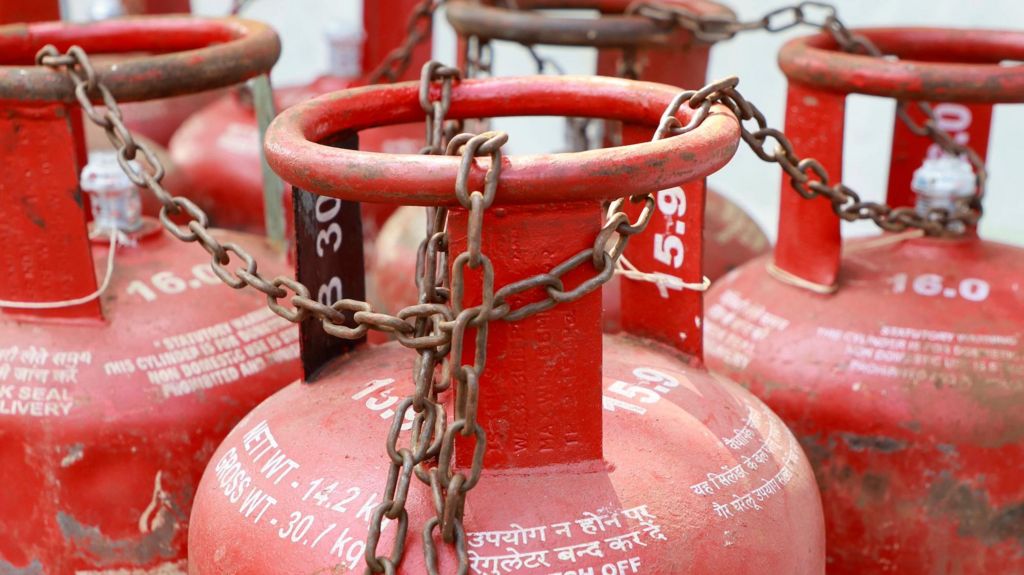
    As one of the world’s most reliant nations on Gulf energy imports, India faces uniquely acute risks from the crisis: 60% of its natural gas, over 90% of its cooking gas (LPG), and a quarter of its fertiliser imports originate from the Middle East. This deep supply dependence has turned regional tensions into an immediate domestic crisis, with visible disruptions rippling from currency markets to neighborhood restaurants.

    The most immediate impact has played out in foreign exchange markets, where the Indian rupee has tumbled to repeated record lows, falling nearly 10% against the U.S. dollar over the past 12 months. While the RBI’s intervention to curb speculative trading has temporarily slowed the rupee’s slide, economists warn the relief is likely temporary. Global investment firm Bernstein projects that if the conflict drags on through most of 2026, the rupee could plummet past 110 against the dollar, a outcome the firm describes as catastrophic. Even a quick resolution to the conflict would not reverse the current downward trajectory, analysts agree.

    A persistently weak rupee amplifies pressure across every corner of the Indian economy. It raises import costs for energy and goods, pushes up consumer prices, erodes corporate profit margins, widens government fiscal deficits, and discourages foreign investment into Indian equities. Already, India’s benchmark stock indexes have fallen 12% since the start of 2026, driven by broad foreign capital outflows that have erased the wealth effect that had powered upper-class consumption, a key engine of India’s recent growth.

    The conflict has also cast a shadow over India’s medium-term growth and inflation outlook. India’s finance ministry warned in its latest monthly economic review that higher import and logistics costs, paired with potential declines in remittances from the 10 million Indian citizens living in the Gulf, could have a significant impact on economic performance. Early indicators already show a measurable moderation in activity across multiple sectors.

    Before the crisis, India projected gross domestic product (GDP) growth of 7% for the 2026-27 financial year, a pace that would keep it on track to overtake Japan as the world’s fourth-largest economy. Now, leading brokerages estimate the Gulf crisis could cut growth by up to a full percentage point. Compounded by recent downward revisions to India’s GDP statistics following a base year update, the setback will almost certainly delay the nation’s long-held goal of rising to fourth place in global GDP rankings.

    Energy shortages have already hit everyday life across India. While the Indian government has absorbed most of the crude oil price shock to keep pump prices stable ahead of key state elections — cutting excise duties on petrol and diesel and imposing windfall taxes on fuel exports — LPG and natural gas shortages have forced widespread closures. Restaurants, hotels, food processing facilities, ceramics manufacturers, and even funeral services have suspended operations in parts of the country due to lack of fuel. Care Edge Ratings notes that fertiliser supply disruptions could also harm India’s large agricultural sector ahead of the upcoming sowing season, which already faces elevated risk from the El Niño weather pattern.

    Former Indian chief economic adviser Arvind Subramanian warns the crisis could deliver a large-magnitude stagflationary shock, with rising inflation paired with stagnating growth. ‘The stag part of the stagflation is already being felt in terms of restaurants closing down and households having less natural gas,’ Subramanian told India Today TV. Early worrying signs include migrant workers beginning to leave major urban centers like Mumbai in response to energy shortages, echoing population shifts seen during Covid-19 lockdowns. Economists warn that if labor shortages emerge and wage pressures rise, the country could face persistent supply-side headwinds.

    To address the crisis, the Indian government has proposed a $6.2 billion economic stabilization fund and has requested approval for additional spending on food and fertiliser subsidies. The funding has been freed up by cutting non-essential spending, likely from infrastructure allocations for roads and railways. Even so, Bernstein notes the fund remains modest relative to the scale of the current economic challenge.

    For its part, the RBI is widely expected to hold interest rates steady at its upcoming policy announcement this week, as policymakers wait for clarity on how long the conflict will last. Care Edge Ratings explains that a ‘wait and watch’ approach preserves the central bank’s flexibility to adjust policy once the full scale of risks to growth and inflation becomes clear.

    Amid the widespread gloom, analysts point to a few bright spots. A weaker rupee could improve the competitiveness of India’s export sector, and the country’s current comfortable foreign exchange reserves provide a larger buffer against market volatility than past crises. Still, Subramanian and other experts frame the crisis as a critical wake-up call for India to address longstanding vulnerabilities in its energy sector. The path forward, they argue, requires building larger strategic energy stockpiles, diversifying import sources, and accelerating the transition to renewable energy in the long term.

  • ‘They’re animals’: Trump doubles down on threat to destroy Iran’s critical infrastructure

    ‘They’re animals’: Trump doubles down on threat to destroy Iran’s critical infrastructure

    Seven weeks into the joint US-Israeli military campaign against Iran, US President Donald Trump has issued a stark ultimatum to Tehran: meet Washington’s preconditions for a negotiated settlement by 8 p.m. Washington local time Tuesday, or face the full obliteration of Iran’s core national infrastructure, including its energy grids, communications networks, and civilian water systems. The escalated rhetoric comes as Iranian officials have repeatedly rejected US overtures, insisting Tehran retains meaningful battlefield leverage and that Washington cannot be trusted to honor any diplomatic agreement.

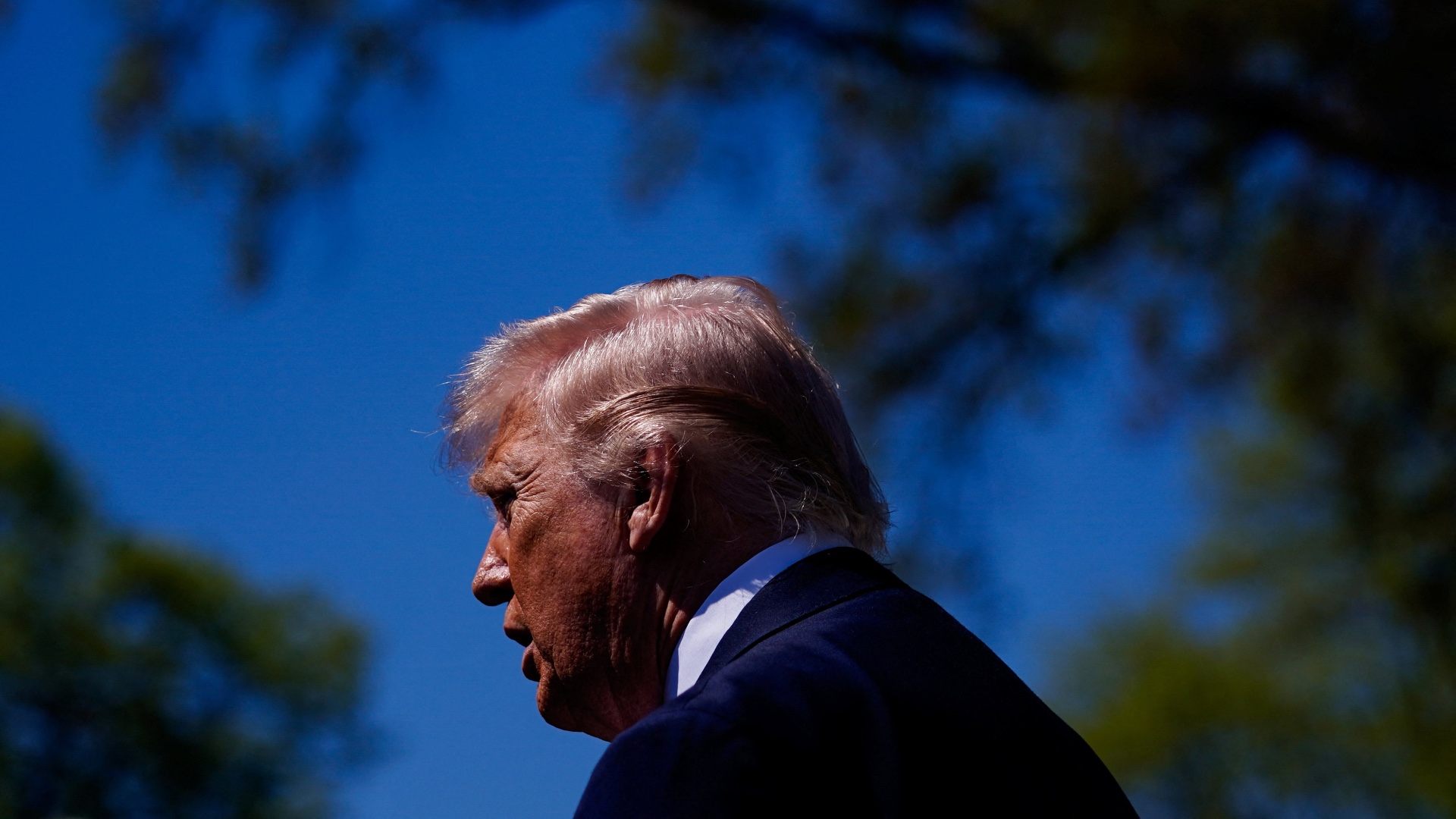
    Trump first laid out the aggressive threat during remarks to reporters at the annual White House Easter Egg Roll on Monday. “We are obliterating that country, and I hate to do it, but we’re obliterating [them] and they just don’t want to say ‘uncle’. They don’t want to cry, as the expression goes, ‘uncle’, but they will. And if they don’t, they’ll have no bridges, they’ll have no power plants, they’ll have no anything,” the president told assembled media.

    When a reporter pressed Trump on whether such a deliberate attack on civilian infrastructure would qualify as a war crime under international law, Trump justified the threat by claiming the Iranian government had killed 45,000 people in recent weeks. No independent verification of this claim has been possible; Iranian authorities have reported just under 4,000 total deaths linked to mass anti-government protests that began in January, a figure that includes both civilian protesters and slain police officers. Undeterred by the lack of corroboration, Trump doubled down on his denunciation, calling Iranians “animals” that must be stopped, and falsely claimed that Iranian civilians “want to hear bombs because they want to be free.”

    The 1949 Geneva Conventions explicitly ban deliberate attacks on infrastructure that cuts off civilian access to basic survival needs, a provision that would cover the targets Trump threatened to destroy.

    Speaking on a virtual panel hosted by the Executive Intelligence Review earlier Monday, Iran’s ambassador to Armenia Khalil Shirgolami pushed back against Washington’s maximalist demands, arguing that Trump’s aggressive approach is fundamentally nonviable. “President Trump had, several times, the chance to find a real solution and political settlement for the nuclear issue of Iran, and at least two times he betrayed diplomacy and he betrayed the negotiating table, and he bombed the negotiation table, actually,” Shirgolami said. “The United States is not in a position in terms of the battlefield operation to be putting all those preconditions.”

    Shirgolami’s remarks referenced Washington’s previously proposed 15-point peace framework, which was transmitted to Tehran via Pakistani intermediaries last month. The US proposal is reported to require Iran to completely end all uranium enrichment activities and fully dismantle its domestic missile program, demands Iran has repeatedly rejected.

    Pakistan, which has mediated quiet backchannel talks between the two sides, presented a new tentative peace framework dubbed the “Islamabad Accords” to both Washington and Tehran on Monday. The new proposal outlines a two-stage process: it calls for an immediate ceasefire first, followed by negotiations to finalize a full comprehensive agreement within a 15 to 20-day window. Shirgolami confirmed that Iran rejects a standalone temporary ceasefire, instead demanding a permanent end to all US and Israeli aggression, the establishment of a joint international mechanism to secure unimpeded trade passage through the Strait of Hormuz, and full compensation for all damage and losses caused by the ongoing conflict.

    Prior to Trump’s press conference at the Easter Egg Roll, Shirgolami noted that Iran’s strategic approach to negotiations is rooted in the proverb “Fool me once, shame on you; fool me twice, shame on me,” explaining that Washington has repeatedly broken past commitments, so it cannot be trusted without ironclad guarantees. “We need to go for a new equation, in which I mean, in that equation, there will be real guarantees for non-aggression against Iran, for preserving Iran’s rights, for the nuclear, peaceful energy and enrichment,” he added.

    During Monday’s Easter event, Trump also told reporters that if his policy decisions were not constrained by the will of the American public, he would simply seize Iran’s oil reserves for US profit. “It’s there for the taking. There’s not a thing they can do about it. Unfortunately, the American people would like to see us come home. If it were up to me, I’d take the oil. I’d keep the oil and would make plenty of money,” he said. When pressed on the comment later in the White House briefing room, Trump defended the framing by noting “I’m a businessman first.”

    Expanding on his vision for a post-deal settlement, Trump also floated the idea of the US seizing full control of the strategically vital Strait of Hormuz, through which a significant share of global oil trade passes. When a reporter asked if Trump would accept ending the conflict in exchange for the right to charge tolls for vessels passing through the Strait, Trump responded: “What about us charging? I’d rather do that than let them [or] have them run it. Why shouldn’t we? We’re the winner. We won. Okay? They are militarily defeated.”

    Currently, the Strait of Hormuz remains operational under Iranian control, which operates a three-tiered access system: vessels from countries friendly to Iran are granted free routine passage, vessels from neutral countries that pay a fee denominated in Chinese yuan are also allowed through, but all ships linked to the US and Israel are barred from transiting. Trump reiterated Monday that any final deal must guarantee unimpeded, free passage for all global oil and commercial traffic through the waterway.

    When asked about the newly proposed Islamabad Accords ceasefire framework, Trump told reporters he “can’t talk about the ceasefire” but claimed “we have a willing participant on the other side” referring to Iran. That claim directly contradicts Shirgolami’s confirmation that Iran rejects any temporary ceasefire proposal that does not include pre-agreed commitments to end aggression permanently and provide security guarantees.

  • Trump’s Hormuz deadline looms but Asian nations have already struck deals with Iran

    Trump’s Hormuz deadline looms but Asian nations have already struck deals with Iran

    The strategic Strait of Hormuz, one of the world’s most critical energy chokepoints, has emerged as the center of a escalating global geopolitical standoff, with multiple Asian economies reliant on Gulf energy already securing individual safe passage agreements with Tehran even ahead of a harsh deadline set by former U.S. President Donald Trump.

    On Monday, Trump issued an aggressive ultimatum to Iran, threatening that the United States could eliminate the Islamic Republic “in one night” if Tehran did not reach an agreement to reopen the Strait of Hormuz by 8 p.m. EDT Tuesday (1 a.m. GMT Wednesday). The threat marked a sharp escalation of tensions that erupted after Iran retaliated for joint U.S.-Israeli airstrikes by vowing to target transiting vessels in the waterway.

    Roughly 20% of the world’s total energy shipments pass through the narrow strait annually, and the threat of disrupted transit has sent global oil prices soaring in recent weeks. While Trump has insisted the U.S. does not rely on Gulf crude and has repeatedly pressured energy-dependent nations to deploy their own warships and lead efforts to reopen the route, many Asian countries have opted for direct bilateral diplomacy with Iran instead. That approach has already yielded tangible results, though major questions about the scope and durability of these agreements remain unanswered.

    The Philippines is the most recent country to formalize a deal. According to Philippine Foreign Affairs Secretary Theresa Lazaro, Iranian officials guaranteed “safe, unhindered and expeditious passage” for all Philippines-flagged vessels following a productive phone conversation between the two sides last Thursday. Lazaro described the agreement as “vital” for protecting the country’s energy and fertilizer supplies. For the Philippines, the deal comes at a critical moment: the nation imports 98% of its oil from the Middle East, and was the first country to declare a national energy emergency after domestic petrol prices more than doubled following the outbreak of the latest Iran war.

    Iran’s willingness to strike a deal with the Philippines, a longstanding U.S. ally, suggests the Islamic Republic is willing to separate security alignments from active participation in the ongoing conflict, analysts note. “Iran appears to be distinguishing between a country’s alliance and its active participation in the conflict,” explained Roger Fouquet, a senior researcher at the National University of Singapore’s Energy Studies Institute, adding that this compartmentalization of relations makes the Philippine deal a particularly notable test case.

    The Philippines is far from alone in securing safe passage guarantees. On March 28, Pakistan announced that Iran had approved passage for 20 Pakistani-flagged vessels through the strait. Pakistani Foreign Minister Ishaq Dar hailed the arrangement as “a welcome and constructive gesture by Iran and deserves appreciation,” adding that “Dialogue, diplomacy and such confidence-building measures are the only way forward.”

    Iran has also explicitly welcomed Indian-flagged tankers to transit the route. “Our Indian friends are in safe hands, no worries,” the Iranian Embassy in India posted on the social platform X last week, responding to a prior statement from the embassy’s South African office that only Iran and Oman would hold authority over the strait’s future. India’s Foreign Minister Subrahmanyam Jaishankar confirmed in March that the safe passage of Indian tankers was the product of quiet diplomatic engagement between the two nations.

    China, the world’s largest purchaser of Iranian oil, has also confirmed that multiple Chinese vessels have recently transited the strait following coordination with relevant parties. “Following coordination with relevant parties, three Chinese vessels recently transited the Strait of Hormuz. We express our gratitude to the relevant parties for the assistance provided,” a Chinese foreign ministry spokesperson told reporters, though Beijing offered no further details on the arrangement. Vessel tracking data shows that millions of barrels of Iranian oil, which is under U.S. sanctions, have been delivered to China in recent weeks despite the ongoing conflict. Beijing maintains close friendly diplomatic ties with Tehran and has joined Pakistan in efforts to broker a ceasefire between the U.S. and Iran.

    Other nations have also secured limited safe passage agreements. Over the weekend, Japanese shipping firm Mitsui OSK Lines confirmed that a Japanese liquefied natural gas carrier had transited the strait, and that “The safety of the vessel and all crew members have been confirmed.” The firm declined to comment on whether any fees were paid or how safe passage was secured. In March, Malaysia announced that several of its tankers had been cleared for transit by Tehran, with Prime Minister Anwar Ibrahim thanking Iran’s president for facilitating the passage. Malaysian Transport Minister Anthony Loke credited the country’s “good diplomatic relationship with the Iranian government” for the agreement, though it remains unclear whether all Malaysian-flagged vessels will receive the same guarantee. Roughly two-thirds of Malaysia’s oil imports originate in the Gulf, making the strait critical to the country’s economy.

    Despite the string of bilateral agreements, major uncertainties remain. Shipping analyst Dimitris Maniatis, of the consultancy Marisks, notes that it is still unclear whether the Iranian guarantees apply only to specific approved vessels or to all ships flagged under a given country. There is also no public clarity on whether nations paid for safe passage, or what terms were agreed to for the arrangements. A further open question is whether shippers will begin reflagging tankers from open registries like Panama and the Marshall Islands, which have not secured safe passage guarantees, to nations that already hold agreements with Tehran.

    While the spate of bilateral deals marks a diplomatic breakthrough for energy-dependent nations, Roc Shi, an energy researcher from the University of Technology Sydney, emphasizes that the agreements do not resolve the core standoff. “While these agreements mark a ‘diplomatic breakthrough’, it is not a resolution to the problem,” Shi noted, adding that it remains unknown how long the guarantees will hold, and how ongoing military operations in the region will impact future transits.

  • Fake Australian, Chinese and Brazilian police stations: BBC goes inside a seized scam compound

    Fake Australian, Chinese and Brazilian police stations: BBC goes inside a seized scam compound

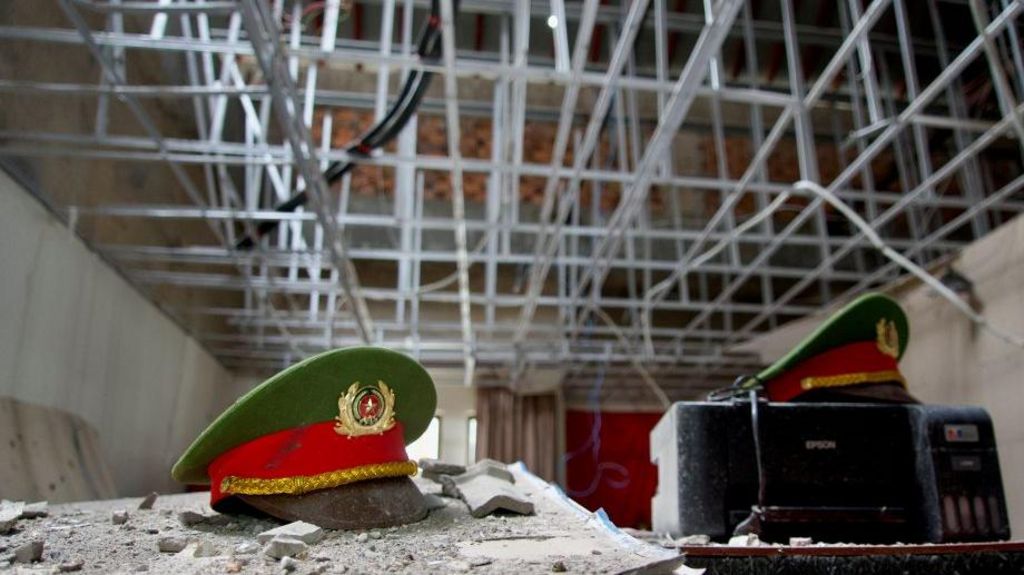
    Deep inside the Cambodian border town of O Smach, behind the shuttered Royal Hill casino, a six-story building stands pockmarked with shrapnel damage from a December cross-border air strike. When the BBC, granted access by occupying Thai military forces, walked its dark, dust-choked corridors, each door opened to a chilling window into one of the world’s largest cross-border online fraud operations.

    Behind one door, a full-scale replica of a Vietnamese bank had been constructed to fool victims. Another was fitted to mimic an Australian police station, complete with a Chinese police uniform hanging on a wall. Hand-painted motivational slogans in Chinese — one reading “Money Coming From Everywhere” — still line the walls, scattered with crumpled counterfeit $100 bills left behind when thousands of trapped scam workers fled after the bombing. This was not a casino, but a sprawling forced labor scam compound, where trafficked workers defrauded countless victims across the globe of their life savings under brutal, regimented control.

    The compound’s current status is wrapped in a brief but tense border dispute. In December, the Thai Air Force carried out airstrikes on Royal Hill, claiming Cambodian military drones were being launched from the site during a short outbreak of cross-border fighting. The bombardment shattered windows, blew gaping holes in roofs and walls, and forced the compound’s workers to flee abruptly, leaving half-eaten noodle bowls, half-empty soda cans, and a stale, acrid stench in their wake. Today, only Thai soldiers patrol the empty site. The Thai military invited the BBC to expose the scale of Cambodia’s transnational scam industry, framing the visit as a call for international action against what they call a regional scourge — a move that also serves to justify their December cross-border strikes. Cambodia has formally protested Thai occupation of the territory, while Thailand argues its troop presence adheres to the post-ceasefire agreement that froze forces in their end-of-conflict positions.

    What makes the Royal Hill compound particularly revealing is how it operated in complete obscurity for years, even as neighboring O Smach Casino, owned by high-profile Cambodian tycoon Ly Yong Phat, had already been named in reports of abuse by escaped scam workers. Ly Yong Phat, a senior figure in Cambodia’s ruling Cambodian People’s Party with close ties to the powerful Hun clan led by former Prime Minister Hun Sen, has already been sanctioned by the U.S. and other nations for alleged involvement in human trafficking and online fraud. By contrast, Royal Hill’s owner Lim Heng has maintained an extraordinarily low public profile, never appearing on international sanctions lists. Like many connected to the ruling elite, Lim Heng was awarded the Cambodian noble title Neak Oknha by Hun Sen — an honor requiring a minimum $500,000 donation to the state, placing him among a small circle of just a few hundred elite Cambodian powerbrokers. The only publicly known unusual detail about Lim Heng is his habit of paying respects at the cremation site of former Khmer Rouge leader Pol Pot, located near another of his northern border casinos.

    The rise of scam compounds like Royal Hill is rooted in decades of political and economic change in Cambodia. After the 1991 end of the Cambodian civil war, well-connected tycoons amassed vast fortunes by acquiring large land tracts through their ties to the ruling family. Early wealth came from illegal logging and agricultural plantations, followed by windfalls from a Chinese-investor-fueled urban property boom. In border regions like O Smach, casinos became the most profitable venture, capitalizing on strict gambling bans in neighboring Thailand and China. Over three decades, the Cambodian government issued roughly 200 casino licenses, drawing the interest of Chinese organized crime syndicates that added lucrative unregulated online gambling operations on site.

    The shift to large-scale online fraud came in 2019, after international pressure from China forced Hun Sen to ban online gambling, followed by the COVID-19 pandemic that halted cross-border tourism. With their core revenue streams cut off, criminal syndicates pivoted to transnational online fraud, luring thousands of young workers from across the globe with false promises of high-paying clerical or tech jobs. Some workers knew they would be participating in illicit activity, but none were prepared for the brutal conditions inside the compounds.

    Documents recovered by the BBC from Royal Hill’s rubble lay bare the brutal disciplinary regime workers faced. Anyone who failed to generate a single “lead” — an initial contact with a potential victim to build an online relationship — in one day received five cane strokes. Three straight days without a lead resulted in a minimum of 10 strokes. Even casual conversation with coworkers or failure to share personal intimate photos to trick victims into trusting scammers earned the same corporal punishment. Escapee Wilson, a young Ugandan man recruited to Royal Hill in August, described even harsher abuse to the BBC. “Some people were electrocuted. Some were put into the black room. They have a room called The Black Room where terrible torture went on,” he said from Phnom Penh, where a local charity shelters him as he waits for repatriation.

    Wilson said he was lured with an offer for a digital marketing job in Malaysia, only to be trafficked to the Cambodian compound. He described being forced to work 15 to 16 hour days, following rigid scripts written by Chinese bosses and using AI to alter his voice and appearance to match his assigned persona: “You are supposed to portray the character of a woman, who is 37 years old, rich, and who wants a husband. You chat to these older Americans with the intention of making them think you have fallen in love with them. So, in the script, there’s a point where you break them emotionally. You build trust, and then later on you can lure them into buying the products.” Wilson added that workers were even forced to return to their posts immediately after bomb blasts during the December air strike: “Every time we would hear a bomb – the building would sometimes shake – we would run out. We were scared. But then we had to come back in and work again.”

    The BBC found scam scripts and operational rules in multiple languages tailored to target victims across the globe. Lateness resulted in fines, and workers had to request permission to use the toilet. One recovered “Employee Outing Registration Form” meticulously logged every bathroom break taken by workers in the days before the air strike, including the exact amount of time each worker spent away from their desk. Next to a fully built replica Brazilian police station, rows of soundproofed booths were set up for scammers to make calls, with handwritten notes in Portuguese reminding scammers of tactics to gain victims’ trust. One recovered fake document was a convincing forged summons from Sao Paolo police accusing a victim of money laundering — a common blackmail tactic to scare targets into transferring funds or surrendering sensitive bank account information.

    For years, the Cambodian government largely ignored growing international outcry over the ballooning scam industry and its linked human rights abuses. The 2025 U.S. State Department Trafficking in Persons Report accused the Cambodian government of failing to take meaningful action to eliminate the trade, noting that no high-profile scam compound owner or operator had ever been arrested or prosecuted. When the U.S. imposed sanctions on Ly Yong Phat in September 2024 over his links to fraud and forced labor, the ruling party demanded the sanctions be withdrawn, accusing the U.S. of violating Cambodian sovereignty.

    Earlier this year, however, sustained international pressure from the U.S., China and other global powers forced the Cambodian government to make an abrupt policy shift. National police have raided dozens of suspected scam compounds, and Prime Minister Hun Manet pledged to fully shut down the entire cross-border scam industry by the end of April, acknowledging that the illegal trade was destroying Cambodia’s international reputation and damaging its legitimate economy.

    The most high-profile move came in January, when Cambodian authorities arrested and extradited to China Chen Zhi, a young Chinese entrepreneur who had become one of Cambodia’s most influential insiders. Chen Zhi, who had acquired Cambodian citizenship and served as a personal adviser to Hun Sen, ran the Prince Group — a conglomerate that owned a national bank, an airline, and massive property developments across the country. Sanctioned by both the U.S. and UK in 2024 for running a vast fraud-funded corporate network, Chen Zhi had seemed untouchable for years. But after his arrest, footage circulated of him being led hooded and handcuffed off a plane to China, where he now awaits trial on charges of running a cross-border fraud and gambling syndicate. His high-profile extradition sent a clear signal that the government was willing to sacrifice top-tier figures connected to the scam industry to salvage Cambodia’s global standing. Authorities followed Chen Zhi’s extradition with the extradition of Li Xiong, chairman of Huione Pay, an online payment platform accused of laundering billions in scam profits.

    Today, many scam compounds across Cambodia sit empty, and authorities say more than 10,000 trafficked foreign workers have been repatriated. But many more, like Wilson, still remain stuck in Cambodia waiting to return home. And despite the government’s bold pledges, analysts remain skeptical that the crackdown will mark the end of cross-border scams in the country.

    Critics compare raid operations to a game of whack-a-mole: it is simple for syndicates to relocate workers to new, unreported lower-profile compounds, and thousands of workers are believed to have chosen to remain in Cambodia rather than face poverty at home. Beyond the high-profile arrest of Chen Zhi, none of the Cambodian tycoons accused of hosting scam compounds behind their casino operations have faced legal action. Ly Yong Phat, Try Pheap and Kok An — all wealthy, powerful elite figures sanctioned by foreign governments for their links to scams — still live freely and comfortably in Cambodia. In a striking irony, both Ly Yong Phat and Kok An, who hold senate seats, recently voted in favor of a new anti-scam law the government says will impose harsh penalties on scam operators.

    As for Lim Heng, the little-known tycoon who built Royal Hill, his name had never appeared in any public reporting or investigation into Cambodia’s scam industry — until Thai forces crossed the border and seized his compound.


  • Top Jerusalem Islamic official calls on West to tell Israel: Don’t mess with Al-Aqsa

    Top Jerusalem Islamic official calls on West to tell Israel: Don’t mess with Al-Aqsa

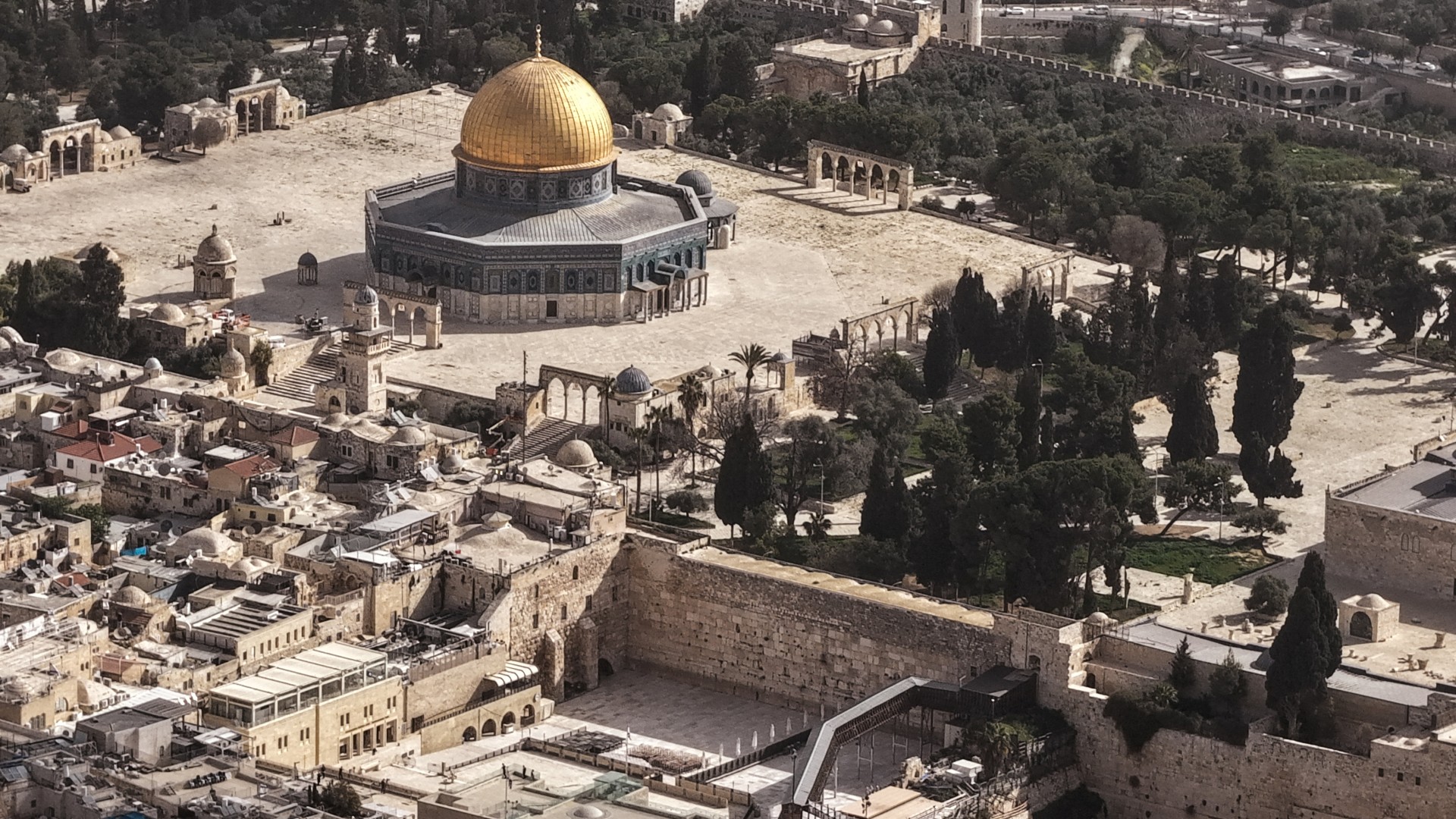
    For five consecutive weeks, one of Islam’s holiest sites has stood empty, a situation that has stoked regional tensions and drawn accusations of Western diplomatic double standards across the Muslim world. Now, a senior leader of the Islamic Waqf, the body tasked with administering Al-Aqsa Mosque in occupied East Jerusalem, is publicly demanding Western governments step in to pressure Israel to reverse its sweeping restrictions and uphold long-standing agreements governing the sacred site.

    Israel imposed a total entry ban on all Muslim worshippers to the Al-Aqsa compound starting February 28, the same day it launched a joint military campaign against Iran alongside the United States, citing unsubstantiated security threats. The ban has remained in place through key religious milestones on the Islamic calendar, including Friday congregational prayers, Eid al-Fitr, and Laylat al-Qadr – one of the holiest nights of the year for Muslim believers. For nearly the entire holy month of Ramadan, the mosque and its sprawling ancient courtyards sat vacant, forcing thousands of Muslim worshippers to gather for prayers on the narrow streets surrounding the Old City instead.

    In an exclusive interview with Middle East Eye, Mustafa Abu Sway, deputy chairman of the Islamic Waqf council, warned the ongoing closure and creeping Israeli control of the site poses a direct threat to stability across the entire Middle East. “If we care about regional stability, Western governments must issue clear statements reaffirming their commitment to preserving the Status Quo, which will prevent Security Minister Itamar Ben Gvir and Prime Minister Benjamin Netanyahu from inflicting further irreversible damage,” Abu Sway said. “A strong public statement would send an unambiguous message to Israel that it cannot tamper with Jerusalem’s holy sites.”

    Muslim Palestinians have expressed widespread frustration over what they view as stark double standards in Western policy toward religious access in Jerusalem. Just one week before the interview, the United States, Italy, Spain, the Vatican, and other international actors issued harsh condemnations of Israel after it barred Catholic leaders from accessing the Church of the Holy Sepulchre for Palm Sunday services. That public outcry forced Netanyahu to reverse the restriction within hours. By comparison, the five-week total ban on Muslim access to Al-Aqsa has been met with complete silence from Western capitals.

    Jordanian MP Saleh al-Armouti, who heads the parliamentary bloc of the Islamic Action Front, praised the Vatican’s intervention on behalf of Christian worshippers while calling for similar action to reopen Al-Aqsa. “I call on the Pope to publicly demand the reopening of the blessed Al-Aqsa Mosque,” al-Armouti said.

    Restrictions across the Old City, which houses Al-Aqsa alongside the Church of the Holy Sepulchre and the Western Wall, have been unevenly enforced. While limits on access to Christian and Jewish holy sites have been loosened at times, the closure of Al-Aqsa has remained rigidly in place. Weeks before the full closure, Al-Aqsa’s leading imam, Sheikh Muhammad al-Abbasi, was arrested by Israeli forces directly inside the mosque’s courtyards.

    A coalition of eight Muslim-majority nations, led by Jordan, has repeatedly called on Israeli authorities to lift the entry ban and reopen the site to Muslim worshippers. In an early March joint statement, the group condemned the restrictions as a “flagrant violation” of international law and the long-standing principle of unrestricted access to houses of worship. The statement also reaffirmed that Jordan’s Ministry of Awqaf and Islamic Affairs is the only legal body with exclusive jurisdiction over Al-Aqsa, and that Israel has no valid claim to control the site. A second joint statement issued by the same bloc last week reaffirmed the demand, citing binding legal and historical Status Quo agreements – and was again ignored by the Israeli government.

    The Status Quo arrangements that govern access and administration of Jerusalem’s holy sites date back to the 19th century. Under the terms of this agreement, Al-Aqsa is managed by the Waqf under Jordanian custodianship. When Israel seized full control of East Jerusalem during the 1967 Six-Day War, it formally recognized the Status Quo and acknowledged that Muslim authorities retain exclusive control over access, security, and the religious character of the Al-Aqsa compound.

    On-the-ground reporting from Middle East Eye confirms a heavy, intimidating Israeli military presence remains deployed across the area surrounding Al-Aqsa, with soldiers positioned to block any attempted entry by worshippers. Internal sources familiar with the situation tell MEE that Israeli interference extends far beyond the entry ban on worshippers. Israeli police have also barred nearly all Waqf staff from entering the compound to carry out critical maintenance work, capping entry at just 25 employees out of the Waqf’s total workforce of roughly 1,000.

    This creeping encroachment has fueled widespread fears that Israel intends to permanently alter the long-standing governing rules of the site once it reopens, including reallocating space or prayer time to Jewish ultranationalist groups. While Israel’s chief rabbinate has formally banned Jewish prayer on the Al-Aqsa compound – which is believed to sit atop the site of the ancient Jewish Second Temple – ultranationalist Israeli groups have increasingly staged incursions into the compound and conducted unauthorized Jewish prayers there, with open political backing from senior government figures including Ben Gvir.

    Abu Sway ruled out any possibility of a compromise that would alter the Status Quo, noting that Jordan’s King Abdullah II has repeatedly declared Al-Aqsa a red line that cannot be violated. “King Abdullah has made clear there will be no time sharing, no space sharing at Al-Aqsa. He has left no room for doubt on this position,” Abu Sway said. “I am grateful that Jordan has our full backing. Without Jordanian support, Israel would have a completely free hand to alter the character of Al-Aqsa. Jordan will never compromise on the Status Quo.”

  • ‘In south Lebanon, we don’t just cover the war, we try to survive reporting it’

    ‘In south Lebanon, we don’t just cover the war, we try to survive reporting it’

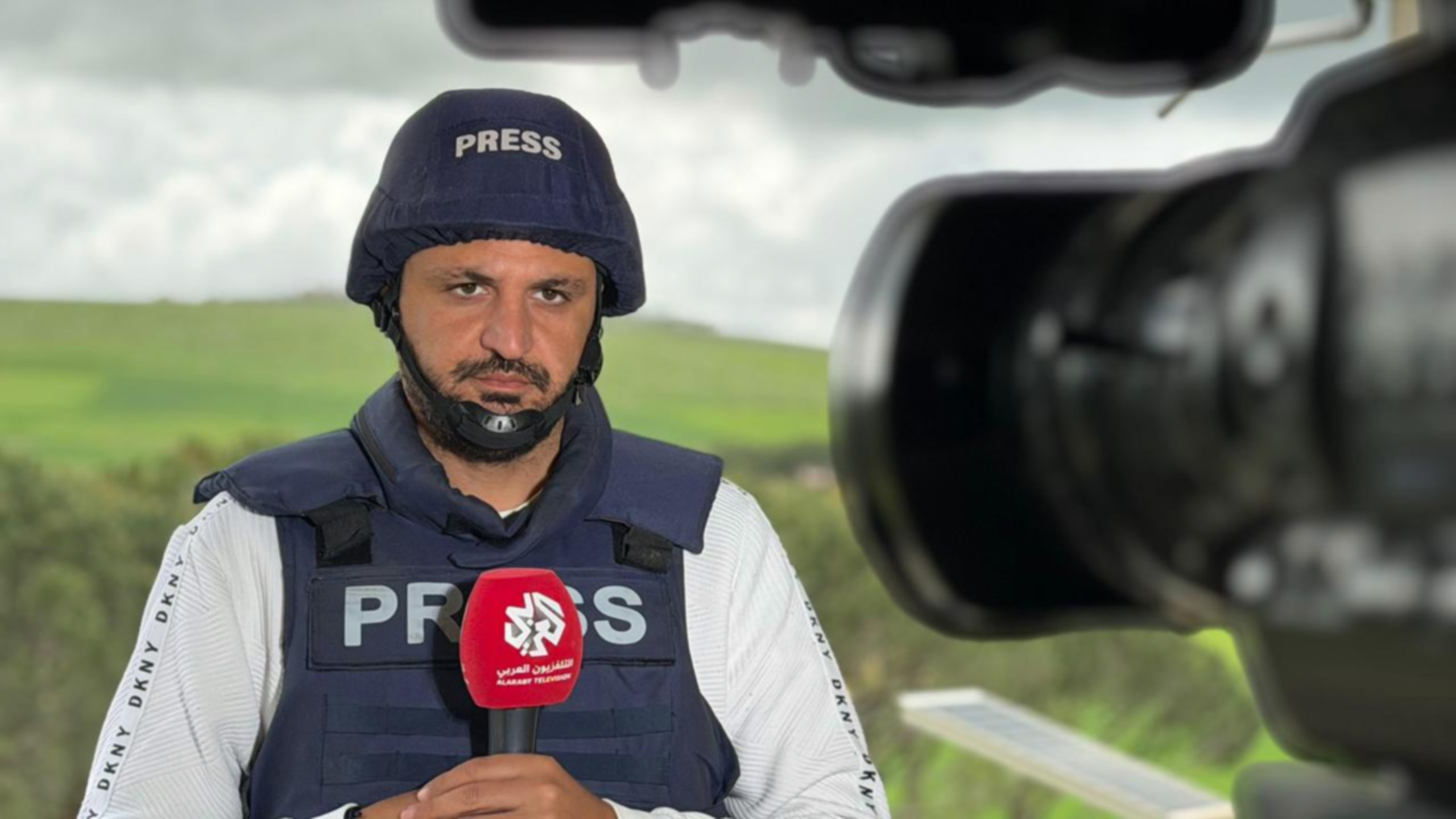
    Editor’s note: This is a firsthand personal narrative from Ramez El Kadi, a Lebanese journalist who has reported from the front lines of Israel’s military campaign in southern Lebanon since the offensive first launched in October 2023.

    Every trip I take down to southern Lebanon is far more than a simple commute between two urban centers. It is a profound mental shift between two very different realities of the journalistic calling: the profession we dreamed of when we first took up our notebooks, and the dangerous, altered version forced on us by years of Israel’s war.

    Gone are the days when a protective vest and helmet were just optional safety gear for high-risk assignments. Today, they are as fundamental to my daily work as the camera in my hand, the notepad in my pocket, and the microphone I use to capture testimony.

    Each morning, I try to frame my shift as just another routine day of on-the-ground reporting: another assignment I will finish, another trip I will return home from safely. But the old normal died the moment our colleagues became intentional targets. Now, reporting the news is no longer just a job of documenting and transmitting events. It is a constant, personal battle against the gnawing fear that rides with me and my team in the back of our car, hanging thick in the long silences broken only by anxious messages from loved ones: Why do you keep going back? Aren’t you scared? Haven’t decades of frontline work been enough?

    In the early years of my career, danger had clear boundaries. I first encountered it in northern Lebanon, in Tripoli, during waves of internal unrest. Back then, threats were tied to specific locations, specific streets, and gunfire with traceable origins. You could map the risk and adjust your steps accordingly.

    Today, that certainty is gone. Journalists are now explicitly listed on Israeli target banks. The repeated deliberate attacks on my colleagues have created a terrifying new reality: simply holding a camera, or reporting a story that contradicts the narrative pushed by those wielding military power, is enough to put a reporter in the crosshairs.

    This truth was driven home on March 19, when RT correspondent Steve Sweeney and cameraman Ali Rida Sbaiti narrowly survived an Israeli strike near southern Lebanon’s Qasmiyeh Bridge. The pair were clearly marked as press, on assignment to cover earlier Israeli attacks on the strategically critical crossing.

    For every frontline reporter in southern Lebanon, stepping out to work each day is now an existential choice, not just a professional one.

    This is the most fundamental shift the war has wrought: danger no longer depends on which road you take, how close your broadcast position is to clashes in the border town of Khiam, or how many kilometers separate you from the front lines. The very equipment we carry to bring the truth to the world can, in an instant, become a death sentence.

    Beyond safety protocols and security briefings, a deep psychological shift has rewired how Lebanese war correspondents prepare to do their jobs now. Standing in front of a camera today requires carrying a double awareness: you are conscious of the violence unfolding around you, and you are also acutely aware that you could become the story yourself.

    Nothing highlighted this shift more sharply than the day we lost Issam Abdallah, the Reuters photojournalist killed in a deliberate Israeli strike in Alma al-Shaab. That strike, on October 13, 2023, changed everything.

    Just hours before the attack, Abdallah and I stood with a group of fellow journalists scouting for a vantage point to film Israeli bombardment across the border. We split up to our positions, and everything felt routine. We were just journalists doing our jobs, unaligned with any fighting faction. Back then, the question we would have asked was simple – and in hindsight, it is devastating: why would we be targeted?

    I was reporting live from a residential rooftop when an Israeli tank across the border opened fire. “It looks like the Israelis hit a house or possibly a car, judging by that thick black smoke,” I said on air, just minutes before I learned the strike had hit a group of my colleagues – all clearly, visibly marked as members of the press.

    Issam was the first journalist Israel killed in Lebanon after it launched its 2023 offensive across the border. Six other reporters were wounded in that same attack. A little over a month later, journalists Farah Omar and Rabih al-Maamari were killed in an Israeli strike on another southern Lebanese town. Less than two weeks before this account was published, Fatima Ftouni and Ali Choeib were killed in a series of targeted strikes that hit their car as they traveled through Jezzine.

    According to United Nations experts, at least 259 journalists and media workers have been killed by Israeli forces since 2023. That toll includes 210 Palestinian journalists in Gaza and 14 Lebanese journalists, with at least 64 of those deaths confirmed as deliberate targeted killings.

    The consistent targeting of reporters has turned the constant, low hum of Israeli drones that fills southern Lebanon’s sky into a permanent, chilling warning: we are being watched. The split second of silence before a strike is no longer just anticipation of harm coming for someone else; it is the quiet dread that the next strike could be for you.

    And even so, I keep going back.

    I return because war cannot be reduced to a count of strikes or maps of territorial control. The real story is in the faces of ordinary people, who are erased by the dry, clinical language of military communiques. In the border villages, amid the rubble and the smoke, there is always a mother searching for her missing child, a family standing in front of what was once their home, now reduced to rubble. There are survivors who only want someone to listen to them before they are swallowed up by statistical tallies of the dead, by rhetoric that erases their humanity.

    In this context, the journalist’s role is far bigger than just reporting the day’s news. We are witnesses to crimes unfolding before our eyes. We are the people tasked with pulling ordinary people’s stories out from under the fire, and carrying them to the rest of the world.

    We do not go back into the field because we have no fear. We go back because we know what it would mean if this war went unwitnessed, if no one was there to hold the powerful to account.

    At the end of every day, once the camera is turned off and the only sound is the quiet of the night, I find myself answering that same question from loved ones, over and over. This is why I return. Not because I seek out danger, but because war cannot be left to the people who want to bury its truth and silence its victims.