
Established as one of China’s leading English-language media outlets, China Daily holds full intellectual property rights over all content distributed through its official website, a position formally outlined in the site’s legal documentation. Dating back to 1994, China Daily Information Co (CDIC) retains exclusive ownership of every form of content hosted on the platform, ranging from written articles and photographic imagery to audio and video multimedia materials. Per the site’s terms of use, no party is permitted to republish or utilize any of this content in any format without first obtaining explicit written authorization from CDIC. Beyond intellectual property regulations, the platform also includes a technical recommendation for end users, suggesting that visitors access the site using a web browser configured to a screen resolution of 1024*768 or higher to ensure optimal browsing performance. Additional administrative records listed on the site include an online multimedia publishing license, issued under registration number 0108263, and a general operating registration number 130349. To increase transparency and accessibility for audiences and partners, the site also provides a dedicated menu of navigation links for core institutional information and outreach opportunities. These sections cover an institutional overview of China Daily, guidelines for brands and organizations interested in purchasing advertising space on the platform, contact information for general inquiries, current open employment positions, and dedicated resources for expatriate job seekers. Visitors are also invited to connect with China Daily’s social media channels to follow the outlet’s latest updates and engage with its content across digital platforms.
标签: Asia
亚洲
-
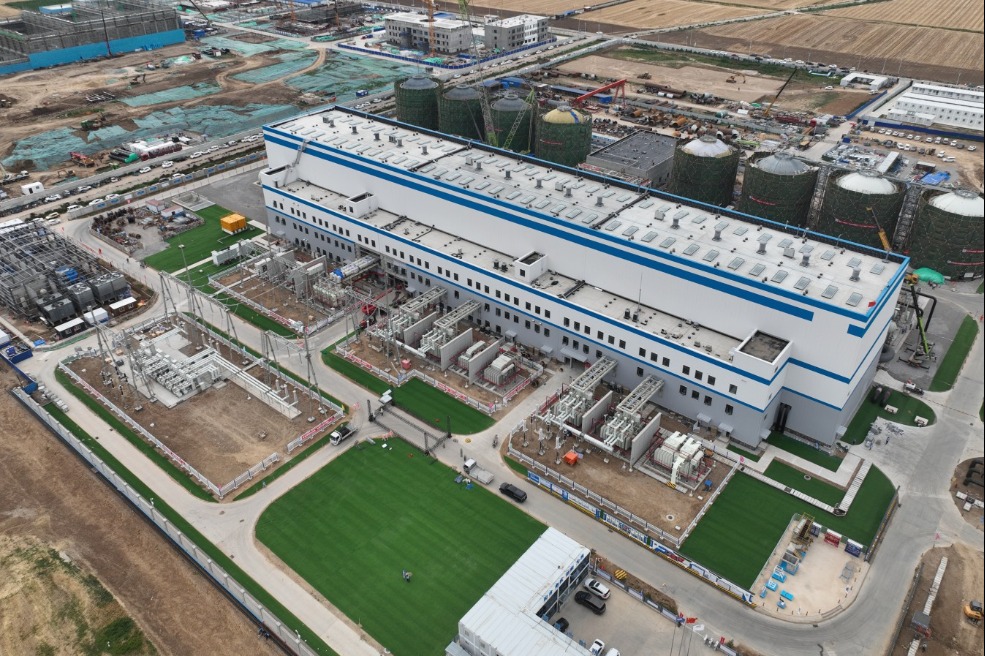
Clean energy transition speeds up across nation
Against the global backdrop of urgent carbon reduction and sustainable development, China is advancing its clean energy transformation at an unprecedented pace, with breakthrough projects and technological innovations reshaping the nation’s energy ecosystem from coastal waters to abandoned underground mines.
In Tai’an, a resource-dependent city in East China’s Shandong Province, a pioneering energy infrastructure project has breathed new life into a long-abandoned rock salt mine. What was once a void left by decades of extraction has been reborn as a large-scale compressed air energy storage facility, the first commercial project of its kind developed by China Energy Engineering Group Co. Liu Shaoyong, the project’s manager, outlined the facility’s impressive technical specifications: designed to store energy for eight hours and deliver four hours of continuous power generation, it can produce up to 460 million kilowatt-hours of electricity annually, enough to meet the annual residential demand of more than 200,000 households. The facility leverages existing underground salt caverns to create grid-scale energy storage, a solution that repurposes retired mining infrastructure while addressing one of renewable energy’s biggest challenges: inconsistent output. During periods of low grid demand, excess electricity is used to compress air and store it underground; when demand peaks, the compressed air is released to drive turbines, delivering reliable power to the grid.
This innovative storage project is just one example of the rapid progress China has made in renewable energy development in recent years. Driven by continuous technological innovation, renewable energy installations accounted for more than half of China’s total national power generating capacity by 2025, crossing a historic milestone that has accelerated the global clean energy transition. In Tai’an specifically, new renewable energy technologies are not only rolling out novel energy storage models, they are also strengthening the grid’s capacity to integrate variable renewable output, guaranteeing a stable and secure energy supply for local residents and industries. An official from the dispatching center of State Grid Tai’an Power Supply Company explained that the authority has streamlined grid integration services, actively monitoring demand fluctuations and providing end-to-end technical support for project commissioning and grid connection. Projections show that Tai’an’s total installed capacity of new-type energy storage will reach nearly 5 million kilowatts by 2030.
Across Shandong, another groundbreaking clean energy milestone went into operation late last year: the world’s largest 26-megawatt offshore wind turbine, fully independently developed by China’s Dongfang Electric Corporation, has been successfully connected to the grid in Shandong’s coastal waters. The turbine sets new global records for both single-unit power generation capacity and rotor diameter. Under full-load operation, a single rotation of the turbine produces 62 kilowatt-hours of electricity. At an average wind speed of 10 meters per second, one turbine can generate 100 million kilowatt-hours of clean power annually enough to supply 55,000 households with electricity. This output translates to an annual reduction of 30,000 metric tons of standard coal consumption and 80,000 metric tons of carbon dioxide emissions.
Beyond Shandong, similar integrated clean energy projects are emerging across China, including clean energy-powered data centers under development in the country’s northwest and southwest regions. These projects allow China to expand its fast-growing digital economy while simultaneously cutting carbon emissions, aligning two key national development goals.
China’s push for clean energy is guided by ambitious national climate pledges. In September 2025, China reaffirmed its commitment to cut net greenhouse gas emissions across the entire national economy by 7 to 10 percent below peak levels by 2035. To meet this target, the country has already passed a critical threshold: total installed capacity of renewable energy now exceeds that of coal-fired power.
As China builds out its domestic clean energy infrastructure, it is also sharing the benefits of its technological advancements with the global community. At the Solar and Storage Live Africa 2026 exhibition held in Johannesburg this past March, photovoltaic equipment and smart energy solutions developed by Chinese companies drew extensive international attention. Qhakazile Mathebula, general manager for digital energy at South Africa’s City Power, praised the contributions of Chinese firms to Africa’s ongoing energy transition. “We welcome the participation of Chinese renewable energy companies, whose investments and technologies are helping accelerate Africa’s shift toward cleaner and more sustainable energy,” Mathebula said, noting that China’s ability to deliver cost-effective, scalable solutions is particularly critical for African nations working to expand universal energy access and resolve persistent energy supply constraints.
From repurposed underground storage facilities to record-breaking offshore wind turbines, China’s accelerating clean energy transition is not only transforming its own energy landscape but also creating new opportunities for sustainable development across the globe.
-
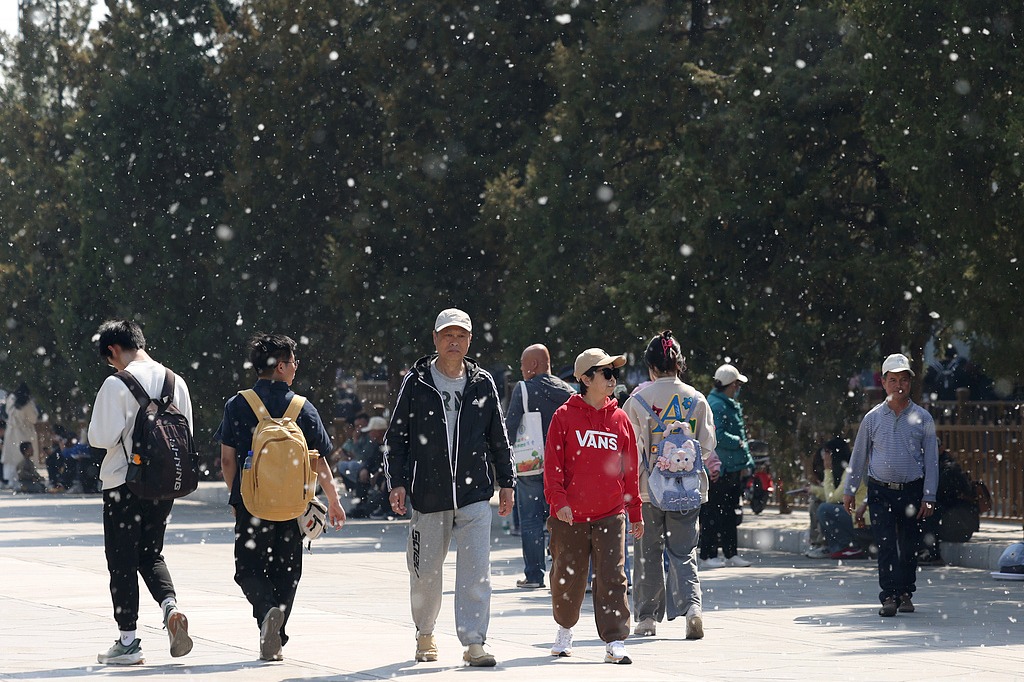
Early catkin season heightens fire and allergy risks
Across northern China and the Yellow-Huaihe River Valley, the annual spring phenomenon of poplar and willow catkin dispersal has kicked off earlier than the historical average this year, bringing extended periods of floating white fluff that is set to last through most of April and elevating dual risks of allergic reactions and wildfire outbreaks.
According to Weather China, the official meteorological platform operated by the China Meteorological Administration, unseasonably early warming that pushed regional temperatures to around 20 degrees Celsius triggered catkin release one to two days ahead of the 2025 timeline. In major northern urban centers Beijing and Tianjin, the catkin season is scheduled to commence between Monday and Thursday this week, with warm, arid, and windy conditions forecast to push catkin concentrations to their peak in mid-April. Unlike regions further south, this area will see catkins remain in the air well into May, creating a months-long period of elevated risk for residents.
Many people mistake the floating white fluff for flower blossoms, but it is actually the fibrous seed dispersal structure of mature poplar and willow trees, designed to carry tiny seeds on wind currents. While the fibers themselves are not the main trigger of seasonal allergies, they act as a mobile carrier for common irritants including pollen, fine dust, and airborne fungi. For residents with sensitivities, this often leads to uncomfortable allergic reactions ranging from persistent sneezing and runny noses to itchy, inflamed eyes.
Li Yuan, deputy chief physician at the China Meteorological Administration Hospital, has outlined clear precautionary guidance for the public to minimize exposure during high-catkin periods. She advises residents to use tightly fitted face masks and protective eyewear such as goggles or oversized sunglasses when outside, to block irritants from entering the respiratory tract and eyes. After returning indoors, she recommends rinsing nasal passages with saline solution and thoroughly washing the face and eye area to remove any trapped irritants and reduce irritation.
To further cut down on exposure, Weather China recommends avoiding unnecessary outdoor activities between 10 a.m. and 4 p.m., the window when catkin concentrations are highest in the air. Individuals with asthma or severe seasonal allergies are specifically advised to stay away from low-lying areas where catkins accumulate in dense drifting drifts.
Beyond health risks, catkins also present a major underrecognized fire hazard, due to their oily fiber composition and large surface-to-volume ratio that makes them extremely flammable. Even a tiny open flame can ignite catkins, leading to extraordinarily rapid combustion. Meteorological researchers note that experiments confirm a 1-square-meter patch of accumulated catkins can be fully engulfed in flames in less than two seconds, and fire can spread quickly from catkins to nearby dry grass, parked vehicles, and even building exteriors, posing a major threat to urban and suburban fire safety.
-
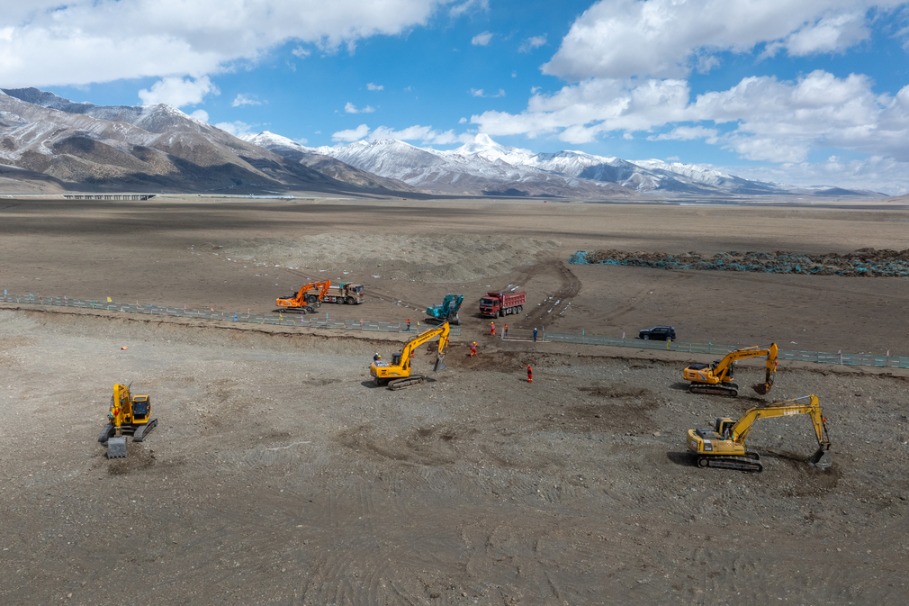
Construction of solar thermal power plant at altitude of 4,550 meters starts in China’s Xizang
On April 7, 2026, state-owned energy developer China General Nuclear Power Group (CGN) announced that construction has officially commenced on a landmark 50 megawatt trough-based concentrated solar thermal power plant, sited at 4,550 meters above sea level in Damxung County, Lhasa, Southwest China’s Xizang Autonomous Region. The project forms a core component of a larger integrated solar thermal and photovoltaic (PV) complex developed by CGN, which combines the steady, dispatchable power generation capacity of concentrated solar thermal (CSP) technology with the high output efficiency of utility-scale PV panels.
Located on the high-altitude Tibetan Plateau, the site benefits from exceptional solar irradiance levels year-round, a key natural advantage for utility-scale solar energy development. However, the extreme altitude also presents unique engineering and construction challenges, including low atmospheric pressure, lower oxygen levels for construction crews, and extreme temperature fluctuations that require specialized materials and design adaptations.
When completed, the project is expected to set a new global record for the highest-altitude utility-scale CSP plant currently in operation. It will also strengthen Xizang’s commitment to expanding its clean energy capacity, leveraging the region’s abundant renewable resources to reduce reliance on fossil fuels and support China’s national carbon peaking and neutrality goals. Drone imagery captured on April 6, one day before the official construction launch, showed initial site preparation work underway across the project footprint, with early infrastructure installation progressing on schedule.
-

Youth personalize tomb offerings
As China’s annual Qingming Festival, the traditional Tomb-Sweeping Day, arrived this year on April 5, a new cultural trend led by China’s Generation Z has breathed fresh, creative life into an ancient ritual: young travelers are flocking to the tombs of celebrated Chinese historical figures, leaving unconventional, deeply personalized offerings that blend modern fan culture with long-held traditions of remembrance.
For centuries, Qingming Festival has centered on family visits to ancestral graves, where descendants clean burial sites, light incense, and leave traditional offerings of food, incense and ceremonial paper money to honor departed loved ones. This year, however, young Chinese history enthusiasts expanded that tradition beyond family lines, extending their tributes to iconic historical figures whose legacies have captivated modern audiences through pop culture, history books and digital content.
The trend gained widespread attention after staff at the Cao Cao’s Mausoleum Site Museum in Anyang, Henan, revealed that visitors had left dozens of boxes of ibuprofen and other painkillers at the tomb of Cao Cao, the powerful Three Kingdoms period (220-280 CE) warlord. Historical records have long documented that Cao Cao suffered from chronic, severe headaches, with some modern archaeologists hypothesizing the pain stemmed from undiagnosed dental neuralgia. Rather than discarding the informal tributes, museum staff told reporters they simply arranged the offerings neatly, respecting the visitors’ intent.
Similar personalized tributes have appeared at tombs across China. At the resting place of Li Bai, the legendary Tang Dynasty (618-900 CE) poet famous for his love of wine, visitors have left bottles of premium Maotai liquor, craft beer, and imported spirits. At the tomb of Zhang Juzheng, a prominent Ming Dynasty (1368-1644) political reformer, hemorrhoid cream appeared as an offering, reflecting widespread popular accounts that the reformer died from complications related to the condition. For Huo Qubing, a Western Han Dynasty general who died at just 23 years old, young visitors left potato chips and spicy street snacks, a nod to his youth that resonates with modern young people.
Scholars and cultural analysts say the trend is far more than a viral internet gimmick — it reveals a shifting, deeply personal way that Gen Z engages with Chinese history and traditional culture. “Young people are adopting a fan club mindset, treating beloved historical figures the way younger generations treat modern celebrities, to dig into the small, human details of the past,” explained Shi Anbin, a communications professor at Tsinghua University, in an interview with China Daily. “This is a far more personalized way of expressing affection for ancient figures, it’s quite different from how previous generations engaged with history.”
Shi noted that while playful entertainment is a part of the trend, the core driver is Gen Z’s desire for authentic, individual self-expression. Born between the mid-1990s and early 2010s, China’s Gen Z prioritizes unique, personal connections over rigid, formal tradition, he said, adding that cultural and tourism institutions could leverage this enthusiasm to create more engaging cultural experiences for young visitors.
Yang Jinsong, a researcher at the China Tourism Academy, echoed that observation, noting the trend aligns with a broader shift in travel preferences toward experiences that deliver personal emotional fulfillment, rather than strictly following formal traditions. “People want to project their own feelings onto ancient figures and establish a modern, personal connection with them,” he said.
However, Yang also raised constructive concerns about the growing volume of physical offerings, pointing to potential safety hazards and negative environmental impacts from accumulated items left at heritage sites. To address this, he suggested cultural institutions develop alternative, structured interactive experiences that channel young people’s enthusiasm without the need for physical offerings. Ideas include historical role-playing activities, live-action mystery games set around historical events, or themed edible products tied to famous historical figures. “If we provide better, more engaging products, visitors may not feel the need to leave physical items,” he explained.
Both analysts agree that when guided thoughtfully, this grassroots trend represents a unique opportunity to make Chinese history more accessible and engaging for younger generations. “This is a natural communication phenomenon of the digital age,” Shi said. “With proper guidance, it can bring history to life in a fun and deeply engaging way for a new generation.”
-

Outbreak of measles kills 100 kids in Bangladesh
A resurgent measles outbreak in Bangladesh has claimed the lives of approximately 100 children and triggered more than 7,500 suspected infections across the country, prompting health authorities to roll out an urgent mass immunization campaign targeting high-risk communities. Official data released ahead of the campaign launch on Sunday confirms the rapid spread of the vaccine-preventable disease, which had been on the brink of elimination in the South Asian nation for nearly two decades.
The emergency campaign, inaugurated by Health and Family Welfare Minister Sardar Md Sakhawat Hossain at a public health facility near the capital Dhaka, will prioritize more than 1 million children aged six months to five years across 18 hard-hit districts that have recorded the highest infection rates. Following this targeted push, a national measles-rubella vaccination initiative will roll out to all remaining districts starting May 3, with 30 of the most severely affected localities already rolling out immunization services ahead of the official schedule.
Discrepancies in official death figures reflect gaps in diagnostic access across the country: the ministry has confirmed 17 measles-linked deaths, with 113 additional suspected deaths. Of the total suspected infections, more than 6,400 are recorded in children under five, the age group most vulnerable to life-threatening complications from the disease. Public health officials note that most unconfirmed deaths occurred before patients could receive diagnostic testing, meaning the actual death toll is likely closer to the 100 suspected fatalities currently cited.
“Compared with past years, the number of affected children is higher, and the death toll is higher too,” explained Halimur Rashid, director of Bangladesh’s Communicable Disease Control unit, in an interview with Agence France-Presse.
Data from the World Health Organization (WHO) shows that Bangladesh saw its largest recorded measles outbreak in 2005, with nearly 26,000 suspected cases. After that peak, case numbers dropped steadily for nearly 20 years, hitting historic lows before the 2026 resurgence.
Health experts point to a mix of interconnected factors that allowed the outbreak to take hold. Rashid cited systemic gaps including widespread vaccine shortages, while other public health leaders note that a scheduled 2024 national measles vaccination drive was delayed by widespread political unrest that ultimately led to the ouster of former Prime Minister Sheikh Hasina’s government.
Officials add another layer of vulnerability: while the national immunization schedule recommends a first measles dose at nine months of age, a large share of the recent infections have occurred in infants as young as six months, who have not yet been scheduled for vaccination.
Mahmudur Rahman, head of the National Verification Committee of Measles and Rubella, acknowledged that the country missed a key public health target set years prior: “We committed to reducing the number [of measles cases] to zero by December 2025 but failed to achieve the target due to poor vaccination programs.”
Tajul Islam A. Bari, a former senior official with Bangladesh’s Expanded Programme on Immunization and a leading public health expert, said institutional missteps contributed directly to the crisis. “Although funds had been allocated for vaccine purchases, authorities had failed to procure them,” Bari explained. “Now we see the result — the situation is scary.”
The Bangladesh outbreak aligns with a global trend of rising measles cases and deaths in recent years. The WHO’s latest 2024 global data estimates that as many as 95,000 people died from measles that year, the vast majority unvaccinated or under-vaccinated children under five.
As defined by the WHO, measles is one of the most contagious viral diseases on Earth, spread through respiratory droplets when an infected person coughs or sneezes. While it can infect people of any age, it disproportionately affects young children and can cause severe life-threatening complications including brain swelling and acute respiratory distress. No targeted antiviral treatment exists for measles after infection, making preventive vaccination the only effective public health intervention to stop outbreaks.
-
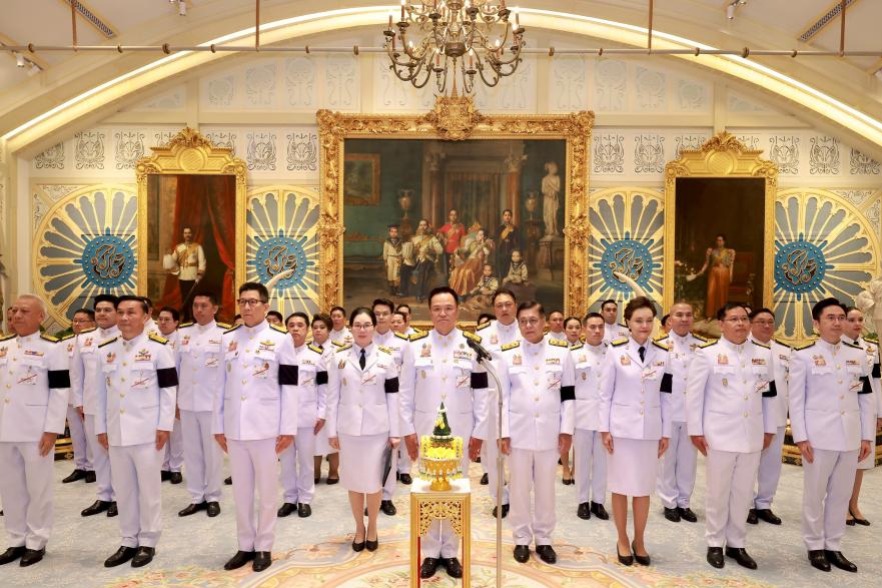
Thailand’s new coalition govt sworn in
BANGKOK – A new chapter in Thailand’s national governance officially began this week, as the country’s freshly formed coalition government, headed by Prime Minister Anutin Charnvirakul, completed its formal swearing-in ceremony on Monday evening. The inauguration followed a royal endorsement granted to the new administration one week prior, clearing the final ceremonial hurdle for the incoming leadership.
The 35-member cabinet took part in time-honored constitutional traditions, gathering at Bangkok’s Dusit Palace to recite the official oath of allegiance during an audience with King Maha Vajiralongkorn. In addition to Prime Minister Anutin, all seven deputy prime ministers, alongside full cabinet ministers and their respective deputies, were in attendance for the historic ceremony.
Shortly after the formal inauguration concluded at the royal palace, Anutin traveled to Thailand’s government house to lead the first extraordinary cabinet meeting of the new administration. In the coming days, the prime minister is scheduled to deliver his administration’s official policy statement to the national parliament. This address marks the last procedural requirement before the new government can fully take up its governing duties and begin implementing its policy agenda.
Anutin, the 59-year-old leader of the Bhumjaithai Party, secured a second term as prime minister of the Southeast Asian nation after winning a parliamentary confidence vote held in March. His victory cleared the way for negotiations to form the ruling coalition that has now officially taken office.
-

Tragedy revisited
One year after a catastrophic 7.7-magnitude earthquake tore through central Myanmar, leaving thousands dead and billions of dollars in destruction, the nation has gathered to honor the lives lost and reflect on ongoing recovery work. The official commemoration ceremony was hosted in Nay Pyi Taw, Myanmar’s national capital, and broadcast by state-owned Myanmar Radio and Television on Sunday.
Addressing attendees, Acting President Senior General Min Aung Hlaing opened the event by extending heartfelt condolences to the families of those killed and affected by the disaster. He spoke of the widespread grief over the thousands of lives cut short and the irreversible loss of personal and public property across the impacted regions.
Min Aung Hlaing went on to detail the full scale of the destruction the earthquake left in its wake. The tremor, which struck on March 28, 2025, rippled across 10 of Myanmar’s administrative regions and states, including the capital Nay Pyi Taw. Official casualty counts confirm 3,818 people lost their lives in the disaster, while an additional 5,104 people suffered injuries ranging from minor to life-altering. In total, more than 160,000 households saw their homes damaged or destroyed, leaving over 420,000 people displaced or otherwise impacted by the event. Preliminary economic assessments put total infrastructure, property and cultural damage at more than 7,979 billion kyats, equivalent to roughly $3.79 billion. One of the most visible symbols of the destruction, captured in international press imagery, was a centuries-old Buddha statue reduced to rubble in Mandalay, the earthquake’s hardest-hit urban center.
Beyond commemorating the lives lost, the acting president emphasized that national rehabilitation and reconstruction efforts remain ongoing, with the government prioritizing the safe return of displaced residents and the rebuilding of critical public infrastructure damaged in the tremor.
-

Iranians threaten to close another strait over Trump war
Escalating geopolitical tensions between the United States and Iran have reached a new critical juncture, as top Iranian officials have issued a stark warning that they could disrupt global energy supplies by closing a second key international oil chokepoint if the Trump administration follows through on threats to target Iranian civilian infrastructure. The warning comes after former U.S. President Donald Trump openly threatened to bomb Iranian power plants, a move that international legal experts widely characterize as a violation of the laws of war and a potential war crime.
Ali Akbar Velayati, a former Iranian foreign minister and currently a senior advisor to Iran’s Supreme Leader Ayatollah Ali Khamenei, announced the potential retaliatory measure in a social media post published over the weekend. Velayati threatened that Iran could move to close the Strait of Bab al-Mandeb, a strategically critical waterway located off the coast of Yemen, where the Iran-aligned Houthi movement holds effective control over the adjacent coastline. “If the White House dares to repeat its foolish mistakes,” Velayati cautioned, “it will soon realize that the flow of global energy and trade can be disrupted with a single move.”
As Al Jazeera highlighted in an analysis published on Monday, the Houthi movement already closed the Bab al-Mandeb Strait for a period during Israel’s ongoing military campaign in Gaza, demonstrating the feasibility of such a disruption. If Iran moves to close the Strait of Hormuz — the world’s most important oil chokepoint through which roughly a fifth of global oil supplies pass — at the same time that the Bab al-Mandeb is shut down, the combined disruption could send global energy prices soaring to uncharted highs, the outlet reported.
“The strait is a vital route through which Saudi Arabia sends its oil to Asia,” Al Jazeera explained. “If Bab al-Mandeb and the Strait of Hormuz were both shut, that would block 25% … of the world’s oil and gas supply.”
Energy markets have already seen steep price increases following the launch of new U.S. military hostilities against Iran more than a month ago, a conflict that critics have repeatedly deemed illegal under international law. As of Monday’s trading session, Brent crude oil futures were holding at $110 per barrel, while average U.S. retail gasoline prices climbed to $4.12 per gallon, according to data from motoring group AAA.
Last week, Democratic members of the U.S. Congress’ Joint Economic Committee (JEC) released a formal analysis estimating that American consumers are now paying 35% more to refuel their vehicles than they did just one month prior, with the entire increase directly tied to the escalation of conflict with Iran.
Rep. Don Beyer, a Virginia Democrat and member of the JEC, highlighted the committee’s findings in a Monday social media post, blaming the Trump administration’s unplanned, unauthorized military escalation for the financial strain hitting American households. “Americans are getting hit with major price shocks because President Trump decided to wage an illegal war against Iran with no plan or strategy,” Beyer said.
Sen. Maggie Hassan, a New Hampshire Democrat and the ranking member of the JEC, told local outlet WMUR that the conflict has exacerbated pre-existing financial pressures that were already pushing working- and middle-class American families to the breaking point. “Families are already being pushed to the brink,” Hassan said. “That was true before the war started, by the cost of everything from groceries to rent to healthcare insurance premiums and prescriptions and even more. But now they’re being forced to pay more at the pump.”
-
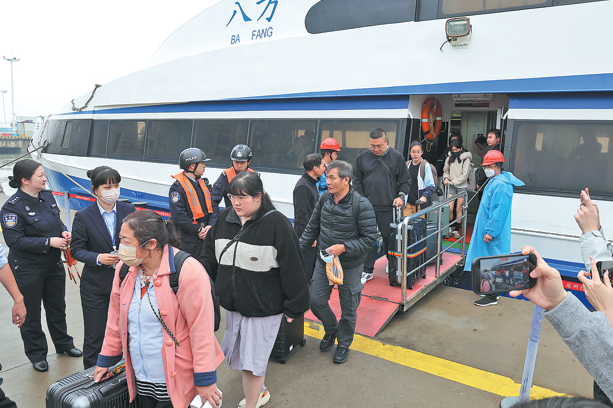
Cross-Strait ferry trips surge for Qingming holiday
As the annual Qingming Festival, a traditional Chinese occasion for honoring ancestors and reconnecting with family roots, unfolded in 2026, cross-Strait maritime passenger routes witnessed a sharp uptick in travel volumes, driven by thousands of Taiwan compatriots returning to the Chinese mainland to pay respects at ancestral graves and reunite with relatives.
Data released by the Fujian Maritime Safety Administration shows that the four core “Mini Three Links” routes — which operate direct ferry services connecting Fujian’s coastal mainland with Taiwan’s Jinmen and Matsu islands — handled 6,655 passenger trips on the Saturday of the holiday weekend alone, marking a 22.5 percent increase compared to the same period last year.
Among these routes, the Jinmen-Xiamen ferry crossing, which completes the journey in roughly 20 minutes, welcomed nearly 6,000 cross-Strait travelers that Saturday, with Taiwan residents making up more than 70 percent of total arrivals. Border inspection authorities project that total passenger volume on this route across the three-day holiday will reach 20,000, underscoring the sustained demand for cross-Strait family connection during the ancestral commemoration period.
For many Taiwan travelers, the trip back to ancestral homes on the mainland takes top priority, even over personal plans. Li Yung-hung, a Taiwan compatriot who arrived in Xiamen via ferry, shared that she postponed a scheduled leg surgery to make the journey for this year’s Qingming Festival. “It is an unbroken Chinese tradition to return home for tomb-sweeping, and I want the next generation to understand that our roots are here on the mainland,” Li explained. “When the Jinmen-Xiamen Bridge opens in the future, I hope to drive myself straight back to my ancestral hometown.”
To accommodate the wave of travelers and create a smooth, comfortable journey, local authorities have rolled out targeted support measures. At Xiamen’s Gaoqi border inspection station, for example, officers fluent in Hokkien — the shared dialect of most Fujian and Taiwan residents — were deployed to assist travelers, a move informed by the fact that 80 percent of Taiwan residents trace their ancestral roots to Fujian, according to Chen Jinlai, deputy chief of the station.
“Qingming Festival offers the most vivid, tangible proof that people on both sides of the Strait are one family,” Chen noted. “Every trip back is a reaffirmation of our shared ancestral roots and a continuation of collective family memory.”
Beyond efficient border services, specialized support for root-tracing efforts is also widely available. On Friday, ahead of the holiday peak, the China Museum for Fujian-Taiwan Kinship launched on-site genealogy-matching services at a port in Nan’an, Quanzhou. Since 2006, the museum has helped more than 300 Taiwan compatriots locate their ancestral families and confirm their lineages.
These root-seeking journeys often lead travelers to iconic ancestral landmarks across the mainland. One notable site is the Jiangxia Ancestral Hall in Xiamen, built in 1910. The hall once served as a departure point for members of the Huang clan who migrated to Taiwan and Southeast Asia, and today it remains a key gathering place for Huang descendants from both sides of the Strait, who gathered there on March 29 to honor their shared ancestors.
For some younger Taiwan compatriots, the search for origins extends beyond Fujian to deeper ancestral homelands further inland. Huang Chao-jung, a young Taiwan resident, traveled to Jiangxia district in Wuhan, Hubei province — widely recognized as the earliest historical origin of the Huang surname — last month to trace her family’s roots.
“Growing up in Taiwan, we were often told all Huangs originated from Jiangxia, but most of us only knew our immediate ancestral roots were in Fujian,” Huang explained. “Making this trip all the way to Wuhan gave me an incredible sense of connection, like I’ve finally followed my family’s line all the way back to its source. Setting foot on this land feels so moving and meaningful.”