标签: Asia

亚洲

  • Strait of Hormuz ‘open to commercial vessels’

    Strait of Hormuz ‘open to commercial vessels’

    A 10-day ceasefire between Israel and Hezbollah entered into force on Friday, April 17, 2026, spurring tentative de-escalation efforts across the Middle East that have already cleared the way for the full reopening of the strategically critical Strait of Hormuz to global commercial shipping. The breakthrough, brokered through behind-the-scenes diplomacy between the United States and Iran with Pakistan serving as a neutral mediator, has offered a glimmer of hope to thousands of displaced Lebanese residents, though deep divisions and unresolved core issues leave the truce highly vulnerable to collapse.

    Within hours of the ceasefire taking hold, both Washington and Tehran confirmed that the Strait of Hormuz — a chokepoint through which roughly 20% of the world’s global oil supplies transit daily — is now fully accessible for commercial vessel passage. In a post on Truth Social, U.S. President Donald Trump confirmed the reopening, emphasizing that the American military’s unilateral naval blockade on Iranian cargo will remain in place until a final bilateral agreement between the two nations is fully finalized. “The Strait of Hormuz is completely open and ready for business and full passage, but the naval blockade will remain in full force and effect as it pertains to Iran, only, until such time as our transaction with Iran is 100 percent complete,” Trump wrote in all caps.

    Iranian Foreign Minister Abbas Araghchi mirrored the announcement just minutes before Trump’s post, sharing on X that the waterway’s opening aligned with the new Lebanon ceasefire and would remain in effect for the full duration of the truce. Hezbollah lawmaker Ibrahim al-Moussawi later reinforced the link between the two developments, noting that the ceasefire would not have been possible without Iranian diplomatic pressure on Lebanon’s behalf, and that Tehran views the truce as equivalent to the decision to reopen the strait.

    On the ground in Lebanon, celebratory gunfire rang out across Beirut’s southern suburbs, Hezbollah’s traditional stronghold, as displaced families packed their belongings and began the journey back to their war-ravaged homes in southern Lebanon. For many returnees, the joy of the ceasefire was tempered by the scale of destruction left by weeks of fighting. “There’s destruction and it’s unlivable. We’re taking our things and leaving again,” Fadel Badreddine, who returned to survey his home with his wife and young son, told Reuters. “May God grant us relief and end this whole thing permanently.”

    Despite the initial calm, the ceasefire remains extraordinarily fragile. The Israeli military confirmed it had struck more than 380 Hezbollah targets across southern Lebanon in the lead-up to the truce, and remains on high alert to resume offensive operations at a moment’s notice. Israeli Prime Minister Benjamin Netanyahu has ruled out any withdrawal of Israeli troops from southern Lebanon, stating that the full disarmament of Hezbollah is a non-negotiable precondition for any long-term “historic peace agreement” between Israel and the Lebanese state. Al-Moussawi responded that Hezbollah will uphold its end of the truce so long as Israel halts all offensive attacks.

    Multiple regional and global stakeholders have welcomed the ceasefire, including Saudi Arabia and Oman, two key Gulf states with deep interests in regional stability. Riyadh has reaffirmed its unwavering support for Lebanese territorial integrity and national sovereignty, while Muscat has called on all parties to exercise restraint and avoid any actions that would violate the truce terms. Iran’s foreign ministry framed the ceasefire as a first step toward a broader regional de-escalation pact reached with the U.S. via Pakistani mediation.

    The conflict between Israel and Hezbollah, which erupted on March 2, has already claimed more than 2,000 lives to date, displacing hundreds of thousands of people on both sides of the border. Political analysts warn that a path to lasting peace remains elusive. Abed Abou Shhadeh, a Jaffa-based Israeli political commentator, noted that Israel has failed to achieve its core goal of disarming Hezbollah, and lacks a clear political roadmap for a lasting settlement with Lebanon. “History over the past 40 years has proven this is not something Israel can achieve,” Abou Shhadeh said. “The military recently acknowledged that fully disarming Hezbollah would require occupying all of Lebanon — a mission it lacks the troop strength to carry out.”

    For his part, Trump has announced that he held “excellent conversations” with both Netanyahu and Lebanese President Joseph Aoun, and has extended an invitation to both leaders to travel to the White House for high-stakes talks aimed at cementing a long-term deal. The U.S. president also added that if a final U.S.-Iran agreement is finalized in the Pakistani capital of Islamabad, he would be willing to travel there to attend the signing ceremony.

    Regional policy experts say Trump’s push for a rapid deal stems from a desire to avoid deeper U.S. entanglement in the Middle East ahead of potential broader fallout for global energy markets. “Trump is seeking an exit ramp from the Iran war before it brings greater repercussions for the US and the global energy market,” said Abas Aslani, a senior fellow at the Center for Middle East Strategic Studies in Tehran, speaking to Al Jazeera. “But it wouldn’t secure any strategic outcome for the US. There are some gaps that need to be bridged, but those differences remain.”

    In recent weeks, Trump has repeatedly stated that the conflict with Iran will end soon, but independent analysts say there is little concrete evidence to support that claim. U.S. Defense Secretary Pete Hegseth issued a sharp warning on Thursday, threatening that if Iran rejects a final deal, the U.S. military will launch targeted strikes against Iran’s critical infrastructure, including its national power grid and energy sector. Clay Ramsay, a researcher at the Center for International and Security Studies at Maryland, argued that the current U.S. administration is not positioned to negotiate a comprehensive, lasting settlement. “Trump has a political incentive to claim peace on his terms is imminent. That does not make it a reality,” Ramsay told Xinhua.


  • CSSC’s rotor sail aims to drive global green ship tech

    CSSC’s rotor sail aims to drive global green ship tech

    As the global push for decarbonization reaches every corner of industrial activity, the international shipping sector — a long-contributing source of global carbon emissions — is facing mounting pressure to green its operations. Now, China State Shipbuilding Corp (CSSC), the world’s largest shipbuilding group, has delivered a major breakthrough in wind-assisted propulsion technology with the development of one of the world’s largest commercially viable rotor sail systems, built to capture growing global demand for sustainable shipping solutions.

    Designed and developed by CSSC’s Luoyang Ship Material Research Institute, an R&D center specializing in advanced shipbuilding materials and engineering techniques, the unnamed new rotor sail has already completed a full suite of ground-based system tests, clearing a key milestone ahead of commercial deployment. Engineers leveraged the institute’s deep existing expertise in green composite materials and wind turbine blade design to refine the system’s performance and durability, resulting in a cutting-edge product that outperforms many smaller existing rotor sail models on the market.

    Standing 35 meters tall with a diameter of 5 meters, the new system ranks among the largest rotor sail designs ever brought to testing phase. Each unit can reach a maximum rotational speed of 180 revolutions per minute, generating over 355 kilonewtons of thrust to help propel fitted vessels. For context, rotor sails — also known as Flettner rotors — operate on a simple but effective physical principle: upright spinning cylinders mounted on a ship’s deck interact with surrounding wind flow to create usable thrust, reducing the need for fossil fuel-powered propulsion.

    First invented in the 1920s, rotor sail technology saw extremely limited adoption for nearly a century, deployed only on a small handful of cargo ships and experimental test vessels before the 2010s. But as the global shipping industry, which moves more than 80% of world trade volume by volume and accounts for roughly 3% of global carbon emissions, has faced growing mandatory decarbonization requirements, the technology has experienced a rapid renaissance. Today, rotor sails are increasingly being integrated into commercial vessels ranging from bulk carriers to roll-on/roll-off ships.

    Feng Wei, project manager for the new CSSC rotor sail, outlined the urgency of decarbonization in a press briefing Friday, noting that the green transition in shipping has evolved from an optional sustainability measure to a mandatory global requirement aligned with international climate goals. “Wind-assisted propulsion represents one of the most promising and practical pathways for the shipping industry to achieve immediate emission reductions,” Feng said.

    Unlike other wind-assisted propulsion technologies, Feng explained, rotor sails offer unique practical benefits that make them ideal for widespread commercial adoption. They take up minimal deck space, do not interfere with standard cargo loading and unloading operations, operate with a high degree of automation, and require almost no modifications to a vessel’s original structure or standard operating procedures. These characteristics make them suitable for installation across most major commercial vessel types, including bulk carriers and oil tankers, with average fuel savings ranging from 5% to 25% per voyage.

    Beyond emission reductions, the system delivers tangible economic benefits for shipowners: it helps buffer against volatile global oil prices and cuts down on future carbon tax expenses that will come into force as international decarbonization regulations tighten. The new design also incorporates a network of smart exterior sensors, boosting its automation capabilities and making it exceptionally easy to control and maintain.

    Industry projections from leading global research organizations cited by Feng forecast that around 7,000 ships worldwide will be fitted with wind-assisted propulsion systems by 2030, with that number jumping to roughly 21,000 by 2050. CSSC’s new large-format rotor sail positions the Chinese shipbuilding giant to capture a substantial share of this fast-growing global green shipping technology market, while supporting the global shipping industry’s collective push to cut carbon emissions and meet international climate targets.

  • Shenzhou XXI crew complete third spacewalk

    Shenzhou XXI crew complete third spacewalk

    China’s ongoing human space exploration program reached a new milestone earlier this week, when the three-person Shenzhou XXI crew stationed at the nation’s Tiangong space station successfully wrapped up their third extravehicular activity, according to official announcements from the China Manned Space Agency.

    The excursion, which concluded at 1:36 a.m. Beijing Time on Friday, saw mission commander Senior Colonel Zhang Lu and spaceflight engineer Major Wu Wu spend roughly five and a half hours operating outside the massive orbiting outpost before returning safely to the Wentian experimental module. The third member of the crew, payload specialist Zhang Hongzhang — a researcher from the Chinese Academy of Sciences — remained inside the space station throughout the spacewalk to coordinate operations and provide critical in-orbit support.

    Working in tandem with ground control teams and leveraging the station’s robotic arm for assistance, the astronauts checked off every scheduled task on their itinerary, including the installation of protective shields designed to mitigate damage from orbital space debris and comprehensive inspections of extravehicular hardware.

    This spacewalk carries special historical significance for China’s human space program: it marks the 27th extravehicular activity conducted by Chinese taikonauts overall, and it is the seventh spacewalk for commander Zhang Lu. With this milestone, the 49-year-old Hunan-born astronaut has become the new record holder for the most spacewalks completed by any Chinese astronaut. Zhang previously completed four spacewalks during his first mission, the six-month Shenzhou XV expedition that launched in November 2022.

    The Shenzhou XXI mission is China’s 16th crewed spaceflight, and the trio has served as the 10th long-term resident crew aboard Tiangong, currently the only operational space station fully developed and operated independently by a single nation. The crew has now lived and worked in low-Earth orbit for more than five months, having arrived at the station on November 1, 2025.

    Over the course of their stay, Zhang Lu and his crewmates have carried out a wide range of work, from cutting-edge scientific experiments in space life science, human physiology and microgravity physics to routine maintenance and operations. These routine tasks include in-orbit environmental monitoring, regular equipment checks and upkeep, and organization of cargo delivered to the station. The team has also completed required emergency preparedness training, including a full-system pressure emergency response drill and on-orbit emergency survival training, alongside all pre-deployment preparations for extravehicular activities.

    In a surprise announcement included in the agency’s news release, officials confirmed that after comprehensive technical analysis and risk assessment, the Shenzhou XXI mission will be extended by approximately one additional month. The adjustment is designed to further test and validate key technologies required for long-duration human spaceflight, and to allow the crew to make full use of additional mission supplies and materials transported to the station by the uncrewed Shenzhou XXII spacecraft.

    Shenzhou XXII launched in late November 2025 on an uncrewed resupply mission to Tiangong, dispatched after a window damage incident affected the return capsule of the earlier Shenzhou XX mission during its reentry. In addition to delivering critical replacement hardware, the spacecraft carried a large volume of additional mission supplies to support extended operations aboard the station.

    Looking ahead, the CMSA confirmed that the Shenzhou XXI crew will continue carrying out their ongoing scientific research and technical tasks for the duration of their extended stay, advancing China’s growing body of knowledge about long-duration human spaceflight and orbital operations.

  • Ningxia eyes big push for intl tourism

    Ningxia eyes big push for intl tourism

    Against the backdrop of a post-pandemic global travel recovery and growing demand for unique, experience-focused cultural getaways, Northwest China’s Ningxia Hui Autonomous Region is launching an ambitious push to position its one-of-a-kind combination of ancient heritage, world-class wine production, and dramatic natural landscapes as a must-visit destination for international travelers. The strategic initiative comes on the heels of a major milestone for the region: the 2025 inscription of the Xixia Imperial Tombs on the UNESCO World Heritage List, a recognition that has significantly boosted Ningxia’s profile on the global tourism map.

  • Even the dead must make way as construction transforms Afghanistan’s capital

    Even the dead must make way as construction transforms Afghanistan’s capital

    In a dusty residential and commercial neighborhood of central Kabul, what remains of Syed Murtaza Sadar’s life and livelihood stands as a stark testament to the human cost of Afghanistan’s push for infrastructure renewal. Where a two-story building once housed his family’s barbershop and public bath on the ground floor, and their home above, only scattered piles of broken brick and crumbled mortar remain. Sadar, a 25-year-old head of an extended family, says he was forced to tear down most of the structure with his own hands after municipal authorities ordered the property seized for road widening.

    “This was our house, and now I am destroying it with my own hands,” Sadar explained pausing mid-work, his hands dusted with mortar. “It will be very difficult for us.”

    The land expropriation that displaced Sadar’s family is part of a broad infrastructure initiative that the ruling Taliban administration has revived, originally drafted decades ago under the former U.S.-backed Afghan government. The plan aims to untangle Kabul’s crippling traffic congestion by expanding narrow, pothole-riddled streets, adding new flyovers, and constructing modern underpasses across the capital. When the plan was first proposed, it never moved past the drafting stage: bureaucratic gridlock, systemic corruption, and widespread violence during the Taliban insurgency derailed all construction work. Within months of the Taliban seizing control of Kabul in August 2021, following the chaotic withdrawal of U.S.-led coalition troops, the new municipal government prioritized reviving the stalled projects.

    According to city officials, the progress has been substantial over the past four and a half years. Naimatullah Barakzai, Kabul municipality’s cultural affairs representative, announced at a recent press briefing that construction crews have completed roughly 280 miles of new roads across the capital, while expropriating more than 11,000 private properties to make way for the expanded network. For 2025 alone, the city has greenlit 233 new projects, with an allocation of more than 1.9 billion afghanis, equal to roughly $29 million in funding. Mohammad Qasim Afghan, the municipality’s head of planning, confirmed the budget allocation, noting that all road construction costs are covered entirely by local municipal funds. Barakzai added that Kabul’s municipal government has raised more than 28 billion afghanis (approximately $434 million) over the past four and a half years to fund the initiative, and property owners receive three months’ advance notice plus compensation at rates set by the city. More than 1.2 billion afghanis ($18.6 million) has been paid out to displaced property owners over the past year alone, per city data.

    For affected residents, however, the compensation and long-term infrastructure benefits often do little to ease immediate hardship. After the initial round of demolition cleared the front of his street, Sadar says authorities ordered remaining property owners to tear down the rest of their structures themselves, leaving residents with little room to push back against the orders. His former business employed 25 local workers and supported five extended families, each with three to four children. Today, Sadar and his family live in rented accommodation, drawing down their limited savings while waiting for compensation to be fully processed. “If the government gives us money, God willing, I will be able to go back to work and buy or build a new house for myself,” he said. Even amid his displacement, Sadar acknowledges the urgent need for the project: the existing single-lane road running past his former neighborhood is so chronically congested that any trip across the city requires more than an hour of sitting in gridlock.

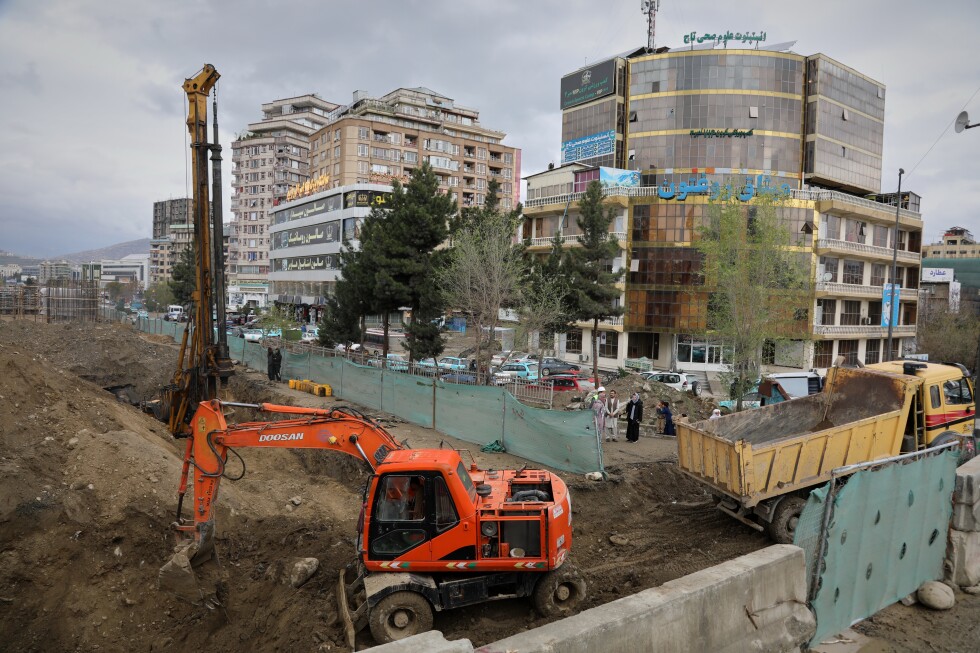
    For a country grappling with widespread poverty and mass unemployment, the construction push has delivered one clear benefit: thousands of much-needed jobs for local workers. At the massive Baraki intersection construction site, project manager and civil engineer Obaidullah Elham says crews work around the clock, seven days a week, to complete a Turkish-designed $23 million flyover and underpass complex that will replace one of Kabul’s most congested junctions. The project employs 500 skilled and unskilled local workers, injecting much-needed income into a local economy reeling from international aid cuts and systemic economic collapse. Work on the 1,540-foot underpass began in July of last year and is already 80% complete, Elham said, standing beside a working excavator moving earth at the site. Construction on the flyover, only the second to be built in Kabul, started earlier this year.

    The scope of the project has required clearing space even for longstanding community landmarks, including a 200-year-old graveyard in Kabul’s Qala-e-Khater neighborhood. The new planned road will cut directly through the historic burial ground, requiring the exhumation and relocation of hundreds of graves to a new section of the cemetery. Today, large rectangular empty holes mark where remains once rested, a quiet reminder of the project’s far-reaching impact.

    Abdul Wadood Alokozay, a 21-year-old resident of the neighborhood, says his grandfather’s remains were among those moved. Alokozay’s extended family lost three properties in the area: a girls’ religious madrassa, and two multi-generational family homes, all of which were expropriated and leveled. “At first our family all were sad for this, that we lost our house,” Alokozay said. “It was even harder to tear it down ourselves, after we lived there for more than 20 years.” The family received roughly $13,000 in compensation for the three structures, with additional compensation promised for the land, and has since built a new three-story home on other family land overlooking the former property.

    Shah Faisal Alokozay, a 30-year-old community representative and Abdul Wadood’s cousin, says plans for the connecting road have sat on city drawing boards for decades. “It’s a very important road, connecting east and north Kabul,” he explained. “So it is very important for the community.”

    For Kabul’s new leadership, the infrastructure push represents both a practical solution to chronic urban congestion and a visible demonstration of the Taliban administration’s ability to deliver long-stalled public projects that the previous government could not complete. For displaced residents like Sadar, it is a complicated trade-off: short-term hardship and displacement in exchange for the promise of a more connected, less congested capital for future generations.

  • Weapons-grade chemical carfentanil surges as dangerous substitute for fentanyl

    Weapons-grade chemical carfentanil surges as dangerous substitute for fentanyl

    Thirty-six-year-old Michael Nalewaja had built a stable, quiet life as an electrician in Alaska, nearly 20 years removed from a teenage battle with drug addiction that led him to rehabilitation. That peaceful existence ended abruptly just days before Thanksgiving 2025, when Nalewaja and a mutual friend unknowingly consumed a deadly combination of fentanyl and carfentanil, which they had mistaken for cocaine.

    Kelley Nalewaja, Michael’s mother, recalled the devastating phone call she received from her son’s wife: “I heard the word ‘autopsy’ and I literally just collapsed to the floor. Even if somebody had been there prepared with Narcan — even if somebody had called 911 in time — he was not going to survive.”

    Michael’s death is far from an isolated tragedy. Authorities are now sounding the alarm over a dramatic resurgence of carfentanil, a weapons-grade synthetic opioid 10,000 times more potent than morphine and 100 times stronger than standard fentanyl, that has killed hundreds of unsuspecting drug users across the United States. This growing public health threat has emerged against a backdrop of an unprecedented multi-year decline in both overall drug overdose deaths and fentanyl seizures, a shift that experts and law enforcement trace to new regulatory controls.

    Following a recent Chinese government crackdown on the sale of chemical precursors used to manufacture illicit fentanyl, Mexican drug trafficking organizations have turned to carfentanil to boost the potency of diluted fentanyl supplies, according to Drug Enforcement Administration (DEA) intelligence bulletins reviewed by The Associated Press. This is not the first time carfentanil has penetrated the North American drug market: a decade ago, the substance caused a wave of mass overdoses before Chinese regulatory controls and U.S. enforcement cracked down on its supply, driving incident numbers sharply down.

    That trend has reversed dramatically in just a few short years. DEA laboratory data obtained by the AP shows that agents identified carfentanil in 1,400 separate drug seizures across the U.S. in 2025. That number marks a drastic jump from just 145 positive identifications in 2023 and only 54 in 2022. Law enforcement officials say Mexican cartels are now either experimenting with domestic carfentanil production or sourcing the substance from Chinese vendors who evade Beijing’s regulations by advertising on unregulated online forums hosted in third countries.

    Manufacturing carfentanil carries extreme risk even for experienced traffickers, notes Frank Tarentino, the DEA’s chief of operations for the Northeast region covering Maine to Virginia. “You can’t just dabble in this. This is not some mad scientist on Reddit you’re going to get to go out to a rudimentary laboratory in Mexico to make carfentanil,” he explained. For people struggling with opioid dependence who purchase unregulated drugs on the street, the risk is unparalleled: a dose smaller than a grain of salt is enough to cause lethal overdose, and even high multiple doses of naloxone — the life-saving overdose-reversing medication — are often ineffective against carfentanil exposure. “This presents an extremely frightening proposition for substance abuse dependent people who seek opioids on the street today,” Tarentino added.

    The resurgence of carfentanil comes at a moment of rare progress in the U.S. overdose crisis. Overall drug overdose deaths have fallen for more than two years, the longest sustained decline in decades. Experts attribute this drop to multiple factors, including wider distribution of naloxone, expanded access to evidence-based addiction treatment, and international regulatory changes targeting fentanyl precursor production. Fentanyl seizures at the U.S. border have also plummeted: U.S. Customs and Border Protection reports that seizures fell to roughly 12,000 pounds in 2025, less than half the total seized in 2023.

    Even with this progress, the DEA has maintained fentanyl and emerging synthetic opioids as its top enforcement priority, recently requesting a $362 million budget increase focused exclusively on combating cartel-driven trafficking. Sara Carter, the White House drug czar under the current administration, framed the crisis as an deliberate act of harm. “Anyone who takes a pill that is not prescribed to them by their doctor is playing a game of Russian roulette with their life,” Carter said. “But if those terrorists think they can continue this chemical warfare without consequences, they are wrong.”

    Public health experts and drug policy specialists warn that carfentanil’s unique deadliness makes its resurgence an especially alarming threat. Originally developed and researched for use as a chemical weapon, carfentanil was infamously deployed by Russian forces against Chechen separatists during a 2002 hostage crisis. Today, the only legal use for the substance in the U.S. is as a tranquilizer for large zoo animals such as elephants, with the DEA capping annual legal manufacturing at just 20 grams — an amount small enough to fit in the palm of a hand.

    “If the world thinks we had a problem with fentanyl, that’s minute compared to what we’re going to be dealing with with carfentanil,” said Michael King Jr., founder of the Opioid Awareness Foundation, comparing the substance to a biological weapon. The most recent Centers for Disease Control and Prevention data underscores this risk: in 2024, overdose deaths linked to carfentanil nearly tripled from the previous year, totaling 413 deaths across 42 states and Washington, D.C. While carfentanil’s overall prevalence still trails that of standard fentanyl, experts warn it could spread rapidly across the country without targeted law enforcement intervention to cut off supply chains.

    In recent months, the DEA has already intercepted large shipments of carfentanil-laced counterfeit pills. In October 2025, the agency’s Los Angeles field division seized 628,000 pills laced with carfentanil; just one month prior, officials in Washington state seized more than 50,000 counterfeit M30 opioid pills at a gas station, which tested positive for a lethal mixture of carfentanil and acetaminophen.

    Traffickers are drawn to carfentanil for the same economic reason that drove the rise of fentanyl years ago: extremely small amounts can produce a massive supply of cut street drugs, generating enormous profits. Rob Tanguay, senior medical lead for addiction services at Canadian health agency Recovery Alberta, added that some frequent opioid users who have developed tolerance to standard fentanyl actively seek out carfentanil for its more intense high, despite the well-documented lethality. “The toughest part about all of this is that this is all about money,” Tanguay said.

    For Kelley Nalewaja, the loss of her son — a charismatic electrician who recently earned a national award from his industry union — has turned private grief into public advocacy. Instead of holding a large funeral, she organized a community town hall in her hometown of El Dorado Hills, California, bringing together local leaders and other bereaved families who have lost loved ones to illicit synthetic opioids. She is now pushing for sweeping legislative and policy changes to curb carfentanil trafficking, arguing the substance was never intended for human consumption. “It’s not an OD; it’s not an overdose,” she said. “It’s a murder weapon.”

  • Strait of Hormuz ‘completely open’ and Iran will ‘never close’ it again, Trump announces

    Strait of Hormuz ‘completely open’ and Iran will ‘never close’ it again, Trump announces

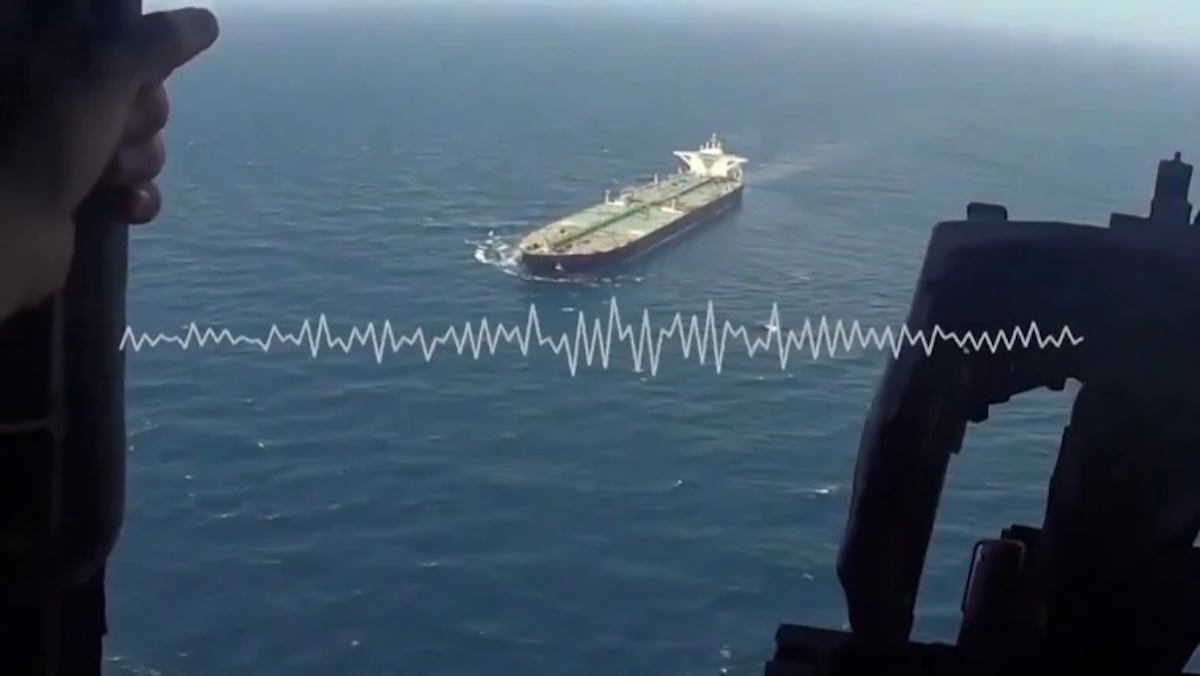
    In a major development that calms one of the world’s most critical energy chokepoints, Iran and the United States announced Friday that the Strait of Hormuz — the waterway through which roughly one-quarter of all global oil shipments pass — will resume full commercial passage for all vessels during an ongoing ceasefire period, just days after heightened military tensions between the two nations and an Israel-US strike on Iranian targets.

    Iranian Foreign Minister Abbas Araghchi confirmed the move in a post on X, noting that the decision aligns with the broader ceasefire agreement reached for neighboring Lebanon. “The passage for all commercial vessels through Strait of Hormuz is declared completely open for the remaining period of ceasefire, on the coordinated route as already announced by Ports and Maritime Organisation of the Islamic Rep. of Iran,” Araghchi wrote.

    US President Donald Trump hailed the announcement as a landmark win for the global community in a series of posts on his Truth Social platform, calling it “A GREAT AND BRILLIANT DAY FOR THE WORLD!”

    Trump clarified that while all commercial traffic is permitted to transit the strait, the unilateral US naval blockade targeting Iranian oil exports, implemented earlier this week, will remain in effect until all terms of the bilateral agreement between Washington and Tehran are fully finalized. “THE STRAIT OF HORMUZ IS COMPLETELY OPEN AND READY FOR BUSINESS AND FULL PASSAGE, BUT THE NAVAL BLOCKADE WILL REMAIN IN FULL FORCE AND EFFECT AS IT PERTAINS TO IRAN, ONLY, UNTIL SUCH TIME AS OUR TRANSACTION WITH IRAN IS 100% COMPLETE,” he wrote, adding that most core terms have already been negotiated and the finalization process is expected to move rapidly.

    The US president also claimed Iran had committed to a permanent, future commitment that the strait will never be closed to international shipping, and that Iran has cleared or is in the process of removing all naval mines from the waterway with US support.

    United Nations Secretary-General António Guterres joined in welcoming the reopening, framing the decision as “a step in the right direction” for de-escalating broader regional tensions.

    However, a key caveat has emerged from the Iranian side, an anonymous Iranian official told Reuters: the reopening of the strait remains conditional on the United States upholding all existing ceasefire commitments. This stands in direct tension with Trump’s repeated public insistence that the Hormuz agreement is completely disconnected from the Israel-Lebanon ceasefire he brokered just one day prior.

    Iran had previously demanded that any regional ceasefire deal must include protections for its allied militant group Hezbollah, which has been engaged in cross-border hostilities with Israel for months. Rejecting any linkage between the two deals in his Truth Social posts, Trump wrote, “This deal is not tied, in any way, to Lebanon, but we will, MAKE LEBANON GREAT AGAIN!”

    The US leader also outlined terms of the nuclear component of the agreement, stating that the US will take possession of all enriched uranium dust created by recent US B-2 Bomber strikes on Iranian nuclear sites, adding that “No money will exchange hands in any way, shape, or form.” He further confirmed that the US will address the Hezbollah situation separately, and that Israel has been prohibited by Washington from conducting further bombing operations in Lebanon, saying “Israel will not be bombing Lebanon any longer. They are PROHIBITED from doing so by the USA Enough is enough!!!”

    The Iranian official pushed back on Trump’s characterization of nuclear progress, telling Reuters that no final agreement has been reached on the details of outstanding nuclear issues, and that substantive negotiations are still required to lock in any agreements on that front.

    In his series of Friday social media posts, Trump also thanked several regional and neighboring powers for their mediation and support: he singled out Pakistan for leading mediation efforts between Washington and Tehran, and expressed gratitude to Saudi Arabia, the United Arab Emirates and Qatar for their assistance throughout the negotiations. Notably absent from his list of thanks were Washington’s traditional European allies, whom Trump publicly criticized as unhelpful.

    “Now that the Hormuz Strait situation is over, I received a call from NATO asking if we would need some help. I TOLD THEM TO STAY AWAY, UNLESS THEY JUST WANT TO LOAD UP THEIR SHIPS WITH OIL. They were useless when needed, a Paper Tiger! President DJT,” he wrote.

    Trump’s rebuke came as an international summit focused on Strait of Hormuz maritime security was already underway in Paris, France. Speaking at the summit, British Prime Minister Keir Starmer announced that roughly 40 countries have agreed to speed up military planning operations to secure permanent freedom of navigation through the strait once a full, permanent end to hostilities is reached.

    The current two-week ceasefire is scheduled to expire next week, though Trump has indicated he is open to extending the truce to allow for further negotiations. Starmer added that full details of the proposed international military security mission will be released publicly next week.

  • Kennedy Wesley scores 1st international goal and adds assist as USWNT beats Japan 3-0

    Kennedy Wesley scores 1st international goal and adds assist as USWNT beats Japan 3-0

    COMMERCE CITY, Colo. – In a frigid, snow-dusted friendly match at Dick’s Sporting Goods Park on Friday night, the U.S. Women’s National Team delivered a dominant second-half performance to secure a resounding 3-0 win over Japan, wrapping up their three-game international series with two victories to Japan’s one.

    The game kicked off in nearly freezing temperatures, just hours after overnight snowfall left a white dusting across the Major League Soccer pitch that hosts the Colorado Rapids. Japan faced an early setback when defender Hikaru Kitagawa suffered an injury in the 25th minute and had to stretchered off the pitch, replaced by Miyabi Moriya. For the U.S., starting defender Tierna Davidson took a hard fall in the 30th minute, received on-field medical evaluation, and managed to play through the end of the first half.

    Despite the U.S. holding a commanding 9-1 shot advantage in the opening 45 minutes, neither side could find the back of the net, and the two teams went into halftime locked in a 0-0 draw. The game’s momentum shifted dramatically immediately after the break, when substitute Kennedy Wesley – who entered the match to replace the injured Davidson – sparked the U.S. scoring surge. In the 47th minute, Wesley redirected a header off a cross toward the near left post to set up Naomi Girma, who buried a point-blank header to put the U.S. ahead 1-0.

    The Americans doubled their lead nine minutes later, in the 56th minute, after winning possession near the midfield. Trinity Rodman played a precise through ball to Rose Lavelle, who outpaced Japan’s backline down the center of the pitch and slotted a clinical shot from the edge of the 18-yard box inside the left post. The goal extended Lavelle’s impressive recent scoring run; the veteran playmaker has now contributed to 10 goals – five scored and five assisted – across her last 10 matches.

    Wesley, a young rising prospect, capped off the rout with her first career international goal in the 64th minute. Off a corner kick delivered perfectly by Jaedyn Shaw, Wesley connected on a clean volley to push the U.S. lead to 3-0, a score that would hold through the final whistle. Goalkeeper Claudia Dickey earned a clean sheet for the U.S. with three key saves.

    A post-match interview, a clearly elated Wesley spoke about her milestone goal. “I really don’t have any words,” she said. “I mean, it was the perfect ball from Jaedyn and I was just in the right place at the right time. I’m just over the moon.”
    U.S. head coach Emma Hayes praised her side’s sharp finishing after the break, noting, “I felt we came out in the second half and there was no coming back, to be honest. I felt tonight we were just clinical in the final third.”

    Friday’s match closed out a tightly contested three-game series between two of the world’s top-ranked women’s teams. The U.S. took the first matchup 2-1 last week in San Jose, California, before Japan pulled off a 1-0 upset win in Seattle on Tuesday. That victory snapped the U.S.’s 10-game winning streak, ended a 42-game scoring stretch for the Americans, and marked the U.S.’s first loss since a 2-1 defeat to Portugal last October. Hayes had rotated her entire starting lineup for the second Seattle game as part of her ongoing work to expand the team’s player pool ahead of 2024 World Cup qualifying, marking the fourth time during her tenure she has fielded a completely new starting 11 in consecutive matches.

    Japan entered the series riding high after a dominant championship run at the 2025 Women’s Asian Cup, where the side outscored all its opponents 29-1 and beat host Australia 1-0 in the final. The technically skilled Japanese side had also beaten the U.S. at the 2024 SheBelieves Cup, giving them momentum heading into the three-game series. Ahead of Friday’s decider, Hayes acknowledged Japan’s elite standing in international women’s soccer. “They’re a world-class team,” she said. “I think when you win the first one, inevitably, the second one becomes that challenge. They are a top side, so we have to give them a lot of credit. So, game on for the third game.”

  • Iran, not US, cancels Hormuz blockade after Israel-Lebanon truce

    Iran, not US, cancels Hormuz blockade after Israel-Lebanon truce

    On Friday, Iran formally announced the full reopening of the Strait of Hormuz, one of the world’s most critical strategic shipping chokepoints, to all international commercial vessels, a move tied to the newly implemented ceasefire agreement between Israel and Lebanon. The announcement came directly from Iranian Foreign Minister Abbas Araghchi, who clarified that open passage would be maintained for the duration of the ceasefire along the pre-coordinated shipping route already made public by Iranian authorities.

    The development drew an initial response from former U.S. President Donald Trump, who first extended gratitude to Iran via a post on his Truth Social platform. Just 20 minutes after his first message, however, Trump issued a follow-up post that clarified U.S. policy would remain unchanged on one key front: “THE STRAIT OF HORMUZ IS COMPLETELY OPEN AND READY FOR BUSINESS AND FULL PASSAGE, BUT THE NAVAL BLOCKADE WILL REMAIN IN FULL FORCE AND EFFECT AS IT PERTAINS TO IRAN, ONLY, UNTIL SUCH TIME AS OUR TRANSACTION WITH IRAN IS 100% COMPLETE. THIS PROCESS SHOULD GO VERY QUICKLY IN THAT MOST OF THE POINTS ARE ALREADY NEGOTIATED.”

    This multi-front ceasefire framework traces back to an agreement reached on April 7 between the U.S., Iran, and Israel, which established a two-week truce. The deal came together after Trump threatened a catastrophic full-scale attack on Iran, warning that “a whole civilization will die tonight” if an agreement was not reached that same day. All parties have explicitly stressed that the current truce does not mark a permanent end to the broader ongoing conflict across the Middle East.

    Friday’s announcement follows the rollout of a tentative 10-day ceasefire between Israeli and Lebanese forces. The 50 days of heavy Israeli bombardment that preceded the truce have left a devastating humanitarian toll in Lebanon: thousands of Lebanese people have been killed or injured, including hundreds of children, and more than one million have been displaced from their homes.

    A major unresolved question hangs over the truce: how Hezbollah, the Iran-aligned Lebanese militant group that was not included in the ceasefire negotiations, will respond. Hezbollah has launched ongoing rocket and drone strikes on Israeli territory in retaliation for Israel’s military campaign in Gaza and its incursion into southern Lebanon, and the weak Lebanese central government currently lacks the capacity to prevent the group from resuming attacks if it chooses to do so.

    The broader conflict that sparked this latest diplomatic push has already had catastrophic consequences across the region. Since the war’s escalation on February 28, thousands of Iranian civilians have been killed or wounded in U.S. and Israeli airstrikes. That same day, a U.S. cruise missile strike on a girls’ school in the Iranian city of Minab killed 168 people, the vast majority of whom were children.

    Approximately 30 minutes after his posts addressing the Strait of Hormuz, Trump issued another statement on Truth Social addressing the situation in Lebanon. He wrote: “the USA will, separately, work with Lebanon, and deal with the Hezboolah [sic] situation in an appropriate manner. Israel will not be bombing Lebanon any longer. They are PROHIBITED from doing so by the U.S.A. Enough is enough!!!”

    Within minutes of Trump’s public prohibition on further Israeli bombing, both Lebanese and Israeli media reported that Israel had carried out a new drone strike targeting a motorcycle traveling between the southern Lebanese towns of Kounine and Beit Yahoun, killing one person. The official terms of the ceasefire signed Thursday allow Israel to carry out so-called “defensive” strikes in response to what it frames as planned, imminent, or ongoing attacks. This immediate breach of the truce’s spirit has underscored widespread concerns that the ceasefire is fragile and unlikely to bring a lasting end to violence in the region.

  • Palestine Football Association president denied entry to Canada for Fifa event: Report

    Palestine Football Association president denied entry to Canada for Fifa event: Report

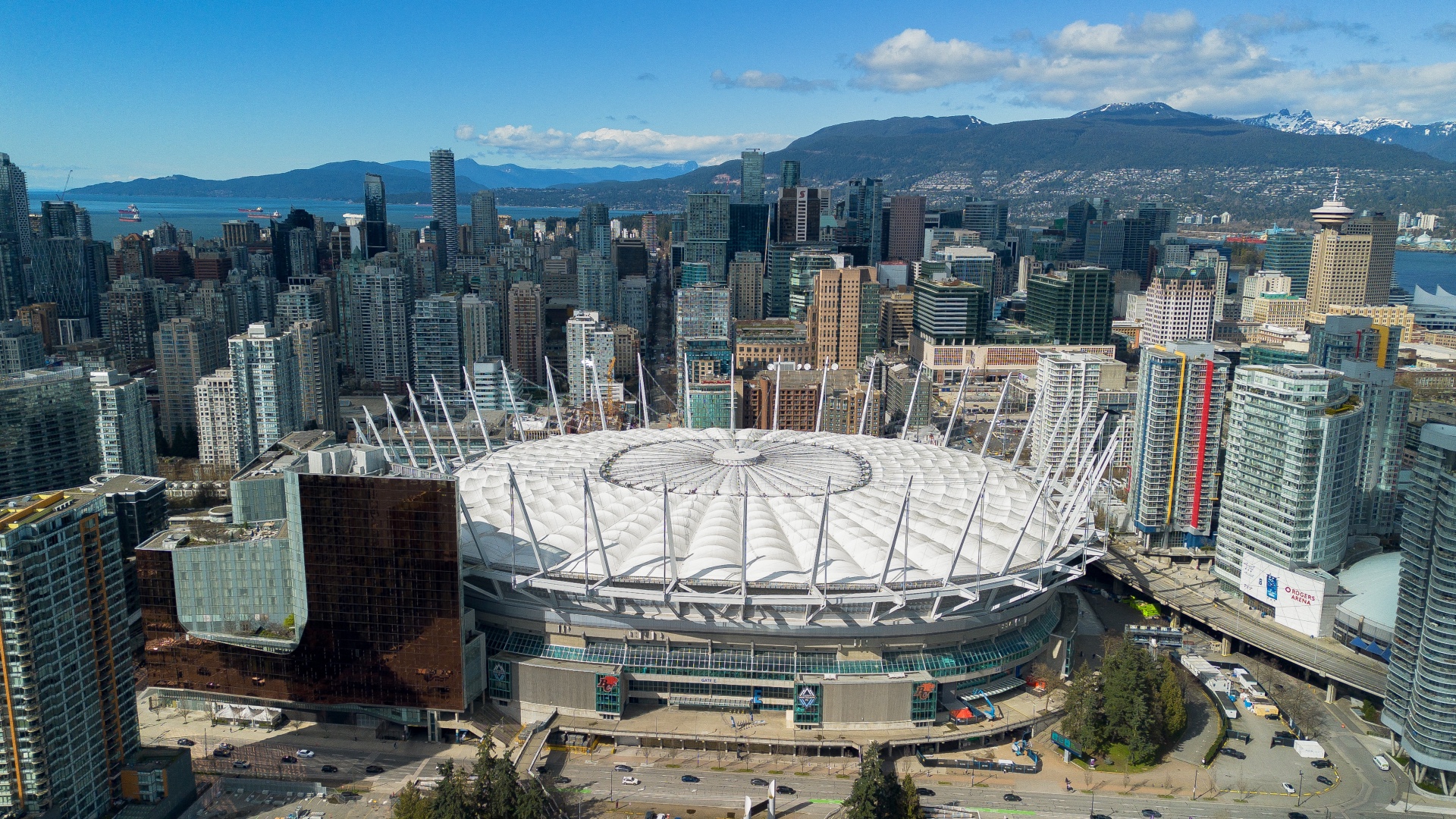
    In a development first reported by The Guardian on Friday, three top representatives of the Palestine Football Association (PFA) — including its president Jibril Rajoub — have been blocked from entering Canada, where global football’s governing body FIFA will hold its annual congressional meeting in Vancouver on April 30. This visa rejection comes at a fraught moment for international football, as Canada is set to co-host the 2026 men’s FIFA World Cup alongside the United States and Mexico, and the PFA is already locked in a high-stakes dispute with FIFA over Israeli football activity in occupied Palestinian territory.

    Rajoub had been expected to use his speaking slot at the Vancouver congress to publicly raise the issue of Israeli matches being held in the West Bank, a territory universally recognized by the United Nations as illegally occupied by Israel. The PFA has formally called on FIFA to step in immediately to resolve the visa issue and allow its delegation to participate in the gathering, where their presence was already set to put the long-running territorial conflict at the center of global football’s agenda.

    When contacted for comment, Immigration, Refugees and Citizenship Canada declined to share specific details about the visa applications, citing privacy rules for individual cases. The department only confirmed that all entry applications are assessed individually based on documentation submitted by each applicant.

    This latest clash follows months of escalating tension between Palestinian advocates and global football leadership. Earlier this year, the PFA filed a formal complaint over the Israeli matches in the West Bank. After completing a review of the complaint last month, FIFA released a statement arguing that the final legal status of the West Bank remains an unsettled, complex issue under international law, and as a result, the organization would take no disciplinary or regulatory action against the Israel Football Association. That inaction prompted a unprecedented legal challenge: in February, a coalition of six pro-Palestinian human rights and sports justice groups — including Irish Sport for Palestine, Scottish Sport for Palestine, Just Peace Advocates, Euro-Med Human Rights Monitor, and Sport Scholars for Justice in Palestine — submitted a 120-page complaint to the International Criminal Court prosecutor, The New York Times confirmed. The complaint names FIFA president Gianni Infantino and UEFA (European football’s governing body) president Aleksander Ceferin, accusing both of aiding and abetting war crimes by allowing Israeli clubs to host official league matches on seized Palestinian land.

    Beyond the immediate dispute over Palestinian participation in the FIFA Congress, the visa denials also unfold against a backdrop of growing concern over immigration and entry policies for the 2026 World Cup, particularly in the United States. Co-host the U.S. has already faced public backlash over flagging ticket sales driven by exorbitant pricing, as well as widespread fears that foreign visitors and immigrant residents will be targeted by U.S. federal immigration authorities during the tournament.

    While there is no publicly confirmed link between U.S. and Canadian immigration decisions on these applications, the two neighboring countries’ border agencies have a long history of sharing intelligence and screening data. Over the 15 months since the Trump administration took office, the U.S. has implemented sweeping new entry restrictions for international visitors, including mandatory social media vetting that requires applicants to share years of personal online activity. Multiple cases have already been documented of visitors being denied entry after border agents found social media content critical of U.S. government policies. Others have been detained for weeks in overcrowded, unsanitary facilities run by U.S. Immigration and Customs Enforcement (ICE) — privately operated detention centers that generate profit for their operators based on the number of detainees held — before being allowed to return to their home countries.

    Last December, Andrew Giuliani, who leads the White House 2026 FIFA World Cup Task Force, publicly confirmed that the Trump administration could not guarantee that non-U.S. citizens would be safe from ICE raids at World Cup stadiums. That comment came just months after a high-profile incident in July, when ICE agents arrested a father of two at a FIFA Club World Cup match in New Jersey. Human Rights Watch issued a public statement at the time calling for urgent reform of U.S. entry policies, warning that the current regime creates unnecessary risk for visitors and directly undermines FIFA’s stated core values of human rights, inclusion, and open global participation. Giulani later defended the arrest, claiming the man had violated event rules by flying a drone to take a family photo at the match.