标签: Asia

亚洲

  • Virat Kohli hits 93 to lead India to 4-wicket win over New Zealand in first ODI

    Virat Kohli hits 93 to lead India to 4-wicket win over New Zealand in first ODI

    In a captivating opening to their three-match series, India secured a hard-fought four-wicket victory against New Zealand in the first ODI at Vadodara on Sunday, propelled by Virat Kohli’s commanding 93-run performance. The hosts successfully chased down New Zealand’s competitive total of 300-8 with six deliveries remaining, finishing at 306-6 in 49 overs.

    New Zealand established a solid foundation with openers Devon Conway (56) and Henry Nicholls (62) compiling a 117-run partnership. However, their momentum stalled as the middle order struggled, with Daryl Mitchell’s impressive 84 off 71 balls serving as the innings’ backbone. Mitchell’s effort, complemented by debutant Kristian Clarke’s late cameo of 24 off 17 deliveries, propelled the Black Caps to an imposing 300-run total.

    India’s response began shakily as captain Rohit Sharma departed after a brisk 26. Kohli then orchestrated the chase with precision, reaching his half-century in just 44 deliveries. He formed crucial partnerships with Shubman Gill (50 off 66 balls) and Shreyas Iyer (49 off 47), maintaining India’s scoring rate throughout the middle overs.

    The match witnessed dramatic tension when pace bowler Kyle Jamieson (4-41) triggered a late collapse, removing Kohli just seven runs short of his century and claiming two additional wickets in quick succession. Despite this pressure, Lokesh Rahul’s composed unbeaten 29 off 21 balls, supported by Harshit Rana’s valuable 29-run contribution, guided India across the finish line.

    The victory gives India a 1-0 series advantage as both teams prepare for Wednesday’s second ODI in Rajkot, where New Zealand will seek redemption after letting control slip despite Jamieson’s bowling heroics.

  • Bride and groom among 8 killed in gas cylinder blast at wedding in Pakistan’s capital

    Bride and groom among 8 killed in gas cylinder blast at wedding in Pakistan’s capital

    A devastating gas cylinder explosion shattered the early hours of Sunday in Islamabad’s residential heartland, transforming wedding celebrations into tragedy as it claimed the lives of at least eight individuals—including the newly married couple—and left seven others injured. The catastrophic incident occurred while wedding guests remained asleep within the family residence following reception festivities, causing partial structural collapse and damaging adjacent properties.

    According to Islamabad police authorities, the explosion originated from a liquefied petroleum gas (LPG) cylinder—a common household utility in Pakistan due to persistent natural gas supply limitations. Emergency responders were dispatched to the scene following early morning alerts, with investigation teams working to determine the precise cause of the leakage and subsequent blast.

    The national government responded with immediate condolences and directives for comprehensive support. Prime Minister Shehbaz Sharif publicly expressed profound grief over the tragic losses while ordering health officials to provide optimal medical care for the injured. His administration further mandated a thorough investigation into the circumstances surrounding the deadly accident.

    This incident highlights ongoing public safety concerns regarding LPG cylinder usage throughout Pakistan, where inadequate natural gas infrastructure forces widespread dependence on alternative fuel sources. Previous similar tragedies have been attributed to gas leakage incidents, though police emphasize their investigation remains ongoing to establish definitive causes and contributing factors.

  • Israel planning renewed Gaza offensive in March, report says

    Israel planning renewed Gaza offensive in March, report says

    The Israeli military is reportedly preparing to initiate a renewed ground offensive in the Gaza Strip by March, aiming to expand its territorial control westward toward the coastal region. According to a Times of Israel report citing official sources, this planned operation would focus on Gaza City and represents a significant escalation despite ongoing ceasefire negotiations.

    The current ceasefire, brokered by the United States on October 10, 2025, established the Yellow Line demarcation that granted Israel control over approximately 53% of Gaza territory. Israeli officials justify the planned offensive by citing Hamas’s refusal to disarm, though Arab diplomats question this rationale.

    Hamas spokesperson Hazem Qassem announced the group’s intention to dissolve governmental bodies in Gaza and transfer authority to a technocratic committee. However, Hamas simultaneously accuses Israel of repeatedly violating the ceasefire agreement, documenting nearly 1,200 violations including airstrikes, shelling, and home demolitions that have resulted in 439 Palestinian fatalities over three months.

    The humanitarian situation in Gaza continues to deteriorate catastrophically. Palestinian health authorities report that Israeli forces have killed more than 71,400 Palestinians since October 2023, including at least 20,000 children, with thousands more missing beneath rubble. Rescue operations are severely hampered by inadequate equipment and deteriorating weather conditions.

    UN agencies warn that recent storms have exacerbated the crisis, with flooding affecting approximately 65,000 families and over one million people requiring emergency shelter assistance. Philippe Lazzarini, head of UNRWA, emphasized that current aid remains insufficient and poorly suited to winter conditions, with non-waterproof tents providing inadequate protection.

    Complicating international efforts, Israeli Prime Minister Benjamin Netanyahu has opposed Turkey’s participation in a proposed stabilization force, discouraging contributions from other potential partners including Azerbaijan, Pakistan, Saudi Arabia, and Indonesia. Meanwhile, Israel’s announced restrictions on humanitarian organizations operating in Gaza have drawn widespread condemnation, with aid groups warning that hundreds of thousands would be cut off from essential care if implemented.

    Arab and European nations are demanding Israel permit “sustainable, predictable and unrestricted” access for rights groups, particularly during the challenging winter months, as the UN humanitarian office reports damaged infrastructure further impedes aid delivery.

  • New law bans China-based IT engineers from Pentagon cloud access

    New law bans China-based IT engineers from Pentagon cloud access

    President Donald Trump has enacted sweeping cybersecurity legislation explicitly prohibiting individuals from China and other adversarial nations from accessing the Pentagon’s cloud computing infrastructure. This decisive action, embedded within the $900 billion National Defense Authorization Act, represents the government’s formal response to critical security vulnerabilities exposed earlier this year.

    The legislative measure follows a ProPublica investigation revealing that Microsoft had utilized China-based engineers to maintain Defense Department computer systems for nearly ten years. This arrangement potentially compromised some of the nation’s most sensitive military data to foreign access. While Microsoft implemented a ‘digital escort’ program with US-based supervisors intended to monitor foreign engineers, investigators found these escorts frequently lacked the technical expertise to effectively oversee their more skilled Chinese counterparts.

    Cybersecurity experts and intelligence officials consistently warned that such practices created unacceptable national security risks, particularly given China’s legal framework that grants authorities broad data collection powers. The revelation prompted bipartisan concern in Congress, with some Republican members condemning Microsoft’s practices as ‘a national betrayal.’

    Defense Secretary Pete Hegseth publicly denounced the practice in July, prompting Microsoft to voluntarily cease using Chinese engineers for Pentagon cloud systems. The Department of Defense subsequently updated its cybersecurity requirements in September, formally banning IT contractors from utilizing China-based personnel. The newly signed legislation codifies these changes into federal law, extending prohibitions to personnel from Russia, Iran, and North Korea.

    The law significantly enhances congressional oversight mechanisms, mandating that the Defense Secretary brief congressional defense committees on implementation progress by June 1, 2026, with annual follow-up briefings scheduled through 2029. These sessions will evaluate control effectiveness, security incidents, and recommend additional legislative or administrative actions.

    Microsoft declined to comment specifically on the legislation but previously committed to collaborating with national security partners to adjust security protocols. Congressional leaders including Representative Elise Stefanik and Senator Tom Cotton praised the legislation for closing dangerous contractor loopholes and protecting critical infrastructure from foreign adversaries.

    The Pentagon has initiated both an investigation into potential national security compromises by China-based engineers and a third-party audit of Microsoft’s digital escort program. Defense officials have stated they were unaware of the full extent of Microsoft’s foreign engineer program until the ProPublica disclosure, despite Microsoft’s claims of having disclosed the arrangement to the Pentagon.

  • ‘A race against time’: Jerusalem’s Silwan faces escalating Israeli expulsions

    ‘A race against time’: Jerusalem’s Silwan faces escalating Israeli expulsions

    In the occupied East Jerusalem neighborhood of Silwan, a profound humanitarian crisis unfolds as Israeli authorities accelerate property demolitions and settler takeovers. Fakhri Abu Diab, a prominent community activist, embodies this struggle having witnessed his family home destroyed twice in 2024 alone—each demolition compounding what he describes as overwhelming psychological trauma and financial devastation.

    The architectural dismantling of Palestinian residences occurs under the justification of building permit violations, a requirement local residents argue is systematically designed for their failure. Beyond bureaucratic mechanisms, settler organizations employ both legal maneuvers and intimidation tactics to displace longstanding communities. Current estimates indicate approximately 2,200 Palestinians face imminent expulsion from Silwan, with 24 families comprising 130 people at immediate risk.

    Israeli human rights organization B’Tselem characterizes these coordinated actions as government-sanctioned ethnic cleansing. The campaign extends beyond residential properties to include educational institutions and community infrastructure, fundamentally altering the neighborhood’s social fabric.

    Financial burdens compound the trauma, with displaced families forced to pay demolition costs—often exceeding $100,000 for permit applications that remain virtually unattainable. The judicial system offers limited protection, with courts frequently favoring state interests according to political analyst Firas Yaghi.

    Urban planning restrictions further exacerbate the crisis, with only 13% of East Jerusalem zoned for Palestinian construction. The separation wall compounds these restrictions, simultaneously isolating communities and providing pretexts for residency revocation.

    This systematic displacement forms part of what researchers identify as the ‘Judaisation of Jerusalem’—a strategic effort to replace the city’s Palestinian character with Jewish settlement. Plans reportedly exist to demolish up to 45,000 Palestinian homes across the city.

    Despite international condemnation, residents report accelerated actions on the ground. Abu Diab warns that without robust international intervention and legal protection, Israel will continue implementing these policies with impunity, permanently erasing Palestinian heritage from the city.

  • Greenland’s harsh environment and lack of infrastructure have prevented rare earth mining

    Greenland’s harsh environment and lack of infrastructure have prevented rare earth mining

    The Trump administration’s controversial proposition to acquire Greenland faces monumental geological and infrastructural obstacles that transcend political ambition. Despite the president’s assertion that “We are going to do something on Greenland whether they like it or not,” experts confirm that the island’s rare earth mineral deposits remain largely inaccessible due to extreme environmental conditions and technological limitations.

    Greenland’s formidable challenges include its remote Arctic location, complete absence of transportation infrastructure, complex mineralogy, and fragile ecosystem. The rare earth elements—crucial for manufacturing high-tech products ranging from electric vehicles to military equipment—are encased within a particularly stubborn rock formation called eudialyte, from which no commercially viable extraction method has been developed.

    Industry analysts suggest geopolitical positioning rather than practical resource acquisition drives the administration’s interest. “The fixation on Greenland has always been more about geopolitical posturing—a military-strategic interest and stock-promotion narrative—than a realistic supply solution for the tech sector,” stated Tracy Hughes of the Critical Minerals Institute.

    The timeline for potential production stretches years into the future, with current exploration activities remaining in preliminary stages. Even the most advanced projects would require hundreds of millions in additional funding and technological breakthroughs to become operational.

    Environmental concerns present additional complications, as the toxic chemicals necessary for mineral separation could damage Greenland’s burgeoning tourism industry and fragile Arctic ecosystems. The frequent presence of radioactive uranium alongside rare earth deposits further complicates extraction prospects.

    Alternative solutions are emerging elsewhere, with established mining operations in the United States, Australia, and other accessible locations offering more immediate potential to reduce dependence on Chinese rare earth exports, which currently dominate over 90% of global supply.

  • Hamda scores big win for Emirati women at Sheikh Mohammed Endurance Festival

    Hamda scores big win for Emirati women at Sheikh Mohammed Endurance Festival

    In a groundbreaking display of equestrian excellence, Emirati riders Hamda Jasim Ahmed Mohamed Al Ali and Maitha Mohamed Al Qubaisi achieved a historic one-two finish at the prestigious Sheikh Mohammed bin Rashid Al Maktoum Endurance Festival in Dubai. The landmark victory, witnessed by His Highness Sheikh Mohammed bin Rashid Al Maktoum himself, represents a significant milestone for women’s sports in the United Arab Emirates.

    The two athletes conquered the grueling 160-kilometer course at Dubai International Endurance City through strategic brilliance and exceptional horsemanship. Riding SW Hinkul, a 12-year-old gelding, Hamda executed a perfectly timed final surge to claim victory in 6 hours, 14 minutes, and 19 seconds, maintaining an impressive average speed of 25.65 km/h throughout the demanding desert terrain.

    What made their achievement particularly remarkable was their tactical approach. Rather than leading from the start, Hamda began in 24th position and remained outside the top ten for much of the race. Her victory was secured through intelligent pacing, meticulous veterinary management, and a decisive final push during the last 20 kilometers that overwhelmed the competition.

    Maitha Al Qubaisi followed just 36 seconds behind her compatriot, completing an all-Emirati female podium dominance that showcased the depth of talent developing within the UAE’s endurance riding program. Mansour Saeed Al Farsi secured third place, rounding out the podium.

    The event, now in its 19th edition and organized by the Dubai Equestrian Club, stands as one of the most prestigious fixtures on the global endurance calendar. Sheikh Mohammed, a former World Endurance Champion himself, personally followed the final stretch of the race, adding symbolic significance to the women’s achievement.

    This triumph demonstrates how endurance riding rewards strategic decision-making and partnership with the horse as much as physical stamina. Both riders emphasized the values of patience, humility, and trust that the sport instills—qualities that proved decisive in their historic performance that will be remembered as a defining moment in the festival’s history.

  • Oman sentences 59 expat workers to jail for Christmas Day riot, vandalism

    Oman sentences 59 expat workers to jail for Christmas Day riot, vandalism

    A court in Oman has delivered a decisive verdict against 59 expatriate workers, sentencing them to imprisonment and subsequent deportation from the Sultanate for their involvement in a violent protest on Christmas Day 2025. The ruling, announced by Oman’s Public Prosecution Authority on January 10th, 2026, concludes a case that has drawn significant attention to labor relations and public order in the Gulf nation.

    The incident unfolded on the evening of December 25th in the Sa’al area of Wilayat Bidbid, where Royal Oman Police responded to reports of mass gatherings and property destruction near a company-owned residential complex. Upon arrival, law enforcement discovered a substantial group of workers engaged in acts of vandalism against company facilities and vehicles, including the damaging of transportation buses, which severely disrupted operations.

    Despite direct orders from police to disperse and cease destructive activities, the workers refused to comply, leading to their immediate arrest and subsequent interrogation. Following comprehensive investigations, prosecutors charged the individuals with multiple criminal offenses under Omani law.

    The Court of First Instance handed down convictions on four distinct charges: incitement to gather (carrying a 3-month sentence), participation in a public gathering of ten or more persons that could disrupt security (6-month sentence), damaging movable and immovable property (1-year sentence), and using information technology to produce and disseminate material harmful to public order (1-year sentence).

    In addition to cumulative prison terms, the court mandated the permanent deportation of all convicted individuals from Oman and ordered the confiscation of mobile phones used in committing cyber offenses. Notably, twenty-three other defendants involved in the same incident were acquitted of all charges, suggesting careful judicial consideration of individual participation levels.

    This case highlights Oman’s stringent approach to maintaining public order while simultaneously raising questions about labor conditions for foreign workers in the region. The timing of the incident on Christmas Day suggests possible cultural or religious dimensions to the protest, though official statements focused exclusively on the legal violations rather than underlying causes.

  • Myanmar holds second round of voting in first general election since military takeover

    Myanmar holds second round of voting in first general election since military takeover

    Myanmar conducted the second phase of its controversial general election on Sunday, marking the first electoral process since the military seized power in February 2021. The voting expanded to include 100 additional townships, many situated in conflict-ridden regions where armed resistance against military rule continues to escalate.

    International observers and human rights experts have condemned the electoral process as fundamentally flawed. Tom Andrews, UN Special Rapporteur on human rights in Myanmar, characterized the election as a ‘sham’ due to systematic political repression. ‘Fundamental freedoms are crushed when thousands of political prisoners remain behind bars, credible opposition parties face dissolution, and journalists are systematically muzzled,’ Andrews stated.

    The electoral landscape reflects the military’s tight control over the political process. According to data from the Assistance Association for Political Prisoners, over 22,000 individuals face detention for political offenses since the coup, while security forces have caused more than 7,600 civilian casualties. A newly enacted Election Protection Law imposes severe penalties for any public criticism of the electoral process, with authorities already charging more than 330 people for leafleting or online activism.

    Despite these measures, armed resistance groups attempted to disrupt Sunday’s voting through attacks on polling stations and government buildings in at least four townships, resulting in two administrative officials killed according to independent media reports.

    The military-backed Union Solidarity and Development Party (USDP) emerged dominant from the first voting phase in December, securing nearly 90% of contested lower house seats. The absence of Aung San Suu Kyi’s National League for Democracy, which was dissolved in 2023 after refusing to comply with new military regulations, has left the political landscape heavily skewed toward military-aligned parties.

    Voter turnout appeared significantly lower than in the 2020 elections, with AP journalists observing sparse attendance at polling stations across Yangon and Mandalay. The military government nevertheless claimed success, reporting approximately 52% participation among eligible voters in the first phase.

    The military government plans to convene the new parliament in March, with the transition to a new government scheduled for April, solidifying what critics describe as the institutionalization of military rule through manipulated democratic processes.

  • Iran intensifying deadly crackdown under internet blackout cover, say rights groups

    Iran intensifying deadly crackdown under internet blackout cover, say rights groups

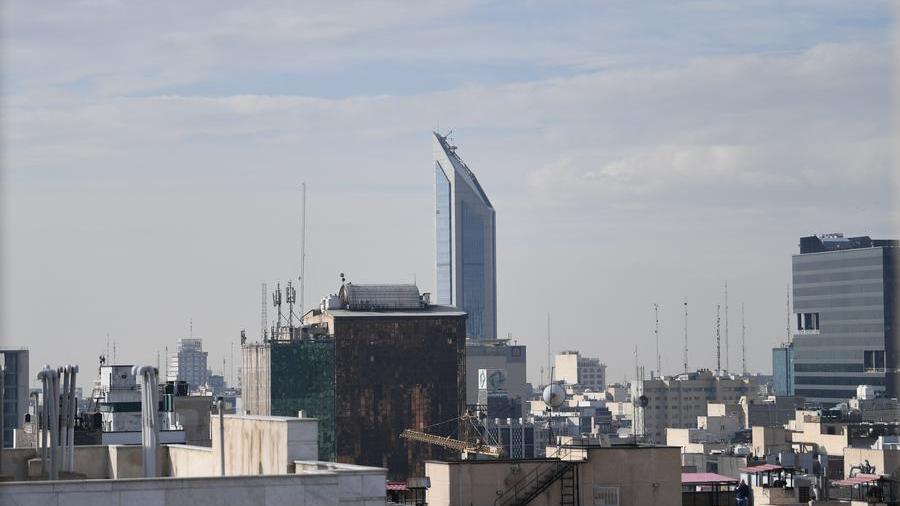
    Human rights organizations are sounding alarms over Iran’s intensified suppression of widespread protests, with security forces allegedly escalating lethal tactics under the concealment of a comprehensive nationwide internet blackout now extending beyond 36 hours. The demonstrations, representing the most significant challenge to Iran’s theocratic leadership in over three years, have reportedly resulted in at least 51 fatalities according to Norway-based Iran Human Rights, though actual numbers may be substantially higher.

    Amnesty International confirmed it is investigating disturbing accounts of security personnel intensifying their unlawful deployment of lethal force against demonstrators since Thursday, resulting in additional casualties. Nobel Peace Laureate Shirin Ebadi issued warnings that authorities might be preparing to execute a ‘massacre under the cover of a sweeping communications blackout.’

    Verified footage reveals continued protests across multiple cities including Tehran, Mashhad, Tabriz, and Qom, with participants chanting anti-government slogans and demanding political change. In response, Supreme Leader Ayatollah Ali Khamenei has accused the United States of instigating the unrest and denounced protesters as ‘vandals,’ while Iranian military forces pledged to ‘vigorously protect national interests’ against perceived external threats.

    The internet shutdown imposed by authorities has severely hampered communication capabilities, with Netblocks confirming the blackout remains actively enforced. This digital censorship coincides with reports of significant property damage, security force deployments, and early business closures throughout Tehran. International observers continue to monitor the situation closely as both protesters and government forces demonstrate increased determination in the ongoing confrontation.