标签: Asia

亚洲

  • ‘Acts of revenge’: Israel arrests Palestinian women footballers and students

    ‘Acts of revenge’: Israel arrests Palestinian women footballers and students

    Before the first light of day filtered across the occupied West Bank, the sharp, sudden sound of pounding echoed through the entrance of Ahmed Safi’s apartment building in the town of Birzeit, north of Ramallah. When the 48-year-old Palestinian father jolted awake, he watched as Israeli soldiers streamed through the halls of his building, and assumed the incursion targeted another resident. He could never have guessed the operation would end with his own 20-year-old daughter, Sama – a psychology undergraduate at Birzeit University – in handcuffs.

    “We were stunned, completely shocked,” Safi told reporters from Middle East Eye in an interview. “We never had any indication this raid was meant for her.”

    Family accounts confirm soldiers entered the residential compound shortly after 2 a.m. on Tuesday, shouting orders in Hebrew as they cleared each floor and made their way to the Safi family’s unit. They demanded identification from Ahmed, his wife, and Sama, before presenting the 20-year-old with a sealed arrest warrant. When the family pressed for details on the allegations against her, commanding officers only offered that they would “learn the reason in court.”

    Before moving Sama out of the apartment, soldiers ransacked her personal study and bedroom, seizing her mobile phone, laptop, and multiple personal items. Among the possessions taken were framed photographs of her cousin, Ayser Safi, who was killed by Israeli forces in a separate 2024 incursion. Sama was then led down the stairs of the building, handcuffed behind her back, blindfolded, and loaded into an unmarked Israeli military vehicle.

    For the Safi family, the shock of the arrest is compounded by urgent fears over Sama’s chronic medical condition: she lives with Familial Mediterranean Fever (FMF), an inherited autoimmune inflammatory disorder that requires daily, consistent medication to prevent life-threatening complications. Ahmed Safi said he repeatedly attempted to explain his daughter’s health needs to the raiding party, but soldiers refused to let him gather her medication or discuss her condition before taking her into custody.

    “Without her daily drugs, she suffers crippling high fevers, intense body pain, and other disabling symptoms,” Safi explained. “This disease triggers spontaneous autoimmune attacks. If she goes without her medication, it can cause permanent liver and kidney damage. We are extremely worried for her right now.”

    As of this week, Sama is being held at the Al-Maskubiya interrogation facility in Jerusalem, with her first scheduled court appearance set for next Tuesday. No formal charges against her have been released to the public.

    Sama is not alone in this latest wave of detentions: she is one of five Palestinian women taken into Israeli custody in a series of overnight raids this week, three of whom are current Birzeit University students, with one a recent graduate of the institution. Among the detainees are two active players on the Palestinian women’s national football team: 20-year-old Natalie Abu Diya and 20-year-old Rand Halawani. The other two detainees are third-year public administration student Julan Abu Awad and recent graduate Laila Nael Khalil.

    Natalie Abu Diya, a second-year media studies student at Birzeit, was taken from her on-campus student housing during what witnesses described as a violent overnight incursion. Her father, Samer Abu Diya, told Middle East Eye that Natalie had represented Palestine in international youth competition as a member of the national under-18 women’s football squad. The family was on a phone call with Natalie until roughly 10:30 p.m. the night of her arrest, when she told them she had 13 class assignments to finish and planned to stay up late to complete the work. By 3:30 a.m., her roommates contacted the family to say Israeli soldiers had broken into her room and taken her into custody.

    Natalie was later transferred to Israel’s Ofer Prison, where she has already met with her legal representation. The family says they still have no information about what charges, if any, will be brought against her.

    “Natalie is my youngest daughter. She is independent, determined, and exceptionally bright,” Samer Abu Diya said. “I do not doubt her ability to withstand this ordeal, but I am deeply heartbroken by the injustice that is being done to her.”

    The second national team player, Rand Halawani, was arrested after Israeli authorities summoned her for questioning in Jerusalem. A military court has extended her detention through Friday, and no further details on charges have been released.

    The Palestinian Football Association (PFA) issued a scathing condemnation of the detentions, calling the arrests “unjust” and part of a broader pattern of systematic targeting that has gone unchecked for years.

    “Their arrest is not an isolated incident; it is part of a well-documented pattern of systematic targeting of Palestinian athletes, which continues without any form of accountability,” the PFA statement read. “The PFA calls on FIFA, our continental confederations, and the entire global sporting community to move beyond empty statements and take concrete disciplinary action within the framework of international football to address these ongoing violations. The targeting of Palestinian athletes must end. The impunity must end. The double standards must end.”

    Julan Abu Awad, the third Birzeit student detained, was arrested during a pre-dawn raid on her family’s home in the West Bank. Her sister, Jenin Abu Awad, said the entire family was left stunned by the incursion.

    “We tried to ask why they were taking her, but they just told us we would find out in court, and that she would be detained for a long time,” Jenin told Middle East Eye. “They tore her room apart, searched every inch of it, and turned everything upside down.”

    The raid that led to Julan’s arrest came just one week after Israeli forces first raided the family home, interrogating all members, seizing personal items including a bottle of perfume and a pack of cigarettes, but leaving without making any arrests. Julan is currently being held at the Al-Maskubiya interrogation center, and like Sama Safi, she has a pre-existing chronic medical condition that requires regular medication: she experiences severe recurring migraines that can leave her incapacitated for days.

    “When she has a migraine, she vomits repeatedly, cannot stand any light, and needs complete silence. She needs strong painkillers and a sedative injection to get through an attack,” Jenin explained. “We are very worried about her health right now.”

    These five detentions are part of a much broader, ongoing pattern of daily incursion and arrest across the occupied West Bank. Palestinian prisoner rights organizations estimate that roughly 9,000 Palestinians are currently held in Israeli prisons, with nearly half of that population detained without formal charges or trial.

    Abdullah Zaghari, head of the Palestinian Prisoners’ Club, a prominent advocacy group, said in an interview that Israeli forces have seen a sharp uptick in the detention of Palestinian girls and women in recent months, with a particular focus on university students and former political prisoners. Most of these arrests are carried out under the broad allegation of “incitement,” often tied to nothing more than social media posts expressing opposition to the Israeli occupation or solidarity with other Palestinian communities.

    Zaghari warned that detained Palestinian women face severe risks inside Israeli prisons, including documented abuse, systemic medical negligence, and prolonged solitary confinement. “The number of arrests of male and female university students has skyrocketed under this pretext, which has no basis in international law whatsoever,” Zaghari said. “These arrests are part of ongoing acts of revenge against the Palestinian people by the occupation.”

    Data from the Palestinian Prisoners’ Club shows that the total number of Palestinian women held in Israeli facilities has risen to 89 as of this week. That population includes three minor girls, three pregnant women, and two women living with cancer. Most are held in Israel’s Damon Prison, while dozens more are still being held in temporary interrogation and detention facilities. At least 19 of the 89 detained women are held under administrative detention, a policy that allows Israeli authorities to imprison individuals without charge or trial, with detention terms renewable indefinitely.

  • Lebanon-Israel ceasefire plans in doubt following Hezbollah’s rejection

    Lebanon-Israel ceasefire plans in doubt following Hezbollah’s rejection

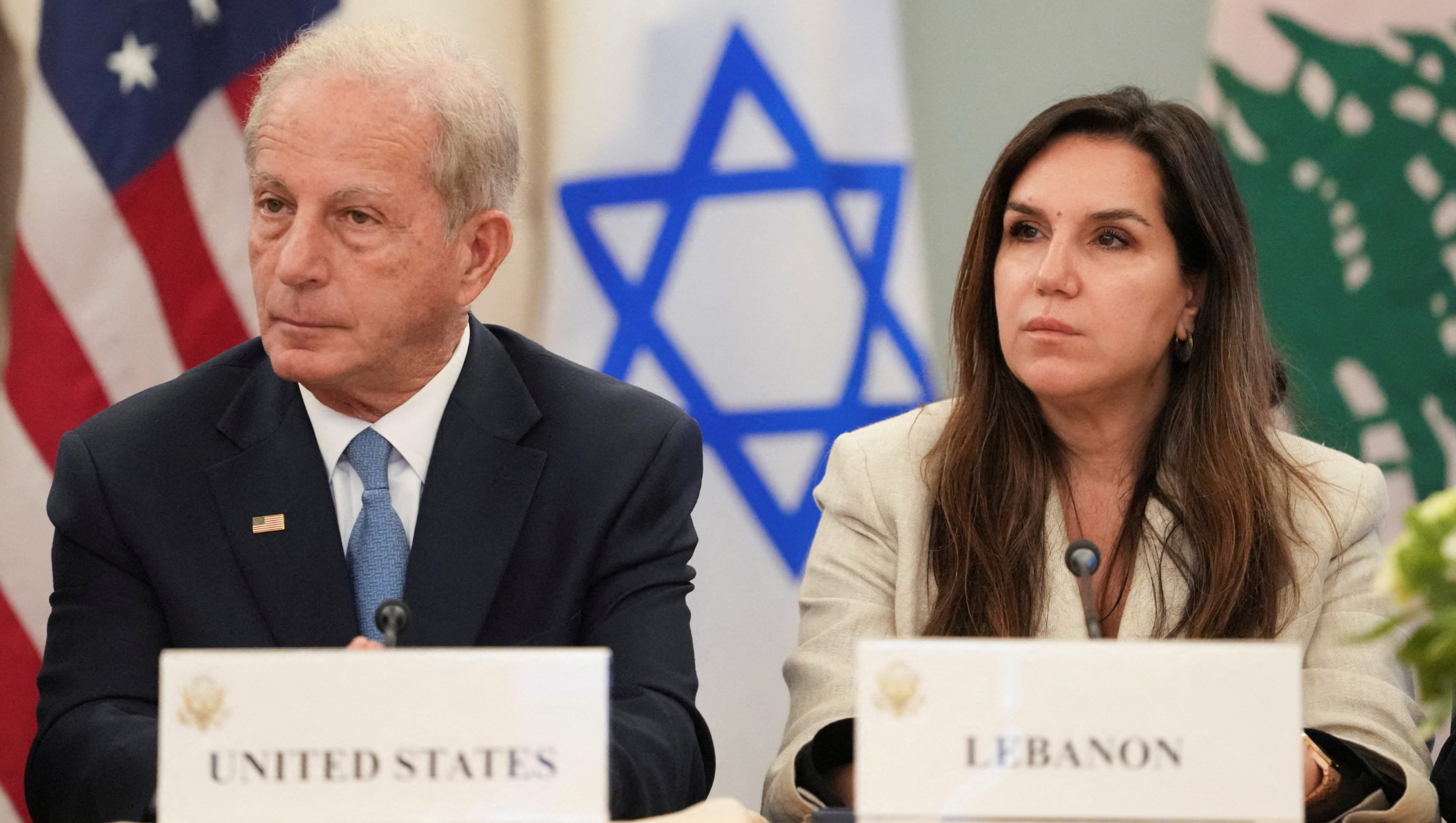
    After four rounds of US-mediated direct negotiations between Israeli and Lebanese delegations in Washington, a US-backed draft plan for a ceasefire between the two nations has emerged, but its path to implementation remains deeply uncertain, with multiple Lebanese stakeholders warning critical pieces are still missing and key regional players stand opposed.

    The two days of talks concluded with a preliminary declaration that lays out a framework for a ceasefire and the establishment of pilot security zones in southern Lebanon. Under the proposed arrangement, the Lebanese Armed Forces would take sole control of these designated areas, barring all non-state armed groups from operating within their borders. The pilot zones are framed as an initial testing ground for a wider security arrangement that could be expanded across the region if successful.

    However, a senior Lebanese official close to President Joseph Aoun told Middle East Eye that the draft proposal lacks any clear, binding implementation mechanism, and its entire fate now rests on whether Hezbollah, the powerful non-state armed group that holds significant sway in southern Lebanon, will give its approval. What is more, the official confirmed that neither Hezbollah nor Nabih Berri – Lebanon’s long-serving Parliament Speaker, a key Hezbollah ally and established intermediary between the group and Washington – were privy to the full details of negotiations as they progressed. Once the draft text was finalized, President Aoun circulated it to both Hezbollah and Berri to gather feedback before communicating Lebanon’s final position to US negotiators.

    The senior official described the closed-door negotiations as grueling, noting that the Lebanese delegation threatened to walk out and suspend talks after Israeli negotiators pushed back against demands for a full, immediate ceasefire. It was this deadlock that led US mediators to put forward the pilot zone concept as a compromise middle ground to break the impasse.

    Another sticking point emerged during the talks when the US delegation insisted on including language condemning what it called “Iran’s attacks on countries in the region”. Lebanese negotiators viewed the repeated push for this language as a deliberate attempt to decouple the Israel-Lebanon peace track from ongoing US-Iran negotiations. Iran has listed a full end to Israeli strikes on Lebanon as a core condition for its own ceasefire talks with Washington, and just days prior, Tehran suspended negotiations in response to Israeli threats to bomb central Beirut.

    The situation on the ground in southern Lebanon has continued to deteriorate despite a nominal ceasefire declared on 17 April. Since that truce took effect, Israel has steadily expanded its military presence across the region, through territorial occupation, repeated air strikes, and mandatory evacuation orders for local residents. Roughly one-fifth of Lebanon’s total territory is now under direct or indirect Israeli control, a footprint that extends far beyond the initial buffer zone Israel declared when the truce was announced. Notably, the new US-backed proposal makes no mention of requiring an Israeli troop withdrawal or ending ongoing Israeli military operations in southern Lebanon, and Israeli Defense Minister Israel Katz confirmed Thursday that Israeli forces would “for the time being, continue its fire and operations on the ground”. Katz added that Israel would keep working to dismantle Hezbollah’s infrastructure in the region and retained US-backed “freedom of action” to strike targets in Beirut in response to any attacks on Israeli territory.

    Hezbollah officials say they were not surprised by the outcome of the Washington talks. A source familiar with the group’s position told Middle East Eye that Hezbollah opposed direct negotiations between the Lebanese state and Israel from the start, predicting it would produce a framework that ran counter to the group’s core interests. “From the first statement issued after the first joint meeting that initiated the direct negotiations path, we knew this is where the Lebanese state intended to go,” the source said. “That is why we were against this track from the start.”

    Hezbollah secretary-general Naim Qassem has since formally rejected the outcome of the talks, calling direct negotiations with Israel “shameful” for Lebanon and dismissing any attempts to tie a ceasefire and Israeli withdrawal to the group’s disarmament. Qassem stressed that any credible ceasefire must cover all of southern Lebanon, where Israel has seized a self-declared security zone, and argued that Israeli security in northern towns would never be achieved as long as Lebanese villages remain under attack, unsafe, and destroyed. “Towns in northern Israel would not be secure as long as our villages are unsafe, bombed, destroyed, and our people are being killed,” Qassem said. For Hezbollah, any discussion of the group’s weapons must only take place after a full stop to all Israeli attacks across Lebanon and a complete withdrawal of Israeli troops from all occupied Lebanese territory – a position that directly clashes with the US framework, which centers on restricting Hezbollah’s military presence and activity south of the Litani River as a core condition for the ceasefire.

    Criticism of the proposal has also come from other Lebanese officials not affiliated with Hezbollah. One senior Lebanese official not involved in the negotiations described the proposal’s wording as deeply ambiguous, saying it remains unclear whether the ceasefire and security arrangements would take effect simultaneously or sequentially. The official also called out a section of the draft that endorses US Secretary of State Marco Rubio’s claim that Hezbollah is “an enemy of Lebanon” in addition to being an enemy of Israel and the United States, calling the paragraph embarrassing for Lebanon even if it only reflects a US position.

    The dispute highlights the narrow, high-stakes path facing the Lebanese government. The presidency has framed the proposal as a last chance to secure a broad ceasefire, but Hezbollah views it as an attempt to achieve through diplomacy what Israel failed to win through military force. It also exposes a core contradiction at the heart of the US-led process: Washington is pushing for a formal state-to-state agreement between Lebanon and Israel, but the most powerful military actor on the Lebanese side – Hezbollah – has been excluded from the negotiations entirely.

    Israeli and Lebanese delegations are scheduled to reconvene later this month for further talks on political and security arrangements. Even so, Lebanese officials openly acknowledge that without Hezbollah’s backing, the proposal is at risk of remaining nothing more than a non-binding diplomatic framework with no viable path to implementation.

  • Ollie Robinson’s dream England comeback: 3 wickets in a maiden first over at Lord’s

    Ollie Robinson’s dream England comeback: 3 wickets in a maiden first over at Lord’s

    Twelve months ago, around the 2023 Christmas holiday, fast bowler Ollie Robinson had convinced himself his days representing England in international test cricket were over. While his national teammates were down in Australia battling for the Ashes, Robinson was on the outside, looking in, his name absent from England’s squad entirely.

    What followed was a chain of events that would set the stage for one of the most dramatic test cricket comebacks in recent memory. After England finished the Ashes with a demoralizing 4-1 series defeat, the team’s management set out to reset their core squad ahead of the 2024 home season. Head coach Brendon McCullum reached out to Robinson with a game-changing message at the opening of the domestic campaign: the talented but polarizing paceman would get a second chance to earn his place back in the national side.

    Robinson’s fall from the England setup just a year prior had not been for a lack of on-field performance. Across 20 test matches, he had already notched an impressive 76 wickets for his country. Instead, he was dropped in early 2024 over concerns about poor fitness standards and questions over his commitment to team-first values. Determined to prove his critics wrong, Robinson embraced a new leadership opportunity this year, taking over as captain of his county side Sussex. The role sparked a noticeable shift in his mindset and work ethic: through the ongoing County Championship, he has already claimed 18 wickets, putting in consistent match-winning performances that made him impossible for national selectors to ignore. When key pace options Jofra Archer and Brydon Carse were ruled out of England’s first home test against New Zealand, opening at Lord’s this Thursday, the spot opened back up for Robinson — and with it, a mountain of pressure to perform.

    What happened next exceeded even the most optimistic expectations for Robinson’s return. Tasked with delivering the new ball for England, after the hosts had been bowled out for a underwhelming first innings total of just 140, Robinson delivered the most historic opening over of his career. He removed New Zealand’s star opener Devon Conway with his third delivery, followed by captain Kane Williamson with his fifth ball, and rising star Rachin Ravindra with his sixth. The three-wicket maiden over sent the packed Lord’s crowd into a frenzy, with supporters chanting Robinson’s name before he had even finished his first six deliveries of the match.

    Speaking to reporters after the incredible over, Robinson admitted the pre-comeback nerves had left him almost unable to perform. “The first over I couldn’t feel my legs, I was so nervous,” he told the BBC. “To get the first wicket, the emotion coming was incredible.” Speaking to Sky Sports, he added: “It was so loud. I was in a bit of a daze and just trying to focus. The crowd were amazing, it’s one of the loudest I’ve heard them here.”

    Robinson was open about the full shift in attitude that allowed him to earn his way back to the national side. “I was in a place where I never thought I’d play for England again,” he said. “To get the text from Baz (McCullum) shifted my mindset. To get back in the team, I knew the date of the first day of the test and there was a lot of work. I’ve tried my best to get back in the condition for today. I know there’s a lot of hard work ahead.”

    By the close of play on day one, Robinson’s incredible form had only continued. He finished the day with unbeatable figures of 4 wickets for just 10 runs across six overs, three of which were maidens. New Zealand’s batting line-up was left reeling at 61 for 6, putting England firmly in control of the match at the end of the opening day.

    Robinson’s stellar performance overshadowed another landmark comeback on the day. New Zealand pace bowler Kyle Jamieson, who was also making his return to test cricket after a career-threatening back injury, picked up an impressive five-wicket haul for 62 runs — his first five-wicket test haul in five years — and was on track to be the day’s standout player before Robinson’s historic opening over. Jamieson’s return came after three stress fractures in three seasons forced him into a year-long rehabilitation process, mirroring Robinson’s own journey back from the sidelines.

    Giving credit to the opposing side after day one, Robinson noted: “They bowled so well, we knew we had to follow suit. Both teams hit the stumps a lot so credit to both teams. We’ve still got a job to do and mop them up in the morning.”

  • Israel’s military creep killing Gaza peace plan

    Israel’s military creep killing Gaza peace plan

    In recent weeks, Israeli Prime Minister Benjamin Netanyahu has directed the Israel Defense Forces to expand its territorial control in Gaza to 70% of the enclave, marking an 11% increase from the roughly 60% the military already holds. This new expansion aligns with an updated map distributed to Gaza-based aid agencies in late March, which draws a new “orange line” marking Israel’s newly claimed restricted military zone. This boundary extends 11% beyond the “yellow line” demarcation agreed upon during the October 2024 ceasefire deal with Hamas.

    Compounding this territorial shift, Israeli Defense Minister Yoav Gallant has publicly reaffirmed the Israeli government’s plan to relocate large numbers of Palestinian residents out of Gaza “when conditions are appropriate and the process is carried out appropriately.” These unfolding moves come amid heightened domestic political upheaval in Israel: the country’s parliament, the Knesset, voted to dissolve itself on May 20, clearing the path for a snap national election to be held as early as this September.

    Experts and international observers have already flagged that Israel’s expanding push directly contradicts the 20-point Gaza peace plan brokered by the U.S.-led Board of Peace. That framework explicitly calls for a phased withdrawal of Israeli military forces from the enclave and includes explicit language guaranteeing that “No one will be forced to leave Gaza, and those who wish to leave will be free to do so and free to return. We will encourage people to stay and offer them the opportunity to build a better Gaza.” Even U.S. Secretary of State Marco Rubio acknowledged this mismatch during a recent congressional hearing, confirming that the peace plan “doesn’t call for” expanded Israeli military control over Gaza.

    As Israel expands its hold, the 2.1 million Palestinian residents of Gaza are increasingly squeezed into a shrinking, war-ravaged, overcrowded strip of coastal land, with little meaningful intervention from the global community to halt the territorial shift. To understand the gravity of these actions, it is necessary to examine them through the lens of established international law, which places clear limits on military occupation of foreign territory. While international law permits temporary occupation to achieve legitimate wartime objectives, two core rules are non-negotiable.

    First, an occupying force cannot assert a permanent legal claim to the territory it seizes. Article 2(4) of the United Nations Charter explicitly outlaws territorial conquest as an instrument of war, a principle the global community enforced firmly in response to Russia’s full-scale invasion of Ukraine, where breaches were widely recognized as the crime of aggression. The International Court of Justice (ICJ) reaffirmed this principle in its 2024 advisory opinion on Israeli actions in occupied Palestinian territories, making clear that Israel cannot claim sovereignty over any part of Gaza.

    Second, all occupying powers are bound by international humanitarian and human rights law, which requires them to protect the welfare of the civilian population under their control and preserve the existing demographic composition of the occupied territory. This means forced displacement of the local population and transfer of the occupying power’s own civilian settlers into the territory are strictly prohibited. These obligations have applied to Israel since it seized Gaza from Egypt during the 1967 Six-Day War, launching a decades-long occupation that continued in a legal sense even after Israel withdrew its ground troops and dismantled settlements in 2005.

    Despite these clear legal standards, enforcing compliance with Israel’s international obligations has proven slow, fragmented, and largely ineffective to date. After the ICJ’s 2024 ruling ordered a full Israeli withdrawal from all occupied Palestinian territories on the grounds that Israel’s presence violates the core principles of Palestinian self-determination and the ban on territorial conquest, the UN General Assembly endorsed the ruling and set a September 14, 2025 deadline for completion of the withdrawal. Israel simply ignored the deadline. Enforcement of ICJ rulings falls exclusively to the UN Security Council, where the U.S.’s permanent veto power has blocked any meaningful action to compel compliance.

    Worse still, the clear legal prohibitions on conquest, forced displacement, and settlements are being intentionally muddied by the Trump administration-brokered 20-point peace plan and the Board of Peace overseeing its implementation. In November 2025, the UN Security Council endorsed the plan, which aimed to end the conflict, disarm Hamas, and establish a transitional Palestinian government overseen by the Board of Peace and a multinational International Stabilisation Force. But from its inception, the ceasefire deal was riddled with critical gaps: it included no binding provisions defining the scope of Israel’s military presence in Gaza, no mechanism for holding actors accountable for alleged war crimes, and no clear roadmap for demilitarization.

    Unsurprisingly, the entire peace process has ground to a standstill since the ceasefire took effect. Israeli airstrikes and ground operations have continued, killing more than 900 Palestinians, aid deliveries remain drastically insufficient to meet the desperate needs of the civilian population, and Hamas has refused to disarm without concrete, binding guarantees for full Palestinian self-determination in the future.

    This stalemate works entirely in Israel’s strategic interests. Under the original ceasefire map, Israel was allowed to maintain military control of all territory behind the “yellow line”, which already gave it control of just over half the enclave, squeezing the majority of Gaza’s population into a small coastal pocket. Within the territory it already controlled, Israel has already undertaken two key projects that reveal its long-term political goals.

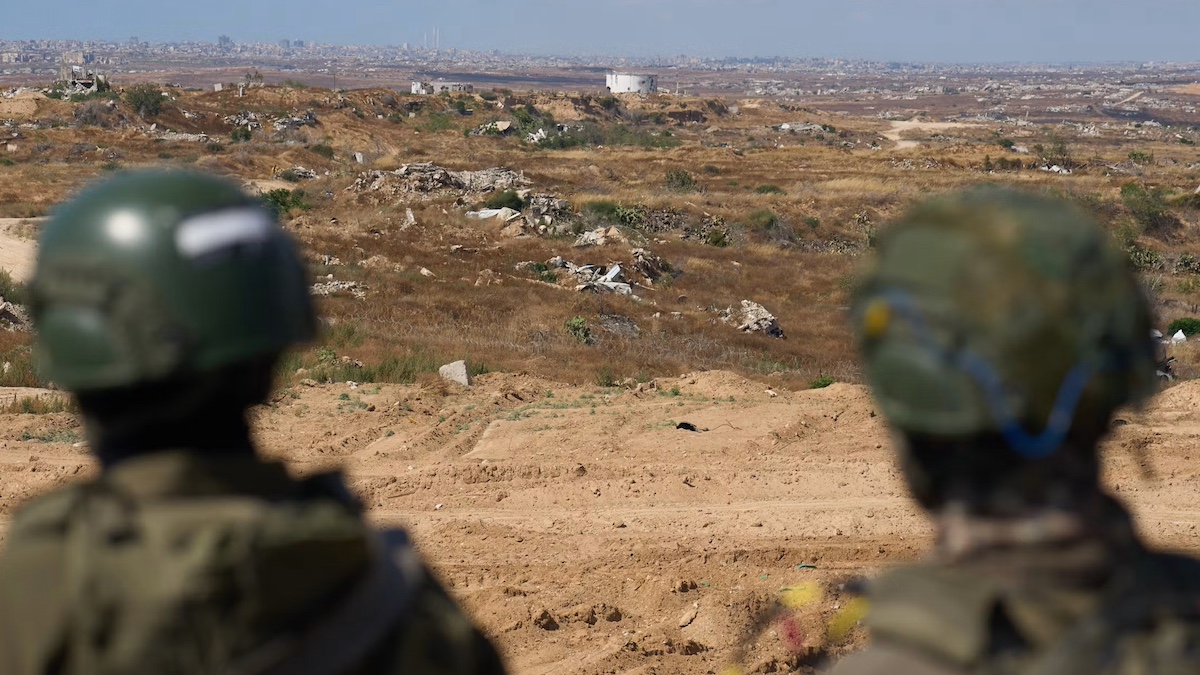
    First, the military has completely flattened entire residential neighborhoods and hundreds of civilian structures, turning large swathes of northern and eastern Gaza into uninhabited wasteland cleared of all civilian infrastructure and residents. On this cleared land, Israel has since built an extensive network of permanent military infrastructure, including new access roads, fortified outposts, barriers, and tall earthen berms. This creates a de facto permanent Israeli-controlled zone emptied of its Palestinian population, a status quo that amounts to unlawful forced displacement and territorial conquest under international law.

    Day by day, the area available to Palestinian residents of Gaza shrinks, as Israel reshapes the territory’s borders through bulldozers and permanent fortifications. Netanyahu has already indicated that Israel has no intention of stopping at 70% control and depopulation. The Israeli government may seek to establish a large permanent buffer zone across much of Gaza, mirroring similar permanent Israeli military presences it has built in southern Lebanon and occupied Syrian territory, or it could even revive plans to establish new Israeli settlements in the strip – a project already being aggressively expanded across the occupied West Bank.

    All of these unfolding moves violate clear international law and the text of the very “peace plan” that was supposed to resolve the conflict, while offering no viable long-term path to justice or self-determination for the Palestinian people. This analysis is by Michelle Burgis-Kasthala, Professor of International Law at La Trobe University, republished with permission under Creative Commons license.

  • Watch: Guide stranded on Everest for six days rescued

    Watch: Guide stranded on Everest for six days rescued

    A high-stakes mountain rescue operation on the world’s highest peak has concluded successfully, after a professional mountain guide spent six grueling days stranded in the deadly altitude of Mount Everest. The dramatic sequence of events that led to the guide’s entrapment and eventual safe extraction has been reconstructed through on-the-ground reporting by the BBC’s South Asia correspondent Rajini Vaidyanathan.

    Everest’s notoriously unpredictable weather and unforgiving terrain have long turned climbing expeditions into life-or-death tests, and this incident is no exception. Details of exactly what left the guide cut off from other climbers and descending teams have emerged gradually, with harsh wind chills, low visibility and sudden ice movement reported to have blocked his planned route off the mountain early last week. Left without a clear path to descend and unable to call for immediate help due to communication disruptions at extreme altitude, the guide was forced to hunker down in a exposed high-elevation campsite, surviving on limited emergency rations as rescue teams coordinated their response from base camp.

    Mountain rescue operations on Everest are among the most challenging in the world, requiring careful coordination between local Sherpa teams, expedition organizers, and air support units that can only operate in narrow windows of clear weather. Multiple days of poor visibility pushed the rescue effort back, extending the guide’s stranding to six full days, raising serious concerns among rescuers and expedition officials that he would not survive the exposure to sub-zero temperatures and oxygen deprivation at more than 8,000 meters above sea level.

    In the end, a break in the weather allowed a specialized rescue team to reach the stranded guide, pull him to safety and transport him to lower elevation for medical evaluation. As of the latest update, the guide is reported to be in stable condition, receiving care for mild frostbite and altitude sickness.

    The incident has once again drawn attention to the persistent risks mountaineers and professional guides face every climbing season on Everest, even as safety technologies and expedition protocols continue to improve. Climbing officials have noted that the successful rescue stands as a testament to the skill and courage of the Nepalese rescue teams that operate in some of the harshest conditions on Earth.

  • How Syria’s captagon trade shifted to Sweida after Assad’s fall

    How Syria’s captagon trade shifted to Sweida after Assad’s fall

    Eighteen months after the collapse of Bashar al-Assad’s regime in Syria, a new chapter of the global captagon trade is unfolding in the country’s southern border province of Sweida, where dismantled drug networks have reconstituted themselves amid fragmented governance and rising regional tensions. Once a key transit corridor for Assad’s multi-billion dollar narcotics empire, the strategically located province has rapidly evolved into one of Syria’s most active captagon production and smuggling hubs, presenting a major test for Damascus’s new transitional government and neighboring security forces alike.

    Under Assad’s decades-long rule, captagon – an inexpensive, highly addictive amphetamine – functioned as a de facto source of state revenue. Western and regional security officials repeatedly documented that the regime’s elite Fourth Armoured Division, commanded by Assad’s brother Maher, and the Military Intelligence Directorate ran an extensive industrial network of captagon factories. At the trade’s peak, the UK government confirmed in 2023 that this network produced roughly 80% of the world’s entire captagon supply. When the new transitional government led by President Ahmad al-Sharaa took power in December 2024, it launched an aggressive nationwide crackdown on this legacy infrastructure, with official data from the United Nations Office on Drugs and Crime (UNODC) showing that by November 2025, authorities had shuttered 15 large-scale production labs, 13 smaller storage facilities, and seized more than 500 million tablets across Syria.

    But while the national crackdown has succeeded in disrupting networks in most regions, Sweida has emerged as a stark exception. Local investigations reveal that as production hubs were dismantled elsewhere, trafficking factions in Sweida retained local control and reorganized their operations, turning the province into a strategic reserve for captagon raw materials and stockpiles left over from the Assad era. For decades under the former regime, Sweida’s position along the Jordanian border made it the primary transit route for narcotics heading to Jordan and consumer markets across the Gulf, with the Assad government relying on alliances with local Bedouin and Druze communities to facilitate cross-border smuggling. That structure has not only survived the regime’s collapse but grown more powerful following sweeping political changes in the province.

    In July 2025, sectarian violence erupted in Sweida that left an estimated 1,700 people dead and triggered the withdrawal of Damascus government forces from most of the province. More than 40 local Druze factions merged into the Druze-led National Guard, which now holds de facto control over Sweida, with explicit political and military backing from Israel. Israel has long positioned itself as a protector of Syria’s Druze minority, and views an autonomous, fragmented southern Syria as a critical strategic buffer against a unified central government in Damascus.

    Security data collated by Syria Weekly confirms that cross-border smuggling from Sweida into Jordan has surged by more than 325% since the National Guard seized control of the province. Between January and July 2025, Jordanian border forces intercepted just 21 trafficking attempts originating in Sweida; over the subsequent nine months, that number skyrocketed to 128 interceptions. Local reporting from Sweida-based outlet Suwayda 24 estimates that 12 to 15 captagon production facilities are now operating across the province, ranging from permanent industrial factories to mobile pill presses hidden inside civilian vehicles. One newly built facility was documented operating in a dense residential neighborhood in the center of Sweida city, directly overseen by National Guard forces, who use local civilian residents as human shields to deter potential airstrikes. The report adds that the operation relies on local technicians who received advanced training from Hezbollah experts prior to Assad’s fall – a continuation of the longstanding alliance between the Iranian-backed Lebanese group and the ousted Syrian regime. Hezbollah has repeatedly denied any involvement in the captagon trade.

    Jordanian intelligence assessments have concluded that Sheikh Hikmat al-Hajari, the Druze religious leader who heads the National Guard, has intentionally built a permissive operating environment for traffickers in exchange for significant revenue, replicating the corrupt financial model that propped up Assad’s rule for decades. For Jordan, the expansion of captagon production on its northern border represents one of the most pressing national security threats, prompting Amman to launch direct military action inside Syrian territory. In early May 2026, the Royal Jordanian Air Force launched F-16 airstrikes targeting at least six suspected captagon facilities across Sweida, an operation officially named “Operation Jordanian Deterrence” that targeted factories, storage warehouses, and smuggling staging hubs. This strike marked the fifth cross-border attack Jordan has carried out since Assad’s fall, and the third since the National Guard took control of Sweida.

    Retired Jordanian Major-General Mamoun Abu Nowar framed the strike as a clear strategic message in comments to Al Jazeera, stating: “This is a warning to groups inside Sweida cooperating with Israel, and to Israel itself: do not advance destabilizing projects along our border. Jordan will not hesitate to strike these smuggling nests.” Retired Air Force Colonel Abdullah al-Sarhan added that the strikes were a pre-emptive measure, noting that traffickers have rapidly adopted increasingly sophisticated smuggling technologies to evade detection, from small quadcopter drones to large GPS-guided helium balloons fitted with timed remote release mechanisms that can carry far larger loads across the border at a fraction of the cost.

    A Jordanian government official confirmed that Amman will not tolerate active drug production hubs operating along its shared border, stressing that the May 2026 strikes were coordinated with Damascus’s transitional government, consistent with a January 2025 bilateral agreement to establish a joint security committee to combat cross-border smuggling of narcotics and weapons. As part of this growing cooperation, Jordan recently hosted a 300-strong cohort of Syrian Internal Security Forces officers at the Jordanian International Police Training Centre for advanced training in modern counter-narcotics tactics, physical fitness, self-defense, and weapons handling. Trained officers are set to deploy soon to rural areas of Sweida still under central government control to bolster border security.

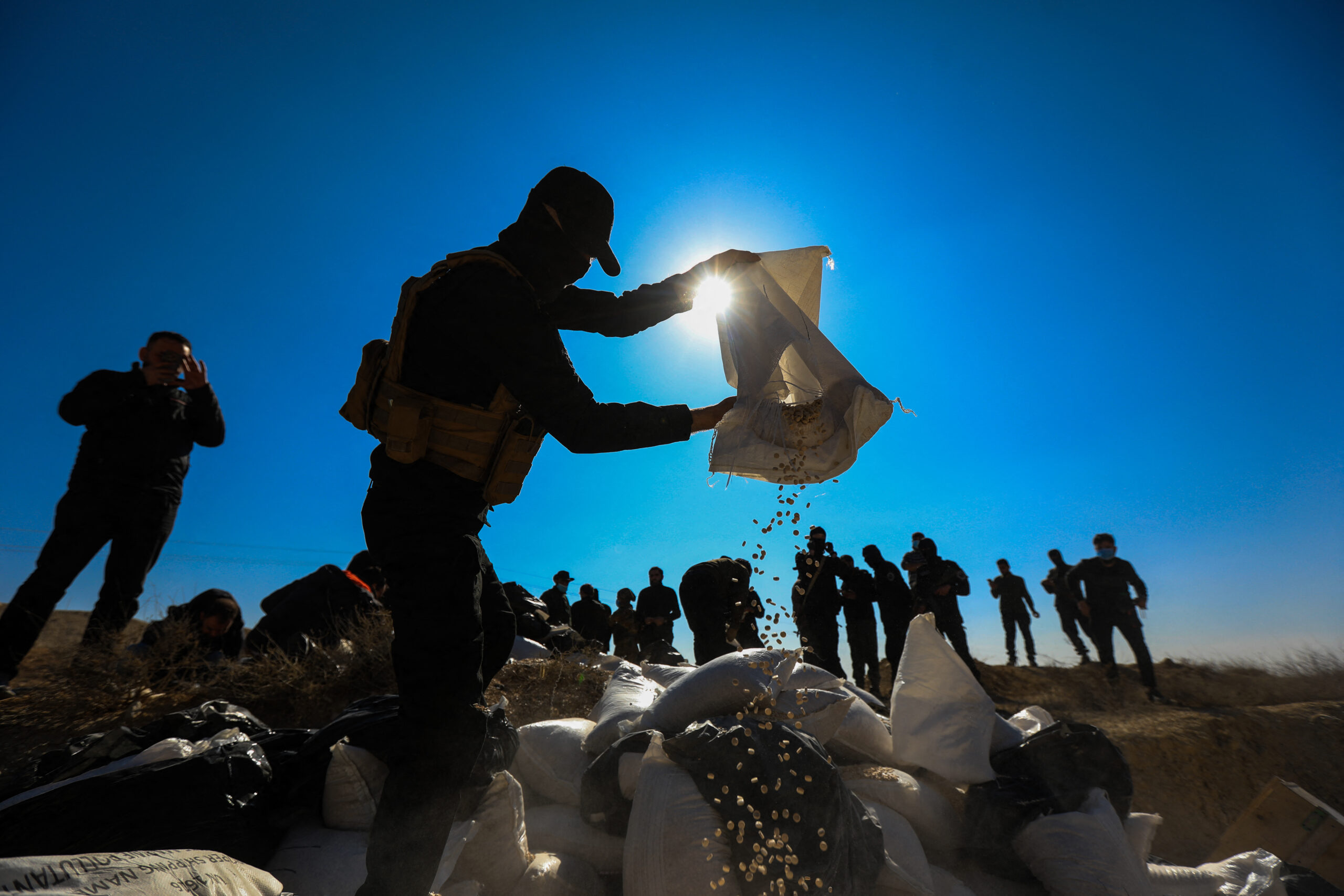
    Data from independent analysts shows the scale of the smuggling challenge: Charles Lister, Senior Fellow and Syria Director at the Middle East Institute, reports that Jordanian forces have intercepted at least 46 million captagon pills from Sweida since July 2025, most of which were being smuggled via GPS-guided helium balloons. In mid-May 2026, Syrian authorities announced they had foiled a plot to smuggle 142,000 pills into Jordan using the same balloon technology, underscoring how rapidly trafficking networks are refining their tactics to evade enforcement.

    Today, the majority of captagon flowing through Sweida originates in Lebanon, where remnants of Assad’s regime have taken refuge alongside Hezbollah, which maintained a close alliance with the ousted president for decades. Syria’s transitional government has cracked down heavily on Hezbollah-linked trafficking operations across the country, and official data from Syria Weekly shows that in the past six months alone, Syrian authorities have seized nearly 33 million captagon pills entering from Lebanon – accounting for 77% of all captagon seized by the government nationwide. In one major operation in January 2026, Syrian counter-narcotics forces in Yabroud, just 20 to 25 kilometers east of the Lebanon border, seized 226 smuggling balloons, 106 kilograms of hashish, 650,000 captagon pills, 238 grams of crystal meth, and $30,000 in counterfeit currency, all originating from Lebanon and bound for Jordan and the Gulf.

    In response to the shared threat, security cooperation between Damascus and Lebanon’s new government has expanded dramatically in recent months. In April 2026, coordinated operations between anti-narcotics agencies from Syria, Lebanon, and Kuwait dismantled an international trafficking ring plotting to smuggle 85 kilograms of narcotics to Kuwait. The same month, Syrian authorities arrested one of Lebanon’s most wanted captagon traffickers after he crossed into Syrian territory, and later transferred him back to Lebanese judicial authorities through the Masnaa border crossing in a demonstration of growing cross-border judicial cooperation. Beyond Jordan and Lebanon, Syria’s transitional government has also launched joint counter-narcotics operations with Iraq and Turkey over the past six months.

    Despite these coordinated efforts, regional security analysts warn that trafficking networks have proven remarkably adaptable to post-Assad political shifts, exploiting gaps in central government authority to re-establish their operations in weakly governed areas like Sweida. The combination of fragmented local control, foreign patronage, and persistent demand across the Middle East has ensured that what was once Assad’s state-run captagon empire survives in new form, threatening regional security years after the former regime’s collapse.

  • Polanski and Corbyn join calls for Britons who served in Israeli army to be tracked

    Polanski and Corbyn join calls for Britons who served in Israeli army to be tracked

    A heated debate has erupted across British politics after two senior party leaders added their voices to growing demands that the UK government track and monitor British citizens who have served in the Israel Defense Forces (IDF), following allegations of widespread war crimes and genocide in Gaza.

    Zack Polanski, leader of the Green Party, and former Labour leader Jeremy Corbyn were among the high-profile signatories of an open letter coordinated by investigative outlet Declassified UK, addressed to UK Home Secretary Shabana Mahmood and Foreign Secretary Yvette Cooper. The letter calls on authorities to systematically track the movements of British nationals who have served in the IDF, and implement mandatory secondary screening for these individuals at UK ports of entry when deemed necessary. It also pushes for full, rigorous war crimes investigations that adhere to both domestic UK legislation and international legal frameworks.

    Current data suggests that approximately 2,000 British-Israeli dual nationals have served in the IDF during Israel’s ongoing military campaign in Gaza, a conflict that a United Nations commission of inquiry formally ruled constituted genocide in 2024. Since the October 7, 2023 Hamas attack that killed roughly 1,200 people in southern Israel, Israeli military operations in Gaza have killed nearly 73,000 Palestinians, injured more than 170,000, and left thousands more unaccounted for, presumed dead under the rubble of destroyed civilian infrastructure.

    In the text of the open letter, signatories — a cross-group coalition of politicians, legal professionals, human rights advocates, journalists, and other public figures — argue that monitoring the entry of IDF-serving dual British nationals into the UK and investigating potential ties to war crimes serves a clear public interest. The letter notes that many of these individuals have returned to the UK after fighting in Gaza and now reside in British communities, even holding positions in public institutions including hospitals, law enforcement agencies, and schools. It adds, “Nobody wants to live next to a potential war criminal – not least members of the Palestinian community in the UK who have family or friends who have been subjected to war crimes.”

    This latest push for action comes after London’s Metropolitan Police sparked outrage in April 2025 when it announced it would not open investigations into 10 British nationals accused of war crimes and crimes against humanity for their service with the IDF in Gaza. The decision came more than a year after the Palestinian Centre for Human Rights (PCHR) and the UK-based Public Interest Law Centre (PILC) submitted a 240-page evidence dossier to the Metropolitan Police’s dedicated War Crimes Team. The dossier outlined detailed allegations that the 10 British nationals, a number of whom hold dual UK-Israeli citizenship, participated in targeted killings of civilian bystanders and humanitarian aid workers, carried out indiscriminate strikes on densely populated civilian areas, attacked hospitals and other protected civilian sites, and aided in the forced displacement of Palestinian civilians. In justifying its refusal to move forward with the case, the Met claimed there was no realistic prospect of securing a conviction and that a thorough, effective investigation could not be completed.

    Alongside Polanski and Corbyn, the open letter has secured support from multiple sitting UK parliamentarians, including independent lawmakers and high-profile Labour Party rebels John McDonnell and Diane Abbott.

    The move has drawn fierce condemnation from opponents on the opposite side of the political and ideological spectrum. Conservative Party chairman Kevin Hollinrake criticized the initiative in an interview with The Telegraph, arguing that “At a time when anti-Semitism is on the rise, Zack Polanski should not be stoking further division and hostility in our society.” The Board of Deputies of British Jews, a leading UK Jewish community organization that has publicly backed Israel’s military campaign in Gaza, echoed that criticism, saying the letter represented “another attempt to demonise Israelis and promote an atmosphere of intimidation against British Jews.”

    In response to the backlash, a spokesperson for Polanski defended the call for action, noting that the IDF has faced credible, well-documented allegations of catastrophic war crimes in Gaza from leading global human rights bodies including the UN Human Rights Council, Human Rights Watch, and Amnesty International. The spokesperson emphasized that “the UK Government should be taking robust action against any British citizen complicit in these crimes.”

    The renewed debate comes amid escalating Israeli military operations in Gaza. Data from the Palestinian Ministry of Health recorded 119 Palestinian deaths at the hands of Israeli forces in May 2025, marking the highest single-month death toll since November 2024. Israeli Prime Minister Benjamin Netanyahu has confirmed that the IDF continues to expand its territorial control across Gaza, currently holding roughly 60 percent of the enclave with plans to push that figure to 70 percent in coming operations.

  • Israel seeks to recruit ultranationalists for police unit at Al-Aqsa Mosque

    Israel seeks to recruit ultranationalists for police unit at Al-Aqsa Mosque

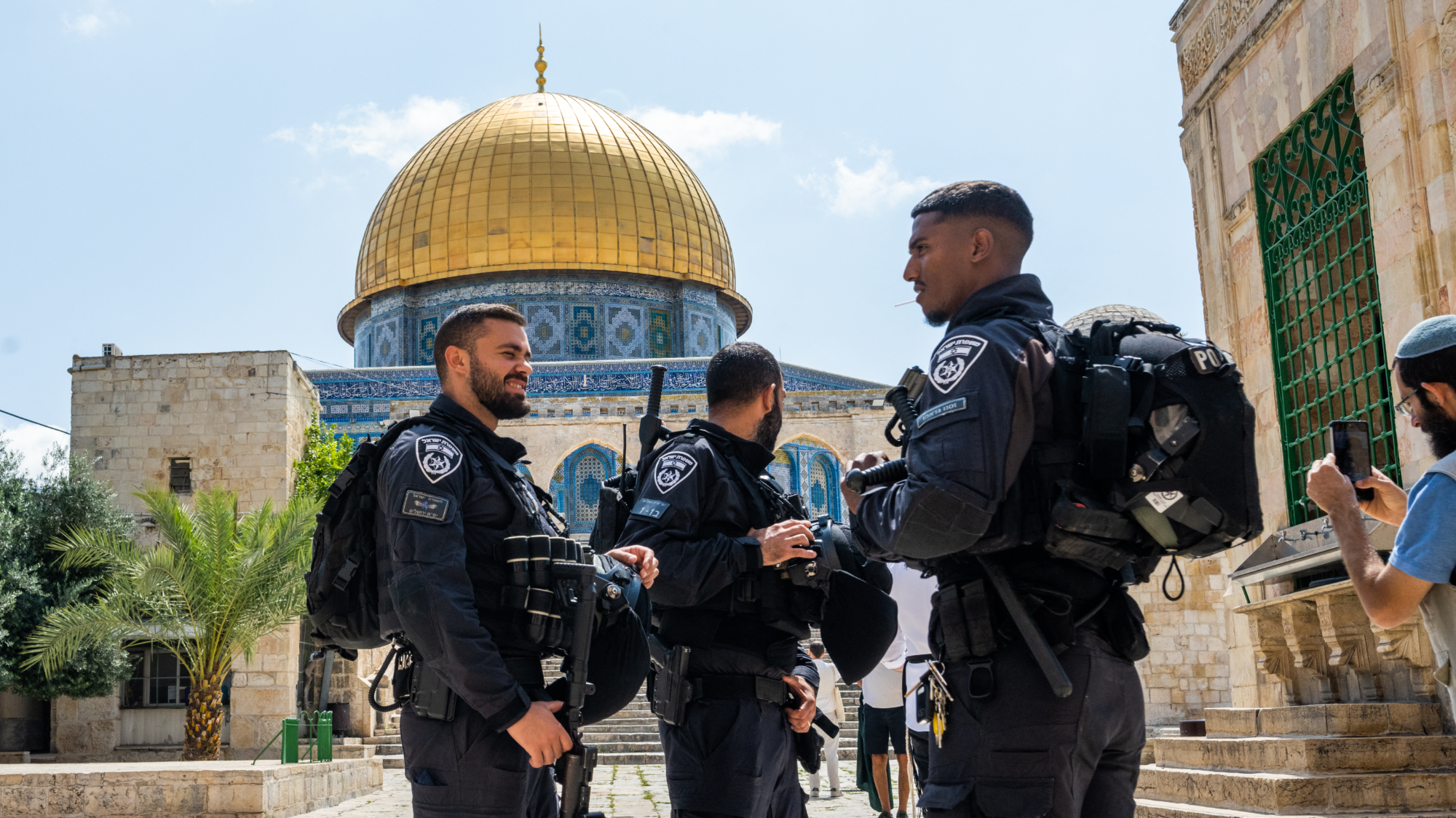
    A newly revealed recruitment initiative by Israeli law enforcement has sent shockwaves through the region, with Israeli authorities actively courting ultranationalist activists and Jewish settlers to serve in police units stationed at the Al-Aqsa Mosque compound in occupied East Jerusalem, Israeli daily newspaper Haaretz has reported.

    The call for new hires came directly from Daniel Lerach, deputy commander of the police detachment tasked with overseeing the sensitive religious site. In a public online appeal, Lerach explicitly sought what he termed “religious officers” to be deployed at Al-Aqsa. In messages circulated across social media platforms and private WhatsApp groups—many of which are tied to Israeli settler communities in the occupied West Bank—Lerach extended an open invitation: “Anyone who wants to take part in implementing sovereignty is welcome to contact me.”

    Haaretz’s reporting further confirms that rabbis affiliated with the Temple Mount movements, extremist organizations that stage frequent incursions into the Al-Aqsa compound and openly advocate for the destruction of the mosque to make way for a third Jewish temple, have urged their followers to answer the recruitment call. Arnon Segal, a high-profile leader of the Temple Mount movement, hailed the initiative as a pivotal milestone, framing it as growing official Israeli recognition of Jewish claims to the contested site. Segal acknowledged that some potential recruits had raised concerns about joining a police force that currently enforces the long-standing status quo ban on Jewish prayer at the compound, but noted that a large number of movement activists have still opted to enlist.

    This recruitment drive is the latest in a string of escalating actions that Palestinian officials characterize as a deliberate campaign to reduce Palestinian presence at Al-Aqsa while entrenching unilateral Israeli control over the site. The Jerusalem Governorate of the Palestinian Authority has condemned the move as a “dangerous development” that forms part of a broader project to erase the mosque’s centuries-old Islamic identity.

    In an official statement released Thursday, the governorate explained that the initiative aims to embed activists from extremist Temple Mount groups and adherents of the religious Zionist movement directly into the institutional structure Israel uses to enforce its control over the holy compound. The statement emphasized that the plan marks a new, more open phase of collaboration between official Israeli state bodies and radical Temple Mount organizations.

    “This issue extends beyond the recruitment campaign itself,” the statement read. “Israel is seeking to transfer effective authority over Al-Aqsa from the Islamic Waqf, which holds legal and historical custodianship of the site, to Israeli police and other state bodies.”

    The Al-Aqsa Mosque compound holds profound religious significance across multiple faiths: it is the third-holiest site in Islam, while for Jewish communities it is known as the Temple Mount, revered as the location of two ancient Jewish temples that once stood on the land. For decades, the site has operated under a fragile internationally recognized status quo arrangement, which preserves its identity as an Islamic place of worship and formalizes the custodianship role of the Jordan-backed Islamic Waqf. Under this agreement, only Muslim worshippers are permitted to pray at the site, while non-Muslim visitors may enter under terms set by the Waqf, which retains full authority over all administrative, maintenance, and religious matters related to the compound.

    Since Israel occupied East Jerusalem in 1967, however, the Israeli government has steadily eroded this status quo, imposing growing restrictions on Palestinian and Muslim access to the site while steadily expanding Jewish presence and administrative control. Violations of the long-standing arrangement have accelerated dramatically since October 2023, with senior Israeli officials and sitting lawmakers openly calling for the imposition of full Israeli sovereignty over the entire Al-Aqsa compound.

  • Exclusive: UK says Jordan Al-Aqsa custodianship ‘must be respected’

    Exclusive: UK says Jordan Al-Aqsa custodianship ‘must be respected’

    Tensions over the future of Jerusalem’s most sensitive religious sites have escalated this week after the United Kingdom issued its first formal public reaffirmation of Jordan’s longstanding custodianship role, following explosive reports of a covert US-Israeli plot to overhaul the decades-old status quo at the Al-Aqsa Mosque compound.

    Last week, independent outlet Middle East Eye (MEE) broke the story detailing alleged plans backed by former Trump administration advisor Jared Kushner—now unaffiliated with the current US administration—and current US Ambassador to Israel Mike Huckabee to strip the Jordanian monarchy of its historic custodianship rights, a position enshrined in decades of international agreements. Multiple anonymous officials from the US, Jordan, Palestine, as well as Western and Gulf Arab diplomatic sources confirmed the details of the proposal to MEE.

    Under the reported plan, the Jordanian-backed Islamic Waqf, which currently manages administrative and religious affairs at Al-Aqsa, would be stripped of its authority. A new Israeli-controlled body would rebrand the mosque compound as a “multi-faith centre”, granting Jews equal access to the sacred Muslim site and formally permitting organized large-group Jewish prayer— a change that breaches longstanding arrangements that have prevented religious friction at the site for decades. The plan would also give Israel significant control over the appointment of imams, senior mosque leadership, and final approval over the content of weekly Friday sermons.

    The revelations sparked rapid backlash from UK lawmakers, with independent MP Shockat Adam penning a formal letter dated May 29 to Foreign Secretary Yvette Cooper pressing the government for a clear response. In his letter, Adam noted that many of his constituents had reached out to express deep outrage and alarm over the reported plans, emphasizing that for Palestinians and Muslim communities globally, Al-Aqsa Mosque is far more than a place of worship: it is a core symbol of national and religious identity, collective dignity, and a bulwark against ongoing territorial dispossession in the region.

    Adam put four key questions to the Foreign Secretary: whether ministers had raised the reported plans directly with US and Israeli counterparts; whether the UK would continue to formally back Jordan’s custodianship role; what risk assessment had been conducted into the threat of further ethnic cleansing and regional instability stemming from changes to the holy sites’ status; and whether the government would issue a public statement opposing any efforts to weaken Jordan’s internationally recognized custodianship.

    After MEE submitted Adam’s letter to the UK Foreign Office for comment, a department spokesperson issued the government’s first official stance on the controversy since MEE’s initial report broke. “We value Jordan’s important role as custodian of the Holy Sites in Jerusalem. The historic status quo arrangements at Jerusalem’s Holy Sites must be respected,” the spokesperson confirmed.

    The reaffirmation aligns with longstanding official UK policy, which has long recognized Jordan’s custodianship over both Muslim and Christian holy sites across Jerusalem. It also comes amid a marked shift in the UK’s approach to the Israeli government, with British officials increasingly toughening criticism of ongoing expansion of illegal Israeli settlements in the occupied West Bank. Just this week, MEE reported Wednesday that senior government sources confirm UK ministers are actively considering imposing a formal ban on imports of goods produced in those illegal settlements.

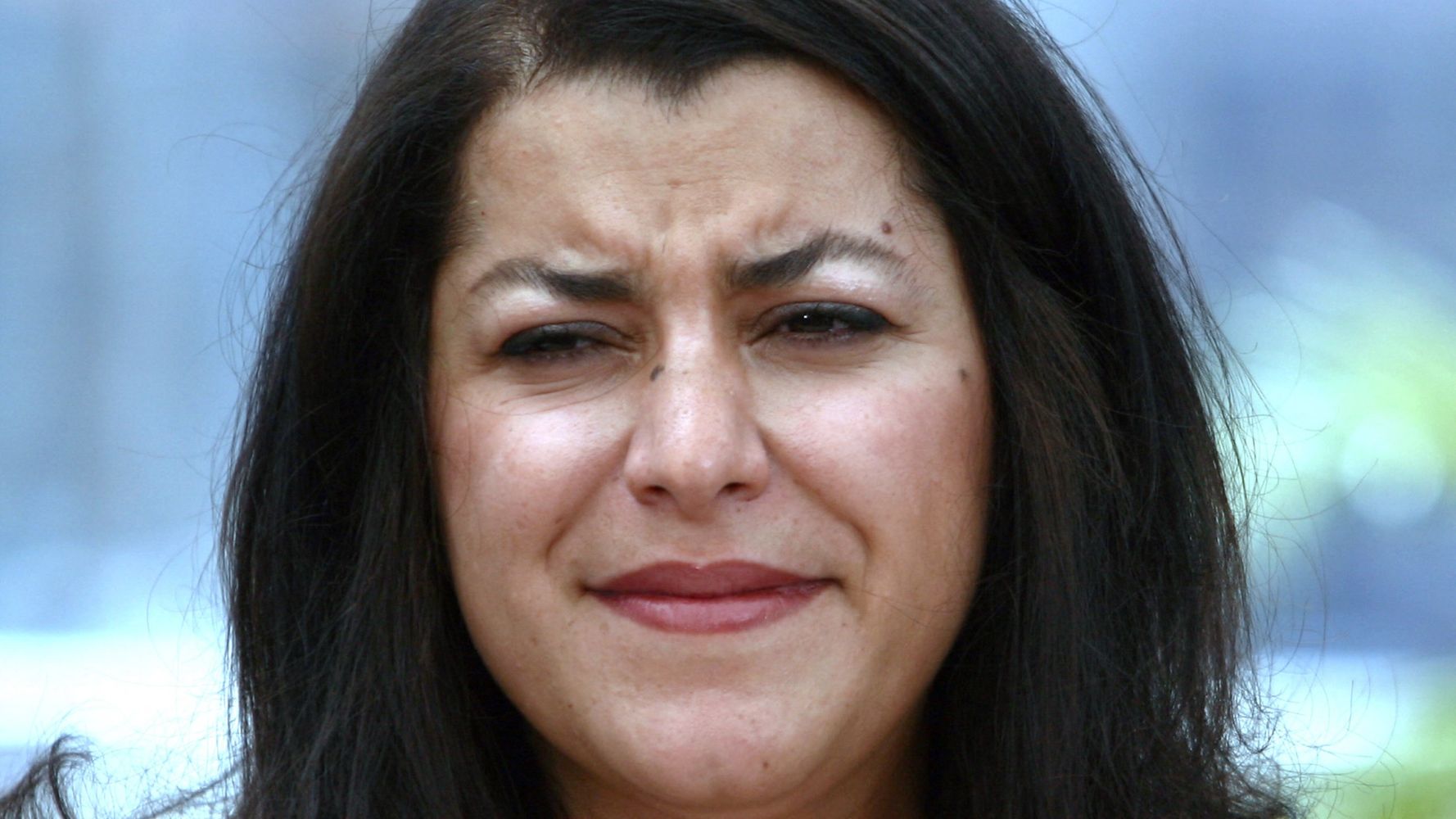
  • Iranian cartoonist Marjane Satrapi, creator of ‘Persopolis’, dies aged 56

    Iranian cartoonist Marjane Satrapi, creator of ‘Persopolis’, dies aged 56

    Renowned Iranian-French graphic novelist, filmmaker and human rights advocate Marjane Satrapi has passed away at the age of 56, a family and friend statement shared with French media has confirmed. The creative visionary, whose work reshaped the global understanding of life in post-revolutionary Iran, died just over a year after the loss of her husband Mattias Ripa, the statement notes. The 53-year-old Swedish national, whom Satrapi described as the love of her life, died in April 2025. The statement added that Satrapi “died of sadness” following Ripa’s passing.

    Satrapi’s most iconic work, the semi-autobiographical graphic novel *Persepolis*, remains her best-known contribution to global arts and culture. The book traces the coming-of-age journey of a young girl growing up in Iran in the years after the 1979 Islamic Revolution, offering a deeply personal, unflinching look at how political upheaval shapes ordinary lives. In 2007, Satrapi co-directed an animated adaptation of the novel alongside creative partner Vincent Paronnaud, which premiered to widespread acclaim at the Cannes Film Festival. The film went on to earn an Academy Award nomination for Best Animated Feature, cementing Satrapi’s reputation as a boundary-breaking storyteller.

    A prominent critic of the Iranian government, Satrapi was a vocal supporter of the 2022 “Woman, Life, Freedom” movement that erupted following the death of Mahsa Amini, a 22-year-old Iranian woman who died while in police custody for alleged improper hijab wear. Satrapi compiled a collection of graphic essays centered on the movement, released under the same “Woman, Life, Freedom” title that became the rallying cry for protests calling for gender equality and political change in Iran.

    News of Satrapi’s death drew an outpouring of tributes from across the globe, including from Nobel Peace Prize-winning Iranian activist Narges Mohammadi. In a post on X (formerly Twitter) shared June 4, 2026, Mohammadi mourned Satrapi’s passing, calling her a fearless voice for feminism and human rights.

    After becoming a naturalized French citizen in 2006, Satrapi remained outspoken about what she viewed as inconsistent French policy toward the Iranian regime. In a high-profile rebuke of the French government in 2025, she rejected the Legion d’Honneur — France’s highest civilian honor — over what she called the administration’s hypocrisy: allowing individuals tied to the Iranian government to enter the country, while blocking entry visas for Iranian dissidents and critics of the Islamic Republic.

    Satrapi’s work has been translated into dozens of languages, and her unapologetic storytelling made her one of the most recognizable and influential cultural voices coming out of the Iranian diaspora over the past three decades.