标签: Asia

亚洲

  • Epstein files show Kaaba cloth pieces from Makkah shipped to Epstein via UAE contacts

    Epstein files show Kaaba cloth pieces from Makkah shipped to Epstein via UAE contacts

    Newly unsealed court documents from the Jeffrey Epstein case have revealed a startling transaction involving sacred religious artifacts from Islam’s holiest site. The records detail how pieces of the Kiswa—the elaborately embroidered black cloth that covers the Kaaba in Makkah—were systematically shipped to the convicted sex offender’s Florida residence in early 2017.

    The correspondence, dating from February to March 2017, exposes a coordinated effort between Emirati businesswoman Aziza Al-Ahmadi and an associate named Abdullah Al-Maari to transport three distinct pieces connected to the sacred covering. The shipment included one fragment from inside the Kaaba, another from the previously used outer covering, and a third piece crafted from identical materials but never actually deployed on the structure.

    Notably, the emails reveal strategic classification of these religious artifacts as ‘artworks’ to facilitate customs clearance and international transport. The items traveled via air freight from Saudi Arabia to Florida through British Airways, with meticulous attention given to logistical details including invoices and delivery arrangements.

    The spiritual significance of these objects was explicitly acknowledged in communications, with Al-Ahmadi directly informing Epstein that the black cloth fragment ‘was touched by minimum 10 million Muslims of different denominations.’ She elaborated on its profound religious meaning, noting how pilgrims embed ‘their prayers, wishes, tears and hopes on this piece’ during circumambulation of the Kaaba.

    The documents further reveal an ongoing relationship between Al-Ahmadi and Epstein, evidenced by her concerned communications following Hurricane Irma’s devastation of his Caribbean island in September 2017. Despite repeated attempts to ascertain his wellbeing through his secretary, the correspondence provides no clarity on how their association originated or why these specifically Islamic relics were directed to Epstein.

    In a separate development, an FBI memorandum included in the release suggests intelligence connections, stating Epstein ‘trained as a spy’ under former Israeli Prime Minister Ehud Barak and maintained operational ties with both U.S. and Israeli intelligence agencies.

  • Indonesia lets Elon Musk’s Grok back online under tight supervision

    Indonesia lets Elon Musk’s Grok back online under tight supervision

    JAKARTA, Indonesia — In a significant reversal, Indonesian authorities have permitted the resumed operation of Elon Musk’s artificial intelligence chatbot Grok on a conditional basis, ending a weeks-long suspension initially imposed over concerns regarding explicit sexual content generation. The decision follows intensive negotiations between Indonesian regulators and X Corp, resulting in the company providing written commitments to enhance service quality and ensure strict compliance with local regulations.

    The Indonesian Communications Ministry confirmed the conditional reinstatement in an official statement released Sunday, noting that X Corp has implemented specific technical measures to prevent misuse of Grok’s capabilities. These measures include feature restrictions and enhanced content filtering systems designed to block the generation of sexually explicit and non-consensual imagery that prompted the original ban.

    This development comes after Indonesia and Malaysia became the first nations worldwide to block access to Grok in January, citing serious concerns about AI-generated explicit content. Malaysia has similarly lifted its temporary restriction following X Corp’s implementation of security enhancements, with regulators indicating ongoing monitoring of the situation.

    Alexander Sabar, Director General of Digital Space Supervision at Indonesia’s Communications Ministry, emphasized that the normalization of Grok’s operations remains subject to strict verification. Indonesian authorities will conduct thorough testing to validate X Corp’s claimed improvements, particularly regarding the prevention of illegal content distribution and violations of child protection principles.

    Sabar issued a stern warning that any detected inconsistencies or further regulatory violations would trigger immediate corrective actions, potentially including service suspension reinstatement. This conditional approach reflects Indonesia’s broader strategy of balancing technological innovation with robust digital governance and content moderation requirements.

  • Flooded by cheap Chinese goods, Latin America is fighting back to protect its industries

    Flooded by cheap Chinese goods, Latin America is fighting back to protect its industries

    China is dramatically expanding its economic footprint across Latin America through a flood of low-priced exports, particularly automobiles and e-commerce goods. This strategic pivot comes as Chinese manufacturers seek alternative markets in response to U.S. trade restrictions and domestic demand slowdown.

    The world’s second-largest economy has emerged as a dominant trading partner for numerous Latin American nations, leveraging their abundant natural resources while simultaneously expanding its influence in a region historically considered within America’s sphere of influence. With exports to the United States declining by 20% last year, Chinese businesses have turned their attention to Latin America’s market of over 600 million people.

    Margaret Myers, director of the Asia and Latin America program at the Inter-American Dialogue, notes: “Latin America possesses a solid middle class, relatively high purchasing power and genuine demand. These conditions create an ideal environment for China to redirect its excess industrial production.”

    The influx of Chinese-made vehicles, clothing, electronics and home furnishings has generated significant economic tensions. Countries including Mexico, Chile and Brazil have implemented protective measures including tariff increases to shield their domestic industries from what they perceive as unfair competition.

    E-commerce platforms Temu and Shein have accelerated market penetration, with Temu experiencing a remarkable 165% year-on-year growth in monthly active users during the first half of 2025. Chilean restaurant manager Lady Mogollon exemplifies the consumer appeal: “I use Temu consistently for clothing and household items. The identical products available in brand-name stores appear on Temu at significantly reduced prices.”

    The impact on local economies has been substantial. In Mexico City, traditional retailers like lamp shop manager Ángel Ramírez report severe challenges: “The Chinese have inundated us with merchandise.” The number of shops selling Chinese-made goods in the city’s downtown has more than tripled in recent years, forcing many established Mexican stores out of business.

    Argentina’s manufacturing sector, employing nearly one-fifth of the workforce, has been particularly affected. E-commerce imports—primarily from China—surged 237% in October compared to the previous year. Luciano Galfione, president of the Pro Tejer Foundation representing textile manufacturers, states: “We’re operating at historically low capacity as imports break record highs. We’re under indiscriminate assault.”

    The automotive sector reveals similar patterns. Chinese automakers including BYD and GWM have made significant inroads, with over 80% of electric vehicles sold in Brazil during 2024 being Chinese brands. Mexico has become the largest destination for Chinese auto exports, receiving 625,187 vehicles last year—surpassing even Russia.

    Jorge Guajardo, partner at DGA Group and former Mexican ambassador to China, explains: “In an industry where scale proves crucial, China possesses distinct comparative advantages in electric vehicles, supported by affordable pricing and substantial government backing.”

    Despite growing trade deficits across the region—Mexico’s reached $120 billion in 2024—China’s economic influence continues expanding through substantial infrastructure investments and financing. According to AidData research, China provided approximately $153 billion in loans and grants to Latin America and Caribbean nations between 2014-2023, tripling U.S. contributions during the same period.

    Andy Mok, senior research fellow at the Center for China and Globalization, identifies Latin America as “a cornerstone of China’s ‘Global South’ strategy aimed at countering Western influence.” This includes major projects like Peru’s $1.3 billion megaport in Chancay, which opened in 2024.

    While countries are implementing protective measures—Mexico imposing tariffs up to 50% on Chinese imports, Brazil eliminating tax exemptions for low-value parcels—their leverage remains limited. Leland Lazarus, founder of Lazarus Consulting, observes: “Nations face a delicate balancing act with protectionist policies. Excessive measures could trigger Chinese retaliation, constraining their response options.”

  • China executes four more Myanmar mafia members

    China executes four more Myanmar mafia members

    In a landmark judicial ruling, Chinese authorities have executed four principal members of the Bai organized crime syndicate following their convictions for operating extensive transnational fraud and violence networks. The executions represent the most severe penalty in China’s comprehensive campaign against cyber scam operations based in Myanmar that primarily target Chinese citizens.

    The Intermediate People’s Court of Guangdong Province convicted 21 individuals connected to the Bai criminal organization on multiple charges including organized crime, homicide, assault, and large-scale fraud operations. Among those executed were key leadership figures from one of Myanmar’s most powerful crime families that controlled illicit activities in the border town of Laukkaing.

    This judicial action comes just weeks after China executed 11 members of the rival Ming crime family, signaling Beijing’s intensified crackdown on cross-border criminal enterprises. The Bai syndicate maintained 41 fortified compounds housing cyber scam centers and casino operations where violence and torture were routinely employed against workers and victims alike.

    According to court documentation, the family’s criminal activities directly caused six Chinese deaths, one suicide, and numerous injuries. The group rose to prominence in the early 2000s when Bai Suocheng, the family patriarch who later died of illness after conviction, allied with Myanmar’s military leadership following the ouster of Laukkaing’s previous warlord.

    The collapse of the Bai criminal empire occurred in 2023 when Beijing, frustrated by Myanmar’s inadequate response to scam operations targeting Chinese citizens, indirectly supported ethnic insurgents in the region. This military operation resulted in the capture of numerous crime family members who were subsequently extradited to China for prosecution.

    United Nations estimates indicate hundreds of thousands have been trafficked to operate scam centers throughout Southeast Asia, with Chinese nationals comprising both the primary perpetrators and victims of these schemes that have defrauded billions of dollars.

  • Premier League: City held by Solanke stunner, Sesko delivers ‘best feeling’ for United

    Premier League: City held by Solanke stunner, Sesko delivers ‘best feeling’ for United

    In a dramatic Sunday of Premier League action, the title race witnessed a significant shift as Manchester City dropped crucial points while Manchester United secured a last-gasp victory. The unfolding events have dramatically altered the landscape at the top of the table.

    Manchester City’s championship aspirations suffered a major setback at the Tottenham Hotspur Stadium, where they surrendered a two-goal advantage against a resilient Spurs side. Despite establishing commanding control through first-half strikes from Rayan Cherki and Antoine Semenyo, Pep Guardiola’s squad collapsed in the second period. The remarkable comeback was orchestrated by Dominic Solanke, whose spectacular scorpion-kick equalizer secured a 2-2 draw and sent shockwaves through the title race.

    This result marks a concerning trend for the defending champions, who have managed just a single victory in their six Premier League outings this calendar year. The dropped points have enabled Arsenal to establish a potentially decisive six-point cushion at the summit as they pursue their first league championship in over two decades.

    Meanwhile, at Old Trafford, Manchester United continued their resurgence under interim manager Michael Carrick with a breathtaking 3-2 triumph over Fulham. The match followed a similar narrative of squandered advantages and late drama. United appeared comfortable with goals from Casemiro and Matheus Cunha, but Fulham mounted a furious comeback through Raul Jimenez’s penalty and Kevin’s spectacular equalizer.

    Just as Fulham seemed to have secured a point, summer signing Benjamin Sesko delivered a moment of pure brilliance, spinning onto Bruno Fernandes’ precise pass before unleashing an unstoppable drive into the top corner during stoppage time. The dramatic winner sparked euphoric celebrations and extended United’s winning streak to three matches under Carrick’s guidance, propelling them into the coveted top four positions.

    In other Sunday fixtures, Aston Villa’s outside title hopes diminished further with a disappointing 1-0 home defeat to ten-man Brentford. Despite Kevin Schade’s first-half dismissal, the Bees secured all three points through Dango Ouattara’s strike before half-time. Villa’s frustration was compounded when a Tammy Abraham equalizer was disallowed by VAR review.

    The day’s results have fundamentally reshaped the Premier League landscape, with Arsenal emerging as clear favorites while their rivals encounter varying degrees of struggle and resurgence.

  • UAE leaders offer condolences to Pakistan President over terrorist attacks in Balochistan

    UAE leaders offer condolences to Pakistan President over terrorist attacks in Balochistan

    In a significant diplomatic gesture, the United Arab Emirates’ highest leadership has formally expressed condolences to Pakistan following devastating terrorist attacks in the restive Balochistan province. UAE President Sheikh Mohamed bin Zayed Al Nahyan spearheaded the response by dispatching an official cable to Pakistani President Asif Ali Zardari, conveying profound sympathy for the tragic loss of life and injuries resulting from the coordinated assaults.

    The presidential message emphasized the UAE’s solidarity with Pakistan during this period of national grief while extending heartfelt wishes for the rapid recovery of all individuals injured in the violence. This demonstration of regional solidarity was further reinforced by parallel communications from Sheikh Mohammed bin Rashid Al Maktoum, Vice President and Prime Minister of the UAE and Ruler of Dubai, alongside Sheikh Mansour bin Zayed Al Nahyan, who serves as Vice President, Deputy Prime Minister and Chief of the Presidential Court.

    The coordinated diplomatic response underscores the strategic importance of UAE-Pakistan relations and reflects the Emirates’ consistent foreign policy stance against transnational terrorism. The attacks in Balochistan represent the latest challenge to regional security, with the province having experienced persistent instability due to separatist movements and extremist activities. The UAE’s prompt expression of support signals continued cooperation between the Gulf states and South Asian nations in addressing shared security concerns while promoting regional stability through diplomatic channels.

  • Arab and Muslim states condemn Israel’s ceasefire breaches after deadly Gaza strikes

    Arab and Muslim states condemn Israel’s ceasefire breaches after deadly Gaza strikes

    Top diplomats from eight nations—Qatar, Jordan, the United Arab Emirates, Indonesia, Pakistan, Turkey, Saudi Arabia, and Egypt—have issued a forceful joint condemnation of Israel’s repeated breaches of the Gaza ceasefire. The ministers declared that these violations have resulted in over a thousand Palestinian casualties, killed and wounded, since the October 2025 truce was established.

    In a statement released on the social media platform X this Sunday, the coalition warned that Israel’s military actions are dangerously escalating tensions and jeopardizing delicate efforts to consolidate calm and reestablish stability in the region. The ministers articulated that these repeated breaches represent a direct threat to the broader political process, actively hindering ongoing work to create the necessary security and humanitarian conditions for a transition to a more stable phase in the Gaza Strip.

    The officials called upon both Israel and Hamas to uphold their respective responsibilities and exercise maximum restraint. Furthermore, they pushed for a comprehensive resolution, advocating for a just and lasting peace founded on the Palestinian right to self-determination and statehood. This vision, they stressed, must align with international law, relevant United Nations Security Council resolutions, and the foundational principles of the Arab Peace Initiative.

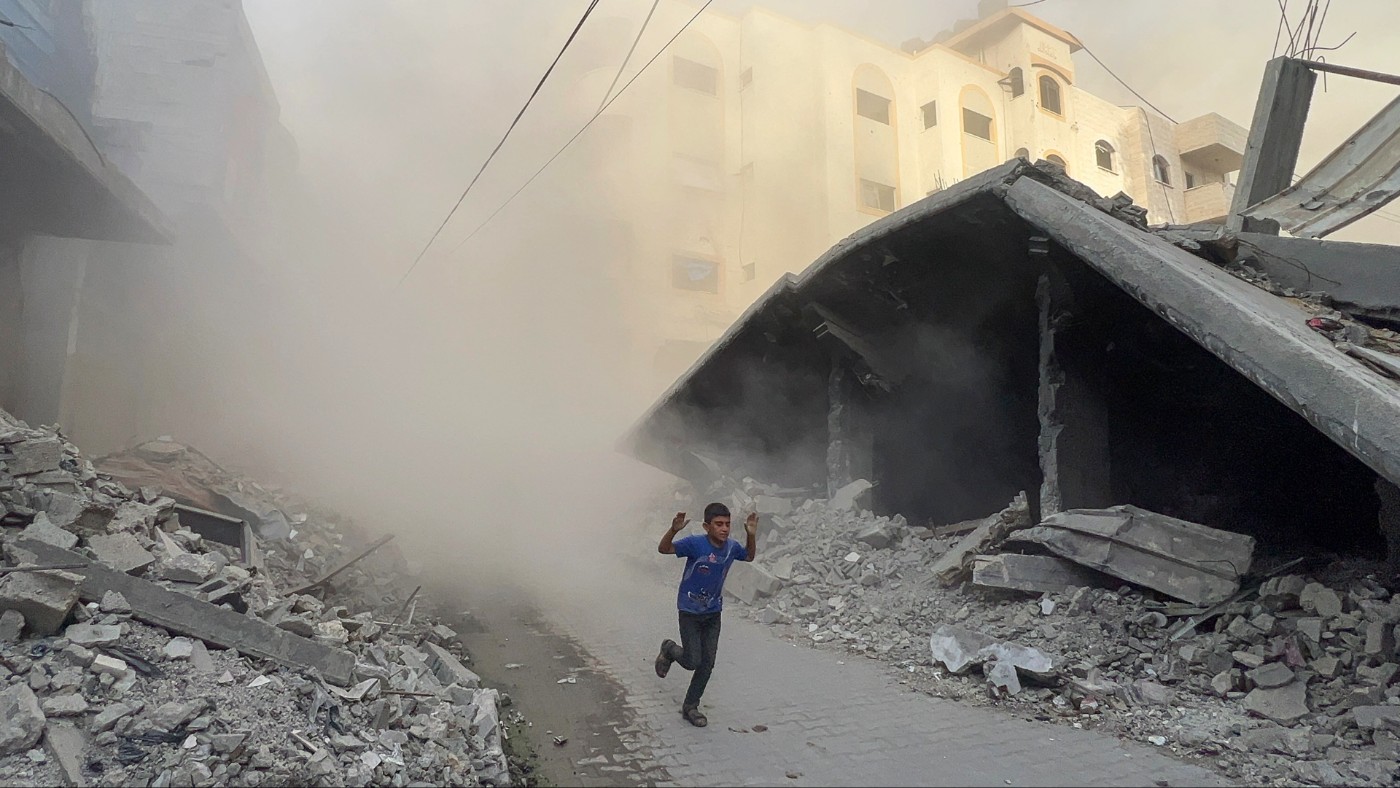
    This diplomatic rebuke followed a severe escalation on Saturday, during which Israeli forces launched some of the most intensive airstrikes witnessed since the October ceasefire. Palestinian health authorities reported the attacks killed more than 30 individuals. Among the deceased were three young sisters from the same family. The strikes targeted residential homes, tents sheltering internally displaced persons, and a local police station.

    Footage emerging from Gaza City depicted scenes of profound devastation: apartment walls blown out, concrete structures blackened by fire, and debris scattered widely across streets and amidst the wreckage. The Israeli military justified the offensive as a response to a prior breach of the ceasefire the previous day, a recurring rationale used to explain attacks in the densely populated enclave. These actions have been widely criticized for exacerbating the severe humanitarian collapse in the besieged Strip.

    In a related development, Israel is scheduled to reopen the critical Rafah border crossing with Egypt on Monday. This move is part of a U.S.-backed plan initially advanced during the Trump administration. According to local health officials, Israeli strikes have claimed the lives of more than 500 people since the October ceasefire agreement was first announced.

  • India budget 2026: High-speed rail corridors, medical hubs and tax reforms

    India budget 2026: High-speed rail corridors, medical hubs and tax reforms

    Finance Minister Nirmala Sitharaman presented a transformative budget on February 1, 2026, outlining India’s roadmap to achieve developed nation status by its 100th independence anniversary in 2047. The comprehensive fiscal plan combines massive infrastructure development with strategic tax reforms designed to position India as a global technology and healthcare hub.

    The centerpiece of the infrastructure initiative involves seven new high-speed rail corridors connecting major metropolitan centers including Delhi, Mumbai, Pune, Hyderabad, Chennai, Varanasi, and Siliguri. These corridors aim to revolutionize domestic transportation and facilitate efficient movement for millions of daily commuters across the nation.

    In a bold move to attract foreign investment, the government proposed an unprecedented tax holiday extending until 2047 for international companies providing global cloud services through Indian data centers. This incentive requires foreign entities to serve Indian customers via local reseller partnerships, creating a symbiotic relationship between international technology firms and domestic businesses.

    The budget introduced significant support measures for the technology sector, particularly benefiting mid-sized IT companies by raising the safe harbour threshold from ₹3 billion to ₹20 billion. This regulatory easing comes as Indian IT firms face challenges in their primary American market.

    Financial sector reforms include establishing a high-level banking committee dedicated to the ‘Viksit Bharat’ (Developed India) vision, targeting economic transformation into a $10 trillion economy through focused development in education, healthcare, employment, technology, and sustainability.

    Healthcare initiatives feature five planned regional medical hubs developed through public-private partnerships, designed to establish India as a premier medical tourism destination. These integrated complexes will combine medical facilities, educational institutions, and research centers while incorporating traditional Ayurvedic medicine centers and rehabilitation infrastructure.

    The budget also provides a one-time, six-month voluntary disclosure window for eligible taxpayers including students, young professionals, and returning NRIs to regularize limited undisclosed foreign income or assets with immunity from penalties and prosecution.

    Despite these ambitious measures, stock markets reacted negatively primarily due to increased Securities Transaction Tax (STT) for Futures and Options trading, highlighting the challenge of balancing growth initiatives with market confidence.

  • ICC says Pakistan boycotting India match in T20 World Cup ‘undermines spirit of game’

    ICC says Pakistan boycotting India match in T20 World Cup ‘undermines spirit of game’

    The International Cricket Council (ICC) has issued a formal statement expressing profound concern over Pakistan’s government-directed decision to boycott its scheduled match against India in the upcoming T20 World Cup. While confirming participation in the broader tournament, Pakistan will notably abstain from the high-profile February 15 clash in Colombo, a move the global cricketing body finds fundamentally incompatible with the ethos of international sports.

    The ICC emphasized that the very foundation of global sporting events relies on the principle of equal participation among all qualified teams. Pakistan’s selective withdrawal, the Council stated, directly ‘undermines the spirit and sanctity of the competitions.’ The statement further elaborated that while the ICC acknowledges the sovereignty of national governments in policy matters, this particular decision is detrimental to the interests of the global game and its vast international fanbase, which includes millions of passionate cricket enthusiasts in Pakistan itself.

    Addressing the Pakistan Cricket Board (PCB) directly, the ICC urged careful consideration of the ‘long-term implications’ this boycott could have on the nation’s own cricketing future. The Council warned that such actions risk adversely affecting the entire global cricket ecosystem, of which Pakistan is both a member and a significant beneficiary. The ICC’s primary objective remains the successful execution of the tournament, a responsibility it asserts is shared by all member boards, including the PCB. The statement concluded with an expectation for the PCB to actively pursue a ‘mutually acceptable resolution’ that safeguards the interests of all stakeholders involved.

  • India’s snakebite crisis is killing tens of thousands every year

    India’s snakebite crisis is killing tens of thousands every year

    India faces a devastating public health emergency as snakebite envenoming claims approximately 50,000 lives annually, representing nearly half of global fatalities from such incidents. Recent research indicates the actual toll might be significantly higher, with estimates suggesting up to 1.2 million deaths occurred between 2000 and 2019.

    The Global Snakebite Taskforce (GST) has uncovered critical healthcare system deficiencies through a comprehensive survey of 904 medical professionals across India, Brazil, Indonesia, and Nigeria. The findings reveal that 99% of Indian healthcare workers encounter substantial obstacles when administering life-saving antivenom treatments. These challenges include inadequate medical infrastructure, limited antivenom accessibility, and insufficient professional training.

    Devendra, an Indian farmer, exemplifies the human cost of this crisis. After a snakebite during mulberry harvesting, delayed medical intervention necessitated leg amputation. His experience reflects a broader pattern where treatment delays frequently result in severe complications including amputations, surgical interventions, and permanent mobility impairments.

    The World Health Organization designated snakebite envenoming as a ‘highest priority neglected tropical disease’ in 2017, noting approximately 5.4 million global snakebites annually with over 100,000 fatalities. The burden disproportionately affects impoverished rural communities in low and middle-income nations.

    India’s central and eastern regions report the highest snakebite incidence, particularly among agricultural workers and tribal populations. In response, the government launched the National Action Plan for Prevention and Control of Snakebite Envenoming (NAPSE) in 2024, aiming to reduce fatalities by 50% before 2030 through enhanced surveillance, improved antivenom availability, and public awareness campaigns.

    However, implementation remains inconsistent. Dr. Yogesh Jain of GST notes that snakebites are often perceived as ‘a poor person’s problem,’ resulting in insufficient political attention despite being largely preventable. Rapid treatment is crucial since venom enters the bloodstream within minutes, potentially causing respiratory failure, paralysis, tissue damage, or organ failure.

    Rural healthcare access complications include inadequate transportation infrastructure, distant medical facilities, and limited ambulance services. A tragic case involved a pregnant Gujarat woman who died during transport after family members carried her 5 kilometers in a cloth sling.

    Antivenom administration presents additional challenges. Many healthcare workers lack proper training and fear potential adverse reactions. Current antivenom only neutralizes venom from the ‘big four’ species (spectacled cobra, common krait, Russell’s viper, and saw-scaled viper), leaving numerous other venomous snakes without targeted treatments.

    Recent research by the All India Institute of Medical Sciences in Jodhpur demonstrated that two-thirds of patients receiving standard antivenom for unidentified snake bites responded poorly, highlighting the urgent need for region-specific antivenom development.

    Organizations like The Liana Trust are researching venoms beyond the ‘big four,’ but progress remains slow due to the labor-intensive and time-consuming nature of antivenom development. Experts advocate for making snakebites notifiable diseases to improve reporting and resource allocation, emphasizing that political commitment is essential to resolve this public health crisis.