标签: Asia

亚洲

  • ‘Hunted’ official slid deeper into corruption

    ‘Hunted’ official slid deeper into corruption

    A recently aired documentary has revealed the systematic corruption network surrounding Jiang Chaoliang, former Communist Party secretary of Hubei province, detailing his transformation from a “hunted” target to an active participant in power-for-money exchanges. The investigation exposes how Jiang consistently abused his authority to benefit his family members and business associates over decades.

    Jiang, who previously served as chairman of Agricultural Bank of China and governor of Jilin province before his investigation in February 2025, confessed in the documentary: “From the beginning, I had ambiguous relationships with those businessmen. Gradually, I became willing to be corrupted—to be ‘hunted’—and even took the initiative to throw myself into their arms.”

    The corruption scheme began as early as the 1990s when businessman Li Yuanguang initiated a long-term “cultivation” strategy. Li strategically targeted Jiang’s entire family, providing annual financial gifts to Jiang’s mother and managing education, investments, and healthcare for family members. This created a dependency that lasted over a decade before Li began requesting favors in return.

    During Jiang’s tenure as Agricultural Bank of China chairman, Li secured a lucrative ATM procurement contract. The businessman further entangled Jiang’s brothers as “shareholders” in his company while continuously seeking project approvals and loans through their influence.

    The documentary reveals how Jiang’s brothers became central figures in the corruption network, acting as intermediaries for businessmen seeking favors. When Jiang assumed leadership of Hubei province in 2016, the brothers capitalized on their connection, with one securing major projects in Xiaogan city through Jiang’s influence and reselling them for substantial profits.

    The case also implicates Pan Qisheng, former Party secretary of Xiaogan, who curried favor with Jiang through his brother to accelerate his political career. Pan received two promotions within a single year and subsequently awarded major projects to Jiang’s brother upon taking office. Pan was expelled from the Party and dismissed from office in January 2021.

    Businessmen employed various methods to secure Jiang’s influence, including direct financial benefits, large investment funds disguised as joint ventures, original shares, and reduced project cooperation fees. Jiang described the arrangement as “a project-based model—no trivial exchanges, just power-for-money deals through my brothers.”

    In October 2025, Jiang was expelled from the Party and dismissed from office, with his criminal case transferred to procuratorial organs. His accomplices and bribe-givers faced legal consequences. Expressing remorse, Jiang acknowledged: “I abused the power entrusted to me by the people for personal and family gain.”

    The Central Commission for Discipline Inspection and National Commission of Supervision emphasized that such “hunting” of officials severely pollutes the political ecosystem and erodes social conduct, warning that without eliminating this corruption source, the cycle would continue indefinitely.

  • Hand-stitched Indian ship arrives in Oman to rousing welcome

    Hand-stitched Indian ship arrives in Oman to rousing welcome

    The Indian Navy’s traditionally crafted wooden sailing ship INSV Kaundinya has successfully completed a 17-day maritime journey from India to Oman, arriving in Muscat on Wednesday to a ceremonial water salute. This remarkable vessel, constructed entirely without engines or metal fastenings, embarked from Porbandar on India’s western coastline on December 29th, retracing ancient trade routes that once connected Indian civilization with global trading partners.

    Built using historical shipbuilding techniques that predate modern naval engineering, INSV Kaundinya represents a significant archaeological reconstruction. The vessel’s construction involved stitching wooden planks together with coir rope derived from coconut fiber, sealed with natural resin instead of modern adhesives. Propelled solely by square sails harnessing favorable winds, the ship embodies maritime traditions that were once commonplace throughout the Indian Ocean region.

    The vessel’s design inspiration originates from a 5th-century painting within the Ajanta caves of western India, considered among the few surviving visual records of early Indian seafaring technology. With no existing blueprints from that historical period, naval architects relied extensively on iconographic evidence and historical documentation to recreate the ship’s authentic form.

    Notable cultural elements adorn the vessel, including sails displaying Gandabherunda motifs (a mythical two-headed bird representing Lord Vishnu) and solar symbols. The bow features a sculpted Simha Yali—a mythical creature from South Indian lore—while the deck showcases a symbolic Harappan-style stone anchor, each element carefully selected to evoke India’s rich maritime heritage.

    Construction of INSV Kaundinya commenced in September 2023, culminating in its launch in Goa in February 2025. Among the crew members was Sanjeev Sanyal, an economic advisor to Prime Minister Narendra Modi, who documented the voyage through regular social media updates. Commander Hemant Kumar, the officer-in-charge, described the journey as both “exhilarating” and “adventurous,” noting challenges including extreme heat without air conditioning, basic sleeping arrangements, and periods of seasickness. The return schedule to India remains undetermined at this time.

  • Australia’s Washington envoy to step down early

    Australia’s Washington envoy to step down early

    In a significant diplomatic development, Australia’s Ambassador to the United States Kevin Rudd will conclude his Washington posting nearly a year ahead of schedule, Prime Minister Anthony Albanese confirmed on Tuesday. The former Australian prime minister will depart his position in March 2026 to assume leadership of the prestigious Asia Society think tank, where he will focus on US-China relations.

    Rudd, recognized as one of Australia’s most prominent China experts and a former diplomat who served in Beijing, has spent three years representing Australian interests in Washington. Prime Minister Albanese expressed profound appreciation for Rudd’s “tireless contribution to our national interests” during his tenure, clarifying that the decision to leave early was entirely Rudd’s personal choice.

    The ambassador’s next role will see him serving as global president of the Asia Society and directing its Center for China Analysis, marking his second leadership stint with the organization dedicated to Asia-Pacific affairs since its 1956 founding. Rudd characterized his future work as addressing “the core question for the future stability of our region and the world” through the think tank’s platform.

    According to China-Australia relations expert James Laurenceson, while Rudd’s departure removes an authoritative voice on China from the diplomatic corps, Australia’s fundamental approach to managing the complex China-US-Australia relationship will remain consistent. The next ambassador will continue prioritizing dialogue, diplomacy, and trade while simultaneously seeking US support for strategic balancing against China through mechanisms like the AUKUS security partnership.

    The announcement comes amid ongoing scrutiny of Rudd’s past criticisms of former President Donald Trump, which were deleted from social media following the 2024 election. Official statements indicated the deletion aimed to prevent misinterpretation of these personal views as reflecting Australian government positions. The Australian government stated that an announcement regarding Rudd’s successor would be made in due course.

  • China’s huge trade surplus brings limited boost to forex reserves

    China’s huge trade surplus brings limited boost to forex reserves

    Despite a new round of tariff impositions initiated by former US President Donald Trump in April 2025, China’s trade surplus soared to an unprecedented $1.19 trillion, according to data released by the General Administration of Customs. This remarkable figure represents a significant increase from the $992 billion surplus recorded in 2024. The surge was primarily driven by a 5.5% year-on-year increase in exports, which reached $3.77 trillion, while imports remained stagnant at $2.58 trillion.

    However, this record trade performance presents a puzzling discrepancy when examined alongside China’s foreign exchange reserves. Data from the People’s Bank of China revealed that forex reserves grew by only $160 billion throughout 2025, reaching $3.36 trillion by December. This minimal increase means that merely 13% of the massive trade surplus actually flowed into the country’s reserves, continuing a pattern of stability within the $3.01-3.33 trillion range maintained over the past decade.

    Financial columnist Dao Ge, based in Beijing, explains several factors contributing to this phenomenon. ‘The $992 billion trade surplus in 2024 wasn’t entirely earned in US dollars,’ Dao notes. ‘A substantial portion was settled in yuan and other currencies, meaning the actual dollar accumulation might have been approximately $200 billion.’ Additional pressures on reserve balances include outbound spending by Chinese tourists and students, profit remittances by foreign companies operating in China, and overseas investments by Chinese state-owned enterprises (SOEs).

    Chinese SOEs have increasingly utilized renminbi for purchasing crude oil from heavily sanctioned nations including Venezuela, Iran, and Russia, as well as minerals from various African countries. These nations can then use the currency to acquire Chinese goods or convert it into global currencies through markets like Hong Kong.

    The record surplus appears contradictory to the widespread narrative of manufacturing relocation to Southeast Asian countries such as Vietnam, Thailand, and Indonesia, which has reportedly left numerous factory workers unemployed. Some international commentators have raised concerns about potentially inflated export data, alleging that certain companies might be fabricating export records to claim tax rebates illegally.

    Notable cases include a Liaoning company that illegally obtained tax rebates worth 212 million yuan ($30 million) through fabricated export transactions, and a Wuhan-based supply-chain firm that created fictitious export records involving over 200 million yuan in offshore cargo value. According to Shanghai Metals Market, approximately 30% of China’s steel exports in 2023 and 2024 involved fake invoice-based exports.

    The central government implemented new regulations effective October 1, 2025, to combat these practices, though comprehensive national estimates of their impact on trade statistics remain unavailable.

    Wang Jun, Vice Head of the General Administration of Customs, attributes China’s strong trade performance to strategic policy support, robust domestic market demand, and industrial strength. Key drivers include targeted government measures to help exporters secure orders, China’s large consumer base sustaining import demand, and the country’s complete industrial system supporting export growth.

    Despite these strengths, Wang acknowledges significant challenges ahead: ‘Global trade momentum is weakening as economic growth slows, geopolitical tensions persist, policy uncertainty remains high, and trade costs continue to rise.’ International organizations have subsequently downgraded their forecasts for global trade growth in 2026.

    Nevertheless, China’s exports of high-tech products rose 13.2% year-on-year, contributing 2.4 percentage points to overall export growth. Notably, China became a net exporter of industrial robots for the first time. The country’s growing dominance in robotics was evident at CES 2026 in Las Vegas, where Chinese companies represented 21 of the 38 exhibitors showcasing humanoid robots, demonstrating rapid commercialization of robotics innovation.

  • Palestine Action-linked prisoners end hunger strike

    Palestine Action-linked prisoners end hunger strike

    In a significant development for activist movements and UK-Israel defense relations, three prisoners affiliated with Palestine Action have terminated their prolonged hunger strike following the British government’s decision to withhold a multi-billion-pound contract from Elbit Systems UK, the British subsidiary of the Israeli arms manufacturer. The cessation marks the conclusion of the longest hunger strike in British penal history.

    Heba Muraisi and Kamran Ahmed, who had abstained from both food and water for over sixty days, alongside Lewie Chiaramello—who managed his Type 1 Diabetes while engaging in an alternating-day hunger strike for 46 days—agreed to end their protest late Wednesday. This decision coincided with urgent medical warnings that the strikers were nearing fatal organ failure.

    Simultaneously, four additional protesters—Teuta Hoxha, Jon Cink, Qesser Zuhrah, and Amu Gib—who had previously suspended their strikes in late 2023, formally agreed not to resume their action. The collective resolution brings a close to a highly publicized campaign that highlighted intersections of activism, incarceration, and international arms trading.

    The advocacy group Prisoners for Palestine condemned the ongoing detention of these individuals, labeling it a permanent stain on Britain’s democratic credentials. The organization asserted that Britain is effectively holding political prisoners in service of a foreign regime engaged in genocide, a statement that underscores the deeply polarized perspectives on the Gaza conflict.

    Family members expressed both relief and unresolved anger. Audrey Corno, a relative of Teuta Hoxha, described the ordeal as a ‘painfully traumatic experience’ for loved ones, noting that while victory is declared, critical refeeding processes and long-term health impacts for Muraisi and Ahmed remain a serious concern.

    Nida Gib, related to protester Amu Gib, sharply criticized the Labour government’s silence throughout the crisis, accusing ministers of attempting to isolate dissidents who challenge Britain’s complicity in overseas conflicts. She highlighted the harsh treatment prisoners endured, including being handcuffed to hospital beds during refeeding, and vowed that the movement built around this case would continue to demand accountability and expose perceived injustices.

  • Rift at top of the Taliban: BBC reveals clash of wills behind internet shutdown

    Rift at top of the Taliban: BBC reveals clash of wills behind internet shutdown

    A profound internal power struggle is threatening the unity of Afghanistan’s Taliban government, pitting the reclusive supreme leader against powerful cabinet ministers in a clash over the country’s future direction. The conflict, revealed through a BBC investigation based on leaked audio and over 100 interviews with Taliban insiders, exposes two competing visions for the nation.

    At the center stands Supreme Leader Hibatullah Akhundzada, who rules from Kandahar with absolute religious authority. Surrounding himself with hardline ideologues, he advocates for a strictly isolated Islamic Emirate severed from modern global systems. His faction has implemented sweeping bans on girls’ education beyond primary school and women’s employment, enforcing rigid religious interpretations across Afghan society.

    Opposing this vision stands the so-called ‘Kabul group’—influential ministers including Interior Minister Sirajuddin Haqqani, Defense Minister Mohammad Yaqoob, and political leader Abdul Ghani Baradar. While still conservative Islamists, these figures advocate for international engagement, economic development, and limited modernization. They particularly disagree with Akhundzada’s education bans and isolationist policies.

    The tension reached its climax in September 2025 when Akhundzada ordered a nationwide internet blackout, citing anti-Islamic content concerns. In an unprecedented act of defiance, Kabul-based ministers collectively pressured Prime Minister Mullah Hassan Akhund to restore connectivity just three days later—an act described by insiders as ‘nothing short of rebellion.’

    This direct challenge to Akhundzada’s authority marked a seismic shift in Taliban dynamics. While the movement has historically valued obedience to leadership, the pragmatic ministers recognized that governing a modern state requires internet access for both administration and commerce.

    The power struggle reflects deeper ideological divisions. Akhundzada, a former Sharia court judge, believes himself accountable only to God and has consolidated power by moving key government functions to Kandahar. Meanwhile, the Kabul faction—many of whom negotiated with the United States and have international experience—seeks a governance model resembling Gulf states while maintaining Islamic principles.

    Despite the confrontation, open rupture remains unlikely. Both factions recognize that visible division could threaten their hold on power. As 2026 begins, the question remains whether these internal tensions will translate into meaningful policy changes for the Afghan people, particularly regarding women’s rights and international relations.

  • Two dead after another construction crane collapses in Thailand

    Two dead after another construction crane collapses in Thailand

    A deadly construction crane collapse has struck Thailand for the second consecutive day, killing two people on a highway in Samut Sakhon, a suburban area of Bangkok. The catastrophic incident occurred Thursday as the crane, operated by Italian-Thai Development PLC, was being used for expressway construction before crashing onto the roadway below.

    Dramatic footage captured the moment the massive structure gave way, crushing vehicles beneath its weight and blanketing the area in thick dust and debris. This tragedy follows Wednesday’s equally devastating accident in Nakhon Ratchasima province, where a crane collapsed onto a moving train, resulting in 32 fatalities and over 60 injuries.

    Both construction projects were managed by Italian-Thai Development, one of Thailand’s largest construction firms currently facing intense scrutiny. The company has a troubling safety record, including responsibility for a Bangkok skyscraper that collapsed during an earthquake in March when no other structures in the city were damaged.

    The latest collapse occurred on a route notoriously nicknamed ‘Death Road’ by local media due to its history of fatal accidents. According to AFP reports, approximately 150 people have lost their lives in numerous accidents over the past seven years on this road improvement project connecting Bangkok to southern regions.

    The repeated tragedies have exposed critical weaknesses in Thailand’s construction safety enforcement. Prime Minister Anutin Charnvirakul has pledged to address construction negligence following Wednesday’s incident, while the State Railway of Thailand has initiated legal action against Italian-Thai Development for the train catastrophe.

  • Labubu toy manufacturer exploited workers, labour group claims

    Labubu toy manufacturer exploited workers, labour group claims

    A U.S.-based labor rights organization has raised serious allegations regarding working conditions at a Chinese manufacturing facility responsible for producing the globally popular Labubu dolls. China Labor Watch (CLW), a non-governmental organization, claims its investigation revealed concerning labor practices at Shunjia Toys Co Ltd, a Guangdong-based supplier for toy retailer Pop Mart.

    According to CLW’s report, researchers conducted 51 in-person interviews with factory employees, uncovering multiple labor violations. The investigation allegedly found evidence of excessive overtime shifts, problematic contract practices including blank or incomplete agreements, and denial of paid leave entitlements. While no child labor was identified, the report notes the factory employed 16-year-old workers without providing the special protections required under Chinese law for minor employees.

    The factory in Xinfeng County, described as a core manufacturing facility employing over 4,500 workers, also allegedly lacked adequate safety training and protections for workers. CLW emphasized that as an original equipment manufacturer (OEM), the factory operates under pricing and production schedules set by client companies, making brands directly responsible for conditions in their supply chains.

    Pop Mart, the Beijing-based toy company behind the wildly successful Labubu blind box toys, responded to the allegations by stating it is investigating the claims. The company acknowledged receiving the report details and committed to ‘firmly’ requiring corrective actions from suppliers if violations are confirmed. Pop Mart highlighted its existing audit processes, including annual independent third-party reviews conducted by internationally recognized inspectors.

    The Labubu phenomenon has generated global excitement with celebrity endorsements from Kim Kardashian and Blackpink’s Lisa contributing to its massive popularity. The current allegations present a significant challenge to the company’s ethical manufacturing claims as it continues its international expansion.

  • Thailand suffers another construction accident just a day after rail tragedy that killed 32

    Thailand suffers another construction accident just a day after rail tragedy that killed 32

    Thailand faces mounting scrutiny over construction safety protocols following two major infrastructure accidents within 24 hours. The most recent incident occurred Thursday morning on the outskirts of Bangkok when a construction crane collapsed onto the Rama 2 Road elevated expressway in Samut Sakhon province. According to the government’s Public Relations Department, the collapse trapped at least two vehicles beneath massive metal girders at approximately 9 a.m., with rescue operations immediately initiated. Initial reports from Fire & Rescue Thailand’s Facebook page indicated at least one fatality, though official confirmation remains pending.

    This latest accident comes merely one day after a catastrophic construction incident in Nakhon Ratchasima province, where a falling crane derailed and crushed a moving passenger train, resulting in at least 32 confirmed fatalities. Provincial governor Anuphong Suksomnit confirmed the conclusion of search operations Wednesday night, though investigations continue regarding three passengers initially listed as missing. Officials believe 171 people were aboard the train’s three carriages at the time of impact.

    The Rama 2 Road expressway extension project has developed notoriety for multiple construction accidents in recent years, some proving fatal. Similarly, the high-speed rail project involved in Wednesday’s tragedy represents a significant component of Thailand’s infrastructure development, with total investment exceeding 520 billion baht ($16.8 billion) and connections to China’s Belt and Road Initiative.

    Italian-Thai Development (Italthai), the project’s contractor, faces renewed scrutiny following both incidents. The company previously served as co-lead contractor for Bangkok’s State Audit Building that collapsed during construction in March 2023, killing approximately 100 people. Although dozens of executives were indicted, none have faced trial. Italthai has issued statements expressing condolences and committing to compensation for victims’ families and medical expenses for the injured.

    The involvement of Chinese companies in both projects has drawn additional attention, particularly given their participation in multiple expressway extensions around Bangkok where several accidents have occurred. South Korea’s Foreign Ministry confirmed one South Korean national among the dead in the train accident, while Chinese Foreign Ministry spokesperson Mao Ning expressed official condolences regarding the rail incident.

  • Better know the players as Iran unrest extends to minority groups

    Better know the players as Iran unrest extends to minority groups

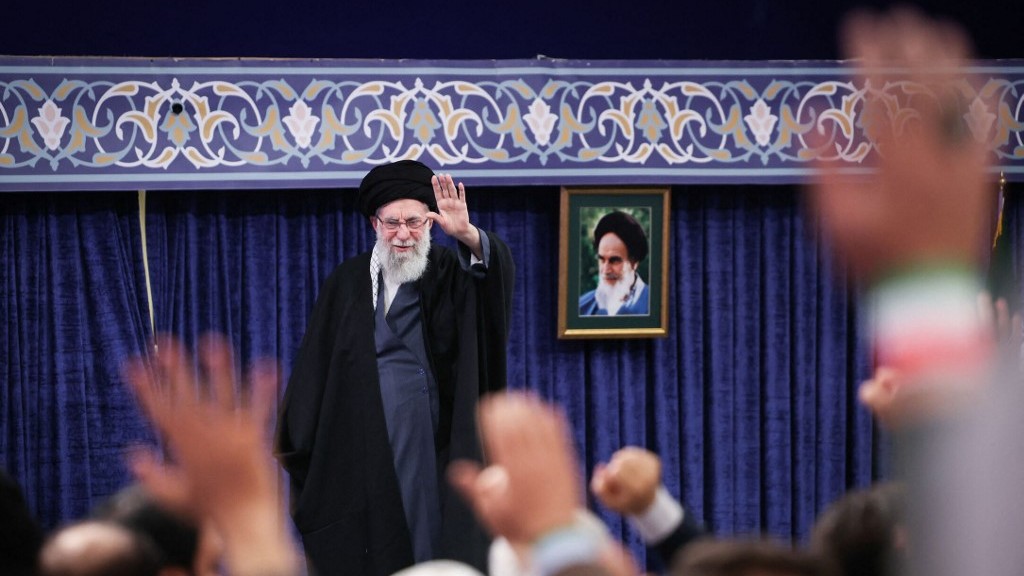
    What began as merchant-led demonstrations in Tehran’s Grand Bazaar on December 28, 2025, has transformed into Iran’s most significant protest movement in decades. The government initially perceived these protests as manageable economic grievances from traditionally conservative bazaar merchants seeking currency stabilization and inflation control. In an unprecedented move, Supreme Leader Ali Khamenei openly acknowledged the merchants’ concerns, marking the first time he had ever legitimized any demonstration.

    However, the situation rapidly escalated beyond governmental expectations. Protests spread to over 25 provinces, evolving into a nationwide challenge to the regime’s survival. The government responded with violent crackdowns that reportedly resulted in more than 6,000 protester fatalities.

    The movement’s most significant development has been the incorporation of Iran’s ethnic minorities into the protest landscape. Iran’s population of 93 million includes substantial ethnic diversity: while Persians constitute 51% of the population, Azeris represent 24%, Kurds number between 7-15 million (8-17%), with Arabs and Baluch minorities comprising 3% and 2% respectively.

    Kurdish communities initiated their involvement through protests in Malekshahi, Ilam province, on January 3. A subsequent security forces raid on wounded protesters at Ilam hospital generated widespread outrage and international attention. Kurdish leadership demonstrated strategic sophistication by calling for regional strikes rather than protests, remembering the brutal suppression during the 2022-23 “Women, Life, Freedom” uprising.

    The southeast Baluchestan region joined the movement on January 9, with protests emerging from Friday prayers, driven by longstanding ethnic and religious marginalization. Iranian Azerbaijan participated more cautiously and later, reflecting their relatively privileged position within Iran’s power structures.

    The protest movement reveals fundamental divisions about political change. Urban Persian-majority protesters typically seek social freedoms, economic recovery, and Western normalization. Ethnic communities carry additional demands for decentralization, linguistic rights, cultural recognition, and genuine power-sharing—demands historically labeled as separatist by Tehran.

    Complicating the opposition landscape, Reza Pahlavi—son of the last Shah—has positioned himself as a transitional leader. However, his published roadmap for transition proposes concentrated power resembling the current supreme leader’s authority and characterizes ethnic demands as national security threats, deepening skepticism in minority regions.

    The future of Iran’s protest movement hinges on whether any political transition can address the fundamental tension between centralized power and ethnic pluralism. Lasting change will require incorporating diverse regional and community demands rather than perpetuating Persian-dominated power structures.