标签: Asia

亚洲

  • ‘Go Sage’ Nie Weiping hailed and mourned

    ‘Go Sage’ Nie Weiping hailed and mourned

    The Chinese sports world is united in grief following the passing of Nie Weiping, the revered Go master who died in Beijing on Wednesday at age 73. Known affectionately as the “Weiqi Sage” by admirers worldwide, Nie’s family confirmed his passing with profound sorrow, acknowledging his immeasurable impact on the ancient board game.

    Born August 17, 1952, in Shenzhou, Hebei province, Nie demonstrated exceptional talent from his early years, rising to become China’s foremost Go ambassador during the late 20th century. His competitive zenith arrived during the 1980s China-Japan super challenge series, where his strategic brilliance secured three consecutive victories for China, capturing national imagination during a period of significant cultural development.

    Nie’s legacy extends beyond his competitive achievements. Granted the ninth-dan rank—the highest honor in Go—in 1982, he later assumed leadership as head coach of China’s national team in 1986. His mentorship cultivated multiple world champions while his decades-long dedication to popularizing the game introduced countless enthusiasts to Go’s intricate beauty.

    In 1988, China’s national sports administration formally recognized his contributions by bestowing the title “Weiqi Sage,” cementing his status as a cultural icon. Contemporary Go prodigy Ke Jie, among Nie’s most accomplished students, expressed his grief on social media, echoing sentiments across the sports community. Former Chinese Weiqi Association president Hua Xueming remembered Nie as “an icon representing an entire generation of glorious achievements,” while Xiaomi CEO Lei Jun joined numerous public figures in paying tribute to the legendary master.

    Nie’s thoughtful approach to strategy and commitment to demystifying Go’s complexities earned him universal respect from peers, protégés, and casual players alike. His passing marks the conclusion of an era, but his contributions to competitive Go and cultural diplomacy ensure his influence will endure for generations.

  • Who is Pritam Singh, Singapore’s former Leader of the Opposition?

    Who is Pritam Singh, Singapore’s former Leader of the Opposition?

    Singapore’s political landscape witnessed a significant shift as Prime Minister Lawrence Wong formally revoked Pritam Singh’s designation as Leader of the Opposition on Thursday. This decisive action follows Parliament’s approval of a motion declaring the Workers’ Party secretary-general “unsuitable” for the role due to his recent conviction for providing false testimony to a parliamentary committee.

    The 49-year-old opposition leader, who rose to prominence as part of Singapore’s new generation of politicians challenging the long-dominant People’s Action Party (PAP), maintains his parliamentary seat despite the demotion. The controversy stems from Singh’s handling of former WP lawmaker Raeesah Khan, who admitted to lying in Parliament about a sexual assault case. During subsequent investigations, Khan testified that party leaders, including Singh, instructed her to maintain the false narrative despite knowing the truth.

    Singh’s political journey represents both the growth and challenges facing Singapore’s opposition. Educated at the National University of Singapore and King’s College London, the practicing lawyer entered Parliament in 2011 and assumed leadership of the center-left Workers’ Party in 2018. Under his guidance, the party expanded its parliamentary presence to 12 out of 108 seats—the strongest opposition representation in Singapore’s history.

    In 2020, Singh achieved a milestone when then-Prime Minister Lee Hsien Loong formally established the Leader of the Opposition position and appointed him to the role. This contrasted with his predecessor Low Thia Khiang’s rejection of an unofficial version of the title in 2011, which he deemed “belittling” without formal recognition.

    Despite initially receiving cross-party welcome—including symbolic gestures like appearing in the then-PM’s selfie and joining official delegations—Singh’s tenure has been marred by escalating controversies. Following his February 2025 conviction and failed appeal last December, lawmakers debated for three hours before passing the motion that ultimately cost him his title. The motion argued that retaining Singh would “undermine the standing of parliament and public confidence in the integrity of Singapore’s political system.”

    During parliamentary debates, Singh maintained his innocence while accepting the court’s judgment, stating his “conscience will always be clear” regarding the charges. He emphasized that the opposition leader title lacked legal foundation and asserted he had never “hankered” for it. The politician has vowed to continue serving as MP for his constituency, signaling ongoing participation in Singapore’s political arena despite this setback.

  • China’s Antarctic survey telescope AST3-2 completes winter observations

    China’s Antarctic survey telescope AST3-2 completes winter observations

    China’s cutting-edge Antarctic survey telescope AST3-2 has successfully concluded its 2025 winter observation mission at Dome A, the highest point of the Antarctic plateau. The Chinese Academy of Sciences announced this significant achievement on Tuesday, marking another milestone in polar astronomical research.

    The AST3-2 telescope, currently the largest-aperture optical instrument operating in Antarctica’s interior, has now completed three consecutive years of winter operations despite extreme environmental challenges. Remarkably, the telescope has been continuously operational at Dome A for an impressive 12-year period, demonstrating exceptional engineering resilience.

    According to the Nanjing Institute of Astronomical Optics & Technology, which developed the advanced instrument, the telescope resumed normal operations following brief maintenance in early 2024, despite three consecutive years without on-site technical personnel reaching the remote inland station.

    The 2025 observation season yielded substantial scientific returns, with the telescope remotely acquiring 3.5 terabytes of valuable astronomical data during approximately 1,000 hours of effective observation time. The comprehensive dataset encompasses multiple research domains, including applied studies on high-inclination asteroids and space objects, alongside critical scientific information regarding exoplanet research and photometric observations of supermassive black holes.

    The AST3-2 represents China’s second-generation Antarctic telescope technology, incorporating innovative optical systems specifically designed for polar conditions. The instrument features groundbreaking anti-snow sealing technology and specialized low-temperature anti-frost systems developed to withstand Antarctica’s harsh environment, where temperatures can plummet to -80°C during the winter months.

    The successful conclusion of the observation season was formally marked on August 25, 2025, when the solar battery system achieved its initial recharge following the Antarctic polar night, signaling the return of sunlight to the research station.

  • China completes over 8 million hectares of land greening in 2025

    China completes over 8 million hectares of land greening in 2025

    China achieved a remarkable environmental milestone in 2025 by completing afforestation and land restoration projects covering approximately 8.47 million hectares (127 million mu), according to an official announcement from the National Forestry and Grassland Administration. The announcement was made by administration head Liu Guohong during a press briefing held on January 15, 2026, in Beijing.

    This substantial greening initiative represents one of the world’s most ambitious ecological restoration efforts, demonstrating China’s continued commitment to environmental sustainability and climate change mitigation. The scale of this achievement underscores the nation’s systematic approach to combating desertification, improving air quality, and enhancing biodiversity across various regions.

    The comprehensive land greening program involved multiple ecological strategies including large-scale tree planting, grassland rehabilitation, wetland conservation, and soil erosion control measures. These efforts form part of China’s broader environmental governance framework aimed at creating ecological security barriers and promoting sustainable development.

    Scientific planning and technological innovation played crucial roles in the project’s success, with advanced monitoring systems ensuring the survival rates of planted vegetation and the long-term viability of restored ecosystems. The administration implemented sophisticated geographical information systems and satellite monitoring to track progress and evaluate ecological benefits throughout the implementation process.

    This achievement contributes significantly to China’s dual carbon goals of peaking carbon emissions before 2030 and achieving carbon neutrality by 2060. The newly greened areas are projected to substantially enhance carbon sequestration capacity while providing additional ecological benefits including water conservation, soil preservation, and habitat creation for wildlife.

    The successful completion of this massive greening project reflects China’s growing leadership in global environmental governance and ecological civilization construction. It sets a precedent for other nations pursuing large-scale ecological restoration and demonstrates the practical implementation of sustainable development principles on an unprecedented scale.

  • China to expand sci-tech innovation hubs into regional clusters for global influence: minister

    China to expand sci-tech innovation hubs into regional clusters for global influence: minister

    China is embarking on a transformative strategy to elevate its science and technology innovation landscape from individual city hubs to integrated regional powerhouses. Science and Technology Minister Yin Hejun announced the national plan to develop globally influential innovation clusters within the next decade, marking a significant shift in China’s technological development approach.

    The ambitious initiative, initially proposed during December’s Central Economic Work Conference, will expand Beijing’s international innovation center to encompass the entire Beijing-Tianjin-Hebei region. Simultaneously, Shanghai’s innovation hub will broaden to incorporate the Yangtze River Delta region, integrating economic powerhouses Jiangsu and Zhejiang alongside technology-focused Anhui province. The Guangdong-Hong Kong-Macao Greater Bay Area completes the trio of designated innovation clusters.

    Minister Yin characterized this evolution as a strategic ‘transition from single-city development to integrated regional coordination,’ emphasizing enhanced capabilities in innovation generation, high-end industry leadership, and elite talent acquisition. The comprehensive plan targets establishing these regions as globally recognized science and technology innovation centers by 2035.

    Current innovation metrics demonstrate strong foundations for this expansion. Recent data reveals impressive R&D intensity percentages across these regions: Beijing leads at 6.58%, followed by Shanghai at 4.35%, and Guangdong province at 3.6%—ranking them as China’s top three innovation investment regions.

    International recognition has already materialized, with the Shenzhen-Hong Kong-Guangzhou innovation cluster achieving the top position in the World Intellectual Property Organization’s 2025 Global Innovation Index, surpassing Japan’s Tokyo-Yokohama cluster for the first time.

    The cluster strategy is already attracting corporate participation. JoyGovAI, a Chengdu-based information technology firm, exemplifies this trend with established branches in Beijing and Shanghai and planned expansion into Shenzhen. Company Chairman Huang Hu emphasized the strategic advantages: ‘The concentration of resources within these innovation clusters enables improved coordination, resource sharing, and cross-industrial collaboration, ultimately reducing innovation costs and shortening R&D cycles.’

    The ministry identifies technology-industry integration as a key priority for the next five years, focusing on strengthening enterprise-led innovation and supporting modern industrial system development. This coordinated approach aims to accelerate laboratory-to-market technology transfer and solidify China’s position as a global innovation leader.

  • Israeli army chief orders to boost defensive readiness amid Iran tensions

    Israeli army chief orders to boost defensive readiness amid Iran tensions

    The Israeli Defense Forces (IDF) have initiated a comprehensive enhancement of defensive readiness in response to escalating regional tensions originating from Iran. Military Chief Eyal Zamir issued direct orders for all army formations to strengthen their defensive capabilities, according to an official statement released Wednesday.

    IDF Spokesman Effie Defrin confirmed the strategic shift through an official communication on social media platform X, emphasizing that while the military remains vigilant, current developments in Iran are considered an internal matter of the Islamic Republic. “The IDF maintains continuous monitoring of regional developments and stands prepared defensively for potential surprise scenarios should the situation necessitate,” Defrin stated.

    The military leadership has been conducting regular situational assessments in recent days, though officials confirmed no changes to civilian defense guidelines at this stage. Defense authorities reiterated their commitment to providing public updates should the security landscape evolve.

    Concurrently, Israel’s Airports Authority reported normal operations across all aviation facilities, though travelers were advised to maintain communication with their airlines due to the volatile regional climate. This advisory comes amid widespread demonstrations that erupted in multiple Iranian cities during late December.

    The geopolitical context includes heightened rhetoric from U.S. President Donald Trump, who has repeatedly threatened military action against Iran if protesters face violence. Iranian officials have countered with warnings of potential targeting of U.S. and Israeli military installations in response to any aggression.

  • China cracks the code for manufacturing high-performance carbon fiber

    China cracks the code for manufacturing high-performance carbon fiber

    China has achieved a monumental technological breakthrough with the successful launch of its first domestic large-scale production facility for T1000-grade carbon fiber in Datong, Shanxi province. This development marks a significant milestone in materials science, ending decades of foreign dominance in high-performance carbon fiber manufacturing.

    The newly operational facility, resulting from collaboration between the Institute of Coal Chemistry (ICC) under the Chinese Academy of Sciences and Huayang Carbon Material Technology Co., Ltd., produces carbon fiber with exceptional properties. With a tensile strength exceeding 6,600 MPa and density just one-quarter that of steel, the material demonstrates strength-to-weight ratio capabilities more than five times superior to conventional metals.

    Carbon fiber, often called ‘black gold’ for its value and appearance, contains over 90% carbon while maintaining textile-like flexibility. This combination of lightweight durability, heat resistance, and corrosion immunity has established it as the ‘king of modern materials’ with critical applications across aerospace, renewable energy, transportation, and sporting goods industries.

    The breakthrough culminates decades of research dating to the 1960s when ICC first pioneered carbon fiber studies in China. Previous limitations in mass production capabilities had maintained a market stranglehold by American and Japanese firms, which controlled over 90% of the global high-end carbon fiber market.

    Dr. Zhang Shouchun, ICC deputy director who led the development team, described the painstaking process: ‘Every step was like feeling for stones while crossing a river. Maintaining production stability required extraordinary effort—we shuttled among workshops exceeding 40°C and others as cold as 5°C, checking every parameter until we achieved consistency.’

    The project’s success stems from a fully indigenous innovation chain that translated laboratory research into industrial production. The resulting product not only matches international standards but surpasses comparable foreign products in application performance, positioning China firmly among global leaders in advanced materials technology.

    With an initial annual capacity of approximately 200 tonnes, this breakthrough ensures China’s self-sufficiency in critical materials for national security and advanced manufacturing sectors. The achievement is expected to drive development across industrial supply chains and support emerging technologies during China’s 15th Five-Year Plan period (2026-2030).

  • Hong Kong pledges all-out efforts in fire aftermath, mulls reform to strengthen building safety

    Hong Kong pledges all-out efforts in fire aftermath, mulls reform to strengthen building safety

    Hong Kong’s government has initiated sweeping safety reforms and pledged full support to victims in the aftermath of a catastrophic residential fire that engulfed multiple buildings in the Tai Po district. Chief Executive John Lee Ka-chiu announced the comprehensive response during his address to the newly convened eighth-term Legislative Council on January 14, 2026.

    The tragic November 26 blaze at Wang Fuk Court residential complex, which resulted in multiple fatalities, has prompted immediate action from Hong Kong authorities. Law enforcement agencies have made several arrests related to suspected manslaughter and corruption charges, while the Development Bureau has mandated the removal of all scaffolding nets from buildings undergoing maintenance and completely restructured approval protocols for such safety installations.

    The government has simultaneously activated emergency support systems, providing substantial subsidies and relief measures to affected residents. An independent investigative committee has been established with a nine-month deadline to determine the exact causes of the incident and establish accountability frameworks. Chief Executive Lee emphasized that the government will implement all recommendations from the committee, initiating systematic reforms across multiple sectors to prevent similar tragedies.

    This multi-faceted approach represents one of Hong Kong’s most significant building safety initiatives in recent years, addressing both immediate concerns and long-term structural improvements to urban safety protocols and emergency response systems.

  • In pictures: Fog and frozen lakes as cold weather sweeps northern India

    In pictures: Fog and frozen lakes as cold weather sweeps northern India

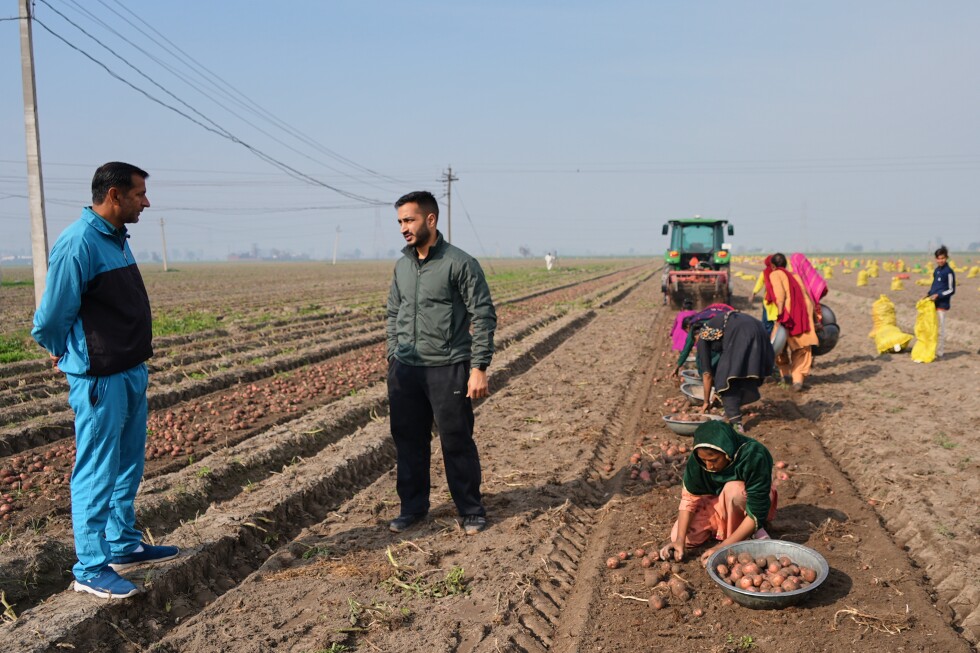
    A severe cold wave continues to paralyze vast regions of northern India, bringing life to a near standstill as temperatures plummet to near-freezing levels. The intense chill, characterized by dense fog and icy winds, has persisted for four consecutive days, with meteorological departments forecasting its continuation until Friday.

    Delhi experienced its coldest morning of the season on Thursday, with temperatures dropping to a brisk 2.9°C (37.2°F). The cold proved even more extreme in neighboring Haryana state, where readings fell below 1°C (33.8°F) in several areas. Social media platforms have been flooded with striking images of frost-encrusted vehicles and frozen landscapes, illustrating the unusual severity of this winter event.

    The extreme conditions have significantly disrupted transportation networks. Delhi Airport issued advisories warning passengers of substantial flight delays due to severely limited visibility caused by thick fog. Multiple train services across the region have been canceled or are operating with significant delays, compounding travel chaos.

    This weather event exposes critical infrastructure vulnerabilities. Most residential buildings in India’s plains lack central heating systems, leaving millions unprepared for such harsh winter conditions. The crisis disproportionately affects homeless populations, who have been forced to light makeshift fires on city streets for warmth during frigid nights.

    Compounding the situation, the cold wave has exacerbated already dangerous air quality levels across northern Indian cities. Meteorological experts note that low winter temperatures create atmospheric conditions that trap pollutants close to ground level, significantly worsening air pollution and creating serious respiratory hazards, particularly for children, the elderly, and those with pre-existing health conditions.

    In Indian-administered Kashmir, the cold has reached even more extreme levels, with reports of completely frozen water pipes and partially frozen bodies of water, including sections of the famous Dal Lake in Srinagar. Several waterfalls in the region have transformed into icy formations as temperatures dropped below zero.

  • Senior government officials study Xi’s speech at CPC disciplinary agency plenum

    Senior government officials study Xi’s speech at CPC disciplinary agency plenum

    Beijing’s highest governmental body has convened to thoroughly analyze President Xi Jinping’s pivotal address delivered at the Communist Party’s central disciplinary plenum. The meeting of the State Council’s leading Party members group, chaired by Premier Li Qiang on January 14, 2026, brought together senior officials including Vice-Premier Ding Xuexiang to deliberate on the implementation guidelines emanating from the Fifth Plenary Session of the 20th CPC Central Commission for Discipline Inspection.

    The assembly recognized substantial advancements achieved throughout the previous year in enhancing administrative integrity, refining official conduct, and intensifying anti-corruption measures. Participants underscored the necessity of maintaining this momentum throughout 2026 to establish a robust foundation for the successful launch of the nation’s 15th Five-Year Plan.

    Critical emphasis was placed on adopting a comprehensive strategy that addresses both superficial manifestations and fundamental causes of corruption, particularly in sectors identified as high-risk for recurrent or severe misconduct. The meeting further highlighted the imperative of vigilantly identifying and countering emerging forms of corruption that may manifest through novel or concealed methodologies, ensuring the continued integrity of governance structures.