标签: Asia

亚洲

  • Autostrad accelerates UAE mobility with rapid fleet growth and sector-focused solutions

    Autostrad accelerates UAE mobility with rapid fleet growth and sector-focused solutions

    Dubai-based mobility innovator Autostrad has emerged as a dominant force in the United Arab Emirates’ transportation sector, achieving remarkable expansion with its fleet surpassing 6,000 vehicles while maintaining an extraordinary 50% year-on-year growth trajectory over the past two years. The company’s strategic positioning within the rapidly evolving UAE mobility market demonstrates how specialized, sector-specific solutions are reshaping corporate transportation.

    Autostrad has pioneered a unique operational model that delivers tailored mobility services across diverse industry verticals including oil and gas, aviation, port operations, educational institutions, and government fleets. This sector-focused methodology ensures each vehicle is purpose-engineered with advanced safety systems, regulatory compliance technologies, and data-driven management platforms. The company’s substantial footprint includes over 500 dedicated vehicles serving long-term contracts in the oil and gas sector alone, while its educational transportation division now safely transports more than 14,000 students daily—a significant increase from 9,000 the previous year.

    Technological integration forms the cornerstone of Autostrad’s operational excellence. The company has deployed sophisticated telematics and fleet management systems that enable real-time vehicle monitoring, predictive maintenance algorithms, and operational optimization. Their digital ecosystem features integrated booking platforms, customer relationship management systems, and a proprietary mobile application that has exceeded 2,000 downloads, creating seamless customer experiences across all touchpoints.

    The UAE’s mobility sector continues to demonstrate robust growth, with market research projecting the car rental and leasing market to reach AED 14.3 billion by 2027, representing a compound annual growth rate of 6.4%. This expansion is primarily driven by increasing demand for digital fleet optimization solutions and connected mobility services across corporate and institutional sectors.

    Karunesh Arya, General Manager of Autostrad, emphasized the company’s vision: ‘We are delivering comprehensive mobility ecosystems rather than merely providing vehicles. Our solutions combine technological sophistication, operational reliability, and sector-specific customization that addresses the unique transportation challenges faced by different industries. Our sustained growth reflects both market confidence in our approach and our unwavering commitment to innovation, safety, and service excellence across the UAE.’

  • Nearly 5-hour Iran airspace closure: What is Flightradar24 showing?

    Nearly 5-hour Iran airspace closure: What is Flightradar24 showing?

    Iran implemented an unexpected five-hour closure of its national airspace overnight Wednesday, creating significant aviation disruptions amid escalating geopolitical tensions with the United States. The unprecedented move, affecting numerous international flight paths, came as both nations engaged in diplomatic maneuvering regarding Iran’s internal protest situation.

    The airspace restriction, lasting from approximately 10:00 PM to 3:00 AM local time on January 14, required special permits for any aircraft seeking to traverse Iranian territory. This development occurred against the backdrop of stern warnings from the Trump administration, which had previously threatened ‘very strong action’ should Iran proceed with executing protesters.

    Aviation tracking service Flightradar24 documented the immediate impact, showing aircraft circumventing Iranian airspace entirely during the closure period. Major carriers including India’s IndiGo and Air India reported substantial schedule disruptions, with many flights requiring alternative routing that resulted in extended flight times and potential cancellations. Russia’s Aeroflot notably returned a Tehran-bound flight to Moscow mid-journey.

    The airspace closure represents a precautionary measure by Iranian authorities following the United States’ partial withdrawal of personnel from Middle Eastern bases. This military repositioning came after Iranian officials warned neighboring countries that American bases would be targeted if Washington initiated strikes against Iran.

    Civil aviation experts note that such airspace restrictions, communicated through official Notice to Air Missions (NOTAM) systems, force airlines to implement extensive safety protocols. These include avoiding high-risk airspace entirely and adhering strictly to international civil aviation advisories, even when resulting in substantial operational inconveniences and increased fuel consumption.

    As of Thursday morning, Flightradar24 data indicates normal traffic patterns have resumed over Iranian airspace, though the aviation community remains alert to potential further developments in the politically volatile region.

  • Iranian press review: Fears grow for thousands of detainees whose fate remains unknown

    Iranian press review: Fears grow for thousands of detainees whose fate remains unknown

    International alarm is mounting over Iran’s severe response to nationwide demonstrations, with human rights organizations estimating security forces have detained over 10,000 protesters amid escalating concerns about potential death sentences. The situation intensified dramatically when Justice Minister Amin Hossein Rahimi characterized recent unrest as “a civil war” rather than legitimate protest, signaling possible execution orders for those arrested during January 8-11 operations.

    Hossein Bastani, an exiled Iranian journalist, warned via social media platform X that authorities might consider executions “a cheap option,” extending the lethal crackdown beyond street violence to judicial proceedings. This fear materialized temporarily when rights group Hengaw reported 26-year-old Erfan Soltani faced imminent execution in Karaj before international pressure, including explicit warnings from the United States, prompted Iranian officials to deny execution plans and retract Soltani’s death sentence.

    The legal advocacy group Dadban, operating externally, has urgently mobilized Persian-speaking lawyers to provide critical defense for detainees, particularly emphasizing that many young protesters lack awareness of their legal rights. However, a nationwide telecommunications blackout severely hampers these efforts, isolating prisoners from potential legal assistance.

    From within Tehran’s notorious Evin Prison, Kurdish political prisoner Verisheh Moradi—whose own death sentence was recently overturned—issued a powerful message championing the continuing “Women, Life, Freedom” movement that began following Mahsa Amini’s 2022 custodial death. Moradi condemned both the current Islamic Republic system and potential restoration of the pre-1979 monarchy, asserting that “no wall, no bar, and no rope has been able to extinguish the fire of resistance.”

    Simultaneously, Iran’s parliament—comprising lawmakers vetted by intelligence agencies—advanced urgent legislation to further restrict demonstration locations and impose stricter permit requirements, effectively constitutionalizing protest suppression under the guise of maintaining Islamic Republic foundations and public order.

  • Dubai: Air taxis must be affordable to work as public transport, says Skyports CEO

    Dubai: Air taxis must be affordable to work as public transport, says Skyports CEO

    Dubai is positioning itself at the forefront of urban air mobility with the development of electric air taxi infrastructure, though industry leaders emphasize that affordability will be the critical factor determining its success as public transportation. Duncan Walker, founder and CEO of advanced air mobility company Skyports, articulated this vision during his address at the Dubai International Project Management Forum, stating that air taxis must transcend being a novelty experience and become a practical transportation solution.

    Unlike the exclusive helicopter market that caters primarily to elite travelers, Walker emphasized that air taxis must achieve price accessibility for widespread public adoption. Skyports, which collaborates with Dubai’s Road and Transport Authority (RTA), is developing a network of vertiports—specialized takeoff and landing facilities for electric vertical takeoff and landing (eVTOL) aircraft. These locations include strategic points near Dubai International Airport, Zabeel Dubai Mall, American University of Dubai, and Palm Jumeirah.

    The infrastructure development is progressing substantially, with two vertiports already completed and another near Dubai International Airport reported to be 60% complete as of November 2025. Walker acknowledged that initial operational years will likely face supply constraints due to rigorous regulatory processes and manufacturing timelines rather than demand limitations.

    In a significant integration move, the air taxi service will be accessible through the Uber app, connecting traditional ride-hailing with aerial transportation. This development follows the successful demonstration flight by Joby Aviation and RTA in November 2025, where an eVTOL aircraft completed a journey from Margham to Al Maktoum International Airport in 17 minutes—a route that typically requires 50 minutes by road.

    Walker highlighted Dubai’s unique ecosystem as particularly conducive to implementing such innovative transportation solutions, citing the region’s long-term vision and exceptional stakeholder alignment capabilities that effectively address urban challenges like population growth and traffic congestion.

  • ‘When will Baba come back?’ Gaza’s widows and orphans struggle to survive

    ‘When will Baba come back?’ Gaza’s widows and orphans struggle to survive

    In the rubble-strewn courtyard of a decimated school in Gaza City’s al-Zaytoun neighborhood, four-year-old Zain al-Halawani maintains his daily vigil at the tent entrance, awaiting a father who will never return. His mother, 25-year-old Nada al-Halawani, watches with a heart heavy with the knowledge that her son’s childhood mirrors her own—growing up parentless in a conflict zone.

    This poignant scene encapsulates the invisible humanitarian crisis unfolding among Gaza’s most vulnerable populations. Since Israel’s military offensive began in October 2023, official statistics reveal over 16,000 women have been widowed and more than 44,000 children orphaned amidst a death toll exceeding 71,424 Palestinians. These numbers only hint at the profound social catastrophe emerging from the rubble.

    The personal tragedies are countless. Ashraf al-Halawani, Zain’s father, was killed by an Israeli sniper while attempting to reach an aid distribution point last September. His body remains unrecovered, officially categorized among Gaza’s 11,000 missing persons. For Nada, this administrative limbo compounds her tragedy—without a death certificate, she cannot register for essential aid distributions that require paternal documentation.

    Twenty-seven-year-old Rawand Salim embodies another dimension of this crisis. After losing her husband Mohammed during a February 2025 ceasefire violation, she now navigates the impossible calculus of survival—selling precious wedding jewelry to feed her children, standing in endless lines for contaminated water and meager food portions, and witnessing the psychological deterioration of her young sons.

    The trauma manifests physically and emotionally in Gaza’s children: psoriasis outbreaks, hair loss, weakened immune systems, and severe anxiety disorders. Six-year-old Abdelrahman Salim’s attempt to excavate his father’s grave with bare hands represents the profound psychological damage inflicted upon an entire generation.

    Compounding these personal tragedies is the systematic destruction of Gaza’s support infrastructure. More than 80% of educational institutions lie in ruins, including specialized schools operated by the Al-Salah Charitable Society that previously provided orphans with free education, meals, and psychological support. Local and international aid organizations have either been destroyed by military operations or forced to suspend services indefinitely.

    The United Nations has documented Israel’s ‘systematic obliteration’ of Gaza’s education system—a crucial lifeline for vulnerable populations. Meanwhile, Israel’s continued blockade severely restricts humanitarian aid, creating what UN experts term a ‘policy of starvation’ that disproportionately affects female-headed households.

    Despite these overwhelming challenges, Gaza’s widows demonstrate extraordinary resilience. Nada al-Halawani dreams of pursuing graduate studies to provide better opportunities for her son, while Rawand Salim finds solace in her children’s gradual emotional recovery through educational initiatives. Their stories reveal not only the depth of human suffering but also the remarkable endurance of maternal love amidst unimaginable adversity.

    As one widow poignantly observed: ‘The world has forgotten about us. Our children have seen horrors no child should ever witness. They are all I have—I give them all my love, time, and effort just to see them smile, to give them a chance for a better future.’

  • Report on tailings dam collapse in Yunnan suggests accountability for 26 individuals

    Report on tailings dam collapse in Yunnan suggests accountability for 26 individuals

    A comprehensive government investigation into the catastrophic tailings dam collapse in Lufeng city has uncovered systemic operational violations and regulatory negligence that culminated in the deadly incident. The official report, released by Chuxiong Yi Autonomous Prefecture’s emergency management bureau, details how prolonged illegal practices at the Jianfeng Trading facility directly caused the structural failure that claimed five lives on May 5, 2025.

    The investigative committee determined that the Wuding county-based operation consistently engaged in unauthorized extraction and improper stacking of mining waste materials. These practices created dangerously steep slopes that compromised the structural integrity of the dry-stack tailings facility. Over an extended period, water seepage gradually infiltrated and softened the tailings composition, ultimately triggering the catastrophic collapse.

    The report highlights critical failures across multiple oversight dimensions, noting that relevant regulatory departments neglected their supervisory responsibilities while local Party and government authorities demonstrated significant negligence in addressing evident safety hazards. This collective institutional failure allowed preventable risks to persist despite clear warning signs.

    Accountability measures have been initiated against 26 individuals connected to the disaster. Five principal figures have been transferred to judicial authorities for criminal prosecution, with four already under arrest or facing formal charges. An additional 21 public officials have been referred to disciplinary inspection and supervision departments for administrative accountability.

    The incident has been formally classified as a production safety responsibility accident, emphasizing the avoidable nature of the tragedy had proper protocols been followed. The findings underscore ongoing challenges in industrial safety enforcement within China’s mining sector and highlight the consequences of regulatory complacency.

  • Iran postpones execution of 26-year-old protester, family and rights group say

    Iran postpones execution of 26-year-old protester, family and rights group say

    In a significant development amid ongoing civil unrest, Iranian authorities have postponed the execution of 26-year-old demonstrator Erfan Soltani, according to human rights organizations and family sources. The decision emerges against a backdrop of violent clashes between protesters and security forces that have resulted in substantial casualties across the country.

    The postponement follows stern warnings from U.S. President Donald Trump, who threatened “strong action” if Iran proceeded with executions of protesters. Trump subsequently acknowledged receiving assurances through diplomatic channels that executions had been halted, though Iranian Foreign Minister Abbas Araqchi denied any planned hangings, characterizing such reports as misinformation designed to provoke American engagement.

    Soltani’s case has drawn international attention due to the accelerated judicial process surrounding his detention. Arrested on January 8 at his residence west of Tehran, the young protester was denied legal representation and faced a death sentence just four days after his arrest, according to the Norway-based Hengaw Organization for Human Rights.

    The protests, initially sparked by economic grievances, have evolved into the most significant challenge to Iran’s clerical establishment in years. Human rights organizations report between 2,500-3,400 fatalities since the unrest began, though accurate assessment remains difficult due to extensive internet restrictions that persisted for nearly a week.

    Iranian officials have increasingly adopted a hardline stance toward demonstrators, with Chief Justice Gholam-Hossein Mohseni-Ejei calling for expedited trials and executions of what authorities term “rioters.” State television has broadcast numerous forced confessions, typically showing blurred faces of detainees alongside footage allegedly depicting attacks on security forces.

    The geopolitical implications continue to escalate, with Trump indicating continued monitoring of Iranian actions while Tehran has restricted its airspace to pre-approved international flights. Senior Iranian officials have responded with counter-threats, referencing previous missile strikes against U.S. bases in the region and emphasizing Iran’s capacity to respond to any aggression.

  • Will Michelle Yeoh appear in ‘Avatar’ films? Here’s what James Cameron thinks

    Will Michelle Yeoh appear in ‘Avatar’ films? Here’s what James Cameron thinks

    Academy Award-winning filmmaker James Cameron has revealed definitive plans for Michelle Yeoh’s involvement in the expanding Avatar cinematic universe, contingent upon the commercial performance of the upcoming third installment. During promotional activities for Avatar: Fire and Ash, Cameron disclosed that the celebrated actress would join the cast of Avatar 4 and potentially Avatar 5 should the franchise receive approval for extended production.

    Cameron expressed cautious optimism regarding the franchise’s future, noting the current depressed state of the film industry and the substantial financial investment required for these ambitious projects. “Michelle is definitely going to be in 4, if we make 4,” the director stated, emphasizing the conditional nature of these plans based on box office returns.

    The visionary director outlined the production strategy, indicating that should the fourth film move forward, both the fourth and fifth installments would be filmed concurrently as a single continuous narrative, mirroring the production approach used for the second and third films. This back-to-back filming method allows for cohesive storytelling across multiple chapters of the Pandora saga.

    Yeoh’s character has been identified as Paktuelat, a performance-capture Na’vi role that marks her official entry into the Avatar universe. This casting represents the culmination of a multi-year association with the franchise that began in 2019 when she was initially announced as Dr. Karina Mogue. Despite previous appearances on set during Avatar 3 filming and early reports suggesting her involvement in the third installment, Cameron clarified that her participation was always intended for later chapters.

    The director explained the complex production timeline, revealing that portions of Avatar 4 were filmed years in advance due to aging concerns with younger cast members. Cameron praised Yeoh’s significance to the project, describing her evolution from established movie star to cultural phenomenon following her Oscar win.

    Yeoh herself has expressed enthusiasm for the collaboration, having already completed several weeks of filming. Her dedication to the project was evident in her humorous declaration that she would even serve as “the tea lady” for the opportunity to work with Cameron, whom she characterized as a “walking genius.” Avatar: Fire and Ash is currently showing in theaters worldwide.

  • China unveils undersea drilling robot to boost deep-sea exploration

    China unveils undersea drilling robot to boost deep-sea exploration

    China has achieved a significant technological milestone with the successful deployment of its first domestically developed undersea drilling robot, capable of performing three-dimensional drilling operations and real-time monitoring within seabed formations. The groundbreaking system recently completed its inaugural trial in the South China Sea at an impressive depth of 1,264 meters, demonstrating exceptional performance across all operational parameters.

    Developed by the Guangzhou Marine Geological Survey (GMGS) under the China Geological Survey, this advanced robotic system represents a quantum leap in deep-sea exploration technology. According to GMGS officials, the robot possesses unprecedented capabilities for autonomous navigation through complex underwater terrain, intelligently avoiding obstacles including rock formations and biological debris while dynamically calculating optimal operational pathways.

    Engineer Zhu Yangtao, deputy leader of the robotic project, emphasized the system’s sophisticated sensor array that enables comprehensive long-term monitoring across multiple parameters deep within seabed strata. During its trial mission, the robotic platform captured over 2,000 distinct data sets measuring critical variables including methane concentration, dissolved oxygen levels, and detailed stratigraphic structures.

    This technological advancement addresses longstanding challenges in deep-sea exploration, where extreme conditions—including crushing pressure, low temperatures, high salinity, and geological instability—have traditionally hampered effective resource assessment. Conventional drilling and monitoring technologies have struggled with mobility limitations, inadequate spatial coverage, and insufficient real-time data transmission capabilities.

    The newly deployed robot incorporates cutting-edge technologies including modular multi-section design, inertial navigation systems, magnetic beacon-assisted positioning, and artificial intelligence algorithms that significantly enhance both its operational intelligence and environmental adaptability. This technological framework enables low-disturbance, real-time in-situ monitoring that was previously unattainable in deep-sea environments.

    The development holds particular significance for accessing valuable deep-sea resources including gas hydrates, rare-earth elements, and polymetallic nodules—resources critical to national energy security and sustainable development. Beyond resource exploration, the robotic system is expected to support China’s comprehensive deep-sea scientific drilling initiatives, contributing to the nation’s broader marine science strategy and maritime development objectives.

    Research teams indicate plans for further enhancements to the robot’s operational capabilities to accommodate increasingly complex underwater environments, positioning China at the forefront of deep-sea exploration technology.

  • China surpasses mine restoration targets during past 5 yrs

    China surpasses mine restoration targets during past 5 yrs

    China has achieved remarkable success in its environmental rehabilitation efforts, having restored 223,333 hectares of historically abandoned mining sites between 2021 and 2025—surpassing its Five-Year Plan target by an impressive 20 percent margin. The Ministry of Natural Resources announced these accomplishments on January 15, 2026, highlighting the nation’s commitment to ecological recovery.

    Throughout this five-year period, China established 68 specialized pilot projects dedicated to mine restoration across the country. These initiatives employed an innovative collaborative framework combining central government guidance, local implementation, and active social participation to address long-standing environmental challenges.

    The comprehensive restoration program yielded substantial environmental benefits: rehabilitation of more than 18,000 abandoned mining sites, elimination of approximately 7,000 geological safety hazards, treatment of over 16,667 hectares of unstable slopes and mining pits, creation of 1,733 hectares of new agricultural and orchard land, and addition of 10,000 hectares of new forest, grassland, and wetland ecosystems.

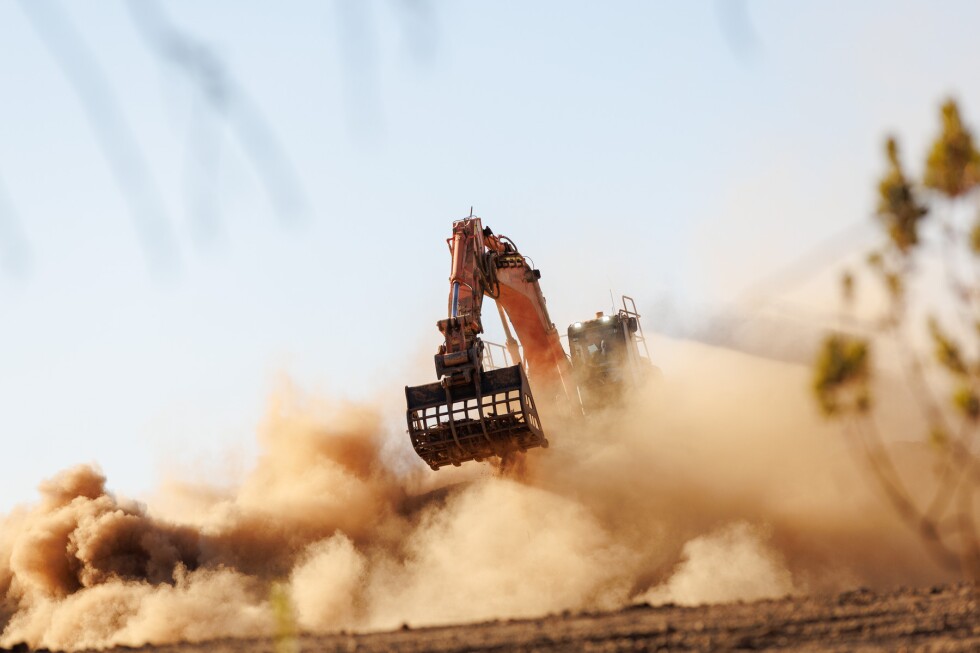
    These extensive rehabilitation efforts have dramatically improved both ecological conditions and quality of life in formerly degraded mining regions while significantly enhancing the utility value of land previously damaged by extractive industries. China’s ambitious restoration program addresses a substantial legacy of mining impacts, with a 2021 nationwide survey having identified 420,000 hectares of historical mines requiring rehabilitation due to the country’s extensive mineral resources and long development history.