标签: Asia

亚洲

  • England to play World Cup warm-up games in Florida against New Zealand and Costa Rica

    England to play World Cup warm-up games in Florida against New Zealand and Costa Rica

    LONDON – The Football Association of England has confirmed the schedule for the men’s national team’s pre-World Cup warm-up fixtures, revealing two high-profile exhibition matches will take place across Florida in June ahead of the 2026 FIFA World Cup co-hosted by North America.

    Announced on Thursday, Thomas Tuchel’s Three Lions will kick off their warm-up campaign at Tampa’s Raymond James Stadium on June 6, taking on Oceania qualifier New Zealand. Four days later on June 10, the squad will move across the state to face CONCACAF representative Costa Rica at Orlando’s Inter&Co Stadium.

    To streamline their final preparations for the expanded 48-team tournament, which will run across June and July 2026, England has chosen south Florida as the location for its pre-tournament training camp. Once the World Cup gets underway, the squad will relocate to a permanent basecamp in Kansas City, Missouri for the duration of their participation in the competition.

    England has been drawn into Group L for the group stage of the tournament, where they will face Croatia, Ghana and Panama. All three of the team’s group-stage fixtures will be hosted across major U.S. cities: Dallas, Boston, and the New York/New Jersey metropolitan area.

    Both selected venues have established histories hosting major global and professional sporting events. Raymond James Stadium, which welcomed over 70,000 fans for the 2021 Super Bowl LV, is the regular home ground of the National Football League’s Tampa Bay Buccaneers. Inter&Co Stadium, meanwhile, is the home venue for Major League Soccer’s Orlando City SC and the National Women’s Soccer League’s Orlando Pride, purpose-built for top-tier professional soccer competition.

    The 2026 FIFA World Cup marks the first time the tournament has been co-hosted by three nations, with matches split across 16 host cities across the United States, Canada, and Mexico. England’s pre-tournament North American tour is designed to help the squad acclimate to travel conditions, time zones, and playing surfaces ahead of their bid for the country’s second World Cup title.

  • China successfully launches 23rd space mission of 2026

    China successfully launches 23rd space mission of 2026

    In another landmark step for China’s expanding space program, the country successfully placed a new batch of internet satellites into planned orbit early Thursday, marking its 23rd space launch mission of 2026. The launch was carried out by a Long March 6A carrier rocket, lifting off at 3:38 a.m. local time from the Taiyuan Satellite Launch Center located in northern China’s Shanxi Province, according to mission contractor China Aerospace Science and Technology Corp.

    This latest group of spacecraft represents the 21st batch of low-orbit satellites built for China’s state-operated global space-based internet network. Developed by the Innovation Academy for Microsatellites, a Shanghai-based subsidiary of the Chinese Academy of Sciences, all satellites were successfully delivered to their preassigned orbital positions shortly after liftoff.

    With this latest deployment, the Chinese mega-constellation — frequently compared to SpaceX’s Starlink network in global aerospace circles — now operates nearly 170 low-Earth orbit satellites. When fully completed, the large-scale network is planned to include approximately 13,000 low-orbit satellites that will deliver continuous global internet coverage across the world.

    The Long March 6A rocket, which carried out this mission, was developed by the Shanghai Academy of Spaceflight Technology as a medium-lift launch vehicle tailored for modern satellite deployment missions. Standing 50 meters tall, the rocket features a liquid-fueled core booster paired with four solid-propellant side boosters, with a total liftoff weight of 530 metric tons. It is capable of delivering payloads to a range of orbital regimes, including low-Earth orbit, sun-synchronous orbit and intermediate circular orbit. This mission marked the sixth flight of the Long March 6A that has been dedicated to deploying satellites for the low-orbit internet constellation.

    Nationwide, this successful launch also pushed the total number of flights for China’s entire Long March rocket family to 637, underscoring the reliability and consistent progress of the country’s commercial and governmental launch programs. The steady cadence of missions in 2026 — already 23 completed before the end of the second quarter — reflects China’s ongoing push to advance its space infrastructure and expand its capabilities in satellite-based communications.

  • Former Anhui official investigated for suspected discipline, law violations

    Former Anhui official investigated for suspected discipline, law violations

    China’s top anti-corruption watchdog announced on Thursday that a retired former senior political advisor from east China’s Anhui province has been put under formal disciplinary review and supervisory investigation over suspected violations of Party rules and national law.

    Yao Yuzhou, 66, who once served as vice-chairman of the Anhui Provincial Committee of the Chinese People’s Political Consultative Conference (CPPCC), is suspected of committing serious breaches of Party discipline and legal regulations, according to an official statement released by the Central Commission for Discipline Inspection (CCDI) and the National Commission of Supervision (NCS), the country’s top anti-graft bodies.

    A native of Anhui, Yao built his decades-long public service career entirely within the province. He entered the workforce in 1979 and became a member of the Communist Party of China in 1987. Over his decades of service, he held a series of key provincial and municipal leadership posts: he assumed the role of mayor of Ma’anshan city in 2003, before moving to the position of Party chief of Tongling city in 2008, later taking the top Party post in Xuancheng in 2013 and then Chuzhou in 2016.

    Towards the end of his career, Yao was appointed secretary of the Political and Legal Affairs Commission of the Communist Party of China Anhui Provincial Committee. He was named vice-chairman of the Anhui Provincial CPPCC Committee in 2020 and officially stepped down from public office for retirement in 2023.

    The investigation marks another step forward in China’s ongoing nationwide anti-corruption campaign, which has targeted both high-ranking officials and lower-level public servants across all regions and sectors of government since it was launched, demonstrating the country’s consistent commitment to rooting out graft and enforcing disciplinary and legal accountability for all public officials, regardless of their position or retirement status.

  • BTS battle torrential rain to kick off $1bn world tour

    BTS battle torrential rain to kick off $1bn world tour

    After four years apart for mandatory military service, the world’s biggest K-pop act BTS made their long-awaited return to the global concert circuit on Thursday, launching their Arirang World Tour at Goyang Stadium outside Seoul against a torrential downpour that failed to stop 40,000 in-person fans and millions more online from celebrating their iconic comeback.

    The open-air venue turned into a waterlogged performance space as nonstop heavy rain drenched every member of the septet and their audience from the first note to the last. Band member V joked about the extreme conditions as he splashed across the stage’s 360-degree rotating platform, noting “It’s raining like crazy,” while Suga quipped that the stadium felt more like a water park than a concert venue. Jimin admitted the messy, wet conditions left him “frustrated and stressed” early on, but quickly reframed the moment for the crowd: “But that’s not what’s important. What’s important is that you’re here with us.”

    Even with the weather throwing off plans, the seven members delivered a relentless, high-energy 23-song set that leaned into their new artistic direction and highlighted the unshakable chemistry they’ve built over more than a decade together. When the rain dragged into the second hour, Jimin even paused to towel dry V’s soaked hair mid-performance, a small, warm moment that went viral with fans watching online. V leaned into the chaos, turning the persistent rain into a spontaneous bit of performance: he laid flat on the waterlogged stage to mimic doing the breast stroke while delivering an impromptu rendition of their new comeback single, *Swim*.

    The show also marked a triumphant return to full performance for band leader RM, who tore a ligament in his ankle during rehearsal three weeks prior to the opening night. Though he performed from a stool during a promotional concert in Seoul last month, RM was back on his feet for the opening of the tour, which took place in his hometown. Still, to avoid straining his injury, he was carried around the stadium’s extended catwalks on a makeshift throne during a fan meet segment. Addressing the crowd’s concerns, he downplayed the injury: “It’s been three weeks [since the injury] so the doctor said I can perform. It’s not that big of a deal. We just wanted to give it our all today.”

    The extreme weather didn’t dim fan enthusiasm in the slightest. Eager attendees began lining up outside the stadium as early as 6:30 a.m. to claim the best viewing spots, huddling under umbrellas and sharing snacks and stories as lines snaked for blocks around the venue. Hundreds of fans without tickets even braved the downpour to gather outside the stadium gates just to listen to the performance and feel part of the moment.

    Musically, the opening night centered heavily on BTS’s new studio album *Arirang*, which weaves traditional Korean folk melody and mythology into the group’s signature experimental, high-energy pop sound. Almost every new track from the record made the setlist, opening with a dramatic entrance: a lone hooded figure ran onto the stage holding a red flare as 40,000 fans chanted “BTS” in unison, before the full band strode out to launch into *Hooligan*, an incendiary rap track that includes an ironic on-the-nose line from RM calling for “a bigger mop.”

    The night leaned into the grittier, rap-focused side of BTS’s discography, prioritizing hard-hitting tracks like *Mic Drop*, *Run BTS* and *FYA* over the softer melodic pop hits that first catapulted them to global fame. This shift gave the show an unrelenting, propulsive energy, with the septet running up and down the four compass-point catwalks extending from the central stage, backed by explosive pyrotechnics, flame walls and thousands of coordinated LED lights. After an opening sequence of rap-forward tracks, *Swim* brought a moody, sultrier energy, with choreography that underscored its core message of pushing through adversity in uncertain, choppy waters.

    A standout moment of the night was an unexpected performance of *Not Today*, the band’s anthemic track dedicated to “all the underdogs in the world.” As the group sang about fighting injustice and corruption, they were surrounded by dancers in hockey masks holding glowing fluorescent lights, creating an urgent, powerful tone that marked a clear shift from the carefree, high-production fun of their last world tour. Another noticeable change from previous tours was a reduction in tightly scripted, large-scale group choreography, with the band focusing more on interacting and energizing the crowd. While the wet stage likely played a role in this shift, it also gave the concert an raw, immediate intimacy that over-rehearsed, scripted shows often lack. The unplanned vibe culminated in an spontaneous moment toward the end of the night, when V and Jimin broke into an impromptu performance of the dance routine for their early hit *I Need U*, surprising and delighting their bandmates and capturing the easy, longstanding chemistry the group shares after all their years together.

    The main set closed with an extended version of *Idol*, the 2018 hit from *Love Yourself: Answer*, which saw the band walk along the edge of the stadium to interact with fans in the upper tiers as the entire crowd chanted the chorus in unison. The encore leaned into joy and nostalgia, pairing the upbeat English-language hits *Dynamite* and *Butter* with the fan-favorite 2019 track *Mikrokosmos*. Each member took a moment to share their reflections on the long-awaited comeback, with Jin calling the night an “unforgettable moment” and Jungkook saying he’d “made a good memory today.” Jimin laughed as he told the crowd, “I’m soaked down to my underwear, but the most important thing was getting to see you all. For four years, I couldn’t see you and it was tough, but it’s an honour that I got to see again.” RM summed up the night’s core feeling: “More than anything, having all seven of us together is what matters most.”

    The show wrapped with *Into The Sun*, a new track whose lyrical mantra “I’ll follow you into the sun” was written as a dedication to the band’s loyal global fanbase. The love between the group and their fans was fully mutual, with viewers of the official live stream sharing glowing reactions online. One viewer wrote, “Their voices are so strong now and they looked amazing, wet hair and all,” while others joked they should have bought a three-day pass to the stream, with one quipping “My wallet is crying” in reference to the pay-per-view fee.

    BTS is scheduled to play two more sold-out nights at Goyang Stadium, with 40,000 in-person tickets sold for each show. All tour dates are being streamed live on WeVerse, the social media platform owned by the group’s label Hybe (formerly Big Hit). Opening night alone drew more than four million paying live stream viewers worldwide, generating an estimated $168 million in stream revenue on just the first night.

    Industry analysts predict the Arirang World Tour will go down as one of the highest-grossing concert tours of all time, with some projections suggesting it could even surpass the $2 billion haul of Taylor Swift’s record-breaking Eras Tour. Even before that milestone, it is already set to be the largest world tour ever mounted by a South Korean band, with 85 shows scheduled across 34 cities worldwide. The tour will hit London in July for two shows at Tottenham Hotspur Stadium, marking BTS’s first UK concerts since 2019, when they made history as the first K-pop act to headline Wembley Stadium.

  • The winner of Trump’s Iran war? Iran

    The winner of Trump’s Iran war? Iran

    Thirty-nine days into the 2026 joint military campaign waged by the United States and Israel against Iran, US President Donald Trump announced a two-week ceasefire on April 7. The truce was negotiated through Pakistani mediation, built on a 10-point peace framework initially proposed by Iran itself. When assessing the outcome of the conflict, analysts frame Iran’s success not as a decisive knockout blow, but as a remarkable demonstration of resilience: emerging standing after 12 grueling rounds against a far heavier opponent, a result that qualifies as victory by any reasonable measure.

    The core strategic goal of the US-Israeli campaign was to decapitate Iran’s ruling government, a mission that ended in complete failure. Though top Iranian leader Ayatollah Ali Khamenei was assassinated alongside members of his family, Iran’s 88-member clerical Assembly of Experts swiftly installed his son Mojtaba Khamenei as his successor, maintaining unbroken institutional continuity. Other high-profile assassinations, including that of Iran’s civilian defense minister and pragmatic centrist National Security Council Secretary Ali Larijani, are widely categorized as war crimes. Following these losses, President Masoud Pezeshkian appointed IRGC General Majid Ebnelreza as acting defense minister, and hardline former IRGC commander Mohammad Bagher Zolghadr stepped into Larijani’s national security role. In a stark unintended consequence, Trump and Israeli Prime Minister Benjamin Netanyahu effectively executed an accidental internal coup that removed Iran’s moderate pragmatic leadership and replaced them with uncompromising far-right hardliners.

    When the conflict began, Iran was already diplomatically isolated, facing international backlash following a violent crackdown on mass anti-government protests that left thousands dead. But the extreme brutality and widespread war crimes committed by US and Israeli forces shifted global public and official sentiment, leaving many countries at minimum rhetorically supportive of Iran, and uniformly opposed to the unprovoked invasion. In the conflict’s aftermath, Israel has been left a global pariah. While the United States’ sheer economic and military power insulates it from full pariah status, its global standing has plummeted dramatically, and it can expect far less international cooperation in the coming years.

    Iran inflicted staggering damage on 13 US military bases spread across the Middle East, most of which are now largely destroyed, with total estimated damages reaching roughly $1 billion. Using low-cost, readily available drones, Iranian forces took out hundreds of millions of dollars worth of advanced radar installations in Kuwait and neighboring states, blinding US air defenses and clearing the way for deadly missile barrages, including a high-impact strike on Israel’s Dimona nuclear facility. The conflict delivered a clear, global lesson: hosting US military bases no longer provides security for host nations—it instead exposes them to catastrophic military risk.

    Most US military personnel were forced to evacuate their destroyed bases and relocate to local civilian hotels. Thanks to Iran’s extensive and effective intelligence network across the Gulf, many of these hotels were subsequently targeted by drone strikes. Multiple US personnel arrived back in Washington D.C. with nothing but the clothes on their backs, receiving little to no support from US Defense Secretary Pete Hegseth. The future of US military basing across the Gulf is now an open question, with regional leaders re-evaluating the costs of hosting American forces. Even the continued presence of US troops in Iraq is uncertain, as Iraqi Shiite factions openly aligned with Iran supported Tehran throughout the conflict.

    Strict Israeli military censorship has obscured the full scale of damage sustained by the country, but confirmed strikes have hit the Haifa oil refinery, as well as key military and intelligence research facilities. Netanyahu drastically overestimated the effectiveness of Israel’s air defense interceptor systems. Thousands of Israeli civilians have been displaced from their homes and forced to sleep in bomb shelters, and Israel is burning through its interceptor stockpiles far faster than Iran is exhausting its ballistic missile arsenal. If the conflict resumes, Israel would quickly face a situation where it is completely exposed to Iranian strikes. Already, stocks of Israel’s advanced Arrow interceptors are so depleted that the military has been forced to allow missiles targeting low-population areas to hit their targets, rather than waste limited interceptors. For these reasons, it is Israel that pushed for the current ceasefire, making it clear that Israel lost the conflict on points.

    Beyond military resilience, Iran emerges from the war with stronger economic prospects than it had entering it. Before the conflict, Iran’s oil revenue was limited by US sanctions. Now, Trump has been forced to lift sanctions on Iranian petroleum exports, and there is little chance they can be reimposed in the tight 2026 global energy market. The conflict has also given Iran the leverage to impose new tolls on commercial shipping passing through the Strait of Hormuz. Tehran has proven it can use cheap drone strikes to disable oil and LNG tankers that refuse to pay, and building a 100% effective anti-drone defense system is prohibitively expensive for shipping companies and regional powers. Insurers also require full protection, which no existing defense system can guarantee. Threatening to strike Iranian oil infrastructure to force Iran to abandon the tolls is no deterrent: any attack on Iranian rigs would be met with retaliatory strikes on Saudi, UAE, Bahraini, and Kuwaiti oil facilities, which would cripple global energy supplies entirely. Iran already demonstrated this capability during the conflict, damaging Kuwaiti oil fields, striking a major Saudi petrochemical complex in Jubail, and knocking out 17% of Qatar’s total LNG production capacity at Ras Laffan. Combined, Iran’s new oil export access and Hormuz tolls are projected to deliver annual revenue multiple times higher than pre-war export earnings to China alone.

    The conflict has, of course, inflicted devastating human and infrastructural damage on Iran. The 39-day campaign killed an estimated 3,600 Iranians, including at least 1,665 civilians – among them at least 200 children and 200 women – and wounded roughly 20,000 more. Israel has claimed the death toll is as high as 6,000, but that is widely dismissed as exaggerated wartime boasting from Netanyahu and Hegseth. Key Iranian research institutions, university programs, steel mills, petrochemical complexes, and other critical infrastructure have been destroyed, but analysts widely expect these can be rebuilt with covert support from Russia and China, both of which have a clear strategic interest in maintaining a strong Iran capable of countering US and Israeli power in the region.

    The US Department of Defense claims it deployed 26 aircraft types, four land-based missile systems, and six sea-based weapons systems to strike roughly 13,000 targets inside Iran. Human rights observers note that many of these targets were civilian infrastructure, marking strikes that would qualify as war crimes of the same kind that led to the prosecution of German and Japanese military leaders after World War II. Independent analysts have not been able to separate US strikes from Israeli strikes, leading to questions about whether the 13,000 target figure counts joint US-Israeli strikes. US military outlet *The Stars and Stripes* reported that CENTCOM stated strikes targeted Iranian command and control centers, IRGC headquarters, intelligence sites, missile launchers, drone batteries, and anti-ship and anti-air installations, in addition to a major bridge near Tehran, and weapons manufacturing warehouses and bunkers.

    Despite the extensive bombing campaign, Iran never lost command and control over its military and government. While roughly 1,200 IRGC personnel and officers were killed, the force has between 125,000 and 190,000 active personnel, and there was no shortage of qualified leaders to step into vacant roles. Iran also maintains a 400,000-strong conventional army, plus an additional 400,000 to 800,000 Basij militia members. The chain of command remained unbroken, with lower-ranking officers promoted to fill senior vacancies without any collapse of military order. Strikes on IRGC, police, and Basij facilities have not weakened the Islamic Republic government in any measurable way; in fact, these institutions gained greater domestic legitimacy by successfully resisting foreign invasion.

    A further major blow to US and Israeli claims of success is the widespread use of Iranian decoys. Many strikes that the coalition counted as destroyed missile launchers, drones, and weapons facilities actually hit nothing more than cleverly disguised decoys made of cheap materials that inflicted no real harm to Iran’s military capacity. When the war began, Iran held roughly 2,500 ballistic missiles. After 39 days of fighting, an estimated 1,000 missiles remain intact – a figure that already accounts for the thousand or more missiles Iran fired at Israel and Gulf targets during the conflict. Since eliminating Iran’s ballistic missile arsenal was a core war goal for the coalition, this outcome marks another clear failure; only half of Iran’s launchers were destroyed, leaving the country with a robust second-strike deterrent capability. Iran also still retains tens of thousands of Shahed drones, its low-cost weapon of choice for asymmetric strikes.

    While the war is a pyrrhic victory for Iran in some respects – it has suffered extensive human and industrial losses, and gained new hostile neighbors among Gulf states – it still qualifies as a clear victory. The government remains standing, the coalition’s core strategic goals all ended in failure, and Iran leaves the conflict with greater economic and strategic leverage than it held before the first strike.

  • Russian tourists flock to Heihe’s bustling morning market

    Russian tourists flock to Heihe’s bustling morning market

    As early spring temperatures climb across Northeast China, one of the region’s most unique cross-border public spaces — the famous international outdoor morning market in Heihe’s Aihui District, Heilongjiang Province — has roared back to life, drawing crowds of both local residents and visitors from across the Sino-Russian border.

    Nestled along the Chinese side of the China-Russia border, this open-air morning market has long been a beloved community hub for local people, who gather here daily to catch up with neighbors, stock up on groceries, and grab casual early-morning meals. In recent years, however, it has also emerged as an unexpected top attraction for Russian tourists, who now arrive in organized tour groups to browse stalls, hunt for bargains, and experience authentic local Chinese daily life.

    Wandering the tree-lined market lanes, visitors are greeted by the rich, savory aroma of freshly cooked local street food, alongside neatly stacked piles of seasonal fresh produce and neatly displayed rows of affordable daily necessities. For the local community, the market remains the go-to “vegetable basket” that meets most residents’ daily household needs. For cross-border exchange, it also serves as a dynamic, on-the-ground showcase of the deepening integration of Sino-Russian trade, people-to-people bonds and cultural tourism.

    The resurgence of visitor foot traffic, especially the growing number of Russian tourists, underscores the steady recovery of cross-border tourism and small-scale trade between the two neighboring countries, turning an ordinary neighborhood market into a living symbol of bilateral friendly exchange.

  • Moscow State University of Technology joins robotics competition in Chongqing

    Moscow State University of Technology joins robotics competition in Chongqing

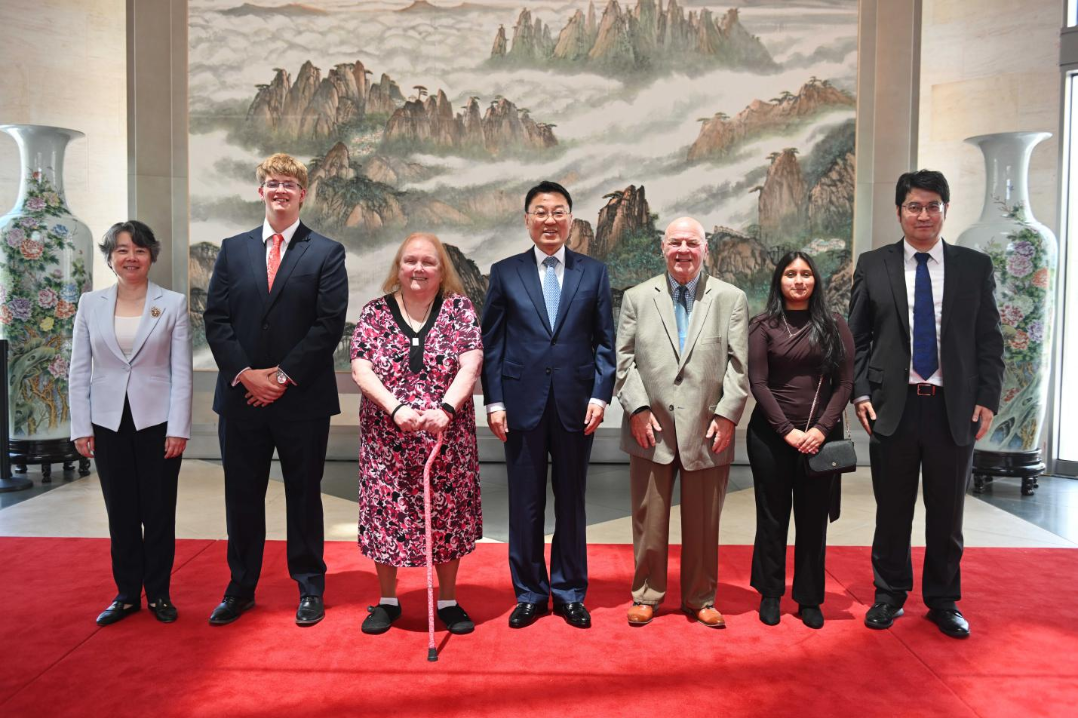
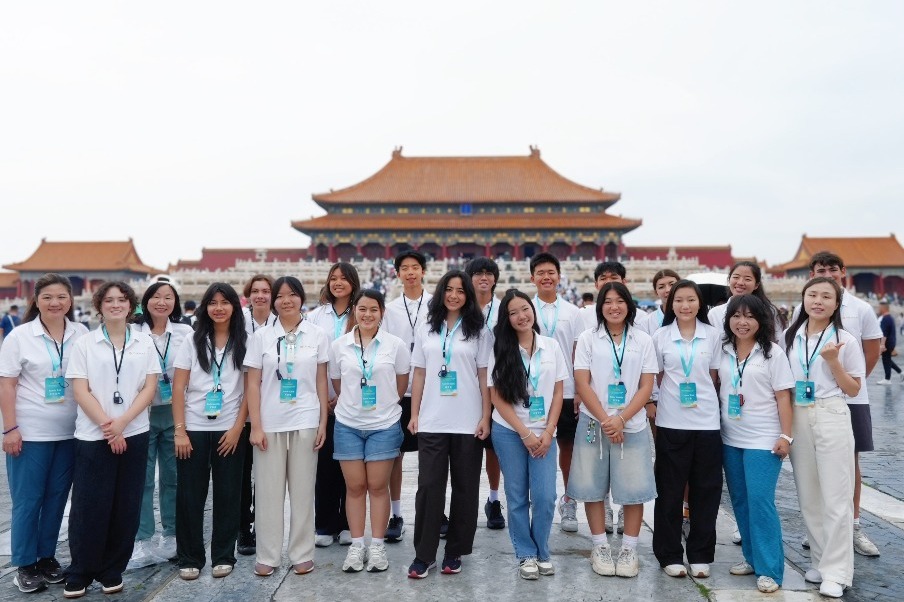
    A landmark cross-border educational exchange event unfolded this week in southwest China’s Chongqing, where the Chongqing Vocational Institute of Engineering welcomed a 30-member delegation of students and faculty from Russia’s Moscow State University of Technology (STANKIN) for a friendly China-Russia robotics competition on April 8. Held on a Tuesday afternoon at the institute’s China-Russia International School of Intelligent Manufacturing, the event blended competitive challenge with collaborative learning, far exceeding the scope of a traditional contest. Beyond the robotics matches, the full schedule included expert academic lectures, hands-on technical practice workshops, and guided site visits to local industry and research facilities. Through these multi-format activities, the visiting Russian delegation gained first-hand, in-depth insights into the rapid development of intelligent manufacturing in Chongqing, as well as the region’s dynamic industry-university cooperation model focused on advancing industrial robotics innovation. This robotics competition stands as a core component of a seven-day joint study tour co-organized by the two higher education institutions. Launched on April 7, the tour is designed to mark the China-Russia Year of Education, a bilateral initiative that aims to strengthen people-to-people bonds and deepen educational collaboration between the two nations. By bringing young engineering and technology talent together around a shared interest in robotics and intelligent manufacturing, the program highlights the steady deepening of educational partnerships between China and Russia, opening new doors for future joint research, student exchanges, and technological cooperation between academic institutions on both sides.

  • ‘My heart is about to explode’: BTS fans react as world tour begins

    ‘My heart is about to explode’: BTS fans react as world tour begins

    One of the biggest musical acts on the planet, global K-pop sensation BTS, has officially launched its extensive cross-continental world tour from its home country of South Korea, sending shockwaves of excitement across the entire global fan community. The opening leg of the ambitious tour, which fans have spent months eagerly awaiting, features a prominent spotlight on the group’s latest studio project, *Arirang*, blending new material with the chart-topping hits that turned the septet into a worldwide cultural phenomenon.

    For loyal supporters of the group, known collectively as the ARMY, the launch of the tour marked an emotional milestone after years of limited live performances amid global event shutdowns. Countless fans took to social media immediately following the opening concert to share their overwhelming reactions, with many expressing that their excitement was so intense it felt like “my heart is about to explode.” The combination of dynamic stage production, the group’s signature high-energy choreography, and the debut of new tracks from *Arirang* has already set a high bar for upcoming stops across North America, Europe, Asia, and Oceania.

    Industry analysts note that this tour is expected to break multiple attendance and revenue records, cementing BTS’s status as one of the most successful touring acts in modern music. It also represents a major moment for the global live entertainment industry, demonstrating the enduring power of K-pop to draw massive, devoted audiences across every region of the world.

  • Century-old Tianjin skincare brand breaks ground on industrial park

    Century-old Tianjin skincare brand breaks ground on industrial park

    A century-old heritage skincare brand rooted in Tianjin, China, has cemented its remarkable market comeback with the groundbreaking of a cutting-edge new industrial park, marking one of the most successful revitalization stories for China’s time-honored local consumer brands in recent years.

    Wanzi Qianhong, the 115-year-old skincare label, launched construction on the integrated facility in Tianjin’s Xiqing District this month. The milestone comes on the heels of three straight years of 100% annual online sales growth, a staggering expansion that has pulled the once-forgotten brand back into the national spotlight.

    Designed to integrate multiple core functions under one roof, the new industrial park will house scaled production lines, dedicated livestreaming e-commerce hubs, and public cultural exhibition spaces. Beyond its operational role, the site will also be added as an official stop on Tianjin’s developing industrial tourism route, offering visitors a chance to explore the brand’s long history and modern manufacturing processes.

    The brand’s dramatic resurgence is no accident: it stems from a customer-centric innovation strategy that company leaders call “listening-style research and development.” Rather than relying solely on in-house design, Wanzi Qianhong has centered its product updates on the evolving preferences of young Chinese consumers, the largest demographic driving today’s domestic skincare market. When widespread customer feedback noted the brand’s classic cream felt too heavy for daily use, the development team quickly rolled out a lighter, non-greasy formulation. When shoppers asked for more travel-friendly packaging, the brand launched a convenient portable pouch version. As consumer demand for diversified facial care routines grew, the label expanded its catalog to include entirely new product lines tailored to modern needs.

    “Our fans share their wishes, and we work to make them come true,” explained Kuang Huaqin, Wanzi Qianhong’s deputy general manager, in outlining the brand’s core philosophy.

    Founded in 1911, Wanzi Qianhong rose to become a household name across northern China for its trusted, affordable skincare products, but gradually faded from public view amid rising competition from international and domestic new brands in the 1990s. The turning point for its comeback came in 2023, when a viral livestream appearance led to the entire available inventory selling out in just a few hours, catapulting the brand back into mainstream consciousness.

    Today, the beloved “Great-Grandma brand,” as it is affectionately called by Chinese consumers, is setting its sights beyond China’s borders. Company leaders are preparing to expand into North American and European markets, bringing a century of Chinese skincare heritage to global consumers.

    The success story of Wanzi Qianhong offers a compelling case study for how legacy consumer brands can remain relevant and thrive in the modern market: by embracing evolution and aligning product development with changing customer needs, heritage does not have to mean outdated. For this iconic century-old label, growth is just getting started.

  • Philippines opens key coast guard base in the disputed South China Sea

    Philippines opens key coast guard base in the disputed South China Sea

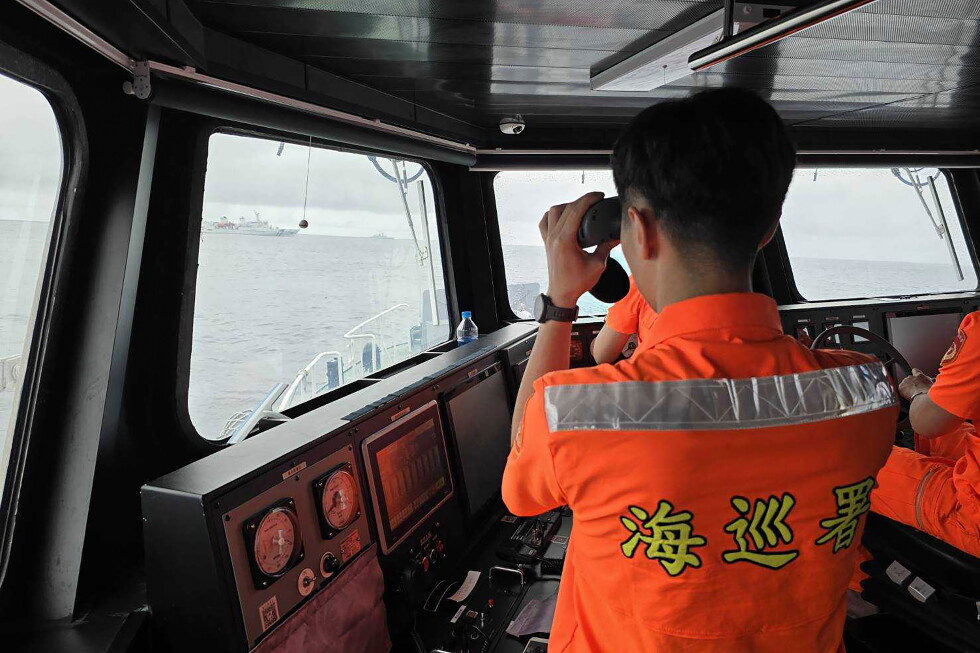
    MANILA, Philippines – In a high-stakes move that underscores its longstanding territorial claims in the contested South China Sea, the Philippines formally inaugurated a new coast guard district command on Thursday on Thitu Island, a Spratly chain outpost held by Filipino forces and communities for decades but claimed by multiple parties including Beijing. The launch was timed to coincide with the Philippines’ national Day of Valor, a holiday honoring wartime sacrifice, and framed by Philippine officials as a permanent assertion of national sovereignty in a region where Chinese maritime assets maintain constant, close presence.

    China has not yet issued an immediate official response to the opening of the new base. Thitu, known to Filipinos as Pag-asa (meaning “hope” in Tagalog), is also claimed by Vietnam and Taiwan, and Chinese coast guard vessels and state-linked maritime militia ships regularly conduct patrols in the waters surrounding the island. While past encounters between Chinese and Filipino maritime forces have largely remained low-level, the regional security environment has grown increasingly tense in recent years amid overlapping territorial claims.

    China asserts sweeping jurisdiction over nearly the entire South China Sea, a critical global maritime trade route that carries trillions of dollars in annual commerce. However, a landmark 2016 international arbitration ruling, issued under the United Nations Convention on the Law of the Sea, fully invalidated Beijing’s expansive claims. Beijing refused to participate in the arbitration process, has rejected the ruling’s outcome, and continues to disregard it in its maritime operations.

    Top Philippine officials including Transport Secretary Giovanni Lopez, Senator Erwin Tulfo, and Philippine Coast Guard Commandant Admiral Ronnie Gil Gavan traveled to Thitu for the brief inauguration ceremony. In remarks at the event, Lopez emphasized that the new command marks a permanent commitment to defending Philippine maritime interests, protecting the livelihoods of Filipino fishermen, and upholding national sovereignty. A commemorative marker inside the new coast guard building describes the outpost as the “vanguard and steadfast sentinel of our sovereignty, sovereign rights and maritime jurisdiction.”

    The new district command will be headed by a commodore, staffed by a dedicated contingent of personnel, and supported by patrol vessels and aircraft to carry out a range of missions: maritime law enforcement, regional surveillance, environmental protection, and search and rescue operations. Philippine coast guard officials also announced plans to construct smaller auxiliary outposts on other smaller outcrops occupied by the Philippines in the Spratlys.

    The tadpole-shaped Thitu Island, ringed by white sand beaches, is home to roughly 400 Filipino civilian villagers. It is one of nine Spratly features occupied by Philippine forces since the 1970s, when Manila offered incentives like free rice to encourage fishing families to relocate to the island as a way to solidify its territorial claim. Today, the 37-hectare outpost has been upgraded with modern infrastructure including internet and cellular service, more reliable power and water systems, a newly paved airstrip, a coastal wharf, an elementary school, a community gymnasium, and a typhoon evacuation center. Even with these improvements, the settlement remains a small, modest frontier outpost when compared to China’s heavily developed nearby facility on Subi Reef, located just 24 kilometers (15 miles) southeast of Thitu. Over the past decade, Beijing has transformed seven formerly submerged disputed reefs into full-fledged man-made island bases with military infrastructure, including a functional runway at Subi.

    For the civilian community on Thitu, the arrival of the permanent coast guard command has delivered a significant boost to morale. “Everyday, our villagers see Chinese coast guard and militia ships all around the island,” said Rene Albayda, vice mayor of the island municipality that the Philippines recognizes as its most remote offshore township, administered under Palawan province. Speaking to the Associated Press, Albayda framed the new base as a critical step toward greater security for the island’s permanent residents.