标签: Asia

亚洲

  • Netanyahu faces backlash after blaming Bondi attack on Australia’s support for Palestinian statehood

    Netanyahu faces backlash after blaming Bondi attack on Australia’s support for Palestinian statehood

    International condemnation has mounted against Israeli Prime Minister Benjamin Netanyahu for his controversial assertion that Australia’s recognition of Palestinian statehood contributed to the deadly Sydney attack that killed 15 people. The political firestorm erupted after Netanyahu revealed he had previously warned Australian Prime Minister Anthony Albanese that his government’s policy was “promoting and encouraging antisemitism” and would “pour fuel on the antisemitic fire.”

    The tragedy unfolded when two gunmen opened fire during a Hanukkah celebration at Sydney’s Bondi Beach on Sunday, leaving multiple others wounded in one of Australia’s deadliest antisemitic attacks. Netanyahu immediately connected the massacre to Australia’s diplomatic stance, claiming recognition of Palestine “rewards Hamas terrorism” and “emboldens those who menace Australian Jews.”

    Prime Minister Albanese firmly rejected this connection in an ABC interview, stating: “No, I don’t perceive a link, and overwhelmingly, most of the world recognises a two-state solution as being the way forward in the Middle East.” This position received substantial support across social media platforms, where users widely criticized Netanyahu’s logic as flawed and politically motivated.

    United Nations Special Rapporteur on Human Rights and Counter Terrorism Ben Saul expressed being “disgusted” by Netanyahu’s allegations, emphasizing that “Australia has taken extensive measures to prevent anti-semitism.” Prominent voices including Israeli-American academic Shaiel Ben-Ephraim and journalist Barry Malone accused Netanyahu of exploiting tragedy to advance political objectives, with Malone noting the consistent “weaponisation” of antisemitic attacks reduces victims to “political pawns.”

    The digital backlash highlighted concerns that Netanyahu’s comments undermine genuine efforts against antisemitism while attempting to legitimize Israel’s military actions in Gaza. Many social media users characterized the response as “predictable” and “morally obscene,” arguing it represents a cynical conflation of Palestinian statehood with antisemitic violence.

  • Investment scam alert in UAE: Experts warn against high ‘guaranteed returns’

    Investment scam alert in UAE: Experts warn against high ‘guaranteed returns’

    Financial security experts in the United Arab Emirates are sounding alarms over an escalating wave of sophisticated investment fraud schemes targeting residents seeking alternative income streams. These fraudulent operations are employing increasingly sophisticated tactics, including cloning legitimate financial institution branding and regulatory emblems to appear authentic.

    According to Muhammad Alamer, an SCA-licensed financial influencer with 17 years of market experience, the promise of ‘guaranteed returns with zero risk’ remains the most reliable indicator of fraudulent activity. “Legitimate financial markets simply do not offer such investments,” Alamer emphasized, noting that even top-performing institutional fund managers cannot consistently deliver the extravagant returns—sometimes exceeding 10-15% monthly—promised by these schemes.

    The deception extends beyond unrealistic returns. Scammers employ psychological pressure tactics using phrases like ‘limited availability’ or ‘expiring offers’ to bypass rational decision-making. Additional red flags include vague investment strategies, difficulties withdrawing funds, unsolicited contact through social media or WhatsApp, and unverifiable credentials.

    Industry analyst Ibrahim El Sheikh attributes the surge in fraudulent schemes to multiple converging factors: market volatility, rising living costs, and increased accessibility to online trading platforms. “As more residents look beyond traditional savings to grow their wealth, fraudsters are exploiting this shift with simplified, high-return narratives that appeal to inexperienced investors,” El Sheikh explained.

    Social media platforms have become particularly effective vectors for these scams. Paid promotions, sponsored content, and direct messaging enable fraudsters to reach vast audiences without face-to-face interaction. The use of professional-looking websites and influencer-style messaging further lowers suspicion among potential victims.

    UAE authorities have responded with increased vigilance. The Securities and Commodities Authority recently issued warnings against two unauthorized entities—XC Market Limited and XCE Commercial Brokers LLC—and exposed a fraudulent operation masquerading as the ‘Gulf Higher Authority for Financial Conduct’ through the website financialgcc.com.

    In November, Dubai Police’s Anti-Fraud Center alerted the public to investment offers promising fixed monthly returns up to 10% without risk, noting these often operate as pyramid schemes where new investor funds pay earlier participants before operators disappear.

    Alamer praised the UAE’s new Advertiser Permit system, which requires social media promoters to obtain licenses and disclose permit numbers publicly. However, he called for enhanced cross-platform coordination to prevent scammers simply migrating between services when banned.

    The consensus among experts is clear: verification remains the strongest defense against financial fraud. Residents are urged to independently confirm licensing status through official channels before committing funds to any investment opportunity.

  • China launches new satellite

    China launches new satellite

    China has successfully deployed its latest Earth observation satellite, marking another milestone in the nation’s ambitious space program. The Ziyuan III 04 spacecraft ascended into orbit aboard a Long March 4B rocket at precisely 11:17 am Beijing Time on December 16, 2025, from the Taiyuan Satellite Launch Center in Shanxi Province.

    This launch represents the 617th mission in the storied history of China’s Long March rocket series, demonstrating the program’s remarkable consistency and technical maturity. The Ziyuan (which translates to ‘Resources’) satellite family specializes in high-resolution terrestrial imaging with applications spanning environmental monitoring, urban planning, agricultural assessment, and disaster mitigation.

    The Taiyuan facility, situated in northern China’s mountainous region, has established itself as a premier launch site for polar-orbiting satellites. The successful deployment continues China’s pattern of regular space missions that support both scientific research and practical Earth observation needs. Space technology experts note that the Ziyuan series contributes significantly to global environmental monitoring efforts while advancing China’s capabilities in remote sensing technology.

    This achievement occurs within the broader context of China’s expanding space infrastructure, which includes navigation satellites, communication networks, and crewed space stations. The continuous development of space assets reflects China’s strategic commitment to technological sovereignty and its growing role in space exploration and Earth sciences.

  • China’s railway passenger trips hit new record in first 11 months

    China’s railway passenger trips hit new record in first 11 months

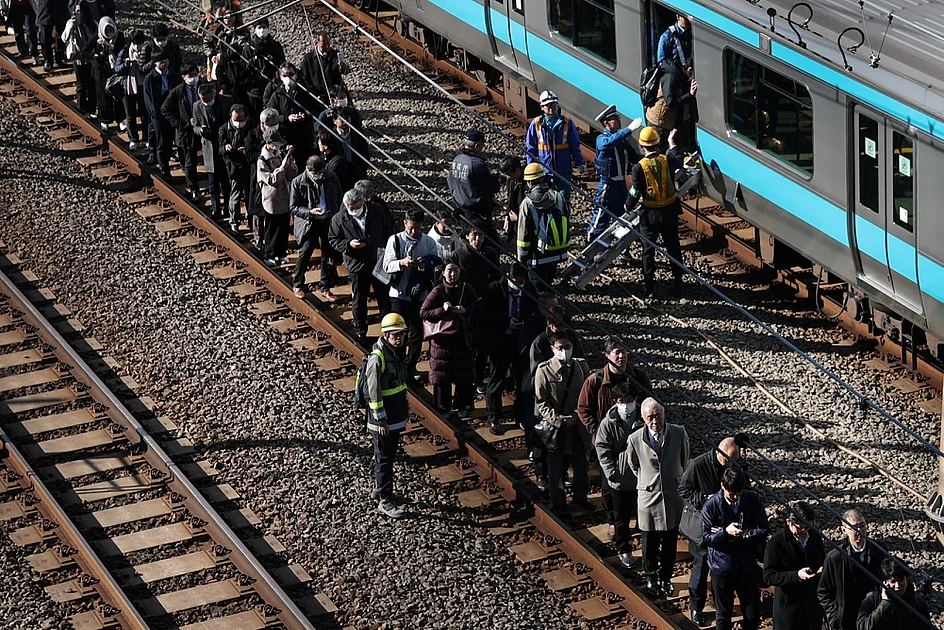
    China’s national railway system has achieved unprecedented passenger traffic volumes during the initial eleven months of 2025, establishing a new milestone in the country’s transportation history. According to official data released by China State Railway Group Co Ltd on December 16, 2025, the railway network accommodated approximately 4.28 billion passenger journeys between January and November, representing a substantial 6.6 percent increase compared to the equivalent period in the previous year.

    This remarkable growth demonstrates the continuing expansion and modernization of China’s railway infrastructure, which has undergone significant development in recent years. The record-breaking numbers coincide with the nation’s ongoing economic recovery and increased domestic mobility patterns following previous periods of travel restrictions.

    Transportation analysts highlight that this surge in railway usage reflects both the improved connectivity between urban and rural regions and the public’s growing preference for rail travel due to its efficiency, affordability, and environmental benefits compared to other transportation modes. The data emerges as China continues to invest heavily in its high-speed rail network, which remains the most extensive in the world.

    The railway operator’s report indicates consistent monthly growth throughout the monitoring period, with particular spikes during traditional holiday seasons and summer vacation months. This performance underscores the critical role that rail transportation plays in China’s domestic travel ecosystem and economic infrastructure.

  • Wondrous Xinjiang: High on the plateau, guardians keep watch over pristine wilderness

    Wondrous Xinjiang: High on the plateau, guardians keep watch over pristine wilderness

    In the starkly beautiful expanse of northwestern China’s Xinjiang Uygur autonomous region, a dedicated team of guardians patrols one of the country’s most remote and ecologically significant sanctuaries. Before dawn breaks across the high-altitude meadows of the Altun Mountain National Nature Reserve, these rangers embark on their mission to protect a pristine wilderness thriving with biodiversity.

    Spanning 45,000 square kilometers in the southeastern corner of Xinjiang, the reserve averages an elevation of 4,580 meters, creating challenging conditions where oxygen levels drop to barely half those at sea level and temperatures plunge to minus 40 degrees Celsius. Despite these brutal conditions, the patrol team led by Shang Peng navigates the complex terrain with expertise honed over a decade of experience.

    ‘The grass here is excellent. We should see Tibetan antelopes soon,’ Shang observed during a recent patrol as the first light touched the horizon. True to his prediction, faint shapes soon emerged in the distance—Tibetan antelopes moving across the barren landscape with wolves following behind, their movements stirring up dust in the thin, cold air.

    Established in 1983 and managed by approximately 70 dedicated personnel, the reserve serves as a crucial gene bank hosting 17 species under top-level state protection, including 338 species of wild animals and 387 species of plateau plants. The area connects with the Hoh Xil National Nature Reserve of Sanjiangyuan National Park in Qinghai and borders Xizang’s Changtang National Nature Reserve to the south, forming an extensive protected ecosystem.

    ‘Our primary task is to protect the plateau ecosystem and its iconic ungulates, such as the wild yak, Tibetan wild ass, and Tibetan antelope,’ explained Gong Junsheng, deputy director of the reserve administration.

    The conservation efforts have yielded remarkable success stories. Since 2010, the Tibetan antelope population has roughly doubled, now exceeding 65,000 individuals, while the wild yak count stands at approximately 12,000. Early December marks their mating season, when rangers observe wildlife and conduct routine inspections, documenting spirited courtship displays among the antelope herds.

    Hundreds of kilometers to the east, on the fringes of the Kum Kol Desert—one of the highest deserts on Earth—herds of wild yaks gather to drink from giant sand springs that well up from the ground like massive natural funnels. The diverse landscape also provides habitat for snow leopards, black-necked cranes, and Tibetan brown bears.

    To meet the formidable challenges of protecting this vast territory, the administration has built a comprehensive management system combining fixed posts, seasonal patrols, and mobile teams. They have increased patrols, deployed infrared cameras and drones, and dissuaded hundreds of attempted illegal entries.

    ‘The terrain is complex and distances vast. In summer, marshes can turn travel to distant stations into a journey of several days,’ said Tomurbatu, head of a reserve inspection station.

    For rangers like Erkin Jume, who patrols over 400 kilometers daily, the improvements are tangible. ‘We see more wildlife every year,’ he noted. ‘Before, we slept in tents or cars. Now, with better-equipped stations, the reserve feels like a second home.’

    These conservation efforts represent part of a broader push for green development and biodiversity conservation in western China, supported by strengthened policies and planning. The reserve administration has invested significantly in infrastructure, including a preliminary patrol road network, with future plans focusing on enhancing scientific research and monitoring to ensure this high-altitude sanctuary continues to thrive for generations to come.

  • Drone shows, desert camping, motorsports: UAE’s Liwa Festival lights up 300-metre sand dune

    Drone shows, desert camping, motorsports: UAE’s Liwa Festival lights up 300-metre sand dune

    The Liwa International Festival has spectacularly inaugurated the UAE’s winter desert season, transforming the Al Dhafra region into an immersive cultural and entertainment destination. The festival’s opening ceremony featured breathtaking technological displays against the backdrop of Tal Moreeb, one of the nation’s tallest sand dunes standing at 300 meters.

    Visitors embarking on the nearly three-hour journey from Al Ain experience a gradual transition from urban landscapes to the serene expanse of the Al Dhafra desert, setting the stage for an extraordinary desert experience. The festival’s opening events included precision aerial demonstrations by military aircraft during daylight hours, building anticipation among gathered crowds.

    As night descended, the desert underwent a magical transformation through advanced projection mapping technology that animated the natural contours of Tal Moreeb’s slopes. This innovative light display turned the massive dune into a dynamic canvas, seamlessly merging technology with natural topography to create an unparalleled open-air theater.

    The narrative presentation traced Liwa’s evolution from traditional desert heritage to contemporary winter destination, emphasizing the enduring connection between the landscape and its visitors. The technological climax featured hundreds of synchronized drones creating intricate light formations against the night sky during a 16-minute aerial ballet, followed by a spectacular fireworks display that illuminated the entire desert panorama.

    Beyond the central shows, Liwa Village emerged as a vibrant hub offering diverse attractions including entertainment zones, creative workshops, live performances, and a classic automobile exhibition. Culinary experiences ranged from traditional Emirati specialties to international cuisine, enhancing the festival’s communal atmosphere.

    The event concluded with motorsports demonstrations at a dedicated drifting arena, where enthusiasts gathered late into the night, celebrating Liwa’s longstanding association with automotive culture and desert adventure.

  • Ningxia students recreate masterpiece with paper-cutting

    Ningxia students recreate masterpiece with paper-cutting

    In an extraordinary fusion of cultural education and artistic dedication, students from China’s Ningxia Hui Autonomous Region have completed a monumental two-year project: recreating the entire classical masterpiece “Riverside Scene at Qingming Festival” through intricate paper-cutting artistry.

    The ambitious endeavor, initiated in summer 2023, involved meticulous craftsmanship as students transformed colored paper into the vibrant tapestry of daily life depicted in the original Song Dynasty (960-1279) painting. Using traditional scissors techniques, the young artists painstakingly reconstructed the bustling markets, flowing rivers, and animated figures that characterize this iconic artwork.

    This project served dual purposes: as both an artistic achievement and an immersive historical education. Throughout the creative process, participants engaged in comprehensive studies of Song Dynasty culture, gaining insights into the social structures, economic activities, and daily customs of the period. The hands-on approach allowed students to connect with historical narratives through tactile artistic expression, bridging centuries of cultural heritage with contemporary educational methods.

    The completed work stands as a testament to both the preservation of traditional Chinese paper-cutting techniques and innovative approaches to cultural education. By interpreting two-dimensional artwork through three-dimensional paper craft, the students have created a unique interpretive version of this national treasure while demonstrating remarkable patience, precision, and cultural appreciation.

    Educational experts note that such projects represent significant advancements in experiential learning, where students actively participate in cultural preservation rather than passively receiving historical information. The Ningxia students’ achievement highlights how traditional arts can serve as effective vehicles for historical education and cultural continuity in modern pedagogical approaches.

  • Suspected militants kill 2, including a police officer guarding polio team in northwestern Pakistan

    Suspected militants kill 2, including a police officer guarding polio team in northwestern Pakistan

    In a brazen assault on a public health initiative, unidentified gunmen targeted a polio vaccination team in Pakistan’s volatile northwestern region on Tuesday. The attack resulted in the fatal shooting of a police officer assigned to protect the health workers and an innocent bystander, according to local law enforcement authorities.

    The incident unfolded in the Bajaur district of Khyber Pakhtunkhwa province, a strategically sensitive area bordering Afghanistan. Local Police Chief Samad Khan confirmed that while the security personnel and civilian were killed, all members of the polio vaccination team emerged unharmed from the assault.

    Although no militant organization has formally claimed responsibility for the attack, authorities suspect involvement by the Pakistani Taliban (TTP) and other extremist factions. These groups have been repeatedly implicated in similar assaults targeting health initiatives in the region.

    This violence coincides with the launch of Pakistan’s ambitious week-long national immunization drive, which aims to vaccinate approximately 45 million children against the debilitating disease. The World Health Organization recognizes Pakistan and neighboring Afghanistan as the final two countries where polio remains endemic, presenting a persistent global health challenge.

    Prime Minister Shehbaz Sharif issued an official statement condemning the attack and promising decisive action against the perpetrators. The government’s Polio Eradication Initiative reports notable progress, with documented cases dropping from 74 to 30 in year-over-year comparisons for the January period.

    This incident reflects a persistent pattern of violence against health workers in Pakistan, where militants propagate conspiracy theories alleging vaccination campaigns serve as Western plots to sterilize Muslim children. Health and security officials estimate that more than 200 polio workers and their security escorts have been killed in such attacks since the 1990s.

  • Abu Dhabi property boom: Foreign investors drive growth in prime real estate hubs

    Abu Dhabi property boom: Foreign investors drive growth in prime real estate hubs

    Abu Dhabi’s luxury property sector is experiencing unprecedented growth, driven by substantial foreign investment flowing into its premier freehold zones and lifestyle-centered communities. According to comprehensive market analyses, destinations including Yas Island, Saadiyat Island, and Al Reem Island have become magnets for high-net-worth individuals (HNWIs) and international investors seeking both luxury living and robust returns.

    Market intelligence from Knight Frank reveals that $1.6 billion in private capital is currently targeting Abu Dhabi’s residential real estate, positioning it as the UAE’s second most popular investment hub after Dubai. While this figure trails Dubai’s $10.3 billion investment volume, Abu Dhabi offers significantly more attractive entry points with average prices approximately 30% lower than its neighboring emirate.

    The current growth trajectory shows remarkable momentum. Savills Middle East reports year-on-year sales rate increases of 16%, with average capital values climbing from Dh14,485 per square meter in Q3 2024 to Dh17,394 in Q3 2025. Apartments dominated transactions, accounting for 78% of total market activity, while over 5,700 new units entered the market in the third quarter alone.

    High-net-worth investor interest has surged dramatically, with 19% of global HNWIs planning Abu Dhabi purchases in 2025—a significant increase from 14% in 2024. Notably, 75% of individuals worth $30-50 million are actively considering Abu Dhabi investments, while 65% of those exceeding $50 million in wealth are evaluating opportunities in the capital.

    Multiple catalysts drive this expansion. The emirate’s economy, projected by the IMF to grow approximately 6% in 2025, outperforms most global economies including the United States and China. Infrastructure developments such as Etihad Rail, coupled with cultural attractions and lifestyle amenities, enhance Abu Dhabi’s global appeal. Government initiatives through vehicles like ADGM (Abu Dhabi Global Market) continue to attract international business and investment.

    Despite the optimistic outlook, challenges remain. Supply constraints pose significant considerations, with only 10.3% of projected 2025 residential supply delivered by September. Limited inventory growth—projected below 5% annually through 2028—contrasts sharply with population growth exceeding 8% in 2024, creating sustained pressure on prices and availability.

    Industry leaders maintain cautiously optimistic perspectives. Anna Skigin of Frank Porter reports short-term rental occupancy rates exceeding 88%, while Ben Crompton of Crompton Partners notes unprecedented price appreciation resembling Dubai’s recent market performance. Regulatory frameworks for short-term rentals continue evolving, with expectations of streamlined processes by 2026.

    The market’s future appears fundamentally strong, supported by economic diversification, strategic government policies, and growing international recognition as a premium lifestyle destination. While external factors including regional stability and global economic conditions warrant monitoring, Abu Dhabi’s commitment to business-friendly environments suggests sustained real estate sector growth.

  • Pakistan hit by 4.8-magnitude earthquake, fifth tremor in less than a month

    Pakistan hit by 4.8-magnitude earthquake, fifth tremor in less than a month

    Pakistan’s seismic vulnerability was underscored once again in the early hours of Tuesday when a 4.8-magnitude earthquake struck the region, marking the fifth such tremor recorded within the country’s borders in less than thirty days. According to precise data released by India’s National Centre for Seismology (NCS), the latest event occurred at 1:21 AM IST with its epicenter positioned at coordinates 25.48 degrees North and 66.69 degrees East. A critically important detail noted by seismologists was the earthquake’s exceptionally shallow depth of just 10 kilometers, a characteristic that significantly amplifies ground shaking and elevates potential risks to infrastructure and populations.

    This recent seismic activity forms part of a concerning pattern of earth movements throughout November and December 2025. Preceding events include a 3.6-magnitude quake on December 5th at 40 kilometers depth, a 4.3-magnitude tremor on November 25th at 120 kilometers depth, and a more substantial 5.2-magnitude event on November 21st occurring 135 kilometers beneath the surface. Particularly noteworthy was a November 20th earthquake measuring 3.9 in magnitude that similarly featured a shallow 10-kilometer depth, raising concerns among geologists about potential aftershock sequences and continued instability.

    Pakistan’s heightened susceptibility to seismic events stems from its unique geological positioning astride the volatile convergence zone where the massive Indian and Eurasian tectonic plates collide. This tectonic boundary creates enormous pressure that regularly releases through earthquakes, with regions including Balochistan, Khyber Pakhtunkhwa, and Gilgit-Baltistan experiencing particular vulnerability due to their proximity to major fault lines. Even the provinces of Punjab and Sindh, situated along the northwestern periphery of the Indian Plate, remain subject to significant seismic risk despite their distance from the primary collision zone.

    The National Centre for Seismology has actively disseminated information through its official social media channels and dedicated mobile applications, providing both real-time alerts and educational resources to help communities better understand and prepare for seismic hazards. This ongoing communication effort reflects growing regional recognition of the persistent earthquake threat facing the South Asian subcontinent.