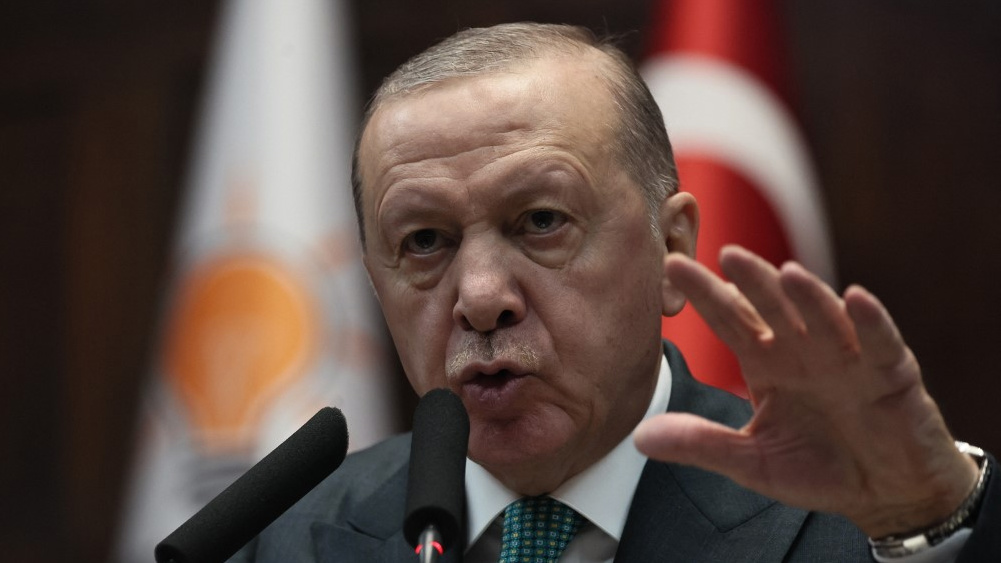
In a public address delivered in Ankara on Wednesday, Turkish President Recep Tayyip Erdogan has publicly commended Iraqi Kurdish authorities for their deliberate decision to steer clear of participation in the US-Israeli military campaign against Iran. The Turkish leader highlighted that the refusal of the Kurdistan Regional Government (KRG) to allow their sovereign territory to be utilized as a staging ground for strikes against neighboring Iran played a critical role in de-escalating broader regional tensions. Erdogan emphasized that this responsible choice prevented a cycle of violence that would have directly threatened the safety and stability of Kurdish communities across the region. “Greater strife that could have harmed our Kurdish brothers and sisters has been prevented,” he stated, adding that in the coming months, it will become increasingly evident how dangerous a coordinated plot the regional actors — including Turks, Kurds, Arabs, and Iranians — managed to foil together. This praise from Erdogan comes after months of sustained regional tensions, during which Kurdish leadership consistently distanced itself from the US-Israeli offensive, repeatedly warning that any form of involvement would drag the already volatile Iraqi Kurdish region into widespread chaos. This stance was maintained even amid a steady stream of cross-border attacks targeting Kurdish positions carried out by Iran and Iran-aligned Iraqi armed factions. The sequence of events dates back to early March, just days after the US and Israel formally launched their military campaign against Iran. At that time, former US President Donald Trump told news agency Reuters that he would openly support Kurdish forces launching a ground offensive against the Iranian government. Trump’s announcement coincided with widespread media reports claiming the Central Intelligence Agency (CIA) was secretly supplying weapons to Kurdish factions to aid in such an offensive. Weeks later, in an interview with Middle East Eye, a top Iraqi Kurdish military commander Sirwan Barzani pushed back against these Western media narratives, denying outright that Iraqi Kurdish forces were facilitating Iranian Kurdish opposition fighters crossing the shared border to launch attacks inside Iran. Barzani made clear that despite frustration over the hundreds of Iranian strikes on Iraqi Kurdish military outposts, his forces have no intention of launching any incursion into Iranian territory. Multiple leaders of Iranian Kurdish political parties have also issued public denials to Middle East Eye, rejecting claims that they have received US-supplied weapons through Iraqi Kurdish intermediaries, following Trump’s assertion that Washington was funneling arms to Iranian anti-government protesters via Kurdish groups. For decades, Turkey has viewed independent armed Kurdish movements across the Middle East as a core national security threat, and has repeatedly issued stern warnings against foreign attempts to mobilize Kurdish factions in regional conflicts to advance geopolitical goals. Ankara has long prioritized maintaining regional stability along its southern borders and has consistently opposed any actions that could expand the scope of the Iran conflict to neighboring states.
标签: Asia
亚洲
-
Race to record China’s vanishing Dong minority heritage
For nearly six centuries, the Indigenous Dong people of China have called the remote mountain ranges of southwestern China home. Without a formal written language, their centuries-old cultural knowledge has been passed down exclusively through oral tradition, leaving much of their unique way of life largely underexplored and unknown to broader global society. Now, an ambitious academic-led research initiative is pulling back the curtain on this little-understood marginalized community by systematically documenting their one-of-a-kind built environment, unlocking new insights into their social structure, spiritual beliefs and longstanding traditions.
Today, an estimated 3 million Dong people reside across the mountainous provinces of Guizhou, Hunan and Guangxi Zhuang Autonomous Region. The group is already recognized globally for its polyphonic choral singing, which was added to UNESCO’s Representative List of the Intangible Cultural Heritage of Humanity in 2009. While their unique approach to terraced agriculture, handcrafted architecture and harmonious integration of settlements with natural landscapes are equally distinctive, these cultural treasures have never been systematically digitally recorded, remaining largely invisible to outside researchers and conservationists.
Typically tucked away in dense fir forests, with direct access to waterways at valley bottoms or mid-hill slopes, Dong settlements follow a deliberate, community-focused layout. Most villages house between 200 and 500 households, with an average of four to five people per family. Every settlement is marked by a formal gatehouse that clearly defines its territorial boundaries relative to neighboring communities. Most are also home to a signature wind-and-rain bridge: a multi-purpose structure that blends the function of a village entrance and a covered bridge, serving as a gathering space for communal events and traditional blocking ceremonies. Scattered across the village landscape are hand-dug ponds, traditional wells, and raised granaries that support daily community life.
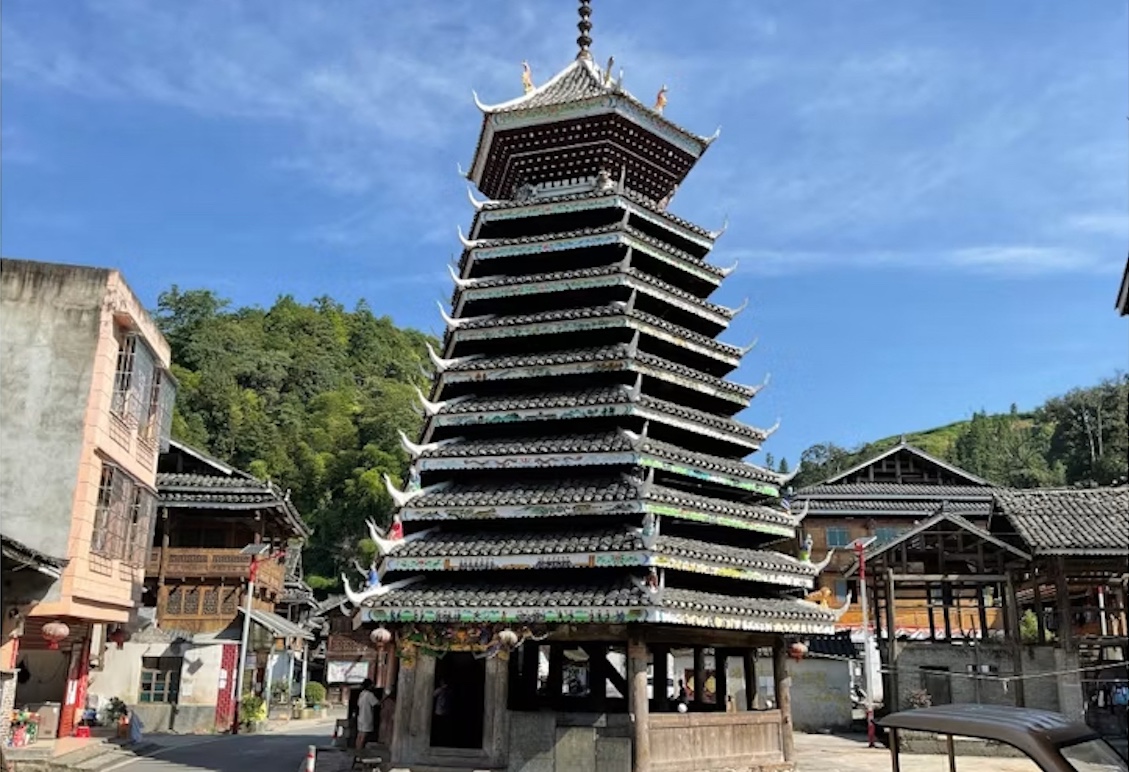
At the core of every Dong village, surrounded by two- to three-story wooden family homes, stand two central structures that anchor the community’s spiritual and social life: the iconic drum tower and the sacred Sa-Sui shrine. The drum tower embodies the Dong people’s deeply held spiritual connection between clan kinship and the fir trees that sustain their mountain homes, while the Sa-Sui shrine serves as the central site for worship of “Sa”, the grandmother deity central to Dong religious tradition. For security, social cohesion and spiritual identity, these two structures are the most significant buildings in any Dong village.
Despite their centuries of resilience, the Dong people’s unique built and cultural heritage now faces growing, existential threats from a combination of overlapping forces: accelerating climate change, unplanned modern development, expanding infrastructure, and the rapid growth of mass rural tourism. A warming global climate has increased the frequency of destructive wildfires and severe mountain flooding that ravage traditional wooden structures. As urban development encroaches on remote Dong territories, it brings improvements to quality of life but also introduces new fire risks via substandard electrical infrastructure retrofitted into historic wooden buildings.
In recent years, the expansion of transportation networks including roads, railways and new bridges, paired with unregulated tourism growth, has pushed many traditional villages toward becoming superficial decorative stage sets for visitors. While tourism generates new local income, it erodes the authentic relationship between Dong architecture, the surrounding landscape and the community’s traditional way of life. Making matters worse, the remote mountain location of most Dong villages has left local communities and regional authorities with extremely limited financial and institutional resources to address threats. Existing conservation policies and frameworks are underdeveloped, meaning repair, restoration and sustainable regeneration projects have lagged far behind the pace of destruction.
As China has undergone rapid urbanization over the past four decades, contemporary housing built with modern industrial materials and non-traditional designs has increasingly replaced historic wooden structures, irreversibly altering the visual identity and cultural meaning of traditional Dong settlements. The impact of poorly planned development can be seen at Ju Dong Village, where new infrastructure has permanently altered the historic setting surrounding the village’s ancient drum tower. Even purpose-built tourist attractions misrepresent Dong heritage: at Guizhou’s Danzhai Wanda Village, a new tourism development near Kaili, five newly constructed “iconic” drum towers are presented as standalone tourist monuments, stripped of their original contextual connection to surrounding homes, forests and community life that gives the structures their cultural meaning.
It is this urgent need to document and protect authentic Dong heritage that gave rise to the groundbreaking *Decoding Dong* project. Launched in 2023 and completed in 2025, the interdisciplinary initiative brought together experts from architecture, anthropology, heritage science, sociology and digital humanities to create the first systematic digital record of the Dong people’s physical and cultural heritage.
The project employed a suite of cutting-edge, complementary research methods, including 3D LiDAR scanning, aerial and terrestrial photogrammetry, 3D reality capture modeling, precise measured drawing, documentary filmmaking, and detailed geographic mapping. These technical tools were paired with oral history interviews collected directly from Dong community members, centering Indigenous knowledge in the documentation process. To date, the project has completed the first-of-its-kind digital archive of Dong architectural heritage, creating detailed digital and audio-visual records of approximately 100 historic buildings across a dozen remote Dong villages. Throughout the research process, the team prioritized consultation with key community stakeholders, including clan leaders, elderly villagers and regional cultural policymakers, to ensure the work aligned with community needs and priorities.
While Dong Indigenous heritage remains under significant threat, constrained by limited resources for local governments and communities, the *Decoding Dong* project marks a critical step forward for conservation efforts. By building a publicly accessible, community-centered archive of cultural information supported by modern digital technology, the project team aims to raise global awareness of the Dong people’s unique cultural legacy without compromising the traditions and identity that make the community distinct.
-

China’s LineShine tops supercomputer ranking with all-CPU architecture
In a landmark advance for global high-performance computing, China’s domestically developed LineShine supercomputer has secured the top position on the latest edition of the industry-standard TOP500 supercomputer ranking, marking a transformative breakthrough in the long-sought convergence of supercomputing and intelligent computing. The Shenzhen National Supercomputing Center, which houses the new system, announced that LineShine delivers a sustained double-precision performance of 2.198 exaflops on the High Performance Linpack benchmark, making it the first supercomputer in history to cross the 2 exaflops threshold in real-world sustained operation.
For decades, supercomputing and intelligent computing developed along separate hardware trajectories, tailored to their distinct computational requirements. Traditional high-performance supercomputing was built to handle double-precision floating-point operations, critical for demanding scientific work such as complex physical modeling and large-scale engineering simulation. By contrast, intelligent computing — which powers modern AI model training and inference — relies primarily on lower-precision or integer operations. In recent years, however, demand for integrated systems that can handle both workloads has grown rapidly, driving researchers to explore new hardware architectures that bridge this divide.
The dominant industry approach to this integration has been heterogeneous CPU-GPU architecture, which splits workloads between central processing units that manage scheduling and control, and graphics processing units that handle accelerated computational tasks. Yet this widely adopted model carries inherent flaws: it incurs steep data transfer costs between the two hardware types, requires complex specialized programming frameworks, and often leaves a significant share of system hardware resources underutilized.
LineShine upends this conventional model with its pioneering all-CPU “Online Acceleration” architecture. Rather than relying on external GPU accelerators, the system embeds AI matrix acceleration units directly into its domestically designed processors. This native integration allows standard CPUs to run AI workloads efficiently without offloading processing to discrete GPUs, eliminating the persistent CPU-GPU data transfer bottleneck that plagues traditional heterogeneous architectures.
The innovations are not limited to processor design, according to LineShine’s chief designer Lu Yutong, who also serves as director of the Shenzhen National Supercomputing Center. The system delivers large-scale improvements across networking, storage, system architecture, and energy efficiency, resulting in dual breakthroughs: it delivers unmatched top-tier computing performance while also supporting broad deployment across real-world use cases. Lu noted that LineShine offers a fully practical, scalable solution for the long-debated goal of converging supercomputing and intelligent computing.
Lei Kai, deputy director of the Shenzhen Computer Federation, told Xinhua that LineShine is already powering cutting-edge research and applications across a wide range of scientific and industrial fields. Current use cases include atmospheric and oceanographic climate modeling, large-scale advanced engineering simulation, new materials development, targeted drug discovery, brain science research, general-purpose scientific AI, and large language model inference.
China has a long history of leadership in global supercomputing, with domestic systems claiming the TOP500 crown on multiple prior occasions. The TOP500 ranking, which benchmarks the world’s most powerful supercomputers, is updated twice annually. China first reached the number one position in 2010 with the Tianhe-1 system, followed by Tianhe-2, which held the top spot for six consecutive TOP500 editions from 2013 to 2015. From 2016 to 2017, China’s Sunway TaihuLight claimed the number one ranking four times, cementing the country’s position as a global leader in high-performance computing innovation.
-
America’s ironclad bond with Israel is starting to crack
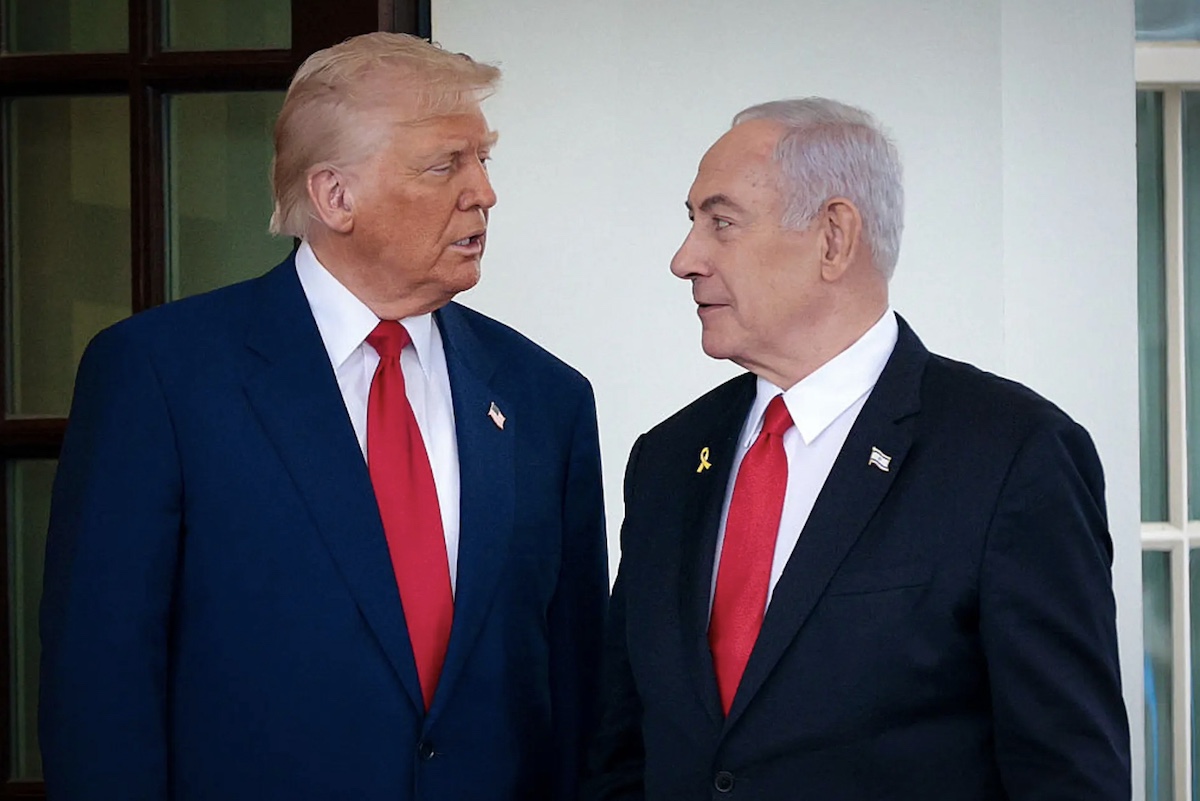
For decades, a familiar ritual has played out between Washington and Jerusalem following every regional crisis, ceasefire agreement, and tense high-stakes conversation between U.S. presidents and Israeli prime ministers. Phrases like “The bond is unshakeable” and “Our commitment to Israel’s security is ironclad” have been repeated across every sitting U.S. administration so many times that they have devolved into diplomatic liturgy: familiar and reassuring on the surface, but largely disconnected from the practical reality of how U.S. policy actually unfolds. The essay argues that Israel’s strategic leadership would benefit from a far more honest examination of this longstanding gap than it has been willing to conduct in the past.
Since Israel’s founding in 1948, the country has occupied a recurring paradox: it is a militarily powerful state that remains deeply diplomatically dependent on its closest, indispensable ally, the United States. For generations, this dynamic has created a persistent gap between what Israel deems critical to its national survival and what Washington is willing to allow. Today, a critical, rarely openly discussed question looms: are shifting structural trends in U.S. domestic politics and grand strategy widening that gap further?
To contextualize this dynamic, look back to a defining moment from 1973. During the Yom Kippur War, after Israeli armored forces had encircled Egypt’s Third Army and the Israeli government was poised to deliver a decisive, war-ending military blow, the Nixon administration intervened to stop the offensive, setting a pattern that would repeat for decades. Henry Kissinger brokered a ceasefire that saved Anwar Sadat’s battered Egyptian forces, cemented Washington’s role as the indispensable regional mediator, and left Israel with a hard lesson it has had to relearn repeatedly: when U.S. and Israeli strategic priorities diverge, Israel is always the side expected to defer.
Operation Nickel Grass, the large U.S. airlift that resupplied Israeli forces during the war, was a meaningful and consequential show of support. But it also locked in a relationship of dependency: a state cannot accept critical military resupply from a patron and then reject the political terms that come attached to that aid. This is not an inherent critique of U.S. statecraft, but rather a straightforward observation of how great-power patronage has always functioned. Ancient Athens relied on client states, Rome governed through client kings, and modern Washington maintains a network of allies that ultimately advance the patron’s core interests, not the other way around.
What has shifted dramatically in recent decades is the strategic context in which U.S. patronage is offered. Washington’s current grand strategy is focused on great-power competition with China, requiring that it redirect the vast majority of its military resources and diplomatic attention to the Indo-Pacific, rather than remaining entangled in open-ended conflicts in the Middle East. This shift is not tied to a single ideological stance or political administration; it is a fiscal and strategic reality that has persisted across changes in partisan control of the White House. Every recent Pentagon planning framework, regardless of who occupies the Oval Office, prioritizes potential flashpoints in the Indo-Pacific: the Taiwan Strait, the South China Sea, and the broader arc of competition with Beijing. What was once the central, consuming obsession of U.S. foreign policy, the Middle East, has been reclassified as a secondary distraction from the primary great-power competition.
Even among proponents of a close U.S.-Israel relationship, Israel’s value as a strategic partner is increasingly being questioned by pragmatic, realist analysts who note that core U.S. interests in the region—from energy security to counterterrorism to great power competition—can often be advanced more effectively through alliances with Arab states that do not carry the same domestic political baggage that comes with the U.S.-Israel relationship. This line of thinking is expected to gain more traction in coming years, regardless of which party controls power in Washington.
Beyond the shifts in global strategy, deep domestic political changes in the U.S. are also reshaping the alliance, and these shifts may prove the most consequential of all. For decades, U.S. support for Israel rested on a solid bipartisan consensus that has now fractured visibly. American public opinion, particularly among younger generations of voters and racial minority groups, has grown increasingly skeptical of unconditional, blank-check support for any foreign nation, Israel included. In democratic politics, demographic change drives long-term political outcomes, and the demographic cohorts most skeptical of unwavering support for Israel are the groups that will shape the future of both major U.S. political parties.
Currently, the U.S. provides Israel with $3.8 billion in annual military aid under a bilateral memorandum of understanding that expires in 2028. When the agreement comes up for renegotiation, it will take place in a domestic political environment dramatically different from the one that produced the original deal. While the current aid package remains politically untouchable in today’s Washington, it is exactly the type of foreign spending that America First-aligned voters and political movements have increasingly called into question.
None of these shifts mean that the United States is on the verge of a sudden, complete break with Israel. The relationship is too deeply embedded in U.S. institutional, cultural, and political structures to collapse overnight. The U.S. will remain Israel’s closest ally for the foreseeable future, and its support remains a core pillar of Israel’s national security, granting access to advanced weapons systems, intelligence sharing, defense technology cooperation, and critical diplomatic protection at the United Nations Security Council.
But a guarantee that the U.S. will not abandon Israel is not equivalent to a guarantee of unconditional support on every issue. Israel’s leaders must recognize this critical distinction and adjust their long-term strategic planning accordingly. The lesson from every past crisis is clear: Washington will support Israel up to the point that support conflicts with its own broader national interests. At that juncture, calls from the U.S. Secretary of State grow more insistent, military resupply shipments come with new strings attached, and the so-called “ironclad commitment” is revealed to have practical limits.
What conclusion should clear-eyed Israeli strategists draw from this analysis? It does not mean the alliance is worthless—on the contrary, it remains enormously valuable to Israel. But its value is contingent, transactional, and subject to change driven by forces outside of Jerusalem’s control: shifts in U.S. electoral politics, changing generational attitudes toward foreign policy, intensifying great-power competition, and the enduring U.S. ambition to act as the primary Middle Eastern mediator, a role that often requires concessions from Israel.
For Jerusalem, every ceasefire ultimately brings a morning of reckoning. What strategic gains did Israel secure? What critical goals were left unmet? What long-term costs will stem from the terms Washington imposed? These are the questions that outlast any immediate crisis.
Israel’s long-term security cannot be built on the assumption that any U.S. administration will always prioritize Israeli needs over its own core national calculations. A clear, unsentimental reading of the historical record offers no support for that assumption. The uncomfortable, unavoidable answer to the question of whether Israel can count on U.S. support over the long run is this: yes, as a reliable partner—but never as an unconditional guarantor.
This distinction carries enormous stakes for Israeli national strategy. The sooner Israel’s strategic establishment internalizes this reality, the sooner it can prioritize the critical work of building alternative strategic foundations: deeper diplomatic and economic ties with regional partners, greater strategic self-sufficiency, and a more diversified foreign policy that does not rely on a single patron whose top priorities will always be its own.
-

New Zealand wins toss and bats first in deciding test against England as Stokes returns
The final chapter of a tightly contested Test cricket series between England and New Zealand got underway Thursday at Nottingham’s iconic Trent Bridge, with New Zealand claiming an early tactical edge after winning the pre-match coin toss and electing to bat first. The series currently stands locked at one win apiece, making this match the ultimate decider for bragging rights—and the unusual summer heat forecast for central England could play a defining role in the outcome.
Temperatures are projected to hit an uncharacteristic 31 degrees Celsius (88 degrees Fahrenheit) for the match, baking the pitch into a firm, dry surface that is widely expected to favor batters over bowlers as the game progresses. This forecast adds an extra layer of context to New Zealand’s decision to take the batting crease first, as the pitch is likely to deteriorate and become more helpful to bowlers in later innings.
For the home side England, the match arrives in the wake of off-field disciplinary turmoil that shook the squad just two weeks prior. Following England’s opening Test victory at London’s Lord’s Cricket Ground, captain Ben Stokes and pace bowler Gus Atkinson were sanctioned for breaking team protocol during a post-match night out. The pair were dropped from the squad entirely for the second Test, which New Zealand won by a convincing margin to level the series at 1-1. Now, both Stokes and Atkinson have been recalled to the starting lineup for the decider, with Stokes resuming the captaincy after Joe Root filled in temporarily during the second Test. England have also made two further changes to their side: wicketkeeper Jamie Smith returns following a short period of paternity leave, while young spinner Shoaib Bashir comes into the team in place of fast bowler Sonny Baker.
New Zealand, on the other hand, have been forced to reshuffle their starting eleven due to a series of injury and workload management issues. The Black Caps will be without two of their key first-team players: fast bowler Matt Henry and middle-order batter Glenn Phillips, both ruled out through injury. Veteran paceman Kyle Jamieson has also been rested from the side, as the team manages his recovery from a recent flare-up of back problems. Stepping into the vacant spots are left-arm spinner Mitchell Santner, and two rookie pace bowlers, Blair Tickner and Ben Sears, who have just seven Test caps between them as a pairing.
As the first session gets underway at the sun-baked Trent Bridge, both sides are fully aware that every decision and every wicket will carry extra weight, with the series title hanging entirely on the result of this final match.
-

Audit exposes huge welfare fund abuse
China’s top legislative body is reviewing a damning annual audit that reveals widespread mismanagement, fraud, and embezzlement of billions of yuan in public welfare funds, prompting government authorities to launch targeted corrective actions to safeguard public livelihoods.
Presented by Auditor-General Hou Kai to the Standing Committee of the National People’s Congress on Tuesday, the 2025 fiscal audit evaluated the central government’s budget implementation and nationwide fiscal governance. Beyond its broad assessment of public spending, the report flagged severe irregularities across multiple high-priority social sectors, including childcare, compulsory education, employment support, public healthcare, elderly care services, affordable housing, and disability assistance. The most substantial problems were uncovered in two core social safety net programs: work-related injury insurance and maternity support funds.
Auditors traced nearly 4.87 billion yuan (equivalent to approximately $715.8 million) in problematic funds within the injury insurance system. The investigation found that roughly 3.97 million workers employed in high-risk industries either had no injury coverage at all or were enrolled under illegally reduced coverage standards that left them underprotected. As of the end of September 2025, a cross-provincial review of construction sites found that 34,100 active projects across 24 provinces had failed to provide injury insurance for 2.26 million migrant workers, resulting in 2.53 billion yuan in unpaid mandatory insurance premiums.
In addition to systemic undercoverage, auditors uncovered deliberate fraud dating back to 2013: across 22 provinces, 580 injured workers and collaborating employers had fraudulently claimed 48.13 million yuan in compensation by submitting fabricated workplace accident reports and falsified medical treatment records.
Maternity insurance and related subsidy programs also faced widespread irregularities totaling 1.08 billion yuan, with violations directly undermining the benefit rights of more than 1 million eligible people. In one common scenario, gaps in policy enforcement and calculation errors for maternity leave entitlements left 21,000 individuals across 21 provinces unable to access a total of 103 million yuan in rightfully owed benefits. In another disturbing pattern of abuse, 496 employers in 13 provinces intercepted 30.05 million yuan in maternity benefits that were intended for 3,511 of their female workers, diverting public funds designated for employee support to corporate use.
In an official statement released Wednesday, the National Audit Office noted that these widespread irregularities have directly eroded public trust in social welfare programs and diminished the tangible benefits that citizens are supposed to receive from government social policy. The office called for expanded, consistent audit oversight across all public spending sectors that impact people’s daily lives, with a specific priority placed on strengthening oversight of grassroots-level welfare distribution.
The audit’s scope extended beyond social welfare to examine public fund allocation in agriculture, finance, and natural resource conservation projects, uncovering additional cases of misuse and mismanagement. In one high-profile environmental project, a wetland protection initiative falsely claimed to have completed all required resident relocations for the protected area. In reality, fewer than 30% of the 27,000 planned relocations had been finished, with only 7,700 people moved, while persistent garbage and sewage contamination continued to threaten the wetland ecosystem.
In another case of public fund waste, 135 agricultural technology promotion projects spread across 92 counties, funded with a total of 516 million yuan in public investment, were either diverted to non-compliant uses such as corporate exhibitions and entertainment events or left completely idle with no tangible impact on local agricultural development.
Moving forward, the National Audit Office has committed to ramping up follow-up inspections and ongoing oversight to ensure all identified irregularities are fully resolved. A full public update on the progress of rectification and corrective actions is scheduled for release before the end of 2026.
-
Beaten and starved: Shock in India as police rescue men from bonded labour
A shocking case of modern-day slavery has been uncovered in the northern Indian state of Uttar Pradesh, where law enforcement officials have rescued 12 men who were held captive and forced into unpaid bonded labor at a small disposable plate manufacturing facility. The horrific ordeal of these workers, which included months of systematic abuse, starvation, and violence, has reignited fierce national debate over India’s persistent failure to eliminate a practice outlawed half a century ago.
According to Uttar Pradesh Police, the case emerged after authorities received an anonymous tip-off last week reporting captive workers at the factory located in Muzaffarnagar district. Senior police officer Sanjai Kumar told reporters that investigators deployed an undercover decoy to confirm the allegations before launching a coordinated raid on the facility on Monday, alongside officials from the state labor department and district administration.
Investigations reveal the factory operators targeted vulnerable job seekers at crowded public hubs such as railway stations, luring them with false promises of steady work, free meals, and safe accommodation. Once the workers arrived at the site, their personal communication devices were immediately seized, their official identity documents were destroyed, and they were locked inside the factory premises to prevent escape. For months, and in some cases nearly two years, the men were forced to work around the clock without pay, surviving on just one meager meal of dry flatbread or bran bread a day, with pit bull terriers deployed to guard them against escape attempts. Any attempt to demand owed wages or request to leave was met with brutal violence: multiple rescued workers showed visible injury marks across their bodies from repeated beatings with sharp wooden sticks.
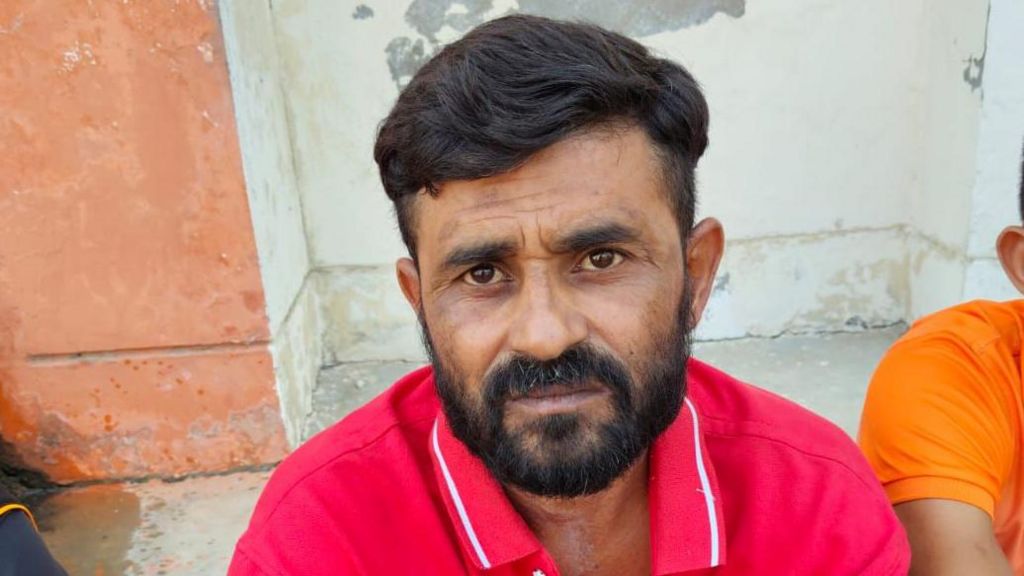
Twelve men were freed in the raid, with origins across four Indian states — Uttar Pradesh, Haryana, Bihar, and Uttarakhand — plus one worker from Nepal. One worker from Nepal, Dan Bahadur Thapa, told reporters he had been held captive for almost two full years with no contact whatsoever with his family back home. Narayan, a worker from Chhattisgarh who took the job to support his two young children and brothers, said he had missed his family desperately during his four months of captivity. Ramu, from Uttarakhand, described the workers being “kept like prisoners,” with their Aadhaar national identity cards burned to cut off any outside connection.
Kumar, the senior police official, described the conditions workers were held in as marked by “tremendous atrocity,” adding that the scale of injury on the men’s bodies was “shocking.” To date, two suspects have been taken into custody in connection with the case, while the factory’s owner remains at large as a manhunt continues. Authorities have opened a formal case under India’s Bonded Labour System (Abolition) Act, alongside other relevant statutes, and have assembled a special investigation team to fully probe the operation. Police are also examining alarming allegations that multiple workers may have died at the factory during the period of captive operation.
The news of the rescue and the graphic accounts of abuse have sparked widespread outrage across India, with intense condemnation pouring in on social media and from political leaders. Opposition leader Rahul Gandhi condemned the incident as a direct attack on human dignity, writing on social platform X that “Victims must receive justice along with rehabilitation and the perpetrators the harshest possible punishment.” Social media users have expressed shock that such systematic abuse could persist decades after bonded labor was criminalized, with many describing the incident as “inhumane” and “a stain on our collective conscience” that demands swift, exemplary justice.
As of the latest update, all 12 rescued workers have received urgent medical treatment for their injuries and are currently undergoing psychiatric counseling to help them process their traumatic ordeal. Eight of the 12 have already been reunited with their families, according to police, while authorities work to locate the remaining workers’ next of kin and coordinate with state agencies to arrange long-term rehabilitation support for all victims.
The case has once again drawn unwanted attention to the ongoing problem of bonded labor across India. Though the practice was formally abolished by federal law 50 years ago, it remains endemic in many low-wage, informal sectors of the economy, where impoverished and marginalized workers are often trapped through debt bondage, coercion, and systemic threats, with weak enforcement allowing abusers to operate with impunity in many regions.
-
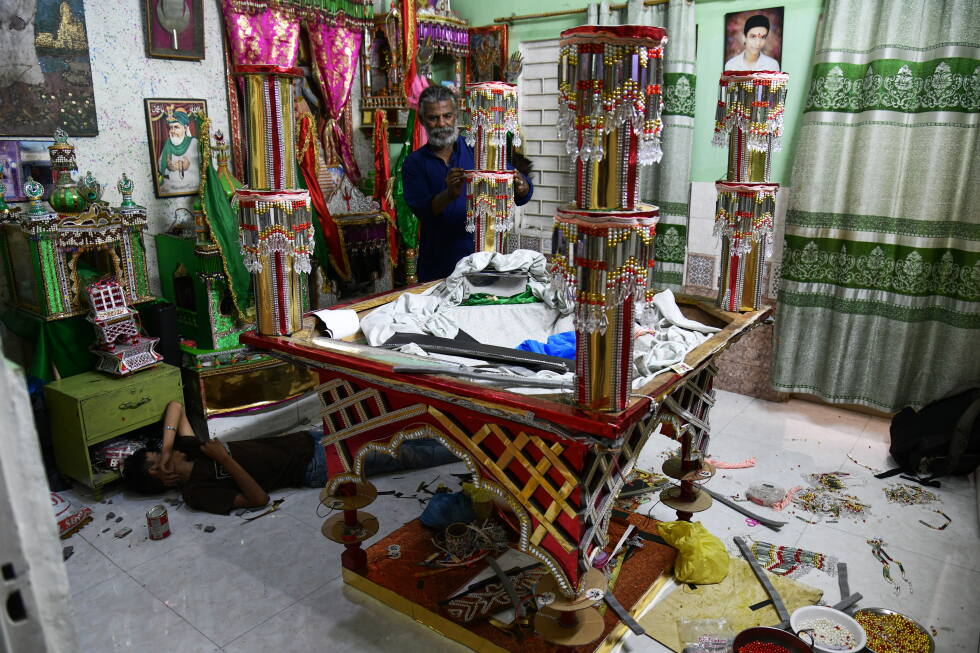
Pakistani Hindus join Shiite Muslims in Muharram observances honoring Imam Hussein
In the bustling coastal metropolis of Karachi, Pakistan, a remarkable interfaith tradition unfolds each year during the Islamic holy month of Muharram. For Raju Rathore, a lifelong Karachi resident whose parents resettled from India’s Gujarat region following the 1947 Partition of India, his Hindu faith and deep devotion to Imam Hussein coexist seamlessly, a legacy passed down through three generations of his family.
Muharram, and particularly the 10th day known as Ashoura, is most widely recognized as a sacred period of mourning for Shiite Muslims, who mark the 7th-century martyrdom of Prophet Muhammad’s grandson Hussein at the Battle of Karbala, in what is now modern-day Iraq. Hussein’s death stands as the foundational event that split Islam into the Sunni and Shiite branches, and millions of believers across the globe commemorate the tragedy each year. Yet across South Asia, a little-known cross-cultural practice has endured for centuries: participation by Hindu communities in Muharram rituals.
For Rathore, this devotion traces back to a promise his mother made decades ago. After years of struggling to conceive, she prayed at the shrine of Masoom Shah Bukhari, vowing that if she were blessed with a child, her offspring would honor Hussein’s martyrdom by crafting tazias — intricate, temporary replicas of Hussein’s mausoleum that are carried in large public processions during Muharram. Today, at 52 years old, Rathore has carried on that vow for 45 years, handcrafting detailed tazias from paper, cardboard, glass and other materials at his own expense. His family collects materials throughout the year in preparation for Ashoura, and now his own son has stepped in to learn the craft, ensuring the tradition will outlive him. “This is our passion,” Rathore explained. “Our devotion to Imam Hussein is such that even giving our lives would feel insufficient. As long as I have the strength to continue, I will keep making them.”
Historical records confirm that cross-communal participation in Muharram has deep roots across South Asia, with groups such as the Hussaini Brahmins developing layered religious traditions that blend Hindu and Shiite Islamic practices. Justin Jones, a religious studies professor at the University of Oxford, notes that one key driving force behind this widespread participation was the political history of the region. For centuries, many ruling dynasties across South Asia were Shiite, and these ruling houses publicly sponsored Muharram processions and commemorative events, transforming what began as a sect-specific religious observance into a large, inclusive public gathering that attracted participants from all faith backgrounds.
Over generations, these observances became woven into the civic and cultural fabric of many South Asian communities. Some Hindu communities contributed as musicians in processions, while others like Rathore’s family took on the role of crafting tazias. While Jones notes that these shared interfaith traditions have become less common over the past century, as religious communities have increasingly separated their ritual practices, the custom holds strong in pockets of the region, including Karachi.
Pakistan’s 2023 national census counts nearly 3.9 million Hindu residents, making Hinduism the country’s largest religious minority. While rights groups such as Minority Rights Group have documented widespread violations of religious freedom for Pakistani Hindus, Rathore says he has never faced barriers to continuing his family’s tradition. “Yes, I am Hindu, but this is not about religion,” he said. “Many of my fellow Hindus also hold Imam Hussein in great respect.”
Rathore and other Hindu participants in Karachi gather at Shiite congregation halls during Muharram, where they join in prayers and traditional mourning rituals including chest-beating before joining the public processions. Bharat Kumar, another Karachi-based Hindu who carries on the tazia crafting tradition, echoed that interfaith respect is a core part of his community’s values. “Our religion has never taught us that because we are Hindus we should not participate in or respect others’ traditions,” Kumar said. “We celebrate our own festivals with great enthusiasm and grandeur and we approach this in the same way.”
As religious divisions have sharpened across much of South Asia in recent decades, this quiet, centuries-old practice of cross-faith solidarity and shared ritual stands as a rare example of intercommunal harmony, preserved by families like the Rathores who see their participation not as a compromise of faith, but as a sacred vow and a deeply held cultural passion.
-
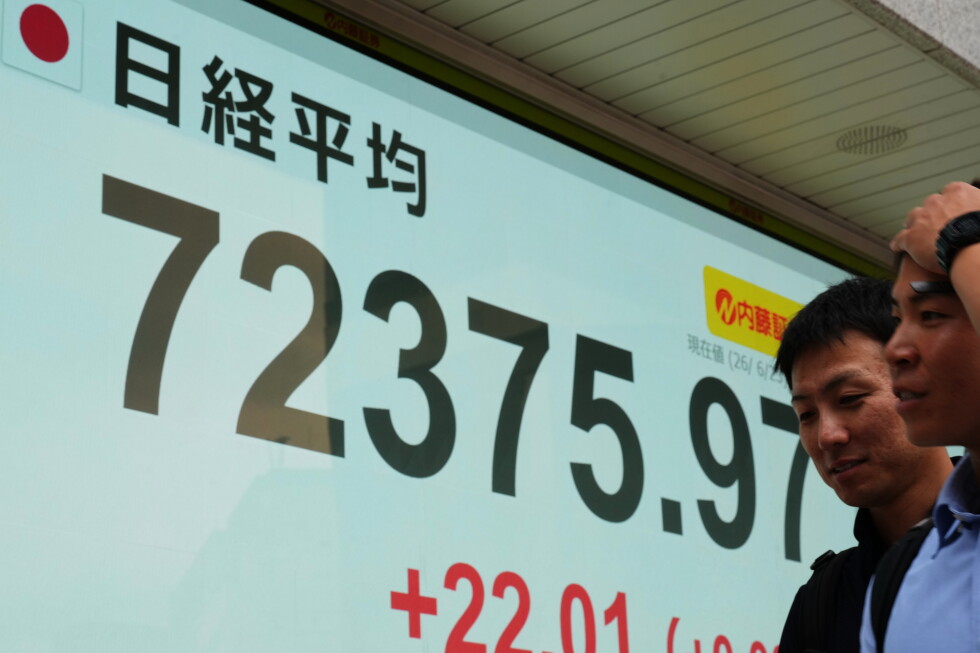
Rebound in tech shares pushes Asian shares higher, while oil prices fall
BANGKOK – Asian equity markets rallied broadly on Thursday, with technology and semiconductor stocks leading double-digit gains across Japan and South Korea. The surge came on the heels of strong earnings reports and upward guidance revisions from two major U.S. semiconductor industry leaders, Qualcomm and Micron Technology, that reignited investor confidence in the global tech sector.
Following the closing bell on Wall Street Wednesday, Qualcomm saw its share price jump 12% in after-hours trading after the firm announced a dramatic upward revision to its 2024 full-year revenue forecast, lifting the projection from an initial $22 billion to $40 billion. The company also unveiled its newest data center central processing unit, the Dragonfly C1000, which has already secured a major customer in Meta Platforms. Not to be outdone, memory chip manufacturer Micron Technology delivered its own positive update: the firm beat Wall Street analysts’ earnings and revenue estimates and raised its forward guidance, pushing its after-hours share price up nearly 16% by the end of extended trading.
These bullish U.S. chip sector results spilled over into Asian trading hours, driving sharp gains across the region’s key tech-heavy benchmark indexes. Japan’s Nikkei 225 surged 4.1% to close at 71,995.59, with semiconductor industry stocks leading the upward climb. Tokyo Electron, a leading global chip manufacturing equipment provider, gained 7.1% on the day, while Advantest, a prominent chip testing equipment manufacturer, saw its shares soar 13.4%. Across the Sea of Japan, South Korea’s benchmark Kospi index notched a new all-time closing high, jumping 5.9% to 8,968.22. Two of the country’s largest tech and chip manufacturers led gains: Samsung Electronics added 5.4% to its share price, and memory chip giant SK Hynix climbed 11.6%.
Gains were far more muted across other major Asian markets, with only small incremental increases recorded in most regional exchanges. Taiwan’s Taiex index climbed 0.8%, India’s Sensex gained 0.6%, and China’s Shanghai Composite Index edged up 0.4% to 4,125.76. Two regional bucked the upward trend: Hong Kong’s Hang Seng Index dropped 1.4% to close at 23,090.27, while Australia’s S&P/ASX 200 shed 0.5% to finish at 8,768.20.
The rally in Asian tech stocks contrasted with a mixed close for U.S. markets on Wednesday, where broader tech sector pressure capped gains for most equities. The S&P 500 slipped 0.1% to close at 7,358.22, dragged down by losses across several large-cap tech names. The Dow Jones Industrial Average, which has a far smaller weighting toward technology stocks than other major U.S. benchmarks, climbed 10.4 points to 51,848.90, while the tech-heavy Nasdaq Composite fell 0.4% to 25,476.64. Microsoft lost 2.3% of its value, Oracle slumped 4.6%, and Alphabet, Google’s parent company, slipped 0.2% ahead of its upcoming addition to the Dow Jones Industrial Average, which will take place on Monday, replacing Verizon. Alphabet will become the fifth member of the so-called “Magnificent 7” group of large U.S. tech stocks to join the Dow, joining Apple, Amazon, Microsoft, and Nvidia. Analysts have warned in recent weeks that valuations for large-cap U.S. tech stocks, which have driven the market’s record-setting rally throughout 2024, may have become stretched.
Energy markets saw significant downward movement on Wednesday as negotiations continue between the U.S. and Iran toward a potential end to their ongoing conflict, pushing global oil prices back toward levels last seen before the outbreak of the war. Brent crude, the global benchmark for oil pricing, fell 3.8% to $73.87 per barrel on Wednesday, and dropped an additional 1.3% to $72.90 in early Asian trading Thursday. U.S. West Texas Intermediate crude fell 3.9% to $70.34 per barrel on Wednesday, and lost a further 1.4% to $69.37 early Thursday. Oil prices are now edging closer to the roughly $70 per barrel trading range recorded in late February, before the Iran war began. The drop in crude pulled energy stocks lower on Wall Street, with Exxon Mobil falling 2% and Chevron losing 2.6%.
Elsewhere on Wall Street, homebuilding stocks were among the top performers Wednesday after U.S. lawmakers passed industry-friendly legislation. KB Home saw its share price surge 16.7%, while D.R. Horton jumped 6.7%.
Market focus now turns to the U.S. inflation update due later Thursday, when the U.S. Bureau of Economic Analysis will release the Personal Consumption Expenditures (PCE) price index – the Federal Reserve’s preferred measure of inflation. Economists polled by forecasters expect the report to show headline PCE inflation rose 4.1% year-over-year in May, which would mark the highest reading recorded in three years. Fed policymakers have remained concerned about persistent inflation, which has been pushed higher by tariffs that raised input costs for a wide range of goods. Inflationary pressures worsened after the outbreak of the Iran war, which pushed global energy and shipping costs higher. Analysts expect those inflationary impacts to linger even as crude oil and gasoline prices decline in recent trading.
In currency markets, the U.S. dollar edged lower against the Japanese yen early Thursday, falling to 161.75 yen from 161.75 yen in the previous session. The euro ticked slightly higher against the greenback, rising to $1.1368 from $1.1358.
-
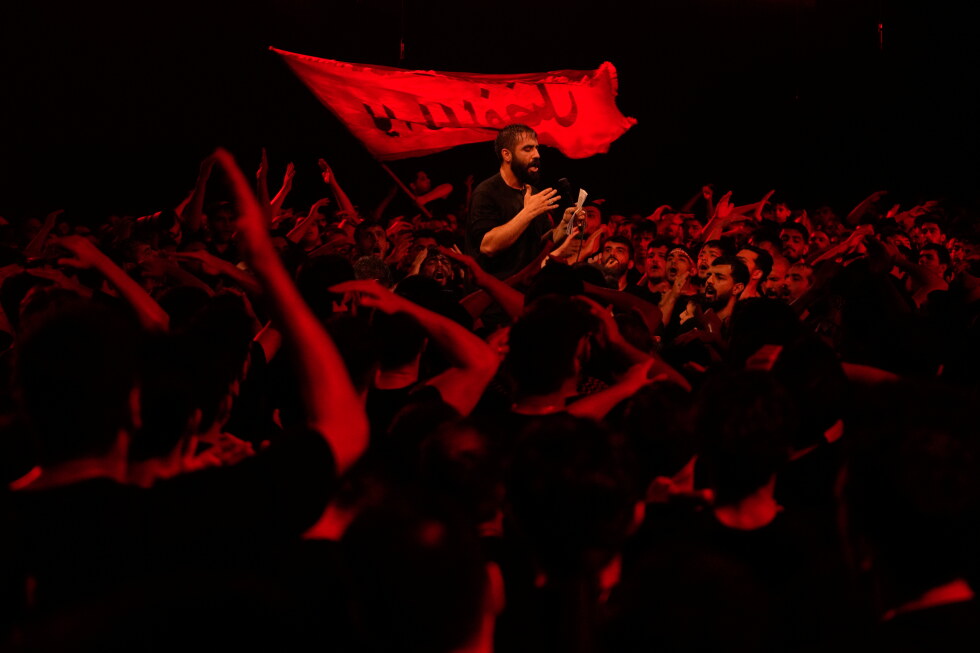
Shiite Muslims mark holy day of Ashoura after months of war in Iran and Lebanon
Across the globe, millions of Shiite Muslims gathered on Thursday to observe Ashoura, the holiest day on their religious calendar, a commemoration steeped in meaning of sacrifice and resistance against oppression that carries unprecedented emotional weight this year, following months of devastating open conflict across Iran and Lebanon.
Rooted in 7th-century Islamic history, Ashoura honors the martyrdom of Imam Hussein, the grandson of the Prophet Muhammad, who was killed alongside his family and close companions at the 680 CE Battle of Karbala after refusing to swear loyalty to the ruling Umayyad caliphate. The event’s legacy shaped the centuries-long schism between Sunni and Shiite Islam, and it endures today as one of the faith’s most potent symbols of standing against injustice.
This year’s observance comes at a defining turning point for the Middle East. Just days ahead of the scheduled funeral procession for Iran’s long-serving supreme leader Ayatollah Ali Khamenei, who was killed in an Israeli airstrike on February 28, the opening day of the ongoing regional war, the timing has amplified the day’s themes of loss and resistance. Khamenei, 86, was not only Iran’s highest political authority and ultimate arbiter of religious doctrine, but also a figure revered by millions of Shiite believers across the world. This week, Iranian and U.S. negotiators have convened talks to work toward finalizing a fragile ceasefire that could end months of active hostilities.
The war has spilled across borders into Lebanon, where Iran’s key regional ally, the Shiite militant group Hezbollah, entered the conflict within days of its outbreak, launching rocket barrages into northern Israel in solidarity with Tehran. The retaliation from Israel has been severe: widespread aerial bombardment and a limited ground incursion that reduced large swathes of majority-Shiite areas in southern Lebanon and Beirut’s southern suburbs to rubble. As this year’s Ashoura is observed, more than one million displaced Lebanese residents are attempting to return to their destroyed hometowns, and religious gatherings have been held against a backdrop of collapsed buildings and widespread ruin.
In the coastal Lebanese city of Tyre, families who lost loved ones — whether fighting alongside Hezbollah or serving as civilian paramedics — gathered for early pre-Ashoura sermons, weeping as clerics framed the current conflict through the lens of Imam Hussein’s legacy. Between portraits of new Iranian Supreme Leader Mojtaba Khamenei and Hezbollah Secretary-General Naim Kassem, one cleric drew a direct parallel between the struggle facing modern Shiite leaders and the sacrifice of Hussein and his followers at Karbala. Red and black banners emblazoned with Hussein’s name line streets across the region, and in Beirut’s southern suburbs, worshippers have flocked in large numbers to the grave of former Hezbollah leader Hassan Nasrallah, who was killed in an Israeli strike in September 2024.
Thousands of miles away in Pakistan, which is home to a large Shiite minority living within a predominantly Sunni nation, security officials have deployed thousands of police and paramilitary forces to protect Ashoura gatherings, following intelligence warnings of planned militant attacks on worshippers. Though most Sunni and Shiite communities in Pakistan coexist peacefully, sectarian militant groups have repeatedly targeted Shiite religious sites and gatherings over the years, carrying out attacks that have killed hundreds of people. To counter potential threats, authorities have announced temporary mobile phone service suspensions in high-risk areas during processions.
For many worshippers, the ancient symbolism of Ashoura feels particularly resonant amid today’s turmoil. “Imam Hussein is a symbol of the highest struggle and sacrifice,” said Saadia Shah, 33, who attended a gathering in the eastern Pakistani city of Lahore alongside her two children. “His name gives us the courage to stand up to tyranny, to say what is right and oppose what is wrong.”
Associated Press journalist Munir Ahmed contributed reporting from Islamabad, Pakistan.