标签: Asia

亚洲

  • Hainan to expand intl opening-up

    Hainan to expand intl opening-up

    China’s southern island province of Hainan has unveiled an ambitious five-year strategy to deepen its international engagement and cement its role as a critical link between China and the broader global economy, marking a key new phase for its groundbreaking Free Trade Port (FTP) initiative just months after the launch of full island-wide special customs supervision.

    Speaking at a State Council Information Office press conference held in Haikou on April 10, 2026, Hainan Governor Liu Xiaoming laid out the province’s trade and opening-up priorities for the 15th Five-Year Plan period spanning 2026 to 2030, framing this stage as a turning point for the FTP project. The milestone launch of island-wide special customs operations on December 18, 2025, formally concluded the FTP’s initial infrastructure and regulatory framework development, clearing the way for the next phase of expansion.

    To advance this new phase of opening, Liu explained that Hainan will prioritize institutional liberalization by aligning its regulatory frameworks with high-standard global trade rules. The province will align its practices with major multilateral frameworks including the Regional Comprehensive Economic Partnership (RCEP), the Comprehensive and Progressive Agreement for Trans-Pacific Partnership (CPTPP), and the Digital Economy Partnership Agreement (DEPA), while also supporting ongoing negotiations to upgrade the China-ASEAN Free Trade Area to its 3.0 iteration.

    The province enters this new planning period on the heels of robust trade growth over the 14th Five-Year Plan (2021-2025), when both goods and services trade posted average annual growth rates exceeding 20 percent. For the coming five years, Hainan has set clear, ambitious targets: 10 percent average annual growth for goods trade, 20 percent annual growth for services trade, and 10 percent annual expansion in actually utilized foreign direct investment.

    Already, the new regulatory framework and policy incentives are driving tangible on-the-ground growth across Hainan’s processing and trade sectors, with the local coffee industry offering a clear illustration of the benefits of the FTP’s model.

    On the same day the special customs regime launched last December, a shipment of blended roasted coffee beans produced by Charoen Pokphand Group (Hainan) Xinglong Coffee Industry Development Co, a Sino-Thai joint venture based in Wanning city, departed Qionghai Boao International Airport for the Chinese mainland market. The beans, imported raw from Colombia, were roasted, blended and packaged at the company’s automated processing facility in Xinglong Coffee Valley, adding more than 30 percent to their value before shipment. This marked the first shipment from Wanning to qualify for Hainan FTP’s value-added tariff exemption policy for domestic sales, cutting costs significantly for the producer.

    The joint venture already operates under a cross-border model unique to the Hainan FTP: importing low-cost raw materials from global producers, processing them into finished high-value products, then selling finished goods both domestically and internationally. During the company’s first export shipment to Australia, the firm saved 8 percent on import tariffs for raw beans and 13 percent on value-added tax, directly boosting its profit margin and global competitiveness.

    “The most transformative change we have seen stems from Hainan’s institutional opening-up,” noted Ye Jian, general manager of the Sino-Thai joint venture. “Hainan is rapidly emerging as a strategic node in the global coffee supply chain.”

    Ye added that Hainan’s geographic proximity to major coffee-producing nations in Southeast Asia, paired with unimpeded access to China’s 1.4 billion-person consumer market, gives the island an unrivaled competitive advantage. The new special customs regime, he explained, is cutting cross-border logistics costs, streamlining supply chain clearance processes, and attracting skilled industry talent, helping reshape Hainan’s role from a simple entry point for raw materials into a fully fledged global processing hub.

    “A single cup of Xinglong coffee might use beans grown in Colombia, processed and packaged in Hainan, and end up sold to consumers in Australia — that is a perfect, tangible example of how the Hainan FTP connects China’s market and production capacity with the entire world,” Ye said.

    Policy support for the new trade and processing model has expanded in lockstep with the launch of the special customs regime. Ahead of the December 2025 launch, Hainan updated its zero-tariff raw material list in February 2025, expanding the roster to roughly 6,600 eligible products and adding unroasted coffee beans alongside 296 other commodity items. By the end of 2025, the number of companies eligible to access the FTP’s preferential policies had grown by more than 11,000 from pre-expansion levels, signaling widespread business uptake of the new regime.

  • New Zealand envoy highlights opportunities in China’s growth

    New Zealand envoy highlights opportunities in China’s growth

    In a clear acknowledgment of deep bilateral economic interdependence, New Zealand’s Ambassador to China Jonathan Austin has emphasized that New Zealand is closely tracking China’s economic development and the new opportunities generated by China’s ongoing opening-up policy as China enters its 15th Five-Year Plan period (2026-2030). Austin stressed that New Zealand’s own economic performance is directly tied to China’s growth trajectory, given China’s longstanding status as the nation’s largest trade partner.

    “One quarter of all New Zealand’s exports go to China. When China’s economy performs well, our economy performs well,” Austin stated. He added that New Zealand’s policymakers closely analyze China’s five-year development blueprints, with a sharp focus on emerging opportunities created by further market opening in China. “We are actively watching for any new openings that come as China continues to open its economy to the world, that is a key focus for us,” he said.

    Austin went on to note that New Zealand has reaped substantial economic benefits from China’s decades-long growth surge. “I can say sincerely that New Zealand has been one of the biggest beneficiaries of China’s remarkable economic rise,” he said. He also recalled that expanded bilateral trade helped New Zealand navigate the 2008 global financial crisis far more effectively than it would have managed without access to the Chinese market.

    The two countries share a historic trade relationship: New Zealand became the first developed nation to sign a comprehensive free trade agreement with China back in 2008, and an upgraded version of that agreement entered into force in 2022. Official data from China’s Ministry of Commerce confirms that China has held its position as New Zealand’s top trading partner, largest import source, and largest export market for 11 consecutive years.

    Austin described the current bilateral trade relationship as both stable and mutually beneficial. On one hand, Chinese consumers gain access to New Zealand’s premium agricultural products, while the trade basket has gradually diversified to include fast-growing exports of New Zealand cosmetics, health supplements, and advanced manufacturing inputs. On the other hand, New Zealand benefits from China’s manufacturing prowess, technological advances, and a broad range of affordable, high-quality imports that support New Zealand households, businesses, and national decarbonization initiatives.

    Beyond economic and trade ties, Austin highlighted the depth and resilience of the broader bilateral relationship, which spans education, tourism, business partnerships, and close people-to-people family ties. Currently, more than 27,000 Chinese students are enrolled in educational institutions across New Zealand, making China one of the country’s largest sources of international students.

    Austin did not shy away from acknowledging that the two nations do not share identical views on every issue. However, he noted that mature bilateral relationships are not built on ignoring differences. Instead, he said, strong ties are founded on the ability to discuss disagreements openly, respectfully and constructively, while preventing differences from derailing cooperation in areas where the two countries share aligned interests.

    Looking at the broader global context, Austin pointed out that New Zealand shares growing concerns over rising pressures on international rules and norms, increasingly contested global economic relations, and shrinking market openness worldwide. Against this challenging backdrop, Austin confirmed that New Zealand will remain committed to supporting multilateral and regional cooperation, particularly through the Asia-Pacific Economic Cooperation (APEC) forum.

    Founded in 1989 to capitalize on growing economic interdependence across the Asia-Pacific, APEC will hold its 33rd Economic Leaders’ Meeting in Shenzhen, China this coming November. “Through open dialogue and cooperation based on shared best practices, APEC plays a critical role in shaping regional economic policy and upholding the global multilateral, rules-based trading system,” Austin explained.

    In a separate development, a parliamentary delegation led by Gerry Brownlee, Speaker of the New Zealand House of Representatives, will travel to China for an official visit running from Sunday to Thursday.

  • Asia outlook cautious amid Mideast conflict

    Asia outlook cautious amid Mideast conflict

    The ongoing escalation of conflict in the Middle East has cast a long shadow over economic prospects for developing economies across the Asia-Pacific, prompting the Asian Development Bank (ADB) to downgrade its 2026 growth forecast and warn of rising inflationary pressure, according to the bank’s flagship annual publication, the *Asian Development Outlook (ADO)*, released on 11 April 2026.

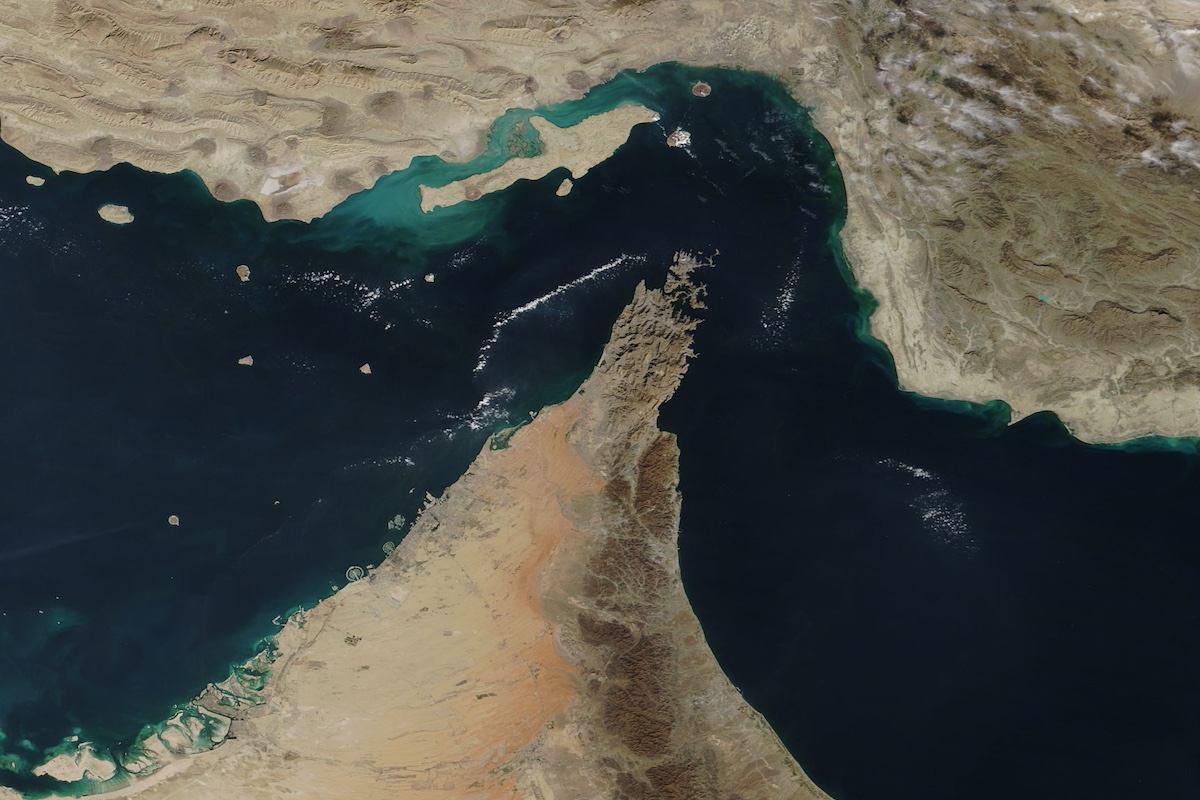
    The ripple effects of the regional crisis have already disrupted global energy markets, pushing international crude prices above $100 per barrel in recent weeks. As of Friday, the global benchmark Brent crude traded above $96 per barrel, driven by supply uncertainty tied to the conflict. The situation worsened earlier this week, when Iran’s state-run Press TV reported the full closure of the Strait of Hormuz, the strategic maritime chokepoint through which roughly a third of global oil and gas exports flow, most bound for Asia-Pacific markets.

    In a webinar launching the ADO report, ADB principal economist John Beirne explained that the vast majority of developing Asian economies rely on net energy imports from Gulf nations, meaning sustained higher energy prices will translate into direct, material income losses for the region. But the spillover impacts stretch far beyond energy and shipping, he noted, extending to core inputs for agricultural and industrial supply chains that also pass through the Strait of Hormuz. Middle Eastern economies are leading global suppliers of critical commodities including petrochemicals, fertilizers, industrial gases and base metals, all of which have seen upward price pressure amid the supply disruption.

    “High fertilizer and diesel prices raise agricultural costs, which could lead to less input use and lower yields next year, and this could contribute to food insecurity,” Beirne warned.

    ADB economists emphasized that the severity of the conflict’s impact will vary widely across emerging Asian economies, with large emerging markets such as China and India projected to remain broadly resilient despite the external headwinds. ADB senior economist Yothin Jinjarak noted that China’s economy faces limited exposure to the crisis, thanks to multiple built-in buffers against global energy price shocks: substantial strategic petroleum reserves, a highly diversified supply base for energy imports, and a rapidly expanding renewable energy sector that reduces reliance on foreign fossil fuels.

    For India, domestic consumption remains the primary engine of economic growth, supported by rising household incomes and recent tax cuts. Still, the ADB forecast that accelerating food and fuel prices will likely moderate consumption growth in the coming year.

    Across the rest of South Asia, the conflict has hit regional economies on two fronts: not only through higher energy import costs, but also through severe disruption to the tourism sector, explained Rana Hasan, ADB’s regional lead economist for South Asia. “We are already seeing our two large tourism-dependent economies, the Maldives and Sri Lanka, take a hit,” Hasan said. Flight disruptions and the closure of Gulf airspace, a critical transit hub for travelers from Europe and North America heading to South Asia, have cut tourist arrivals sharply in both island nations.

    In Southeast Asia, the risk of persistent, high inflation is concentrated in economies that face overlapping vulnerabilities: high energy import dependence, greater exchange rate pass-through to domestic prices, and limited policy buffers to offset shocks, according to Dulce Zara, ADB’s senior regional cooperation officer for Southeast Asia. Laos, Myanmar and the Philippines rank among the most vulnerable, she said, pointing to Laos as an example: the country has very limited fiscal space to roll out relief measures to cushion consumers from rising fuel prices. By contrast, economies such as Brunei, Indonesia and Malaysia face far lower risk, thanks to existing fuel subsidy programs, dedicated oil price stabilization funds, and diversified domestic energy supplies.

    Another underrecognized drag on regional growth will come from falling remittance inflows, the ADB noted. Remittances from migrant workers employed in the Middle East are a key pillar of household consumption for many South and Southeast Asian economies, including Bangladesh, Indonesia, Nepal, the Philippines and Sri Lanka, all of which rely heavily on labor exports to Gulf nations.

    Hasan added that the ultimate scale of the economic damage will hinge entirely on how the conflict unfolds: “A lot is going to depend on the duration of this Middle East conflict and how long it takes for the economies of the Middle East to recover from the conflict.”

  • US, Iran brace for pivotal talks

    US, Iran brace for pivotal talks

    As high-stakes negotiations between the United States and Iran approach in Islamabad, the future of a fragile regional ceasefire and global energy security hangs in the balance, with deep divisions and ongoing military violence casting a long shadow over the scheduled discussions. Set to kick off on Saturday in Pakistan’s capital, the talks could stretch up to 15 days, with negotiators set to address a slate of explosive, high-stakes issues ranging from Iran’s nuclear enrichment program to unimpeded commercial navigation through the strategically critical Strait of Hormuz. However, Iran has already tied its full participation in the dialogue to an immediate end to Israeli military strikes in Lebanon, a demand that comes as Israel continues its offensive against Hezbollah in the region.

    The US delegation will be led by Vice President JD Vance, but Iran has yet to release details of its negotiating team, with top Iranian officials arguing that ongoing Israeli attacks have already stripped the planned talks of meaningful purpose. “The holding of talks to end the war is dependent on the US adhering to its ceasefire commitments on all fronts, especially in Lebanon,” Esmaeil Baqaei, Iran’s Foreign Ministry spokesman, confirmed Thursday.

    Tensions rose further Thursday after US President Donald Trump cast public doubt on Iranian compliance with existing shipping agreements through the Strait of Hormuz, writing on social media that “Iran is doing a very poor job, dishonorable some would say, of allowing oil to pass through the Strait of Hormuz. That is not the agreement we have!” The vocal criticism came amid shifting shipping activity in the region: early Friday, ship-tracking data showed a Botswana-flagged liquefied natural gas tanker reversed course and returned to the Gulf after attempting to exit via a route approved by Iran’s Islamic Revolutionary Guard Corps, highlighting growing uncertainty over the strait’s operation.

    In a Thursday speech marking 40 days since the death of former supreme leader Ali Khamenei—who was killed in a joint US-Israeli strike at the outbreak of the current conflict—Iran’s new Supreme Leader Mojtaba Khamenei declared that the Iranian people had secured a “decisive victory” in the war, and announced that the country would move into a new phase of managing the strategic waterway. De facto disruption to traffic through the strait, through which roughly 20% of the world’s oil supplies pass, has already sent global energy prices soaring: by Friday, the international benchmark Brent crude spot price stood at around $96 per barrel, a 35% jump since the start of the conflict. The price surge has driven up costs for gasoline, food and other essential goods across the globe, far beyond the borders of the Middle East.

    As Pakistan tightened security across Islamabad in preparation for the talks, global economic leaders have warned that the ongoing conflict already poses a major threat to worldwide growth, regardless of whether the fragile ceasefire holds. Kristalina Georgieva, managing director of the International Monetary Fund, told reporters Thursday that “had it not been for this shock, we would have been upgrading global growth.” Speaking ahead of next week’s joint IMF-World Bank spring meetings, Georgieva added: “But now, even our most hopeful scenario involves a growth downgrade.”

    Israeli military activity has continued to escalate in Lebanon, shattering the already uneasy truce between Washington and Tehran. On Wednesday, Israel carried out its deadliest round of strikes on Lebanon since February 28, killing more than 300 people. Early Friday, the Israeli military announced it had targeted an additional 10 rocket launchers across southern Lebanon. Iran’s Parliament Speaker Mohammad Bagher Qalibaf, who is widely rumored to be a leading candidate to join Iran’s negotiating team in talks with Vance, warned Thursday that continued Israeli attacks on Hezbollah would bring “explicit costs and strong responses.”

    Further complicating regional tensions, Kuwait announced Friday it had suffered a drone attack overnight Thursday, which it blamed on Iran. Iran’s Revolutionary Guard quickly issued a denial, rejecting any involvement in the strike.

    Parallel to the US-Iran talks in Pakistan, direct Israeli-Lebanese negotiations are scheduled to launch next week in Washington. But many analysts warn the prospects for progress are slim. Abed Abou Shhadeh, a Jaffa-based Israeli political analyst and activist, described the US-Iran ceasefire talks as “extremely problematic” for Israel. Citing recent Israeli media polls, Al Jazeera reported that 79 percent of Israeli citizens support continuing military operations against Hezbollah in Lebanon, meaning the Israeli government has little political incentive to pursue diplomatic progress.

  • ‘Game on’: How Iran can exact a toll in the Strait of Hormuz

    ‘Game on’: How Iran can exact a toll in the Strait of Hormuz

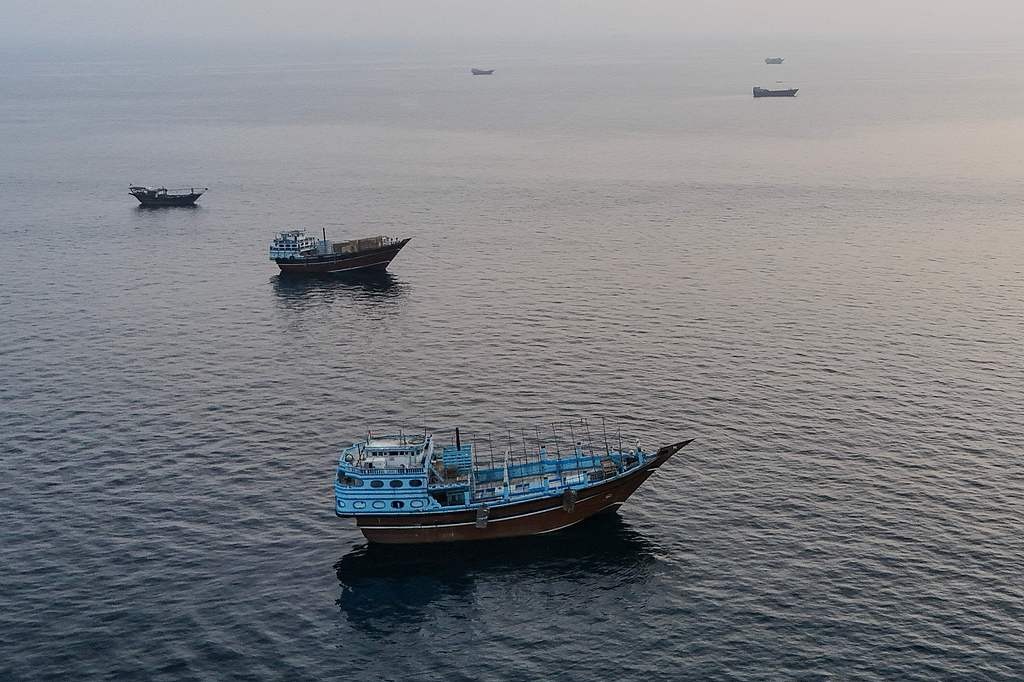
    In recent days, a quiet but consequential transaction has unfolded off Iran’s coast: an Iranian marine pilot boarded a Greek-flagged tanker carrying Kuwaiti crude bound for Japan, after the captain obtained clearance to enter Iranian territorial waters via VHF radio. The day prior, the vessel’s charterer transferred a six-figure sum in U.S. dollars to an Omani bank tied to the Iranian government. This encounter, experts say, could become a daily routine if ongoing U.S.-Iran negotiations in Pakistan result in a peace deal, formally cementing Iran’s control over the Strait of Hormuz, one of the world’s most critical energy chokepoints.

    Middle East Eye consulted six maritime security experts, ship owners, international law scholars and energy traders to unpack how Iran could turn its de facto control of the waterway into a formal revenue stream, even amid long-standing U.S. hostility. The first step, experts agree, is rebranding: what Iran frames as a charge for passage cannot be called a toll if it hopes to win international and U.S. acceptance.

    Donald Rothwell, a leading law of the sea scholar at Australian National University, explained to Middle East Eye that the better framing is a “fee for service” rather than a transit toll. After military strikes from the U.S. and Israel, Iran effectively restricted traffic through the strait. Under international law, while states bordering international straits are barred from blocking innocent transit, they can suspend passage for security reasons during active conflict, Rothwell noted. Critics point out Iran’s current tactics – including harassing and seizing commercial vessels and designating Omani territorial waters as hazardous – violate existing international norms, but experts say the Trump administration, which has previously floated controversial territorial expansion ideas, may overlook legal technicalities to reach a deal.

    Notably, neither the U.S. nor Iran has ratified the United Nations Convention on the Law of the Sea (UNCLOS), leaving more room for negotiation. U.S. President Donald Trump has already sent mixed signals on the plan: he has suggested sharing transit proceeds with Iran could be positive, but later demanded Iran halt all fee collection immediately. Despite the legal ambiguities, Rothwell argues Iran’s position holds some merit amid the current ceasefire uncertainty.

    “Right now Iran is in a twilight zone, pending a finalised peace deal with the U.S. and Israel,” Rothwell said. “Iran can argue that it needs to guarantee safe passage for transiting vessels amid the risk of resumed military operations, and that escorted transit is a service it provides. That creates a legal opening.”

    While formal tolls are only legally permitted for man-made waterways like the Suez and Panama Canals, precedent exists for international strait states to charge service fees. Australia charges mandatory pilotage fees for vessels transiting the narrow, dangerous Torres Strait shared with Papua New Guinea, and Turkey collects tonnage fees for Bosphorus and Dardanelles transits under the 1936 Montreux Convention to fund safety, rescue and inspection services. Jason Chuah, a maritime law professor at City St Georges University of London, told Middle East Eye that Iran’s situation is not identical to these examples, but these precedents give Tehran a legal foothold to build on.

    Currently, Iran’s control of transit remains ad-hoc and unstructured. Before the recent conflict, roughly 130 vessels transited the strait daily. Between April 8 and 9, that number dropped to just 14, with nearly two-thirds of those belonging to Iran-sanctioned entities or the shadow fleet, according to Marine Traffic analytics. Vessels that do gain passage must submit extensive documentation – including bills of lading, crew manifests, insurance details and previous and next port information – so Iran can screen for U.S. or Israeli links, explained Martin Kelly, head of advisory at risk consulting firm EOS Risk Group. Even with government-to-government approval, there is no guarantee of passage, Kelly added.

    So far, vessels from Iran’s close partners including Russia, Pakistan, India and China have successfully transited. Among Western-linked shipping, Greek firms have been the most active: multiple tankers owned by Dynacom, the shipping group of Greek magnate George Prokopiou, have passed through the strait, with payments made to Iran in Chinese yuan, an anonymous ship owner confirmed to Middle East Eye. While yuan has been used for ad-hoc payments, the head of Iran’s oil, gas and petrochemical exporters union recently told the Financial Times that Tehran prefers payment in cryptocurrency.

    Joshua Hutchinson, chief commercial officer at British maritime security firm Ambrey, told Middle East Eye that Iran has not yet established a clear, scalable framework for the system, due to internal divisions. “The Islamic Revolutionary Guard Corps is disconnected from the politicians right now. So the communication by Tehran has been problematic,” he said. While prospective ship owners – many drawn by sky-high shipping rates – have multiple channels to reach Iran, including embassies and local brokers, the core issue remains payment structure. “Iran has not communicated a clear, scalable payment scheme,” Hutchinson said. “I think that will happen eventually; it’s just progressing slowly because of the split between the civilian government and the military.”

    Iranian officials have publicly floated a $2 million toll per vessel, or $1 per barrel of oil carried, but maritime experts say a tonnage-based fee would be the most practical implementation. While Iran has proven it can drastically reduce traffic through the strait, meaningful monetization requires buy-in from major global shipping players. Currently, record-high shipping rates have left many ship owners weighing risk against reward, said Maria Bertzeletou, senior analyst at shipping services firm Signal Group.

    “At the end of the day, it depends if owners are willing to pay the fees Iran wants and take the risk. Maybe they will prefer to send their vessels on other routes,” Bertzeletou said. She noted that even after the Houthis halted Red Sea attacks in May 2025, total tonnage through the waterway remains 50% lower than pre-attack levels, meaning traffic may not rebound quickly even if a deal is reached. Bertzeletou predicted a split in shipping attitudes: “We could see a bifurcation of the strait with different attitudes between Asian and western shipowners. I have a feeling that some western ship owners could sell some second-hand tankers to Asian owners who have an appetite to cross the strait, while Western owners focus on other routes.”

    Toby Copson, portfolio manager at Davenport Energy, said the timeline for large-scale energy traffic and formal fee collection remains uncertain. “It will be cloak and daggers for some time,” he said, noting that many Chinese vessels currently transiting the strait are not paying fees. However, with rates for Very Large Crude Carriers – the workhorses that carry Gulf crude to Asia – hitting historic highs, and oil and LNG prices also spiking, the proposed fees would be easy for shippers to absorb, Copson argued. “This fee Iran wants could be absorbed so quickly given the spike in oil prices. In the current pricing climate, the shippers would be stupid not to pay it.”

    The biggest barrier remains U.S. sanctions, Chuah noted: any payment to the IRGC, which controls Iran’s border and maritime security operations, would currently violate U.S. sanctions. Iran has demanded sanctions relief as a core condition of any peace deal, part of a 10-point proposal it released this week that Trump has called a “workable” basis for negotiations. While most Western shipping relies on U.S. dollars, Copson said Iran could easily collect fees in yuan or cryptocurrency. For yuan payments, he explained, shippers simply exchange for offshore renminbi and transfer to Iranian accounts, which Iran then converts to gold or dollars through Chinese intermediaries – a process that is not overly complex, though cryptocurrency would offer more opacity.

    Still, the Trump administration is likely to resist any fee framework that excludes the dollar, particularly as the conflict has fueled broader global discussions of de-dollarization. If a deal is reached, the international shipping industry will have little choice but to comply, Chuah said, but the U.S. will face intense pushback from key regional allies that oppose Iran cementing control over the strait. The United Arab Emirates, a close U.S. and Israeli partner that has taken a hard line against Iran during the conflict, has already pushed back: Anwar Gargash, diplomatic adviser to the Emirati president, said this week the UAE will reassess its alliances post-war, and Sultan al-Jaber, head of Abu Dhabi’s state oil company, said Iran continues to use coercion to restrict passage, even amid the ceasefire. “Big oil majors and Gulf states absorb a fee, but it will set a very bad precedent,” Chuah said.

    But other experts argue regional opponents will have little leverage if the U.S. agrees to a deal. “If Trump lifts sanctions on Iran, it will be game on,” Hutchinson said.

  • Iranian delegation arrives in Islamabad for talks

    Iranian delegation arrives in Islamabad for talks

    ISLAMABAD, April 11 – A senior Iranian delegation led by Parliament Speaker Mohammad Baqer Qalibaf touched down in Islamabad on Saturday ahead of highly anticipated negotiations with United States representatives, Pakistan’s Ministry of Foreign Affairs confirmed in an official statement this week.

    The visiting delegation, assembled for the high-stakes diplomatic discussions, also counts Iranian Foreign Minister Seyed Abbas Araghchi among its core members. On arrival at the Pakistani capital, the Iranian delegation was formally welcomed by a senior contingent of Pakistani leadership. The reception party included Pakistani Deputy Prime Minister and Foreign Minister Mohammad Ishaq Dar, National Assembly Speaker Sardar Ayaz Sadiq, Chief of Army Staff Field Marshall Syed Asim Munir, who also serves as Chief of Defense Forces, and Interior Minister Syed Mohsin Raza Naqvi.

    In remarks following the welcome, Ishaq Dar shared Pakistan’s expectation that all negotiating parties will approach the discussions in a spirit of constructive engagement. He reaffirmed Pakistan’s longstanding commitment to continuing its role as a neutral facilitator, working to support all parties in reaching a sustainable, long-term resolution to the ongoing conflict between the United States and Iran.

    The talks mark a rare diplomatic opening between the two longtime adversaries, with Pakistan serving as the host and intermediary for the pivotal discussions that are being watched closely by global powers across the world.

  • US, Iran negotiation delegations to hold talks in Islamabad Saturday: Pakistani PM

    US, Iran negotiation delegations to hold talks in Islamabad Saturday: Pakistani PM

    ISLAMABAD – In a significant step toward de-escalating long-running tensions in the Middle East, Pakistani Prime Minister Shehbaz Sharif confirmed Friday that senior negotiation delegations from the United States and Iran will convene for direct talks in the Pakistani capital on Saturday. The announced meeting comes on the heels of a recently agreed temporary ceasefire in the region, marking the start of what Sharif described as a far more challenging phase of diplomacy to lock in lasting, permanent peace.

    In a public address announcing the planned talks, Sharif emphasized that dialogue remains the only viable path forward to resolve deep-rooted disputes fueling instability across the Middle East. With the temporary pause in hostilities already in place, the next critical step is to translate that short-term truce into a durable, long-standing peace through constructive negotiations, he added.

    The Pakistani prime minister also made clear that his country’s leadership is committed to doing everything in its power to create an environment conducive to productive dialogue, and to ensuring the negotiations reach a successful outcome. As a key regional actor with long-standing diplomatic ties to both Washington and Tehran, Pakistan has positioned itself as a neutral mediator to bring the two sides to the negotiating table amid heightened regional tensions that have threatened to spill beyond the Middle East in recent months.

    The planned talks mark a rare high-level engagement between the United States and Iran, two nations with decades of strained diplomatic relations that have been a core source of instability across the Middle East. The international community has widely welcomed the decision to hold negotiations, with many regional and global powers expressing hope that the talks will open the door to broader confidence-building measures and a lasting reduction in tensions.

  • An inappropriate joke nearly ended his career. Now he’s back with more humour

    An inappropriate joke nearly ended his career. Now he’s back with more humour

    One year after a high-profile controversy derailed one of India’s biggest online comedy careers, 29-year-old creator Samay Raina has stepped back into the public eye with a raw, deeply personal new YouTube stand-up special that has already resonated with fans across the country.

    Walking onto stage with his signature tousled hair and rumpled checked shirt, Raina half-smiles at the packed crowd before he even utters a word — and the audience erupts in laughter before his first punchline can land. It is a homecoming 12 months in the making, a moment that once seemed impossible after a single guest remark brought his thriving career to an abrupt halt.

    Until early 2025, Raina stood at the forefront of India’s fast-growing digital comedy revolution. Unlike most veteran Indian comics who cut their teeth in small underground clubs of Mumbai and Bangalore, Raina was a product of the open internet. A former competitive chess player, he first built an audience during the global pandemic by streaming chess matches online, gradually blending game play with self-deprecating banter, bilingual observational comedy and spontaneous interactions with live chat. His quick, sarcastic wit, which switched seamlessly between Hindi and English, earned him millions of loyal followers in just a few years.

    His breakout hit, *India’s Got Latent*, was a scrappy, unapologetic parody of formal television talent competitions that became a cultural phenomenon for young Indian streaming audiences. The format, which featured eccentric contestants and unfiltered roasts from judges and host, rejected the polished, censored comedy of traditional TV for a raw, real-time style that felt revolutionary. The show drew a eclectic roster of guests from across the digital space: fellow stand-ups, chess grandmasters, TikTok and YouTube creators, and podcasters, all pulled into Raina’s loose, improvisational vibe. For millions of young fans, it was comedy that felt like it spoke directly to their generation.

    Then everything collapsed overnight. During an episode featuring popular Indian podcaster Ranveer Allahbadia — known to his followers as BeerBiceps — the guest posed an explicit question to a contestant that sparked immediate nationwide outrage. Police filed obscenity complaints against everyone involved in the episode, including Raina, and when Raina’s editor was arrested, the comic made the decision to take the entire *India’s Got Latent* series offline and step away from public life.

    For 12 months, Raina largely vanished from social media and stages, stepping out of the spotlight he had worked so hard to build. In Indian comedy circles, his name became a cautionary tale about the volatility of online fame, where a single misstep can erase a career in days.

    Now, Raina is back, and he is using the art that got him into trouble to process what happened. Earlier this week, he dropped *Still Alive*, a 90-minute stand-up special critics are already calling his boldest, most personal work to date. The set weaves together sharp self-deprecating humour with quiet reflection, addressing every part of his year-long hiatus: the whiplash of losing the public identity he built online, the vulnerability of being “cancelled” in an era where social media metrics define personal worth, the loneliness of losing connections with former collaborators, and the anxiety that shook him even as he prepared to return to the stage.

    Where his old comedy was unapologetically brash and unfiltered, his new material carries a thread of quiet melancholy, honed by a year of navigating legal battles and public backlash. Even so, his timing remains as precise as ever. “I always knew there’d be an FIR against me one day,” he jokes ruefully to the crowd. “I just never thought it would be for saying nothing.”

    In one of the special’s most viral moments, Raina opens up about the impact the controversy had on his family, admitting he often struggled to even answer calls from his mother, and that he felt broken by the entire experience. He also confronts the wider reality of modern Indian comedy: the sector has exploded in the last decade, with digital platforms allowing new comics to reach millions of fans across cities and small towns, turning a small urban niche into a massive mainstream industry. But that growth has come with steep new risks: comics operate under far greater scrutiny than ever before, and more creators are facing legal action, police complaints and even arrest over their material, as lines of acceptability are constantly renegotiated in the public square.

    Raina nods to this fragile ecosystem in his set, riffing on George Orwell’s famous line that “every joke is a tiny revolution.” Twisting the quote to fit his own experience, he deadpans: “If Orwell had lived in India, he’d probably have said — every revolution is a tiny joke.” The line earned one of the biggest laughs of the night.

    Rather than completely reinventing his comedy to avoid controversy, Raina has adjusted his approach, testing the line between his signature spontaneous, unfiltered style and the realities of working in a hyper-scrutinized digital space. It is a balancing act that nearly every young boundary-pushing Indian comedian faces today: how to stay true to a spontaneous voice while performing for an audience that is vast, diverse, and quick to judge.

    The controversy that sidelined Raina has not fully disappeared, and the risks of his style of comedy remain real. But if *Still Alive* is any indication, Raina is not chasing a neat public apology or resolution — he is focused on continuing to create. For his fans, the special is not an act of contrition, it is a reassertion of his voice, and his refusal to be sidelined. Closing out the set, he shrugs, mixing defiance with punchline delivery, and says: “I’m still here, and I am going to do whatever I want.”

  • ‘Make or break’: What to know about US-Iran talks in Pakistan

    ‘Make or break’: What to know about US-Iran talks in Pakistan

    On a Friday morning in Washington D.C., U.S. Vice President JD Vance departed for Pakistan’s capital of Islamabad, bringing a more optimistic and conciliatory tone to Saturday’s landmark ceasefire talks with Iran that sets him apart from his superior, President Donald Trump. Speaking to reporters ahead of the negotiations, which will be mediated by Pakistan, a country that maintains friendly diplomatic ties with both Washington and Tehran, Vance struck a measured hopeful note.

    “We’re looking forward to the negotiation. I think it’s going to be positive,” Vance said. Echoing comments previously made by President Trump, he added, “As the president of the United States said, if the Iranians are willing to negotiate in good faith, we’re certainly willing to extend the open hand. If they’re going to try to play us, then they’re going to find the negotiating team is not that receptive.”

    Trump, for his part, took a far more aggressive stance in a series of posts Friday on his Truth Social platform, claiming Iran “has no cards” to play in negotiations and arguing that Tehran’s public relations strategy is far stronger than its military capabilities. “The only reason they are alive today is to negotiate!” the president wrote.

    As both sides prepare for the critical discussions, Pakistani Prime Minister Shehbaz Sharif framed the talks as a defining turning point for the region, calling it a “make or break” moment in public comments Friday.

    For Iran, Vance’s appointment as head of the U.S. delegation is viewed as a welcome shift from the failed talks of the past, when the negotiation team was led by special peace envoy Steve Witkoff and Trump’s son-in-law Jared Kushner, both of whom faced intense criticism for their lack of technical diplomatic experience relative to seasoned Iranian negotiators like Foreign Minister Abbas Araghchi. Notably, Kushner holds no official role in the Trump administration but maintains extensive private financial interests across Israel and Gulf Arab states. Admiral Brad Cooper, head of U.S. Central Command, is also expected to join the talks; his appearance at previous diplomatic talks in Oman alongside Witkoff and Kushner in February was widely interpreted as a veiled show of military force to reinforce Trump’s willingness to use military power against Iran.

    Negar Mortazavi, a senior fellow at the Center for International Policy, called Vance’s leadership of the delegation a clear signal of Washington’s increased seriousness. “It shows a lot of seriousness. It’s a major step up,” Mortazavi told Middle East Eye Friday. She added that if Iran sends Parliament Speaker Mohammad Bagher Ghalibaf to lead its delegation, the two sides would be evenly matched. Ghalibaf will indeed join Foreign Minister Araghchi for the talks, but before departing Tehran Friday, he laid out a non-negotiable precondition: the U.S. must first unblock more than $100 billion in Iranian assets held in international bank accounts before formal discussions can begin. “Two of the measures mutually agreed upon between the parties have yet to be implemented: a ceasefire in Lebanon and the release of Iran’s blocked assets prior to the commencement of negotiations,” Ghalibaf wrote on X. “These two matters must be fulfilled before negotiations begin.”

    These talks mark a historic shift from U.S.-Iran negotiations of the past six years. Since the Trump administration unilaterally withdrew from the 2015 Iran Nuclear Deal in 2018, direct talks between the two countries have been nonexistent, and all discussions have been carried out through third-party mediators shuttling messages between separate delegations. This time around, the involvement of the U.S. vice president opens the door for potential direct face-to-face negotiations, a development that many analysts see as significant.

    Mortazavi noted that Vance’s selection also carries symbolic weight, as he is closely aligned with the anti-war wing of the Republican Party and the Make America Great Again movement. This stands in contrast to Secretary of State Marco Rubio, a longstanding hawk on Iran from the party’s traditional neoconservative wing, Mortazavi explained.

    Pakistan, the host and mediator of the talks, has adopted a flexible approach to the format of the discussions. Pakistani Ambassador to Washington Rizwan Saeed Sheikh told Al Jazeera English Friday that “all options are open” for how negotiations will be structured. “I believe it would not be good to have prerequisites or prejudgments or preemptions, but rather let the process flow in accordance with the comfort level of the two conflicting parties,” he said.

    Despite the opening for diplomacy, the shadow of military conflict looms large over the talks. In comments to The New York Post Friday, Trump repeated his open threat to resume military action against Iran if no deal is reached. “We’re loading up the ships with the best ammunition, the best weapons ever made – even better than what we did previously, and we blew them apart,” Trump said of U.S. naval deployments. “If we don’t have a deal, we will be using them, and we will be using them very effectively.”

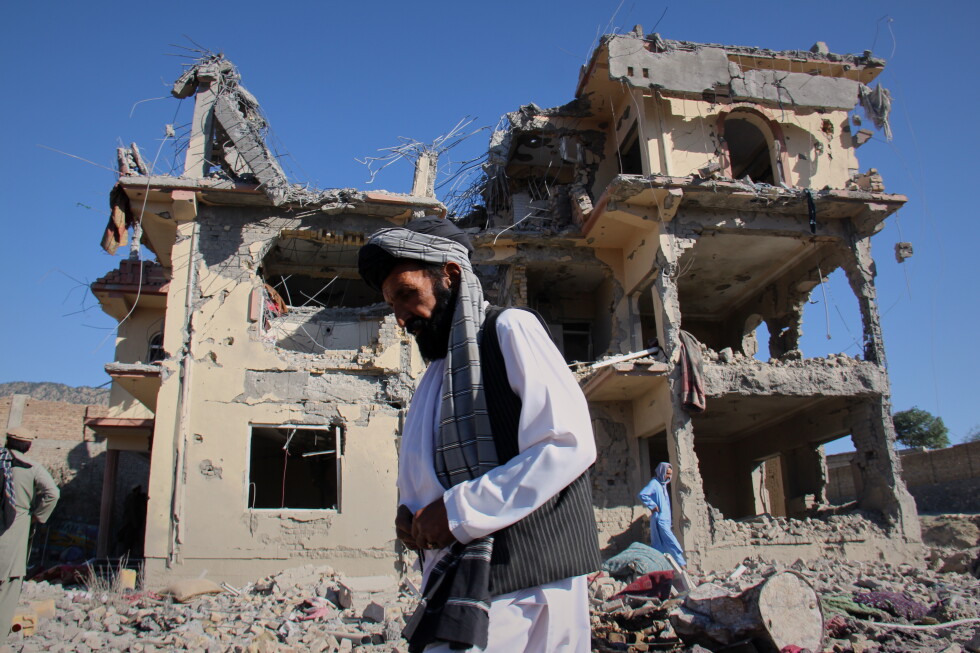
    Iran, for its part, has placed the responsibility for a successful outcome firmly on Washington, demanding that the U.S. rein in its closest regional ally, Israel. Within hours of a preliminary ceasefire announcement Tuesday, Israel launched strikes in Lebanon that killed more than 350 people and wounded over 1,000 more. Lebanon’s Hezbollah movement, a key strategic partner of Iran, is widely viewed as the central sticking point in negotiations, as Israel has long held ambitions to reoccupy southern Lebanon.

    “The Iran-US Ceasefire terms are clear and explicit: the US must choose-ceasefire or continued war via Israel. It cannot have both,” Araghchi wrote on X Wednesday. “The world sees the massacres in Lebanon. The ball is in the US court, and the world is watching whether it will act on its commitments.”

    Israel will not have any official representation at Saturday’s talks in Islamabad, and holds no direct role in the ceasefire agreement reached earlier this week. Washington remains the only primary channel for diplomatic pressure on the Israeli government. Analysts note that U.S. and Israeli interests are currently misaligned on the outcome of the talks.

    “They’re not interested in this resolution,” Mortazavi told Middle East Eye of Israel. “And I think US and Israeli interests right now are diverging. Despite Iran saying that the regional cessation of hostilities was part of the agreed ceasefire, and Pakistan has reaffirmed that… this has been a pattern from Israel. Right before the ceasefire or right after the ceasefire, they do an escalation, sometimes essentially in the form of a trap, to push the other side to violate it.”

    In response to Israel’s post-ceasefire escalation, Iran has not followed through on its commitments under the preliminary ceasefire deal to change its posture at the Strait of Hormuz, a key global energy chokepoint that Trump has repeatedly demanded Iran open to full commercial traffic.

    Ryan Costello, policy director for the National Iranian American Council, warned Friday that the core regional tensions that pushed the two sides to the brink of full war remain unresolved, even as talks are set to open. “While the bombardment of Iran has paused for now, the underlying conditions that brought the region to the brink remain firmly in place,” Costello said in a statement. He added that expectations for a breakthrough should be “very low,” noting that “if diplomats succeed in meeting in Islamabad to begin discussions on a broader peace, they will do so in spite of President Trump’s efforts to walk back the terms.”

    For Pakistan, a country with little experience mediating high-level international conflicts between major powers, the bar for success is modest: simply getting the two sides to continue talking would mark a significant win. “Diplomacy is a gradual process,” Sheikh told Al Jazeera English. “For as long as we have to facilitate, we cherish, we value, and we are grateful for the trust reposed in us, and as a repository of that trust, we would be willing to go the whole distance.” The talks come as Pakistan’s own stance on the conflict has come under scrutiny: just two days before the talks opened, Pakistani Defense Minister Khawaja Muhammad Asif posted a since-deleted message on X calling Israel “cancerous” and “a curse for humanity.”

  • Event marks 55th anniversary of ‘ping-pong diplomacy’

    Event marks 55th anniversary of ‘ping-pong diplomacy’

    Fifty-five years after a seemingly small sports exchange reshaped the trajectory of China-US relations, stakeholders from both nations gathered in Beijing’s Capital Indoor Stadium on Friday to honor the legacy of the groundbreaking “ping-pong diplomacy” that first opened the door to normalized engagement between the two countries.

    The historic gathering brought together a diverse group of attendees, including surviving firsthand witnesses who participated in the original 1971 cross-border table tennis exchange, rising young table tennis talents from China and the United States, and delegates from a wide range of public and private sectors across both nations. During the event, young athletes from the two countries posed for commemorative photos, symbolizing the continued people-to-people connection that the original diplomacy initiative first built.

    Beyond honoring the 55-year milestone, the ceremony also served as the official launch pad for a full calendar of bilateral youth sports exchange programs set to take place across 2026. Organizers and attendees alike emphasized that by carrying forward the spirit of “ping-pong friendship” forged half a century ago, the younger generation of Chinese and Americans is breathing new, dynamic energy into the civil society ties that underpin broader bilateral relations, even amid periods of political tension between the two governments.

    The original ping-pong diplomacy, which grew from an accidental encounter between a US table tennis team member and Chinese athletes during the 1971 World Table Tennis Championships in Japan, paved the way for then-US President Richard Nixon’s historic visit to China the following year, ending decades of estrangement and establishing the foundation for modern China-US relations.