标签: Asia

亚洲

  • US delegates for talks with Iran land in Pakistan

    US delegates for talks with Iran land in Pakistan

    Diplomatic momentum has shifted to Islamabad this weekend, as rival delegations from the United States and Iran have both touched down in Pakistan’s capital for long-awaited negotiations aimed at de-escalating ongoing hostilities across the Middle East.

    On Saturday morning, a US delegation led by Vice-President JD Vance arrived in the city, according to regional diplomatic sources. Two other high-profile members of the American team — Donald Trump’s special representative Steve Witkoff and senior advisor Jared Kushner — traveled separately on a dedicated aircraft that landed at Islamabad’s Nur Khan Airbase alongside the main delegation.

    The Iranian diplomatic contingent, headed by Parliament Speaker Mohammad Baqer Qalibaf, completed its own arrival in the Pakistani capital earlier the same day, positioning both sides to launch the scheduled discussions later on Saturday.

    The talks come at a critical moment for regional security, with the ultimate goal of bringing an end to active hostilities that have roiled the Middle East in recent months. But despite the willingness of both sides to come to the negotiating table in a neutral third country, deep-seated decades-long mistrust between the two longstanding adversaries hangs over the discussions, creating major uncertainty about the prospects for meaningful breakthroughs. Pakistan, acting as the host for this unexpected diplomatic summit, has provided a neutral venue for the two powers to engage in direct talks amid heightened international pressure to reduce regional tensions.

  • Too many players, too many grievances for one ceasefire to hold

    Too many players, too many grievances for one ceasefire to hold

    On the morning of April 7, 2026, US President Donald Trump issued an extraordinary threat to wipe out an entire civilization in Iran. By the end of that same day, he had done an abrupt about-face, announcing a two-week ceasefire between the two nations. The sudden, dramatic reversal left international observers stunned, struggling to parse what the sudden shift means for regional security and global order.

    While it remains impossible to forecast with certainty whether the ceasefire will hold or how coming events will unfold, existing conflict dynamics already lay bare critical short-term vulnerabilities and severe long-term risks for the entire Middle East. Barely hours after the truce was announced, cracks began to emerge: the US and Iran have already put forward conflicting accounts of the agreement’s terms, most critically over whether the ceasefire applies to the ongoing war in Lebanon.

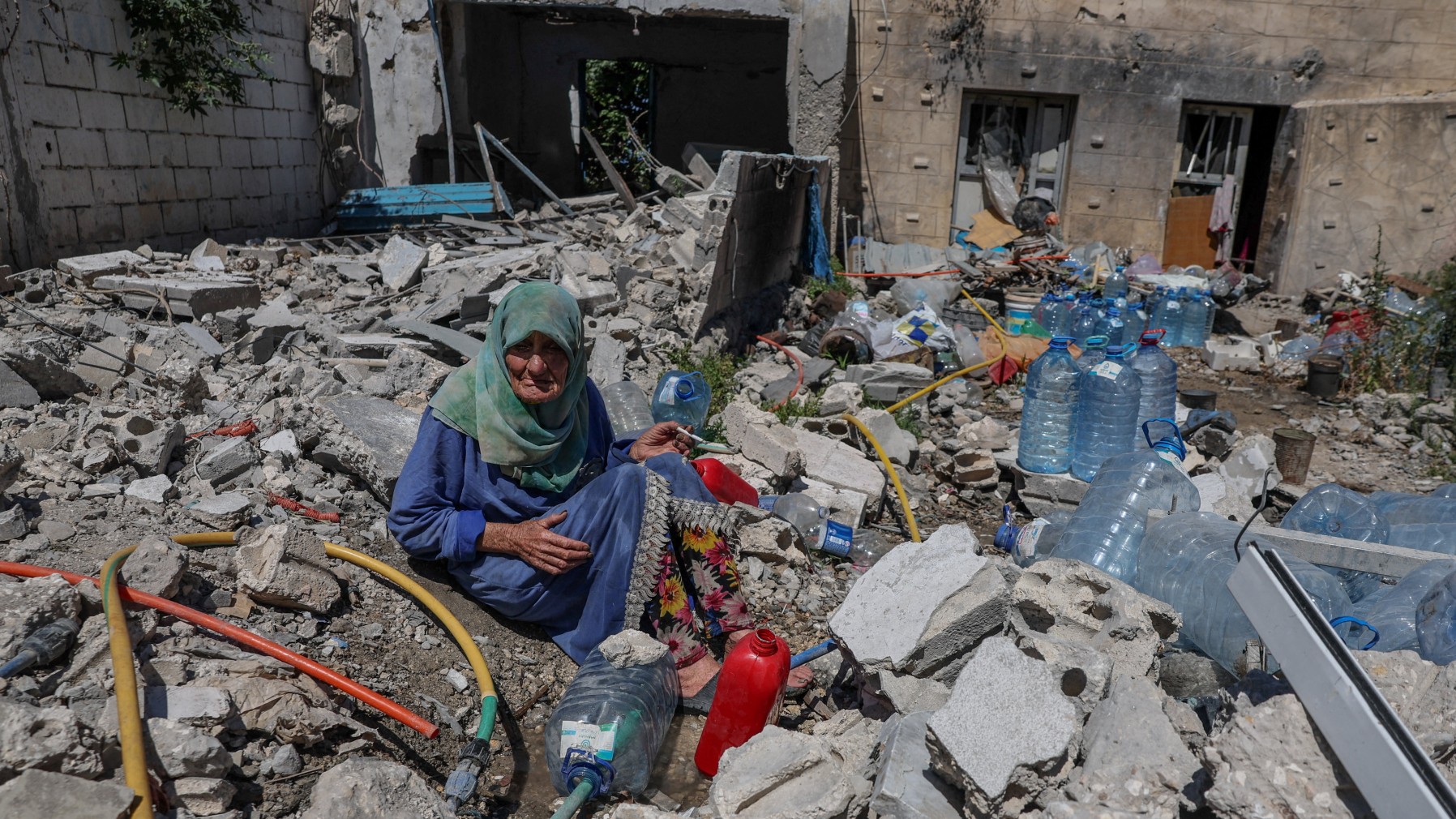
    Pakistan, the lead mediator that brokered the deal alongside Iran, insists the truce extends to Lebanese hostilities. But the US and Israel, which has agreed to abide by Washington’s agreement, reject this framing. Just 24 hours after the ceasefire entered into force, Israel launched one of its most intensive bombing campaigns across Lebanon to date, leaving civilian homes destroyed and displacing hundreds. Photographic evidence captured by AP journalist Emilio Morenatti shows a Lebanese civilian salvaging what few belongings he can from the rubble of his destroyed home, a stark reminder of the human cost even after a formal ceasefire is declared.

    As a scholar specializing in Middle East politics, I argue that the wide web of state and non-state actors involved in both negotiations and the conflict itself makes upholding any short-term truce an uphill battle. Over the past decade, shifting regional alliance structures have pushed many regional powers to pursue increasingly assertive foreign policies, deepening the long-running bitter rivalry between Iran and Saudi Arabia. The current war has only supercharged these competitive dynamics, giving both governments and armed militant groups new openings to gain leverage over their rivals and advance narrow interests.

    This current crisis also underscores a painful truth: decades of external great power intervention, and a repeated preference for military escalation over diplomatic negotiation, have made sustainable conflict resolution exponentially more difficult in a region already scarred by centuries of imperial expansion, great power competition, and intractable political divides.

    ### Widening Regional Fault Lines
    One of the most striking features of the war that erupted in Iran on February 28 is how rapidly it escalated geographically, drawing in a growing cast of actors far beyond the original three core parties: Israel, the United States, and Iran. All three core states are currently grappling with their own internal political crises, deep domestic polarization, and growing challenges to governing legitimacy. Meanwhile, outside powers including China, Russia, and Pakistan have all inserted their own strategic interests and diplomatic capital into the conflict, engaging indirectly to advance their own regional goals.

    The conflict has also pulled in a wide range of regional governments and armed groups, from Saudi Arabia and the Gulf Cooperation Council states to Lebanon’s Hezbollah and Yemen’s Houthi movement. This broadening of the conflict is guaranteed to deepen pre-existing regional fault lines, raising the risk of sustained sectarian conflict and persistent tension for decades to come.

    Already, the war has done profound damage to the United States’ reputation and credibility across the Arab world, while also eroding public trust in international legal and humanitarian frameworks meant to prevent civilian harm. The human toll of the conflict to date is staggering: more than 1,200 Iranian civilian casualties, over 3.2 million Iranians displaced from their homes, and widespread destruction of critical civilian infrastructure. Thirteen US service members have also been killed, alongside more than two dozen casualties in Israel and the Gulf states. This does not account for the catastrophic toll in Lebanon, where more than 1,500 people have died and over 1 million have been displaced since hostilities spilled over the border in early March.

    ### How Local Conflicts Fuel Regional Instability
    The Houthi movement in Yemen offers a revealing case study of how long-running unresolved local disputes become entangled in wider regional conflict. The Houthi movement, a Zaydi Shia rebel group that seized Yemen’s capital Sanaa in 2014, has been the target of sustained military intervention by Saudi Arabia and the United Arab Emirates since 2015. That years-long military campaign pushed the group steadily into closer alignment with Tehran.

    Avowed opponents of the state of Israel, the Houthis declared war on Israel immediately after the October 7, 2023 Hamas attacks and Israel’s subsequent military campaign in Gaza. In 2024, the movement launched a series of attacks on commercial shipping transiting the Red Sea near the Bab el-Mandeb Strait, a critical global maritime chokepoint. That campaign foreshadowed Iran’s own later decision to block the Strait of Hormuz, another key energy transit chokepoint, during the 2026 crisis.

    The Houthi shipping campaign prompted the US to assemble a large international counterattack coalition, launch sustained military strikes against the group, and re-designate the Houthis as a foreign terrorist organization. The confrontation eventually ended with a US-Houthi ceasefire deal in May 2025. But the underlying regional disputes and domestic fractures that drove the Houthi involvement in regional conflict were never resolved. When the 2026 war in Iran broke out, the Houthis re-entered the fray, launching a direct attack on Israel on March 28.

    The group has refrained from resuming Red Sea shipping attacks and is currently abiding by the April ceasefire. But its decision to join the war allowed the politically and militarily weakened Houthi movement to demonstrate its resolve, operational capacity, and loyalty to its alliance with Iran, even as Yemen continues to grapple with a catastrophic economic collapse and one of the world’s worst humanitarian crises. The Houthis now hold new leverage that they can use to derail ongoing diplomatic efforts if it serves their interests.

    ### The Heavy Cost of Rejecting Diplomacy
    The Houthis are far from the only actor that has framed the 2026 war on Iran as an opportunity to expand regional influence. Just as the Houthis and their rivals use regional conflict to boost domestic legitimacy and gain strategic advantages, the core conflict parties – Iran, Israel, and the United States – are also re-fighting decades-old unresolved disputes on the battlefield.

    Amid this cascade of overlapping crises and competing interests, the United States’ own strategic goals in the conflict have remained frustratingly unclear. The Trump administration has flip-flopped between framing the war as a mission to achieve regime change in Tehran and reframing it as an effort to prevent Iran from developing operational nuclear weapons capabilities.

    So far, there is no indication that upcoming talks to extend the current two-week ceasefire into a full, permanent diplomatic agreement will succeed in stopping Iran’s uranium enrichment program. One of the core sticking points in the current negotiating framework is whether the international community will formally accept Iran’s right to conduct civilian nuclear enrichment.

    This issue has a long, well-documented history: in 2018, the first Trump administration withdrew from the Joint Comprehensive Plan of Action (JCPOA), the multilateral Iran nuclear deal. Under that agreement, Iran had accepted strict limits on its uranium enrichment program to block any path to developing a nuclear weapon, and fully complied with inspections by the International Atomic Energy Agency for years. It was only after the US withdrawal from the deal that Iran began expanding its uranium stockpiles and advancing its enrichment program.

    In her 2020 book *Not for the Faint of Heart*, which chronicles the 22-month diplomatic process that led to the JCPOA, former lead negotiator Ambassador Wendy Sherman detailed just how complex, challenging, and delicate multiparty diplomatic negotiations with Iran can be. But the 2026 war on Iran makes clear that the aggressive, military-first approach to Iran and the wider Middle East favored by the current US administration and Israeli government carries severe, long-lasting costs and risks.

    After weeks of war with unclear strategic objectives, vague end goals, and catastrophic human costs, the Middle East is far less stable than it was before hostilities began. That has made the path to a long-term, durable peace far more difficult to achieve, even now that diplomacy has finally returned to the table.

  • Heze launches intl communication center to boost global outreach

    Heze launches intl communication center to boost global outreach

    On April 10, 2026, Heze, the celebrated peony-growing city in eastern China’s Shandong Province, marked a major milestone in its global engagement strategy with the official opening of the Heze International Communication Center. The launch ceremony also featured the signing of a framework cooperation agreement on international outreach, reached by three parties: the Publicity Department of the CPC Heze Municipal Committee, the Business Development Department of China Daily, and Heze Daily.

    As the core governing body leading the initiative, Heze’s municipal publicity department framed the new center as a strategic platform to amplify the city’s voice on the global stage. Cao Lin, director of the department, outlined that the center will draw on Heze’s one-of-a-kind cultural resources — including its world-famous peony heritage, traditional Han Chinese clothing (hanfu), and centuries-old local opera forms — to build genuine connections with international audiences and showcase the city’s distinct cultural charm.

    Beyond promoting local culture, the collaboration also carries a broader mission: to carve out innovative channels for Heze to contribute to the national effort of sharing authentic Chinese stories with global communities. Cao Lin explicitly noted that Heze anticipates China Daily will provide critical support for the development of the city’s official multilingual website, expand its suite of international communication channels, and ultimately strengthen Heze’s visibility and reputation across the world.

    For its part, China Daily has a long-standing track record of supporting Heze’s efforts to boost its international influence, according to Gong Zhengzheng, director of China Daily’s Business Development Department. He emphasized that the establishment of the new communication center creates a valuable opportunity to deepen the existing partnership between Heze’s municipal authorities and China Daily.

    Looking forward, Gong laid out the collaborative agenda: the partnership will not only spotlight Heze’s profound historical and cultural legacy, but also highlight the city’s contemporary progress in advancing balanced, coordinated development between ecological protection and economic growth. The end goal, he confirmed, is to deliver a comprehensive, vivid portrait of Heze — covering both its time-honored cultural appeal and its modern development achievements — to audiences across the globe.

  • Mirandrea in Shanghai

    Mirandrea in Shanghai

    Two decades after the original *The Devil Wears Prada* cemented its place as a global cultural touchstone, the franchise’s most iconic leading duo finally stepped onto Chinese soil for a long-awaited reunion. On April 10, Academy Award-winning acting legends Meryl Streep and Anne Hathaway walked the red carpet for the Shanghai premiere of *The Devil Wears Prada 2*, reprising their legendary roles as the sharp-witted editor Miranda Priestly and her former assistant Andrea Sachs for the sequel.

    The event marked a special full-circle moment for both stars, who took time during the premiere to express their sincere gratitude to Chinese fans who have supported the franchise over the past 20 years. They thanked local audiences for growing alongside their characters, acknowledging the deep connection fans have built with the story and its leading figures since the first film debuted in 2006. Thousands of fans gathered at the premiere venue to catch a glimpse of the pair, with many sharing their excitement about the on-screen reunion decades in the making. Footage from the red carpet and behind-the-scenes moments is available for viewers to explore to see more of the historic event.

  • Luoyang invites creators to reimagine its legacy through AI

    Luoyang invites creators to reimagine its legacy through AI

    In a groundbreaking move that bridges millennia of cultural heritage and cutting-edge digital technology, the central Chinese city of Luoyang, Henan province, has launched the “Peony Capital” Global AI Creators Competition, an open call to artificial intelligence practitioners and digital artists across the world to reimagine the city’s iconic historical legacy through innovative AI-generated works. Running through an extended submission period, the competition invites participants to craft original digital artworks rooted in Luoyang’s thousands of years of cultural history, drawing inspiration from everything from its status as one of China’s ancient Four Great Capitals to its world-famous peony cultivation, UNESCO-listed Longmen Grottoes, and centuries-old imperial traditions. Organizers framed the initiative as a deliberate effort to unlock fresh, contemporary avenues for sharing and reinterpreting traditional Chinese culture for modern global audiences. Beyond celebrating creative talent, the event also aims to cultivate a cross-border, internationally recognized hub for AI creative collaboration, where technologists, artists, and cultural scholars can connect, exchange ideas, and explore the evolving intersection of artificial intelligence and cultural preservation. By centering Luoyang’s unique cultural identity in an AI-focused global competition, organizers hope to demonstrate how emerging technology can breathe new life into ancient heritage, making it accessible and engaging for younger, digitally native audiences while fostering global dialogue around cultural innovation through AI.

  • Experts warn of ‘hasbara’ and disinformation in digital battle over Palestine

    Experts warn of ‘hasbara’ and disinformation in digital battle over Palestine

    On April 7, a virtual gathering organized by the Global Alliance for Palestine brought together researchers, grassroots activists and digital rights specialists to sound the alarm about coordinated state-backed propaganda and disinformation operations that are actively skewing global public narratives about Palestine. Titled “Countering Israel’s 2026 Hasbara Industry”, the webinar centered its discussion on what panelists characterized as structured, well-resourced digital messaging campaigns run by the Israeli government.

    Hasbara, Israel’s official national public diplomacy directorate, is the body that oversees the country’s widespread propaganda operations. In a sign of internal friction around these efforts, the directorate has already faced legal action from private companies and contractors that provided services for the campaigns in the early months of Israel’s military campaign in Gaza. To amplify its messaging following the outbreak of large-scale conflict in Gaza, Israel launched a covert initiative codenamed the “Esther Project”, which relies on secret public relations campaigns and contracted corporate firms to manage a sprawling network of paid social media influencers.

    Since the October 2023 escalation of hostilities, Israel’s propaganda push has expanded beyond Hasbara, with the country’s foreign ministry and diaspora ministry also committing massive budgets to distributing Israeli-aligned content. The core goal of these efforts, panelists confirmed, is to shift global public opinion, push back against and deny widespread allegations of war crimes, crimes against humanity, and genocide perpetrated by Israeli forces in Gaza.

    During the webinar, panelists emphasized that modern Israeli disinformation operations increasingly leverage cutting-edge digital tools, micro-targeted advertising, and artificial intelligence to shape public perception. Anas Ambri, a researcher with The New Arab Investigative Unit, presented new findings on Israel’s online ad campaigns and industry transparency requirements, noting that promotions tied to the Israeli government rarely disclose their official affiliations. He detailed how untargeted disclosures and hidden funding for targeted ad campaigns can reshape public narratives across major social media and digital platforms.

    Tariq Kenney-Shawa, a policy analyst with the Palestinian think tank Al-Shabaka, outlined the critical role open-source intelligence plays in documenting on-the-ground events in Gaza and pushing back against false Israeli messaging. He explained that open-source verification methods have been instrumental in confirming the details of violent incidents, challenging unsubstantiated Israeli claims, uncovering mass grave sites in Gaza, and exposing disinformation campaigns on social media platforms.

    Hala Hanina, a Gaza-born political activist and doctoral researcher based in the United Kingdom, analyzed long-standing patterns of media coverage throughout the current conflict. She argued that a core pillar of Israeli state disinformation involves outright denial of attacks on civilian infrastructure and populations, shifting blame to Palestinian groups for Israeli violence, and framing narratives that deliberately downplay or obscure the devastating impact of military operations on Palestinian civilians. Her presentation detailed how these manipulated messages spread across both traditional legacy media and digital platforms, derailing calls for accountability and confusing audiences seeking accurate information about the conflict.

    Another panelist, identified only as Lujane, focused her remarks on the intersection of artificial intelligence and digital influence, explaining how curated content ecosystems can skew AI-generated outputs to amplify and entrench pro-Israeli narratives. She noted that hidden funding networks and targeted amplification strategies are key to ensuring these skewed narratives reach broad global audiences.

    Noted digital rights advocate Nadim Nashif raised urgent concerns about unequal platform governance, pointing to repeated past incidents where content from Palestinian creators and journalists was removed or algorithmically restricted. He argued that current algorithmic moderation frameworks and major platform policies systematically create unequal visibility for Palestinian and Israeli perspectives, amplifying pro-Israeli content while suppressing Palestinian voices.

    Not all discussion focused solely on the challenge of disinformation, however. Miriyam Aouragh, a professor at the University of Westminster, noted that the open digital ecosystem has also created new space for counter-narratives, allowing Palestinian voices to reach wider global audiences than ever before. She pointed to growing public dissent among technology workers at major platforms, as well as increased public scrutiny of platform content moderation practices, as positive shifts that have helped level the information playing field.

    Webinar organizers emphasized that the event’s core goal was to provide attendees with the analytical tools needed to trace how information is produced, circulated, and manipulated during armed conflict. They stressed that addressing systemic disinformation and expanding global media literacy will remain critical priorities, as digital platforms continue to be the primary venue where global public perceptions of the Palestine-Israel conflict are formed.

    This reporting builds on independent, on-the-ground coverage of the Middle East and North Africa from Middle East Eye, a publication focused on unaffiliated, in-depth analysis of the region.

  • Britain beats Australia to advance to Billie Jean King Cup finals

    Britain beats Australia to advance to Billie Jean King Cup finals

    MELBOURNE, Australia – In a decisive Saturday doubles clash at Melbourne’s John Cain Arena, Great Britain booked its place in the 2025 Billie Jean King Cup finals after Harriet Dart and Jodie Burrage pulled off a straight-sets win over Australian pair Storm Hunter and Ellen Perez, sealing a 3-1 overall victory in the best-of-five qualifying tie. The British squad had already built a commanding 2-0 advantage on the opening day of play, thanks to two gritty singles wins from rising star and 17-year-old Mika Stojsavljevic and veteran Harriet Dart. Stojsavljevic overcame Australia’s Talia Gibson in a tight two-set battle, closing out the match 7-6(4), 7-5, while Dart bounced back from a slow first set to defeat Kimberly Birrell 4-6, 6-3, 6-3, putting Britain just one win away from qualification. Australia picked up a consolation win in the reverse singles, where 17-year-old homegrown talent Emerson Jones defeated Britain’s Katie Swan 7-5, 6-3 to adjust the final tie score to 3-1. The Billie Jean King Cup, the premier global women’s national team tennis tournament previously known as the Fed Cup, will host its 2025 finals in Shenzhen, China this coming September. As the host nation, China has already earned an automatic qualification spot for the finals stage. Six more spots in the 8-team finals lineup will be decided by the end of Saturday, with six high-stakes qualifying ties still wrapping up around the globe: defending champion Italy faces Japan, Kazakhstan takes on Canada, Switzerland goes head-to-head against the Czech Republic, Slovenia meets Spain, Belgium battles the United States, and Poland clashes with Ukraine. Teams that fall short in this round of qualifying will not go home empty-handed: they will move on to the Billie Jean King Cup playoffs scheduled for November, where spots for the 2027 tournament qualification will be determined. For more coverage of professional tennis, visit the Associated Press’ dedicated tennis hub at https://apnews.com/hub/tennis.

  • ‘You are my god’, Japan’s PM tells British rock band Deep Purple

    ‘You are my god’, Japan’s PM tells British rock band Deep Purple

    On a crisp Friday in central Tokyo, one of the world’s most influential hard rock acts crossed paths with their most high-profile admirer – Japan’s first female prime minister, Sanae Takaichi, a decades-long Deep Purple superfan.

    The legendary British rock group, currently on a Japanese tour commemorating their historic 1972 live album *Made in Japan* – widely ranked among the greatest live rock records ever cut – met Takaichi at her official office ahead of their Saturday headline set at Tokyo’s iconic Nippon Budokan arena. For 65-year-old Takaichi, the encounter was the fulfillment of a fandom that began when she was a primary school student, when she first picked up the band’s breakthrough 1971 studio album *Machine Head*.

    A skilled amateur percussionist herself, Takaichi cut her musical teeth performing with a Deep Purple tribute act as a teenager; she started on keyboards before switching to drums during her university years. In a playful revelation to the band, the conservative leader shared that she still turns to the band’s raw, high-energy sound to blow off steam today: “These days, when I fight with my husband I drum to *Burn* and cast a curse on him,” she told the group, laughing. Greeting founding drummer Ian Paice with a broad smile, Takaichi presented him with a custom pair of hand-signed Japanese-made drumsticks, telling him “You are my god.”

    Through an interpreter, Takaichi expressed profound admiration for the band’s enduring five-decade career, noting: “I have the deepest respect for the way you continue to make rock history while embracing new challenges and creating captivating music to this day.” She added that she hoped the band’s cross-country tour would not only thrill Japanese rock fans but also strengthen cultural ties between the United Kingdom and Japan.

    Formed in Hertfordshire, England, in 1968, Deep Purple holds a place as one third of the “unholy trinity” of foundational British heavy metal, alongside fellow icons Black Sabbath and Led Zeppelin. The band is best known for their era-defining hit *Smoke on the Water*, whose iconic guitar riff remains one of the most recognizable in rock history. The group’s current tour marks a homecoming of sorts: it was in Japan that Deep Purple recorded *Made in Japan* over 50 years ago, a record that cemented their global stardom.

    Paice, the band’s founding drummer, called the meeting with the prime minister an unexpected delight, describing it as a special “added bonus” to the band’s already anticipated return to Japan. In an Instagram post documenting the meeting, the band highlighted that Takaichi has long been open about her love for hard rock and heavy metal, and has repeatedly named Deep Purple as one of her all-time favorite acts. Takaichi’s history with drumming is well-documented: she was known for carrying multiple sets of drumsticks to performances early on, thanks to her intense playing style that often left sticks broken mid-set.

    The lighthearted meeting comes as a rare break for Takaichi, who has navigated a series of pressing political and economic challenges since taking office last October, including strained diplomatic relations with neighboring China, persistent domestic inflation, and a stagnant national economy.

  • Chang’e 7 lunar probe to be launched later this year

    Chang’e 7 lunar probe to be launched later this year

    China’s ambitious next step in lunar exploration is on track for liftoff in the second half of 2026, with the Chang’e 7 robotic probe now fully prepared for final pre-launch operations at its coastal launch site, China’s human spaceflight authority has confirmed.

    As of April 9, all structural components and scientific instruments of the Chang’e 7 probe have arrived at the Wenchang Space Launch Center in southern China’s Hainan Province, transported via a combination of air and road shipments, according to an official statement from the China Manned Space Agency (CMSA). In the coming months, engineering teams will complete on-site assembly of the spacecraft and conduct a full suite of functionality and integration tests to confirm the probe is flight-ready.

    The core objective of the Chang’e 7 mission is to map the unique geological environment and natural resource reserves of the moon’s south polar region, an area that has emerged as a high-priority target for global lunar exploration in recent years. To achieve this goal, the mission will pursue major breakthroughs in several cutting-edge space technologies, including high-accuracy soft landing on the uneven lunar surface, legged rover mobility, and controlled hopping detection for permanently shadowed craters – regions that never receive sunlight and are thought to hold large deposits of water ice.

    Unlike previous lunar missions that relied on a single flight architecture, Chang’e 7 will use a combined multi-phase operation approach: an orbiter will survey the region from lunar orbit, while a lander, a mobile rover, and a small hopping flying probe will conduct on-site surface investigations. The mission will also host multiple collaborative scientific projects with international research institutions, underscoring China’s commitment to open space exploration.

    In a notable shift from past Chang’e program announcements, CMSA, rather than the China National Space Administration (CNSA), which has overseen robotic lunar exploration updates for decades, released this latest progress update. Agency officials explained the change is part of a broader plan to integrate China’s existing capabilities in both manned lunar exploration development and unmanned robotic lunar research.

    “By combining the technological advances and decades of mission experience accumulated through both the national manned space program and the Chang’e robotic exploration initiative, we can greatly improve the overall efficiency of China’s lunar exploration efforts,” the statement noted.

    Per pre-launch mission design documents, Chang’e 7 consists of four integrated modules: the orbiter, lander, rover, and the small hopping flying probe. The latter craft is specifically engineered to descend into permanently shadowed craters to search for and analyze water ice, a resource that is critical for future long-term human lunar outposts and deep space exploration missions. In a nod to international collaboration, the probe carries six scientific payloads developed by research teams from around the world. These include laser retroreflector arrays from Italy’s National Institute for Nuclear Physics Frascati National Laboratory, a lunar dust and electric field instrument from the Russian Academy of Sciences’ Space Research Institute, and an international lunar-based telescope from the International Lunar Observatory Association.

    China’s Chang’e program has already completed six landmark robotic lunar missions since its inception, cementing the country’s position as a global leader in deep space exploration. Previous missions have achieved a series of historic firsts: Chang’e 3 and Chang’e 4 successfully deployed two rovers on the lunar near side and far side respectively, while Chang’e 5 and Chang’e 6 retrieved lunar surface samples from both the near and far sides of the moon – a feat no other space program has accomplished to date.

    With pre-launch preparation moving forward according to schedule, Chang’e 7 is set to open a new chapter of detailed scientific exploration of the lunar south pole, generating data that will inform both future unmanned research and China’s planned manned lunar landing missions targeted for before 2030.

  • Visa-free, favorable policies boost foreign arrivals

    Visa-free, favorable policies boost foreign arrivals

    China has recorded a sharp uptick in foreign visitor arrivals during the first three months of 2026, with newly expanded visa-free entry policies and streamlined cross-border travel facilitation measures cited as the core driving forces behind the growth, the National Immigration Administration (NIA) announced in a press briefing Friday.

    Overall, border inspection authorities processed a total of 185 million entry and exit trips nationwide in the first quarter of 2026, marking a 13.5% year-on-year increase, according to NIA spokesperson Lyu Ning. Breaking down the data, foreign nationals accounted for approximately 21.33 million total trips during the period, a 22.3% annual jump that outpaced growth rates for all other traveler segments, including mainland Chinese residents and travelers from Hong Kong, Macao and Taiwan.

    Of all foreign arrivals recorded in the quarter, nearly 8.32 million entered China through visa-free arrangements, a 29.3% rise from the same period last year. Visa-free entries now make up 77.9% of all foreign arrivals into the country, reflecting the broad impact of China’s recent policy expansions to open its borders to international travelers.

    For comparison, mainland Chinese residents made 91.67 million entry and exit trips, a 14.2% year-on-year increase, while travelers from Hong Kong, Macao and Taiwan completed 72.5 million total trips, representing a 10.3% annual gain.

    Lyu explained that the consistent growth in international visitor arrivals stems from the NIA’s ongoing push to expand institutional opening-up in immigration governance. The administration has coordinated with multiple relevant government departments to expand the list of countries eligible for China’s unilateral visa-free entry policy, while continuously upgrading public services for international travelers.

    As one of the most recent service upgrades, the NIA launched a new pilot program in March that allows foreign nationals staying at non-hotel accommodations to complete temporary accommodation registration entirely online. The pilot is currently operational in seven regional jurisdictions: Chongqing Municipality, Guangxi Zhuang Autonomous Region, and Hebei, Liaoning, Zhejiang, Hubei and Sichuan provinces.

    In addition to the new online registration pilot, immigration authorities have continued to streamline application procedures for all types of entry and exit documents, boosting the efficiency of government services. Over the first quarter of 2026, authorities issued 406,000 visas and other immigration documents to foreign nationals.

    The NIA’s official online service platform handled more than 51.32 million inquiries and other government service requests from both domestic and international travelers during the quarter. The administration’s 12367 hotline service also processed approximately 1.8 million inquiries from callers based in more than 100 countries and regions around the world.

    The quarter also saw strong growth in travel from Taiwan to the Chinese mainland. Applications from Taiwan compatriots for mainland travel permits rose 11.8% year-on-year, while total trips by Taiwan residents to the mainland jumped 27.6% annually. First-time applicants from Taiwan saw a 4.5% quarter-on-quarter increase in permit applications, and applications for port-issued one-time entry permits rose 24.7% from the fourth quarter of 2025.

    This growth follows a policy adjustment implemented on November 20, 2025, that expanded the number of mainland ports authorized to issue one-time travel permits to Taiwan residents from 58 to 100. The expanded network of authorization now covers 56 airports, 27 water ports, and 17 railway and highway ports. Lyu noted that the adjusted policy has made entry to the mainland far safer and more convenient for Taiwan compatriots traveling from all regions of the world.