标签: Asia

亚洲

  • Powering the future of China’s service industry

    Powering the future of China’s service industry

    BEIJING, April 12, 2026 — As China enters the pivotal 15th Five-Year Plan period (2026-2030), the country’s top leadership has elevated the strategic importance of the service sector — already the largest pillar of its economy and a major engine of employment — to unprecedented heights, laying out a clear roadmap for its high-quality evolution.

    President Xi Jinping, who also serves as General Secretary of the Communist Party of China Central Committee and Chairman of the Central Military Commission, delivered a key instruction at the first-ever national conference on the service sector held earlier this week, calling for fresh breakthroughs in advancing the sector’s high-quality development.

    Official statistics from 2025 underscore just how central the service industry has become to China’s economic landscape: its added value topped 80 trillion yuan (approximately $11.65 trillion), accounting for 57.7% of national GDP. The sector contributed 61.4% of the country’s overall economic growth, a 3.7 percentage point increase from 2024, and supports roughly half of China’s total workforce.

    Against a backdrop of persistent global economic volatility, the new policy focus on the service sector comes as China continues its structural transformation toward high-quality growth. Xi’s direction is expected to cement the sector’s critical role in driving industrial upgrading, fostering innovation, unlocking untapped domestic demand, and stabilizing the broader national economy.

    While the sector has delivered strong foundational growth, policymakers have acknowledged pressing challenges that threaten its long-term progress. Persistent market entry barriers in key sub-sectors, an imbalanced supply structure, and a shortage of high-end service offerings have grown increasingly prominent. Addressing these gaps has been framed as a strategic priority to unlock the next phase of China’s economic expansion.

    In his instruction, Xi outlined four core pillars for future development: demand-driven growth, breakthroughs in market-oriented reform, technological empowerment, and expanded opening-up and international cooperation. He called for the implementation of national initiatives to expand service capacity and upgrade quality, goals already enshrined in this year’s Government Work Report and the 15th Five-Year Plan outline.

    Even as China continues to prioritize its world-leading manufacturing sector, Xi has long emphasized the critical role of services, which underpin both industrial production and household consumption. Over recent years, his on-the-ground inspections have included visits to financial and technology service providers, elderly care facilities, and cultural tourism destinations, highlighting the sector’s priority on the national policy agenda.
    Already, targeted policy measures have begun rolling out across government agencies. Earlier this year, the Ministry of Commerce joined eight other departments to release the 2026 Work Plan for Improving Quality and Accessibility of Service Consumption, which focuses on upgrading service infrastructure while addressing pressing livelihood needs including elderly and childcare services.

    Looking ahead, Xi has set clear priorities for sub-sector development: advancing producer services toward greater specialization and higher positions in the global value chain, fostering high-quality, diverse and accessible consumer services, and building globally competitive “China Services” brands.

    Producer services — which range from research and development, design and inspection certification to information technology — are in particularly high demand as China scales up its advanced manufacturing sector. During a March 2026 inspection of Xiong’an New Area, the planned “future city” in Hebei Province, Xi called for clustered development of emerging and future-oriented industries, with robust growth in producer services to support the transformation and upgrading of traditional manufacturing.

    Cheng Xiang, an analyst with Shenwan Hongyuan Securities, noted that producer services have already emerged as a high-growth investment focus, driven by deep integration with advanced manufacturing, favorable policy tailwinds, and massive untapped demand.

    On the consumer side, growing urbanization and a steadily expanding middle class have shifted household spending priorities toward services, creating enormous potential to boost domestic demand. Xi has repeatedly outlined policy priorities for a wide range of consumer-facing service sectors tied to people’s livelihoods, from cultural tourism to elderly care.

    At the December 2025 Central Economic Work Conference, Xi emphasized the need to remove unreasonable regulatory restrictions on consumption to unlock growth potential in service sectors including culture and tourism, sports events, catering, and health and wellness. During the Central Urban Work Conference in July 2025, he called for accelerated development of livelihood-focused services including healthcare and domestic services to adapt to shifting population and demand structures.

    By upgrading consumption offerings, meeting growing personalized demand, and expanding the supply of inclusive, high-quality services, China can fully unlock the potential of service consumption, strengthening the resilience of domestic economic circulation as spending shifts from goods acquisition to high-quality services and experiences.

    Alongside domestic reform and expansion, continued growth of the service sector will rely on deeper opening-up to international participation. In a 2025 letter to the China International Fair for Trade in Services (CIFTIS), Xi committed that China would accelerate the opening of its service market and advance high-quality development of trade in services.

    In recent years, China has steadily eased foreign investment access restrictions and advanced orderly opening-up of sectors including telecommunications, internet services, education, culture and healthcare. It has also fostered service trade innovation through flagship platforms such as CIFTIS, and expanded its comprehensive service sector opening pilot program to 20 regions spanning all major regions of the country.

    Analysts project that the new push from national leadership will trigger a fresh wave of opening-up, expansion and upgrading measures, injecting renewed momentum into the service sector and reinforcing its role as a core driver of China’s economic resilience.

  • Iran-US peace talks extended for another day: media

    Iran-US peace talks extended for another day: media

    Diplomatic efforts between Iran and the United States will continue into an additional day, after Pakistan tabled a proposal to extend talks that gained the approval of both negotiating delegations, Iran’s semi-official Tasnim News Agency reported in an early Sunday dispatch.

    The latest round of Pakistani-mediated peace negotiations wrapped up its initial schedule in Islamabad early Sunday, following an exchange of drafted negotiation texts between the two national delegations. After the initial session concluded, Islamabad put forward a plan to hold an extra day of talks. The proposal came against the backdrop of ongoing disagreements, with Tasnim noting that US negotiators have put forward what Tehran describes as “illogical and excessive demands”, while the Iranian delegation has remained firm on protecting the country’s core national interests throughout the discussions. Both sides ultimately signed off on the extension, clearing the way for further diplomatic bargaining on Sunday to narrow gaps in their positions.

  • 3rd round of US-Iran negotiations concludes with ‘serious disagreements’

    3rd round of US-Iran negotiations concludes with ‘serious disagreements’

    After days of closed-door diplomatic discussions in the Pakistani capital, the third round of high-stakes negotiations between the United States and Iran has wrapped up, with deep, unresolved divisions remaining between the two long-adversarial nations. Iran’s semi-official Tasnim News Agency first reported on the outcome of the talks this Sunday, confirming that core sticking points including control and access to the Strait of Hormuz, a critical global oil chokepoint, have not been resolved and remain major sources of “serious disagreement”.

    While the outcome of the latest round reflects how far apart the two sides remain on key issues, the Iranian government has signaled its commitment to continued diplomatic engagement. In an official statement posted to its social media channels, the administration emphasized that despite the profound disagreements that emerged during the latest round of talks, diplomatic channels will remain open and negotiations will proceed in future rounds.

    The talks, hosted by Pakistan, mark the latest attempt to de-escalate decades of tensions between Washington and Tehran, with both global powers weighing in on issues that carry significant implications for regional security and global energy markets. The Strait of Hormuz, which roughly a fifth of global oil supplies pass through daily, has long been a flashpoint between the two nations, with Iran repeatedly asserting full sovereignty over the waterway and the US pushing for open, unimpeded navigation for commercial and military vessels.

  • China says it will resume some ties with Taiwan after visit by opposition leader

    China says it will resume some ties with Taiwan after visit by opposition leader

    BANGKOK, Associated Press – More than seven decades after the cross-Strait split, and amid years of rising tensions between Beijing and the ruling Taipei administration, mainland China announced Sunday a series of measures to restore suspended cross-Strait connections, following a landmark meeting between Chinese leader Xi Jinping and the chair of Taiwan’s Beijing-leaning opposition Kuomintang Party (KMT), Cheng Li-wun.

    The high-profile gathering between Xi and Cheng in Beijing on Friday centered on public calls for cross-Strait peace, though no concrete policy details were released by either side. In an official statement released Sunday, the Communist Party of China’s Taiwan Work Office outlined multiple steps to rebuild ties that have been frozen for years: the resumption of direct flights linking Taiwan to mainland cities including Xi’an and Urumqi, the restart of imports of Taiwanese aquaculture goods previously blocked by Beijing, and a plan to explore the establishment of a permanent communication channel between the CPC and the KMT. Beijing also reaffirmed its long-proposed plan to advance the construction of a cross-Strait bridge connecting mainland China to Taiwan’s Kinmen and Matsu islands, which lie just off the Chinese coast.

    Cross-Strait relations have deteriorated sharply since 2016, when pro-independence Democratic Progressive Party leader Tsai Ing-wen won Taiwan’s presidential election. Beijing has cut off almost all official dialogue with Taipei’s ruling government, and increased regular military patrols of warships and fighter jets near Taiwan’s borders in a show of sovereignty. China continues to claim Taiwan as an integral part of its own territory, and has never formally ruled out the use of military force to bring the self-governing island under its control.

    Taiwan’s Mainland Affairs Council, the government body that oversees cross-Strait relations, quickly pushed back on Beijing’s announcement, framing the new measures and proposed cross-party communication mechanism as unilateral political deals between the CPC and KMT that bypass Taiwan’s democratically elected government. The agency reaffirmed Taipei’s long-held position that all cross-Strait affairs involving public authority must be negotiated between the two governments on an equal, mutually respectful footing to deliver tangible benefits that protect the rights and well-being of Taiwan’s people. Critics note that it remains unclear how the new measures announced by Beijing can be implemented without formal approval from Taipei’s government, given existing cross-border travel and trade regulations.

    To provide context for the latest developments: Beijing first banned individual tourism travel to Taiwan for Chinese citizens in 2019, and current Taiwanese entry rules require Chinese passport holders to hold a valid third-country residence visa (issued by nations such as the U.S. or EU member states) to qualify for a Taiwanese visitor visa. On the trade front, Beijing first blocked imports of Taiwanese pineapples in 2021, before expanding restrictions to other agricultural and aquaculture goods, including grouper, squid, and tuna. After the grouper import ban was imposed, Taiwan’s Ministry of Agriculture attempted to negotiate with Beijing to revise production standards to meet Chinese import requirements, but Beijing only approved a small, unelaborated list of individual Taiwanese firms for limited exports.

  • Iran war diverts US military and attention from Asia ahead of Trump’s summit with China’s leader

    Iran war diverts US military and attention from Asia ahead of Trump’s summit with China’s leader

    Fifteen years after former U.S. President Barack Obama first announced his landmark “pivot to Asia” strategy — a plan intended to wind down long-running wars in Iraq and Afghanistan and refocus American power to counter China’s growing global influence — a new conflict with Iran has once again pulled U.S. military resources and political attention away from the Indo-Pacific, stoking widespread fears that Washington is ceding strategic ground to Beijing.

    Obama’s 2011 framework was built on a clear core vision: after a decade of costly conflict in the Middle East, the U.S. would turn toward the Asia-Pacific’s massive economic potential and cement American leadership as China’s influence expanded across the region. But from the very start, the strategy faced repeated setbacks: the signature Trans-Pacific Partnership trade agreement collapsed in the U.S. Senate, President Donald Trump withdrew Washington from the deal shortly after taking office in 2017, and successive administrations have repeatedly been pulled back into Middle East tensions.

    Today, the pattern is repeating. As the U.S. escalates operations to counter Iran’s nuclear and missile programs, it has reallocated critical military assets from the Asia-Pacific to the Middle East. This shift has already forced Trump to delay a much-anticipated trip to Beijing, pushing back a high-stakes summit with Chinese President Xi Jinping that was set to address pressing economic and strategic tensions. Critics warn that the distraction from the Iran conflict is undermining longstanding U.S. deterrence efforts against China, particularly as Beijing speeds up its plans to assert control over the self-governing island of Taiwan.

    “This is precisely the wrong time for the United States to turn away and be sucked into another intractable Middle East conflict,” said Danny Russel, a distinguished fellow at the Asia Society Policy Institute. “Rebalancing to Asia is highly relevant to America’s national interests, but it has been undercut by many bad decisions.”

    Lawmakers who recently traveled to the region have confirmed deep unease among U.S. allies. A bipartisan delegation led by Senate Foreign Relations Committee top Democrat Jeanne Shaheen visited Taiwan, Japan and South Korea earlier this year, where local leaders raised alarm over the withdrawal of key U.S. military capabilities, including a rapid-response Marine unit from Japan and missile defense systems from South Korea, as well as the impact of the Iran conflict on global energy prices.

    Shaheen told the Associated Press that Chinese leadership has already accelerated its timeline for potential military action against Taiwan, and global conflicts in Ukraine and the Middle East are directly shaping Beijing’s strategic calculations. “Failure is not an option,” she said, noting that U.S. defense industries are already stretched thin to replenish munitions expended in the Middle East, leading to delayed weapons deliveries to Indo-Pacific allies. Even so, Shaheen added she is encouraged by moves from Taiwan, Japan and South Korea to expand their own defense capabilities.

    Independent analysts echo these concerns. Kurt Campbell, who served as deputy secretary of state under the Biden administration, warned that the critical military capabilities the U.S. spent years building up in the Indo-Pacific may never return to their full strength even after the Iran conflict concludes. Zack Cooper, a senior fellow at the American Enterprise Institute specializing in U.S. Asia strategy, added that extended conflict in the Middle East will not only drain ongoing resources and attention from the region, but also harm future U.S. arms sales to Indo-Pacific allies.

    “The United States has expended substantial numbers of munitions in the Middle East and will have to keep an increased force presence there, some of which has been redirected from Asia,” Cooper explained. “Meanwhile, Xi Jinping’s preparation of a ‘wartime’ economy through stockpiling and expanding alternate energy sources has proven strategically advantageous for Beijing.”

    Not all observers criticize the current U.S. approach, however. Supporters of Trump’s policy argue that confronting Iranian and Venezuelan aggression actually serves the broader goal of countering China globally, noting that Beijing is a key backer of the adversarial regimes Washington is targeting. “Beijing is the chief sponsor for the adversaries that President Trump is dealing with sequentially, and it’s wise to do this sequentially,” said Matt Pottinger, who served as deputy national security adviser in Trump’s first term, in a recent podcast appearance.

    NATO Secretary General Mark Rutte has also framed the multi-theater challenge as an inherent reality of great power competition. Speaking Thursday at the Ronald Reagan Institute in Washington, Rutte noted that China could leverage its partnerships across regions to divert U.S. attention if it moves against Taiwan, meaning any crisis will not be limited to the Indo-Pacific. “Most likely it will not be limited, something in the Indo-Pacific to the Indo-Pacific,” he said. “It will be a multi-theater issue.”

    The current state of U.S. strategy lays bare just how elusive Obama’s original pivot vision remains after 15 years and three presidential administrations. After Trump took office for his second term, his 2025 national security strategy reaffirmed that deterring Chinese aggression in the Taiwan Strait and along the First Island Chain — the string of U.S.-aligned islands off China’s coast that block Beijing’s access to the Western Pacific — is a core national priority. The document explicitly stated that Washington’s historic reasons for heavy engagement in the Middle East would recede as U.S. domestic energy production ramped up. Just months later, the Iran conflict upended that plan.

  • India refuses to criminalise marital rape. This new series shines a light on it

    India refuses to criminalise marital rape. This new series shines a light on it

    In a media landscape where many taboo topics remain buried under social and cultural norms, a breakout Hindi web series on India’s JioHotstar streaming platform has thrust a long-ignored injustice into the national conversation: marital rape, a crime still not outlawed in the world’s largest democracy.

    Titled *Chiraiya* – Hindi for ‘little birds,’ a quiet nod to the women who are often caged and silenced by patriarchal norms – the series premiered in March 2025 and has already amassed an audience of millions, ranking among the streamer’s most popular Hindi original series in recent months. Widely praised by critics for its unflinching portrayal of a topic widely sidelined in Indian popular culture, the show has reignited social media discussions around sexual consent, systemic misogyny, and the failure of Indian law to protect married women from violence. At the same time, it has drawn sharp pushback from conservative and men’s rights groups, who have labeled the series ‘anti-men’ and claim it undermines the perceived ‘sanctity of marriage.’

    Adapted from the successful Bengali series *Sampoorna* and reimagined for the deeply patriarchal cultural context of northern India, *Chiraiya* centers on the intersecting lives of two women shaped by opposing views of gender roles. The first is Pooja, an educated, socially conscious young advocate for gender equality played by actor Prasanna Bisht, who marries Arun – a man widely seen as an ideal match, raised like a son by middle-aged homemaker Kamlesh, portrayed by award-winning veteran actor Divya Dutta. Kamlesh, a lifelong housewife who has internalized the belief that a woman’s place is in the home, initially holds the traditional view that sexual consent is automatically implied by marriage.

    The story unravels dramatically on Pooja and Arun’s wedding night, when Arun rapes Pooja. When Pooja confronts him, he dismisses her complaint, declaring he has only ‘taken what is mine’ – and points out that under Indian law, marital rape is not a criminal offense, leaving her with no legal recourse. When Pooja dares to speak out about the abuse, even her own family pressures her to stay silent and adjust to the situation, arguing that public discussion of the issue would only bring shame to the entire family. As the series progresses, Kamlesh is forced to confront her own deep-seated beliefs, choosing between staying in her comfortable, socially approved bubble or standing with a woman she initially dislikes. By the story’s midpoint, she undergoes a gradual transformation, emerging as a loyal ally to Pooja.

    In comments to the BBC, Dutta explained that the core theme of *Chiraiya* is the concept of consent, specifically within the institution of marriage, which is widely framed as an inherently sacred, unbreakable bond in Indian culture. ‘Marital rape is very difficult to talk about. Every woman who goes through it thinks it’s just her story. She thinks if she speaks about it, there will be social stigma, the harmony of the house will be disrupted,’ she said. Director Shashant Shah added that the creative team intentionally avoided framing the show’s male characters as one-dimensional villains. Instead, he noted, they are ordinary people molded by a deeply entrenched patriarchal system that normalizes misogyny, often without people even recognizing their own harmful biases. ‘They are not monsters – they are just regular people we encounter in our daily lives. Patriarchy is so deeply entrenched that most people are not even aware they are being misogynistic,’ Shah said. Unlike the original Bengali series, which centered an already radicalized feminist protagonist, *Chiraiya* follows Kamlesh, a woman so immersed in patriarchal conditioning that she does not even recognize the misogyny shaping her life. Through her gradual awakening, the creative team hoped to craft a character that millions of women across India could see themselves in. ‘We wanted to raise this question to the society – how do you look at it? We wanted to make people aware,’ Shah explained, adding that while Pooja’s story is fictional, it reflects the lived reality of millions of married women in India.

    The series arrives amid a long-running national battle over the criminalization of marital rape in India. Official Indian government data shows that 6.1% of ever-married women in the country have experienced sexual violence at the hands of their spouses. Despite decades of advocacy from women’s rights activists, India remains one of roughly three dozen countries around the world – alongside Pakistan, Afghanistan, and Saudi Arabia – that have not criminalized marital rape. A colonial-era law still in force today exempts men from criminal prosecution for forced sex with an adult wife, and successive Indian governments, along with conservative religious groups and men’s rights organizations, have repeatedly blocked efforts to amend the legislation. Public outrage erupted last year after a man convicted of raping his wife (who died within hours of the assault) was released on appeal, after judges ruled that India does not legally recognize marital rape as a crime.

    For *Chiraiya*’s scriptwriter Divy Nidhi Sharma, the gap in Indian law and social acceptance of marital rape made telling this story a moral imperative. ‘This injustice is happening within our homes, in our neighbourhoods. What I find most troubling is that there’s no legal or social recourse. So, as a writer I felt I should do my bit about it,’ he told the BBC. While critics and opponents have slammed the series for its portrayal of marital abuse, Sharma says the creative team’s only goal was to drag a taboo topic into public view. ‘But our aim was to just start a conversation. We are artists, we can’t make laws, we can’t curb crimes, we can’t change society rapidly, but we can use art to make a taboo topic mainstream,’ he said.

    Reception to the series has been overwhelmingly positive, according to Dutta, who says the response has been ‘absolutely overwhelming.’ ‘I’ve been getting midnight messages and calls and personal notes on Instagram and Twitter. Everyone’s watching it. Veteran actors are calling me to say thank you for doing this. Someone sent me a sari with a heartfelt note, somebody’s sent a poem they’ve written. I think it really stirred something within everyone,’ she said. Though a small minority of viewers have reacted negatively, Dutta says she chooses to focus on the widespread support for the show’s message. Dutta added that she believes stories like *Chiraiya* carry unique power to drive social change, starting with conversations within households. ‘I think this will make a difference in more ways than one because it is telling us where we are going wrong. And rather than just putting the onus on the outside, for someone else to do something for us, this show just emphasises that let’s start from home first. And that is a first step, but it is a very strong step,’ she said.

  • Lavelle and Heaps score to give USWNT a 2-1 win over Japan

    Lavelle and Heaps score to give USWNT a 2-1 win over Japan

    SAN JOSE, Calif. — The U.S. Women’s National Soccer Team kicked off a three-game friendly series against reigning Women’s Asian Cup champions Japan with a tense 2-1 win on Saturday, extending their undefeated run to 10 consecutive victories for the first time since 2023.

    Rose Lavelle delivered a standout performance to mark her 100th international start for the U.S., netting one goal and notching an assist that set up Lindsey Heaps’ first-half strike, putting the Americans up 2-0 early in the second half. The milestone goal came in the ninth minute, when Trinity Rodman flicked a free kick from Sam Coffey into Lavelle’s path, putting her away for the 28th international goal of her career.

    Less than three minutes after halftime, Lavelle turned provider, slipping a precise pass to Heaps who converted for her 40th career goal in a U.S. uniform. Japan finally broke a long U.S. shutout streak in the 61st minute, when Riko Ueki headed home to cut the deficit in half. Ueki’s score marked the first goal the U.S. had allowed since an October 26 win over Portugal, ending a 866-minute scoreless run for the American defense.

    The match also marked a feel-good milestone for Sophia Wilson, who earned her first national team start since giving birth to her daughter, and her first cap for the U.S. since October 2024.

    Coming into Saturday’s clash, Japan carried major momentum after a dominant run to win the 2025 Women’s Asian Cup. The Nadeshiko outscored all their tournament opponents by a combined 29-1, capped off by a 1-0 defeat of host Australia in the final that secured their ticket to the 2026 Women’s World Cup in Brazil. For the U.S., qualifying for the same World Cup will come in the CONCACAF W Championship set to take place this coming November. Japan also held a recent upper hand over the Americans, having beaten the U.S. 2-1 in the 2025 SheBelieves Cup final.

    The three-match series will continue Tuesday night in Seattle, before wrapping up this coming Friday in Commerce City, Colorado.

  • Iran war lands ‘triple blow’ to flood-ravaged Sri Lankans

    Iran war lands ‘triple blow’ to flood-ravaged Sri Lankans

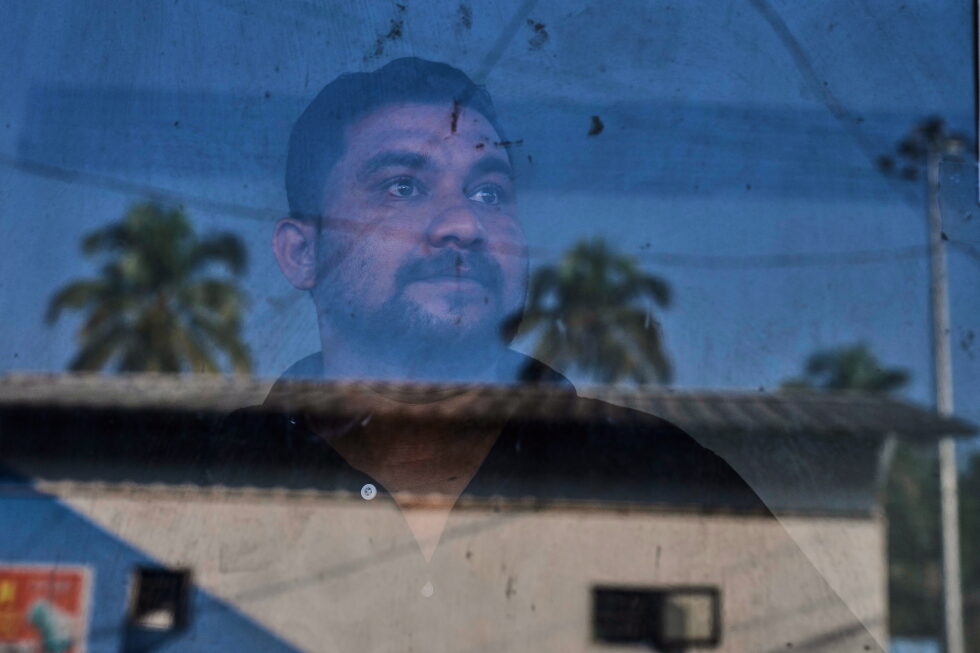
    For Indrani Ravichandran and her family, the nightmare began in the pitch-black of a November night, when Cyclone Ditwah’s unprecedented rainfall sent floodwaters surging through their small village of Kudugalhena in Sri Lanka’s Kandy district. Within minutes, rising waters swallowed portions of their home, forcing the family to flee into lashing rain, slippery hillsides and constant fear of encountering venomous wildlife displaced by the storm. They escaped with their lives, leaving almost all their belongings behind. Today, months after the cyclone passed, they have returned to the only section of their home that remained standing, joining hundreds of thousands of Sri Lankans still picking up the pieces of the worst natural disaster to hit the island nation in modern history.

    Cyclone Ditwah left a trail of destruction that experts say outstripped even the devastating 2004 Indian Ocean tsunami in terms of infrastructure damage. Over just 72 hours, parts of Sri Lanka’s central highlands received up to 500 millimeters of rain – nearly two months of average rainfall – triggering catastrophic flash floods and landslides that washed away entire communities, businesses and residential settlements. The official human toll stands at 643 confirmed dead, with another 173 people still unaccounted for. Close to two million people across all 25 of Sri Lanka’s districts were impacted, with more than 165,000 people remaining displaced months after the storm, housed in temporary shelters or with host families.

    According to estimates from the United Nations and international aid agencies, total damage from the cyclone reaches roughly $4 billion – an amount equivalent to 4% of Sri Lanka’s entire annual gross domestic product. Dr. Ganeshan Wignaraja, a visiting senior fellow at London’s ODI Global Institute, notes that while the cyclone’s death toll was lower than that of the 2004 tsunami, its damage to roads, public utilities, private property and critical economic infrastructure is unmatched in the country’s modern history.

    The cyclone hit at the worst possible moment for Sri Lanka. The South Asian island nation had only just begun to claw its way back from a crippling 2022 economic crisis, when a collapse in foreign currency reserves led to a sovereign debt default and widespread shortages of food, medicine, fuel and cooking gas. Those shortages sparked mass public protests that ousted then-president Gotabaya Rajapaksa, and the new government had implemented austerity measures including cutting electricity subsidies and raising top income tax rates to 36% in an effort to stabilize public finances and restore growth.

    Now, the fallout from the ongoing Iran conflict has compounded the country’s existing challenges, creating what Wignaraja calls a “triple shock” to the fragile economy: first, the $4 billion in damage from Cyclone Ditwah; second, skyrocketing global fuel prices driven by Middle East tensions; and third, a looming drought in parts of the country that threatens to deepen resource shortages.

    In response to shrinking fuel supplies and spiking global prices, the Sri Lankan government has been forced to implement emergency austerity measures in recent weeks: fuel rationing, broad price hikes, a mandatory four-day working week to cut energy consumption, a 40% increase in electricity tariffs, and rolling power and water cuts to conserve dwindling resources. Fuel and cooking gas shortages have already triggered panic buying across the country, stirring grim memories of the 2022 crisis, when daily power cuts stretched up to 13 hours and basic essentials were unobtainable for millions.

    As the government struggles to fund post-cyclone reconstruction, it has secured only around $750 million of the estimated $4 billion in recovery costs – barely one-fifth of what is needed. Unlike the 2004 tsunami, which drew immediate billions in international donor pledges from across the globe, the international response to Cyclone Ditwah has been far more muted. Only neighboring India moved quickly to mount a large-scale relief effort, launching Operation Sagar Bandhu – “Friend Across the Sea” – deploying two warships including an aircraft carrier, launching rescue sorties that saved hundreds of people including foreign citizens, setting up field hospitals, restoring critical infrastructure, and delivering more than 1,000 tonnes of emergency supplies. New Delhi also provided $450 million in grants and direct aid, making it by far the largest international donor to date.

    In contrast, long-time Sri Lankan ally and major investor China has offered minimal support: less than $2 million in financial aid and roughly 100 tonnes of emergency supplies. The Sri Lankan government formally requested Chinese support for key infrastructure reconstruction projects in January, but has yet to receive a substantive response.

    Sri Lankan disaster management officials acknowledge that while most families with partially damaged homes – like the Ravichandrans, who received 50,000 rupees ($325) in repair aid plus additional support for their young children – have received government assistance, compensation for families who lost their entire homes or businesses has been delayed. KG Dharmathilake, a senior official in the country’s disaster management division, says the delay stems from the government’s focus on “building back better”: officials are prioritizing identifying safe, disaster-resilient land for new housing to protect families from future extreme weather events, rather than rushing construction in high-risk areas. He adds that more than 80% of all affected residents have already received the financial support they are eligible for.

    For displaced Sri Lankans and economic analysts alike, the outlook has grown even bleaker in recent weeks due to the Iran conflict. Beyond spiking fuel prices, the crisis threatens Sri Lanka’s key source of foreign exchange: remittances from the estimated one million Sri Lankan workers based in Gulf nations. Last year, those remittances totalled roughly $7 billion, nearly matching the country’s current total foreign reserves of $7 billion. While mass layoffs have not yet occurred, economists warn that a prolonged conflict in the Middle East could cut off new job opportunities for Sri Lankan migrant workers and reduce overall remittance inflows, further straining the country’s ability to pay for critical imports and fund reconstruction.

    Economists say that with careful fiscal management, the current $7 billion in foreign reserves should be enough to get the country through the immediate crisis of cyclone recovery and spiking fuel prices. But a prolonged fallout from the Iran conflict would push the country back into the kind of economic chaos it saw in 2022. For President Anura Kumara Dissanayake, who took office after the 2022 crisis, successfully navigating this compound of natural disaster and geopolitical economic shock will be the defining test of his leadership.

  • Over 90 arrested as hundreds gather to defy Palestine Action ban in London

    Over 90 arrested as hundreds gather to defy Palestine Action ban in London

    On a Saturday afternoon in central London, hundreds of demonstrators gathered in the iconic Trafalgar Square to openly defy the UK government’s recent ban of the direct action group Palestine Action, deliberately putting themselves at risk of arrest under sweeping counterterrorism legislation.

    Organized around a silent vigil, approximately 500 protesters set up camping chairs along the base of Trafalgar Square’s central steps, holding handcrafted cardboard placards that bore a simple, unapologetic message: “I oppose genocide, I support Palestine Action.” In a show of force that preceded the start of the demonstration, London’s Metropolitan Police had already lined the open square with police vans, deploying a heavy uniformed presence hours before the first protester arrived.

    Footage and on-the-ground reporting from the event captured images that have become increasingly common across the UK in the months since the ban was enacted: elderly protesters, many grey-haired, frail, or relying on crutches for mobility, were physically hauled away by officers. A number of demonstrators chose to dress as Suffragettes, the early 20th-century British women’s suffrage activists, to draw a parallel between their current civil disobedience and historical fights for democratic rights. At one point during the arrests, one elderly woman lost consciousness while being carried by officers, and was placed in the recovery position by police as onlookers watched on.

    This demonstration is far from an isolated incident. Since the UK government formally proscribed Palestine Action as a terrorist group in July 2025, more than 1,600 people have been arrested under counterterrorism laws simply for holding placards echoing the same message displayed at the Trafalgar Square vigil, government data shows. Many of the attendees at Saturday’s gathering have already been detained multiple times for the same act of peaceful protest.

    Among the protesters were 70-something siblings Mark and Betty, who traveled separately from Wales and Cornwall to attend the London vigil. Both have a long history of local Palestine advocacy, and this marked their first joint appearance at a national demonstration. Mark, a Jewish genocide scholar, told Middle East Eye that his participation carries triple weight: as a member of the Jewish community, a scholar of mass atrocities, and a critic of the UK government’s policy. “I don’t want to be here. I want the government to acknowledge a failing and unravel this ban,” he said.

    Betty, also Jewish and a veteran of decades of anti-war organizing, echoed her brother’s frustration. “There is really very little else we can do. We’ve done everything: smaller local protests, writing letters to our Members of Parliament, signing petitions,” she explained. “But clearly this government will not be told unless it is forced to be told by making things very, very difficult for them by being here.” She added that the current political climate has reached a deeply worrying point: “But now we’ve got into the stage where we’re not even allowed to turn up on the street with a bit of paper for being absurdly peaceful people.”

    Also in attendance were former Palestine Action supporters who had been imprisoned after the ban, among them Heba Muraisi, who took part in a 73-day hunger strike behind bars to protest both poor detention conditions and the proscription itself. Muraisi, who had only recently been released, told reporters she had watched previous “Lift the Ban” protests on a small prison television, and witnessing the police response in person was staggering. “It’s crazy actually witnessing it. It’s both insane and disgusting. Look how many police are here, just for elderly people holding placards. It’s a joke. The state is a joke,” she said.

    Trudi Warner, a veteran activist who previously faced contempt of court charges for holding a pro-jury rights placard outside a climate change trial, argued that the UK government is completely disconnected from widespread public sentiment on Palestine. “People are outraged, they are furious, and we’re trying to show that,” Warner said. “Our thing is show, don’t tell. We can tell people that we’re living in an authoritarian state. They won’t believe us, but we can show them, and that’s what these actions are all about.”

    Saturday’s mass arrests come against a shifting legal backdrop. In February 2026, the UK High Court issued a ruling that found the government’s ban on Palestine Action was unlawful. Following that decision, Home Secretary Shabana Mahmood was granted permission to appeal the High Court’s ruling, with the appeal scheduled to be heard on April 28 and 29.

    After the initial High Court ruling, the Metropolitan Police issued a public statement saying it would suspend arrests of Palestine Action supporters and proscription opponents under counterterrorism laws, and would instead focus solely on gathering evidence for future prosecutions pending the appeal. But in a sudden policy reversal that surprised activists, the Met backtracked, describing its initial statement as an “interim position” and announcing it had revised its approach to resume arrests. Prior to Saturday’s vigil, MEE had already confirmed the Met had arrested two people on proscription-related charges after announcing the suspension.

    Defend our Juries (DOJ), the activist group leading the national campaign to overturn the Palestine Action ban, said it had formally written to Met Commissioner Mark Rowley to warn that any arrests carried out after the High Court’s unlawful ruling would carry serious legal repercussions. The group noted it had planned Saturday’s vigil based on the Met’s original pledge to suspend arrests, and that police had failed to issue a substantive response to correspondence from the group’s legal team ahead of the event.

    DOJ argues that any post-ruling arrests are unlawful, as they violate protesters’ fundamental democratic rights enshrined in the UK Human Rights Act and the European Convention on Human Rights. In a formal statement released after the vigil, the group said: “It is clear that the Metropolitan Police has adopted a policy of a) refusing to investigate crimes under the [International Criminal Court Act] relating to the acts of the government of Israel; and b) suppressing public expression of opposition to such crimes. Such a biased and discriminatory policy materially assists both the Israeli Government and Elbit Systems in the commission of genocide, war crimes and crimes against humanity.”

    Dal Babu, a former chief superintendent with the Metropolitan Police, told BBC Radio 4 that the optics of mass arresting peaceful elderly protesters will create significant reputational challenges for the force. “The optics of the mass arrests will be very challenging for the police… in terms of how they manage it,” Babu said. “Also be aware of the fact there will be a huge amount of people who have sympathy with what is going on with the views of Palestine Action.”

    Official Home Office data underscores the scale of the crackdown: arrests linked to the Palestine Action ban make up the majority of the 1,800 total terrorism arrests conducted across the UK in 2025, representing a 660% year-on-year increase in counterterrorism detentions. Multiple leading human rights organizations have repeatedly warned that the proscription of Palestine Action represents a dangerous misuse of counterterrorism legislation that threatens core civil liberties, including the rights to free expression and peaceful assembly.

    A DOJ spokesperson emphasized that the campaign to lift the ban has grown far beyond a single protest rights issue. “The government’s refusal to accept the judgment of the High Court, coupled with inconsistent and opaque policing decisions, signals a troubling disregard for the rule of law,” the spokesperson said. “These are not the actions of institutions committed to protecting citizens, but of a state prioritising its own authority. Today’s wrongful arrests of… people holding signs at a silent vigil are further evidence of this.”

  • US and Iran hold direct talks in Pakistan to end war

    US and Iran hold direct talks in Pakistan to end war

    Six weeks after open conflict erupted between the United States and Iran, the two long-adversarial nations convened their highest-level face-to-face negotiations in half a century Saturday in Pakistan’s capital of Islamabad, marking the first direct formal high-level meeting between the two sides since Iran’s 1979 Islamic Revolution. The two-hour closed-door session brought together a high-powered American delegation led by Vice President JD Vance, special envoy Steve Witkoff, and former White House senior advisor Jared Kushner, while Iran was represented by parliamentary speaker Mohammad Bagher Ghalibaf and Foreign Minister Abbas Araghchi. Pakistan’s army chief also joined the opening round of talks, as the South Asian nation served as a neutral mediator for the breakthrough diplomatic engagement. The talks entered a pause after the initial session, even as competing and contradictory accounts of early progress and on-ground developments began to emerge even before negotiators released any official joint statement. One key point of contention is the status of the Strait of Hormuz, the strategically critical waterway that carries roughly a fifth of the world’s daily oil supplies. Iran’s blockade of the strait earlier sparked the largest single disruption to global energy markets in modern history. A senior anonymous U.S. official told news outlet Axios that multiple U.S. Navy vessels traversed the strait on Saturday, but both Iranian state television and an anonymous Pakistani source outright denied any U.S. ships had passed through the waterway. Shortly after the opening of talks, former U.S. President Donald Trump claimed on social media that the process of clearing the Strait of Hormuz had already begun, adding that all 28 of Iran’s mine-laying vessels had been sunk. No independent confirmation of this claim has emerged as of Saturday evening. Another conflicting report centers on the fate of billions of dollars in Iranian assets frozen by U.S. sanctions in foreign banks, primarily in Qatar. A senior unnamed Iranian source earlier told Reuters that the U.S. had agreed to release these assets, a statement that was immediately rejected by a U.S. official. The direct Saturday meeting came after hours of pre-negotiation shuttle diplomacy led by Pakistani Prime Minister Shehbaz Sharif, who worked to align both sides on basic terms before the first face-to-face encounter. Iranian state media outlined Tehran’s core pre-negotiation red lines that Washington must accept for any final agreement: progress on the status of the Strait of Hormuz, the full unfreezing of Iranian blocked assets, war reparation payments from the U.S., and a comprehensive immediate ceasefire across the entire Middle East region. A key non-U.S.-Iran conflict at the top of Tehran’s negotiating agenda is the ongoing Israeli military campaign in Lebanon, where strikes have continued despite the recent bilateral ceasefire between the U.S. and Iran. On Wednesday alone, Israeli strikes killed more than 350 people in Lebanon, and total fatalities from Israeli operations that began in March have reached nearly 2,000. Both the U.S. and Israel have insisted that the military campaign in Lebanon falls outside the scope of the U.S.-Iran ceasefire, a position Tehran strongly rejects. Iran’s negotiating delegation has confirmed it will continue to press for an immediate ceasefire to end Israeli strikes in Lebanon during the ongoing talks. Even as the Islamabad talks got underway Saturday, fresh violence rocked southern Lebanon: Israeli air strikes hit more than a dozen locations, killing 10 people including a Lebanese civil defense member and two paramedics. In response, the Iran-aligned group Hezbollah announced it had carried out multiple targeted operations against Israeli military positions both inside Lebanese border territories and across the frontier in northern Israel. Looking ahead, both Israeli and Lebanese officials have confirmed they will hold separate talks in Washington on Tuesday, though the two sides have also released conflicting accounts of what agenda those discussions will cover, adding another layer of uncertainty to the already volatile regional situation as world powers wait for outcomes from the historic U.S.-Iran negotiations in Pakistan.