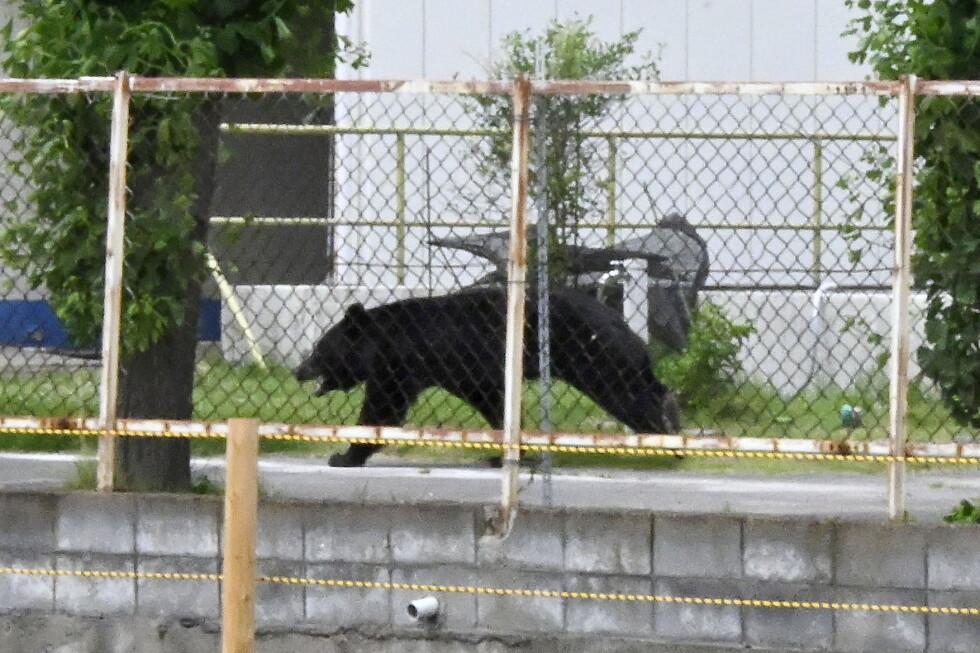
A brown bear has left four people injured after rampaging through a residential and industrial area of Fukushima, northeastern Japan, on Tuesday, marking the latest in a growing wave of dangerous human-bear encounters that have put communities across the country on high alert in recent years.
This attack comes as Japan grapples with a record-breaking surge in bear-related violence: government data from 2025 shows 13 people killed in over 230 bear attacks across the nation, a total that surpasses the number of both fatalities and incidents recorded in any prior year.
Emergency responders were dispatched immediately after the Fukushima Steel Works placed an emergency call reporting that two of its staff had been attacked by the animal. Surveillance camera footage captured the dramatic sequence of events: the black bear emerged unexpectedly near the factory entrance, chasing a male employee in his 20s, who was knocked to the ground as he attempted to escape. The bear then moved onto the factory grounds, where it wounded a second male worker in his 60s.
After leaving the steel works property, the bear attacked two more people: another male employee in his 60s at a neighboring adjacent company, and an 80-year-old woman who lives in the surrounding residential area. According to the Fukushima City Fire Department, the three male victims suffered only minor injuries, while the elderly woman sustained moderate wounds. None of the injuries are classified as life-threatening.
As of Tuesday afternoon, the bear remained at large. Authorities believe it is still trapped within the compound of the second company, which has been cordoned off by uniformed police officers equipped with specialized long bear control sticks. As a precautionary measure, two nearby schools including Noda Elementary School canceled in-person classes, shifting to remote learning and posting public warnings urging local residents to “avoid non-essential outings and stay safe.”
The latest attack has reignited widespread public anxiety that first spread nationwide after a surge of deadly incidents in 2024, which prompted the Japanese government to deploy the self-defense force to Akita, a northern prefecture where more than 60 people were attacked and four killed by bears.
Wildlife experts explain that the growing frequency of bear incursions into human settlements stems from a combination of demographic and ecological shifts: Japan’s bear population has expanded steadily, while rural human communities are shrinking and aging rapidly, leaving a critical shortage of trained hunters to manage bear numbers.
In March of this year, the Japanese government estimated the total national bear population at approximately 57,800. Officials have already approved a comprehensive bear population management roadmap that includes systematic culling to reduce conflict risk. The plan outlines a threefold increase in municipal bear control staff, reaching 2,500 total personnel within five years, and a doubling of the number of active bear traps deployed across high-risk regions.
Recent bear sightings have even spread to the outskirts of Japan’s capital, with multiple reports in western suburban Tokyo including the popular Okutama hiking area. Local park authorities have responded by placing additional traps and rolling out real-time bear alerts on social media platforms to warn visitors.
Alongside expanded population control, the government has ramped up public education campaigns to help people stay safe. Officials urge hikers and wild foragers, who frequent bear habitats in search of mushrooms, to check recent sighting updates before heading out, and avoid outdoor activity during early morning and evening hours, when bears are most active.
The Ministry of the Environment’s official safety manual outlines key steps for people who encounter a bear: do not panic, move slowly away, and never turn your back to run. If an attack is unavoidable, the manual advises people to lie face down, curl into a tight ball, and cover their neck to protect vital areas. “The core goal is to prevent a fatal wound,” the manual explains.