标签: Asia

亚洲

  • Trump says war ‘close to over’

    Trump says war ‘close to over’

    On April 15, 2026, United States President Donald Trump made a significant public statement suggesting that the active conflict between Washington and Tehran is rapidly approaching a conclusion, while signaling that a second round of direct negotiations between the two long-time adversaries could be hosted by Pakistan in the coming days.

    Speaking in an interview with Fox Business host Maria Bartiromo on the program *Mornings with Maria*, Trump emphasized, “I think it’s close to over … I view it as very close to being over.” He added that he believes Iran is deeply motivated to reach a negotiated settlement to end the standoff. As of April 15, Iranian officials had not issued any public confirmation or comment regarding the planned new round of talks, leaving the details of Tehran’s position unconfirmed.

    Pakistan’s Ministry of Foreign Affairs released an official statement on the same day confirming Prime Minister Muhammad Shehbaz Sharif’s multi-nation diplomatic tour taking place from April 15 to 18, which will include stops in Saudi Arabia, Qatar, and Turkiye. The statement clarified that his visits to Riyadh and Doha will focus on bilateral priorities, including deepening existing cooperation and discussing pressing questions of regional peace and security. During his time in Turkiye, Sharif will attend the Fifth Antalya Diplomacy Forum, where he is scheduled to hold one-on-one talks with Turkish President Recep Tayyip Erdogan and other senior global leaders. A cohort of senior Pakistani officials, including Deputy Prime Minister and Foreign Minister Mohammad Ishaq Dar, Information and Broadcasting Minister Attaullah Tarar, and Special Assistant to the Prime Minister Syed Tariq Fatemi, will accompany Sharif on the tour.

    United Nations Secretary-General Antonio Guterres told reporters during a briefing at UN Headquarters in New York on April 14 that following a phone conversation with Pakistan’s deputy prime minister, the UN has received indications that new US-Iran negotiations are highly likely to resume soon. Guterres voiced strong praise for Pakistan’s diplomatic initiative to de-escalate tensions in the Middle East, saying he has “enormous admiration” for the country’s leading role in facilitating dialogue. The UN chief also reaffirmed a core longstanding UN position: that the broader Middle East crisis can never be resolved through military means.

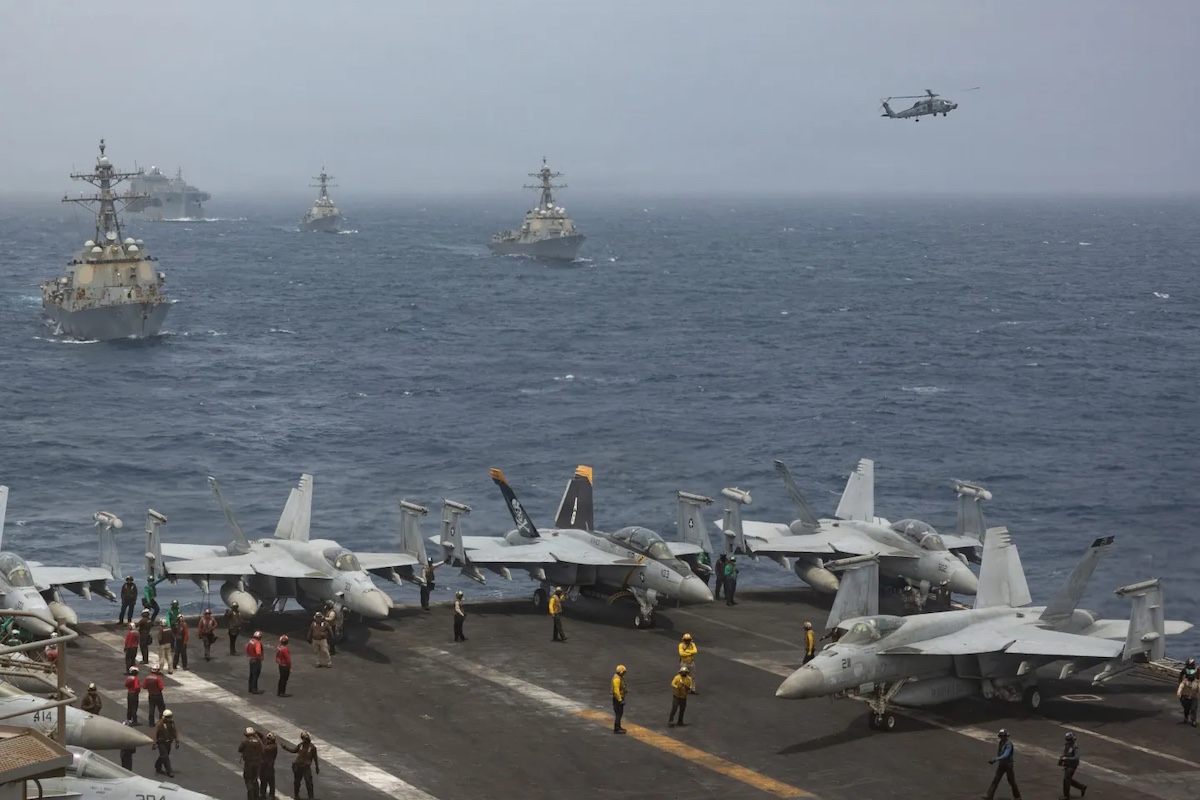
    “Serious negotiations must resume. The ceasefire must be preserved — and extended as necessary. And international navigational rights and freedoms — including in the Strait of Hormuz — must be respected by all parties,” Guterres stated. At present, the US is enforcing a full naval blockade of the Strait of Hormuz, one of the world’s most critical maritime chokepoints for global energy trade.

    On April 15, US Central Command announced via a post on the social platform X that US Navy guided-missile destroyers are core assets for the blockade operation targeting Iranian ports, adding that the measure is enforced equally against all vessels of any flag seeking to enter or exit Iranian coastal areas. The command noted that a standard guided-missile destroyer carries a crew of over 300 highly trained sailors specialized in both offensive and defensive maritime operations. Admiral Brad Cooper, head of US Central Command, confirmed that the blockade of Iranian ports has been “fully implemented as US forces maintain maritime superiority in the Middle East.” He added that roughly 90 percent of Iran’s national economy depends on seaborne international trade, and that in less than 36 hours after the blockade launched, US forces have completely stopped all maritime trade moving into and out of Iran.

    However, a report from Xinhua News Agency, citing British shipping industry publication *Lloyd’s List*, documented that at least two vessels successfully traveled through the Strait of Hormuz toward Iranian ports on April 14 by altering their Automatic Identification System (AIS) destination data. Both are Iran-flagged container ships that originally listed the major southern Iranian port of Bandar Abbas as their destination, before changing their AIS listings to the broader classification “PG Ports,” short for Persian Gulf ports. The ships continued their voyage toward Bandar Abbas uninterrupted that day. The Xinhua report notes that these kinds of AIS adjustments can complicate US intelligence gathering efforts for the blockade, requiring the US military to allocate additional resources to track and identify vessels involved in maritime traffic bound for or leaving Iranian ports.

    Reza Amiri Moghadam, Iran’s Ambassador to Pakistan, condemned the US naval blockade as “a reckless misstep meant possibly for a dignified exit and face-saving.” He argued the measure is designed to build domestic political credibility for Washington by reinforcing the narrative that the US is projecting force in the region, thereby justifying the military deployment, inflammatory rhetoric, loss of life, and heavy financial costs borne by US taxpayers. “Still, the miscalculation adds up to the inventory of faults with dire consequences for the whole region and beyond,” Moghadam added.

    As diplomatic teams work to finalize the exact date and logistics for the upcoming US-Iran talks, a group of 10 countries released a joint statement addressing the separate ongoing crisis in Lebanon. Canada, the United Kingdom, Australia, Japan, Brazil, Colombia, Indonesia, Jordan, Sierra Leone, and Switzerland said they remain “deeply concerned” by the worsening humanitarian situation and mass displacement crisis in Lebanon. “We welcome the ceasefire agreed between the United States, Israel, and Iran. We call for an urgent end to hostilities in Lebanon. Civilians and civilian infrastructure must be protected from the effects of hostilities,” the statement read. Currently, Israel and Lebanon are holding direct ambassador-level talks at the US State Department in Washington DC, focused on resolving tensions along their shared border.

  • German scientist’s book debuts in Chinese in Beijing

    German scientist’s book debuts in Chinese in Beijing

    On Monday, a Beijing-based academic seminar marked the official launch of the Chinese translation of *Questions of the Future*, a notable work by German molecular biologist Patrick Cramer, president of the Max Planck Society. This release marks the first time the book, originally published in German under the title *Zukunftswelten* in March 2024, has been adapted into a foreign language, bringing Cramer’s insights on global scientific progress to a new Chinese-speaking audience.

    Hosted under the theme “Interdisciplinary Dialogues for the Science of Tomorrow,” the event brought together leading scientific experts from across sectors to explore how collaborative research can answer pressing global challenges. During his keynote address, Cramer walked attendees through the core arguments of his book, sharing his perspectives on the future direction of scientific inquiry, the power of cross-disciplinary research, and the irreplaceable role of international partnership in advancing knowledge.

    Cramer stressed that foundational basic research, trailblazing original innovation, and open cross-border collaboration are non-negotiable for driving meaningful scientific progress. He further noted that a growing number of issues once considered far-off future concerns have now evolved into critical threats that will define the trajectory of human civilization. These pressing issues span the global transition to clean energy to reverse climate change, the far-reaching social disruption of rapid artificial intelligence advancement, and the systemic shifts required to accommodate aging populations worldwide amid modern medical progress.

    Attending experts reinforced Cramer’s views during a subsequent roundtable discussion, pointing out that no single academic discipline or individual nation has the capacity to independently solve shared transnational challenges, from climate change and population aging to responsible AI governance and biodiversity protection. They concluded that expanding cross-disciplinary dialogue, deepening coordinated investment in basic research, and fostering consistent international scientific and technological exchange are critical not only for pushing the boundaries of human knowledge, but also for building collective solutions to the challenges that unite all countries.

    The seminar was sponsored by the Bureau of International Cooperation of the Chinese Academy of Sciences, and organized by the Institute for the History of Natural Sciences of the Chinese Academy of Sciences.

  • Turkey rocked by two mass school shootings in two days, at least four dead

    Turkey rocked by two mass school shootings in two days, at least four dead

    Turkey is grappling with shock and grief after two successive school shooting incidents over a 48-hour period left four people dead and more than 30 others injured, in a rare outbreak of gun violence on Turkish educational campuses.

    The deadlier of the two attacks unfolded on Wednesday afternoon in the southeastern Turkish city of Kahramanmaras, where an eighth-grade student opened fire inside Ayser Calik Middle School. Speaking in a live public address, Kahramanmaras governor Mukerrem Unluer confirmed that the shooting left three students and one teacher dead before the teen attacker turned the gun on himself and took his own life.

    Initial investigations have found that the student smuggled five firearms and seven loaded ammunition magazines onto campus before carrying out the attack. The shooter fired intermittently into two separate classrooms, and the weapons he used are believed to belong to his father, a retired senior police officer, according to Unluer. In addition to the fatalities, 20 students were hurt in the attack, with four of those wounded remaining in critical condition and undergoing emergency surgery as of Wednesday evening.

    In response to the incident, Turkish Justice Minister Akin Gurlek announced that seven senior prosecutors have been appointed to lead the official investigation, and a temporary media broadcast ban has been ordered to prevent outside interference with the probe. Cabinet ministers overseeing education, internal affairs, and health were immediately deployed to Kahramanmaras to coordinate emergency response and support affected families.

    The Kahramanmaras attack came just one day after a separate school shooting in the southern Turkish province of Sanliurfa, which left 20 people wounded before the attacker also died by suicide. That attack was carried out by a 19-year-old man identified only by the initials O.K., a former student of Ahmet Koyuncu Vocational and Technical High School who told authorities he carried out the attack out of revenge for what he viewed as unfair treatment that led to his academic failures. He specifically targeted the school’s principal, according to local reports.

    Turkish daily newspaper Sabah later revealed that the 19-year-old failed to finish middle school due to prolonged absenteeism, before transferring to an online distance education high school that he also did not complete. Weeks before the attack, O.K. began sending explicit threats to the school community, even writing in one message, “Get ready, there will be an attack at this school in a few days.” He was taken into custody over the threats just 24 hours before the shooting, but was subsequently released, prompting questions over official oversight.

    School gun violence is extremely uncommon in Turkey, making the two back-to-back attacks all the more alarming. Local television commentators have raised the possibility that the incidents are linked as copycat attacks, noting that widespread national media coverage of the Sanliurfa shooting may have inspired the attacker in Kahramanmaras to carry out his attack just one day later. Turkish authorities have not yet confirmed that connection, but have pledged a full review of security protocols at schools across the country in the wake of the violence.

  • Polarization harms ordinary people, says former Thai official

    Polarization harms ordinary people, says former Thai official

    In a recent exclusive conversation with China Daily, a veteran former Thai political leader has sounded the alarm over deepening global divides, warning that the world’s most vulnerable populations bear the brunt of rising polarization and conflict. Bhokin Bhalakula, who previously served as president of Thailand’s National Assembly, made the remarks during an interview updated by the outlet on April 15, 2026, offering a clear-eyed assessment of today’s fractured international landscape.

    Bhokin emphasized that the current era of geopolitical polarization is unlike any the world has seen before, with every new escalation of tension and outbreak of conflict leaving everyday civilians to face the worst consequences. From disrupted livelihoods to lost lives and fractured communities, he argued, ordinary people who have no stake in power struggles between nations or blocs end up paying the highest price for rising division.

    Beyond his warning on polarization, Bhokin pushed back against the growing trend of great power unilateralism. He noted that a foreign policy framework that prioritizes the interests of a single nation over the sovereign rights and needs of other countries can never earn genuine respect from the global community. Such an approach, he implied, only deepens divides and fuels further instability.

    In contrast to unilateral, zero-sum approaches to global affairs, Bhokin highlighted the strength and resonance of China’s vision for global cooperation. The concept of “a community with a shared future for mankind,” first put forward by Chinese President Xi Jinping, effectively upholds the equal rights and interests of all nations in international governance, he said. This vision, Bhokin added, aligns perfectly with the widespread global desire for inclusive, peaceful development that benefits all people, not just a select few powerful states.

  • Expats get into Sanyuesan Festival spirit

    Expats get into Sanyuesan Festival spirit

    As anticipation builds for one of southern China’s most vibrant traditional cultural celebrations, international residents living in Guilin, Guangxi Zhuang Autonomous Region, have already begun immersing themselves in the joyful, culturally rich spirit of the Sanyuesan Festival.

    Falling on the third day of the third month of China’s traditional lunisolar calendar, Sanyuesan holds deep meaning for communities across Guangxi. Far more than a simple seasonal observance, the festival is a major interethnic gathering that brings together the region’s many diverse cultural groups in shared celebration. For the Zhuang people, Guangxi’s largest ethnic community, the day also carries an additional layer of historical and cultural significance: it is recognized as the group’s oldest traditional Valentine’s Day, rooted in centuries of folk custom.

    What began as a curious cultural observation for many of Guilin’s expat residents has quickly transformed into full, enthusiastic participation, as these international visitors step off the sidelines to join local communities in marking the occasion, transitioning from curious outside observers to active participants in the region’s cherished ethnic cultural traditions.

  • Chase Guiyang’s flower bloom with Xiaoshuang

    Chase Guiyang’s flower bloom with Xiaoshuang

    As rising spring temperatures sweep across Southwest China, the capital city of Guizhou Province, Guiyang, has entered its most visually stunning seasonal window, with countless floral varieties bursting into full bloom across the region. To celebrate this annual display of natural beauty, local authorities have launched a charming flower-viewing guided tour led by Xiaoshuang, a beloved local cultural IP character.

    Xiaoshuang draws its inspiration from the energetic wild macaques that inhabit Guiyang’s iconic Qianling Mountain, a landmark popular with both local residents and domestic tourists. The character offers audiences an immersive, curated journey through the city’s most breathtaking floral landscapes, highlighting the diverse spring scenery that defines Guiyang this time of year.

    The tour showcases a vivid spectrum of blooms: soft pastel pink and white peach blossoms that line urban parks and hillside pathways, rolling golden fields of rapeseed flowers that stretch across suburban outskirts, romantic dense clusters of colorful roses that fill specialized garden spaces, and sweeping dreamlike purple expanses of verbena that create a fairy-tale atmosphere across the city’s green spaces. Every curated stop on Xiaoshuang’s tour highlights a distinct side of Guiyang’s springtime charm, weaving together natural scenery, local cultural traditions, and one-of-a-kind regional character into a cohesive engaging experience.

    The official Xiaoshuang IP is authorized for promotional and public use by the Publicity Department of the CPC Guiyang Municipal Committee and the Cool Guiyang smart integrated livelihood service platform, a local digital initiative designed to connect residents and visitors with cultural and public services across the city.

  • From dropping bombs to pressuring banks: U.S. pivots to economic warfare on Iran

    From dropping bombs to pressuring banks: U.S. pivots to economic warfare on Iran

    As a critical ceasefire between the U.S. and Iran approaches its expiration next week, the Trump administration is laying the groundwork for a dramatic shift in its conflict strategy, moving away from direct kinetic military strikes to an all-out economic pressure campaign designed to force Tehran into compliance by crippling its financial foundations.

    Treasury Secretary Scott Bessent confirmed the new approach during a White House press briefing Wednesday, framing the planned escalation as the “financial equivalent” of a sustained bombing campaign. The core of the new strategy is a major expansion of secondary sanctions that would target any third-country individuals, firms and financial entities that engage in business with Iranian-controlled assets – a move that would even impact U.S. allies in the Gulf such as the United Arab Emirates and major economic competitors including China.

    “We have told companies, we have told countries that if you are buying Iranian oil, that if Iranian money is sitting in your banks, we are now willing to apply secondary sanctions, which is a very stern measure,” Bessent told reporters. “And the Iranians should know that this is going to be the financial equivalent of what we saw in the kinetic activities.”

    The announcement came just one day after the Treasury Department issued formal warnings to financial institutions across China, Hong Kong, the UAE and Oman, accusing these jurisdictions of facilitating illicit Iranian financial activity through their systems and threatening penalties for continued engagement. A senior anonymous source familiar with the administration’s internal planning told the Associated Press that the pressure campaign is designed to force Iran to accept U.S. terms for limiting its nuclear program, a longstanding policy goal of the Trump presidency.

    Privately, administration officials argue that while Iranian leadership believes it can outlast current U.S. pressure, cutting off access to global financial markets will leave Tehran unable to pay its military and political allies, ultimately forcing it back to the negotiating table. Additional economic targets are already lined up for potential sanctioning, including Iran’s bonyads – powerful charitable-controlled business entities that make up a large portion of the country’s overall economy.

    Bessent also revealed that two major Chinese banks have already received formal warnings over their handling of Iranian funds, as President Trump prepares for a high-stakes official visit to Beijing next month to meet with Chinese President Xi Jinping. The Treasury chief added that Iran’s Gulf neighbors have become willing to freeze Iranian assets held in their domestic banks, a shift driven by Tehran’s military actions during the ongoing conflict.

    On the same day the new strategy was announced, the Treasury rolled out new sanctions targeting an oil smuggling network tied to the late senior Iranian security official Ali Shamkhani, a close adviser to Iran’s former Supreme Leader. The penalties cover dozens of individuals, front companies and vessels spread across multiple countries – most based in the UAE – that have been involved in the clandestine transport and sale of Iranian and Russian oil. “Treasury will continue to cut off Iran’s illicit smuggling and terror proxy networks,” Bessent said in a formal statement. “Financial institutions should be on notice that Treasury will leverage all tools and authorities, including secondary sanctions, against those that continue to support Tehran’s terrorist activities.”

    Sanctions expert Daniel Pickard, a practicing sanctions attorney, warned that the expansion of secondary sanctions carries major risks of diplomatic and economic blowback from U.S. trading partners, which could undermine the coalition-building needed to make the pressure campaign effective. “A lot of our trading partners have been outspoken in regard to their opposition to the conflict in Iran,” Pickard noted. “Most economic sanctions professionals would agree that when you get more people on the team, the chances of your economic sanctions being effective are greater.”

    Trump administration officials have expressed growing confidence that the current ceasefire and ongoing blockade of Iranian shipping through the Strait of Hormuz have shifted the momentum of the conflict in Washington’s favor. Months of bombardment have caused tens of billions of dollars in damage to Iran’s core infrastructure, including critical damage to its oil sector – the central pillar of Iran’s already fragile, long-isolated economy – that officials estimate will take years to fully repair.

    Vice President JD Vance reinforced the administration’s negotiating position this week, saying Trump is not seeking a limited incremental agreement and instead pushing for a sweeping “grand bargain” that would see Iran commit to full denuclearization in exchange for economic relief. “If you guys commit to not having a nuclear weapon, we are going to make Iran thrive,” Vance said, outlining the U.S. offer.

    Stephen Miller, Trump’s deputy chief of staff, struck a harder line during a Fox News appearance Tuesday, framing the Strait of Hormuz blockade as a checkmate move against Tehran. “If Iran chooses the path of a deal that’s great for the world, that’s great for everybody. If Iran chooses the path of economic strangulation by blockade, then the world will pass Iran by,” Miller said. “New energy routes will be established. New supply chains will be established. Other nations throughout the region — throughout the world, and especially America — will power the world and Iran will become a footnote.”

    Reaction from Republican lawmakers on Capitol Hill has been split. While some, like Sen. Thom Tillis of North Carolina, say any additional pressure on Iran is worth pursuing, others are skeptical that more sanctions will change Tehran’s behavior after years of existing penalties failed to alter Iran’s strategic goals. “I’m not sure if it’s sanctions that’ll do it. I think we’re putting some pretty heavy sanctions on right now,” said Sen. Mike Rounds of South Dakota, a member of both the Senate Banking and Armed Services Committees. “I personally am just not optimistic that we actually can fix this thing without a regime change.”

    Trita Parsi, executive vice president of the Quincy Institute, a think tank that has publicly criticized Trump’s decision to launch the conflict, argues that the ceasefire has shifted the negotiating dynamic between the two sides. Before the ceasefire, Parsi noted, Trump was politically cornered and strategically constrained, but the current opening has left Iran with more incentive to reach a deal than the U.S. “The window now open offers Tehran a chance to convert battlefield leverage into lasting strategic gain,” Parsi wrote in a recent analysis. “To let it close would mean forfeiting not just incremental progress, but the possibility of reshaping its economic and geopolitical position. By contrast, the United States, having already secured a tenuous exit ramp through the ceasefire, has less at stake in the short term.”

  • China delivers world’s largest electric-powered intelligent container ship

    China delivers world’s largest electric-powered intelligent container ship

    In a landmark milestone for global maritime sustainable innovation, the world’s largest fully electric-powered intelligent container vessel was officially handed over to its operator during a delivery ceremony held in Shanghai on April 15, 2026. Christened “Ning Yuan Dian Kun”, the 740 TEU (twenty-foot equivalent unit) vessel stands as the first of its kind developed entirely in China, breaking new ground for zero-emission shipping worldwide.

    Designed and engineered entirely by the Shanghai Merchant Ship Design and Research Institute, with a custom-built electric propulsion system supplied by the Shanghai Marine Equipment Research Institute, the vessel is a 100% indigenous Chinese creation. Both design and manufacturing institutions are subsidiaries of the China State Shipbuilding Corp, underscoring the country’s growing integrated capability in advanced marine engineering.

    With an overall length of 127.8 meters and a beam of 21.6 meters, the container ship was purpose-built exclusively for Ningbo Ocean Shipping Co Ltd. Following delivery, it will enter regular commercial service on the coastal trade route linking Ningbo and Zhapu, two major ports in China’s eastern Zhejiang province.

    This delivery marks a pivotal turning point for the global shipping industry’s transition away from fossil fuel-powered vessels. As one of the world’s first large-scale all-electric intelligent container ships put into commercial operation, the “Ning Yuan Dian Kun” demonstrates that zero-emission container shipping is technically feasible for coastal trade routes, setting a new benchmark for sustainable maritime transportation around the world. The integration of intelligent navigation and operation systems also positions the vessel as a showcase for next-generation smart shipping technology, combining environmental performance with improved operational efficiency.

  • Japanese scholar warns of potential risks in military expansion

    Japanese scholar warns of potential risks in military expansion

    As the world sees growing shifts in global defense policy and a steady upward trend in military spending across many nations, one prominent Japanese academic has stepped forward to sound the alarm over the underrecognized long-term dangers that come with large-scale military expansion. Hiroshi Onishi, emeritus professor at Japan’s Keio University and vice-chairman of the World Association for Political Economy, drew direct parallels between contemporary moves to expand military capacity and Japan’s pre-World War II strategic choices that altered the course of global history. In his analysis, Onishi recalled that in the years leading up to World War II, Japan funded its dramatic military buildup through the issuance of massive volumes of government bonds, a fiscal choice that set the nation on a path of escalating aggression with catastrophic global consequences.

    Beyond the geopolitical risks of renewed militarization, Onishi has also laid out clear opposition to the current push for rising national defense budgets, highlighting the severe economic harm that increased military spending inflicts on broader public well-being and long-term national competitiveness. He emphasized that diverting an ever-larger share of national resources to military projects does not generate sustainable broad-based growth. Instead, the academic warned, significant increases in defense expenditure inevitably crowd out funding for civilian needs and gradually erode household consumption capacity, weakening domestic demand and undermining a nation’s overall economic strength over time. His warning comes amid growing global debate over defense budget priorities, as nations weigh security concerns against the need for investments in social welfare, infrastructure, and civilian economic development.

  • Belgium seizes arms shipment sent from Britain to Israel

    Belgium seizes arms shipment sent from Britain to Israel

    In a development that puts new scrutiny on cross-border arms transfers to Israel, Belgian authorities have seized two separate shipments of undeclared military components originating from the United Kingdom that were en route to Israel. The seizure comes after Belgium implemented a policy banning aircraft carrying military equipment bound for Israel from landing in its territory or transiting its airspace.

    The interception followed a formal alert sent to Brussels authorities last month by a coalition of transparency and advocacy groups: British investigative outlet Declassified, Belgian non-governmental organization Vredesactie, Irish news platform The Ditch, and the Palestinian Youth Movement. The groups tipped officials off to the weapons-bound shipments traveling from the UK to Israel via Belgium’s Liege Airport.

    According to tracking details, the two consignments departed the UK on March 23 and were intercepted at Liege Airport the following day. A specialized engineering inspection of the packages uncovered mislabeled cargo: fire control systems and spare parts designed for military aircraft, which had not been accurately declared on shipping documentation.

    Belgian federal authorities have confirmed they have opened a formal criminal investigation into the unauthorized shipments, but have declined to publicly identify the companies named in the initial complaint. However, the regional government of Wallonia, the southern Belgian region where Liege Airport is located, has publicly named one implicated firm as Moog, a U.S.-headquartered aerospace manufacturer that operates multiple production facilities across the United Kingdom.

    Investigative reporting from Declassified has uncovered additional context: a shipping postcode linked to Moog’s Wolverhampton, UK factory was used to send similar components to Israel via Belgium as early as December 2024. Moog produces key flight actuators for the M-346 trainer aircraft used by the Israeli Air Force to train new military pilots.

    Sources familiar with the shipment tracking process told reporters the components were exported from the UK under an Open Individual Export Licence, a mechanism that classified the goods as general aircraft parts rather than restricted military equipment. The same sources also confirmed that at least 17 separate consignments linked to Moog have been shipped from the UK to Liege Airport, all with final destinations in Israel.

    A freedom of information request filed by the tracking team further revealed that the UK Foreign Office holds no documented correspondence with Belgian authorities regarding the transit of UK-sourced military components to Israel via Belgian territory.

    The seizure comes months after the UK government implemented a partial suspension of arms sales to Israel in September 2024. At that time, UK officials halted 30 of 350 active arms export licenses to Israel, citing a “clear risk” that the equipment could be used to violate international humanitarian law in the ongoing Gaza conflict.

    In a formal statement responding to inquiries about the seizures, the UK’s Department for Business and Trade said: “We have suspended all licences for equipment for Israel that might be used in military operations in Gaza, with the exception of the special measures relating to the global F-35 programme. Exports of controlled equipment are subject to strict licensing requirements. It would be a criminal offence for an exporter not to have the required licences in place before exporting such items.”

    A Walloon government spokesperson told Declassified that the mislabeled goods unequivocally require a transit license under Belgian law, saying: “In our view, the goods do indeed require a transit licence… We have already contacted our lawyers. We wish to… take all necessary steps to ensure that the law is upheld.”

    A separate spokesperson for the Belgian federal government added: “No transit licence request was issued; if it had been, it would have been refused.”

    Middle East Eye, which first broke the full details of the seizure, has reached out to Moog for official comment on the allegations. The outlet provides independent, on-the-ground coverage of the Middle East, North Africa and broader global affairs.