标签: Asia

亚洲

  • Sculptor remolds clay modeling for new generation

    Sculptor remolds clay modeling for new generation

    Nestled in Dongli District, Tianjin, the historic Clay Figure Zhang studio has long been home to grand, traditional sculptures of legendary Chinese figures like Guan Yu and Confucius. This Spring Festival, however, a new addition drew wide attention: a collection of vivid, compact clay figurines crafted to celebrate the Year of the Horse, bridging centuries-old craft with contemporary appeal.

    As the sixth-generation custodian of Clay Figure Zhang — a Tianjin-origin folk art form inscribed as a national intangible cultural heritage of China in 2006 — Zhang Yu walks a careful line: he upholds time-honored craftsmanship while constantly exploring fresh modes of expression to connect with younger generations.

    With a history stretching more than 200 years, Clay Figure Zhang has earned global acclaim for its strikingly lifelike, hand-painted figurines, which are molded from specially processed clay sourced from local canals. The craft has long been celebrated for its vivid realism, capturing everything from mythic heroes and Peking Opera characters to the subtle, intimate details of ordinary daily life.

    Zhang emphasizes that safeguarding the authenticity of the centuries-old tradition does not equal rigidly clinging to outdated practices. “Our works, even when rooted in tradition, need to resonate with modern viewers if the craft is to survive and thrive,” he explained.

    In his work of preservation, strict adherence to the craft’s traditional, multi-step production process remains non-negotiable. Creating a single finished Clay Figure Zhang figurine requires three core phases — sculpting, hand-painting, and firing — broken down into 18 separate, meticulous steps that demand years of practice to master.

    The raw clay itself follows a rigorous preparation process: it is harvested from the banks of Tianjin’s South Grand Canal, carefully sorted, left to air-dry naturally for three full years, then kneaded repeatedly to build the ideal balance of adhesiveness and breathability that gives Clay Figure Zhang its signature texture and durability.

    The sculpting process begins with building a internal support framework, followed by incremental layering of clay, gradual refining of the figure’s contours, and painstaking work on tiny, high-detail features such as ears, a step that only skilled artisans can execute with consistent precision.

    Zhang credits the craft’s 200 years of cross-generational popularity to its enduring connection to everyday life. “The heart of Clay Figure Zhang creation has always been the lives of ordinary people, or vivid portrayals of characters people know from traditional theater,” he said. “Traditional culture is never an abstract concept. It’s something that flows naturally through our daily lives, and that is what we strive to carry forward in every piece we make.”

  • Paper-cutting pioneer fuses scissors with software

    Paper-cutting pioneer fuses scissors with software

    Centuries-old traditional Chinese crafts are finding new life in the 21st century, thanks to innovators willing to bridge time-honored skills and cutting-edge digital tools. For Hao Guifen, a 67-year-old inheritor of Yangliuqing paper-cutting, a 300-year-old folk craft rooted in northern China, that transformation has turned her work into a globally recognized cultural treasure. Today, her reimagined take on the art form even serves as a recurring national gift for international diplomatic exchange.

    Hao’s journey of artistic revolution began back in the 1990s, when she first stepped away from the monochromatic red paper that has long defined traditional Chinese paper-cutting, used most commonly for holiday window decorations. Over decades of refinement, she organized her evolved creative system into four core technical pillars, with multilayered and dyed paper-cutting emerging as the signature innovations that set her work apart.

    The biggest breakthrough came when Hao turned to technology to solve a persistent creative challenge. As she pushed the boundaries of her craft to create more intricate layered works, she found her naked eye could no longer accurately distinguish the subtle color gradients needed for seamless separation of layers. That barrier fell when a younger member of her family introduced her to computer-aided design, which now helps her precisely decompose patterns into individual layers. Today, her most complex pieces feature up to 18 stacked layers of hand-cut colored paper, creating a nuanced three-dimensional effect that mimics the depth of fine art painting.

    Walk into Hao’s Tianjin-based studio in Xiqing District, and visitors are immediately met with walls lined with paper-cutting works spanning every size and theme. While traditional motifs remain a core part of her practice—each carrying the symbolic meaning that has long anchored folk art—she has also expanded her subjects to fit modern tastes. A lush persimmon tree, for example, plays on the Chinese homophone for persimmon and “affairs” to convey the traditional wish “may all things go as you desire”, while a layered rolling mountain landscape symbolizes enduring prosperity and steady, long-lasting good fortune. Alongside these classic themes, she also creates designs of popular anime characters that resonate with younger audiences, bringing the ancient craft into the lived experience of modern generations.

    Many of her large-scale hanging works stretch more than two meters long, with intricate details and rich, vivid coloration that completely upend common expectations of paper-cutting. At first glance, many visitors mistake her finely layered works for oil paintings or delicate fine-brush Chinese watercolors—only on close inspection do they notice the precise, hand-cut edges that reveal the work’s true identity. Her giant panda design is a perfect example: every shade of the animal’s iconic black-and-white coat comes from a separate, individually cut layer of paper, stacked to create subtle light and shadow that gives the piece remarkable depth.

    Yangliuqing paper-cutting was first recognized as an intangible cultural heritage of Tianjin when it was added to the city’s second batch of protected heritage items back in 2009. Since then, Hao’s innovative fusion of traditional scissors work and modern digital design has elevated the craft far beyond its local roots, bringing it to a global audience and securing its place as a distinctive representative of Chinese traditional culture on the world stage. As she continues to teach the craft to a new generation of enthusiasts, her work proves that even centuries-old traditions can thrive when paired with creative adaptation and modern innovation.

  • Taiwan’s chipmaker TSMC reports 58% jump in profit, warns about Iran war impacts

    Taiwan’s chipmaker TSMC reports 58% jump in profit, warns about Iran war impacts

    The world’s largest contract chipmaker and a critical supply chain partner for major tech firms including Apple and Nvidia, Taiwan Semiconductor Manufacturing Company (TSMC), has delivered blowout first-quarter financial results, with profit surging nearly 60% year-over-year amid an unrelenting global boom in artificial intelligence that has sent demand for advanced semiconductors soaring.

    Reporting its Q1 2025 earnings on Thursday from its Hong Kong-based press update, TSMC announced a record net quarterly profit of 572.5 billion new Taiwan dollars, equal to approximately $18.1 billion. This figure far outpaced the consensus forecasts from industry analysts, marking a 58.3% increase from the 361.6 billion new Taiwan dollars ($11.5 billion) profit the firm posted in the same quarter one year prior. Sequentially, the result also represented a 13.2% gain compared to TSMC’s final quarter 2024 performance. Revenue for the first three months of the year hit $35.9 billion, an increase of 8.4% from the prior quarter. Looking ahead to the ongoing April-June second quarter, the chipmaker projects revenue will grow further, landing in a range between $39 billion and $40.2 billion.

    The explosive profit growth comes as demand for AI-capable semiconductors continues its upward trajectory across the global tech industry. TSMC, which dominates the market for cutting-edge advanced chips, has responded by ramping up expansion of its manufacturing footprint across three regions: Taiwan, the United States, and Japan. The company’s expansion efforts center on ramping up output of 3-nanometer semiconductors, the most advanced commercial chip node currently available that powers everything from high-end smartphones to AI data center accelerators.

    “AI-related demand continues to be extremely robust,” TSMC Chief Executive Officer and Chairman C.C. Wei stated during the company’s post-earnings press conference Thursday. “Our conviction in the multi-year AI megatrend remains high, and we believe the demand for semiconductors will continue to be very fundamental.”

    To meet this sustained projected demand, TSMC has locked in massive expansion commitments, including a $165 billion plan to build new fabrication facilities in Arizona. On Thursday, the company confirmed that its total capital spending over the next three years will be “significantly higher” than spending over the past three years as it scales up capacity. Earlier, the firm already announced it would raise its 2025 capital expenditure budget to a range of $52 billion to $56 billion, up from roughly $40 billion in 2024. Officials now expect 2026 capital spending will land toward the upper end of that annual range.

    Even with the strong results and optimistic outlook for AI demand, TSMC did flag growing risks stemming from the ongoing Iran war, which has roiled global energy and commodity markets. The conflict has pushed up input costs across global supply chains, and disrupted global supplies of critical manufacturing inputs including specialty chemicals and helium, a rare gas that is essential to multiple chipmaking processes.

    Wendell Huang, TSMC’s Chief Financial Officer, noted that while rising costs tied to the Iran conflict could put downward pressure on profit margins in coming quarters, the company has proactively built up safety stock of key materials including helium. Huang added that the firm does not expect any immediate disruption to its manufacturing operations as a result of the ongoing market volatility.

  • China to further reform investment approval system to boost efficiency

    China to further reform investment approval system to boost efficiency

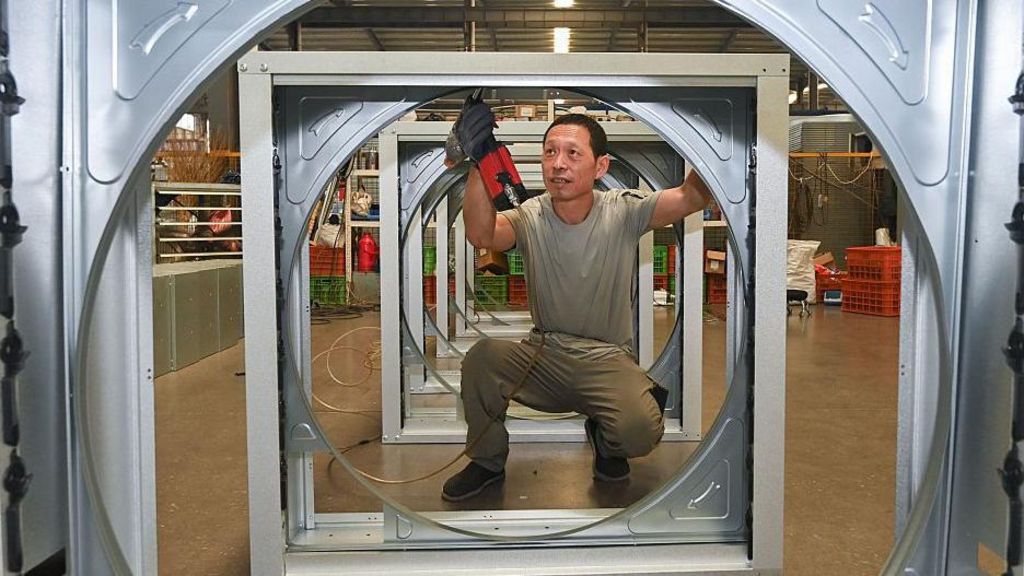
    BEIJING, April 16, 2026 — China’s State Council has unveiled a revised set of policy guidelines to advance systemic reform of the country’s investment approval mechanism, with the core goals of cutting bureaucratic red tape, elevating approval service efficiency, and unlocking larger volumes of high-quality effective investment across the country.

    Released publicly on Wednesday by the General Office of the State Council, the new framework lays out targeted adjustments for the two major categories of investment projects in China: government-backed and privately led initiatives. For projects funded through public resources, the guidelines commit to further clarifying and optimizing the distribution of approval authority across different levels of government, alongside the introduction of a lifelong accountability system for project decision-making. This measure is designed to enforce greater responsibility among official decision-makers and reduce misallocation of public investment funds.

    For projects driven by private and enterprise investment, the policy requires continuous dynamic updates to the official government approval catalog, standardized documentation for project registration, and stronger alignment between national investment policies, industrial development strategies, and production factor management frameworks. The coordinated policy design aims to reduce policy friction and give enterprises greater clarity when planning new investment initiatives.

    To tackle longstanding complaints about slow and fragmented approval processes, the guidelines outline concrete steps to streamline administrative workflows for all investment projects, standardize regulatory oversight of public project bidding and tendering, crack down on prevalent irregularities such as bid-rigging and collusive bidding, and upgrade digital systems for project information filing. These changes are expected to cut the overall timeline for project launch and reduce compliance costs for investors.

    In closing, the policy document emphasizes that relevant regulatory departments will have their oversight responsibilities strengthened, and a new performance evaluation system aligned with China’s national goal of high-quality development will be established to assess the outcomes of the reform and investment implementation.

  • Plastic packaging runs short in Asia amid conflict

    Plastic packaging runs short in Asia amid conflict

    The ongoing Iran conflict has triggered an unexpected shake-up in Asia’s $200 billion packaging industry, disrupting critical plastic raw material supplies, sending polymer prices soaring to four-year highs, and accelerating a long-discussed shift toward eco-friendly paper-based alternatives that environmental campaigners have pushed for decades.

    The disruption traces back to the conflict’s impact on Middle Eastern energy and petrochemical exports—supply chains that Asia, the world’s largest plastic consuming and producing region, is deeply dependent on for raw feedstock. With oil and petrochemical flows choked off, plastic input costs have skyrocketed, forcing businesses across multiple sectors to reevaluate their reliance on conventional single-use plastic packaging.

    South Korean cosmetic packaging manufacturer Yonwoo, which has long offered a line of sustainable paper-based tubes and pouches, has emerged as an early beneficiary of the market shift. Senior manager Kim Min-sang, who works at parent company Kolmar Korea—a supplier to global beauty giant L’Oreal—told reporters that inquiries for the firm’s paper packaging options have tripled since the conflict escalated. Unlike traditional plastic packaging, Yonwoo’s paper tubes for products such as sunscreen and body lotion use just 20% of the plastic found in conventional alternatives. While initial demand for these options came almost exclusively from brands prioritizing sustainability goals, Kim says growing interest is now being driven entirely by plastic supply uncertainty, with further demand growth expected if supply chain disruptions drag on.

    Across the region, the crisis is exposing just how deeply reliant Asian economies have become on plastic, even as the region grapples with a global plastic pollution crisis that it contributes to disproportionately. According to a 2025 study published in *Nature* by researchers from Tsinghua University, Asia accounts for more than one-third of all plastic waste that leaks into global ecosystems, driven by inadequate waste management infrastructure in many low-income Southeast Asian nations. Per capita, Japan ranks second only to the United States in plastic production and consumption, making the country particularly vulnerable to current supply disruptions.

    Japanese retailers are already sounding alarm bells over impending shortages of core plastic products including food trays and shopping bags. Kensuke Takahashi, product manager at Marutake Supermarket located in Saitama, just outside Tokyo, says industry wholesalers have repeatedly warned of incoming supply gaps. “We now have to discuss how to sell our products if trays are no longer supplied at all,” Takahashi said. “I’m very worried. We really don’t know what will happen.” Major Japanese plastic manufacturers including Mitsubishi Chemical and Sanipak, which produce plastic bags and food cling wrap, have announced that they will hike prices for selected products by roughly 30% in the coming weeks to offset spiking raw material costs.

    The disruption has already pushed some companies to make abrupt switches to alternative packaging. In Malaysia, leading dairy producer Farm Fresh has confirmed it has temporarily transitioned to paper-based milk cartons to avoid production halts. But for many small and medium-sized manufacturing firms, switching to alternatives is not a quick or simple option.

    Gaone, a 20-year-old South Korean firm that produces plastic packaging for face masks, is already facing extended order delays. Sales team manager Han Kyung-hun says the company is now warning clients of order lead times stretching to eight weeks, and projects that the supply crunch will hit its annual revenue significantly. “I hope things return to normal as soon as possible,” Han said, noting that even if the Iran conflict ends immediately, full supply chain recovery could still take up to two months.

    The current crisis comes as global progress on curbing plastic production remains stalled. Negotiations for a binding global treaty to address plastic pollution broke down last year, after the United States and major plastic-producing nations rejected a proposal led by the European Union to implement mandatory caps on new plastic production. While the current market-driven shift to paper alternatives has moved faster than years of policy negotiations, many industry analysts note that the transition is still largely a reactive short-term fix, rather than a permanent, structured shift toward sustainable packaging.

  • Tone-deaf, expensive tourism songs draw a lot of flak

    Tone-deaf, expensive tourism songs draw a lot of flak

    Two costly, government-funded tourism music projects in central and southwest China have drawn widespread public and official condemnation for misspending public funds, emerging as a high-profile test case for a new national campaign aimed at reshaping how Chinese officials measure effective governance.

    The first project, overseen by Hubei Provincial Department of Culture and Tourism in partnership with the local Hubei College of the Arts, carried a 3 million yuan ($440,000) price tag to produce a single tourism promotion song. The second, in Sichuan’s Zhaojue County — a region that emerged from extreme poverty only recently and still relies almost entirely on higher-level government transfer payments to cover its annual fiscal expenditure — allocated 1.49 million yuan to create and promote three similar music productions.

    An official investigation into the projects found multiple critical flaws in their planning and approval. Neither initiative underwent rigorous assessment of their potential public outreach impact, and both reflected a growing problematic trend of officials chasing trendy vanity projects rather than addressing grounded, practical public needs. The review also found that the agencies behind the projects violated central government directives calling for tighter controls on public spending, a rule that requires party and government bodies to set an example of cost-cutting and fiscal prudence.

    Officials further noted that the decision-making process for both projects lacked due rigor, with final approvals driven heavily by subjective preference rather than data-driven, community-centered analysis. These two cases, the official statement emphasized, are not isolated incidents: they are emblematic of a broader, systemic issue in how some local officials evaluate and pursue professional performance.

    The public criticism of these ill-conceived tourism projects comes on the heels of a party-wide study campaign launched by the Communist Party of China Central Committee in late February 2026, focused on entrenching what the party frames as “a correct understanding of what it means to perform well”. The campaign, scheduled to run through July, is designed to root out misguided governance approaches that lead to wasteful vanity projects, hidden fiscal risks, unnecessary burdens on local communities, and erosion of public trust in government.

    This performance-focused framework serves as a core guiding principle for officials nationwide, stressing that effective governance should be measured by tangible improvements to public well-being and long-term sustainable outcomes, delivered through thoughtful decision-making and concrete on-the-ground action — even when those benefits do not materialize immediately. This latest initiative marks the continuation of the party’s ongoing efforts to strengthen internal self-governance, following a 2025 campaign focused on reforming official conduct.

    Party analysts and policy experts agree the campaign arrives at a pivotal moment for China. As the country enters the first year of its 15th Five-Year Plan (2026-2030), a key developmental stage on the path to achieving basic modernization by 2035, the success of the plan’s long-term goals depends entirely on how officials interpret and implement policy priorities.

    Li Zhiyong, a professor at the Party School of the CPC Central Committee, explained that practices like ignoring local economic and social conditions, blindly following trendy project types, and prioritizing quick, visible results over long-term foundational work could create major barriers to progress over the course of the five-year period.

    Wang Junwei, director of the Academic and Editorial Committee at the Institute of Party History and Literature of the CPC Central Committee, echoed this view, noting that officials must balance a focus on short-term visible achievements with investment in less visible, foundational work that lays the groundwork for sustained long-term development. This balanced approach, Wang emphasized, is essential to maintaining steady national progress.

    The official statement outlining the findings of the tourism project investigation stressed that all future policymaking must center public well-being, improve the efficiency of public expenditure, and enforce strict disciplinary measures against wasteful spending. “Every yuan of public funds should be directed to the most pressing needs, so that people can see and feel tangible, meaningful improvements in their daily lives,” the statement concluded.

  • Trump says war ‘close to over’, hints at fresh talks

    Trump says war ‘close to over’, hints at fresh talks

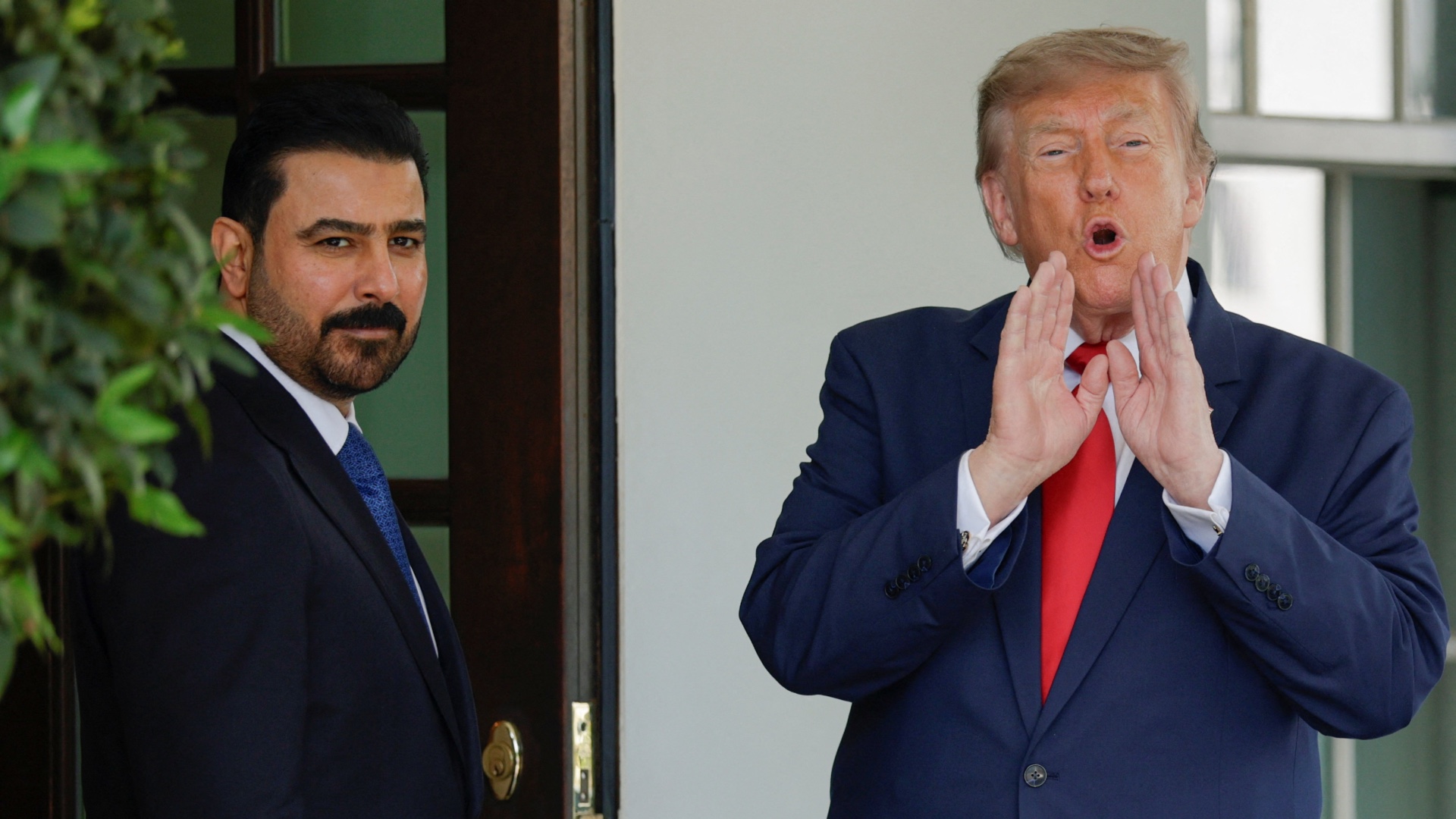
    A stark contradiction has emerged between U.S. President Donald Trump’s optimistic remarks on the US-Iran conflict and unconfirmed reports of expanding American military presence in the Middle East, as regional diplomatic efforts gain momentum to de-escalate tensions. Speaking in an interview with Fox Business host Maria Bartiromo on Wednesday, Trump asserted that the ongoing standoff with Tehran is ‘very close to being over’, adding that he believes Iranian authorities are eager to reach a negotiated settlement. He also dropped a hint that a new round of bilateral talks could be held in Pakistan in the coming days.

    While the Trump administration has not publicly confirmed any new troop movement, The Washington Post first reported that thousands of additional U.S. service members will be deployed to the region in the coming days to pressure Iran into accepting a deal favorable to Washington. Iran has yet to issue an official response to Trump’s talk of new negotiations, but Pakistan’s Ministry of Foreign Affairs released a public statement this week outlining an upcoming diplomatic tour by Pakistani Prime Minister Shehbaz Sharif, who will visit Saudi Arabia, Qatar, and Turkiye between April 15 and 18.

    Officials note the visits are centered on advancing bilateral cooperation and discussing regional peace and security priorities. A key stop on Sharif’s tour is Turkiye, where he will take part in the 5th Antalya Diplomacy Forum and hold one-on-one talks with Turkish President Recep Tayyip Erdogan and other visiting global leaders.

    The United Nations has already signaled cautious optimism for renewed negotiations. During a UN briefing on Tuesday, Secretary-General Antonio Guterres said that following a call with Pakistani Deputy Prime Minister Mohammad Ishaq Dar, the UN has received indications that US-Iran talks are highly likely to restart. Guterres also praised Pakistan for taking the diplomatic initiative to facilitate dialogue and advance peace in the Middle East.

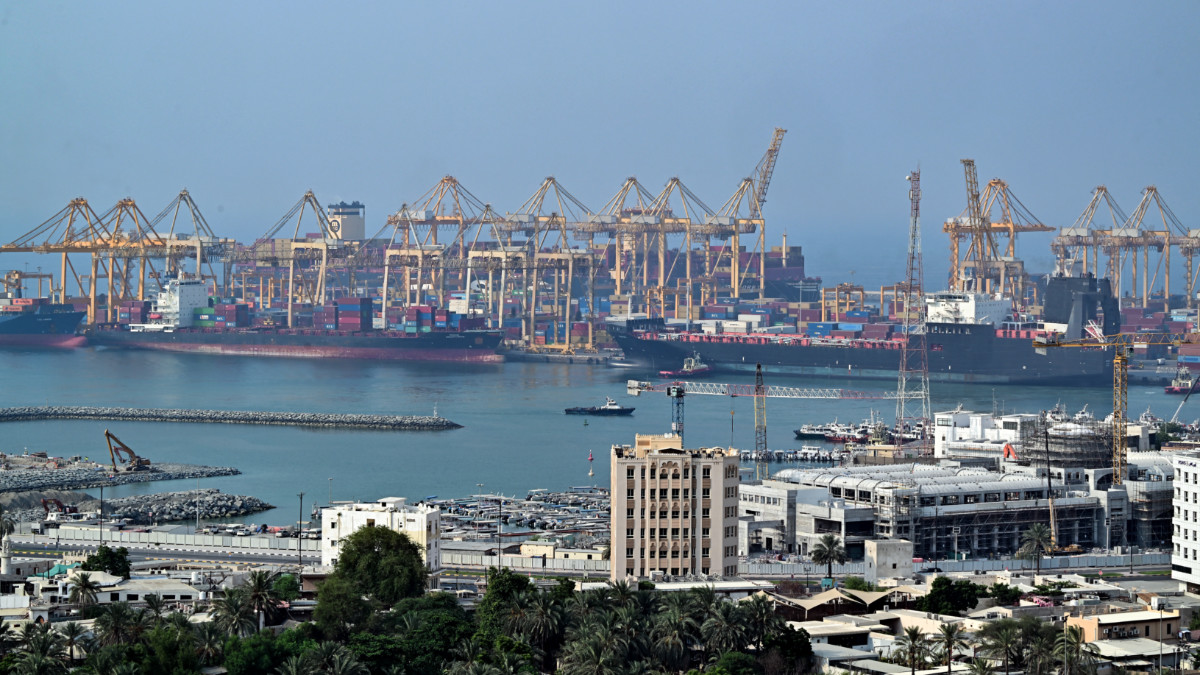
    Alongside diplomatic efforts, the U.S. military has maintained aggressive pressure on Iran through a full naval blockade of Iranian ports along the Strait of Hormuz, a critical global chokepoint for oil and energy trade. In a post on X Wednesday, U.S. Central Command confirmed that American guided-missile destroyers are part of the blockade force, which enforces restrictions on all vessels entering or exiting Iranian coastal waters, regardless of their flag. ‘A blockade of Iranian ports has been fully implemented as US forces maintain maritime superiority in the Middle East,’ U.S. Central Command chief Admiral Brad Cooper said in a statement.

    Despite the formal blockade, however, two commercial vessels managed to reach Iranian ports this week by adjusting their automatic identification system (AIS) data, according to a Xinhua News Agency report citing maritime intelligence firm Lloyd’s List. The two Iran-flagged container ships, originally registered as heading for the major southern Iranian port of Bandar Abbas, changed their AIS destination to the broader label ‘PG Ports’, short for Persian Gulf Ports, and successfully completed their journey to Bandar Abbas on Tuesday.

    Iran’s ambassador to Pakistan, Reza Amiri Moghadam, has condemned the naval blockade as a dangerous and irresponsible act. He described the move as ‘a reckless misstep meant possibly for a dignified exit and face-saving’ for the United States, adding that the action is designed to create the narrative that Washington is imposing its will through military force. Moghadam argued the blockade serves to justify past military deployments, aggressive rhetoric, human casualties, and the heavy financial burden of the conflict on American taxpayers.

    As diplomatic teams work to finalize the date and location for the next round of US-Iran talks, the international community is also turning attention to another ongoing conflict in the Middle East: the standoff between Israel and Lebanon. A group of 10 countries including Canada, the United Kingdom, Australia, Japan, Brazil, Colombia, Indonesia, Jordan, Sierra Leone, and Switzerland issued a joint statement this week expressing deep concern over the deteriorating humanitarian situation and mass displacement crisis in Lebanon. Currently, Israeli and Lebanese delegations are holding direct ambassador-level talks at the U.S. State Department in Washington, with Israel pushing for the full disarmament of Hezbollah and Lebanon calling for an immediate ceasefire.

  • China to boost two-way urban-rural job mobility

    China to boost two-way urban-rural job mobility

    BEIJING – In a major move to address long-standing divides in China’s labor market and unlock inclusive growth, three central government departments jointly published new policy guidelines on Wednesday that outline a comprehensive package of reforms to integrate urban and rural employment systems, enable smoother two-way worker mobility, and break down barriers between segmented urban and rural labor sectors.

    Released through a collaborative effort by the Ministry of Human Resources and Social Security, the National Development and Reform Commission, and the Ministry of Agriculture and Rural Affairs, the new framework sets a core goal of delivering high-quality, full employment for workers across both urban and rural regions of the country.

    The policy suite targets five key priority areas: expanding accessible employment opportunities, building public employment services that guarantee equal access for all workers regardless of residential background, rebalancing the distribution of vocational training resources, strengthening protections for fundamental worker rights, and expanding targeted support for vulnerable jobseekers.

    To expand local job opportunities closer to rural communities, the guidelines call for growing employment offerings at the county and township levels. The policy specifically highlights untapped employment potential in consumer-facing sectors, including cultural tourism, the creator (debut) economy, ice-and-snow leisure economy, and inbound tourism. It also prioritizes the creation of grassroots-level positions tailored to young jobseekers, particularly new graduates from colleges and universities.

    To reduce information and service gaps between regions, local administrative bodies are urged to develop balanced, easy-to-access employment service networks that span both urban and rural areas. The guidelines also encourage enhanced cross-regional labor matching and public information sharing, alongside formal policy support for skilled urban workers who wish to launch businesses or secure employment in rural regions.

    On the skills development front, the framework proposes a new integrated vocational training model, alongside a policy change to relax age restrictions for enrollment at vocational technical schools, a move designed to open up skills training opportunities to more rural young people.

    For the large population of rural migrant workers employed in urban centers, the guidelines place strong emphasis on upholding core labor and social rights. Key commitments include ensuring equitable access to childcare and compulsory education for migrant workers’ children, raising the share of migrant children enrolled in urban public schools, and expanding coverage of the national housing provident fund scheme to include more migrant workers. Eligible cities are also encouraged to add qualified migrant workers to local housing assistance programs, reducing the financial burden of urban relocation.

    For disadvantaged jobseekers facing structural barriers to employment, the guidelines strengthen existing targeted employment assistance programs. Particular focus is placed on supporting workers at risk of falling back into poverty, with provisions to better leverage existing urban and rural social safety net policies to prevent joblessness from leading to economic hardship.

    The policy sets a clear 5-year implementation timeline aligned with China’s 15th Five-Year Plan period, which runs from 2026 to 2030. By the end of the period, authorities aim to fully smooth cross-sector employment channels, rebalance access to employment services and training resources between urban and rural areas, and build a far more equitable national employment environment. These changes are designed to not only achieve the core goal of high-quality full employment but also underpin broader high-quality economic and social development across the country.

  • Conflict takes toll on historical sites

    Conflict takes toll on historical sites

    As armed conflict continues to roil the Middle East, a growing international outcry has emerged over the irreversible damage inflicted on centuries of cultural heritage, with at least 131 historical sites in Iran already harmed by joint US-Israeli strikes and escalating threats to culturally significant landmarks across Lebanon amid ongoing Israeli bombardment. Experts warn that this destruction goes far beyond what is commonly accepted as unavoidable collateral damage of war, representing a deliberate erasure of shared human history.

    Neda Zoghi, an Iranian artist and civilization scholar with a doctorate in Islamic art who currently serves as a researcher at the Asia West East Centre based in Kuala Lumpur, Malaysia, argues that the scale of destruction points to a coordinated attack on the identity of regional civilizations. “When over 100 cultural heritage sites and museums sustain deliberate or negligent destruction in a matter of weeks, we are confronting something far more calculated — the systematic dismantling of a civilization’s physical memory,” Zoghi explained in comments on the escalating crisis.

    Per a Friday report from Xinhua News Agency, Seyed Reza Salehi-Amiri, Iran’s Minister of Cultural Heritage, Tourism, and Handicrafts, confirmed that the damage spans 20 of Iran’s provinces, with 131 irreplaceable historical and civilization-related monuments sustaining harm from the strikes. Photographic evidence released in early April captured the devastating impact: visitors walking through the fire-scarred, structurally damaged interiors of Tehran’s iconic Golestan Palace, a UNESCO World Heritage Site and one of Iran’s most recognizable cultural landmarks, serve as a stark visual testament to the destruction.

    As strikes continue, concerns are also mounting that Lebanon’s rich array of cultural and historical properties face the same fate. The country’s millennia-long history has left it with thousands of archaeological sites, historic city centers, and heritage landmarks, many of which already sit in active conflict zones along the Lebanon-Israel border. Cultural heritage advocates warn that without urgent intervention to protect these sites, the region could lose irreplaceable pieces of global cultural history that have survived centuries of conflict and change.

    The destruction of cultural heritage during armed conflict is widely recognized as a violation of international humanitarian law, which explicitly prohibits deliberate attacks on historic monuments and cultural sites unless they are repurposed for military use. The scale of damage reported in Iran has drawn growing condemnation from cultural organizations across the globe, with many calling for an immediate halt to strikes that target or put at risk sites of cultural significance.

  • China’s top garden expo opens in Wenzhou in East China

    China’s top garden expo opens in Wenzhou in East China

    WENZHOU, Zhejiang — China’s most prestigious international landscaping gathering, the 15th China International Garden Expo, officially opened its doors to the public on Wednesday in the eastern Chinese city of Wenzhou, spotlighting the nation’s ongoing dedication to advancing ecologically friendly urban transformation. First launched in 1997, the expo has long held status as China’s highest-profile and most influential international event in the landscaping and urban greening sector. Over nearly three decades, it has transformed far beyond its original focus as a showcase for floral displays and ornamental gardening, growing into a multifaceted global platform that brings together ecological restoration projects, urban renewal initiatives, and cultural heritage preservation under one umbrella.

    This year’s iteration of the expo marks a notable step forward in sustainable event planning, with organizers integrating cutting-edge green and low-carbon technologies across every stage of development. A core priority of the 2026 expo is aligning large-scale event infrastructure with broader local urban renewal goals, ensuring the park and surrounding areas deliver long-term benefits to Wenzhou residents long after the expo concludes. In a break from traditional large-scale event development models, this year’s expo emphasizes grassroots public participation, inviting local citizens to take part as co-builders of the venue and contributors to programming.

    More than 600 public and professional events are scheduled across the expo’s run, organized around four central pillars: ecological empowerment, cultural revitalization, industrial upgrading, and international dialogue. The programming has been designed to create immersive, accessible experiences that blend the expo’s core mission with tourism, youth engagement, everyday community use, and technological innovation, breaking down barriers between professional landscaping displays and public recreation.

    Since the venue, Wenzhou Garden Expo Park, opened for a soft trial operation on February 14, it has already drawn overwhelming public interest. As of the official opening, the park has welcomed more than 2.18 million visits, averaging 40,000 visitors per day in the lead-up to the launch.
    To mark the official opening of the expo, organizers released the landmark Wenzhou Declaration on opening day. The document lays out a global call to action, advocating for a people-first approach to urban planning, heightened global collaboration on environmental protection, and the exploration of a Chinese model for building inclusive, sustainable modern cities that center the needs of all residents.