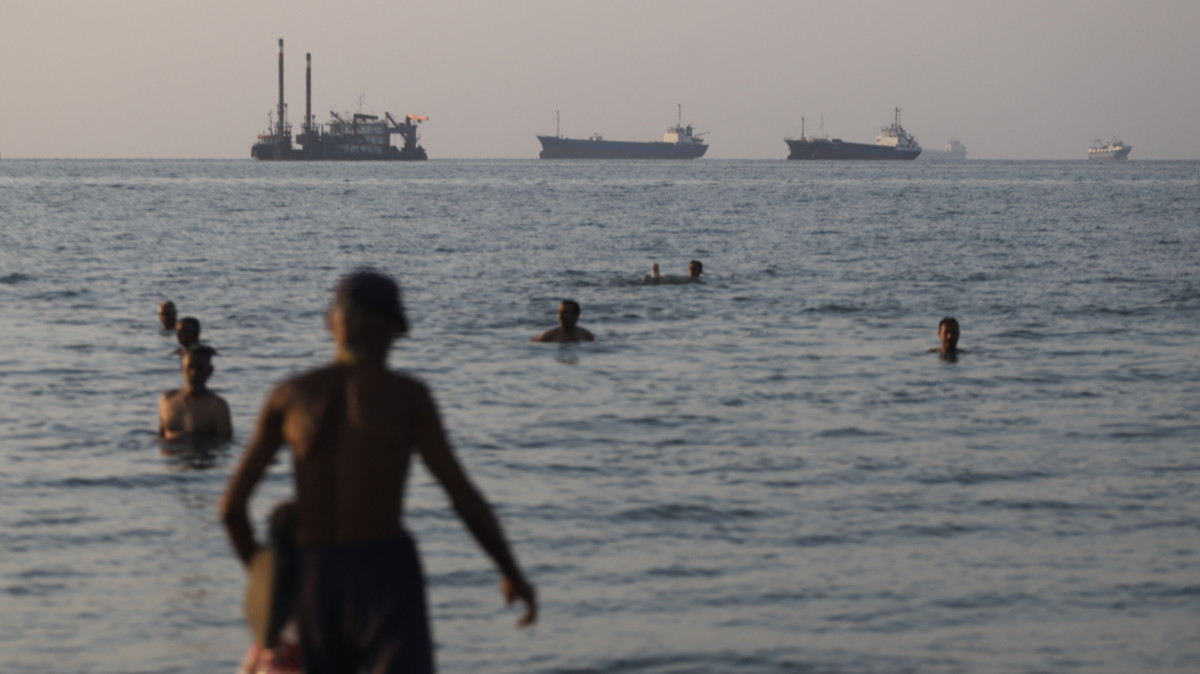
In a series of public remarks delivered Friday, senior United States government officials have confirmed that the US Navy is carrying out nightly escort missions for dozens of commercial tankers transiting the Strait of Hormuz, moving millions of barrels of crude oil through the critical chokepoint amid an ongoing regional conflict that has disrupted global energy supplies.
US Energy Secretary Chris Wright told the Bloomberg Energy Security Executive Briefing held in Houston, Texas on Friday that tankers under American protection currently carry approximately seven million barrels of oil through the Strait of Hormuz each day. That volume accounts for roughly half of the total daily traffic that passed through the waterway before the US-Israeli military campaign against Iran began on February 28. Wright noted that current shipping volumes are continuing to climb, closing the gap left by the post-conflict blockade.
“Flows today are approaching half of the gap, and they’re rising,” Wright told attendees at the briefing.
Secretary of the Interior Doug Burgum echoed Wright’s confirmation in an interview with CNBC Friday, adding that the operation escorts up to 20 vessels through the strait each night, with some nights seeing more than 20 commercial ships pass through under US protection. Burgum emphasized that the operations have already moved large volumes of crude out of the Gulf, and that global energy markets have already priced in this recovery ahead of mainstream media coverage.
“Some nights, more than 20 ships [are] coming out,” Burgum said. “Substantial amounts of oil have come out of the strait. I think the markets figured that out before some of the tabloid press did, because you’re starting to see a softening of oil prices.”
The confirmation comes after US President Donald Trump earlier this week claimed that the US had been carrying out secret escort operations for commercial vessels leaving the Gulf. Trump claimed that the operations have already allowed more than 200 commercial ships and 100 million barrels of oil to bypass Iran’s blockade of the Strait of Hormuz.
As ceasefire negotiations between Washington and Tehran continue, it remains unclear whether Iran has implicitly approved the ongoing escort operations. Earlier this week, an American Apache attack helicopter operating in the waterway was shot down, according to US media, which linked the aircraft to the escort mission. Iranian officials have downplayed the severity of the incident, offering few details on the encounter.
Global oil markets saw extreme volatility after the US and Israel launched their military campaign against Iran, with international benchmark Brent crude spiking to $112 per barrel in the immediate weeks after the conflict began. Energy analysts have long noted that public exchange prices have not fully reflected the actual premiums paid for physical crude cargoes, particularly in Asia, a region that relies heavily on crude exports from Gulf producing states.
Many market analysts predicted even steeper price spikes after Iran seized control of the Strait of Hormuz and imposed a blockade on energy shipments from neighboring Gulf states. In response, the US implemented its own counter-blockade that removed Iranian crude barrels already under international sanctions from global markets.
Global oil markets stabilized after a series of policy interventions: Western nations released 400 million barrels of crude from their strategic emergency reserves, while China made an unprecedented cut to its crude import volumes to reduce demand. China’s May crude imports fell roughly three million barrels per day compared to year-ago levels, according to trade data.
Neither Burgum nor Wright offered a clear timeline for how long the nightly escort operations will continue. But the operations have already coincided with a steady downward trend in global oil prices this month. Brent crude, the global benchmark, has fallen roughly 20 percent over the past 30 days. On Friday, the benchmark traded 3.5 percent lower at $87.17 per barrel, as both Iran and the US publicly signaled that a new ceasefire agreement is within reach.