标签: Asia

亚洲

  • UAE contributes $5 million to support emergency humanitarian response in Sudan

    UAE contributes $5 million to support emergency humanitarian response in Sudan

    The United Arab Emirates has formally pledged $5 million in humanitarian assistance to Sudan through a newly signed agreement with the United Nations Office for the Coordination of Humanitarian Affairs (OCHA). The contribution, channeled through the Sudan Humanitarian Fund, aims to bolster emergency response capabilities and address critical needs among conflict-affected populations.

    Dr. Tareq Ahmed Al Ameri, Chairman of the UAE Aid Agency, emphasized the nation’s ongoing commitment to supporting international relief efforts amid Sudan’s devastating civil war. “The UAE continues its urgent humanitarian response and stands in solidarity with those affected by this tragic conflict,” stated Dr. Al Ameri, highlighting the worsening displacement crisis that has forced thousands into neighboring Chad, South Sudan, Uganda, and Ethiopia.

    The agreement was formally executed by Rashid Salem Al Shamsi, Executive Director of Logistics Support at the UAE Aid Agency, and Sajeda Al Shawa, Head of OCHA’s UAE office. Al Shawa expressed profound appreciation for the contribution, noting that “this significant funding will enhance collective efforts led by the United Nations to reach vulnerable communities in Sudan and support timely delivery of life-saving assistance.”

    This latest commitment reinforces the UAE’s decade-long humanitarian engagement with Sudan, totaling $4.24 billion in assistance between 2015 and 2025. Since the current crisis erupted in 2023, the Emirates has allocated $784 million specifically for humanitarian aid. The UAE has concurrently advocated for a humanitarian ceasefire to ensure civilian protection and facilitate unimpeded aid delivery, underscoring the necessity of collaborative action with regional and international partners to achieve stability and peace for the Sudanese people.

  • China needs to invest bigger at home to sustain prosperity

    China needs to invest bigger at home to sustain prosperity

    China’s economy achieved its official growth target of 5% in 2025, according to official GDP figures, but this headline accomplishment conceals significant underlying vulnerabilities. While exports surged to a record-breaking $1.2 trillion trade surplus despite ongoing trade tensions with the United States, the economy faces mounting domestic challenges that threaten sustainable growth.

    The export sector’s remarkable performance, driven by successful diversification to Southeast Asian, South American, European, and African markets, offset concerning weaknesses in domestic consumption. December retail sales grew at a meager 0.9% year-on-year—the slowest pace since late 2022—highlighting persistent consumer reluctance to spend. This consumption weakness appears structural rather than temporary, rooted in high savings rates, property market uncertainties, and concerns about job security.

    Simultaneously, China confronts demographic headwinds as its population declined for the fourth consecutive year in 2025, with birth rates hitting record lows. This accelerating aging population presents long-term economic challenges that require substantial productivity gains to overcome.

    Fiscal constraints further complicate the economic landscape. Local governments face mounting debt burdens, reduced revenues from land sales, and increasing social program obligations, limiting their capacity for stimulus spending. Investment in fixed assets declined by 3.8% in 2025, with property investment plummeting approximately 17%.

    The fundamental challenge lies in redirecting China’s substantial national savings—which reached 43.4% of GDP in 2024—toward productive domestic investment rather than export surpluses that fuel international trade tensions. The transition toward a more capital- and knowledge-intensive growth model, particularly in technology services and high-value manufacturing, appears essential for navigating these structural challenges.

  • Mainland denounces Taiwan-US trade deal as ‘sellout pact’

    Mainland denounces Taiwan-US trade deal as ‘sellout pact’

    Chinese officials have issued a stern condemnation of the recently signed trade agreement between Taiwan and the United States, characterizing it as an unequal pact that undermines Taiwan’s economic sovereignty and industrial foundation. During a press briefing on Wednesday, Peng Qing’en, spokesperson for China’s State Council Taiwan Affairs Office, articulated Beijing’s firm opposition to what he termed a “sellout pact” negotiated under duress.

    The controversial agreement, which reduces US tariff rates on Taiwanese imports to 15 percent, requires substantial reciprocal commitments from Taiwan. According to official statements, Taiwan has pledged approximately $500 billion in combined investments and credit guarantees directed toward American semiconductor and artificial intelligence sectors. This arrangement includes the potential transfer of up to 40 percent of Taiwan’s semiconductor production capacity to the United States.

    Peng asserted that negotiations occurred under significant economic pressure from Washington, which allegedly utilized tariff leverage to extract concessions that could fundamentally weaken Taiwan’s industrial competitiveness. The spokesperson criticized Taiwan’s Democratic Progressive Party administration for presenting what he described as “unilateral concessions” as mutually beneficial cooperation, labeling the arrangement a “complete capitulation” to American economic demands.

    The financial scale of Taiwan’s commitment represents approximately 80 percent of the island’s foreign exchange reserves, equivalent to a per capita contribution of NT$680,000 (approximately $21,489) from each Taiwanese citizen. Peng warned that such substantial resource diversion could transform Taiwan from a technological hub into an economically hollowed-out territory, jeopardizing both industrial stability and economic security.

    Beijing’s response emphasized that the agreement demonstrates the inherent risks of pursuing independence policies and relying on external powers rather than embracing cross-strait cooperation. Officials suggested that without the support of mainland China, Taiwan remains vulnerable to economic pressure from foreign interests.

  • India to withdraw diplomats’ families from Bangladesh, official says

    India to withdraw diplomats’ families from Bangladesh, official says

    India has initiated the evacuation of diplomatic families and dependents from Bangladesh citing heightened security concerns ahead of the country’s February 12 general election. The decision comes amid escalating bilateral tensions that have strained relations between the South Asian neighbors.

    According to an anonymous Indian official speaking on Wednesday, the withdrawal constitutes part of ‘internal readjustments’ in response to security threats. The move follows India’s December summons of Bangladesh’s high commissioner to express concerns about deteriorating security conditions, particularly regarding threats against the Indian mission in Dhaka.

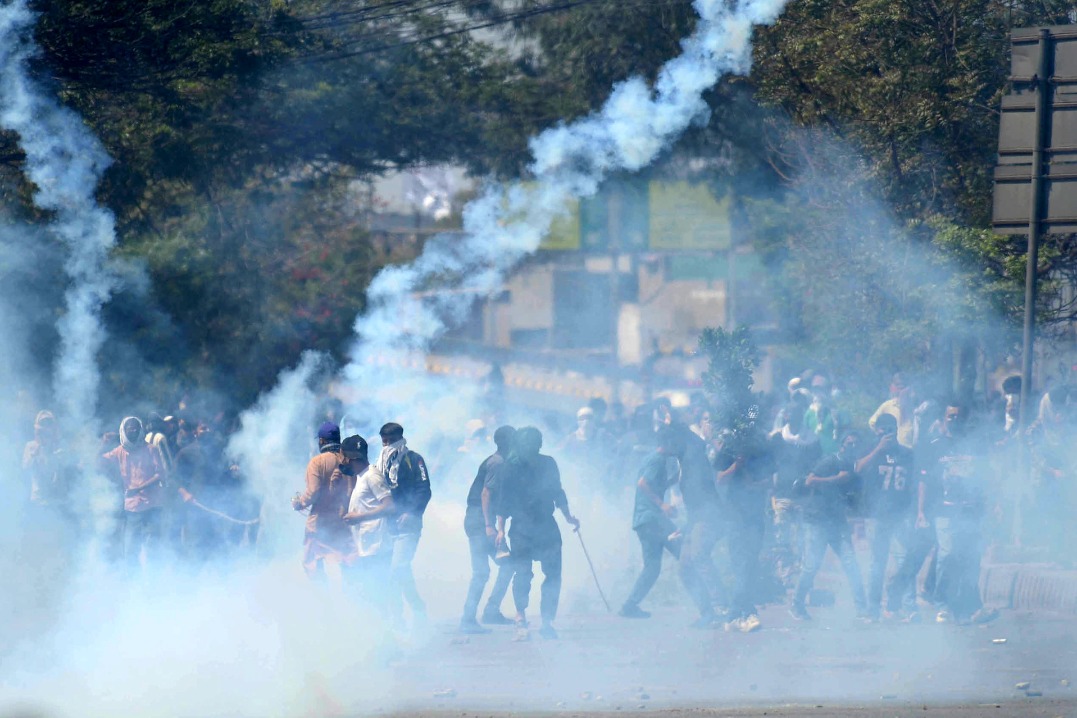
    The current political climate in Bangladesh has been volatile since former Prime Minister Sheikh Hasina sought refuge in India in 2024 following deadly protests that forced her departure. Campaigning for the upcoming election begins Thursday, already triggering demonstrations and counter-protests across the nation.

    The interim government led by Nobel laureate Muhammad Yunus has consistently demanded Hasina’s extradition while simultaneously dismissing India’s concerns about violence targeting minority Hindu communities. Neither country’s foreign ministry has provided immediate commentary on the evacuation decision, and the timeline for families’ return remains unspecified.

    This development marks a significant deterioration in diplomatic relations between the two nations, reflecting the ongoing political instability surrounding Bangladesh’s electoral process and the unresolved status of its former leader.

  • Dubai: Gold prices jump over Dh15 per gram to another record high, could touch Dh600 soon

    Dubai: Gold prices jump over Dh15 per gram to another record high, could touch Dh600 soon

    Dubai’s gold market witnessed unprecedented gains on Wednesday as prices surged dramatically at market opening, setting a third consecutive record high. The precious metal’s remarkable rally saw 24K gold escalate by Dh15.75 to reach Dh586.25 per gram, bringing it within striking distance of the psychological Dh600 barrier.

    The comprehensive price surge affected all variants: 22K gold climbed to Dh542.75 per gram, 21K advanced to Dh520.5, 18K reached Dh446.25, while 14K gold settled at Dh348.0 per gram. This sustained upward trajectory reflects deepening global economic anxieties and geopolitical uncertainties.

    International markets mirrored Dubai’s bullish trend, with gold breaching the $4,800 milestone for the first time in history. At 9:15 AM UAE time, spot gold traded at $4,869.7 per ounce, registering a substantial 2.28 percent increase. This global surge coincides with escalating tensions between the United States and European Union regarding Greenland, adding fresh momentum to gold’s safe-haven appeal.

    Ole Hansen, Head of Commodity Strategy at Saxo Bank, contextualized the rally: ‘The renewed US-Europe standoff over Greenland has acted as a fresh catalyst for gold and silver demand, reinforcing an already powerful hard-asset narrative. Importantly, this rally predates the current dispute and shows no signs of abating. The Greenland episode has effectively poured fresh fuel on a rally that has been building for months, driven by an increasingly uncomfortable macro and geopolitical backdrop.’

    Hansen further noted the concerning performance of traditional safe havens, observing that the dollar, yen, and US Treasuries have all struggled to provide their customary stability as long-end yields rise due to credibility concerns rather than growth optimism.

    Market analysts suggest that if the current momentum persists amid ongoing global uncertainties, Dubai’s gold prices could realistically approach the Dh600 per gram threshold in the near term. Some international forecasts even project gold potentially reaching $5,000 per ounce during the first quarter, underscoring the metal’s strengthened position in contemporary portfolio strategies.

  • Japan court sentences ex-PM Abe’s assassin to life in prison, NHK reports

    Japan court sentences ex-PM Abe’s assassin to life in prison, NHK reports

    A Japanese court has delivered a life imprisonment verdict to Tetsuya Yamagami, the 45-year-old perpetrator behind the assassination of former Prime Minister Shinzo Abe in July 2022. The Nara District Court’s ruling concludes a landmark case that has captivated Japan for over three years, marking one of the most significant political violence incidents in the nation’s post-war history.

    Yamagami, who admitted to crafting a homemade firearm and fatally shooting Abe during a campaign speech in western Nara, faced certain conviction following his October court admission. Prosecutors had characterized the assassination as “an extremely grave incident unprecedented in post-war history” during last month’s sentencing request.

    The court proceedings revealed complex motivations behind the attack, with Yamagami expressing resentment toward the Unification Church after his mother’s substantial donations to the organization created severe financial distress for his family. Media reports indicated the assailant targeted Abe due to the former prime minister’s recorded video message to an event affiliated with the church.

    This assassination exposed extensive connections between Japan’s ruling Liberal Democratic Party (LDP) and the controversial religious group, with internal investigations revealing over hundred lawmakers maintained dealings with the organization. The disclosure has significantly eroded public trust in the long-dominant political party.

    Despite stepping down in 2020 citing health concerns, Abe remained Japan’s longest-serving prime minister with 3,188 days in office across two terms and continued to wield considerable influence within the LDP. His death created a political vacuum that has resulted in two leadership transitions and diminished party stability under current Prime Minister Sanae Takaichi, Abe’s political protégée.

    Internationally, Abe was recognized for forging strong diplomatic ties, particularly his unique relationship with former U.S. President Donald Trump, being the first foreign leader to meet Trump after his 2016 election victory. Their bond, strengthened through numerous golf meetings across both nations, continues to influence current Japan-U.S. relations under the Takaichi administration.

    Yamagami’s defense team argued for a reduced sentence of maximum 20 years, citing the defendant’s family hardships caused by the religious organization’s financial demands. The court ultimately rejected these mitigating circumstances in delivering Japan’s most severe punishment short of capital punishment.

  • Beijing becomes China’s second 5-trillion-yuan economy in 2025

    Beijing becomes China’s second 5-trillion-yuan economy in 2025

    Beijing has officially cemented its status as China’s second 5-trillion-yuan economy, achieving a remarkable GDP of 5.2 trillion yuan ($746.7 billion) in 2025 with a solid 5.4% year-on-year growth rate. This milestone places the capital city alongside Shanghai as the only two Chinese municipalities to surpass this monumental economic threshold.

    The city’s economic expansion was primarily fueled by extraordinary performance in advanced manufacturing sectors. The computer, communications, and electronic equipment manufacturing cluster witnessed a striking 20.2% annual growth, while the automotive industry accelerated with a 17.7% increase. Particularly noteworthy was the explosive growth in green technology and high-tech sectors, where new energy vehicle production skyrocketed by 140%, lithium-ion battery output surged by 120%, and service robot manufacturing advanced by 47.6%.

    Beijing’s export capabilities demonstrated significant strength, with large-scale industrial enterprises achieving a delivery value of 211.3 billion yuan—a 6.4% increase from the previous year. The automotive manufacturing sector led this charge with a substantial 24.6% export growth, followed by specialized equipment manufacturing at 10.8%.

    The service sector equally contributed to Beijing’s economic triumph, with information technology services reaching a combined added value of 1.2 trillion yuan after an 11% growth spurt. Simultaneously, the financial industry strengthened its position with an added value of 866.82 billion yuan, reflecting an 8.7% increase that underscores Beijing’s dual identity as both a technological and financial hub.

    This economic milestone reflects Beijing’s successful transition toward high-value industries and innovation-driven growth, positioning the capital as a model for urban economic development in China’s new era of quality-focused expansion.

  • Trump’s plane lands safely after ‘minor electrical issue,’ Davos trip to continue

    Trump’s plane lands safely after ‘minor electrical issue,’ Davos trip to continue

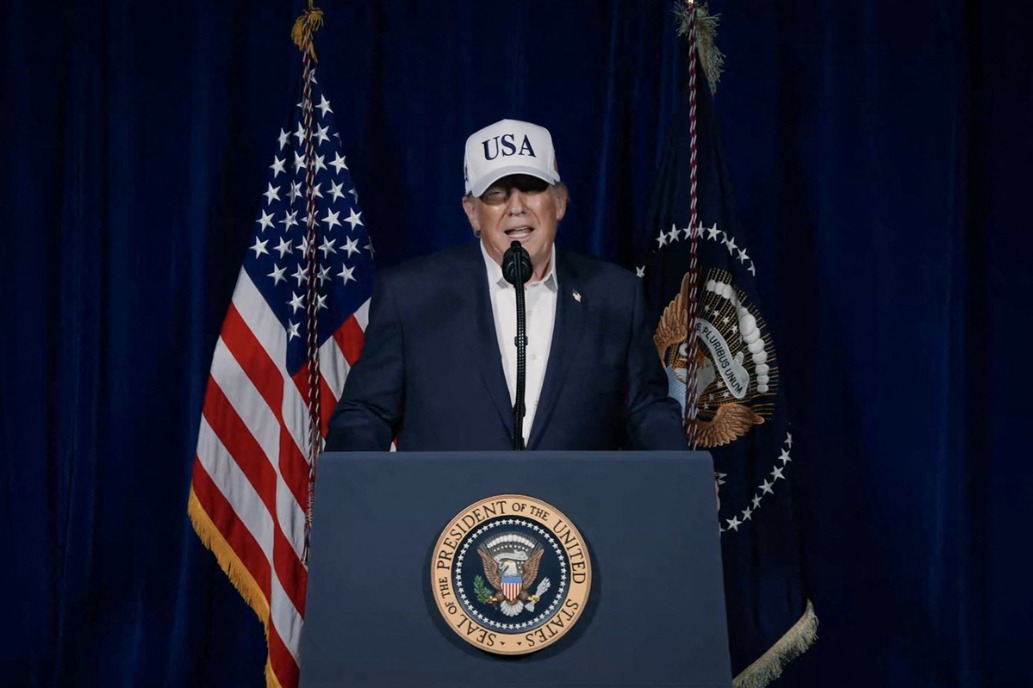
    President Donald Trump’s scheduled journey to the World Economic Forum in Davos, Switzerland, encountered a brief interruption Tuesday night when his official aircraft, Air Force One, returned to Joint Base Andrews shortly after departure. The decision to turn back was prompted by the flight crew’s identification of a minor electrical malfunction, according to an official statement from the White House.

    White House Press Secretary Karoline Leavitt confirmed that the aircraft landed without incident and that the presidential delegation would promptly transfer to a replacement aircraft to continue the transatlantic trip. The incident caused no injuries and was characterized as a minor technical issue.

    Historical context provided by aviation experts indicates that while such safety incidents involving U.S. presidential aircraft are uncommon, they are not without precedent. In 2011, an Air Force One flight carrying President Barack Obama aborted a landing approach in Connecticut due to adverse weather conditions. Similarly, in 2012, the vice presidential aircraft Air Force Two, transporting then-Vice President Joe Biden, sustained a bird strike during approach in California but landed safely without further complications.

    The swift aircraft change demonstrates the extensive contingency protocols surrounding presidential travel, ensuring that such technical issues cause minimal disruption to official schedules. President Trump is expected to join numerous other world leaders at the annual Davos forum, which serves as a critical platform for global economic dialogue.

  • Harry Brook feels lucky to still be England cricket captain after nightclub incident

    Harry Brook feels lucky to still be England cricket captain after nightclub incident

    COLOMBO, Sri Lanka — England’s white-ball cricket captain Harry Brook has publicly acknowledged what he describes as a “terrible mistake” following a physical altercation with a nightclub bouncer in New Zealand, an incident that nearly cost him his leadership position ahead of the current Sri Lanka tour.

    The confrontation occurred on October 31 in Wellington, just before the final ODI match against New Zealand, when Brook was reportedly denied entry to an establishment. The England and Wales Cricket Board responded by imposing a substantial £30,000 (approximately $40,300) fine and issuing a final conduct warning. Despite the disciplinary action, the board opted to retain Brook as both white-ball captain and test vice-captain following Australia’s 4-1 Ashes victory.

    Addressing journalists on Wednesday before England’s six-match white-ball series opener in Sri Lanka, Brook expressed deep remorse: “I made a terrible mistake, not only as a player but as a captain. My actions were profoundly unprofessional. As a leader, I should be setting the standard for professional conduct rather than placing myself in compromising situations.”

    The cricketer extended apologies to teammates and supporters, recognizing particularly those “who travel far and wide and spend considerable money to watch us play.” He clarified that while the team had initially gone out for drinks together, he had “taken it upon myself to go out for a few more alone.”

    When questioned about potentially resigning his captaincy, Brook revealed the thought never crossed his mind, though he would have accepted dismissal: “I left that decision to the hierarchy. Had they sacked me as captain, I’d have been perfectly fine with it so long as I could continue playing for England.” He conceded feeling “probably slightly” fortunate to retain his leadership role.

    As England prepares for three ODIs and three T20 matches in Sri Lanka—critical preparation for the T20 World Cup commencing February 7 in India and Sri Lanka—Brook recognizes the work ahead to rebuild trust: “I’ve apologized to the players and acknowledge I have work to do to regain their full confidence.”

  • Chinese researchers develop eye surgery robot

    Chinese researchers develop eye surgery robot

    Chinese researchers have achieved a groundbreaking advancement in medical robotics with the development of an autonomous system capable of performing delicate ocular injections. The robotic platform, created by scientists at the Institute of Automation under the Chinese Academy of Sciences, represents a significant leap forward in ophthalmic microsurgery technology.

    The innovative system employs sophisticated algorithms for three-dimensional spatial perception, cross-scale precise positioning, and trajectory control to navigate the challenging environment of the human eye. Retinal surgery has traditionally been among the most demanding medical procedures due to the eye’s minute and delicate structures, requiring exceptional surgical precision.

    Experimental results published in Science Robotics demonstrate remarkable performance metrics. During animal testing, the autonomous robot achieved a 100 percent success rate in both subretinal and intravascular injections. Comparative analysis revealed the system reduced average positioning errors by approximately 80 percent compared to manual procedures and by 55 percent relative to surgeon-controlled robotic operations.

    The technology’s potential extends beyond precision enhancement. Researchers indicate the autonomous system could standardize surgical outcomes, reduce the extensive training period required for ophthalmic surgeons, and potentially enable complex eye operations in remote locations or extreme environments where specialist surgeons are unavailable. This development may significantly improve accessibility to advanced eye care in underserved regions.

    The successful implementation in animal models using eyeball phantoms, ex vivo porcine, and in vivo animal eyeballs confirms the clinical feasibility of autonomous intraocular microsurgical robots. The research team’s work establishes a new benchmark for robotic-assisted medical procedures in ophthalmology and demonstrates China’s growing capabilities in advanced medical technology innovation.