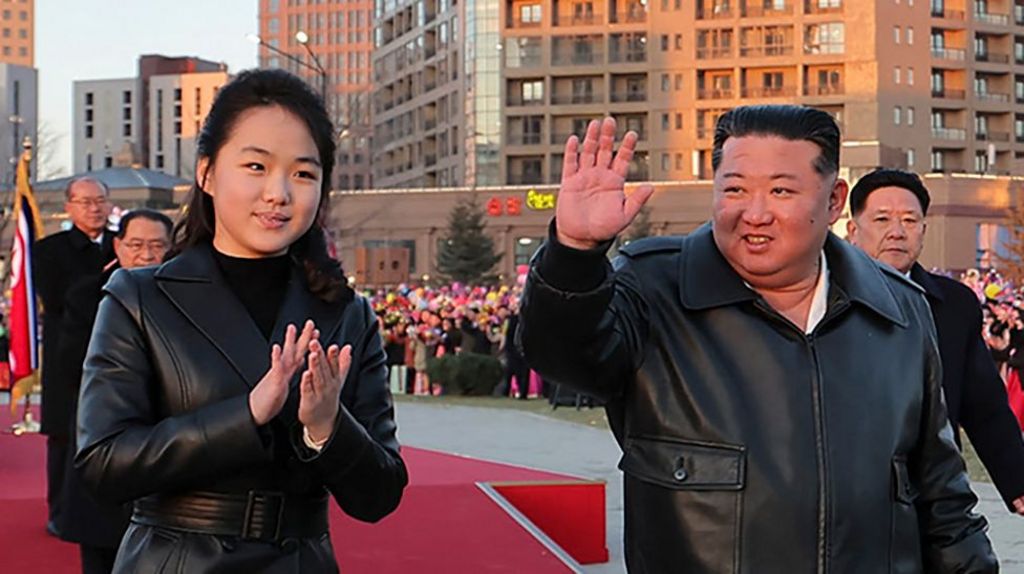
The recent Workers’ Party Congress in North Korea has ignited intense speculation about the nation’s future leadership, shifting attention from Kim Jong Un’s routine nuclear threats toward his mysterious daughter’s political emergence. While the dictator used the platform to reaffirm his commitment to expanding sanctioned weapons programs, the absence of clear succession announcements has fueled analytical debates about 13-year-old Kim Ju Ae’s potential role.
Intelligence assessments from Seoul suggest Kim has designated his daughter as political heir, though concrete evidence remains elusive. Her increasing visibility in state media—appearing alongside her father during military inspections and strategic meetings—marks a significant departure from North Korea’s traditionally secretive leadership transitions. Analysts note her central positioning in official photographs and the regime’s use of honorific language typically reserved for supreme leaders.
Cheong Seong-chang, a prominent North Korea watcher at Sejong Institute, interprets these developments as deliberate preparation for hereditary succession. “The state media is cultivating her personality cult using terminology previously exclusive to sitting leaders,” he observes. Her military engagements appear particularly significant, with top generals shown kneeling to communicate with her during parades—a visual narrative designed to establish military credibility.
However, former North Korean diplomat Ryu Hyun-woo challenges this interpretation, citing the country’s deeply entrenched patriarchy. Despite her Paektu bloodline connection to founding leader Kim Il Sung, Ryu argues that traditional gender norms would prevent female leadership. He describes widespread gender discrimination, including superstitious practices among taxi drivers who consider female passengers bad luck.
The debate coincides with evolving social dynamics in North Korea. Researcher Song Hyun-jin documents how women gained economic influence during the 1990s famine, eventually rising to management positions and party roles. State television now occasionally shows men performing domestic chores, reflecting gradual social shifts.
Kim Jong Un’s sister, Kim Yo Jong, recently ascended to propaganda minister, potentially positioning her as a regent figure should juvenile succession occur. This maneuvering suggests the regime is preparing for leadership continuity rather than reform, with analysts expecting any transition to maintain the country’s authoritarian trajectory.
The attention surrounding Ju Ae may itself serve regime objectives, according to Ryu: “Kim thrives on international speculation about his dynasty—it reinforces his perceived importance on the global stage.”