标签: Asia

亚洲

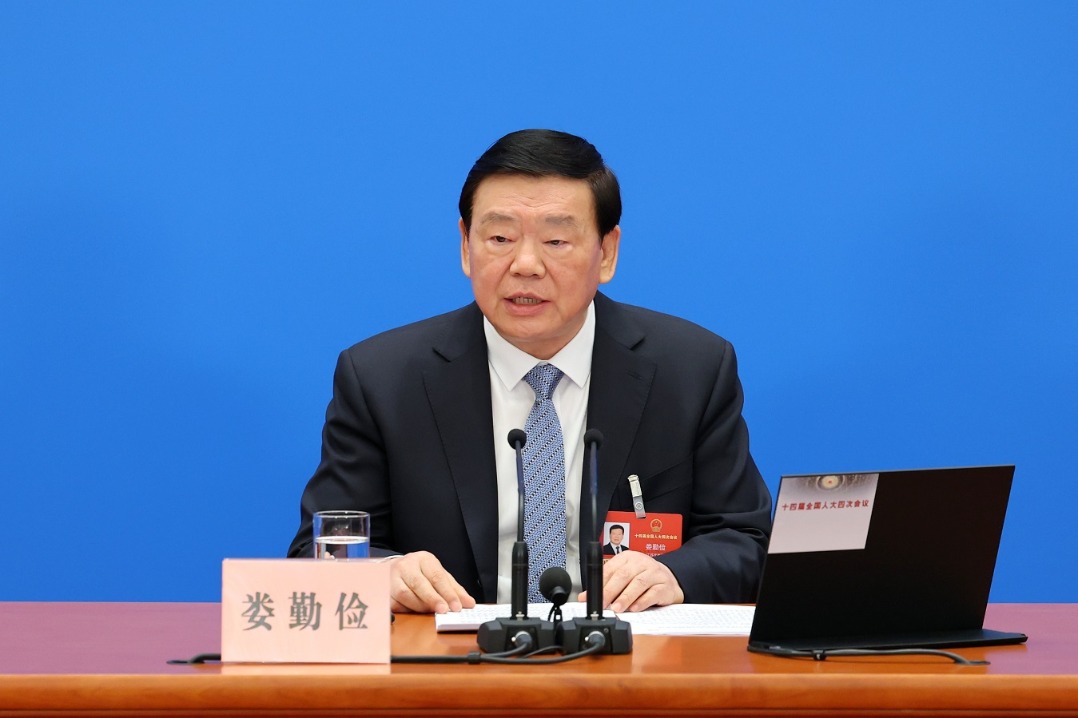
  • Chinese people never allow external interference in China’s internal affairs: spokesman

    Chinese people never allow external interference in China’s internal affairs: spokesman

    In a definitive statement ahead of China’s pivotal legislative gathering, official spokesperson Lou Qinjian articulated the nation’s uncompromising position against external intervention in domestic matters. Speaking at a press conference preceding the Fourth Session of the 14th National People’s Congress, Lou emphasized that safeguarding national sovereignty, unity, and territorial integrity remains the fundamental principle guiding China’s foreign engagements.

    The spokesperson specifically addressed growing international concerns regarding cross-strait relations, identifying the Taiwan question as central to China’s core interests. Lou condemned recent remarks by Japanese leadership on Taiwan as fundamentally erroneous, reinforcing China’s position that the matter exclusively represents an internal affair. The declaration comes amid increasing geopolitical tensions in the Asia-Pacific region, where multiple nations have attempted to influence China’s policy directions.

    This strong reaffirmation of sovereignty principles signals China’s continued commitment to autonomous governance without external pressure. The statement aligns with historical precedents where China has consistently resisted foreign intervention, particularly regarding matters of territorial integrity and national security. The timing of this declaration, just before the National People’s Congress session, underscores the importance of unity and sovereignty in China’s policy framework during a period of complex international relations.

  • Heavy snow, rain forecast across China

    Heavy snow, rain forecast across China

    The National Meteorological Center has issued a significant weather advisory, forecasting a multi-day period of intense winter conditions across China from Wednesday through the weekend. Northern territories are set to experience substantial snowfall, while southern regions will contend with prolonged rainfall.

    Meteorologists predict light to moderate snowfall will affect vast areas of North China, Northeast China, and the Xinjiang Uygur Autonomous Region through Friday, with several localities anticipating heavy snow accumulations. This wintry precipitation follows an abrupt temperature plunge recorded in eastern Inner Mongolia and Northeast China, where thermometers dropped dramatically by 6-10°C within 24 hours, with some isolated areas experiencing decreases exceeding 12°C.

    Concurrently, southern China prepares for an extended wet period from Wednesday through Saturday. The northeastern sector of Hainan province faces particularly severe weather, with forecasts indicating heavy downpours that could result in localized flooding and travel disruptions.

    The complex weather system has already manifested through reduced visibility conditions. As of Wednesday morning, dense fog enveloped multiple provinces including Hebei, Shandong, and Henan, where visibility in certain locations diminished to under 200 meters, creating hazardous travel conditions and prompting transportation advisories.

    The meteorological center emphasizes that these conditions represent a significant seasonal transition period, requiring public vigilance and appropriate preparedness measures for both the extreme cold in the north and potential water-related challenges in the south.

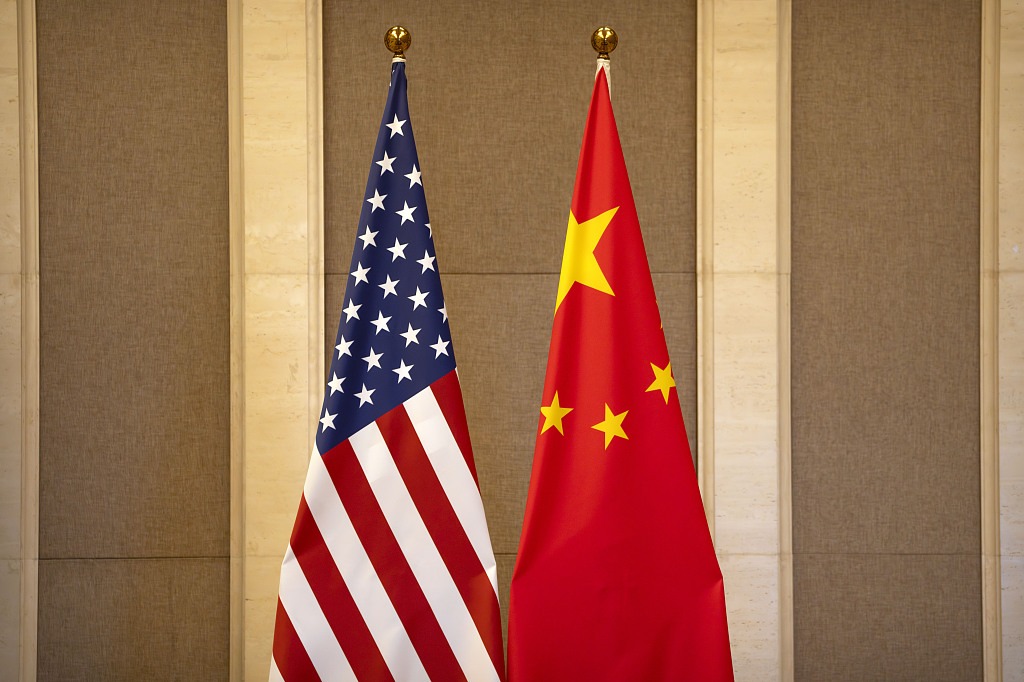
  • China, US should respect each other, pursue peaceful coexistence and win-win cooperation: spokesman

    China, US should respect each other, pursue peaceful coexistence and win-win cooperation: spokesman

    In a significant diplomatic statement ahead of China’s annual legislative session, official spokesperson Lou Qinjian articulated Beijing’s position on Sino-American relations, emphasizing mutual respect and cooperative engagement between the world’s two largest economies.

    Addressing journalists at a pre-session press conference on Wednesday, the spokesman for the 14th National People’s Congress fourth session outlined China’s commitment to fostering constructive dialogue with the United States across multiple levels and through diverse communication channels. This approach, according to Lou, aims to expand the scope for bilateral cooperation and create substantial opportunities for both nations.

    The spokesperson simultaneously underscored China’s unwavering dedication to protecting its core national interests. Lou explicitly stated that while pursuing cooperative engagement, China would maintain its fundamental principles and established boundaries, consistently safeguarding its sovereignty, security, and developmental objectives without compromise.

    This balanced messaging comes at a crucial juncture in international diplomacy, reflecting China’s dual approach of seeking collaborative partnerships while firmly maintaining its strategic positions. The statement represents Beijing’s continued emphasis on peaceful coexistence despite ongoing complexities in the geopolitical landscape.

    The press conference preceded the formal commencement of China’s annual parliamentary gathering, where domestic policies and international relations are expected to feature prominently in legislative discussions and policy formulations.

  • London police arrest 3 men on suspicion of spying for China. One is a UK lawmaker’s husband

    London police arrest 3 men on suspicion of spying for China. One is a UK lawmaker’s husband

    British authorities have detained three individuals on suspicion of espionage activities benefiting China, marking the latest development in growing national security concerns. The Metropolitan Police confirmed Wednesday that the arrests were made under the National Security Act of 2023 for allegedly assisting a foreign intelligence service.

    The suspects include a 39-year-old London resident, a 68-year-old from Powys, Wales, and a 43-year-old from Pontyclun, Wales. While official identities remain protected due to ongoing investigations, it has been confirmed that one of those detained is the husband of Labour Party MP Joani Reid, who represents the Scottish constituency of East Kilbride and Strathaven.

    MP Reid issued a public statement acknowledging her husband’s involvement while vehemently denying any personal knowledge or participation in the alleged activities. “I have never seen anything to make me suspect my husband has broken any law,” she stated, emphasizing that neither she nor her children are subjects of the investigation.

    This case represents the most recent in a series of espionage-related arrests targeting Chinese intelligence operations within the UK. The domestic security service MI5 had previously alerted lawmakers in November about China’s “targeted and widespread” recruitment efforts through professional platforms like LinkedIn and front companies.

    Security Minister Dan Jarvis confirmed that British officials have formally complained to Chinese counterparts regarding these developments. The government maintains its position that “China presents a series of threats to the United Kingdom” and expressed “deep concern about increasing covert activity from Chinese state-linked actors targeting UK democracy.”

    Despite the serious nature of the allegations, counter-terrorism officials assured the public that there is no imminent threat to general safety. Commander Helen Flanagan noted a “significant increase in national security casework” in recent years, underscoring authorities’ commitment to disrupting malign activities.

    Beijing has consistently denied all espionage allegations, characterizing them as fabricated claims and malicious slander against China’s international reputation.

  • Chongqing’s ‘Train to Spring’ returns as monorail glides through blossoms

    Chongqing’s ‘Train to Spring’ returns as monorail glides through blossoms

    The picturesque spectacle of Chongqing’s monorail gliding through a vibrant canopy of plum blossoms has returned, marking the arrival of spring in the mountainous megacity. Chongqing Rail Transit Line 2, particularly the segment connecting Daping and Fotuguan stations, has transformed into a moving observatory where passengers experience spring’s bloom from unique vantage points.

    This annual phenomenon, dubbed the ‘Train to Spring,’ has evolved into an iconic seasonal attraction drawing both residents and tourists seeking immersive natural beauty within an urban landscape. The visual harmony of modern transit infrastructure moving seamlessly through nature’s temporary pink tapestry represents a rare synthesis of urban development and seasonal transformation.

    The area’s distinctive topography creates a multi-layered visual experience: elevated monorail tracks above, an expansive floral display at mid-level, and pedestrian walkways below, all set against Chongqing’s dramatic skyline. This vertical arrangement emphasizes the city’s unique mountainous character while providing unforgettable springtime visuals that have become synonymous with Chongqing’s identity.

    Photographers and nature enthusiasts flock to strategic vantage points along the route, capturing the perfect convergence of technology and nature. The municipality has recognized this seasonal attraction as a cultural landmark that showcases harmonious coexistence between urban infrastructure and natural beauty, reflecting China’s evolving approach to urban ecological integration.

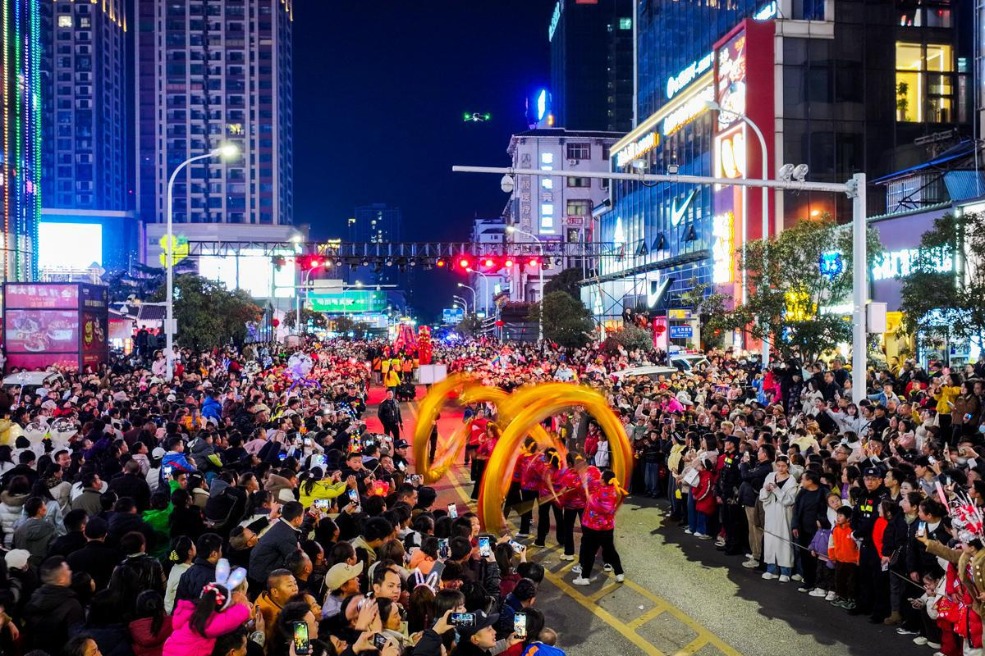
  • Lantern Festival celebrations light up Zhangjiajie with tradition, technology

    Lantern Festival celebrations light up Zhangjiajie with tradition, technology

    The ancient city of Zhangjiajie in Hunan Province became a breathtaking canvas of cultural fusion on Tuesday as it hosted spectacular Lantern Festival celebrations that masterfully intertwined time-honored traditions with innovative technological displays. The festivities commenced with the vigorous rhythm of ceremonial drums and dynamic dragon and lion dances, creating an electrifying atmosphere that captivated both local residents and international visitors alike.

    This year’s event showcased an unprecedented integration of digital technology with traditional lantern craftsmanship. Elaborate light installations featuring advanced LED technology and interactive projection mapping transformed public spaces into immersive environments that paid homage to Chinese cultural heritage while demonstrating technological advancement. The visual spectacle extended across multiple districts of the city, creating a cohesive narrative that celebrated both historical continuity and modern innovation.

    Cultural preservation remained at the heart of the celebrations, with artisans demonstrating traditional lantern-making techniques passed down through generations. Simultaneously, digital artists presented contemporary interpretations of classical Chinese motifs through cutting-edge light installations. This harmonious combination created a multi-sensory experience that appealed to diverse age groups, effectively bridging generational gaps in cultural appreciation.

    The event significantly boosted local tourism, with hospitality establishments reporting near-capacity occupancy during the festival period. Municipal authorities noted the successful execution of this large-scale public gathering while maintaining comprehensive safety protocols and crowd management measures. The festival’s innovative approach to cultural celebration has established a new benchmark for how traditional holidays can evolve while maintaining their essential cultural significance.

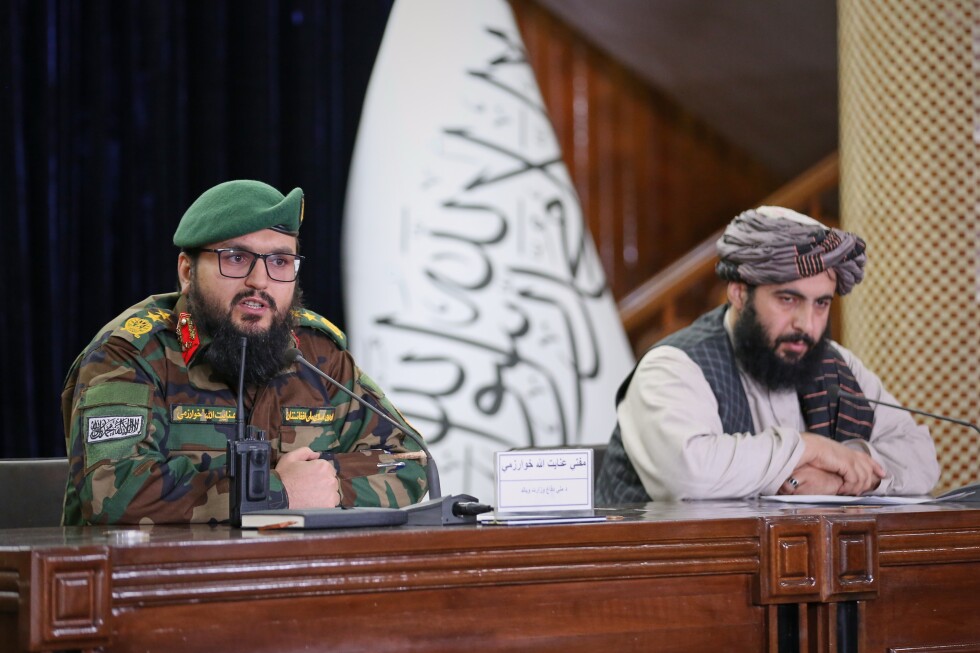
  • Turkey’s Erdogan offers to try to revive a truce as Pakistan-Afghan border clashes enter sixth day

    Turkey’s Erdogan offers to try to revive a truce as Pakistan-Afghan border clashes enter sixth day

    Turkish President Recep Tayyip Erdogan has extended an offer to broker a new ceasefire between Pakistan and Afghanistan as intense border hostilities entered their sixth consecutive day on Wednesday. The escalating military confrontation, which began last week following Afghan retaliation for Pakistani airstrikes, has prompted international concern after Pakistan declared itself in “open war” with its neighbor.

    The current violence has effectively nullified a previous truce agreement mediated by Qatar and Turkey in October, which had temporarily averted another near-war situation between the two nations. That earlier diplomatic effort had culminated in six days of negotiations in Istanbul and an agreement to extend the ceasefire, though subsequent talks in November ultimately failed to produce any substantive breakthroughs.

    According to an official statement from Ankara, President Erdogan, during a telephone conversation with Pakistani Prime Minister Shehbaz Sharif, explicitly condemned terrorist attacks within Pakistan and expressed Turkey’s commitment to facilitating the reestablishment of ceasefire conditions. While Sharif’s office did not directly acknowledge the mediation offer, it confirmed the leaders had engaged in substantive discussions regarding border tensions along the 2,611-kilometer frontier and pledged continued cooperation toward regional stability.

    The Taliban government in Kabul has remained silent regarding Erdogan’s proposal, though analysts suggest Afghan authorities might perceive Turkey’s position as potentially biased toward Islamabad. This perception could complicate mediation efforts despite last week’s communication between Turkish Foreign Minister Hakan Fidan and his Afghan counterpart Amir Khan Muttaqi regarding the cross-border situation.

    Military engagements have primarily concentrated in Pakistan’s northwestern Khyber Pakhtunkhwa and southwestern Balochistan provinces, with both nations issuing dramatically conflicting casualty reports. Afghanistan’s Defense Ministry claimed Wednesday that its forces had inflicted significant losses on Pakistani troops, while Pakistan’s Information Minister Attaullah Tarar asserted that 481 Afghan soldiers had been killed over the six-day conflict period. The remote, media-inaccessible border region—where al-Qaida and Islamic State affiliates also operate—has made independent verification of these claims impossible.

    Pakistan has emphatically stated that military operations will continue until Afghanistan demonstrates verifiable action against Pakistani Taliban (TTP) militants and other groups operating from its territory. Islamabad has consistently accused Kabul of harboring TTP elements responsible for increased attacks inside Pakistan since the Afghan Taliban’s return to power in 2021—an allegation Afghan authorities vehemently deny.

  • Hormuz doesn’t need to close to cripple Asia’s economies

    Hormuz doesn’t need to close to cripple Asia’s economies

    Asia confronts its most severe energy security challenge since the 1973 oil embargo as military tensions transform the Strait of Hormuz into an active theater of geopolitical conflict. The crisis escalated dramatically on February 28, 2026, when a joint US-Israel military operation eliminated Iran’s Supreme Leader Ayatollah Ali Khamenei, creating unprecedented disruption within Iran’s command structure and triggering uncompromising retaliation threats from Tehran.

    Iran’s explicit warning that it will ‘set fire’ to vessels attempting passage through the strategic waterway has shifted theoretical risk into operational reality. The strait serves as the world’s most critical energy corridor, facilitating approximately 20% of global oil shipments and comparable liquefied natural gas volumes. In 2025, nearly 20 million barrels per day—representing $600 billion in annual energy trade—transited through the narrow 33-kilometer passage between Iran and Oman.

    The geographical configuration grants Tehran asymmetric influence capabilities. Even without formal blockade implementation, drone strikes, missile threats, and naval harassment can render commercial transit prohibitively expensive. Insurance markets have responded with dramatically escalated premiums, effectively closing the strait through economic mechanisms rather than physical obstruction.

    Asia bears disproportionate vulnerability, with four-fifths of Hormuz-bound crude destined for Eastern markets. China, India, Japan, and South Korea account for the majority of these imports, with Japan and South Korea importing over 80% of their energy requirements through this corridor. While China has developed strategic petroleum reserves and increased Russian crude imports as hedging measures, neither approach fully offsets dependence on Gulf suppliers.

    The crisis exposes fundamental limitations in Asia’s energy security architecture. LNG markets face particularly severe constraints due to fixed liquefaction capacity, destination-bound contracts, and limited spare volumes. Any disruption to Qatari shipments would trigger direct competition between Asian and European buyers for alternative supplies, with price spikes permeating entire economic systems through electricity costs, industrial production, and agricultural inputs.

    Emerging Asian economies operating fuel subsidy regimes face additional fiscal pressure, while central banks confront renewed inflation-growth tradeoffs. The situation revives concerns about energy-driven economic reshaping reminiscent of the 1970s, testing whether Asia’s technologically advanced economies can overcome structural energy dependencies.

    While sustained total shutdown remains operationally challenging for Iran—particularly given Tehran’s own $67 billion annual oil export dependence—episodic disruption may sufficiently destabilize markets. Alternative pipelines developed by Saudi Arabia and UAE provide partial relief but cannot fully compensate for Hormuz capacity. The crisis ultimately reveals the geopolitical risks embedded within Asia’s hydrocarbon-dependent growth model and questions the region’s strategic autonomy in an era of intensifying US-China rivalry.

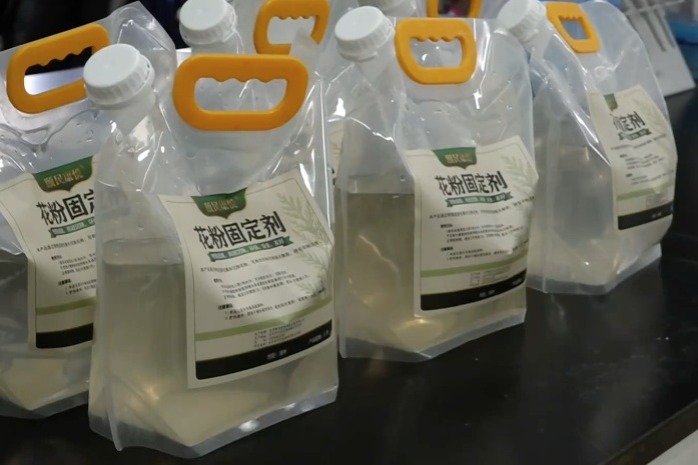
  • Beijing to give juniper trees ‘invisible masks’ in fight against pollen

    Beijing to give juniper trees ‘invisible masks’ in fight against pollen

    Beijing is pioneering an innovative approach to combat its annual spring pollen crisis through the strategic application of an organic polymer spray that creates protective barriers on juniper trees. This scientific breakthrough, developed by Beijing University of Agriculture, represents a significant shift from traditional defensive measures to proactive pollen suppression strategies.

    The Beijing Municipal Forestry and Parks Bureau has identified approximately 337,000 juniper trees within the Fifth Ring Road, with nearly half (168,000) being pollen-producing male specimens. According to meteorological projections, the pollination period is scheduled to commence between March 7-11, reaching peak intensity from March 15-20.

    Professor Xing Yu from the College of Plant Science and Technology explains the technological advantage: ‘A single application of this pollen fixative demonstrates over twenty times greater effectiveness in settling pollen compared to conventional water spraying methods. While standard watering requires three to five daily applications, our organic compound achieves superior results with just one daily treatment.’

    The transparent coating, successfully trialed over three years, effectively captures pollen at the source before it becomes airborne. This year marks the first city-wide deployment across Beijing’s six core districts, with the solution now entering mass production phases.

    Complementing the technological intervention, new regulatory frameworks effective since January 1 have formally incorporated pollen management into municipal legislation, establishing clear governmental responsibilities. Additionally, meteorological and forestry departments are collaborating to provide real-time pollen concentration forecasts, enabling citizens to make informed decisions regarding personal protection measures during high-pollen periods.

  • China achieves breakthrough in high-orbit satellite-ground laser communication

    China achieves breakthrough in high-orbit satellite-ground laser communication

    Chinese scientists have established a groundbreaking milestone in space communication technology by successfully demonstrating high-speed laser data transmission between Earth and a satellite in high orbit. The unprecedented achievement, accomplished across a staggering distance of 40,740 kilometers, represents a quantum leap in satellite-ground communication capabilities.

    The pioneering experiment, a collaborative effort between the Chinese Academy of Sciences’ Institute of Optics and Electronics, Beijing University of Posts and Telecommunications, and the China Academy of Space Technology, utilized a specialized observatory facility in Yunnan province to establish a stable optical link with a geosynchronous satellite. This technological marvel achieved simultaneous two-way communication at remarkable speeds of 1 gigabit per second – comparable to terrestrial fiber-optic performance but accomplished across interplanetary distances.

    What distinguishes this breakthrough is its exceptional operational performance: the system established a laser connection in merely four seconds and maintained uninterrupted transmission for over three hours. This represents a monumental improvement from previous minute-level durations to sustained hour-level operation, marking the first time such stability has been achieved in the challenging high-orbit environment.

    The technological implications extend far beyond raw data transmission speeds. This advancement effectively transforms high-orbit satellites from simple data relay stations into potential intelligent processing hubs capable of receiving complex commands and executing sophisticated operations in real-time. The demonstrated capability addresses two critical challenges in space communication: achieving peak transmission rates for data-intensive applications and ensuring prolonged operational stability for advanced interactive systems.

    Researchers emphasize that this breakthrough establishes a mature engineering model for future space infrastructure. The validated technology paves the way for establishing high-speed laser communication networks with lunar bases, Mars missions, and deep space probes, effectively laying the foundation for an integrated Earth-space network that could revolutionize humanity’s approach to space exploration and satellite operations.