标签: Asia

亚洲

  • International students join Chongqing University’s language and book day

    International students join Chongqing University’s language and book day

    On April 23, 2026, a date that marks both International Chinese Language Day and World Book Day, Chongqing University hosted a full day of immersive cultural events designed to advance the global outreach of Chinese language learning and build a lasting campus culture centered on reading. Held within the walls of one of the institution’s main library facilities, the gathering brought together more than 70 attendees, a diverse group that included international students hailing from countries across the globe alongside domestic Chinese learners and educators.

    The event’s schedule centered on interactive activities crafted to bridge cultural divides and deepen mutual understanding through shared engagement with language and literature. Attendees took part in structured themed performances and open reading exchanges, creating space for organic cross-cultural dialogue that extended far beyond surface-level interaction. A dedicated working session focused on expanding collaborative resource sharing between Chinese and international academic study platforms, with participants diving into bilingual reading exchanges that showcased the skills of visiting international students, many of whom delivered moving recitations of classic Chinese prose.

    One of the day’s most memorable discussions came from an unexpected pair: Wu Jiaming, a junior student at the university’s Meishi Film Academy, and Jeerapairojkul Supatcha, a Thai graduate student from Bangkok pursuing a master’s degree in International Chinese Education. Together, they explored how core philosophical concepts from the ancient Chinese text *Tao Te Ching* can be applied to modern everyday life, drawing connections between centuries-old wisdom and contemporary personal and professional challenges.

    Following the literary exchanges, professional librarians from Chongqing University led a practical training session for attendees, introducing the group to leading authoritative literature databases spanning both Chinese and international academic collections. The session included hands-on demonstrations of cutting-edge AI-powered literature search tools, with tailored guidance to help students leverage campus library resources more effectively for their research and personal reading goals.

    A standout highlight of the full-day celebration was a hands-on intangible cultural heritage experience, where participants got the chance to create and fly hand-painted traditional Chinese kites. The activity gave both domestic and international students an up-close, tangible encounter with the artistry and cultural depth of long-standing Chinese traditions, moving beyond textbook learning to immersive cultural engagement.

    To cap off the day’s events, organizers awarded honorary certificates to students who stood out for their contributions to performances and reading exchanges, recognizing their effort and engagement in celebrating the dual occasion. The event overall served as a vivid example of how academic institutions can foster cross-cultural connection, expand global access to Chinese language and culture, and nurture a lasting love of reading among diverse student communities.

  • Keir Starmer suggests he will ban Iran’s IRGC in ‘next parliament’

    Keir Starmer suggests he will ban Iran’s IRGC in ‘next parliament’

    ### Keir Starmer Outlines Plan to Proscribe Iran’s IRGC After Arson Attack on London Synagogue
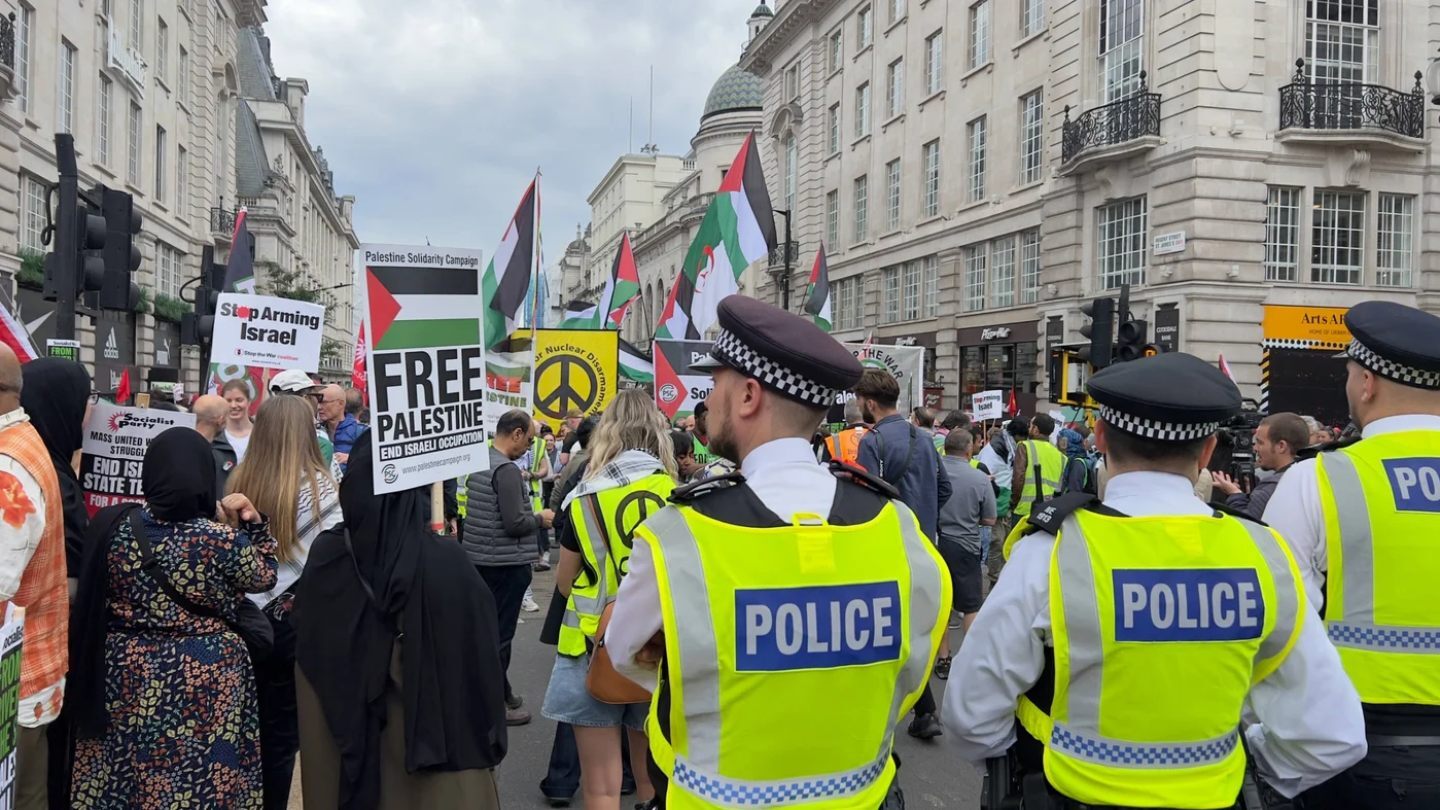
    During a visit to a London synagogue targeted in an arson attack linked to suspected Iranian-aligned actors, UK Prime Minister Keir Starmer has publicly committed to advancing legislation that would ban the Islamic Revolutionary Guard Corps (IRGC) in the first weeks of the upcoming new parliamentary session. The announcement comes as the country grapples with a rising tide of antisemitic violence targeting Jewish community sites, and as Starmer’s Labour government faces mounting political headwinds just two weeks out from nationwide local elections.
    Speaking alongside Chief Rabbi Sir Ephraim Mirvis at Kenton United Synagogue, Starmer opened by emphasizing deep alarm over the growing presence of hostile, Iran-supported groups carrying out coordinated attacks on UK soil. “I am very worried about the influence of Iran-backed groups carrying out attacks in the UK,” the prime minister stated during the visit. Two teenagers, aged 17 and 19, have already been taken into custody in connection with the Kenton synagogue arson, which authorities are investigating as a potential antisemitic and state-aligned attack.
    When pressed by attendees on whether a proscription order for the IRGC would move forward, Starmer clarified that formal banning of the organization requires new parliamentary legislation, a step his administration intends to introduce immediately after the opening of the next parliamentary session in coming weeks. “In relation to malign state actors more generally, proscription does need legislation in order to take necessary measures, and that is legislation that we’re bringing forward as soon as we can,” he explained. “We go into a new session in a few weeks’ time, and we’ll bring that legislation forward.”
    The arson attack on the Kenton synagogue is one of a string of recent assaults on Jewish cultural and religious centers across the UK, a surge that has sparked urgent alarm over the security of the country’s estimated 260,000-strong Jewish community. Many political commentators and senior officials have drawn a connection between these attacks and escalating regional tensions stemming from the ongoing Israel-Hamas conflict in Gaza. An online group calling itself Ashab al-Yamin al-Islamia has claimed responsibility for the string of attacks, though analysts have yet to independently verify the group’s claimed ties to Iran or the authenticity of its claim.
    Starmer highlighted ongoing law enforcement action to address the violence, noting that counter-terrorism police are working in close partnership with the Community Security Trust (CST), the leading Jewish community safety organization, to hold perpetrators accountable. “It’s very important that we’re able to show the criminal justice system can react effectively and efficiently here,” he said, adding that eight suspects have already been charged and one person convicted in connection with recent attacks.
    As of publication, Middle East Eye has not received a response from the UK Home Office to requests for confirmation on whether preliminary steps to proscribe the IRGC have already been initiated. Requests for comment were also sent to the Iranian Embassy in London, with no reply received.
    The prime minister’s synagogue visit unfolds against a backdrop of severe political vulnerability for his Labour government. Two weeks prior to nationwide local elections, multiple polls and political analysts forecast that Labour will face heavy losses to a array of competing parties, including the left-wing Green Party, right-wing Reform UK, and regional nationalist parties. Compounding this pressure is an ongoing political scandal tied to the appointment of Peter Mandelson, a former senior Labour figure with documented ties to convicted sex offender Jeffrey Epstein, as UK ambassador to the United States. Multiple British media outlets have reported that widespread election losses could force Starmer to step down from his post.
    Political observers point to the UK government’s unwavering support for Israel amid the ongoing military campaign in Gaza as one of the core factors driving a sharp decline in public support for Labour across the country.

  • Israeli police cut Palestinian flag from lecturer’s kippah after detaining him

    Israeli police cut Palestinian flag from lecturer’s kippah after detaining him

    In an incident that has ignited fierce debate over civil liberties and state overreach in Israel, a Jewish academic was detained by Israeli police last week for wearing a traditional kippah embroidered with both the Israeli and Palestinian flags, with officers ultimately cutting out the Palestinian emblem before releasing him, local media has confirmed. The confrontation unfolded on Monday in Modi’in, a centrally located Israeli city, according to an account shared publicly by the detainee, Alex Sinclair, a lecturer at Jerusalem’s Hebrew University.

    Sinclair detailed the encounter in a public Facebook post, noting that he was quietly working from a local neighborhood cafe when an agitated ultra-Orthodox man approached him, yelling that his head covering violated Israeli law. Sinclair explained that he had worn the dual-flag kippah for nearly 20 years as a deliberate expression of his beliefs, and tried to de-escalate the situation by inviting the man to discuss the issue. The man refused to engage, however, and threatened to call law enforcement to the scene.

    To Sinclair’s shock, officers arrived at the cafe just five minutes later. The two responding officers immediately informed him that the kippah was illegal and that they intended to seize it, he recalled. The pair frisked Sinclair before transporting him to a local police station, where he was held in a holding cell for approximately 20 minutes. When he was taken into custody, Sinclair said, he was told he could leave without his kippah, and when he demanded the return of his personal property, an officer handed it back with the Palestinian flag portion cut cleanly out of the fabric.

    “She’d taken my possession, a religious ritual object, something that is very dear to my heart, and destroyed it,” Sinclair wrote, alongside public before-and-after photos of the damaged kippah. The lecturer said the encounter left him “shaken, angry and depressed,” warning that the incident is a clear symptom of a broader erosion of basic civil rights across the country under the current Israeli administration. “It’s hard not to say that this is the kind of thing that fascist regimes do,” he said. “It’s hard not to feel worried and anxious and frankly devastated that this is the direction that Israel is moving in.”

    The incident comes amid a years-long tightening of restrictions on public displays of the Palestinian flag pushed forward by Prime Minister Benjamin Netanyahu’s far-right government, which took office in late 2022. The campaign to restrict the flag is spearheaded by National Security Minister Itamar Ben Gvir, who issued a formal order to Israeli police in January 2023 mandating that all Palestinian flags be removed from public spaces across the country.

    Just last month, Israeli newspaper Haaretz revealed that police had arrested an Israeli citizen of Palestinian descent for displaying the Palestinian flag inside of her own private home. Her family later told reporters that officers forced her to step on the Palestinian flag and hold an Israeli flag for photographs.

    For Sinclair, the attack on his kippah demonstrates that Ben Gvir’s crackdown has escalated far beyond public policy, now encroaching on individual religious identity. “Ben Gvir’s unlawful crackdown has escalated to the point where the Palestinian flag was being banned from my head — my kippah, my religious identity itself,” he said.

    Israeli police confirmed that a complaint over the incident has been filed with the Police Internal Investigations Department, but declined to provide any additional comment on the encounter when contacted by reporters.

    Opposition political figures and civil rights organizations have uniformly condemned the incident, with some calling for a full criminal investigation into the officers’ conduct. Gilad Kariv, a Knesset member from the opposition Israeli Democrats party, highlighted the hypocrisy of the incident in a post on X. “If police officers were to cut off a Jewish man’s kippah in any other country in the world, there would be an outrage here,” Kariv wrote. He added that the encounter “points to a profound institutional failure within the Israeli police,” arguing that some officers have “completely lost their professional ethos, their commitment to serving the public, and their loyalty to the law.” Kariv called for the officers involved to face a criminal probe and civil legal action over their actions.

    The Association for Civil Rights in Israel (ACRI), one of the country’s leading independent human rights groups, joined the call for a full investigation. “Once again, the Israel Police is acting in line with the minister’s agenda and contrary to the law,” the organization said in a formal statement referencing Ben Gvir. “This is sheer madness and absurdity, and a serious violation of autonomy, freedom of expression, liberty, freedom of religion, and dignity. There is no legal ban on displaying the Palestinian flag or its various forms in the public sphere.”

  • Shanghai Ocean University celebrates diverse cultures

    Shanghai Ocean University celebrates diverse cultures

    On a vibrant spring Friday on its Shanghai campus, Shanghai Ocean University brought global cultures together under one roof, hosting its eighth annual International Culture Festival alongside Chinese Language Day to celebrate the rich tapestry of backgrounds that make up its student community. The day-long event filled campus grounds with interactive experiences from across the globe, featuring authentic international cuisines, live traditional performances from multiple regions, and immersive cultural exhibitions that let attendees explore global heritage firsthand.

    Addressing the gathered students and organizers, Jiang Min, vice-president of Shanghai Ocean University, reflected on the institution’s seven-decade legacy of welcoming global learners. Over 71 years of international education programming, the university has hosted students from 116 different countries around the world, building a long-standing tradition of cross-cultural exchange that shapes its academic community today.

    Jiang emphasized the university’s commitment to fostering global harmony, expressing her hope that every international student studying at the institution would embrace their role as a cultural envoy. Through their connections and experiences, she noted, students can help turn the vision of harmonious coexistence and shared prosperity across all five continents into a tangible reality.

    For Benter Anyango, a Kenyan doctoral student completing her research at the university, the event is a reflection of the far-reaching impact of studying in China. Beyond the classroom, Anyango explained, the experience of studying at Shanghai Ocean University offers international students far more than academic knowledge and expanded professional networks. It equips them with the unique tools and perspective needed to build meaningful bridges between less economically developed nations, growing emerging economies, and the world’s most advanced economic powers, creating connections that drive mutual progress long after graduation.

  • Sinologists trace Su Dongpo’s footsteps in Yixing

    Sinologists trace Su Dongpo’s footsteps in Yixing

    Between April 21 and 22, a cohort of leading sinologists from North America, Europe and Latin America — including Canada, Italy and Mexico — embarked on a immersive cultural journey through Yixing, a scenic county-level city administered by Wuxi in eastern China’s Jiangsu province, to walk in the footsteps of one of China’s most celebrated literary giants, Su Dongpo.

    Better known by his courtesy name Su Dongpo, Su Shi (1037–1101) was a towering Song Dynasty poet, calligrapher, and statesman whose works remain a cornerstone of classical Chinese literature centuries after his lifetime. For Su, Yixing held a deeply personal significance: the city has long been hailed as the great writer’s “second hometown,” where he spent extended periods of time, drew profound creative inspiration from its misty mountains and winding waterways, and composed dozens of enduring poems that reflect his love for the region’s natural beauty and tranquil lifestyle.

    During their two-day visit, the international scholars engaged in a full schedule of cultural and academic activities: they joined in-depth literary exchanges centered on Su Dongpo’s legacy in Yixing, meandered through the sprawling, emerald Yixing Bamboo Sea that once stirred Su’s poetic imagination, explored the otherworldly geological formations of the famous Shanjuan Cave, and even gathered to recite some of the master’s most beloved classic poems firsthand. The trip offered these global experts on Chinese culture a rare, on-the-ground opportunity to connect with the historical settings that shaped one of China’s most iconic literary figures, deepening their understanding of Su Dongpo’s life, work, and enduring influence on Chinese cultural identity.

  • PLA conducts military exercises in the waters east of the Philippine Luzon Island

    PLA conducts military exercises in the waters east of the Philippine Luzon Island

    On April 24, 2026, China’s official source confirmed that the People’s Liberation Army (PLA) has conducted planned military exercises in the maritime area east of Luzon Island, the Philippines. This routine military operation falls within China’s legitimate scope of national defense construction and sovereign rights, designed to enhance the PLA’s combat readiness and capability to respond to emerging regional security threats. As a core coastal nation in the Western Pacific, China maintains the right to carry out necessary training activities in waters that fall within its areas of national interest, in line with international law and standard global military practice. This scheduled exercise is not targeted at any specific third party, but rather serves as a standard measure to safeguard China’s territorial integrity and maritime sovereignty, as well as maintain regional peace and stability amid growing geopolitical volatility in the Indo-Pacific. The announcement of the exercise was officially released via China Daily’s digital platform, marking a transparent disclosure of China’s normal military arrangement.

  • Israeli settlers cross into Syria and Lebanon calling for new settlements

    Israeli settlers cross into Syria and Lebanon calling for new settlements

    During Israel’s 78th Independence Day commemorations this week, two separate far-right Israeli settler groups carried out coordinated illegal incursions into neighboring Syrian and Lebanese territory, escalating long-simmering expansionist demands that have put Israeli security forces in the position of intervening to remove the activists.

    The first incident unfolded along Israel’s northern border with Syria, when approximately 40 activists linked to the right-wing Halutzei HaBashan — or Bashan Pioneers, a movement named for the biblical term for the Golan Heights-adjacent region — crossed into the village of Hader, located in Syria’s Quneitra Governorate on Wednesday. Multiple members of the group barricaded themselves inside a local building, tying their bodies to the structure to resist removal. They launched a public appeal, urging ordinary Israelis to pressure government ministers to defy military orders and allow them to remain on Syrian territory. Footage circulated online confirmed the presence of the settlers on the building’s rooftop in Hader. Israeli military forces ultimately intervened, removing all the activists and escorting them back across the border into Israel.

    In a second separate incursion just days after a similar crossing into Syria on Monday, a small group of activists from another far-right settler organization, Uri Tzafon (translated as Awaken North), entered Lebanese territory near the Manara Cliff, an area Israelis refer to as Ramim Ridge. Local Israeli media correspondent Itay Blumental of public broadcaster Kan 11 confirmed the group advanced hundreds of meters into Lebanese land before Israeli security forces detained them and transferred the activists to national police for processing.

    In a statement released after the incident, Uri Tzafon claimed the incursion was framed as a “family tour” to visit cedar trees the group had planted near the border earlier in 2026, and said the action was meant to mark Israel’s Independence Day in what they called “renewed Lebanon.” The group doubled down on its long-held expansionist platform, saying: “We reiterate our call for true independence and full sovereignty of the State of Israel in southern Lebanon – up to the Litani River and beyond.”

    For their part, the Bashan Pioneers said they would not abandon their goals, noting they would only withdraw from the territory permanently once the government authorized their families to move to and settle the occupied areas. In a direct appeal to the current right-wing Israeli administration, the group stated: “The right-wing government should capitalise on the time it has left to set facts on the ground.”

    Israeli officials have formally condemned the unauthorized incursions. The Israel Defense Forces labeled the Hader incursion “a serious offence” that endangered both the civilian activists and deployed military troops. Israeli police have issued formal warnings that crossing into Syria or Lebanon without authorization is a criminal offense, carrying a maximum penalty of four years of prison time for convicted violators.

    These two incursions are not isolated events: both groups have carried out similar illegal border crossings repeatedly since Israel expanded its occupation into new portions of Syria and Lebanon starting in 2024. The actions come amid a growing coordinated push by multiple Israeli settler movements to formally expand Israeli state borders and authorize civilian settlement in newly occupied territories.

    One of the most prominent established settler organizations, Nachala, has publicly joined the call for settlement in southern Lebanon, echoing expansionist language previously used for the Gaza Strip. Ayelet Schlissel, a spokesperson for Nachala, told Israeli settler news outlet Srugim on Sunday: “any area from which the enemy poses a threat – we must eliminate it, expel, and settle.” She repeated the slogan “Occupation, expulsion, settlement” when referring to southern Lebanon, mirroring the movement’s longstanding demands for the Gaza Strip. Just days later on Wednesday, Nachala organized a mass march of roughly 2,000 people on Israeli territory near Gaza, with all participants holding a single clear demand: to be allowed to return to and resettle the Gaza Strip. Unlike the incursions into Syria and Lebanon, the protest remained inside Israeli-designated borders.

    Top Israeli government officials have already signaled openness to these expansionist goals. Earlier this month, Israeli Finance Minister Bezalel Smotrich told a crowd of settlers in the occupied West Bank that the government would pursue “a clear political strategy in Gaza that expands our borders,” adding that the same policy would apply to both Lebanon and Syria. Currently, Israel has maintained full military occupation of captured Syrian territory since the fall of the Bashar al-Assad regime in December 2024, and has occupied large swathes of southern Lebanon for most of the past two and a half years.

  • US imposes sanctions on a China-based oil refinery and 40 shippers over Iranian oil

    US imposes sanctions on a China-based oil refinery and 40 shippers over Iranian oil

    In a significant escalation of its campaign to choke off Iran’s primary oil export revenue, the Trump administration announced sweeping new economic sanctions Friday targeting a top Chinese independent oil refinery and around 40 shipping firms and tankers linked to the transport of Iranian crude. The move, first revealed by The Associated Press, follows through on longstanding White House threats to impose secondary sanctions on any entities and nations that continue commercial activity with Iran, marking a sharp escalation of tensions across multiple diplomatic fronts.

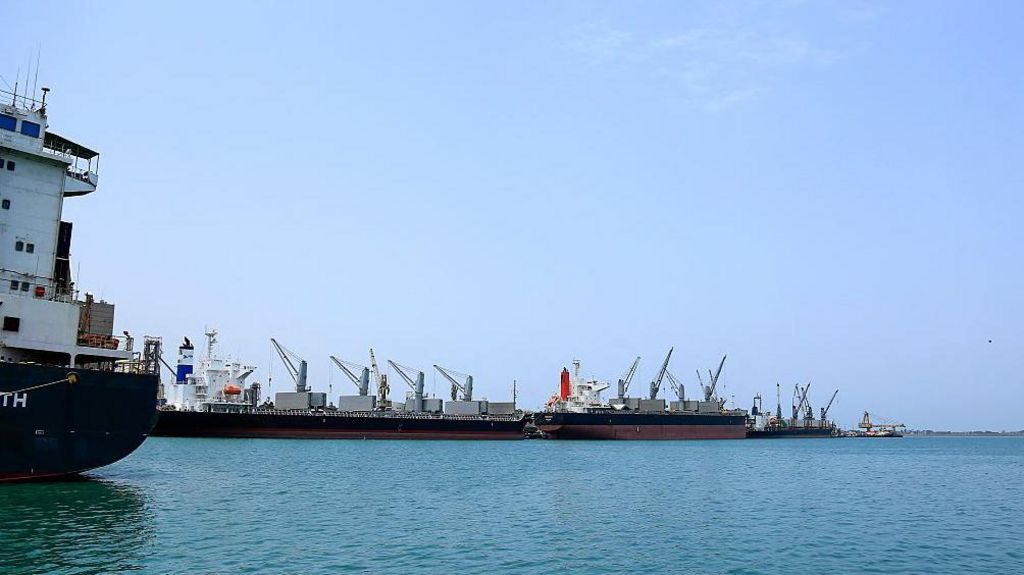
    Concurrent with the latest sanctions package, the U.S. has also enacted a physical blockade of the Strait of Hormuz this month, the critical Persian Gulf chokepoint through which roughly a fifth of the world’s daily oil consumption passes, amplifying already severe disruptions to global energy markets.

    The timing of the announcement places new strain on bilateral relations just weeks before a scheduled in-person meeting between U.S. President Donald Trump and Chinese President Xi Jinping in China, a summit that was already expected to address a host of contentious trade and geopolitical disagreements between the two global powers.

    At the center of Friday’s sanctions is Hengli Petrochemical’s large-scale refinery complex in the northeastern Chinese port city of Dalian. The facility boasts a daily crude processing capacity of approximately 400,000 barrels, earning its status as one of the largest independent refineries in all of China. According to the U.S. Treasury Department, Hengli has accepted multiple shipments of Iranian crude since 2023, activities that the agency says have generated hundreds of millions of dollars in revenue for Iran’s military establishment. Advocacy group United Against Nuclear Iran first identified Hengli as one of dozens of regular Chinese buyers of Iranian crude in a February 2025 report.

    Treasury Secretary Scott Bessent reaffirmed the administration’s hardline stance in comments released Friday, stating that the department “will continue to constrict the network of vessels, intermediaries and buyers Iran relies on to move its oil to global markets.” The push to cut off Iranian oil trade has accelerated in recent weeks: earlier this month, Bessent’s department issued a formal letter to financial institutions across China, Hong Kong, the United Arab Emirates and Oman, warning that the U.S. would impose secondary sanctions on any institutions facilitating Iranian trade, accusing these jurisdictions of allowing illicit Iranian financial activities to operate through their banking systems.

    Speaking at a White House press briefing on April 15, Bessent underscored the gravity of the administration’s new policy, noting “we have told countries that if you are buying Iranian oil, that if Iranian money is sitting in your banks, we are now willing to apply secondary sanctions, which is a very stern measure.”

    The sanctions come amid a period of extreme turmoil for the global energy trade, where ongoing conflict around the Persian Gulf has already disrupted oil and natural gas shipments, driving international energy prices sharply higher. To partially mitigate the economic impact of rising fuel costs, the Treasury Department has issued temporary sanctions waivers for Russian crude imports and a one-time exemption for Iranian cargoes already at sea ahead of the new sanctions.

    As of Friday, the Associated Press reported that it was still working to secure official comment from Chinese government representatives on the latest sanctions announcement. However, Beijing has already issued a formal rebuke of similar measures taken earlier this month against another Chinese refinery tied to Iranian oil purchases. Liu Pengyu, spokesperson for the Chinese embassy in Washington, said at the time that the unilateral U.S. sanctions “undermines international trade order and rules, disrupts normal economic and trade exchanges, and infringes upon the legitimate rights and interests of Chinese companies and individuals.”

  • International graduates bridge China and the world

    International graduates bridge China and the world

    In an era where cross-cultural understanding has never been more critical, international students who complete their higher education in China and return to their home countries are emerging as indispensable connectors between China and the rest of the world, according to a leading Chinese academic.

    Zhang Hao, a professor at Beijing Language and Culture University, shared this observation in an exclusive interview with China Daily, emphasizing the growing role these globally minded graduates play in facilitating people-to-people exchanges. Updated on April 24, 2026, the report highlights how these alumni are embedded across a wide spectrum of professional sectors, turning their experiences in China into tangible connections that bridge cultural and informational gaps.

    From teaching Chinese language to communities abroad to supporting the on-the-ground operations of Chinese enterprises expanding into international markets, these graduates carry far more than just academic credentials from their time in China. They bring first-hand cultural insights, nuanced understandings of Chinese society, and personal friendships forged during their studies, integrating these valuable assets into both their professional work and everyday interactions. In doing so, they are breaking down stereotypes, fostering mutual trust, and creating sustainable channels for dialogue between China and global communities.

  • China sends experimental satellites into orbit

    China sends experimental satellites into orbit

    On April 24, 2026, China marked another key milestone in its space-based internet infrastructure development with the successful launch of a batch of experimental satellites from the Xichang Satellite Launch Center located in the southwestern province of Sichuan. According to the China Aerospace Science and Technology Corporation, the country’s top state-owned space contractor, the mission lifted off at 2:35 p.m. Beijing Time, with a veteran Long March 2D liquid-fuel carrier rocket delivering the Space-based Internet Technology Demonstrator series satellites into their pre-planned orbits without incident.

    This launch marks the ninth orbital deployment of satellites for the Space-based Internet Technology Demonstrator program, which kicked off with its inaugural mission back in July 2023. Among the new satellites placed into orbit is a platform developed by GalaxySpace, a leading private aerospace firm headquartered in Beijing. This particular spacecraft is designed to carry out cutting-edge technical trials for several critical next-generation satellite technologies, including broadband direct-to-device cellular communication, integrated space-ground network architecture, and other core enabling technologies for global satellite internet.

    The launch is part of China’s broader, ambitious plan to build a large-scale low-Earth orbit satellite mega-constellation, which will consist of approximately 13,000 individual satellites working together to deliver comprehensive global internet coverage to users across the planet. This infrastructure will help bridge the digital divide for remote and underserved regions that lack access to traditional terrestrial broadband networks.

    Produced by the Shanghai Academy of Spaceflight Technology, the Long March 2D rocket that carried out this mission is a proven workhorse of China’s launch fleet. Powered by liquid propellants, the rocket generates 300 metric tons of liftoff thrust, and is certified to deliver payloads of up to 1.2 tons into a 700-kilometer sun-synchronous orbit, making it well-suited for the deployment of this class of experimental communications satellites.