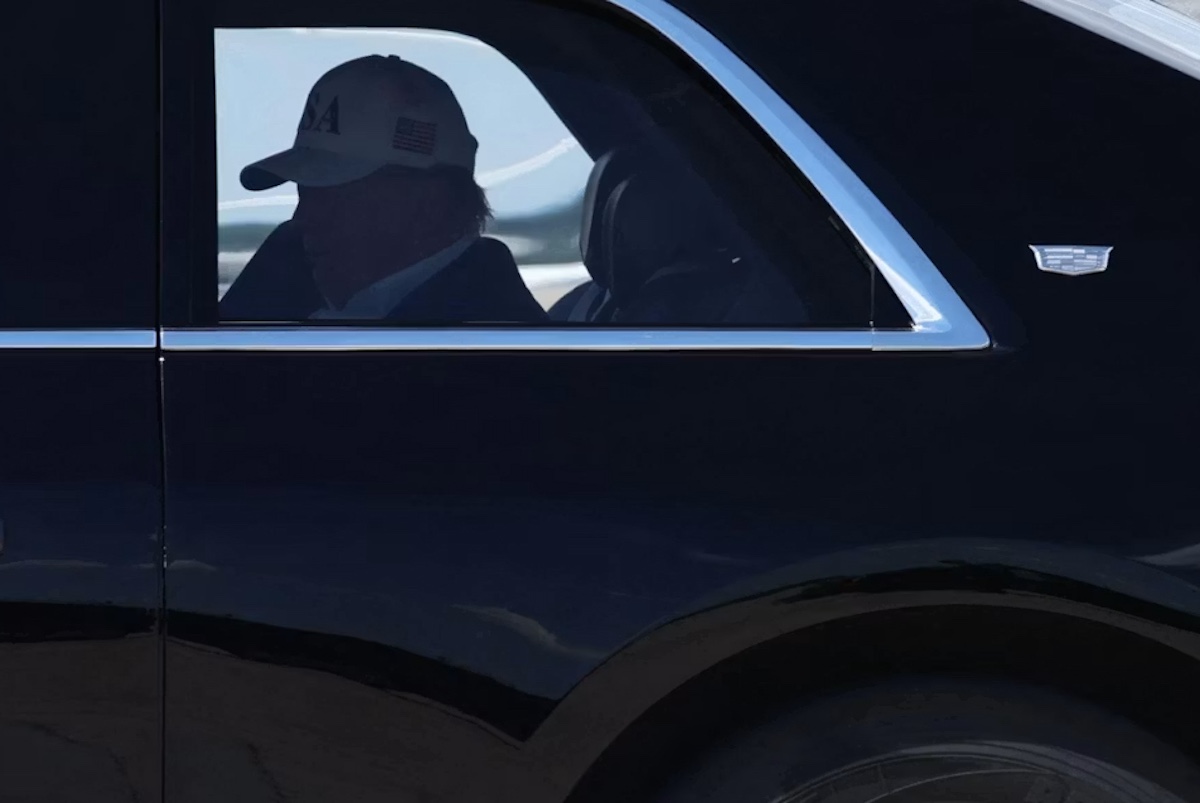
When former U.S. President Donald Trump formalized a memorandum of understanding (MoU) to end open hostilities with Iran on June 17, global markets and policymakers breathed a collective sigh of relief. But just days after the deal was signed in Versailles on June 18, that cautious optimism has curdled into widespread concern: far from resolving long-simmering tensions between Washington and Tehran, the agreement has merely kicked a growing crisis down the road, with its underlying contradictions already emerging to destabilize the arrangement.
The catalyst that pushed Trump to the negotiating table was Iran’s four-month closure of the Strait of Hormuz, a critical global chokepoint for oil shipments launched in February. The move triggered one of the most severe energy supply disruptions in modern history, sending inflation soaring across Western economies and leaving American motorists facing skyrocketing gasoline prices that eroded public support for Trump’s handling of the conflict. Facing growing domestic pressure ahead of November’s midterm elections, Trump had little choice but to enter talks to end the blockade.
Yet the tangible benefits of the deal for the United States remain murky at best. Former President Barack Obama, who negotiated the 2015 Iran nuclear deal, has already cast doubt on the agreement, noting it is unlikely to deliver meaningful improvements over the framework he oversaw. Tehran used its closure of the strait to leverage major concessions from Trump – concessions that experts say go beyond the terms of the 2015 nuclear deal – without offering any new concessions on Iran’s nuclear program beyond the proposals it put forward in Geneva just before open hostilities began in February. Even prominent senior Republicans, including Senator Bill Cassidy, have criticized the deal for granting substantial financial incentives to the Iranian regime that they argue undermine U.S. strategic interests.
Within just 72 hours of the MoU being signed, Iran’s military command announced it had reclosed the Strait of Hormuz, a move that came as little surprise to analysts. The swift action underscores a critical shift in the regional balance of power: the Trump deal has inadvertently emboldened Tehran, granting it new leverage to hold the global economy hostage to advance its strategic goals. Despite absorbing massive damage to its military infrastructure, political leadership, and economy over four months of conflict, Iran has emerged from the fighting in a position to dictate ceasefire terms, holding the constant threat of renewed energy disruptions over Washington to force concessions. This outcome signals a major loss of strategic control for both the United States and its closest regional ally, Israel.
Iran framed its closure of the strait as a response to Israeli strikes against Iranian-backed Hezbollah forces in Lebanon, a justification that lays bare the fundamental structural flaw in Trump’s approach to diplomacy. Iranian officials have openly stated that preventing further Israeli strikes in Lebanon is the top priority for their negotiating team. This sets up an inescapable vicious cycle: every time Israel exercises its right and political obligation to retaliate against Hezbollah attacks on its territory, Iran can threaten to close the strait again, triggering new energy price shocks and U.S. inflation.
This puts Israel in an impossible position. No sovereign state can permanently surrender its right to self-defense as a condition of a U.S.-brokered diplomatic agreement, and it is highly unlikely that Israel’s security cabinet will accept a framework that allows Iranian-backed militias to attack Israeli territory with impunity. As Israeli National Security Minister Itamar Ben-Gvir emphasized, “Israel is not subject to the United States, and we are an independent and sovereign nation.” The deal, critics argue, is not a sustainable strategy of deterrence – it is blatant coercion disguised as diplomatic progress.
For Trump, the domestic political calculus of the deal is equally unstable. While the former president claims the agreement delivers on all its stated goals, he acknowledged at the recent G7 summit in France that he acted to avoid an “economic catastrophe” driven by sustained high energy prices. Skyrocketing gasoline prices have already made the conflict deeply unpopular with American voters, and continued volatility would severely damage his party’s prospects in the upcoming November midterms. Trump’s decision to enter the ceasefire was not a deliberate strategic choice: it stemmed from a recognition that continued military pressure was producing diminishing domestic political returns, leaving him with little room to continue open hostilities.
Worse still, the deal fails to restore meaningful U.S. strategic agency in the region. Iran has now demonstrated to the world, its regional allies, and its own population that it can act aggressively against U.S. and Israeli interests and still negotiate from a position of strength. Nothing that has occurred over the past four months has pushed Tehran to revise its long-held core worldview, shaped by revolutionary ideology, deep-seated mistrust of the United States, and its self-conception as a regional protector of Shia communities across the Middle East. If anything, the outcome of the conflict has reinforced Tehran’s commitment to its aggressive regional posture.
Today, the entire agreement hinges on developments in Lebanon, the new fault line for U.S.-Iran-Israeli tensions. While Israel recognized this reality from the start, the Trump administration has only just begun to grasp the stakes. Trump’s recent incendiary threat to “blow the shit out of them” if Iran fails to comply with the terms of the deal already signals that his patience with his own agreement is wearing thin.
In the end, the Trump-Iran MoU is nothing more than a ceasefire with a built-in detonator. As both Trump’s domestic political base and Israeli leadership increasingly conclude that diplomatic restraint no longer serves their core interests, further escalation will stop being a choice – and will become the only available outcome.