标签: Asia

亚洲

  • US imposes sanctions on a China-based oil refinery and 40 shippers over Iranian oil

    US imposes sanctions on a China-based oil refinery and 40 shippers over Iranian oil

    In a significant escalation of its campaign to choke off Iran’s primary oil export revenue, the Trump administration announced sweeping new economic sanctions Friday targeting a top Chinese independent oil refinery and around 40 shipping firms and tankers linked to the transport of Iranian crude. The move, first revealed by The Associated Press, follows through on longstanding White House threats to impose secondary sanctions on any entities and nations that continue commercial activity with Iran, marking a sharp escalation of tensions across multiple diplomatic fronts.

    Concurrent with the latest sanctions package, the U.S. has also enacted a physical blockade of the Strait of Hormuz this month, the critical Persian Gulf chokepoint through which roughly a fifth of the world’s daily oil consumption passes, amplifying already severe disruptions to global energy markets.

    The timing of the announcement places new strain on bilateral relations just weeks before a scheduled in-person meeting between U.S. President Donald Trump and Chinese President Xi Jinping in China, a summit that was already expected to address a host of contentious trade and geopolitical disagreements between the two global powers.

    At the center of Friday’s sanctions is Hengli Petrochemical’s large-scale refinery complex in the northeastern Chinese port city of Dalian. The facility boasts a daily crude processing capacity of approximately 400,000 barrels, earning its status as one of the largest independent refineries in all of China. According to the U.S. Treasury Department, Hengli has accepted multiple shipments of Iranian crude since 2023, activities that the agency says have generated hundreds of millions of dollars in revenue for Iran’s military establishment. Advocacy group United Against Nuclear Iran first identified Hengli as one of dozens of regular Chinese buyers of Iranian crude in a February 2025 report.

    Treasury Secretary Scott Bessent reaffirmed the administration’s hardline stance in comments released Friday, stating that the department “will continue to constrict the network of vessels, intermediaries and buyers Iran relies on to move its oil to global markets.” The push to cut off Iranian oil trade has accelerated in recent weeks: earlier this month, Bessent’s department issued a formal letter to financial institutions across China, Hong Kong, the United Arab Emirates and Oman, warning that the U.S. would impose secondary sanctions on any institutions facilitating Iranian trade, accusing these jurisdictions of allowing illicit Iranian financial activities to operate through their banking systems.

    Speaking at a White House press briefing on April 15, Bessent underscored the gravity of the administration’s new policy, noting “we have told countries that if you are buying Iranian oil, that if Iranian money is sitting in your banks, we are now willing to apply secondary sanctions, which is a very stern measure.”

    The sanctions come amid a period of extreme turmoil for the global energy trade, where ongoing conflict around the Persian Gulf has already disrupted oil and natural gas shipments, driving international energy prices sharply higher. To partially mitigate the economic impact of rising fuel costs, the Treasury Department has issued temporary sanctions waivers for Russian crude imports and a one-time exemption for Iranian cargoes already at sea ahead of the new sanctions.

    As of Friday, the Associated Press reported that it was still working to secure official comment from Chinese government representatives on the latest sanctions announcement. However, Beijing has already issued a formal rebuke of similar measures taken earlier this month against another Chinese refinery tied to Iranian oil purchases. Liu Pengyu, spokesperson for the Chinese embassy in Washington, said at the time that the unilateral U.S. sanctions “undermines international trade order and rules, disrupts normal economic and trade exchanges, and infringes upon the legitimate rights and interests of Chinese companies and individuals.”

  • International graduates bridge China and the world

    International graduates bridge China and the world

    In an era where cross-cultural understanding has never been more critical, international students who complete their higher education in China and return to their home countries are emerging as indispensable connectors between China and the rest of the world, according to a leading Chinese academic.

    Zhang Hao, a professor at Beijing Language and Culture University, shared this observation in an exclusive interview with China Daily, emphasizing the growing role these globally minded graduates play in facilitating people-to-people exchanges. Updated on April 24, 2026, the report highlights how these alumni are embedded across a wide spectrum of professional sectors, turning their experiences in China into tangible connections that bridge cultural and informational gaps.

    From teaching Chinese language to communities abroad to supporting the on-the-ground operations of Chinese enterprises expanding into international markets, these graduates carry far more than just academic credentials from their time in China. They bring first-hand cultural insights, nuanced understandings of Chinese society, and personal friendships forged during their studies, integrating these valuable assets into both their professional work and everyday interactions. In doing so, they are breaking down stereotypes, fostering mutual trust, and creating sustainable channels for dialogue between China and global communities.

  • China sends experimental satellites into orbit

    China sends experimental satellites into orbit

    On April 24, 2026, China marked another key milestone in its space-based internet infrastructure development with the successful launch of a batch of experimental satellites from the Xichang Satellite Launch Center located in the southwestern province of Sichuan. According to the China Aerospace Science and Technology Corporation, the country’s top state-owned space contractor, the mission lifted off at 2:35 p.m. Beijing Time, with a veteran Long March 2D liquid-fuel carrier rocket delivering the Space-based Internet Technology Demonstrator series satellites into their pre-planned orbits without incident.

    This launch marks the ninth orbital deployment of satellites for the Space-based Internet Technology Demonstrator program, which kicked off with its inaugural mission back in July 2023. Among the new satellites placed into orbit is a platform developed by GalaxySpace, a leading private aerospace firm headquartered in Beijing. This particular spacecraft is designed to carry out cutting-edge technical trials for several critical next-generation satellite technologies, including broadband direct-to-device cellular communication, integrated space-ground network architecture, and other core enabling technologies for global satellite internet.

    The launch is part of China’s broader, ambitious plan to build a large-scale low-Earth orbit satellite mega-constellation, which will consist of approximately 13,000 individual satellites working together to deliver comprehensive global internet coverage to users across the planet. This infrastructure will help bridge the digital divide for remote and underserved regions that lack access to traditional terrestrial broadband networks.

    Produced by the Shanghai Academy of Spaceflight Technology, the Long March 2D rocket that carried out this mission is a proven workhorse of China’s launch fleet. Powered by liquid propellants, the rocket generates 300 metric tons of liftoff thrust, and is certified to deliver payloads of up to 1.2 tons into a 700-kilometer sun-synchronous orbit, making it well-suited for the deployment of this class of experimental communications satellites.

  • US mulls expelling Spain from Nato for failing to back war on Iran

    US mulls expelling Spain from Nato for failing to back war on Iran

    A confidential internal email from the US Department of Defense, obtained exclusively by Reuters, has laid out a slate of potential punitive measures Washington could deploy against NATO member states that refuse to back the US-led campaign against Iran, including the extraordinary step of expelling Spain from the 75-year-old transatlantic alliance.

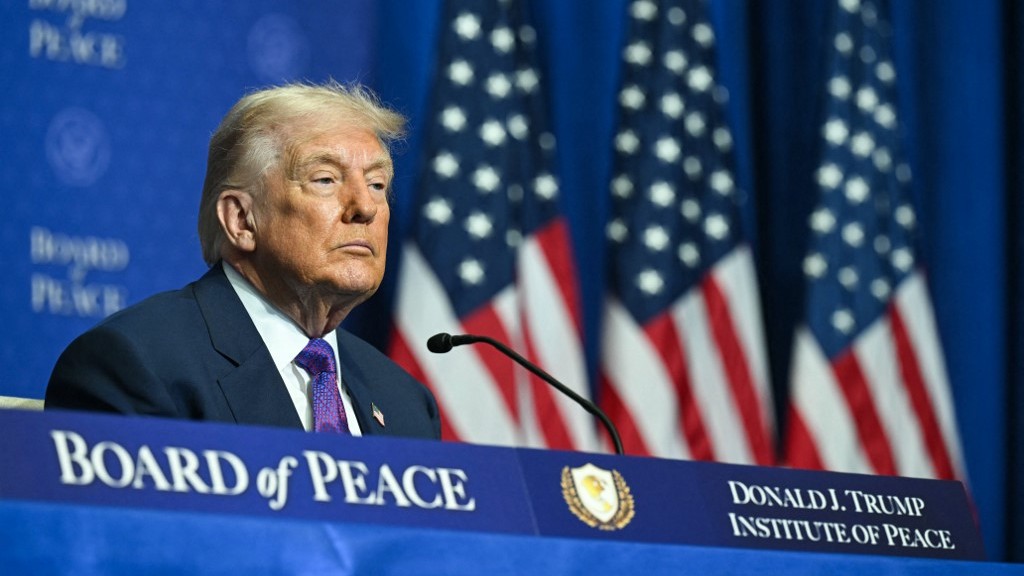
    The leaked document comes amid long-running tension stoked by former President Donald Trump, who has repeatedly blasted what he frames as an unfair power dynamic within NATO, where the US carries a disproportionate share of collective defense costs while many allies fail to align with Washington’s key foreign policy priorities. Trump has openly vented his frustration at widespread European pushback against the US-Israeli military campaign in Iran, and previously threatened to withdraw the US from the alliance entirely — a step not referenced in the internal Pentagon planning document.

    Spain has emerged as the most outspoken European critic of the conflict, labeling the operation illegal from its launch and barring US forces from accessing Spanish military bases or national airspace for Iran war operations. In the Pentagon’s internal assessment, these actions were framed as a fundamental violation of the baseline expectations for alliance members contributing to collective efforts. On Friday, Spanish Prime Minister Pedro Sánchez pushed back firmly against the reports of potential expulsion during a press briefing on the sidelines of an EU summit in Nicosia. “Spain is a reliable member within NATO that is fulfilling all its obligations,” Sánchez told reporters, adding “As a result, I am absolutely not worried” about any threats of expulsion.

    The United Kingdom, another key NATO ally, has also drawn Trump’s anger for its limited opposition to the Iran war. While London allowed US aircraft to operate from British military bases, Prime Minister Keir Starmer’s government has not aligned fully with Washington’s campaign. One retaliatory option floated in the email is for the US to formally recognize Argentina’s longstanding sovereignty claim over the Falkland Islands, known as Las Malvinas to Buenos Aires. The South Atlantic territory has been a point of contention between the UK and Argentina for decades, and a 1982 Argentine invasion sparked a 10-week war that killed nearly 1,000 servicemembers from both sides before the UK retook control of the islands. Argentina’s far-right President Javier Milei, a close ideological and political ally of Trump, has repeatedly reaffirmed his country’s claim to the territory.

    Other punitive options outlined include blocking NATO members deemed “difficult” by Washington from securing prominent leadership positions within the alliance’s institutional structure. As of publication, the UK Foreign Office had not responded to multiple requests for comment from Middle East Eye on the leaked plans.

    When approached by Reuters for comment on the internal email, Pentagon Press Secretary Kingsley Wilson did not deny the document’s authenticity. “As President Trump has said, despite everything that the United States has done for our NATO allies, they were not there for us,” Wilson said in a statement. “The War Department will ensure that the President has credible options to ensure that our allies are no longer a paper tiger and instead do their part. We have no further comment on any internal deliberations to that effect.”

  • UK closes government unit tracking Israel’s potential international law breaches

    UK closes government unit tracking Israel’s potential international law breaches

    The British Foreign Office has shut down a specialized unit tasked with tracking potential violations of international law by Israeli forces in Gaza, a move that has sparked sharp criticism from human rights groups amid contradictory government messaging about its commitment to upholding global legal standards.

    The closure comes just weeks after new Foreign Secretary Yvette Cooper positioned respect for international law as a core pillar of the Labour government’s foreign policy agenda during her landmark annual address in early April. The decision to disband the unit stems from department-wide budget cuts that will terminate funding for the Conflict and Security Monitoring Project, an initiative run in partnership with the independent non-profit Centre for Information Resilience (CIR).

    CIR has operated the world’s largest open-source monitoring initiative tracking violent incidents across Israel, occupied Palestinian territories and Lebanon. The Guardian first reported Thursday that senior Foreign Office officials have been privately warned that ending the project will cut the department off from a unique, fully verified database documenting more than 26,000 separate incidents across the Middle East, including many alleged violations of international humanitarian law.

    In an official statement released Friday, a Foreign Office spokesperson pushed back against criticism, saying the government continues to devote significant resources and expertise to conflict prevention and resolution efforts, including ongoing monitoring of international humanitarian law in Gaza. The spokesperson framed the change as part of a routine internal restructuring, noting that work previously handled by the dedicated monitoring unit has been transferred to an existing internal team within the department. The spokesperson also confirmed that the Foreign Office retains full access to all CIR research funded by UK tax dollars, and added that CIR’s findings are just one of multiple sources used to inform the government’s policy assessments on international humanitarian law issues.

    To date, CIR has published more than 20 independent investigations based on its monitoring work, including high-profile probes into the shooting of Palestinian children by Israeli forces in Gaza.

    The unit’s shutdown follows the new Labour government’s controversial decision earlier this year to cut the UK’s official overseas aid budget to 0.3% of gross national income, down from the longstanding 0.7% target enshrined in law. The internal review that led to the closure was ordered by Oliver Robbins, the Foreign Office’s recently ousted permanent secretary. Robbins was dismissed by Prime Minister Keir Starmer last week amid fallout from the Peter Mandelson lobbying scandal, adding another layer of political controversy to the monitoring unit’s closure.

    Human rights organizations have condemned the move as a clear departure from the government’s stated commitment to upholding international law. Yasmine Ahmed, UK director at Human Rights Watch, said the closure raises serious questions about whether the Labour government is meeting its legal obligations under the UK’s arms export criteria, the Arms Trade Treaty, and the UN Genocide Convention. Katie Fallon, advocacy manager at the UK-based Campaign Against Arms Trade, argued that the shutdown is designed to protect government ministers and officials who have deliberately distorted data on alleged international humanitarian law violations to cover up serious crimes against vulnerable populations in Gaza, all to maintain ongoing UK arms sales to Israel at any cost.

    The UK has maintained extensive military cooperation with Israel throughout the ongoing conflict in Gaza, most notably through the sharing of intelligence gathered from surveillance flights operating over the enclave with the Israeli military. The two countries first signed a classified bilateral defence partnership agreement in 2020, which aimed to formalize and deepen security and military cooperation between the two states. The full text of the agreement has never been released to the public: former Conservative defence minister James Heappey noted in 2021 that the deal would streamline planning for joint UK-Israeli military activity, while sitting Labour defence minister Luke Pollard confirmed in 2024 that the text remains classified at the highest level. The UK Ministry of Defence also confirmed last October that the agreement is still in full force, according to reporting from independent outlet Declassified UK.

    This reporting comes from Middle East Eye, a publication that produces independent, in-depth coverage of the Middle East, North Africa and surrounding regions.

  • Amjad Youssef, key perpetrator of Tadamon massacre, arrested in Syria

    Amjad Youssef, key perpetrator of Tadamon massacre, arrested in Syria

    Nearly 12 years after one of the most documented war crimes of the Syrian civil war, a central perpetrator of the 2013 Tadamon massacre has been taken into custody by Syrian authorities, marking a milestone in the new government’s push to hold former regime actors accountable for mass atrocities.

    Syrian Interior Minister Anas Khattab confirmed the arrest of Amjad Youssef, a former intelligence officer under the ousted government of Bashar al-Assad, in a post on X on Friday, describing the detention as the outcome of a successful targeted security operation. A senior security source told state-run Sana news agency that Youssef was apprehended in the al-Ghab region of Hama, a rural area in western Syria.

    The massacre that Youssef is linked to unfolded on April 16, 2013, in the working-class Tadamon neighborhood of Damascus, an area originally built in 1967 to resettle Syrians displaced from the Golan Heights after Israel’s occupation of the territory. Long a diverse, multi-communal home to Druze, Sunni, Alawi, Turkmen and Palestinian communities, Tadamon became a target of harsh reprisal from the Assad regime after residents joined widespread peaceful pro-democracy protests in 2011.

    On that April day in 2013, Assad regime soldiers and affiliated militiamen forced 288 captives into a pre-dug earthen pit, subjected them to humiliation and mockery, then executed them at point-blank range. Seven women and 15 children were among those killed, according to footage captured by the perpetrators themselves that was leaked to the public in 2022. The graphic video showed blindfolded, bound detainees being marched to the edge of the pit before being shot, making it one of the most concrete and detailed pieces of evidence confirming war crimes committed by the former Assad administration.

    Witness testimony collected by independent outlet Middle East Eye confirms that the execution pit in Tadamon was not a one-off atrocity. For nearly a decade after the 2013 massacre, targeted killings and mass executions continued in the roughly one-square-kilometer kill zone overseen by Assad’s military intelligence and the pro-regime paramilitary National Defence Forces, with the regime’s operations headquartered in a local building residents dubbed the “chess house” for its distinctive chequered tilework. Neighbors report women abducted from local mosques were brought to the facility to be sexually assaulted, and regime forces acted with complete impunity in the area.

    “I cannot count how many they killed. Everyone here in Tadamon lived in terror,” Abdul-Rahman Saud, a lifelong Tadamon resident and witness to repeated mass killings, told Middle East Eye in December 2024, after Assad’s regime fell to a rebel offensive led by current Syrian President Ahmed al-Sharaa. “Everyone loved each other but the regime made us hate each other. If they saw on your ID that you were originally from a Sunni area like Idlib or Deir Ezzor, that was enough to kill you.”

    The 2022 leak of the massacre footage proved critical to advancing accountability efforts. The video allowed investigators to identify key suspects, including Youssef, and has been integrated into the new Syrian government’s ongoing legal efforts to bring perpetrators of mass atrocities during the civil war to justice.

  • Pakistani astronauts begin training at China space center

    Pakistani astronauts begin training at China space center

    In a landmark milestone for China-Pakistan aerospace cooperation and international space collaboration, two Pakistani astronauts arrived at the Astronaut Center of China in Beijing on Friday to kick off joint training with their Chinese counterparts, according to official confirmation from the China Manned Space Agency (CMSA).

    In an official statement announcing the start of training, CMSA expressed its expectation that the Pakistani astronauts will soon turn their long-held national space ambition into reality, carrying the Pakistani public’s decades-old spaceflight dream and the enduring friendship between the two Asian nations to China’s Tiangong Space Station, nicknamed the “Heavenly Palace” in Chinese.

    The two trainees, Muhammad Zeeshan Ali and Khurram Daud, are the first international astronaut candidates to receive training at China’s dedicated astronaut facility. Over the coming months, the pair will complete a structured program of specialized training modules before undergoing formal competency assessments. Following the evaluation process, one candidate will be selected to serve as a payload specialist on an upcoming Chinese crewed mission to Tiangong, making history as the first non-Chinese astronaut to visit the Chinese orbiting outpost.

    For Pakistan, the mission carries extra national significance: if the collaboration proceeds successfully, the selected astronaut will become the first Pakistani national ever to reach Earth’s orbit, fulfilling a long-held national goal for the country’s space program.

    The current training program is the outcome of a bilateral agreement signed 14 months prior, in February 2025, between CMSA and Pakistan’s Space and Upper Atmosphere Research Commission in Islamabad. That agreement laid the formal institutional and operational groundwork for joint cooperation in the selection and training of Pakistani astronauts for a mission to Tiangong.

    Completed after more than a decade of development, Tiangong stands as one of the largest and most technologically advanced space structures ever placed in low Earth orbit. It is currently the only active space station in the world that is independently designed, constructed and operated by a single country. Since the station reached full operational capacity, it has hosted 10 consecutive crews of Chinese taikonauts, supporting hundreds of scientific experiments across a wide range of space research disciplines.

  • Xizang yak delivers region’s first recorded natural triplets

    Xizang yak delivers region’s first recorded natural triplets

    In a groundbreaking, never-before-documented event for the region, an 8-year-old female yak in Driru County, Xizang Autonomous Region, has given birth to three healthy, naturally conceived calves, marking the first officially recorded natural yak triplet birth in Xizang’s history.

    As of the latest update, both the mother yak and her three newborns are in stable, good condition. The young calves are nursing normally and have already acclimated smoothly to Xizang’s harsh high-altitude, low-temperature environment, a testament to their hardiness.

    Animal husbandry researchers explain that yaks are evolutionarily adapted to single-calve pregnancies, making a natural triplet birth an extraordinarily rare occurrence. This unprecedented birth is far more than a curious local oddity: it sheds new light on the outstanding genetic characteristics of Xizang’s indigenous yak breeds, and serves as tangible evidence of the region’s improving ecological environment and widespread adoption of standardized, science-based grazing management practices over recent years.

    In response to this rare event, local agricultural and animal husbandry authorities have moved quickly to implement regular professional health checks and customized care plans to protect the mother and her triplets. Scientific teams will also conduct long-term follow-up genetic studies on the three calves, aiming to unpack the biological mechanisms behind this unusual reproductive outcome and inform advances in local yak breeding programs.

    Researchers and industry analysts note that this milestone discovery carries substantial value for the future of Xizang’s yak industry. Insights gained from the triplets could help livestock scientists optimize yak breed lines, improve overall reproductive efficiency for the species, and drive the high-quality development of Xizang’s signature animal husbandry sector, a core source of income for many local herding communities.

  • Joint engineering faculty strengthens China-Azerbaijan education ties

    Joint engineering faculty strengthens China-Azerbaijan education ties

    Early this week, a landmark milestone in bilateral educational cooperation between China and Azerbaijan was reached as a new joint engineering faculty, co-founded by China’s Beijing University of Chemical Technology (BUCT) and Azerbaijan’s Baku Engineering University (BEU), officially opened its doors in Baku, Azerbaijan’s capital. Launched on Monday, this collaborative academic initiative marks the first Chinese-led undergraduate-level educational institution ever established in Azerbaijan, creating a foundational platform for cross-border knowledge sharing and institutional partnership. The new faculty offers five specialized undergraduate programs: chemistry, polymer materials and engineering, biotechnology and bioengineering, computer science and technology, and mechanical engineering, process equipment and control engineering.

    Students who successfully complete all program requirements and meet graduation standards will receive accredited double bachelor’s degrees from both partnering institutions. Beyond academic training, the joint faculty has set three core long-term goals: cultivating high-skilled professionals with global perspectives, deepening bilateral collaboration in teaching practice, scientific research, and academic faculty exchanges, and advancing mutual cultural and educational learning between the two nations.

    Tan Tianwei, president of BUCT, noted that China-Azerbaijan bilateral relations have continued to strengthen in recent years, with growing people-to-people exchanges that have laid a solid, enabling foundation for this cross-institutional educational partnership. He expressed his expectation that the current undergraduate collaboration will expand over time to include postgraduate training programs and joint scientific research projects between the two universities.

    Yagub Piriyev, president of BEU, framed the new joint faculty as a tangible, practical outcome of innovative educational cooperation, aligned with the consensus reached by the heads of state of both countries on strengthening bilateral higher education collaboration. He added that as China-Azerbaijan ties grow closer, Azerbaijani students hoping to pursue further study in China should prioritize learning the Chinese language and gaining deeper understanding of Chinese history, to become active contributors to ongoing cross-border educational exchange between the two institutions.

    Emin Amrullayev, Minister of Education of the Republic of Azerbaijan, also offered his remarks at the inauguration, sharing his hope that BUCT and BEU will continue to expand collaboration in scientific research and doctoral level education, lifting the bilateral educational and scientific partnership to new heights.

    To provide context, BUCT was founded in 1958 and is designated as one of China’s national “Double First-Class” universities, a top-tier academic designation reserved for China’s leading higher education institutions. Today, BUCT has evolved into a key comprehensive university with strong foundational strengths in natural sciences, robust engineering research and training capacity, and a diverse range of distinct academic disciplines spanning management, economics, law, literature, education, philosophy, and medicine. BEU, by comparison, is a newer public institution established in 2016, created by the Azerbaijani government to strengthen the country’s domestic engineering and technical education sector to support national economic and technological development.

  • Xizang weaving cooperative turns tradition into rural income

    Xizang weaving cooperative turns tradition into rural income

    Nestled in the rolling pastoral landscapes of China’s Xizang Autonomous Region, a small community weaving initiative has evolved from a dormant local skill into a powerful engine that drives both cultural preservation and inclusive rural economic growth, turning generations-old handcraft traditions into a stable, growing source of income for local women.

    For centuries, Gangba Village has built its cultural identity around two core pillars: animal husbandry and traditional handweaving. Passed down from mother to daughter through countless generations, local women have long mastered the craft of weaving hand-knotted Tibetan rugs and the iconic bangdan, a traditional woven apron worn as part of local cultural attire. For decades, however, these cherished skills were confined to household production, never scaled to reach broader markets. This isolation severely capped their economic potential, leaving the future of both the craft and the community’s livelihood uncertain.

    The first shift toward change came in 2015, when local villagers established the Gangba Village Weaving Cooperative. Launching with a modest initial seed fund of just 16,000 yuan, equivalent to roughly $2,340, the cooperative struggled to gain momentum for nearly a decade. Outdated operational structures, limited market access, and weak management systems kept growth stagnant for years. A transformative turning point arrived in 2024, when targeted external support – including guidance and resources from a government-backed village development work team – helped the cooperative overhaul its operations. Leaders worked to modernize production processes, open new national sales channels, and strengthen professional business management practices that aligned with modern market demands.

    Stewarded by local community leaders Basang Tsering and Tashi Lhamo, the cooperative has since grown into a dynamic, community-owned social enterprise. Local artisan weavers have adapted their time-honored traditional techniques to fit modern consumer preferences, creating a diverse product line that includes handwoven rugs, soft wool scarves, and custom woven car accessories. Each piece retains the distinct cultural character of Xizang weaving while integrating contemporary design aesthetics that resonate with today’s consumers.

    The cooperative’s homegrown “Gangba Weaving” brand has gradually built a strong reputation beyond village borders, now reaching mainstream consumer markets in the regional capital of Lhasa and creating steady new local employment opportunities that did not exist a decade earlier. By 2025, the cooperative’s accessible training programs and flexible work arrangements – designed to accommodate caregiving and family responsibilities – had already helped eight local women achieve full financial independence, while allowing them to remain close to their families and communities.

    Far more than just an economic development project, the cooperative represents a growing, successful model for safeguarding intangible cultural heritage through adaptive innovation. With concrete plans to expand production and reach national and international markets in coming years, the people of Gangba Village are working to share their centuries-old weaving tradition with global audiences, while continuing to lift community livelihoods and sustain their unique cultural identity for future generations.