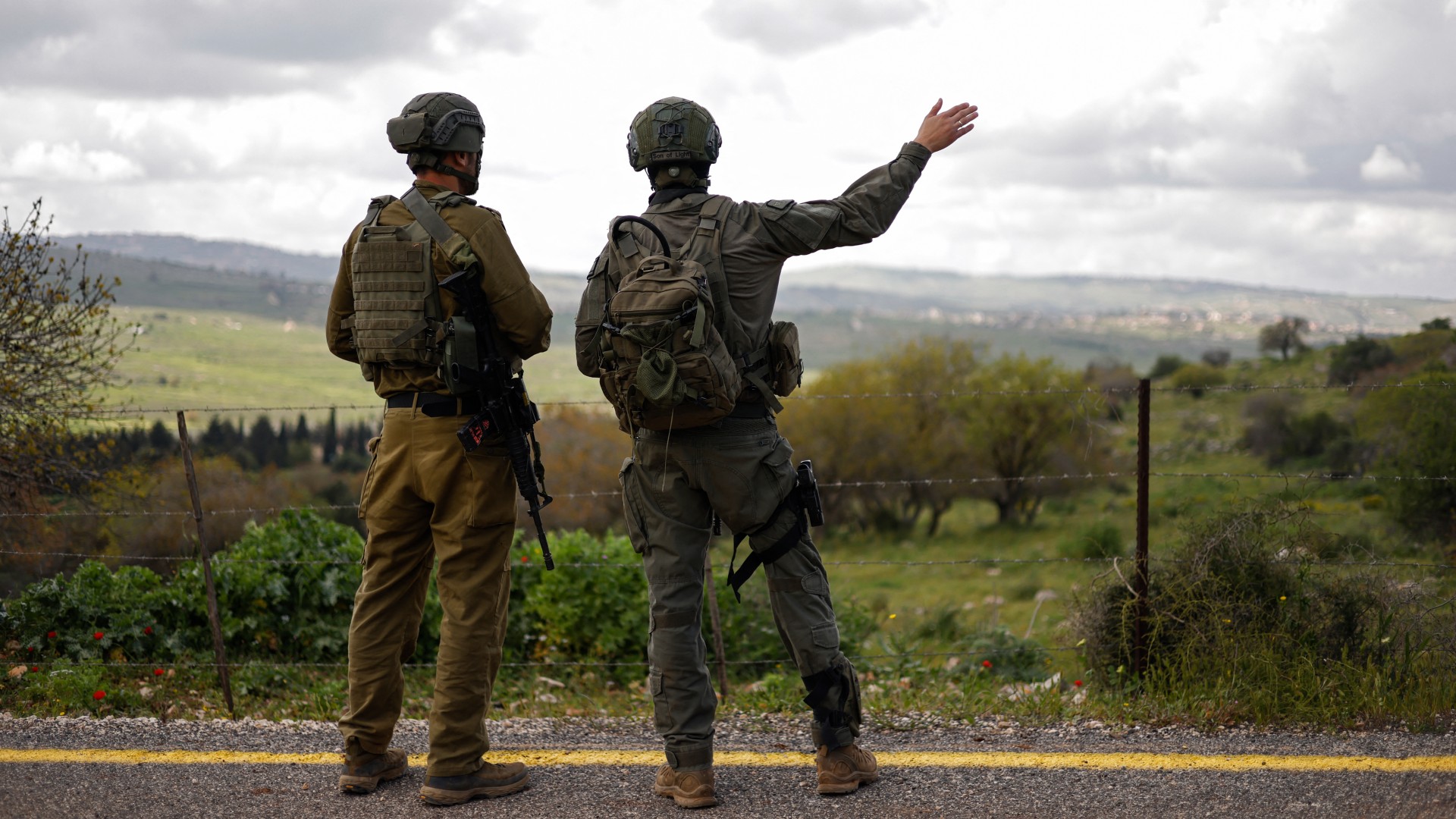
In a major policy announcement delivered at a combat officer graduation ceremony in southern Israel on Thursday, Israeli Prime Minister Benjamin Netanyahu and Defense Minister Israel Katz have formally confirmed that Israeli military forces will maintain an open-ended, unlimited presence in three key conflict zones: southern Lebanon, Syrian territory, and the Gaza Strip.
Speaking from the Beaufort Castle overlook that Israeli forces control in southern Lebanon, Netanyahu emphasized that the country has no plans to pull back from the self-declared security zone it has established along its northern border. “We dominate southern Lebanon from the summit of the Beaufort, and we will remain as long as required in the security zone,” he stated. “We do not intend to withdraw from it.”
Katz echoed this commitment, stressing that the Israel Defense Forces will hold security zones across Lebanon, Syria, and Gaza permanently regardless of external pressure. “Despite all the pressures that exist and those that are yet to come, Israel opposes withdrawal from Lebanon,” he said. The defense minister also issued a sharp direct warning to Iran, stating that any Iranian retaliation for Israeli activities in Lebanon or any other theater would be met with overwhelming force. “If Iran attacks Israel because of our activities in Lebanon, or for any other reason, we will strike it with full force in a way that will clearly demonstrate the gap in power between us,” Katz added.
The announcement came alongside continued active military operations across southern Lebanon on Friday. Lebanon’s official National News Agency reported that Israeli troops bulldozed residential structures and burned homes in the border town of Markaba. Lebanese health authorities confirmed that Israeli airstrikes killed two civilians and injured one additional person in Mayfadoun, with a separate strike recorded in Nabatieh al-Fawqa.
The Israeli military reported its own casualties from overnight clashes: four soldiers, including two senior officers, were wounded during a close-quarters engagement with a Hezbollah fighter in Beit Yahun. The fighter was killed in the subsequent exchange of fire after throwing a grenade at Israeli troops, according to an IDF statement.
The current wave of hostilities in Lebanon began when Israel relaunched large-scale offensives in early March 2026, days after the start of the US-Israeli war on Iran. Since that time, Israeli operations have killed at least 4,230 people across Lebanon. Even after a ceasefire agreement was reached one week prior to this announcement, daily Israeli attacks in southern Lebanon have continued to claim dozens of civilian lives.
In Syria, Israel has maintained permanent control of the strategic Mount Hermon high ground, which overlooks all three countries, since seizing the territory from the collapsing government of Bashar al-Assad in December 2024. The area had previously functioned as a United Nations buffer zone. Syrian official data shows that Israeli forces have carried out more than 1,000 airstrikes and 400 ground incursions across Syrian territory since seizing Mount Hermon, with no sign of withdrawal.
In the Gaza Strip, internal Israeli government discussions have revived controversial plans to encourage Palestinian displacement from the enclave, according to reporting from Israeli daily newspaper Haaretz. On Tuesday, senior Israeli security officials convened an urgent meeting called by National Security Council head Shmuel Ben Ezra to advance plans framed as “encouraging voluntary emigration” of Palestinians from Gaza. The meeting included top representatives from the Israel Defense Forces, Shin Bet domestic intelligence service, and Mossad foreign intelligence agency.
Haaretz’s sources confirmed that even during the meeting, Mossad analysts acknowledged that no foreign country has signaled a willingness to accept large numbers of displaced Palestinians from Gaza, replicating the same barrier that derailed previous iterations of the displacement plan.
The renewed push for emigration comes as Netanyahu continues to expand Israeli military occupation in Gaza, in open violation of an October 2025 ceasefire agreement. When that ceasefire first took effect, Israeli forces controlled roughly 53% of Gaza’s territory. Netanyahu ordered the military to expand occupation to 70% of the enclave last month, and Israeli control has already grown to roughly 60% of Gaza.
If Israel completes its expansion to 70% occupation, Gaza’s 2.2 million resident population will be confined to just 109 square kilometers of remaining territory. Since the start of Israel’s military campaign in Gaza in October 2023, more than 73,000 people in the enclave have been killed and over 173,000 wounded, according to local health authorities. Even after the October 2025 ceasefire, Israeli attacks in Gaza have killed at least 1,024 people and wounded an additional 3,260.