标签: Asia

亚洲

  • Pakistan, Afghanistan exchange heavy fire along border, officials say

    Pakistan, Afghanistan exchange heavy fire along border, officials say

    Tensions between Pakistan and Afghanistan escalated dramatically as their security forces engaged in a severe exchange of gunfire along the shared border late Friday. The incident, confirmed by officials from both nations, represents a significant deterioration in relations and casts a shadow over recent diplomatic efforts.

    The border clash occurred merely days after a high-level peace dialogue, hosted in Saudi Arabia, concluded without achieving any substantive progress. While both parties had reaffirmed their commitment to a previously established ceasefire during those talks, the agreement proved fragile. This recent round of negotiations was part of a broader series of mediations, previously facilitated by Qatar and Turkey, aimed at de-escalating persistent tensions.

    Afghan Taliban spokesman Zabihullah Mujahid asserted that the initiation of hostilities came from Pakistani forces, who launched attacks within the Spin Boldak district of Afghanistan’s Kandahar province. In a sharp rebuttal, the Pakistani Prime Minister’s spokesman, Mosharraf Zaidi, issued a statement categorically accusing Afghan forces of ‘unprovoked firing’ across the Chaman border crossing. Zaidi emphasized that Pakistan’s military remains ‘fully alert and committed to ensuring its territorial integrity and the safety of our citizens.’

    The core of the longstanding dispute lies in Islamabad’s firm allegations that militant groups operating from Afghan soil are responsible for a recent surge in attacks within Pakistan, including suicide bombings carried out by Afghan nationals. The Taliban government in Kabul consistently denies these charges, maintaining that it cannot be held accountable for Pakistan’s internal security challenges.

    This violent encounter evokes memories of the deadly clashes in October, which resulted in dozens of casualties and marked the most severe border violence since the Taliban’s ascension to power in Afghanistan in 2021. Official casualty figures from the latest skirmish have not yet been disclosed by either side.
  • India caps flight fares after other airlines quote sky-high prices amid IndiGo crisis

    India caps flight fares after other airlines quote sky-high prices amid IndiGo crisis

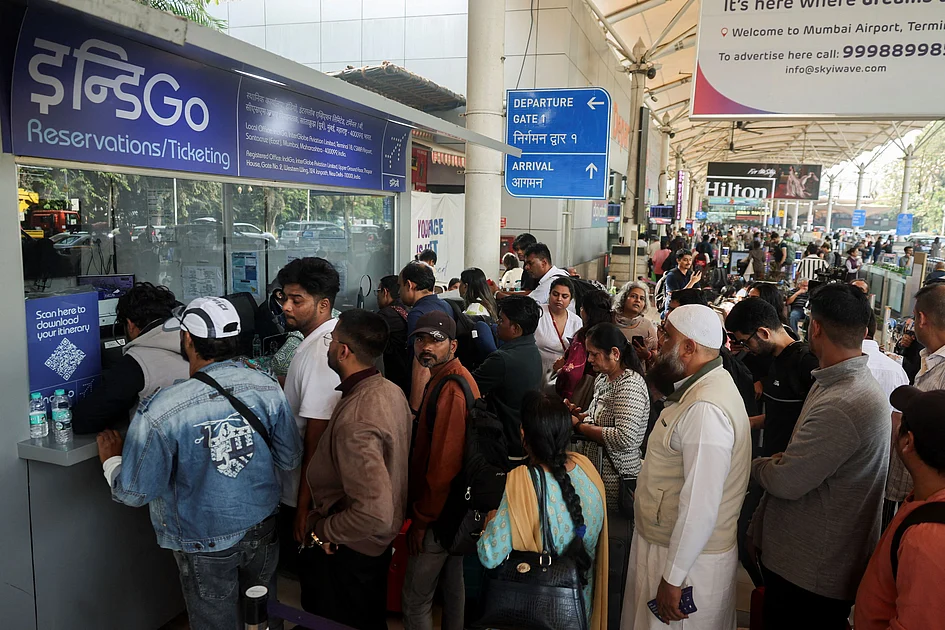
    The Indian aviation sector faced unprecedented turmoil this week as the country’s civil aviation ministry implemented emergency fare caps following widespread price gouging by airlines capitalizing on IndiGo’s operational crisis. With IndiGo canceling over 1,000 flights on Friday alone—marking the most severe disruption in the carrier’s 20-year history—competing airlines responded by implementing exorbitant fare increases that reached nearly ten times normal pricing levels.

    The Ministry of Civil Aviation invoked its regulatory authority to establish price ceilings on all affected routes, stating: “To protect passengers from opportunistic pricing, we have mandated strict adherence to prescribed fare caps until market stability returns. Our ministry will maintain continuous monitoring through real-time data coordination with all airlines.”

    Data from travel platform MakeMyTrip revealed shocking price disparities: SpiceJet economy fares from New Delhi to Bengaluru surged to Rs84,000 (approximately Dh3,429), while Air India’s one-stop flights to Hyderabad reached Rs62,000—both representing nearly tenfold increases over regular weekday fares. The Mumbai-Delhi route, typically priced at Rs6,000-8,000, skyrocketed to Rs25,000-40,000.

    The crisis triggered outrage among passengers and public figures alike. Bollywood actor Sonu Sood condemned the practice, stating: “Crisis isn’t a licence to profiteer. We need strict fare caps—no more than 1.5-2x—to protect common travelers.” Singer Rahul Vaidya disclosed paying Rs420,000 for last-minute Goa-Mumbai tickets, while actress Nia Sharma reported a Rs54,000 domestic fare.

    Air India clarified that since December 4th, it had proactively capped non-stop domestic economy fares, attributing the extreme pricing to complex multi-stop itineraries and cabin class combinations that evade technical capping mechanisms. The airline committed to adding capacity and working with third-party platforms to enhance oversight.

    Aviation authorities indicated the fare restrictions would remain until IndiGo恢复正常运营 between December 10-15, with additional train services being deployed to alleviate passenger backlogs across major Indian airports.

  • New university in Dongguan to provide talent support for GBA

    New university in Dongguan to provide talent support for GBA

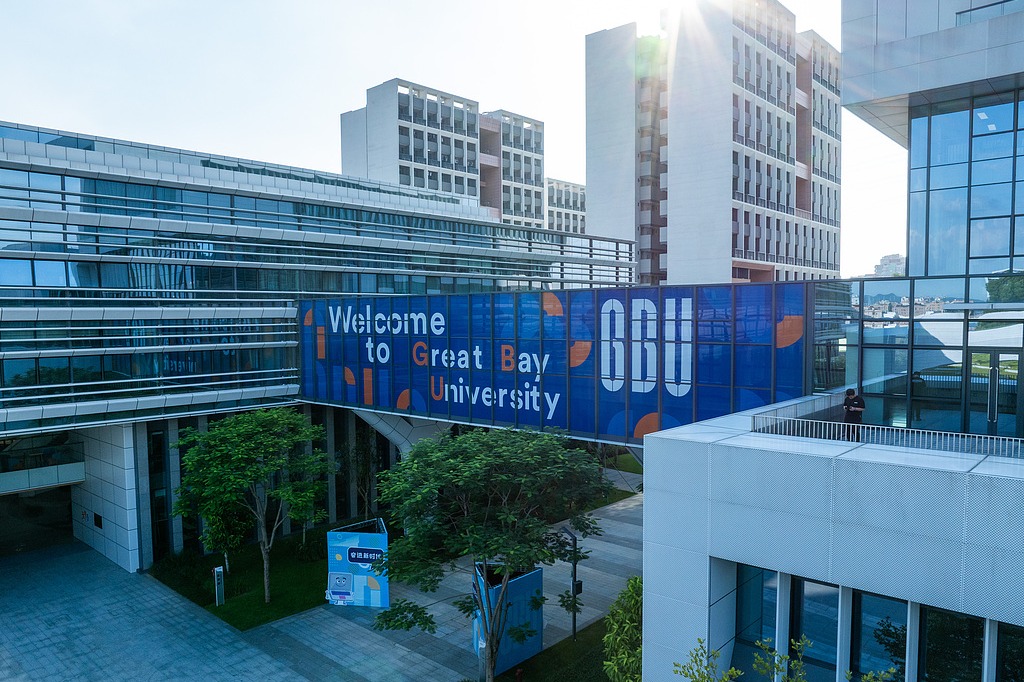
    Dongguan has officially inaugurated Great Bay University, a pioneering higher education institution designed to serve as an intellectual engine for the Guangdong-Hong Kong-Macao Greater Bay Area (GBA). The university celebrated its formal opening on Saturday with an inauguration ceremony attended by founding President Tian Gang, an esteemed academician of the Chinese Academy of Sciences.

    Strategically positioned within the pilot zone of the Comprehensive National Science Center near Songshan Lake, the university benefits from proximity to world-class research infrastructures including the China Spallation Neutron Source and the Songshan Lake Materials Laboratory. This location also places it adjacent to leading technology enterprises like Huawei, creating a vibrant ecosystem for innovation.

    President Tian articulated the institution’s distinctive educational philosophy, describing it as “a science and engineering-based, small yet elite, high-level research-focused institution.” The curriculum is specifically designed to address the GBA’s development needs through six focused disciplines: materials science, advanced engineering, life sciences, information science and technology, fundamental science, and financial management.

    The university has adopted an innovative pedagogical approach where first-year students delay declaring specific majors to focus on self-exploration before selecting their specialized fields in the second year, with opportunities for cross-disciplinary minor programs.

    Currently operating with its inaugural cohort of 80 students selected from 53 middle schools across 16 cities in Guangdong province, the institution has assembled a distinguished research faculty of over 300 members, all holding doctoral degrees with more than 70% possessing international study or work experience. The Ministry of Education formally approved the university’s establishment on June 19, with operations commencing in August.

  • Rayhan Thomas takes major leap toward PGA Tour with gritty Q-School breakthrough

    Rayhan Thomas takes major leap toward PGA Tour with gritty Q-School breakthrough

    Dubai-based professional golfer Rayhan Thomas has achieved a significant career milestone by securing his advancement to the Final Stage of the Korn Ferry Tour Qualifying School. The 26-year-old Dubai Creek Golf & Yacht Club representative demonstrated exceptional composure under pressure at The Landings, Deer Creek course in Savannah, Georgia, finishing with a four-round total of 13-under-par (275) that placed him in a tie for 15th position.

    Thomas’s performance throughout the qualifying tournament showcased remarkable mental fortitude and strategic discipline. After posting rounds of 67, 71, and 67, he closed with a steady 70 on the Tom Fazio-designed par-72 layout. His final round proved particularly impressive, featuring 16 pars against only two bogeys while maintaining position exactly on the qualifying threshold throughout the day.

    The Dubai-born golfer, who represents his Indian heritage, acknowledged the intense pressure of the qualifying environment. ‘It was a tight squeeze at the end, but it was a huge relief,’ Thomas stated afterward. ‘I hit a lot of greens, did not hole much with my putter, but that is what Qualifying School is all about – surviving and advancing.’

    Thomas now progresses to the decisive Final Stage in Ponte Vedra Beach, Florida, where the 72-hole tournament will be contested across TPC Sawgrass’s Dye’s Valley Course and Sawgrass Country Club from December 11-14. The stakes couldn’t be higher: the top five finishers will receive full PGA Tour playing privileges for the 2026 season, while the next 40 players and ties will secure full Korn Ferry Tour membership.

    Supported by sponsors including Hero, Wilson, Cadillac, and Dubai Basketball, Thomas carries substantial momentum into the final qualifying stage. His achievement marks a potential historic breakthrough, as he could become one of the very few golfers from the Middle East region to obtain full PGA Tour status with a top-five finish in Florida.

  • Egyptologists uncover 225 ‘exceptional’ figurines in pharaoh’s tomb

    Egyptologists uncover 225 ‘exceptional’ figurines in pharaoh’s tomb

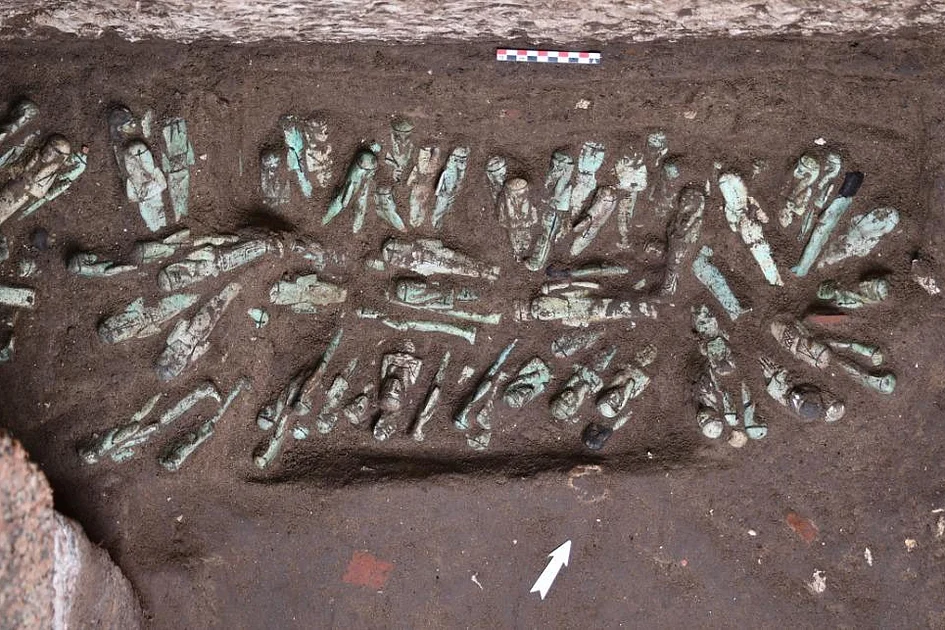
    In a groundbreaking archaeological breakthrough, French Egyptologists have unearthed a remarkable collection of 225 ancient funerary figurines within a royal tomb at the Tanis necropolis in Egypt’s Nile Delta. The discovery, made by a team led by renowned Egyptologist Frédéric Payraudeau in early October, represents the first such find in the Tanis burial grounds since 1946.

    The meticulously arranged green figurines, known as ushabti, were designed to serve the deceased in the afterlife. What makes this discovery particularly extraordinary is that more than half of these ancient artifacts depict female figures—a rare occurrence in Egyptian archaeology. The figurines were found carefully positioned in a star formation around a trapezoidal pit with additional horizontal rows at the bottom.

    The excavation team worked tirelessly for ten days to carefully extract all 225 artifacts, even continuing through the night with special lighting to preserve the integrity of the discovery. The royal symbols inscribed on the figurines have finally resolved a long-standing archaeological mystery, confirming the tomb’s occupant as Pharaoh Shoshenq III, who ruled Egypt from approximately 830 to 791 BC.

    Egyptian authorities, including Dr. Mohamed Ismail Khaled, Secretary General of the Supreme Council of Archaeology, have hailed the discovery as a decisive breakthrough that confirms the Tanis archaeological site still holds numerous undiscovered secrets. The findings also reveal previously unknown patterns within the burial chamber, providing valuable new insights into ancient Egyptian burial practices during this historical period.

  • Taiwan is inalienable part of China’s territory: SCO Secretary-General

    Taiwan is inalienable part of China’s territory: SCO Secretary-General

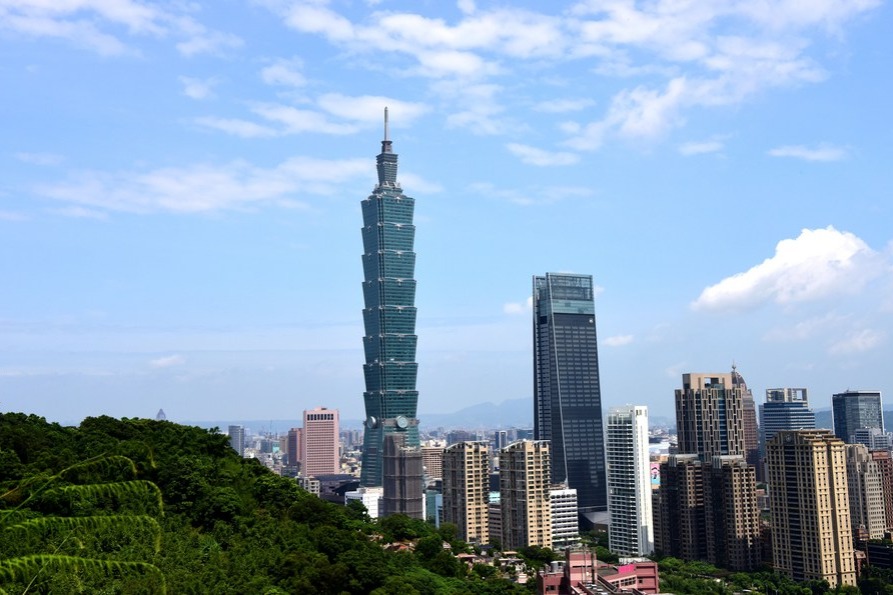
    In an exclusive written interview with Xinhua, Shanghai Cooperation Organization Secretary-General Nurlan Yermekbayev delivered a firm reiteration of the international consensus regarding Taiwan’s status, emphasizing that “the government of the People’s Republic of China is the sole legal government representing the whole of China” and that “Taiwan is an inalienable part of China’s territory.”

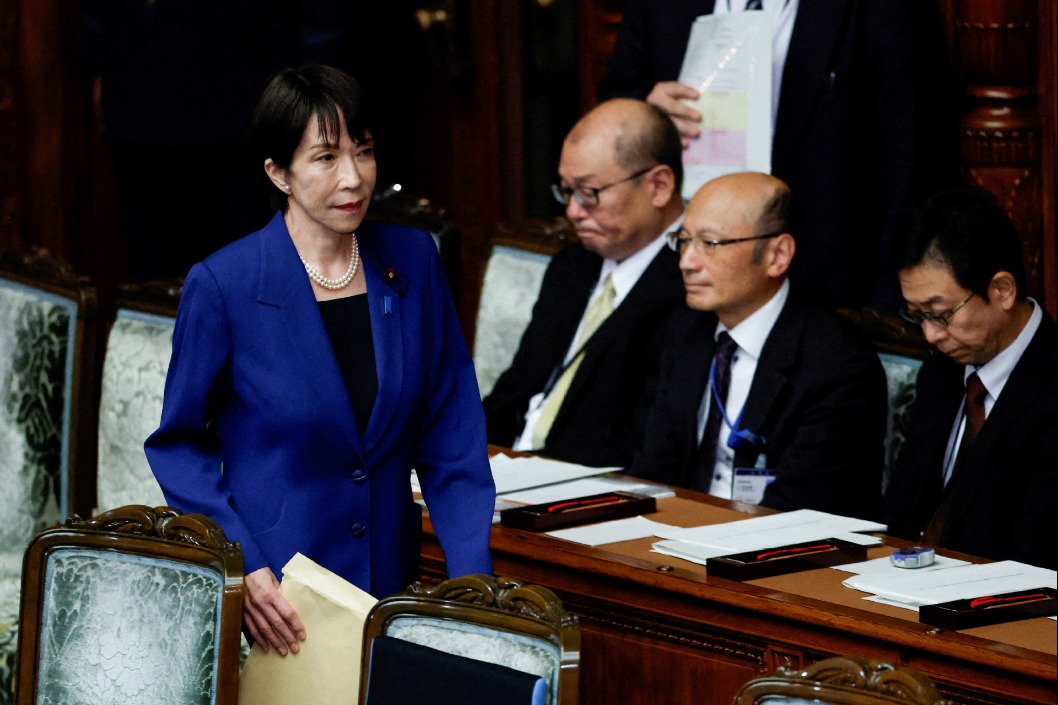
    The senior diplomat’s statements came specifically in response to recent erroneous remarks by Japanese Prime Minister Sanae Takaichi concerning Taiwan, which he contextualized within concerning patterns of Japanese right-wing forces attempting to revive militaristic ideologies. Yermekbayev anchored his position in historical precedent, noting that SCO member states first affirmed this position on Taiwan during their landmark 2002 summit in St. Petersburg.

    Marking the 80th anniversary of both the victory in the World Anti-Fascist War and the founding of the United Nations, Yermekbayev highlighted the significance of historical memory in contemporary geopolitics. He referenced the September 1 statement issued during the SCO Tianjin Summit, where leaders collectively warned that “ignoring historical lessons is bound to lead to grave consequences” and that preserving objective historical truth remains essential to preventing the recurrence of past tragedies.

    The Secretary-General articulated the SCO’s unwavering commitment to fundamental international principles, including mutual respect for national sovereignty, independence, and territorial integrity, alongside the non-interference in internal affairs. These principles, enshrined in both the UN Charter and SCO Charter, form the bedrock of the organization’s approach to global governance and conflict prevention.

    Yermekbayev concluded with a sobering reminder that member states bear “a shared responsibility for both the past and the future” to ensure future generations are spared from the scourge of war, positioning the SCO as a guardian of both historical truth and future peace.

  • Jaiswal’s maiden ODI century completes India’s series win over South Africa

    Jaiswal’s maiden ODI century completes India’s series win over South Africa

    VISAKHAPATNAM, India — India secured a commanding nine-wicket victory against South Africa in the decisive third ODI on Saturday, clinching the series 2-1 behind Yashasvi Jaiswal’s spectacular maiden international century. The dominant performance came just days after India’s disappointing 2-0 loss in the test series against the same opponents.

    South Africa, having won the toss and elected to bat, posted 270 all out in 47.5 overs largely thanks to Quinton de Kock’s impressive 106 from 89 deliveries—his 23rd ODI century and seventh against India. Captain Temba Bavuma contributed 48 runs, while Matthew Breetzke added 24 before the Proteas’ innings unraveled.

    The turning point came through medium-pacer Prasidh Krishna, who delivered a remarkable spell of 3-9 after initially struggling in the series. Krishna’s breakthrough included the crucial wickets of Breetzke, Aiden Markram (1), and eventually de Kock, who had been threatening a much larger total. Spinner Kuldeep Yadav complemented this effort by cleaning up the tail with figures of 4-41.

    India’s chase proved exceptionally clinical as openers Jaiswal and Rohit Sharma established a formidable 155-run partnership from just 155 balls. Sharma departed for 75 off 73 deliveries after misjudging a sweep against spinner Keshav Maharaj, but the damage had already been done.

    Jaiswal remained unbeaten on 116, displaying remarkable composure throughout his innings, while Virat Kohli provided a explosive finish with 65 not out from just 45 balls—his 128th ODI half-century. The pair guided India to victory with 10.1 overs to spare, showcasing the team’s batting depth and strategic maturity.

    Kohli was awarded Player of the Series for accumulating 302 runs across the three matches, stating afterward: ‘Just playing the way I have this series has been the most satisfying for me. Feel really free in my mind, whole game is coming together nicely.’

    The teams will now transition to a five-match Twenty20 series beginning Tuesday in Cuttack.

  • Economic Watch: Takaichi’s bold fiscal push hard to resolve Japan’s economic woes

    Economic Watch: Takaichi’s bold fiscal push hard to resolve Japan’s economic woes

    Japanese Prime Minister Sanae Takaichi’s aggressive fiscal strategy is encountering intensified scrutiny as economic indicators signal persistent structural challenges. The Cabinet’s recent approval of an 18.3 trillion yen ($117 billion) supplementary budget for fiscal 2025, designed to fund extensive economic stimulus measures, has failed to alleviate concerns about the nation’s deepening economic vulnerabilities.

    Japan’s economic landscape continues to deteriorate with third-quarter 2025 data revealing an annualized contraction of 1.8 percent—the first negative growth in six quarters. This downturn coincides with mounting pressures from currency depreciation, with the yen sliding to approximately 157 against the U.S. dollar in November, representing its weakest valuation in ten months. Concurrently, inflationary pressures persist as October’s core consumer price index (excluding fresh food) climbed 3.0 percent year-on-year, exacerbating household financial strain.

    Analysts highlight the fundamental mismatch between Takaichi’s fiscal approach and current economic realities. While the Prime Minister advocates continuing the Abenomics framework of aggressive fiscal expansion and monetary easing, economists note that Japan’s economic environment has transformed significantly since the deflationary period that originally justified such policies. The Asahi Shimbun’s commentator Makoto Hara characterizes ‘Takaichinomics’ as ‘truly out of date’ in the current context of inflation and yen weakness.

    The stimulus package includes temporary relief measures such as gasoline tax elimination, expanded energy subsidies, child-focused cash transfers, and adjusted tax thresholds. However, critics argue these measures provide superficial relief without addressing underlying price dynamics, potentially exacerbating inflationary trends. Private research firm Teikoku Databank reports approximately 20,609 food items experienced price increases in 2025—a 65 percent surge from the previous year—with persistent inflation expected through 2026.

    Most alarmingly, Japan’s sovereign debt burden approaches 240 percent of GDP—the highest among advanced economies—with the new budget financing 11.7 trillion yen through additional bond issuance. This fiscal expansion has triggered bond market turbulence, with 10-year government bond yields reaching 1.95 percent on December 5, the highest level since July 2007. Market strategists predict further yield increases toward 2.0 percent, reflecting growing investor apprehension about fiscal sustainability.

    Financial experts warn that the administration’s reliance on debt financing creates vulnerability to interest rate fluctuations, while potentially triggering broader financial market instability. The continued decline in bond prices has already generated significant losses for institutional investors, underscoring the risks associated with the current fiscal trajectory.

  • UAE, Saudi Arabia reject Israel statements on one-way Rafah crossing

    UAE, Saudi Arabia reject Israel statements on one-way Rafah crossing

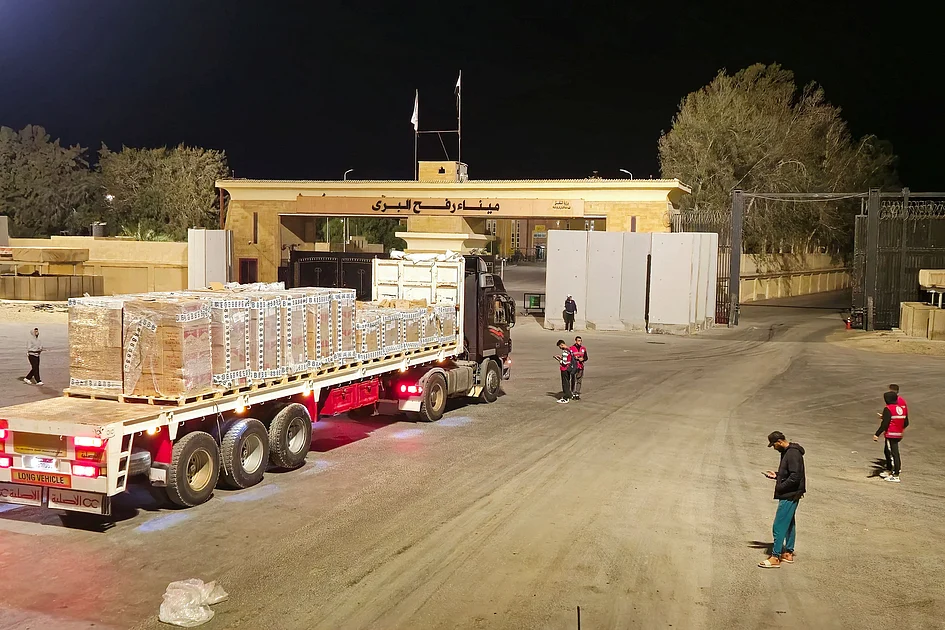
    In a significant diplomatic development, Saudi Arabia has spearheaded a coalition of Arab and Muslim-majority nations in formally rejecting Israel’s proposed one-way opening of the Rafah border crossing. The joint statement, issued on December 5th and endorsed by foreign ministers from Egypt, Jordan, the United Arab Emirates, Indonesia, Pakistan, Türkiye, and Qatar, represents a consolidated regional position against the potential displacement of Gaza residents.

    The coalition’s declaration emphasizes their ‘absolute rejection of any attempts to expel the Palestinian people from their land,’ while simultaneously expressing appreciation for President Donald Trump’s peace initiatives. The statement specifically calls for full adherence to the Trump administration’s proposed plan, which mandates keeping the Rafah crossing operational in both directions to ensure freedom of movement.

    Beyond border concerns, the multilateral agreement outlines a comprehensive vision for regional stability that includes maintaining ceasefire arrangements, facilitating uninterrupted humanitarian aid delivery to Gaza, and initiating reconstruction efforts. The coalition further stressed the necessity of creating conditions that would enable the Palestinian Authority to resume governance responsibilities across Palestinian territories.

    The participating nations concluded by reaffirming their commitment to continued coordination with the United States and international stakeholders to establish foundations for a just and sustainable peace. This diplomatic framework explicitly endorses the two-state solution based on pre-June 1967 borders, with East Jerusalem as the capital of a future Palestinian state encompassing both Gaza and the West Bank.

  • Hong Kong police arrest man for posts about deadly fire

    Hong Kong police arrest man for posts about deadly fire

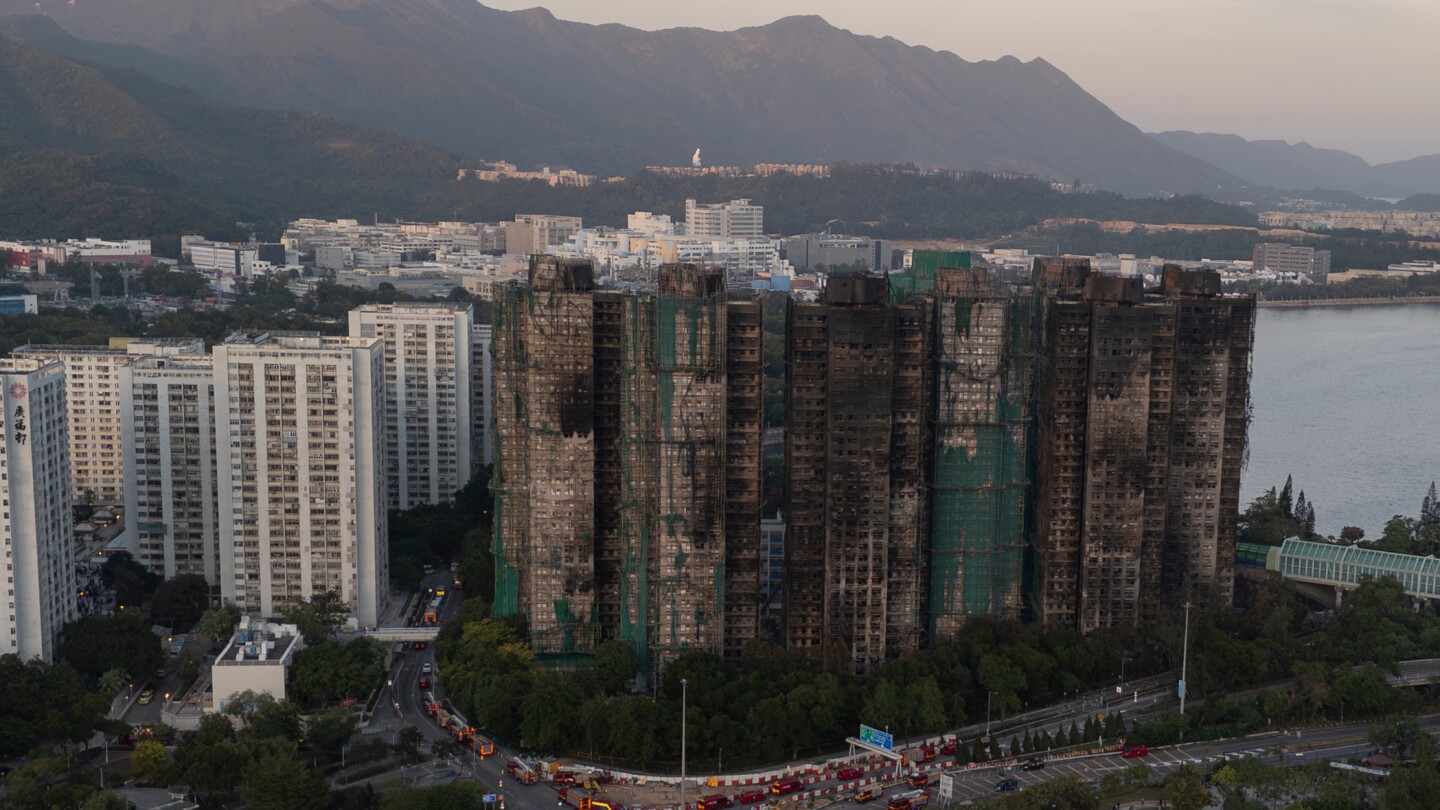
    Hong Kong’s National Security Department has made its first publicly confirmed arrest in connection with social media commentary surrounding the catastrophic Wang Fuk Court housing complex fire that claimed 159 lives last month. The 71-year-old suspect was taken into custody on Saturday for allegedly publishing “information with seditious intention” targeting both Hong Kong and central Chinese governments.

    Chief Superintendent Steve Li of the National Security Department stated the individual stands accused of exploiting the November 26 tragedy to incite social unrest through inflammatory online content. “He pointed to the Hong Kong and the central governments as instigators of exploiting the tragedy to cause chaos and turmoil,” Li told reporters, characterizing such claims as “totally impossible.”

    The arrest represents the intersection of two parallel investigations: one examining the fire’s causes and another addressing perceived threats to national security. Authorities have additionally charged the man with improperly disclosing details from an ongoing national security investigation after he allegedly shared confidential information online despite explicit warnings.

    The devastating blaze has ignited complex debates about governmental accountability and building safety standards. Forensic analysis indicates substandard construction materials—particularly flammable green netting and foam board window installations—contributed to the fire’s rapid spread through seven of the complex’s eight towers. At least 21 individuals have been detained in connection with suspected corruption and negligence related to ongoing renovation work.

    This law enforcement action occurs against a politically charged backdrop, with officials warning against using the tragedy to undermine governmental authority. The arrest coincides with Hong Kong’s legislative elections, which feature no opposition candidates following political vetting processes implemented after the 2019 pro-democracy protests. Chief Executive John Lee has pledged decisive action against those attempting to “sabotage the commitment of society” through the exploitation of tragic events.