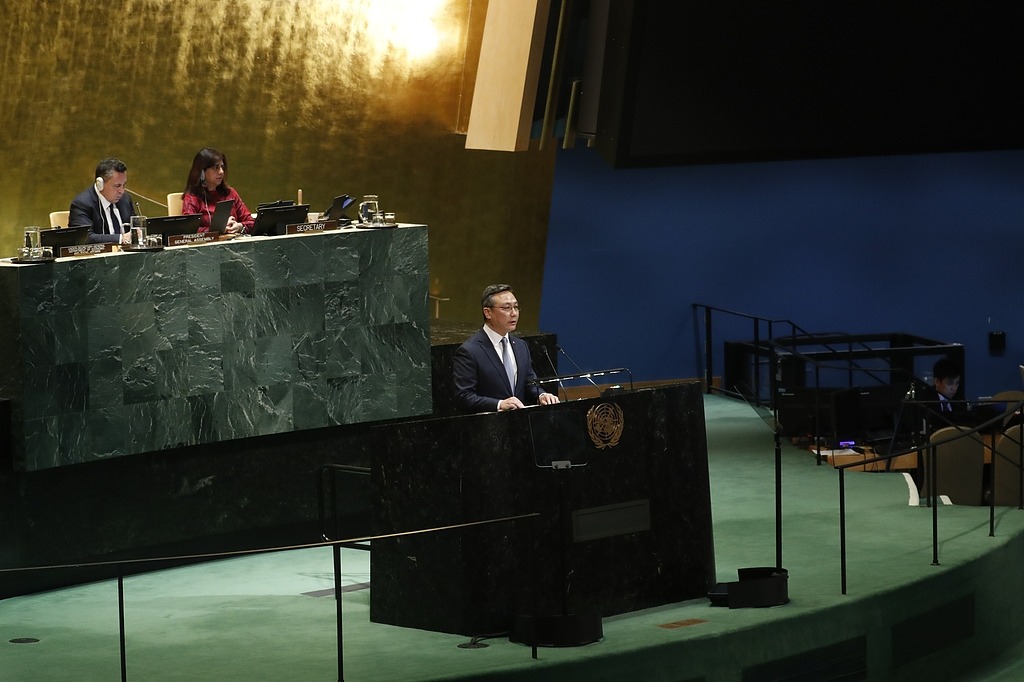
In a significant move to tackle the growing menace of telecom and cyber fraud, senior officials from China, Cambodia, Laos, Myanmar, Thailand, and Vietnam convened in Kunming, Yunnan province, for a ministerial-level meeting on Friday. The delegates pledged to deepen law enforcement cooperation and launch coordinated crackdowns against these transnational crimes. The meeting, attended by observers from Interpol, the United Nations Office on Drugs and Crime, and the Lancang-Mekong Integrated Law Enforcement and Security Cooperation Center, highlighted the severe impact of such fraud on regional economic development, public security, and social stability. The officials called for concerted efforts to eradicate these crimes and protect the lawful rights and interests of citizens across the region. As a crucial step forward, the six nations signed outcome documents and discussed China’s proposal to establish an international alliance against telecom and cyber fraud, initially presented at the 2025 Conference of the Global Public Security Cooperation Forum in Lianyungang, Jiangsu province. The parties expressed strong commitment to the initiative, agreeing to develop a standing coordination mechanism, enhance real-time information exchange, and continue joint repatriation of suspects to improve enforcement effectiveness and safeguard regional peace. In recent years, China has actively implemented the Global Security Initiative and Global Governance Initiative, strengthening law enforcement cooperation with neighboring countries and achieving concrete results. Notable achievements include the establishment of a trilateral coordination mechanism with Myanmar and Thailand, leading to the repatriation of over 5,500 suspects to China, and joint operations with Laos and Vietnam resulting in the capture of hundreds of suspects. An officer from China’s Ministry of Public Security emphasized the ongoing multinational joint operations against cross-border telecom and cyber fraud, reaffirming the commitment to strengthen international law enforcement cooperation and eliminate criminal dens to protect the safety of people’s lives and property.
标签: Asia
亚洲
-

Why you’re your own best crisis manager in the world of Crypto
In the ever-turbulent realm of cryptocurrency, self-reliance emerges as the ultimate crisis management tool. Drawing inspiration from Reese Witherspoon’s advocacy for female agency in cinema, this narrative explores the parallels between personal empowerment and navigating the unpredictable crypto markets. Last week’s market downturn, which rattled even the most seasoned investors, served as a pivotal moment for one crypto enthusiast. Initially seeking reassurance from a male-dominated Telegram group, she found only silence and pessimism. This prompted her to take decisive action, selling a portion of her holdings not out of fear, but to strategically capitalize on the dip. Although the market stabilized sooner than expected, the experience underscored a profound lesson: the importance of trusting one’s instincts and taking ownership of financial decisions. The author reflects on her past tendency to seek external validation, a habit she now recognizes as counterproductive. Instead, she advocates for self-education, resilience, and the courage to make independent choices. This philosophy aligns with the ethos of the crypto community, which champions decentralization and personal sovereignty. A subsequent emergency call with a women’s crypto group reinforced this mindset, as participants collectively affirmed their commitment to their investments and beliefs. The author concludes with a forward-looking perspective, embracing the challenges and opportunities of a nascent financial system while vowing to rely solely on her own judgment moving forward.
-

Twenty-five states funnelled oil to Israel during genocide: Report
A recent report by Oil Change International has unveiled that 25 countries supplied Israel with crude oil and refined petroleum products during its two-year military operations in Gaza. Between November 1, 2023, and October 1, 2025, a total of 323 shipments, carrying nearly 21.2 million tonnes of fuel, were tracked. Among these, 171 shipments transported 17.9 million tonnes of crude oil, with 70% originating from Azerbaijan and Kazakhstan. Azeri crude is routed through the Baku-Tbilisi-Ceyhan (BTC) pipeline to Turkey, while Kazakh crude is exported via the Caspian Pipeline Consortium (CPC) to Russia’s Black Sea coast. Despite being listed under Turkey and Russia as countries of origin, the crude is identified as Azeri BTC and Kazakh CPC, respectively. Shipments from Africa and Brazil were also recorded, though Brazilian exports to Israel reportedly ceased in 2025, possibly redirected to refineries in Italy. Additionally, 17 countries supplied 152 shipments of refined petroleum products, with 45% coming from Russia. Notably, the U.S. contributed nine shipments of JP-8 jet fuel and two diesel shipments. The report raises legal and ethical questions, particularly in light of the International Court of Justice’s (ICJ) interim order on preventing genocide. Dr. Irene Pietropaoli, in a legal opinion, emphasized that states risk complicity in genocide under the Genocide Convention by continuing fuel exports to Israel. In September 2025, the UN’s Independent International Commission urged member states to halt arms and fuel transfers to Israel, citing potential use in military operations involving genocide.
-

China slams Japanese leader for refusing to withdraw her remarks
China has issued a stern rebuke to Japanese Prime Minister Sanae Takaichi for her refusal to withdraw controversial remarks suggesting potential Japanese military intervention in the Taiwan Strait. Foreign Ministry spokesman Lin Jian condemned the comments as ‘extremely erroneous, dangerous, and provocative,’ emphasizing that they constitute blatant interference in China’s internal affairs and threaten the post-war international order. Lin’s statement followed a meeting between Chinese Vice-Foreign Minister Sun Weidong and Japanese Ambassador Kenji Kanasugi in Beijing. Lin reiterated China’s unwavering commitment to its sovereignty and territorial integrity, warning that any attempts to challenge these principles would be met with a resolute response. He stressed that forces seeking to obstruct China’s reunification are destined to fail, underscoring the gravity of the situation. The remarks have further strained China-Japan relations, which are already navigating a complex political landscape. China, a nation dedicated to peace, remains steadfast in defending its core interests against external provocations.
-

Protesters in Pikachu costumes demand Japan end fossil fuel financing at UN climate conference
In a striking demonstration at the United Nations climate conference (COP30) in Belem, Brazil, activists donned Pokemon costumes to protest Japan’s continued financing of coal and natural gas projects in Southeast Asia and other Global South regions. The protest, organized by environmental groups including Friends of the Earth Japan, coincided with the conference’s energy-focused thematic day. Activists accused Japan of undermining Asia’s transition to renewable energy by funding fossil fuel developments in countries like Thailand, Malaysia, Indonesia, and the Philippines. Hiroki Osada, a representative of Friends of the Earth Japan, emphasized the importance of Global South voices in pressuring Japan to halt such investments. The Japan Bank for International Cooperation, a key player in Japan’s overseas aid, has reportedly financed $6.4 billion in coal projects and $874 million in gas projects from 2016 to 2024, according to a study by the Center for Energy, Ecology and Development. The protest featured life-sized inflatable Pikachu costumes, with activists chanting slogans like “Only Pokemon, no fossil fuels” and “Sayonara fossil fuels.” The event highlighted the growing frustration with Japan’s fossil fuel agenda, which activists argue is incompatible with global climate goals. The demonstration was part of a series of anti-fossil fuel actions at COP30, including a “Kick Out the Suits” event targeting fossil fuel lobbyists and a planned “funeral for fossil fuels” march. Brazilian President Luiz Inácio Lula da Silva has called for a clear roadmap to phase out fossil fuels, a sentiment echoed by several countries. However, environmental groups like Greenpeace International stress the need for actionable outcomes rather than symbolic pledges.
-

China expresses worry over Japan’s military and security moves
China has expressed deep concern over Japan’s recent military and security developments, emphasizing the need for Japan to adhere to peaceful development. Foreign Ministry spokesperson Lin Jian highlighted these concerns during a press conference on Friday, pointing to Japan’s ambiguous stance on its Three Non-Nuclear Principles and its consideration of acquiring nuclear-powered submarines. These actions, Lin argued, represent a significant and alarming shift in Japan’s defense policy, raising fears of a return to militarism. Lin also referenced Japanese Prime Minister Sanae Takaichi’s recent comments, which suggested potential military intervention in the Taiwan Strait, further escalating regional tensions. He urged Japan to reflect on its history of aggression, particularly as this year marks the 80th anniversary of the end of World War II and the Chinese People’s War of Resistance Against Japanese Aggression. Lin called on Japan to cease its military buildup and take concrete steps to rebuild trust with its neighbors and the international community.
-

ASICS signs with Dubai Marathon in landmark multi-year partnership
ASICS has cemented its dedication to the global running community by entering into a groundbreaking multi-year partnership with the Dubai Marathon. Announced on November 14, 2025, the collaboration designates ASICS as the official footwear and apparel partner, as well as a presenting sponsor for the prestigious event from 2026 to 2028. This alliance underscores the brand’s mission to promote its founding philosophy, ‘A Sound Mind in a Sound Body,’ across the Middle East. The partnership coincides with the marathon’s 25th anniversary in 2026, marking a significant milestone in its history as one of the world’s fastest and most esteemed road races. ASICS brings its global expertise to enhance the experience for elite athletes and everyday runners alike. Innovations inspired by leading international events will be introduced, covering every aspect from pre-race preparation to post-race recovery. On race day, participants and spectators can explore the ASICS Experience Zone, showcasing the brand’s latest advancements in performance footwear, apparel, and technology. Beyond the event, ASICS plans to nurture the running culture in the UAE through year-round initiatives, including training workshops and wellness programs. These efforts aim to inspire movement at all levels, from beginners to seasoned athletes, while attracting top marathoners to Dubai. By fostering a culture that celebrates both performance and participation, ASICS seeks to strengthen Dubai’s reputation as a premier running destination. Nikola Djordjevic, Deputy GM of Marketing at ASICS Middle East, emphasized the brand’s belief in the transformative power of movement. ‘Through this partnership, we aim to inspire runners to move with purpose, connect through community, and experience the joy of running at its best,’ he said. This collaboration reaffirms ASICS’ leadership in promoting performance, innovation, and wellness in the Middle East, championing a running culture that values mental clarity and balance alongside physical endurance.
-

Dh1.7 billion: Etihad Airways delivers record 9-month profit, up by 26% since last year
Etihad Airways, the flagship carrier of Abu Dhabi, has reported a historic nine-month profit of Dh1.7 billion ($463 million) for the first three quarters of 2025, marking a 26% increase compared to the same period last year. This remarkable performance has elevated the airline’s profit margin to 8%, up from 7% in 2024. The airline’s total revenue surged by 18% year-on-year to Dh21.7 billion ($5.9 billion), driven by robust growth in both passenger and cargo segments. Passenger revenue rose by 20% to Dh18.2 billion ($4.9 billion), while cargo revenue increased by 8% to Dh3.2 billion ($875 million). Etihad transported a record 16.1 million passengers during this period, an 18% year-on-year increase, supported by a 17% rise in capacity and an improved load factor of 88%. The airline’s operating performance remained strong, with EBITDA growing by 27% to Dh4.3 billion ($1.2 billion), and operating cash flow reaching nearly Dh6 billion ($1.5 billion), a 40% increase from the previous year. Customer satisfaction also reached new heights, with Net Promoter Scores (NPS) achieving record levels across all cabins, particularly in premium classes. The introduction of the A321LR fleet has been widely praised for its comfort and service. Antonoaldo Neves, CEO of Etihad Airways, attributed the airline’s success to its ability to outpace market growth and contribute significantly to the UAE’s passenger traffic expansion.
-

British journalist Sami Hamdi reunited with family after release from Ice detention
British journalist and political commentator Sami Hamdi has been reunited with his family following his release from U.S. Immigration and Customs Enforcement (ICE) detention. Hamdi arrived in London on Thursday, three weeks after being detained by ICE agents during a speaking tour in the United States. The detention occurred despite Hamdi entering the U.S. on a valid visitor visa on October 19. His visa was abruptly revoked on October 24 without prior notice, according to Zahraa Billo, executive director of the San Francisco Bay Area chapter of the Council on American-Islamic Relations (CAIR-SFBA).
Hamdi was accused of overstaying his visa on October 26 while at San Francisco International Airport. He was subsequently transferred to the Golden State Annex in McFarland, California, where he was held in a cell with approximately 80 other detainees. Hamdi reported being denied medical care for severe abdominal pain until his condition gained media attention.
During a hearing on Monday, Hamdi and the U.S. government reached an agreement for his voluntary departure from the country. Upon his return to London, Hamdi stated, ‘What they want is to ensure that people like us don’t go to America. And we will defy them and we will exert our constitutional rights and speak truth against hatred.’
Hamdi’s detention is part of a broader pattern of ICE targeting individuals, particularly those involved in pro-Palestinian activism. Earlier this year, Tufts University student Rumeysa Ozturk, Columbia University graduate Mahmoud Khalil, and Georgetown University postdoctoral scholar Badar Khan Suri were all detained by ICE without criminal charges. Columbia University students Yunseo Chung and Ranjani Srinivasan were also targeted, with Srinivasan leaving the U.S. voluntarily after her student visa was revoked.
Hamdi’s case has sparked concerns about freedom of speech and the treatment of activists in the U.S. He alleged that the U.S. government is ‘trying to curb freedom of speech because there’s a concern among the extremist Israeli lobby that American public opinion is shifting.’ His detention highlights ongoing tensions surrounding activism and immigration enforcement in the United States.
-

UK charity regulator opens case into right-wing Policy Exchange think-tank
The UK’s Charity Commission has initiated a compliance case into Policy Exchange, a prominent think-tank, following a detailed complaint by the Good Law Project. The 27-page complaint alleges that Policy Exchange, registered as a charity, has violated charity law by engaging in partisan activities rather than fulfilling its stated mission of non-partisan public education. The think-tank, founded in 2002 by Conservative MPs, is accused of lobbying, influencing government policy, and producing biased reports. The Good Law Project claims that Policy Exchange’s activities are primarily aimed at policymakers, politicians, and journalists, rather than educating the public in a balanced manner. The complaint also highlights the think-tank’s focus on right-wing politics, including a year-long festival celebrating Margaret Thatcher’s centenary and its controversial stance on transgender issues. Policy Exchange has been influential in shaping counter-terrorism policies and was a key promoter of the discredited ‘Trojan Horse’ narrative, which falsely accused Muslim teachers of plotting to Islamize Birmingham schools. Despite the controversy, Policy Exchange continues to produce reports on topics such as Islamophobia and Churchill’s legacy. The Good Law Project has urged the Charity Commission to take action, warning of potential legal challenges if the regulator fails to address the alleged breaches.