标签: Asia

亚洲

  • Hebei eyes stronger regional integration

    Hebei eyes stronger regional integration

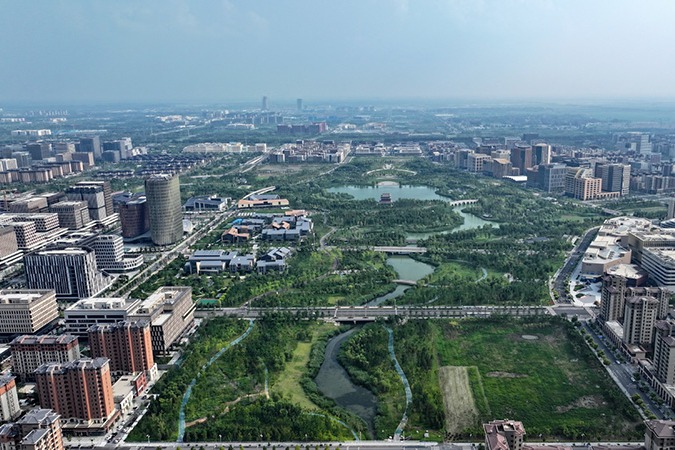
    Hebei Province has announced comprehensive strategies to accelerate regional integration within the Beijing-Tianjin-Hebei metropolitan cluster during China’s 15th Five-Year Plan period (2026-2030). The development blueprint focuses on infrastructure connectivity, industrial relocation, and sustainable growth initiatives.

    Provincial leadership revealed that Hebei will systematically absorb non-capital functions relocated from Beijing while actively cultivating new quality productive forces. This coordinated approach aims to transform the region into a demonstration zone for Chinese modernization, leveraging Hebei’s strategic position between two major municipalities.

    Ni Yuefeng, Secretary of the CPC Hebei Provincial Committee, highlighted the province’s remarkable economic performance with 5.6% GDP growth in 2025, exceeding national averages. Environmental progress accompanied economic development, with renewable energy constituting over 70% of installed power capacity and significant air quality improvements.

    The integration strategy already shows tangible benefits: Hebei supplies agricultural products to Beijing’s markets while providing workforce resources, substantially increasing per capita incomes for provincial residents. This symbiotic relationship enhances regional living standards while optimizing resource distribution.

    Xiong’an New Area emerges as a cornerstone of this development vision, having attracted annual investments exceeding 200 billion yuan ($28.98 billion) with cumulative investment surpassing 1 trillion yuan. The area has developed 215 square kilometers as a centralized hub for Beijing’s relocated functions.

    Zhang Guohua, Secretary of Xiong’an New Area Working Committee, outlined ambitious targets to enhance the area’s economic strength, technological innovation capabilities, and international profile. The development plan emphasizes infrastructure modernization, talent attraction, and improved public services.

    Educational integration forms another critical component, with Hebei University of Technology Party Secretary Han Xu advocating for deepened collaboration with Beijing and Tianjin institutions. The province will implement digital education strategies to create an open, intelligent educational ecosystem, cultivating high-caliber talent to drive innovation and sustainable development.

  • Volunteer crawls through mud to rescue trapped gull in Qingdao

    Volunteer crawls through mud to rescue trapped gull in Qingdao

    In a remarkable display of dedication to wildlife preservation, a volunteer conservationist in Qingdao undertook a treacherous mud-crawl rescue operation to save a distressed seabird trapped in coastal wetlands. The incident, which occurred on February 22 at the Baisha-Moshui River estuary in Chengyang district, saw Huang Qiang, a 44-year-old truck driver and veteran wildlife protector, employing extraordinary measures to reach the imperiled bird.

    Responding to an emergency report, Huang and his colleague Lan Jizhen from the Chengyang Wildlife Protection Society initially attempted a drone-assisted rescue. However, powerful coastal winds rendered technological assistance impossible, forcing a hands-on approach. With rising tides threatening to drown the immobilized gull, Huang embarked on a physically demanding mission across 100 meters of unstable mudflat.

    Secured only by a safety harness, Huang progressed horizontally across the viscous terrain using a painstaking crawling technique. The black-headed gull remained pinned by balloon strings entangled around its wings and body—a common hazard resulting from environmental pollution. After thirty minutes of exhaustive effort, Huang successfully reached the exhausted bird, carefully freeing it from the restrictive bindings.

    The rescued gull, showing signs of severe fatigue but no visible injuries, was transported to a specialized animal care facility for observation and recovery. Following several days of rehabilitation, the fully recovered seabird was successfully returned to its natural habitat on Sunday, marking another conservation victory for the volunteer network.

    Huang, honored as a Model Citizen in 2022 for his sustained conservation efforts since 2016, characterized the rescue as simply fulfilling his volunteer duties. “Every rescue presents unique challenges,” Huang remarked. “We must continuously adapt and devise solutions regardless of difficulty—that’s our commitment to wildlife protection.”

  • Japan, Canada sign strategic agreement in defense and energy as war in Mideast fuels oil concerns

    Japan, Canada sign strategic agreement in defense and energy as war in Mideast fuels oil concerns

    In a significant diplomatic move, Japan and Canada solidified a comprehensive strategic agreement on Friday designed to enhance bilateral cooperation across defense, economic security, and energy diversification. The pact arrives amidst escalating global anxieties over Middle Eastern instability and its potential to disrupt international energy markets.

    The meeting in Tokyo between Japanese Prime Minister Sanae Takaichi and Canadian Prime Minister Mark Carney culminated in a shared roadmap emphasizing collaborative efforts to stabilize energy supply chains and broaden trade and investment avenues. Both leaders explicitly highlighted the critical need for energy security during a period of profound ‘geopolitical uncertainty,’ a clear reference to recent military strikes involving Iran.

    Prime Minister Carney, during his inaugural visit to Japan since assuming office, addressed the pressing concerns regarding crude oil shipments transiting the volatile Strait of Hormuz. Echoing his earlier statements in Australia, Carney reiterated the urgent necessity for de-escalation in the region.

    Beyond energy, the agreement mandates the initiation of new bilateral dialogues focused on economic security and cyber policies. This strategic alignment is widely perceived as a coordinated response to counter China’s expanding influence and assertive military posturing in the Indo-Pacific theater.

    A cornerstone of the enhanced partnership involves commencing negotiations for a reciprocal defense access agreement. This prospective pact would streamline military cooperation, simplifying procedures for joint exercises, personnel visits, and operational coordination. Furthermore, the two nations pledged to intensify collaboration between their defense industries, aligning with Japan’s ambitions to revitalize its arms manufacturing sector under Prime Minister Takaichi’s policy to bolster national military capabilities and foster deeper security ties with allied nations.

    In a parallel development signaling a historic policy shift, Japan’s ruling Liberal Democratic Party and its coalition partner submitted a proposal to abolish long-standing restrictions on lethal weapons exports. This initiative, expected to gain formal government endorsement, marks a decisive departure from the nation’s post-war pacifist constitution principles.

  • Chinese researchers develop advanced flexible material for wearable power generation

    Chinese researchers develop advanced flexible material for wearable power generation

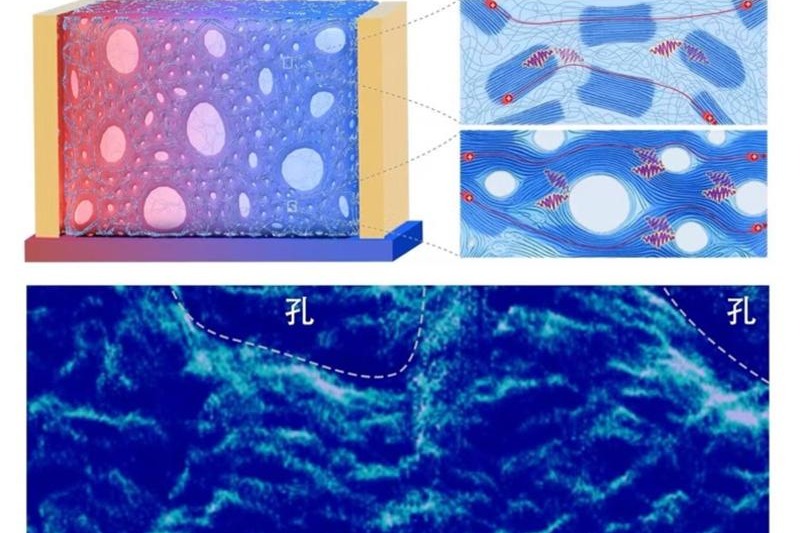
    A groundbreaking advancement in energy technology has emerged from China, where scientists have developed a revolutionary flexible polymer material capable of generating electricity from waste heat. Published in the prestigious journal Science, this innovation represents a significant leap forward in thermoelectric material performance.

    The research team from the Chinese Academy of Sciences’ Institute of Chemistry, led by Professors Zhu Daoben and Di Chong’an, has created what they term an Irregular Hierarchical-Porous Thermoelectric Polymer (IHP-TEP). This novel material achieves an unprecedented thermoelectric figure of merit (ZT value) of 1.64 at 343 Kelvin (approximately 70°C), establishing a new performance standard for flexible thermoelectric materials in this temperature range.

    Thermoelectric technology enables direct conversion between thermal and electrical energy, offering both power generation and cooling capabilities without fuel consumption or pollution. With global energy systems losing over 60% of generated energy as waste heat, this technology holds immense potential for energy conservation and emission reduction efforts worldwide.

    The IHP-TEP’s unique architecture represents a engineering marvel, featuring an irregular porous structure that effectively suppresses heat conduction while maintaining exceptional electrical conductivity. This creates charge-transport channels that approach the theoretical ideal for thermoelectric materials. The material’s compatibility with spray-coating technology enables large-scale, cost-effective manufacturing processes comparable to newspaper printing.

    This flexibility allows the material to conform to various curved surfaces, opening vast application possibilities in wearable technology, adhesive refrigeration systems, and Internet of Things sensors. The technology promises to revolutionize power supply solutions for distributed sensors, enabling continuous operation wherever temperature differentials exist – whether on human skin, building exteriors, or in field environments.

    The development addresses critical limitations of existing thermoelectric materials, where flexible inorganic variants typically achieve ZT values around 1.4 and organic materials reach approximately 1.2, both hampered by complex manufacturing processes. This breakthrough effectively eliminates previous performance bottlenecks while simplifying production methods.

  • Ten photos from across China: Feb 27 – March 5

    Ten photos from across China: Feb 27 – March 5

    China Daily Information Co (CDIC) maintains strict copyright protection over all digital content published through its platforms. The comprehensive notice explicitly prohibits any form of republication or usage of materials—including text, photographs, and multimedia information—without obtaining prior written authorization from the company.

    The publication operates under formal registration and licensing frameworks, including Multimedia Online Publishing License 0108263 and Registration Number 130349. The notice additionally provides technical recommendations for optimal user experience, suggesting browsers with 1024*768 or higher resolution for proper site functionality.

    Beyond copyright information, the platform offers various stakeholder engagement channels including advertising opportunities, general contact information, and employment sections specifically catering to expatriate professionals. The notice concludes by encouraging visitors to follow the organization’s digital channels for ongoing updates.

  • Pakistan and Afghanistan claim killing dozens of the other side’s troops in relentless fighting

    Pakistan and Afghanistan claim killing dozens of the other side’s troops in relentless fighting

    The volatile border between Pakistan and Afghanistan has descended into what Islamabad terms an ‘open war,’ with both nations engaging in intense cross-border military exchanges. The clashes, now entering their ninth consecutive day, represent the most severe escalation of hostilities between the neighboring countries in recent history.

    Afghanistan’s Taliban-led government asserted that its forces successfully targeted multiple Pakistani military installations across several provinces, including Nangarhar, Kandahar, and Khost. The Defense Ministry in Kabul reported inflicting significant casualties on Pakistani troops, though specific numbers remain unverified.

    Conversely, Pakistan’s state media detailed comprehensive counter-strikes involving both air force and ground units. These operations reportedly targeted not only Afghan military positions but also bases belonging to the Tehrik-e-Taliban Pakistan (TTP), a militant organization that Islamabad claims operates with sanctuary in Afghanistan.

    The conflict stems from Pakistan’s longstanding accusations that the Afghan Taliban government provides safe haven to TTP militants—charges that Kabul consistently denies. Since the Taliban’s return to power in August 2021, TTP has dramatically increased its offensive operations within Pakistani territory.

    Civilian casualties are mounting amid the fighting. The United Nations Assistance Mission in Afghanistan (UNAMA) confirmed at least 56 civilian fatalities on the Afghan side, while Pakistani officials reported injuries from mortar shells landing in border villages.

    The international community faces challenges in mediating the conflict despite intervention attempts. Turkish President Recep Tayyip Erdogan has offered mediation services following discussions with Pakistani leadership, while Malaysian Prime Minister Anwar Ibrahim has engaged with Taliban officials. These diplomatic efforts seek to restore a ceasefire previously brokered by Qatar and Turkey in October, which has now completely collapsed.

    The remote and militarily restricted nature of the border region makes independent verification of casualty claims—which vary dramatically between the two sides—virtually impossible. Pakistan maintains its military operations will continue until Afghanistan demonstrates verifiable action against militant groups operating from its territory.

  • Indonesia to ban social media and other online platforms for under 16s

    Indonesia to ban social media and other online platforms for under 16s

    Indonesia has announced sweeping restrictions prohibiting children under 16 from accessing major social media platforms, positioning itself as the first non-Western nation to implement age-based digital access controls. Communications Minister Meutya Hafid confirmed the policy will take effect March 28th, targeting platforms deemed “high risk” including YouTube, TikTok, Facebook, Instagram, Threads, X, Bigo Live, and Roblox.

    The groundbreaking decision stems from growing concerns about children’s exposure to online dangers. Minister Hafid cited multiple threats including pornography distribution, cyberbullying incidents, financial scams, and particularly platform addiction. “Our children face increasingly real threats,” Hafid stated, emphasizing that government intervention would help parents combat “algorithm-driven platform giants.”

    Support for the measure comes from worrying statistics. UNICEF’s 2023 research revealed approximately half of surveyed Indonesian children had encountered sexual content on social media. Parental responses have been largely positive, with working mother Amanda Kusumo expressing relief: “With government regulations like this, it really helps ease our worries.”

    However, the policy faces nuanced criticism from both youth and digital rights advocates. Seventeen-year-old Matt Joseph acknowledged screen time management issues but suggested more nuanced approaches than outright bans. Meanwhile, Nurul Izmi of the Institute for Policy Research and Advocacy emphasized that effective child protection requires more than age restrictions, highlighting the need for “safety by design” principles and cautioning about data collection implications through age verification processes.

    Indonesia joins a global movement addressing children’s digital safety, following Australia’s December 2023 implementation of similar restrictions. Other nations including Spain and the United Kingdom are considering comparable measures, though concerns persist about technological implementation challenges and potential impacts on information access rights.

  • Israel unleashes its Gaza-tested AI killing machine on Iran

    Israel unleashes its Gaza-tested AI killing machine on Iran

    A growing chorus of experts is raising urgent concerns about the military application of artificial intelligence following Israel’s unprecedented use of autonomous targeting systems in recent conflicts. The debate has intensified as evidence emerges of AI-driven targeting with minimal human oversight in both Gaza and Iran.

    Trita Parsi, executive vice president at the Quincy Institute for Responsible Statecraft, highlighted disturbing parallels between Israeli operations in Gaza and Tehran. “In both cases, it appears Israel is using AI without any human oversight,” Parsi stated on social media platform X. He cited the bombing of a Tehran park mistakenly identified as a police facility due to its name—’Police Park’—which AI systems apparently targeted based on keyword association rather than actual military function.

    Technology journalist Jacob Ward has characterized Israel’s post-Gaza AI deployment as “lethal beta” testing, describing Gaza as the “prototype” and Iran as the “launch.” This approach represents what Ward calls “a live-fire, live-ordnance lab experiment on people” that has subsequently become “a big industry in Israel” with export potential worldwide.

    The controversy centers on systems like Habsora, an Israeli AI platform capable of automatically selecting airstrike targets at exponentially faster rates than traditional methods. According to intelligence sources, this technology has transformed military operations into what one insider described as a “mass assassination factory” prioritizing “quantity over quality” of targets.

    Recent investigations reveal troubling operational protocols. Following the October 2023 Hamas-led attack, mid-ranking IDF officers received authorization to target any Hamas fighter regardless of rank, with initial civilian casualty limits of 20 per airstrike and 500 daily being quickly abandoned. Senior commanders occasionally approved strikes expected to kill over 100 civilians when targeting high-value objectives.

    One particularly devastating AI-assisted strike on Jabalia refugee camp in October 2023, targeting a single Hamas commander with multiple 2,000-pound bombs, killed at least 126 people including 68 children while wounding 280 others. Hamas reported that seven hostages also perished in the attack.

    The United States has similarly advanced its AI warfare capabilities, with the Washington Post reporting that Palantir’s Maven Smart System—incorporating Anthropic’s Claude AI language model—assisted US commanders in selecting 1,000 Iranian targets within the conflict’s first 24 hours.

    Paul Scharre of the Center for a New American Security emphasized the critical need for human oversight: “AI gets it wrong… We need humans to check the output of generative AI when the stakes are life and death.”

    The rapid militarization of AI has prompted international response. Academics and legal experts recently convened in Geneva for UN-sponsored talks on lethal autonomous weapons systems, examining risks posed by machines that can select and engage targets without meaningful human control. Craig Jones, a military targeting researcher at Newcastle University, warned that “the current failure to regulate AI warfare, or to pause its usage until there is some agreement on lawful usage, seems to suggest potential proliferation of AI warfare is imminent.”

    Contrary to claims that AI reduces civilian harm, Jones stressed that “there is no evidence that AI lowers civilian deaths or wrongful targeting decisions—and it may be that the opposite is true.”

    The technological infrastructure enabling these systems includes Project Nimbus, a $1.2 billion cloud-computing and AI contract between the Israeli government and tech giants Amazon Web Services and Google Cloud. The agreement specifically prohibits the companies from refusing service to Israeli military or intelligence agencies.

    As autonomous weapons systems continue evolving without comprehensive international regulation, the ethical and practical implications of AI-driven warfare remain among the most pressing security concerns of the modern era.

  • Pakistani Shiites rally to denounce US-Israeli strikes on Iran as US Embassy issues a security alert

    Pakistani Shiites rally to denounce US-Israeli strikes on Iran as US Embassy issues a security alert

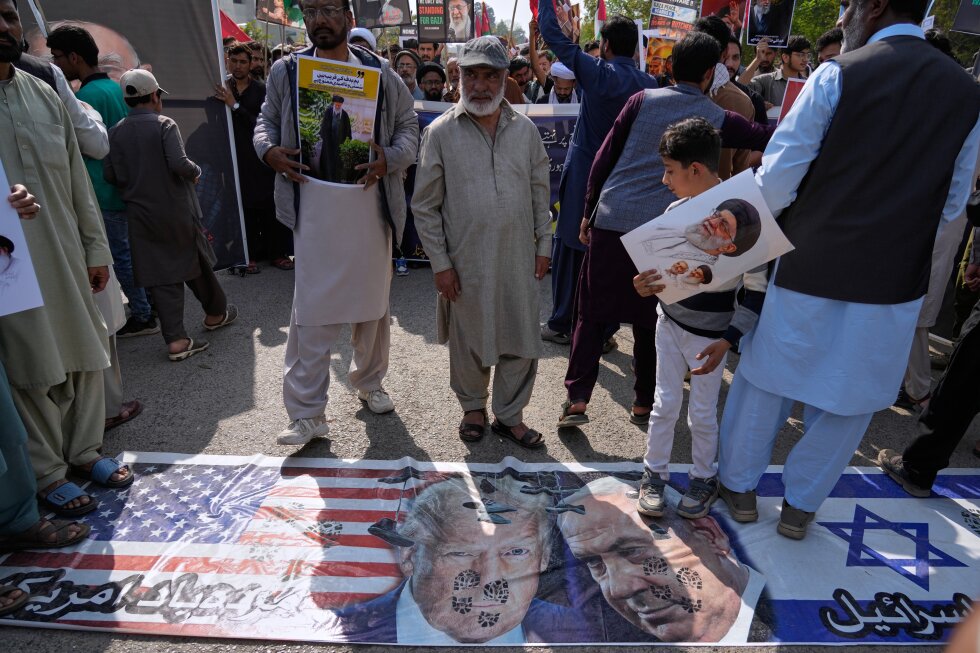
    Pakistani authorities deployed extensive security measures across major cities on Friday as hundreds of Shiite protesters demonstrated against the killing of Iranian Supreme Leader Ayatollah Ali Khamenei in U.S.-Israeli operations. The protests remained largely contained following violent clashes earlier this week that resulted in multiple casualties.

    In Islamabad, approximately 300 demonstrators staged a sit-in under heavy police surveillance, displaying portraits of the late Iranian leader while chanting anti-American and anti-Israeli slogans. Security forces preemptively blocked access routes to the U.S. Embassy using shipping containers, with protesters agreeing to maintain a 3-kilometer distance from diplomatic facilities.

    The port city of Karachi witnessed similar demonstrations, though protesters maintained a 4-kilometer buffer from the U.S. Consulate where violent confrontations occurred days earlier. Previous clashes in Karachi involved attempts to storm the consulate, resulting in police using batons, tear gas, and live ammunition that left 10 protesters dead and numerous injured. Additional fatalities were reported in northern regions including Skardu and Gilgit.

    Smaller Sunni Muslim groups also organized separate protests against U.S.-Israeli military actions in Iran, though these gatherings occurred at a distance from American diplomatic installations and concluded without violence.

    The U.S. Embassy issued multiple security advisories warning American citizens to restrict unnecessary movement and avoid travel to Balochistan province, Khyber Pakhtunkhwa, and Kashmir regions due to heightened risks of terrorism and kidnapping. Khamenei’s death has resonated deeply among Pakistan’s Shiite minority, which constitutes approximately 15% of the country’s 250 million population, reflecting the late leader’s significant religious influence across global Shiite communities.

  • Shohei Ohtani hits a grand slam at the World Baseball Classic after putting on a show in BP

    Shohei Ohtani hits a grand slam at the World Baseball Classic after putting on a show in BP

    TOKYO — Baseball superstar Shohei Ohtani delivered a breathtaking performance that transcended the game itself as Japan dominated Taiwan with a decisive 13-0 victory in their Pool C opener at the World Baseball Classic on Friday.

    The two-way phenomenon ignited the Tokyo Dome with a second-inning grand slam that instantly became the tournament’s defining moment. His powerful swing sent the ball soaring beyond the park, creating an electric atmosphere that captivated the sold-out crowd of 40,000 spectators.

    Ohtani’s influence extended far beyond the diamond, attracting global celebrities including actor Timothée Chalamet and pop icon Bad Bunny to witness his mastery. The anticipation built hours before first pitch during batting practice, where Ohtani showcased his extraordinary power by launching approximately 10 balls out of the park during just 25 swings.

    Fans traveled extraordinary distances for the experience, with Lia Chan and her family flying seven hours from Singapore specifically to witness Ohtani’s performance. ‘When Ohtani came along, it’s just gone out of proportions,’ Chan remarked, highlighting baseball’s limited popularity in her home country.

    Following the game, Ohtani addressed the enthusiastic crowd in Japanese, expressing gratitude for their support. ‘It was a good game and we got off to a good start, so I think it was all because of your support,’ he stated amid rising applause. The superstar emphasized the importance of scoring first and maintaining momentum throughout the tournament.

    Starting pitcher Yoshinobu Yamamoto credited Ohtani’s grand slam for establishing crucial early momentum. ‘This was our first game of the tournament and to score the first run is always difficult,’ Yamamoto noted in his post-game comments. ‘But Shohei hit a huge home run to give us the momentum. So I tip my cap to him.’

    Ohtani’s pre-game preparation demonstrated his unique approach to the sport, taking time to greet sponsors, interact with teammates, and even personally thank the batting practice pitcher before gathering loose balls—gestures that further endeared him to fans and observers alike.