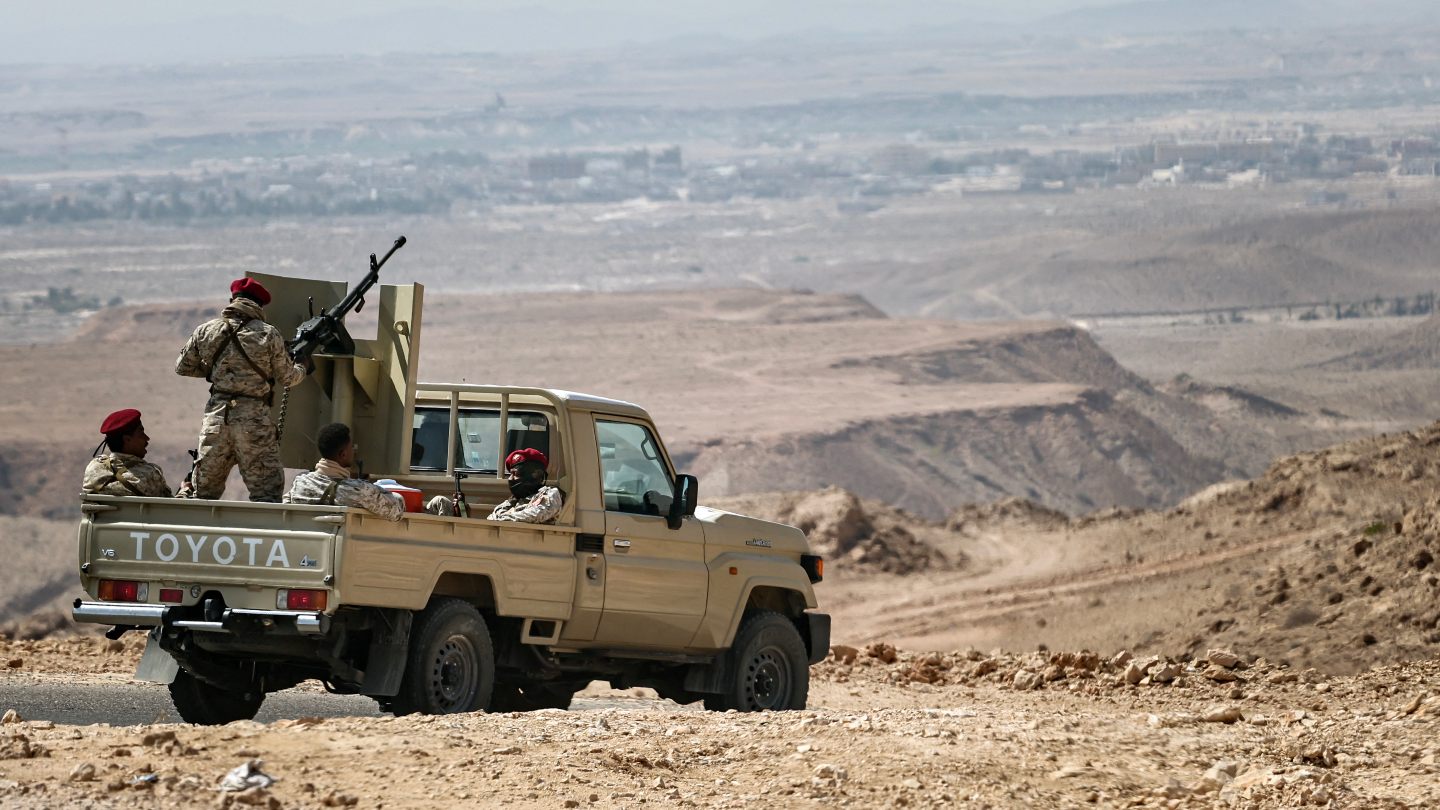
In a dramatic escalation of hostilities that has shattered years of relative calm in Yemen, Houthi missile and drone attacks killed at least 38 Yemeni internationally recognized government forces and wounded 29 others on Thursday, according to multiple sources cited by Agence France-Presse. Military officials confirm this assault is the deadliest strike against government-aligned troops since the United Nations-brokered ceasefire took effect in 2022.
Houthi military spokesperson Yahya Saree confirmed the group carried out the coordinated attacks, saying the operation was launched in direct retaliation for what the group calls a Saudi-backed military buildup in strategic Yemeni regions. Saree added that ballistic missiles and drones targeted multiple government military positions across three key areas: al-Ruwaik in Marib province, al-Thaniyah, and al-Abr in Hadramawt province. “We are fully prepared to confront any further escalation from our opponents,” Saree stated in the official announcement.
Detailed on-the-ground accounts from medical and military sources reveal one of the deadliest strikes hit a government military camp during morning formation in the al-Ruwaik district of Marib, alone leaving 45 personnel dead or injured. Additional simultaneous strikes targeted military outposts in al-Abr and al-Wadiah, Hadramawt province, a region that sits directly along Yemen’s border with Saudi Arabia, a key backer of the Yemeni government.
Yemen’s defense ministry swiftly issued an official statement condemning the attacks, vowing that the country’s armed forces would respond to the drone and missile assault “at the appropriate place and time.”
The Thursday offensive represents the latest spike in a broader resurgence of conflict that has followed rising tensions between the United States and Iran this year. After the 2022 UN truce brought an extended period of relative stability, the Houthi movement formally ended the de-escalation phase on July 12, following what the group claims was an Saudi air strike on Sanaa International Airport while an Iranian aircraft was on the tarmac in the Yemeni capital. Since that announcement, the Houthis have significantly ramped up military operations across the country.
In the weeks following the end of de-escalation, the Houthi group declared a full maritime blockade of all Saudi ports and launched a series of attacks on commercial shipping linked to Saudi interests. This disruption of Red Sea and Gulf of Aden shipping comes as Saudi Arabia has rerouted much of its oil shipments through the Bab el-Mandeb Strait, after Iran blocked the Strait of Hormuz to vessels aligned with the U.S. and its allies in March. The closure of Hormuz followed the February 28 launch of US-Israeli military operations against Iran.
This most recent deadly attack is not an isolated incident: just one month ago, Houthi strikes killed 16 government-aligned troops in an offensive south of the Red Sea port city of Hodeidah, AFP reports.
The current escalation of fighting in Yemen extends a nearly decade-long conflict that began when Houthi forces seized the capital Sanaa in 2014, pushing the internationally recognized government into exile and later into control of southern Yemeni territories. The conflict has killed hundreds of thousands of Yemenis through direct fighting, starvation, and lack of access to medical care, creating what the United Nations has repeatedly called one of the worst humanitarian catastrophes on the planet. Even after the formal expiry of the 2022 truce, front lines remained largely static for more than two years, until the recent regional spillover from the US-Iran confrontation reignited large-scale hostilities.