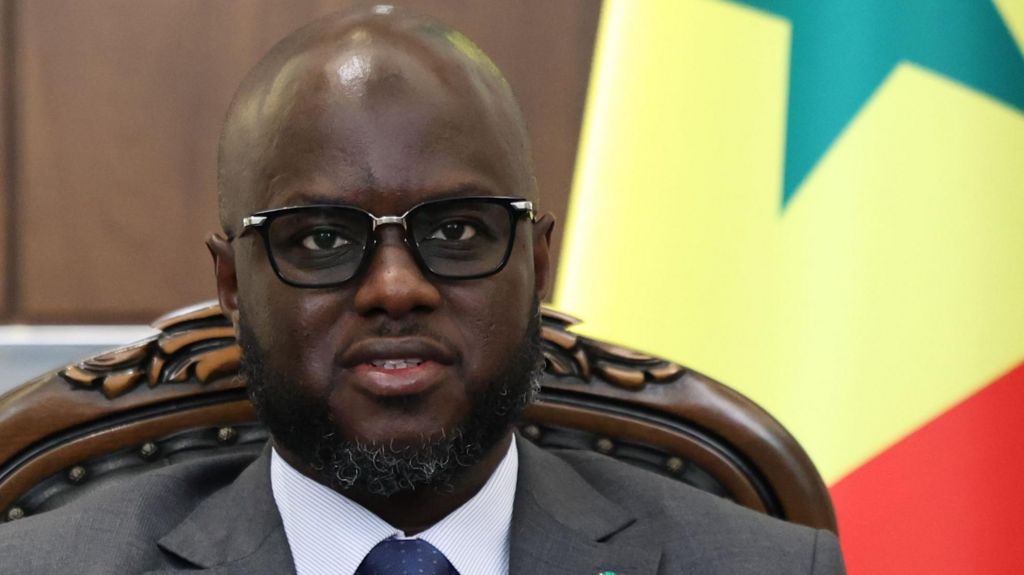
A rapidly escalating political crisis has gripped Senegal in recent days, following President Bassirou Diomaye Faye’s sudden dismissal of Prime Minister Ousmane Sonko, his one-time political mentor, and the dissolution of the entire national government. Now, just days after that high-stakes shakeup, El Malick Ndiaye, the speaker of Senegal’s National Assembly, has stepped down from his leadership post, opening a critical vacancy that political observers say could see Sonko return to legislative power.
In a public statement released Sunday announcing his resignation, Ndiaye framed his departure as a decision rooted in principle. He explained that his exit came after “deep reflection” on his “sense of statehood,” adding that, “In public responsibilities as well as in the trials of national life, there are times when the interest of the country commands to prioritise integrity, discernment and sense of duty.”
The move has set the stage for a extraordinary parliamentary session scheduled for Tuesday, when sitting lawmakers will convene to formalize Sonko’s return to the legislature and vote to fill the vacant speaker position. Sonko, the firebrand founder and leader of the ruling Pastef party, was originally elected to parliament in the 2024 legislative elections, topping the party’s candidate list. But at the time, he declined his legislative seat to remain in the post of prime minister, telling reporters two years ago, “I am staying at the prime minister’s office. I submitted my resignation letter as a member of parliament.”
With Sonko’s tenure as prime minister cut short by Faye’s sacking, political insiders say his loyalists in the assembly are now planning to nominate him for the open speaker role in a direct challenge to Faye’s authority. Sonko’s Pastef party already holds an absolute majority in parliament, meaning his bid for the speaker’s post is almost certain to succeed if it comes to a vote.
The unfolding power struggle is the culmination of months of simmering tension between Faye and Sonko, a relationship that has gone from alliance to open rivalry. It is a historic irony that Faye owes his presidency largely to Sonko: the 51-year-old former prime minister was barred from running in the 2024 presidential election over a defamation conviction, clearing the way for Faye to run as the Pastef party’s candidate and win the top office.
A popular populist who commands massive support across Senegal, particularly among the nation’s large youth demographic, Sonko built his political career as a fierce opposition critic of former President Macky Sall, and in recent months he has increasingly taken the same combative approach to Faye’s leadership.
Political analysts warn that if Sonko takes control of parliament, Faye’s ability to govern and advance his policy agenda could be severely undermined, leaving him sidelined without legislative backing. The already uncertain political landscape is further complicated by constitutional constraints: Faye cannot legally dissolve parliament until at least two years after the last legislative election, meaning any attempt to call early elections before November 2026 would be unconstitutional and invalid.
Senegal is now waiting for Faye to nominate a new prime minister to replace Sonko, but even that routine step carries uncertainty. Lawmakers have up to three months to approve the president’s nominee, and with Pastef holding a majority, it remains unclear whether the confirmation process will proceed smoothly.
For a West African nation already struggling with heavy debt burdens and a history of contentious leadership struggles, this latest rift between the country’s two most powerful politicians has deepened political instability. Senegal won international praise in recent years for its transition to a youthful, dynamic democratic government, but the future of that progress now hangs in the balance as the full scope of the split between Faye and Sonko remains unclear.