标签: Africa

非洲

  • Powerful cyclone kills at least 20 as it tears through Madagascar port

    Powerful cyclone kills at least 20 as it tears through Madagascar port

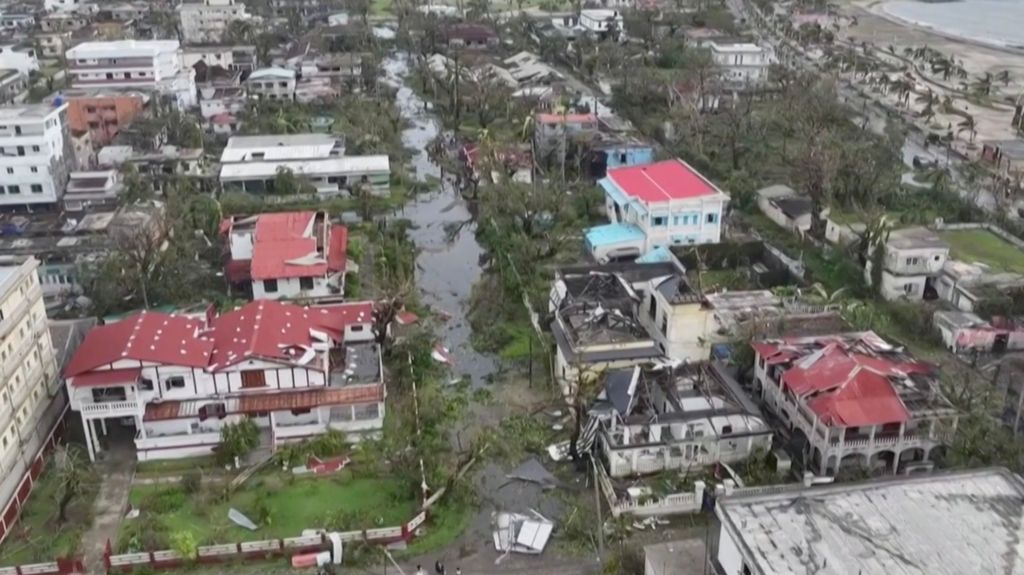
    A devastating cyclone has unleashed catastrophic damage across eastern Madagascar, claiming at least 20 lives and plunging the port city of Toamasina into what authorities describe as ‘total chaos.’ Cyclone Gezani made landfall on Tuesday, striking with ferocious winds reaching 250 km/h (155 mph) – one of the most intense storms recorded in the satellite era for the region.

    According to the National Office for Risk and Disaster Management, the majority of fatalities occurred when residential structures collapsed under the cyclone’s brutal force. The storm’s impact zone witnessed widespread destruction: approximately 90% of houses suffered complete or partial roof loss, power lines snapped creating widespread blackouts, and trees were violently uprooted across neighborhoods.

    The disaster management office has executed emergency evacuations, relocating dozens of injured individuals and hundreds of residents from districts surrounding Toamasina, a urban center housing approximately 400,000 people. Survivors recounted terrifying experiences as the cyclone struck. ‘I have never experienced winds this violent… The doors and windows are made of metal, but they are being violently shaken,’ Harimanga Ranaivo told Reuters.

    This catastrophic event marks the second major cyclone to batter Madagascar within just ten days. Tropical cyclone Fytia recently claimed 14 lives and displaced over 31,000 people according to UN humanitarian reports, compounding the nation’s emergency response challenges.

    In preparation for Gezani’s arrival, Malagasy authorities had implemented preventive measures including school closures and emergency shelter preparations. By Wednesday morning, the meteorological service reported the system had weakened to a moderate tropical storm, moving westward inland approximately 100km north of the capital Antananarivo. Forecasters project the storm will cross the central highlands before exiting into the Mozambique Channel.

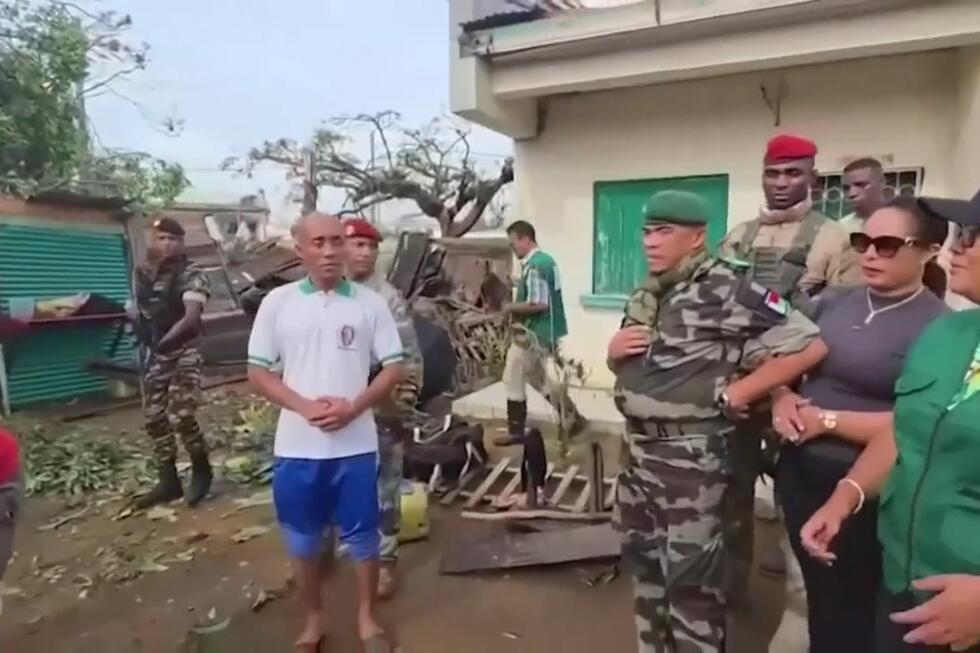
    The nation’s new leader, Colonel Michael Randrianirina – who assumed power in October – was personally assessing the damage in Toamasina on Wednesday morning. The Indian Ocean cyclone season typically spans November through April, generating approximately a dozen annual storms in the region according to meteorological patterns.


  • Bad Bunny’s Super Bowl sneakers just dropped in Dubai, here’s where to buy them

    Bad Bunny’s Super Bowl sneakers just dropped in Dubai, here’s where to buy them

    Dubai has become the latest market to receive the highly anticipated Adidas Originals para Bad Bunny BadBo 1.0 sneakers, fresh from their global debut during the artist’s historic Super Bowl LIX halftime performance. The pristine white footwear, which made its first public appearance during one of the world’s most-watched entertainment events, officially launched in the region on February 10 at select Adidas locations in Dubai and through the brand’s online portal.

    The BadBo 1.0 represents Bad Bunny’s inaugural signature silhouette collaboration with Adidas Originals, marking a significant milestone in the artist’s growing influence across both music and fashion industries. The model initially saw a limited release of just 1,994 pairs in a brown colorway back in January 2026, creating immense anticipation among collectors and fashion enthusiasts worldwide.

    Following overwhelming demand, the white iteration worn during the Super Bowl performance is now available at Adidas Dubai Mall and via adidas.ae. The sneaker’s clean, minimalist design reflects Bad Bunny’s distinctive aesthetic that blends bold statements with refined simplicity—a characteristic that has defined his previous fashion collaborations.

    The launch comes amid a landmark period for the Puerto Rican artist (born Benito Antonio Martínez Ocasio), who recently made history as one of the few Spanish-language artists to headline the Super Bowl halftime show. Despite facing criticism from former US President Donald Trump regarding his performance, Bad Bunny continues to dominate global music charts and cultural conversations, recently securing a Grammy Award for Best Album.

    The artist’s latest album, ‘Debí Tirar Más Fotos,’ has topped international charts, continuing his record-breaking trajectory that includes multiple years as Spotify’s most-streamed artist worldwide and maintaining his position as the highest-grossing touring Latin artist in music history.

  • AI and stablecoins reshape DeFi infrastructure for future finance

    AI and stablecoins reshape DeFi infrastructure for future finance

    The digital finance landscape is undergoing a fundamental transformation as stablecoins and artificial intelligence converge to redefine core financial operations. With annual transaction volumes approaching $33 trillion, stablecoins have transcended their cryptocurrency origins to become institutional-grade settlement tools valued for their operational efficiency rather than technological novelty.

    The most visible manifestation of this shift emerges through payment infrastructure evolution. Fintech platforms are increasingly integrating stablecoin settlement beneath conventional card payment experiences, with Klarna’s recent Coinbase partnership demonstrating how major players now treat onchain settlement as balance-sheet optimization tools rather than experimental features.

    Payment networks including Visa have expanded stablecoin settlement capabilities between issuers and acquirers, creating user experiences identical to traditional card payments while delivering enhanced processing speed, reduced costs, and broader global reach. Industry analysts anticipate stablecoin compatibility will transition from alternative option to standard feature within mainstream payment architecture by year’s end.

    This infrastructure evolution coincides with the rise of agentic finance—AI-driven systems that autonomously execute financial operations atop DeFi infrastructure. These non-custodial agents now manage routine functions including idle balance reallocation, yield optimization, and payment initiation while maintaining full transparency and auditability. This model proves particularly transformative in underbanked regions, where users access sophisticated financial services through simplified interfaces while automation handles backend complexity.

    As agentic systems mature, their application expands from retail savings management to corporate treasury operations, working capital optimization, and cross-market liquidity deployment. The foundational requirements remain consistent: non-custodial infrastructure, transparent operations, and resilient architecture.

    The convergence of stablecoin settlement, DeFi integration, and AI automation points toward financial infrastructure growth driven by practical utility, operational efficiency, and genuine economic adoption rather than speculative interest. This transition, while still in early stages, establishes the framework for capital movement across future global markets.

  • Senegalese university students say death of protester dashes hope for change

    Senegalese university students say death of protester dashes hope for change

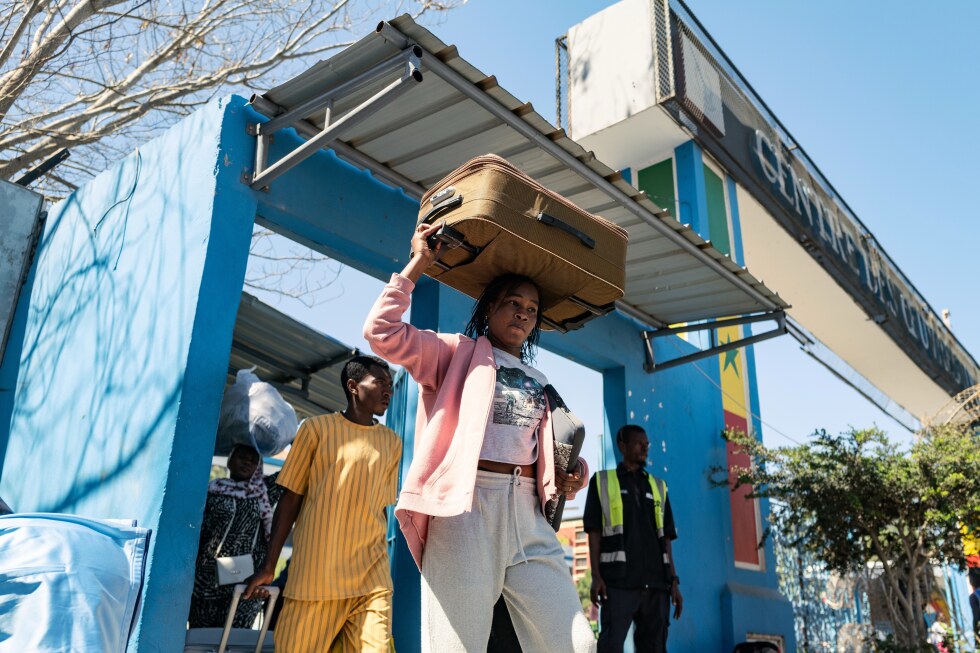
    DAKAR, Senegal — Senegal’s premier higher education institution descended into chaos this week as violent protests over delayed student stipends culminated in a tragic death and mass campus evacuations. The incident has exposed deep-seated systemic failures in the country’s education funding system and sparked nationwide outrage.

    Authorities confirmed the death of Abdoulaye Ba, a second-year medical student, following severe head injuries sustained during demonstrations at Cheikh Anta Diop University. While official reports remain vague, student representatives assert Ba was not participating in protests but was brutally assaulted by police within his residence. Social media footage captured terrifying scenes of students fleeing burning dormitories, some leaping from windows to escape the inferno.

    The unrest stems from a protracted stipend crisis affecting approximately 80,000 students at West Africa’s largest university. Many have endured months without receiving their 40,000 CFA franc ($73) monthly allowances—a critical financial lifeline for the majority who rely solely on this support. The situation deteriorated when university administrators shut down cafeterias after students refused to pay for meals typically covered by food stamps.

    This tragedy occurs against a backdrop of recurring academic disruptions that have plagued Senegalese universities for years. Extended closures—sometimes exceeding nine months—have created overlapping academic years and bureaucratic delays in stipend distributions. The current government inherited substantial debt from previous administrations, complicating resolution efforts despite campaign promises to address corruption and improve resource management.

    Interior Minister Mouhamadou Bamba Cissé acknowledged “acts of violence observed on both sides” during a press conference where unverified footage of Molotov cocktails played nearby. Amnesty International Senegal joined rights groups in condemning the “disproportionate use of force by police” at the university.

    The political dimension adds complexity to the crisis. Many students previously supported Prime Minister Ousmane Sonko and President Bassirou Diomaye Faye, who gained popularity through anti-corruption platforms. However, their administration’s response to the stipend crisis has generated widespread disillusionment among former supporters.

    Khadija Ndiaye, a history student without stipends for three months, expressed betrayal: “We were fighting for him during his campaign. It’s contradictory for him to now say students can survive without stipends.” Literature student Ibrahima Diatta echoed this sentiment, noting that stipends function as “de facto salaries” for many students supporting rural families.

    Education experts warn that the government’s decision to close campus housing—forcing thousands to return to countryside homes—may exacerbate academic calendar disruptions and further delay stipend payments. As David Célestin Faye, secretary-general of Senegal’s professors’ union, emphasized: “Students are not a burden, they are an investment that must be supported.”

  • Proteas edge Afghanistan after two super overs

    Proteas edge Afghanistan after two super overs

    In an unprecedented display of cricketing tension, South Africa and Afghanistan delivered what will be remembered as one of the most dramatic contests in T20 World Cup history, ultimately decided through two nerve-shredding super overs in Ahmedabad.

    The monumental Group D clash saw both teams finish locked at 187 runs after their allotted 20 overs, triggering the extraordinary tie-breaker procedure. The first super over ended in another deadlock with both teams scoring 17 runs, marking only the third instance in men’s T20 international history requiring multiple super overs to determine a winner.

    South Africa established their competitive total of 187-6 through commanding half-centuries from Quinton de Kock (59 from 41 balls) and Ryan Rickelton (61 from 28 deliveries), who combined for a formidable 114-run second-wicket partnership. Afghanistan’s response was spearheaded by Rahmanullah Gurbaz’s explosive 84 from just 42 balls, supported by valuable contributions from Azmatullah Omarzai (22) and captain Rashid Khan (20).

    The match reached its zenith in the final over of regulation play. With Afghanistan requiring 13 runs from the final six deliveries and only one wicket remaining, Kagiso Rabada’s two no-balls provided dramatic reprieves. The tension peaked when Fazalhaq Farooqi was run out attempting a second run with three balls remaining, forcing the match into its first super over.

    After both teams matched each other’s 17-run effort in the initial super over, the contest progressed to an unprecedented second tie-breaker. David Miller’s crucial 16 runs from four deliveries propelled South Africa to 23-0, setting a challenging target. Despite Rahmanullah’s blistering 18 from four balls in response, spinner Keshav Maharaj claimed two vital wickets, restricting Afghanistan to 19-2 and securing South Africa’s victory by the narrowest of margins.

    This thrilling encounter served as a rematch of the 2024 T20 World Cup semi-final, though Afghanistan demonstrated significant improvement from their previous 56-all-out performance in Trinidad. The result solidifies South Africa’s position in the tournament following their opening victory over Canada, while Afghanistan faces elimination after consecutive defeats.

    The Proteas now prepare to face New Zealand at the same venue on Saturday, while Afghanistan will meet the United Arab Emirates in Delhi on Monday, with both teams contemplating very different tournament trajectories after this historic contest.

  • Ghana declares Wednesday ‘Fugu Day’ to promote traditional outfit after online mockery

    Ghana declares Wednesday ‘Fugu Day’ to promote traditional outfit after online mockery

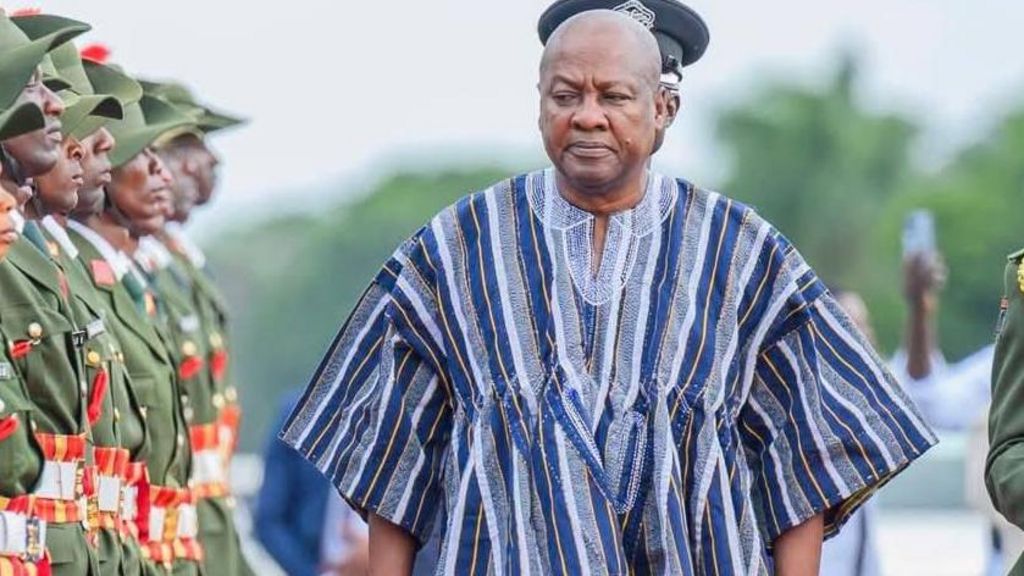
    In a remarkable display of cultural diplomacy, Ghana has officially designated every Wednesday as a national day for wearing traditional fugu attire. This decision comes shortly after a spirited online exchange between Ghanaians and Zambians regarding the cultural garment, which gained international attention when Ghana’s President John Dramani Mahama wore it during a state visit to Zambia.

    The conversation began when some Zambians humorously referred to the distinctive garment as a ‘blouse,’ triggering a wave of national pride among Ghanaians who flooded social media with images showcasing their traditional attire. The digital cultural exchange soon reached the highest levels of government, with Zambian President Hakainde Hichilema expressing interest in importing the fugu garments from Ghana.

    Ghana’s Minister for Tourism, Abla Dzifa Gomashie, announced the weekly tradition would help project Ghana’s cultural identity ‘with pride on the global stage.’ She encouraged citizens to wear the garment ‘in all its diverse forms, designs, and expressions,’ complemented by its distinctive accessories.

    The fugu, also known as batakari, originates from northern Ghana and is crafted from hand-woven, narrow strips of thick cotton fabric stitched together to form a structured, poncho-style garment. Beyond its cultural significance, Minister Gomashie emphasized that the weekly display would generate substantial social and economic benefits for local weavers, designers, artisans, and traders.

    The government anticipates this collective embrace of traditional attire will strengthen national unity, stimulate the creative economy, and serve as a powerful symbol of Ghana’s cultural confidence. President Mahama highlighted the garment’s historical significance, noting that Ghana’s founding father Kwame Nkrumah wore it on Independence Day in 1957, and that he himself had recently worn it proudly to the United Nations.

    The cultural exchange has fostered unexpected diplomatic and economic opportunities, with both nations exploring ways to celebrate and share their traditional heritage through fashion and cultural appreciation.

  • Tropical Cyclone Gezani hits Madagascar and kills at least 9 on the Indian Ocean island

    Tropical Cyclone Gezani hits Madagascar and kills at least 9 on the Indian Ocean island

    ANTANANARIVO, Madagascar — Tropical Cyclone Gezani has unleashed catastrophic damage across Madagascar, claiming at least nine lives and injuring 19 others after making landfall in the nation’s primary port city of Toamasina. The powerful storm struck with ferocious winds exceeding 195 kph (121 mph), triggering red alerts across multiple regions for potential flooding and landslides.

    The National Office for Risk and Disaster Management confirmed the casualties resulted primarily from structural collapses as the cyclone battered the eastern coastline late Tuesday. Toamasina, a critical economic hub with approximately 300,000 residents, suffered the most severe impact, with eyewitnesses describing widespread devastation including destroyed buildings, uprooted trees, and severed power infrastructure.

    Madagascar President Michael Randrianirina, who assumed power following an October military coup, visited the disaster zone to assess damage and coordinate response efforts. Official social media footage revealed extensive flooding, commercial and residential structures with shattered windows and missing roofs, and streets littered with debris.

    This meteorological disaster compounds existing vulnerabilities for the Indian Ocean nation, which endured another deadly cyclone less than two weeks prior. Tropical Cyclone Fytia killed 14 people and displaced over 85,000 residents on January 31st, highlighting the region’s recurrent weather crises.

    Meteorological services reported Gezani weakened to tropical storm status while moving inland Wednesday, though red alerts remained active for the capital region Antananarivo due to flooding risks. The storm system is projected to enter the Mozambique Channel on Thursday, where it could potentially regain cyclone strength and threaten Madagascar’s southwestern coast next week.

    With annual cyclone seasons from November through March consistently battering one of the world’s poorest nations, Madagascar faces perpetual recovery challenges. The United Nations Office for Disaster Risk Reduction estimates weather disasters cause approximately $85 million in annual infrastructure damage, severely hampering national development efforts.

  • This woman fought back when jihadists killed her sons

    This woman fought back when jihadists killed her sons

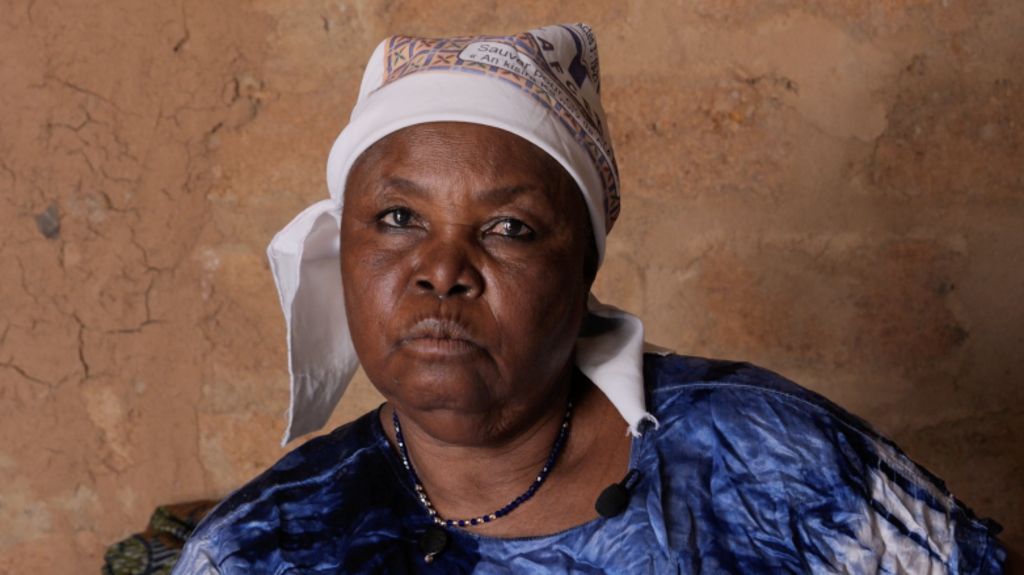
    In the dim confines of a refugee camp in Ivory Coast, 57-year-old Yameogo Aminata grapples with the traumatic memory of her four sons being executed by jihadist fighters in Burkina Faso. The attack occurred in 2022 when armed insurgents—who have terrorized central Burkina Faso for nearly fifteen years—overran her village, slaughtering residents and seizing property.

    “They slit the throats of four of my children,” Aminata recounted to the BBC, her voice trembling with emotion. “When I arrived, they were killing my fourth son.” Despite attempting to fight back with a knife, she was overpowered, severely beaten, and left with critical injuries. Her daughter remains missing since the assault.

    Aminata is among thousands who have fled to the Nioronigué camp, established in 2023 near the Burkinabé border through a collaboration between the United Nations and Ivorian authorities. Here, she preserves the bloodied clothing from the attack as a harrowing reminder of her loss.

    The Sahel region, described by the UN as the “epicentre” of global jihadist violence, has seen over 10,000 fatalities and the displacement of more than three million people. Countries like Burkina Faso, Mali, and Niger have been particularly affected, leading to military coups and a strategic pivot from Western alliances to Russian military support under the Africa Corps. Yet, insurgency persists, notably from al-Qaeda affiliate JNIM.

    Hassane Tall, a 60-year-old farmer, escaped northern Burkina Faso with his three wives and 19 children after repeated attacks. “We thought we would die,” he said. Now in Nioronigué, he mourns the loss of his ancestral land but sees no safe future at home.

    The camp, designed for 6,000 people, now shelters approximately 13,000 refugees—far exceeding its capacity. More than 80,000 Burkinabés currently reside in Ivorian camps, with many others integrated into local communities. This influx strains resources, despite the Ivorian government’s commitment to welcome refugees as “brothers” sharing cultural and historical ties.

    Blerta Cela of the UN Development Programme warned that host communities and infrastructure are under severe pressure. Meanwhile, refugees like a 27-year-old Malian finance graduate describe fleeing pervasive fear and violence after family members were targeted.

    For Aminata, the struggle to rebuild her life is overshadowed by enduring trauma. “I still cannot erase what happened to me,” she confessed. “We just pray to God that peace comes back to Burkina Faso.”

  • India–Pakistan feud casts shadow over cricket’s Olympic ambitions

    India–Pakistan feud casts shadow over cricket’s Olympic ambitions

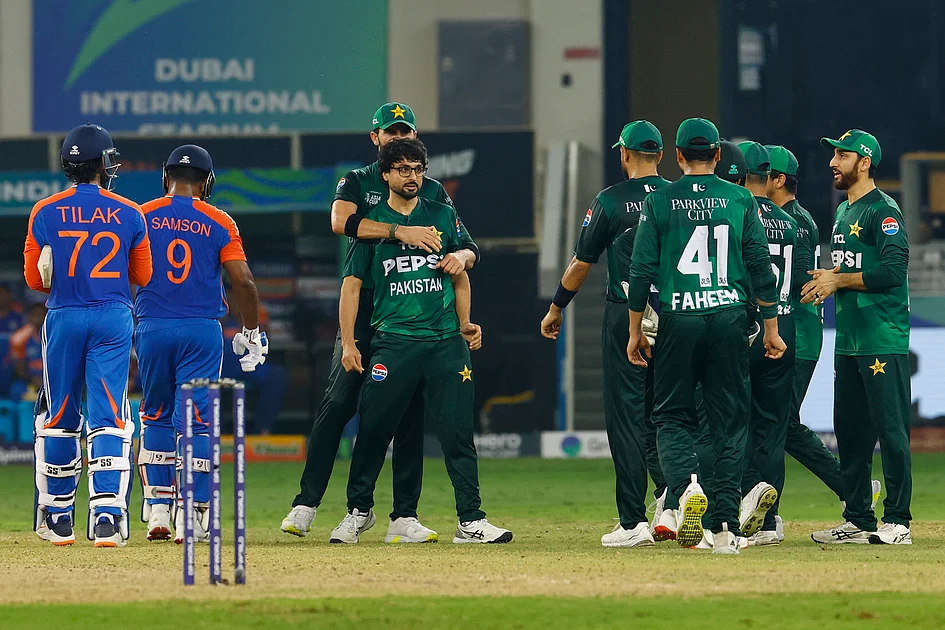
    Cricket’s anticipated return to the Olympic stage at Los Angeles 2028 faces significant challenges beyond the upcoming Games, as persistent geopolitical tensions between India and Pakistan cast doubt on the sport’s long-term Olympic aspirations. The recent T20 World Cup impasse, which saw Pakistan initially boycott their marquee match against India, highlights deeper structural issues within cricket’s governance that could undermine its global expansion ambitions.

    The International Cricket Council (ICC) successfully mediated a temporary resolution to the crisis through emergency talks with the Pakistan and Bangladesh cricket boards. However, sports analysts characterize this solution as merely addressing symptoms rather than curing the underlying disease of political interference in sporting decisions.

    Veteran Indian journalist Chander Shekhar Luthra emphasizes that substantial structural reforms within the ICC are imperative if cricket genuinely seeks permanent Olympic inclusion. ‘The governing body must liberate itself from political pressures exerted by powerful cricket boards, particularly the Indian board which operates under political compulsions,’ Luthra stated.

    The timing of these tensions carries additional significance as India contemplates bidding for the 2036 Olympic Games. Pakistani commentator Nauman Niaz warns that the International Olympic Committee’s commitment to neutrality and impartiality might view recent politicization incidents unfavorably. ‘The IOC operates very differently from cricket’s governing bodies,’ Niaz noted. ‘As India prepares an Olympic bid, such incidents will inevitably come under scrutiny.’

    Despite these challenges, both commentators acknowledge India’s remarkable transformation as a sporting nation and its deserving credentials to host the Olympics. The paradox remains that the same nation driving cricket’s commercial success might inadvertently hinder its Olympic aspirations through political interventions that contradict the Olympic movement’s fundamental principles.

  • CellSave Arabia qualified by Gilead and Kite to support advanced cell therapy for lymphoma patients

    CellSave Arabia qualified by Gilead and Kite to support advanced cell therapy for lymphoma patients

    In a significant advancement for cancer care in the Middle East, CellSave Arabia has achieved qualification from biotechnology leaders Gilead and Kite to deliver specialized cell storage services for lymphoma treatments across the United Arab Emirates. This strategic collaboration establishes new pathways for patients requiring advanced cellular therapies, particularly CAR T-cell treatments that represent a breakthrough in oncology care.

    As the region’s premier private stem cell laboratory operating under CSG.BIO, CellSave Arabia brings state-of-the-art biobanking capabilities to this partnership. The company maintains internationally recognized accreditations including AABB, FDA, and ISO 2038 certifications, ensuring compliance with global standards for cellular preservation. This infrastructure positions the organization as a critical component in the CAR T-cell treatment process, where secure handling and storage of biological material is paramount.

    Kite, a Gilead subsidiary acquired in 2017, stands as a global pioneer in cell therapy innovation. The company has developed transformative treatments including YESCARTA and TECARTUS, which have demonstrated remarkable efficacy against certain lymphoma variants. To date, more than 32,000 patients worldwide have received Kite’s CAR T-cell therapies through over 555 authorized treatment centers. Within the UAE, the company currently maintains two approved CAR T-cell therapies across four medical indications.

    Alia Abdel-Razeq, Chief Operating Officer of CellSave Arabia, emphasized the patient-centric nature of this collaboration. “Our fundamental mission revolves around placing patients at the core of every innovation we pursue,” she stated. “This partnership enables us to support lymphoma patients with unprecedented levels of precision, safety, and care while maintaining the highest preservation standards for cellular materials.”

    Eslam Khedr, Head of Oncology Regional Headquarters for Gilead and Kite Middle East, highlighted the individualized nature of CAR T therapy. “This approach represents a truly personalized treatment modality with curative intent for patients confronting difficult-to-treat blood cancers,” Khedr explained. “Meeting patient and healthcare professional needs requires robust treatment delivery infrastructure, which we’ve developed through one of the world’s most extensive in-house manufacturing networks.”

    This collaboration underscores the UAE’s emerging role as a regional hub for next-generation biomedical innovation and scientific collaboration. By combining CellSave Arabia’s specialized biobanking expertise with Gilead and Kite’s therapeutic leadership, the partnership aims to streamline treatment pathways, enhance accessibility to advanced cancer therapies, and ultimately improve outcomes for patients battling hematological malignancies across the Middle East.