标签: Africa

非洲

  • Egypt and Sudan welcome Trump’s offer to mediate Nile River dam dispute

    Egypt and Sudan welcome Trump’s offer to mediate Nile River dam dispute

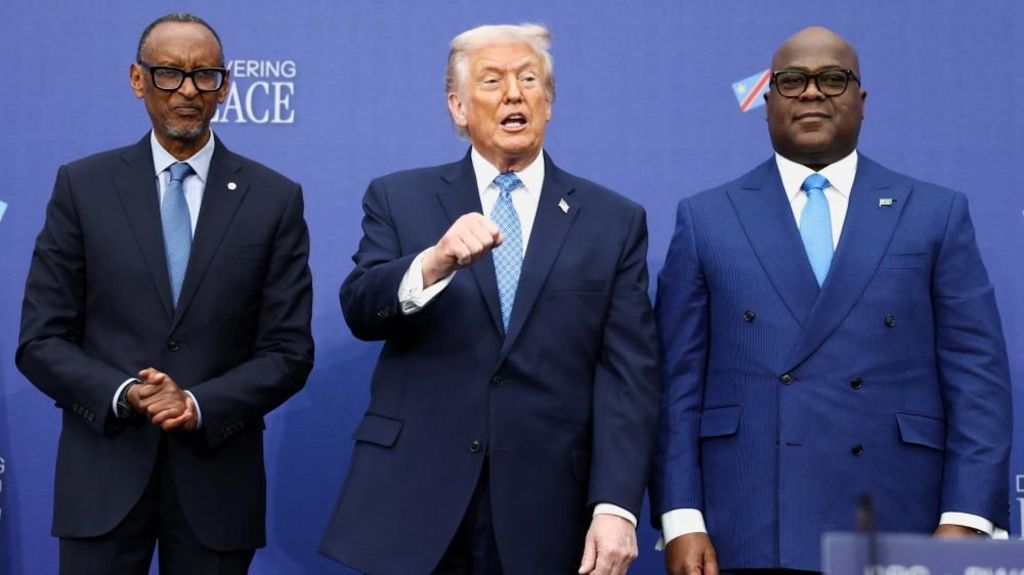
    Egypt and Sudan have expressed approval of former President Donald Trump’s proposal to restart American mediation efforts concerning the contentious Grand Ethiopian Renaissance Dam (GERD) on the Nile River. The diplomatic overture comes amid ongoing tensions between the Nile Basin nations over Africa’s largest hydroelectric project.

    Egyptian President Abdel-Fattah el-Sissi acknowledged Trump’s engagement with what Cairo considers a matter of national survival, stating his country remains committed to “serious and constructive cooperation with the Nile Basin countries, based on the principles of international law.” Simultaneously, Sudan’s military leader Gen. Abdel-Fattah Burhan characterized Trump’s initiative as a positive step toward achieving sustainable solutions that protect all parties’ rights.

    The $5 billion GERD project, inaugurated by Ethiopia last fall, represents a monumental infrastructure development with the capacity to generate over 5,000 megawatts of electricity—effectively doubling Ethiopia’s power generation capabilities. However, downstream nations Egypt and Sudan view the dam’s operation as potentially catastrophic to their water security.

    Egypt, whose 110 million population depends overwhelmingly on Nile waters, fears the dam could significantly reduce water flow, threatening agricultural sustainability and other vital sectors. Sudan has emphasized the need for coordinated reservoir management to prevent adverse effects on its own dams.

    The core disagreement revolves around establishing binding agreements regarding the dam’s filling procedures, water release protocols during droughts, and dispute resolution mechanisms. Previous U.S.-mediated negotiations initiated during Trump’s presidency stalled in 2020 when Ethiopia withdrew from talks, though discussions continued under African Union auspices without resolution.

    Ethiopia maintains that the dam is crucial for national development, noting that most of its population lacks reliable electricity access. As of this reporting, Ethiopian officials had not publicly responded to Trump’s renewed mediation offer.

  • Dubai: Planning to buy property in 2026? Here’s what off-plan looks like

    Dubai: Planning to buy property in 2026? Here’s what off-plan looks like

    Dubai’s real estate sector continues to demonstrate unprecedented momentum as off-plan developments solidify their position as the primary growth driver heading into 2026. Industry analysis reveals that pre-construction properties not only maintained market dominance throughout 2025 but are positioned to capture an even larger share of transaction volume in the coming year.

    Market intelligence indicates that both local and international developers are preparing significant project launches that will further stimulate investor interest. According to Himanshi Trivedi, Deputy Director for Off-Plan Sales at Metropolitan Premium Properties, “Off-plan remains the driving force of Dubai’s residential real estate market, accounting for over 70% of total transactions in 2025. With major developments underway in high-growth corridors including Dubai South, Dubai Islands, and new master-planned phases by industry leaders Emaar and Damac, we anticipate off-plan unit sales to increase by 10-15% in 2026.”

    The appeal of off-plan investments stems from their superior return potential compared to completed properties. Market data shows that projects nearing completion continue to experience price appreciation, while the ready market offers rental savings advantages for residents.

    Betterhomes CEO Louis Harding notes a pronounced shift in demand dynamics: “Demand is clearly tilting toward new supply, especially in the apartment segment.” This trend is reflected in 2025 transaction data, where off-plan activity constituted 65% of total transactions and 53% of total value, with apartment sales surging 29% to AED 325 billion while villas and townhouses contributed AED 221 billion, representing a 26% increase.

    The market expansion has been extraordinary, with approximately 145,000 new off-plan units entering the market during 2024—averaging 400 units daily. Cavendish Maxwell research indicates sales volumes reached four times pre-pandemic levels, demonstrating the sector’s robust recovery and growth trajectory.

    John Lyons, Managing Director at Espace Real Estate, observed: “Dubai’s real estate market, spanning both residential and commercial sales, continued to demonstrate remarkable resilience and growth throughout the second half of 2025. Transaction volumes remained robust, buoyed by sustained demand across all asset classes.”

    Development leadership emerged clearly in H2 2025, with Binghatti launching over 13,000 units, followed by Damac Properties (6,588 units) and Emaar (6,262 units), signaling continued confidence in Dubai’s property market fundamentals.

  • Police deny claims Uganda opposition leader abducted by helicopter

    Police deny claims Uganda opposition leader abducted by helicopter

    Uganda’s political landscape remains fraught with tension as authorities and opposition figures offer conflicting narratives regarding the whereabouts and status of presidential challenger Bobi Wine. The National Unity Platform (NUP) party leader’s residence in Kampala has become the epicenter of a deepening crisis, with police asserting controlled access due to security concerns while Wine’s family alleges his abduction by helicopter.

    The electoral commission’s latest figures indicate a substantial lead for incumbent President Yoweri Museveni, showing 72% of counted votes against Wine’s 24% with 94% of polling stations reporting. These results emerge against the backdrop of a nationwide internet blackout implemented earlier this week, severely hampering information verification and communication capabilities.

    Police spokesman Kituuma Rusoke categorically denied abduction allegations during a Saturday press briefing, characterizing family claims as “untrue” and “unfounded.” He explained that security measures around Wine’s property were necessary to prevent gatherings that could potentially incite violence or destabilize national security.

    Contradictory accounts emerged from Wine’s son, Solomon Kampala, who initially reported both parents’ seizure before later asserting his father had “escaped” while his mother remained under house arrest. These developments occurred alongside reports of opposition supporter fatalities in Butambala and documented instances of security forces employing tear gas and warning shots to disperse gatherings.

    Technical difficulties plagued Thursday’s electoral process, with voting delays of up to four hours reported at numerous stations due to malfunctioning biometric verification systems and delayed ballot box deliveries. Electoral chief Simon Byabakama maintained that vote counting proceeded unaffected by communication restrictions, with final results expected by Saturday afternoon.

    The campaign period preceding this election witnessed significant violence and allegations of suppression against opposition activities. Museveni, seeking an unprecedented seventh term after initially assuming power in 1986, positions himself as Uganda’s sole guarantor of stability. Meanwhile, Wine—a former pop star representing the country’s substantial youth demographic—has campaigned on anti-corruption platforms and sweeping reform promises.

    Uganda’s Communications Commission justified internet suspension as necessary to prevent misinformation, fraud, and violence incitement, though the United Nations human rights office condemned this measure as “deeply worrying.”

  • Ugandan police deny arrest of opposition leader as country awaits final election results

    Ugandan police deny arrest of opposition leader as country awaits final election results

    Ugandan authorities have officially refuted claims regarding the detention of prominent opposition figure Bobi Wine during the highly charged electoral period. Police spokesperson Kituuma Rusoke characterized reports of the arrest as “deceitful and inciteful” while confirming that security measures had been implemented around the opposition leader’s residence to prevent potential violence incitement.

    The general elections conducted on Thursday occurred under extraordinary circumstances, featuring a nationwide internet blackout extending into its fourth day and substantial military deployment across the country. Isolated incidents of violence emerged as citizens protested parliamentary election outcomes in various regions.

    Incumbent President Yoweri Museveni, aged 81 and pursuing an unprecedented seventh term, maintains a commanding lead in provisional results with over 70% of counted votes. His primary challenger, musician-turned-politician Kyagulanyi Ssentamu (popularly known as Bobi Wine), has secured approximately 20% of the vote according to initial tallies. Wine has vehemently dismissed these results as “fabricated” and urged his supporters to disregard the announced figures.

    Electoral officials are constitutionally mandated to announce final presidential results by Saturday’s conclusion. The electoral commission chairperson confirmed plans to meet this deadline despite operational challenges that plagued the voting process, including delayed delivery of materials to polling stations and technical failures of biometric verification systems.

    President Museveni endorsed the commission’s decision to utilize paper-based voter registration records as an alternative to malfunctioning digital systems. However, Wine’s campaign has alleged systematic electoral manipulation, citing instances of “massive ballot stuffing” and the abduction of party polling agents to create unfair advantages for the ruling party.

    The election period has been marked by intense security presence, with opposition figures reporting constant surveillance and harassment of supporters. Wine notably campaigned wearing protective gear including a flak jacket and helmet due to security concerns. Uganda continues to await the final election announcement while maintaining its historical pattern of never experiencing peaceful presidential power transition since gaining independence six decades ago.

  • AGN Skyline Developers breaks ground on Casa Aura, an exclusive family-oriented residential project in Dubai South

    AGN Skyline Developers breaks ground on Casa Aura, an exclusive family-oriented residential project in Dubai South

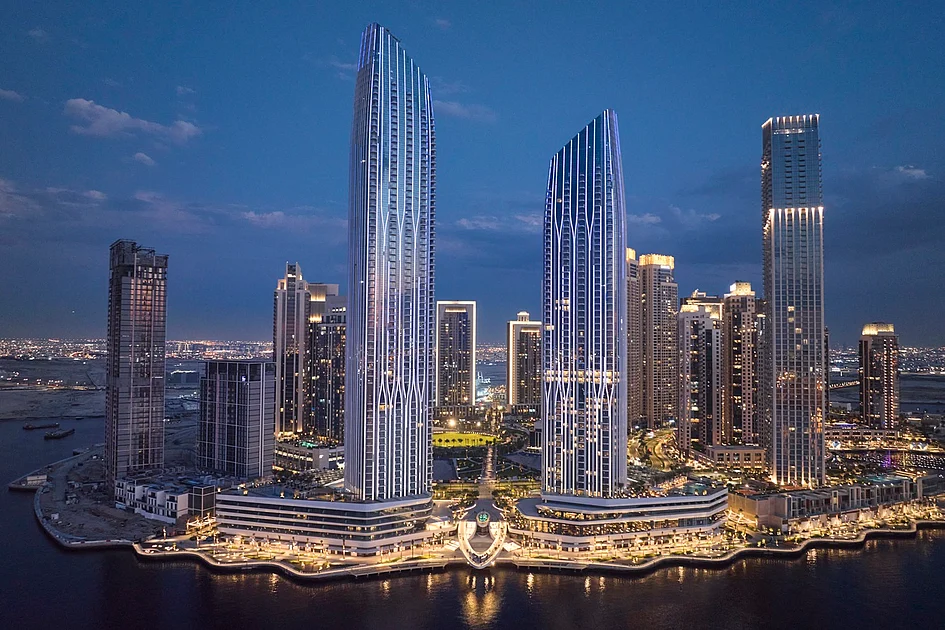
    AGN Skyline Developers has officially commenced construction on Casa Aura, a meticulously planned family-oriented residential project within Dubai’s rapidly expanding Dubai South district. The groundbreaking ceremony, attended by company leadership, consultants, and project partners, marks the transition from planning to active construction phase for this exclusive development.

    Spanning 2,586.97 square meters across five low-rise stories, Casa Aura represents a strategic expansion of Dubai’s residential offerings tailored specifically for family living. The development incorporates contemporary architectural design paired with premium amenities including a dedicated padel court, swimming pool, state-of-the-art fitness facility, jogging track, basketball court, and open-air cinema. Additional community features include lounge and BBQ areas, children’s play zones, and comprehensive security systems with CCTV surveillance.

    The residential units feature open-plan layouts with expansive balconies, premium European finishes, and integrated smart home technology. Fully equipped kitchens with high-quality appliances, spa-inspired bathrooms, and bedrooms designed for optimal natural light contribute to a refined living environment targeting modern family needs.

    Strategically positioned within the 145-square-kilometer Dubai South master development, Casa Aura benefits from proximity to critical infrastructure including Al Maktoum International Airport, Jebel Ali Port, Expo City Dubai, and major commercial and residential centers. This location places residents within an emerging economic and residential hub with exceptional connectivity.

    From an investment perspective, the project offers a structured payment plan spanning 22 months post-booking, with installments synchronized to construction milestones. The development capitalizes on Dubai South’s growing infrastructure, increasing residential demand, and investor-friendly policies including full tax exemption and on-site visa processing services.

    Abdul Ghaffar, Managing Director and CEO of AGN Skyline Developers, emphasized the project’s philosophy: “Our focus extends beyond construction to creating genuine homes where families can establish roots, build connections, and thrive. Casa Aura embodies our commitment to developing thoughtfully planned communities that deliver lasting value for both residents and investors.”

    With construction now underway, the project advances toward its completion timeline, reinforcing AGN Skyline Developers’ reputation for quality-focused development and timely project execution in Dubai’s competitive real estate market.

  • From camouflage to tracksuits – Guinea’s junta leader poised to become civilian president

    From camouflage to tracksuits – Guinea’s junta leader poised to become civilian president

    Colonel Mamadi Doumbouya, who seized power in Guinea through a military coup in September 2021, is poised to be sworn in as the nation’s elected president on Saturday following a controversial electoral process. The 41-year-old former special forces commander, who initially promised not to seek elected office, secured 87% of the vote in December’s election against a severely constrained opposition field.

    Doumbouya’s political transformation has been accompanied by a deliberate image makeover. The once-imposing military figure, known for his mirrored sunglasses and red beret, has increasingly adopted civilian attire—baseball caps, tracksuits, and traditional Guinean boubous—while engaging in public activities such as school openings and cycling through Conakry’s streets. This carefully curated presentation aims to project him as a civilian leader working on behalf of the people, according to security analyst Beverly Ochieng of Control Risks.

    Despite his popular support evidenced by Afrobarometer polls showing trust in the president growing from 46% to 53% between 2022-2024, Doumbouya faces significant criticism over his democratic credentials. Exiled former Prime Minister Cellou Dalein Diallo has dismissed the election as a charade with fabricated results. Researchers point to banned political demonstrations, excluded opposition candidates, suspended parties, and mysterious disappearances of activists and journalists as evidence of democratic backsliding.

    Doumbouya’s governing philosophy emphasizes national sovereignty and resource nationalism. His government has canceled dozens of mining contracts deemed insufficiently beneficial to Guinea and is pursuing greater local processing of mineral resources. The development of Simandou’s massive iron-ore deposits, partially owned by Chinese and Western companies, represents a potential economic transformation that could define his presidency.

    Internationally, Doumbouya has maintained a pragmatic approach, avoiding the outright rejection of France seen in other West African coup states despite his French education and marriage to a French citizen. His administration promises to invest mining revenues in infrastructure, health, and education as Guinea seeks to leverage its natural resources despite persistent poverty.

  • ‘UAE is guiding star’: Awqaf forum highlights how nation became beacon of safety

    ‘UAE is guiding star’: Awqaf forum highlights how nation became beacon of safety

    Under the spiritual inspiration of Al Isra wal Miraj, Al Ain hosted the second season of the Wal-Najm Forum, organized by the General Authority of Islamic Affairs, Endowments and Zakat (Awqaf). Themed “Mawaqiʿ Al-Nujum: Values and Sciences,” the event served as a platform to reinforce the Emirati family’s crucial role in preserving national identity while cultivating generations that harmonize faith with contemporary knowledge.

    Omar Habtoor Al Darei, Chairman of Awqaf, articulated that under President Sheikh Mohamed bin Zayed Al Nahyan’s leadership, the UAE has crafted a distinctive national paradigm that merges robust values with scientific openness. He characterized the nation as “a beacon of safety and an enduring human value,” emphasizing dignity-centered development. Al Darei elaborated on the forum’s celestial symbolism, noting that in Islamic tradition, stars represent profound guidance and elevated principles rather than mere astronomical phenomena—drawing a parallel to the UAE’s role as a guiding star that extends genuine goodness to humanity.

    The forum featured an insightful panel discussion examining the family unit as the primary guardian of cultural values, while stressing the necessity of synergistic collaboration between families and educational institutions to prepare students for future challenges without compromising core principles.

    Zaki Anwar Nusseibeh, Cultural Adviser to the UAE President, highlighted the nation’s unique development approach where technological advancement consistently aligns with cultural authenticity. He noted that UAE leaders have been recognized “for their ethics before their achievements and for their values before their policies.”

    Sarah bint Yousif Al Amiri, Minister of Education, addressed the integration of future-oriented subjects like artificial intelligence and programming into curricula, clarifying that technology serves as a tool whose value derives from its application. She emphasized that preserving national identity requires “a strong and effective partnership between schools and families.”

    The event concluded with ceremonies honoring winners of the Hafeet Religious Talents Competition, which attracted 705 participants from 450 institutions, including 26 determined individuals with special needs, and engaged over 11,000 voters during public voting phases. The forum was attended by Sheikh Mohammed bin Hamdan bin Zayed Al Nahyan, along with numerous ministers, officials, and intellectual leaders.

  • Watch: Iranian journalist breaks down at UN while reading names of protesters killed

    Watch: Iranian journalist breaks down at UN while reading names of protesters killed

    In a profoundly emotional address at the United Nations, Iranian journalist and activist Masih Alinejad delivered a heartbreaking testimony that laid bare the human cost of Iran’s ongoing civil unrest. Overcome with grief, her voice trembled as she recited the names of protesters killed during recent demonstrations, creating a powerful moment of human connection amid diplomatic formalities.

    The emotional climax occurred when Alinejad recounted the death of 28-year-old Negin Ghadimi, who perished in her father’s arms after being shot by members of Iran’s Revolutionary Guards. ‘I feel guilty that I don’t name the rest,’ Alinejad stated, her composure breaking. ‘The list of names goes on and on. They knew they would face guns and bullets, but they wanted justice.’

    Beyond the emotional appeal, Alinejad delivered a scathing condemnation of Iran’s clerical leadership, drawing direct comparisons to the terrorist organization Daesh (ISIS). She challenged the international community to move beyond symbolic gestures and empty condemnations. ‘The Iranian people are asking the world to help through actions, not back-to-back meetings,’ she asserted. ‘The Islamic Republic behaves like Daesh, and the Islamic Republic must be treated like Daesh. This is how you can save lives.’

    This powerful address comes amid what human rights organizations describe as the deadliest wave of dissent in Iran in years. According to the US-based HRANA rights group, the death toll from recent protests has reached 2,571 individuals, including 2,403 verified protester deaths, 147 government-affiliated casualties, 12 minors, and 9 non-protesting civilians. Iranian authorities have acknowledged approximately 2,000 fatalities—their first official death toll recognition after more than two weeks of nationwide unrest.

    The current protests, initially sparked by dire economic conditions, have evolved into the most significant internal challenge to Iran’s leadership in at least three years. This domestic turmoil coincides with intensified international pressure following Israeli and US military actions against Iranian targets last year, creating a complex geopolitical landscape that amplifies the significance of Alinejad’s emotional appeal for concrete international intervention.

  • Museveni in commanding lead ahead of election announcement

    Museveni in commanding lead ahead of election announcement

    Early electoral results from Uganda’s presidential race indicate a substantial advantage for long-serving incumbent Yoweri Museveni. The 76-year-old leader, who has held power since 1986, is significantly outpacing his primary opponent, Robert Kyagulanyi, the musician and legislator popularly known as Bobi Wine.

    The electoral commission’s preliminary tallies show Museveni maintaining a dominant position as vote counting progresses across the nation. This development follows an intensely contested campaign period marked by widespread allegations of government suppression, internet restrictions, and violent clashes between security forces and opposition supporters.

    International observers and human rights organizations have raised serious concerns about the electoral process’s fairness, citing the arrest of opposition figures, restrictions on independent media coverage, and the government’s shutdown of internet services during the critical voting period. Despite these challenges, electoral officials maintain that the process has been conducted according to established procedures.

    The outcome of this election carries significant implications for Uganda’s political trajectory and its relations with international partners. Museveni’s potential extended tenure would represent a continuation of policies that have characterized his leadership, while a surprise outcome favoring Kyagulanyi would signal a dramatic political shift for the East African nation.

  • UAE: Friday sermon marks anniversary of January 17 Houthi attack

    UAE: Friday sermon marks anniversary of January 17 Houthi attack

    The United Arab Emirates observed a solemn national commemoration on Friday, marking four years since Houthi rebel forces launched deadly attacks against civilian infrastructure in Abu Dhabi. Special sermons titled ‘Day of Determination’ were delivered across mosques nationwide, honoring the resilience and unity demonstrated by Emirati citizens and armed forces during the January 17, 2022 assault.

    The coordinated attacks targeted Musaffah ICAD 3’s industrial area and a construction zone at Abu Dhabi International Airport, resulting in catastrophic explosions of petroleum tankers that claimed three civilian lives and left six individuals injured. The Iran-backed Houthi militia subsequently acknowledged responsibility for these strikes against non-military targets.

    Official statements read during Friday prayers emphasized national pride in the populace’s steadfast support for leadership and vision. “Our Armed Forces have demonstrated unparalleled bravery and made the greatest sacrifices, proving their deep love for the nation’s soil,” the sermon proclaimed, characterizing the anniversary as a moment to reflect on Emirati determination.

    Dubai Crown Prince Sheikh Hamdan bin Mohammed bin Rashid Al Maktoum reinforced this message, announcing scheduled national media programming for Saturday morning featuring the national anthem as a symbolic renewal of collective pledge toward national progress. Previous commemorations have drawn similar responses from top leadership, with President Sheikh Mohamed previously describing the date as commemorating “the strength, resilience, and solidarity of the people of the UAE.”

    The annual observance serves both as memorial for victims and affirmation of national security resolve amid ongoing regional tensions involving Yemeni rebel factions.