标签: Africa

非洲

  • Why moon-sighting with telescopes on Feb 17 may be ‘dangerous’: UAE experts

    Why moon-sighting with telescopes on Feb 17 may be ‘dangerous’: UAE experts

    Astronomical authorities in the United Arab Emirates have issued an urgent safety advisory regarding potentially hazardous moon observation attempts scheduled for February 17, 2026. The International Astronomy Centre based in Abu Dhabi has emphasized that attempting to view the crescent moon through optical instruments on this date poses severe risks of permanent eye damage, including potential blindness.

    The danger stems from an unusual celestial alignment occurring that Tuesday. A solar eclipse earlier in the day will result in the moon maintaining extreme proximity to the sun by sunset—the traditional time for crescent sighting committees worldwide to attempt observations. In Riyadh, the angular separation between the moon and sun will measure merely one degree at sunset.

    Khadijah Al Hariri, Operations Manager at Dubai Astronomy Group, explained the critical safety concerns: “Even though the eclipse occurs earlier, by sunset when people typically search for the crescent, the moon remains dangerously close to the sun. Directing telescopes toward the crescent’s position means the sun will either be within the instrument’s field of view or immediately adjacent to it.”

    The scientific community notes that angular separation measurements occur between the centers of the sun and moon disks, meaning the actual crescent distance from the sun’s disk would be approximately half a degree. This proximity creates unacceptable risks for both observational equipment and human vision without professional-grade solar filters and safety protocols.

    Beyond the safety implications, astronomers have declared public observation attempts astronomically impractical. The IAC stated that even if observers wait for the sun’s disk to fully set before beginning observations, the moon’s lower edge will have naturally set by that time, leaving no crescent visible.

    The advisory specifically warns against using telescopes, binoculars, or any optical instruments without certified solar filters. Professional observatories follow internationally recognized safety standards using specialized equipment that amateur observers typically lack.

    Several Gulf countries, including Oman, have already announced official Ramadan start dates in advance, citing both practical observation challenges and their commitment to scientific certainty rather than potentially contradictory visual reports. The IAC clarified that while they provide scientific awareness, they are not the authority responsible for official crescent sighting declarations or lunar month determinations.
  • Planned US-funded baby vaccine trial in Guinea-Bissau blasted by WHO

    Planned US-funded baby vaccine trial in Guinea-Bissau blasted by WHO

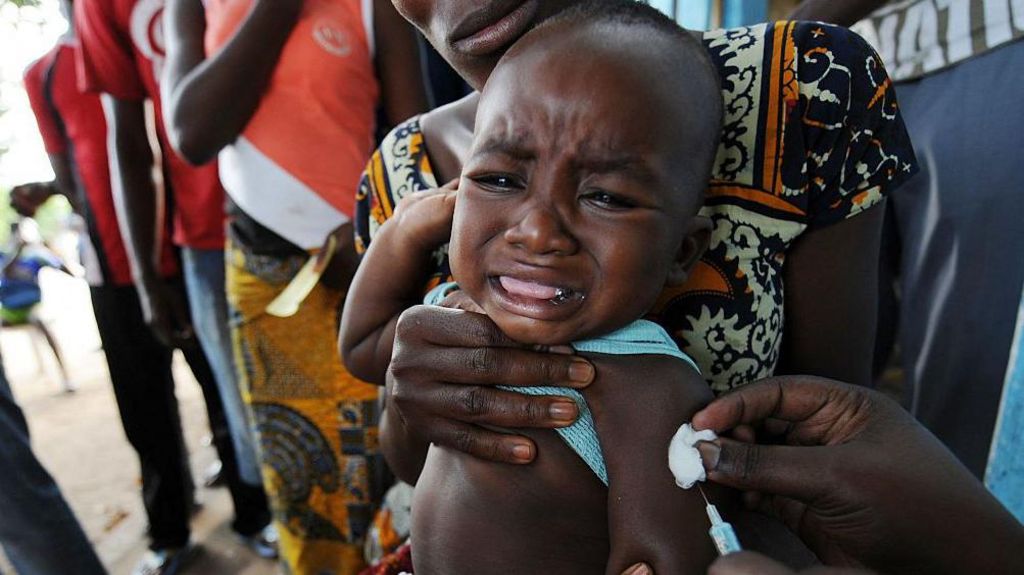
    The World Health Organization has issued a strong condemnation of a controversial hepatitis B vaccine study in Guinea-Bissau that was abruptly halted following public outcry. The $1.6 million trial, funded by the US Centers for Disease Control and Prevention and led by Danish researchers, proposed to delay vaccination for approximately 14,000 newborns until six weeks of age rather than administering the standard birth-dose vaccine.

    WHO officials expressed ‘significant concerns’ regarding the study’s scientific justification and ethical safeguards, describing the proposed methodology as fundamentally unethical. The organization emphasized that the hepatitis B vaccine has demonstrated effectiveness over three decades of use across 115 countries, with birth-dose administration preventing mother-to-child transmission in 70-95% of cases.

    The controversial study gained particular attention due to its connection with US Health Secretary Robert F. Kennedy Jr., who has repeatedly questioned vaccine efficacy despite claiming personal vaccination adherence. Kennedy had previously replaced all members of the Advisory Committee on Immunization Practices with vaccine-critical appointees, who subsequently voted to stop recommending universal hepatitis B vaccination for American newborns.

    Guinean authorities suspended the trial following substantial domestic opposition, including from former health minister Magda Robalo who declared ‘Guinea-Bissauans are not guinea pigs.’ The West African nation suffers from exceptionally high hepatitis B prevalence, with WHO estimates indicating over 12% of adults carry chronic infection and some studies suggesting rates as high as 20%.

    The WHO maintains that birth-dose vaccination represents an essential public health intervention that prevents potentially irreversible harm. The organization argues that placebo-controlled trials are only ethically acceptable when no proven treatment exists, which is not the case for hepatitis B prevention. Guinea-Bissau currently administers the vaccine at six weeks but plans nationwide birth-dose implementation by 2028, a transition the WHO has pledged to accelerate.

  • UAE residents turn living rooms into mini stadiums for India-Pakistan match on Feb 15

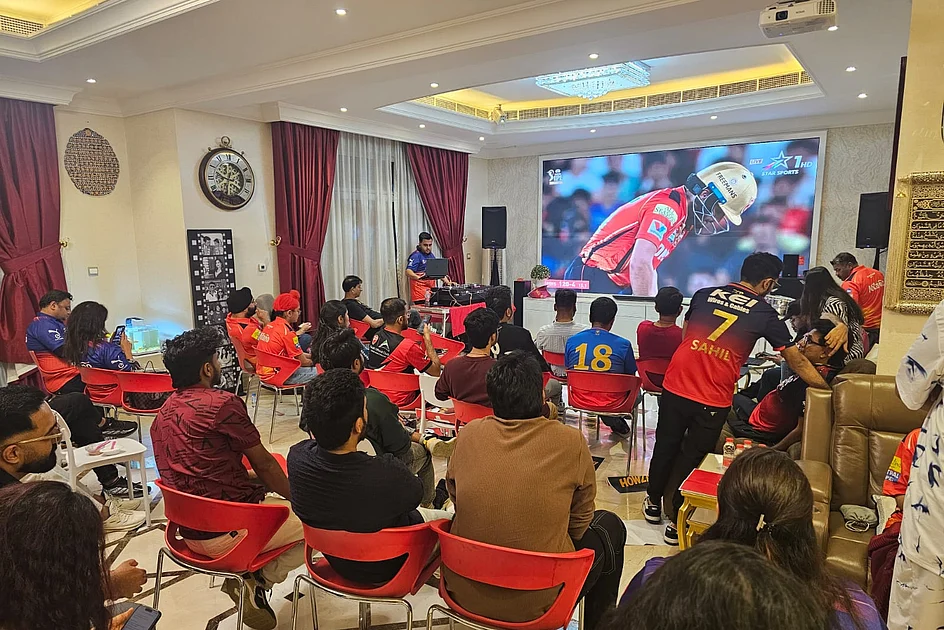
    UAE residents turn living rooms into mini stadiums for India-Pakistan match on Feb 15

    Across the United Arab Emirates, residents are converting their homes into vibrant cricket viewing venues ahead of Sunday’s highly anticipated T20 World Cup clash between arch-rivals India and Pakistan in Colombo. While some dedicated fans have traveled to Sri Lanka for the live event, countless others are preparing their living spaces for communal screenings that capture the electric atmosphere of stadium viewing.

    In Dubai and Sharjah particularly, households are undergoing elaborate transformations with large-screen installations, decorative arrangements, and culinary preparations. The event has transcended ordinary cricket viewing, evolving into a significant social occasion that brings together diverse communities. Invitations have circulated days in advance, grocery lists have been meticulously planned, and technical equipment is being rigorously tested to ensure flawless viewing experiences.

    Anis Sajan, founder of Mr Cricket UAE, has established a tradition of hosting these screenings during major tournaments. “Cricket remains a gentleman’s game that builds bridges rather than walls,” Sajan remarked. “The India-Pakistan encounter represents more than mere competition—it embodies deep emotion. We’re recreating the stadium experience with DJ entertainment, traditional dhol drummers, and spirited fan engagement.”

    The gatherings feature potluck-style dinners where participants contribute national dishes ranging from biryanis and kebabs to various snacks and desserts. Nadeem Ahmed, a Pakistani expatriate in Arabian Ranches, described his preparations: “We’ve converted our lawn into a mini-stadium with large screens and arranged seating tables. A barbecue station will operate throughout the evening, and we’ve created separate areas for children to enjoy themselves while learning about cricket’s cultural significance.”

    Parents emphasize the educational value for children growing up in the UAE’s multicultural environment. Youngsters witness both the competitive rivalry on screen and the respectful camaraderie among adults from both nations. Despite the geographical distance from Colombo, the excitement within UAE homes promises to match stadium intensity, with enthusiastic cheers for wickets and good-natured banter following boundary shots.

    For the UAE’s diverse population, this cricketing event symbolizes how athletic competition can foster cross-cultural friendship and mutual respect, reflecting the tolerance that defines Emirati society.

  • Ramadan 2026: Karama’s street food festival back with 100 restaurants, Dh5 dishes

    Ramadan 2026: Karama’s street food festival back with 100 restaurants, Dh5 dishes

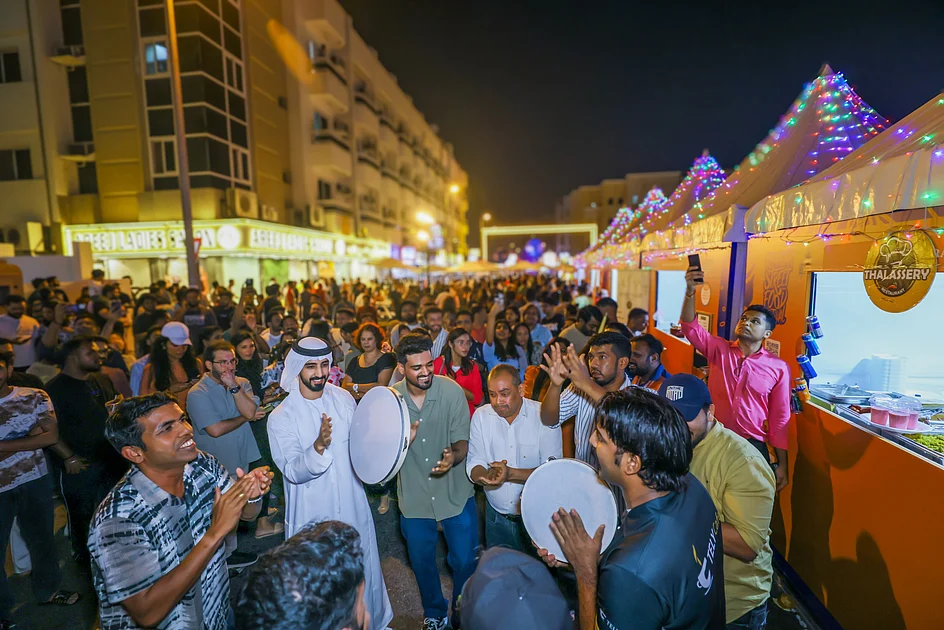
    Dubai’s Sheikh Hamdan Colony in Karama is set to undergo a remarkable transformation during Ramadan 2026, evolving into an expansive open-air culinary destination for the fourth annual Ramadan Street Food Festival. Scheduled from February 19 to March 18, this beloved community event promises an enhanced experience with unprecedented scale and diversity.

    The festival will unfold across two distinct zones—Flavour Lane and Culinary Crossroads at Karama Park—connected by an immersive food trail that invites exploration. This year’s edition introduces several innovative elements including communal long-table iftars, mobile entertainment units, and a dedicated carnival zone designed for family enjoyment. Organizers anticipate welcoming over 70,000 visitors throughout the holy month.

    Accessibility remains central to the festival’s ethos, with free admission and dishes starting at just Dh5. The culinary offerings span global street food traditions, featuring everything from aromatic biryanis and savory beef tapioca to fresh samosas, pickled mangoes, passionfruit juices, and traditional Sulaimani tea.

    The event will operate in two distinct phases: initial restaurant decorations from February 19-28, followed by a full carnival activation from March 1 featuring live musicians, LED stilt walkers, and main stage programming. Evening performances will include MC-led storytelling, children’s entertainment, and cultural music from 9:15 PM until 11:00 PM on weekends.

    A highlight of this year’s programming includes 18 community iftar gatherings with capacity for 150 participants each, operating on a first-come, first-served basis. Additional Friday long-table dinners will encourage intercultural dialogue and community bonding among residents and visitors.

    Cultural immersion continues with roaming artisans practicing Arabic calligraphy, henna application, and live caricature drawing from March 1 onward. Between 9:30 PM and 10:00 PM nightly, the festival grounds will come alive with tanoura dancers, jugglers, mascots, and human statues moving through the crowds.

    The festival forms part of the broader ‘Ramadan in Dubai’ program under the ‘Season of Wulfa’ initiative, which coordinates cultural experiences across the emirate including Ramadan by the Bay, Ramadan Reflections, and Hai Ramadan at Expo City Dubai. These citywide activations collectively create an atmosphere of reflection, connection, and cultural celebration throughout the holy month.

  • UAE weather: Fog alert issued; lowest temperature 9°C

    UAE weather: Fog alert issued; lowest temperature 9°C

    Meteorological authorities in the United Arab Emirates have issued a weather advisory warning residents of reduced visibility conditions due to fog formation across coastal regions. The National Center of Meteorology (NCM) forecasts generally fair weather with intermittent cloud cover for Saturday, February 14th, though atmospheric conditions will create challenging visibility scenarios from Friday evening through Saturday morning.

    The humidity levels are anticipated to increase significantly during nighttime and Sunday morning, creating optimal conditions for mist and fog development, particularly along coastal areas. Interior regions will experience humidity fluctuations ranging from 10-30% minimum to 65-80% maximum throughout the day.

    Temperature variations across the Emirates will be considerable, with internal areas experiencing lows of 9°C and highs reaching 34°C. Major urban centers will see more moderate conditions: Dubai ranging between 20°C and 30°C, Abu Dhabi between 18°C and 32°C, and Sharjah between 15°C and 31°C.

    Wind patterns will remain light to moderate throughout the day, blowing from southeasterly to northeasterly directions at speeds of 10-20 km/h, occasionally reaching 30 km/h. Maritime conditions in both the Arabian Gulf and Oman Sea are expected to remain calm with slight waves.

    The previous day’s maximum temperature of 33.9°C was recorded in Barakah 2, located in the Al Dhafra Region, at approximately 1:30 pm on Friday. Meteorological officials continue to monitor conditions closely and advise residents to exercise caution during reduced visibility periods.

  • Nigerian rock artist wants people to pause and feel loved in the hustle and bustle of Lagos

    Nigerian rock artist wants people to pause and feel loved in the hustle and bustle of Lagos

    In the bustling metropolis of Lagos, Nigeria, where economic pressures dominate daily life, a local rock musician is redefining Valentine’s Day traditions through spontaneous acts of musical kindness. Bianca Okorocha, professionally known as Clayrocksu, has taken to the city’s vibrant streets to deliver impromptu serenades and distribute single-stem roses to unsuspecting commuters.

    The initiative emerges against a backdrop of significant economic challenges following President Bola Tinubu’s 2023 reforms, which included eliminating long-standing fuel subsidies. While intended to stimulate investment, these measures have triggered one of Nigeria’s most severe cost-of-living crises in decades. Compounding these difficulties, ongoing security issues in northern regions have disrupted agricultural production, causing price surges that ripple across the nation, including its economic capital.

    Clayrocksu’s street performances create moments of unexpected delight in an environment where Valentine’s Day typically receives limited attention. As she strums her guitar through renditions of classics like James Blunt’s “You’re Beautiful,” initial astonishment transforms into beaming smiles among recipients. The musician explicitly aims to broaden Valentine’s conventions beyond romantic partnerships, promoting inclusive celebrations of affection.

    Barbara Lulu, one beneficiary of the musical surprise, described the encounter as a stress-interrupting delight during her demanding day. Clayrocksu emphasizes that her project addresses contemporary needs for positive experiences amid overwhelming negative news cycles, using music’s universal language to foster connection and emotional relief during challenging times.

  • What we can learn from lovebirds, the rare birds that mate for life

    What we can learn from lovebirds, the rare birds that mate for life

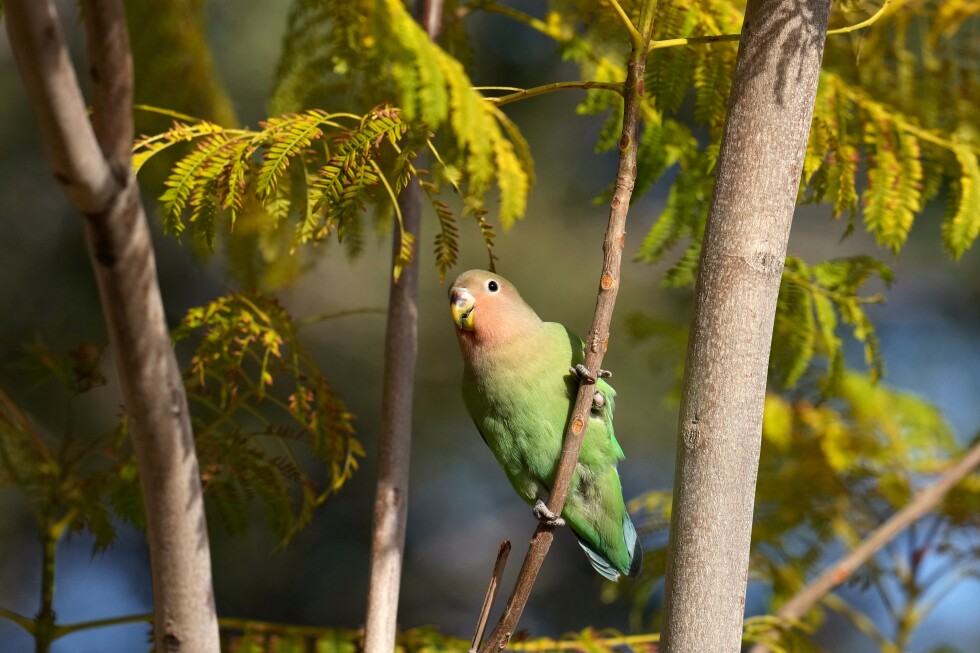
    PHOENIX — An extraordinary avian phenomenon has taken root in the heart of Arizona’s capital, where vibrant green flashes streak across the sky accompanied by distinctive chattering calls. The metropolitan area now hosts North America’s largest established colony of rosy-faced lovebirds (Agapornis roseicollis) outside their native southwestern African habitat, with approximately 2,000 of these resilient parrots adapting remarkably to urban desert living.

    Originating from the arid Namib Desert spanning Angola, Namibia and South Africa, these non-native birds descended from escaped or released pets first documented in Phoenix during the 1980s. According to Robert Carter of the Maricopa Bird Alliance, while their precise colonization history remains uncertain, the population has demonstrated extraordinary ecological plasticity by thriving in an environment characterized by extreme summer temperatures that regularly exceed 100°F (38°C).

    The lovebirds employ ingenious survival strategies including nesting in cactus cavities and palm tree crevices while strategically positioning themselves near air conditioning exhaust vents during peak heat periods—particularly noticeable at Arizona State University’s science building. Their behavioral adaptations extend beyond temperature management to sophisticated social structures characterized by lifelong pair bonding.

    Ornithological experts including Kenn Kaufman, field editor for Audubon magazine, note that while smaller populations exist in Hawaii’s Big Island and Maui, plus a Fischer’s lovebird colony in southern Portugal, Phoenix’s colony represents the most significant established population beyond Africa. These observations provide valuable insights into avian adaptation mechanisms and the ecological implications of introduced species.

    The species’ common name derives from their exceptional pair-bonding behaviors, which include continuous mutual preening—especially of hard-to-reach feathers—and lifelong food-sharing between mates. Dr. Stephanie Lamb, avian specialist at the Arizona Exotic Animal Hospital, notes that lovebirds demonstrate measurable distress when separated from partners, including reduced activity and altered vocalizations.

    Their affectionate displays include beak-to-beak food transfer resembling human kissing (though involving regurgitation), and despite occasional conflicts requiring temporary separation, they consistently reunite through reconciliation behaviors. With lifespans approaching two decades, these resilient birds offer scientists ongoing opportunities to study tropical species adaptation to desert environments alongside their complex social dynamics.

  • Abu Dhabi’s IHC to launch new holding with $237 billion in assets under management

    Abu Dhabi’s IHC to launch new holding with $237 billion in assets under management

    Abu Dhabi’s International Holding Company (IHC) has announced the creation of a major financial services holding entity, Judan Financial, which will command an impressive $236.88 billion (Dh870 billion) in assets under management. The new conglomerate will consolidate financial assets from IHC, Alpha Dhabi, 2PointZero Group, and Sirius International Holding, spanning diverse sectors including banking and insurance.

    With an estimated valuation of approximately Dh100 billion, Judan Financial will oversee a portfolio of more than 20 operating financial services companies, including the prominent alternative investment firm Lunate. The entity will be chaired by Sheikh Tahnoun bin Zayed Al Nahyan, who serves as the UAE’s national security adviser and also chairs both the Abu Dhabi Investment Authority (ADIA) and IHC.

    Mohamed Hassan Alsuwaidi, the UAE’s investment minister, has been appointed as Chief Executive Officer of Judan Financial. His mandate includes scaling the platform over the next five years and attracting third-party institutional capital. This strategic move follows a significant reorganization last month that saw Abu Dhabi’s newest sovereign wealth fund, L’imad Holding, assume control of ADQ, creating an investment powerhouse chaired by the emirate’s Crown Prince Sheikh Khaled bin Mohamed bin Zayed Al Nahyan.

  • Who are new DP World leaders Essa Kazim, Yuvraj Narayan?

    Who are new DP World leaders Essa Kazim, Yuvraj Narayan?

    Dubai-based global logistics leader DP World has initiated a significant executive restructuring, naming financial sector veteran Essa Kazim as its new Chairman and promoting long-serving executive Yuvraj Narayan to Group Chief Executive Officer. The announcement, made on February 13, 2026, marks a strategic repositioning of one of the world’s largest port operators.

    Essa Kazim brings over three decades of distinguished financial expertise to his new role. The Emirati national currently maintains his position as Governor of the Dubai International Financial Centre, a role he has held since January 2014. His extensive career began at the UAE Central Bank in 1988 as a Senior Analyst in the Research and Statistics Department. Kazim’s transformative leadership was demonstrated during his tenure as Director-General of Dubai Financial Market from 1999 to 2006, followed by his chairmanship from 2007 to 2021, where he navigated the institution through both expansion periods and the challenges following the global financial crisis.

    Beyond his new appointment, Kazim retains several pivotal roles including Chairman of Borse Dubai, Deputy Chairman of Dubai’s Supreme Legislation Committee, and board positions at both Nasdaq and Nasdaq Dubai. His comprehensive understanding of financial markets and regulatory frameworks positions him uniquely to guide DP World’s global strategy.

    Yuvraj Narayan ascends to the Group CEO position after dedicating twenty-two years to DP World, having joined in 2004 during a critical expansion phase. The Indian expatriate was appointed Group Chief Financial Officer within his first year and most recently served as Deputy CEO and CFO, where his responsibilities encompassed financial strategy, corporate finance, and broader business operations.

    Prior to his tenure at DP World, Narayan cultivated substantial expertise in transportation infrastructure and finance. He served as Head of Corporate and Project Finance for South Asia at ANZ Group and held the CFO position at Salalah Port Services in Oman. His current directorships include positions at HDFC International Life and Re Company Limited and Dubai Financial Market.

    This leadership transition occurs as DP World continues to expand its global footprint in maritime logistics and supply chain solutions. The appointments signal a consolidation of financial acumen and operational expertise at the helm of the Dubai-based conglomerate, combining Kazim’s regulatory and market knowledge with Narayan’s deep institutional understanding and financial management capabilities.

  • African Union summit opens as youth anger grows over a ‘bloc of old leaders’

    African Union summit opens as youth anger grows over a ‘bloc of old leaders’

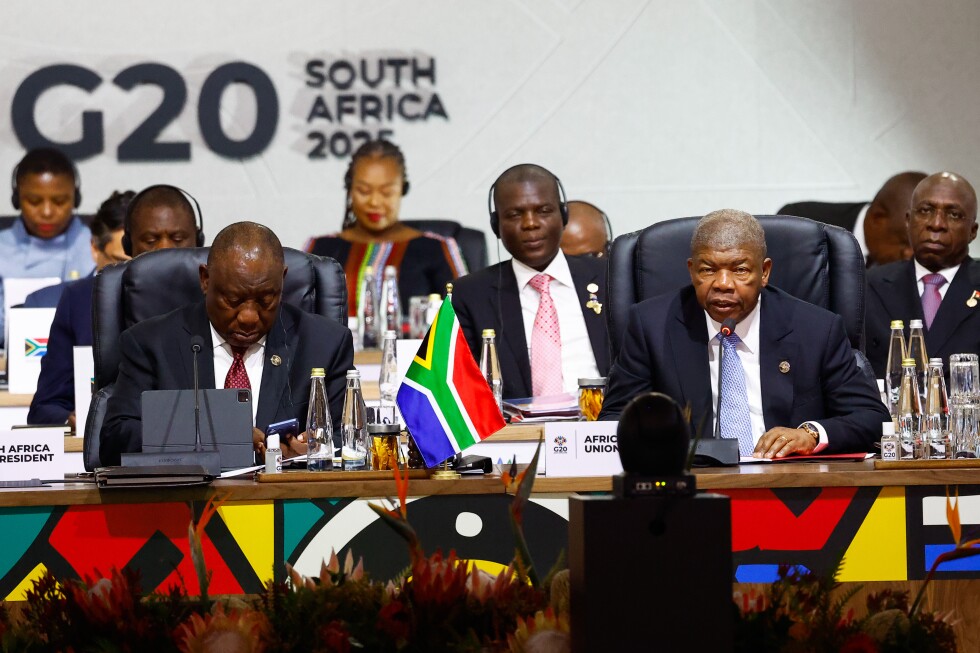
    ADDIS ABABA, Ethiopia — The African Union convenes its 39th annual summit this weekend amidst growing criticism from the continent’s youth population, who increasingly view the regional body as an ineffective organization dominated by aging leaders. Established to foster unity among African states, the AU now confronts a severe credibility challenge as military coups, contested elections, and economic protests sweep across numerous nations.

    Africa’s demographic paradox presents a central challenge: while boasting the world’s youngest population with over 400 million people aged 15-35, the continent simultaneously hosts some of the globe’s longest-serving leaders. This generational disconnect has fueled widespread disillusionment with the AU’s governance approach, which analysts say prioritizes governments over citizens.

    Liesl Louw-Vaudran, senior analyst with the Crisis Group, observes: ‘The fundamental frustration stems from the perception that this is not a citizen-driven African Union. The organization has consistently missed opportunities to center its operations around people rather than political leadership.’

    The AU’s election monitoring has drawn particular scrutiny. During recent presidential elections in Uganda, the Commission initially commended electoral conduct despite widespread reports of opposition suppression, internet shutdowns, and media intimidation. This response provoked fierce social media backlash, with one user decrying the AU as a ‘dictatorship club.’

    Enforcement mechanisms represent another critical weakness. Macharia Munene, professor of history at the United States International University in Nairobi, notes: ‘The AU struggles with implementation because not all members meet their dues or fully accept collectively decided measures.’

    This year’s summit, focused on water sanitation and climate response, occurs against a backdrop of shifting global alliances and reduced foreign aid. While the gathering offers opportunities for international coordination, critics urge the AU to address internal governance failures more urgently.

    In Nigeria’s capital Abuja, 32-year-old resident Chima Ekwueme expressed a common sentiment: ‘They exist for their own interests. Despite Nigeria’s mineral wealth, we face severe security and economic crises. Where is the AU’s accountability mechanism?’

    As the continent’s population projected to double by 2050, the pressure mounts for the AU to transform from a symbolic body into an effective institution capable of addressing Africa’s most pressing challenges.