标签: Africa

非洲

  • Home favourites advance at Dubai Duty Free Tennis Championships

    Home favourites advance at Dubai Duty Free Tennis Championships

    The Dubai Duty Free Tennis Championships erupted with electrifying energy as two athletes embraced by Dubai’s substantial Filipino community secured dramatic first-round victories in starkly contrasting fashion.

    Filipino sensation Alexandra Eala, the 20-year-old World No.40 making her tournament debut, faced a formidable challenge against American powerhouse Hailey Baptiste (World No.39). Despite a significant physical disparity, Eala harnessed the overwhelming support of a near-capacity Centre Court crowd adorned in Philippine colors. Trading early breaks, the rising star captured the first set 6-4 with relentless court coverage and precision winners. The match concluded abruptly in the second set when Baptiste retired with a left abdominal injury, propelling Eala into a second-round clash against World No.8.

    ‘I’m super happy to be in the next round,’ Eala addressed her cheering supporters. ‘This tournament is serving up such great experiences, especially playing in front of the best crowd ever. Hello Kabayans!’

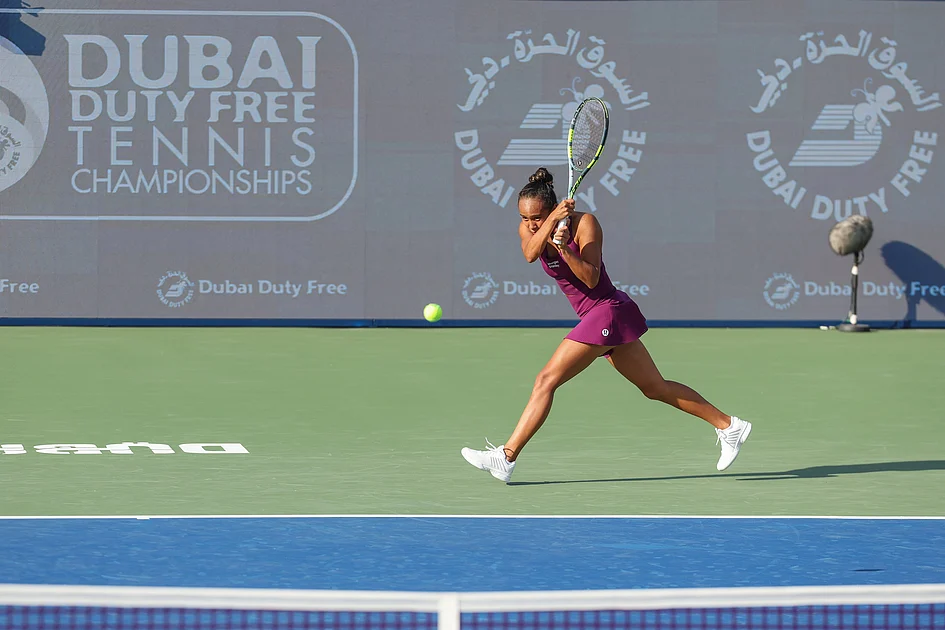
    Earlier, Canadian star Leylah Fernandez (World No.27), who shares Filipino heritage, engaged in an epic three-hour battle against Russia’s 13th-seeded Liudmila Samsonova (World No.17). After dropping a tense first set 7-5, Fernandez mounted a spectacular comeback, claiming the second set 7-5 despite Samsonova’s late surge. Fernandez dominated the decider, racing to a 5-0 lead before weathering a final challenge to secure a 6-3 victory.

    The evening session concluded with Czech player Sara Bejlek delivering a commanding 6-2, 6-2 victory over Turkey’s Zeynep Sonmez in just 75 minutes.

    The WTA 1000 event continues with Britain’s Emma Raducanu among Monday’s featured players, with the tournament boasting 16 of the world’s top 20 players through February 21st.


  • AI is giving you a personalised Internet, but you have no say in it

    AI is giving you a personalised Internet, but you have no say in it

    The digital landscape is undergoing a fundamental transformation as artificial intelligence becomes an inescapable component of our online experiences. Tech giants including Google and Meta are aggressively integrating AI tools into their platforms without providing users with meaningful opt-out mechanisms, raising significant concerns about digital autonomy and privacy.

    This AI infiltration began subtly but has accelerated dramatically. Google introduced Gemini, its AI assistant, directly into Gmail without explicit user consent, mirroring its earlier deployment of AI Overviews in search results. Similarly, Meta embedded its AI chatbot across Instagram, WhatsApp, and Messenger as a permanent feature. These implementations share a common characteristic: the absence of clear disable options, forcing users to adapt to AI-driven interfaces whether they welcome them or not.

    Industry representatives defend these integrations as advancements in creating intelligent ‘agents’ capable of handling tasks from email composition to travel bookings. They argue that generative AI’s adaptability enables uniquely personalized internet experiences tailored to individual needs. However, this corporate narrative starkly contrasts with public sentiment. Pew Research Center data reveals that most Americans express greater concern than excitement about AI’s role in daily life, with overwhelming majorities desiring more control over technological implementations.

    The underlying economic motivations behind this AI push are becoming increasingly apparent. Despite the enormous operational costs of maintaining AI chatbots like Gemini and ChatGPT—which haven’t generated direct profits through subscriptions—companies are strategically positioning themselves for an advertising revolution. The same technology powering consumer-facing chatbots enables advertisers to micro-target audiences with unprecedented precision, creating automatically tailored ads and dynamic pricing based on intimate user data extracted through conversational interfaces.

    This represents a significant evolution in digital advertising. As regulatory pressures limited cross-platform tracking, AI chatbots emerged as a solution: they encourage users to voluntarily disclose personal information, preferences, and intentions through natural conversations. Search queries have increased industry-wide precisely because people engage more extensively with chatbot-powered interfaces, revealing far more explicit data than traditional keyword searches.

    The implications are profound. Advertising systems can now infer detailed personal characteristics—such as someone’s preference for winter running—and generate hyper-specific marketing content. This creates what experts describe as ‘surveillance capitalism’ on steroids, where even product pricing could become dynamically adjusted based on individual budget information shared with chatbots.

    Smaller competitors like Mozilla and DuckDuckGo are advocating for user agency by implementing AI toggle features. Surprisingly, when DuckDuckGo asked users about AI preferences, approximately 90% rejected AI integration. However, their impact remains limited against the dominance of Google and Meta, whose products reach nearly half the global population daily. This market dominance creates a concerning reality: even when AI implementations are widely criticized, users have limited alternatives, effectively locking them into an AI-driven internet they didn’t choose.

  • She was denied a legal abortion and sent to prison over an illegal one. Now she tells her story

    She was denied a legal abortion and sent to prison over an illegal one. Now she tells her story

    In a case highlighting Africa’s complex reproductive rights landscape, 26-year-old Violet Zulu endured a two-year prison sentence after performing a self-managed abortion under desperate circumstances. The Zambian house cleaner, earning merely $40 monthly, found herself abandoned by her partner during pregnancy and subsequently failed by multiple systems designed to protect citizens.

    Zulu initially sought legal termination at a public clinic but was turned away without counseling or services. A private pharmacy quoted her 800 Zambian kwacha ($43)—equivalent to her entire monthly salary—for abortion medication. Already struggling to feed her two young sons and occasionally relying on relatives for food, Zulu consumed an herbal concoction known to terminate pregnancies, prioritizing her existing children’s survival over expanding her family.

    Her subsequent admission of delivering the fetus in a toilet and disposing of it led to criminal charges. Without legal representation—despite Zambia guaranteeing this right—and with only eighth-grade education, Zulu pleaded guilty without understanding the legal consequences, expecting merely a warning. Instead, she received a seven-year maximum-security prison sentence, separated from her children for nearly two years.

    International reproductive rights organizations including the Center for Reproductive Rights eventually intervened, facilitating her appeal and release. Legal experts note Zulu qualified for free abortion under Zambia’s provisions allowing doctors to consider risks to existing children’s wellbeing—information she never received due to widespread stigma and lack of public health education.

    Zambia presents a constitutional paradox: while permitting abortion under one of Africa’s more progressive laws, it simultaneously identifies as a strongly Christian nation. This contradiction creates practical barriers where legal procedures become ‘paper laws’ rather than accessible services. Health rights organizations estimate approximately 75% of African abortions are unsafe, with over 6 million occurring annually in sub-Saharan Africa under dangerous conditions.

    Even in South Africa—with the continent’s most progressive abortion laws—studies show only 7% of public health facilities actually provide services. A 2023 case involving a 14-year-old denied valid abortions underscored how medical professionals sometimes undermine legal rights.

    Zulu’s case has sparked calls for national dialogue about implementing Zambia’s reproductive laws more effectively. As activists emphasize, her story represents countless African women making desperate choices when legal systems fail them, revealing the urgent need for both legal reform and practical accessibility in reproductive healthcare.

  • ‘This is for India’: Suryakumar delighted with big win over Pakistan

    ‘This is for India’: Suryakumar delighted with big win over Pakistan

    In a commanding display of cricketing prowess, India delivered a resounding 61-run victory over arch-rivals Pakistan in a highly anticipated T20 World Cup group stage clash on Sunday. The match, which had faced potential political boycotts until recently, culminated in India’s qualification for the Super Eight phase alongside West Indies from Group A.

    India’s innings was propelled by an explosive performance from opener Ishan Kishan, who smashed 77 runs off just 47 deliveries, featuring 10 boundaries and 3 sixes. His aggressive batting established a formidable foundation after the early dismissal of Abhishek Sharma. Despite Pakistan’s mid-innings recovery that restricted India to 175-7, the total proved more than sufficient.

    Pakistan’s response began disastrously, collapsing to 13-3 within the powerplay as Jasprit Bumrah (2-12) and Hardik Pandya made early breakthroughs. The critical dismissal of captain Salman Agha and star batsman Babar Azam for single-digit scores left the team reeling at 34-4. Usman Khan provided brief resistance with 44 runs, but his dismissal triggered a terminal collapse to 78-7, with Pakistan ultimately bowled out for 114 in 18 overs.

    The geopolitical tension surrounding the encounter was palpable, with captains abstaining from the traditional handshake at the toss—a recurrence of their Asia Cup 2025 protocol. The match itself was only confirmed six days prior following diplomatic resolutions between the nuclear-armed neighbors, who haven’t played bilateral cricket since 2013.

    Captain Suryakumar Yadav (32 off 29 balls) dedicated the victory to the nation, praising Kishan’s ‘outside-the-box thinking’ that changed the game’s momentum. The result extends India’s dominant World Cup record against Pakistan, having now won eight of their nine T20 encounters and all eight ODI World Cup meetings.

  • Flexibility and rising costs are keeping mothers at work

    Flexibility and rising costs are keeping mothers at work

    A profound shift in workforce dynamics is unfolding across America as mothers with young children maintain unprecedented employment levels years after the pandemic’s peak. Current data reveals that nearly 71% of women with children under five are actively engaged in the workforce, surpassing pre-pandemic benchmarks according to analysis by the Hamilton Project at Brookings Institution.

    This sustained participation stems from two powerful, contrasting forces reshaping family economics. The pandemic’s legacy of remote work opportunities has created flexible arrangements that enable mothers to balance professional responsibilities with childcare duties. Simultaneously, escalating living costs are compelling many women to remain employed out of financial necessity rather than choice.

    For white-collar professionals, hybrid work models have created previously unavailable flexibility. Highly educated women particularly benefit from remote positions that accommodate their dual roles as caregivers and professionals. Meanwhile, the healthcare sector’s expansion has generated numerous predictable-shift positions in nursing and social assistance that appeal to working mothers.

    However, economists identify a concerning underlying trend: many mothers feel financially compelled to work rather than opting to do so. Grocery prices have surged over 25% in five years, while childcare costs have outpaced general inflation dramatically. These pressures make single-income households increasingly unsustainable, with over 70% of Americans reporting that childrearing has become unaffordable.

    The personal toll emerges in stories like Kelsey Whitlatch of West Virginia, who juggles multiple income streams despite preferring more time with her children. ‘We were going under so bad,’ she recounted of periods without employment. Similarly, Louisiana resident Cameron Hulin plans to leave her nonprofit career despite enjoying it, finding childcare for two children economically prohibitive.

    Structural challenges persist as pandemic-era subsidies expire and immigration policies reduce available childcare workers. While some states attempt to expand access, the fundamental tension between workplace flexibility and economic necessity continues to redefine motherhood in America’s post-pandemic economy.

  • What’s the secret to happiness? These researchers have a theory

    What’s the secret to happiness? These researchers have a theory

    A groundbreaking new publication from leading psychological researchers is challenging conventional wisdom on the pursuit of happiness. Distinguished psychology professor Dr. Sonja Lyubomirsky from University of California Riverside and relationship expert Dr. Harry Reis from University of Rochester present a compelling thesis in their collaborative work “How to Feel Loved”: genuine happiness stems not from self-improvement alone, but from perceiving love returned to us through meaningful social connections.

    The researchers identify a critical paradigm shift in understanding emotional wellbeing. While previous happiness studies emphasized the love we extend to others, their findings demonstrate that the sensation of being loved ourselves creates the fundamental foundation for contentment. This revelation addresses a fundamental human quest that Dr. Lyubomirsky has studied for decades, moving beyond reductive solutions to present evidence-based approaches.

    Central to their methodology is the development of enhanced listening capabilities. The authors contend that most individuals mistakenly believe themselves proficient listeners while primarily awaiting their opportunity to speak. They advocate for a “listening to learn” mindset that prioritizes understanding over response. Practical techniques include avoiding interruptions, refraining from unsolicited advice, and employing follow-up questions—with the simple phrase “tell me more” proving remarkably effective.

    The research proposes a targeted relationship investment strategy rather than diffuse social efforts. By selecting one significant relationship and conducting three curiosity-driven conversations within a week, individuals can initiate a reciprocal dynamic the authors compare to a seesaw: genuine attentiveness elevates both participants, creating mutual understanding and emotional reward.

    However, the research acknowledges relationship limitations. When concerted efforts yield minimal reciprocity or genuine curiosity proves unsustainable, these indicate potentially unsuitable connections for emotional investment. The ultimate empowerment comes from recognizing that feeling loved operates within our sphere of influence through conscious conversational choices and strategic relationship cultivation.

  • UAE considers phased rules to protect children on social media

    UAE considers phased rules to protect children on social media

    The United Arab Emirates is developing a comprehensive, phased regulatory approach to safeguard children’s digital wellbeing, positioning itself at the forefront of online child protection initiatives. This strategic move comes as global concerns mount regarding children’s exposure to harmful digital content and practices.

    Authorities are implementing a risk-based methodology that will initially focus on social media platforms before expanding to encompass broader digital services. The initiative establishes clear operational guidelines for service providers while creating robust compliance mechanisms to ensure age-appropriate content accessibility. This progressive framework represents a fundamental shift from reactive measures to proactive prevention, fundamentally redesigning how digital platforms operate for younger users.

    The Education, Human Development and Community Development Council has identified the regulation of children’s social media usage as a critical priority. During recent deliberations, the Council emphasized the necessity of a unified national framework addressing both social media and digital services comprehensively. Officials examined the substantial impact of digital platforms on family dynamics, communication quality, and children’s cognitive development—including attention span, time management capabilities, and language acquisition.

    To address these challenges, the UAE will provide families with practical tools for digital supervision and guidance, promoting healthier technology usage habits. Child development experts and mental health professionals will contribute specialized guidance, while coordinated public awareness campaigns will encourage responsible digital engagement. Multiple government sectors—including education, health, security, and media—will collaborate to ensure effective implementation.

    Educational policies and school programs are being harmonized under the national framework, incorporating standardized assessments including Arabic language evaluations to identify children requiring additional support. Updates to Arabic language and Islamic studies curricula will simultaneously strengthen fundamental skills while reinforcing national values and identity.

    This initiative builds upon the Child Digital Safety Law enacted in December 2025, which mandates protection from digital content adversely affecting children’s physical, psychological, and moral development. The legislation applies to internet service providers and digital platforms operating within or targeting UAE users, encompassing websites, search engines, applications, messaging services, forums, gaming platforms, social media, streaming services, and e-commerce platforms.

    The law fundamentally transforms digital environments by requiring platforms to recognize age differences and adjust content, features, and protections accordingly. It prohibits children under 18 from accessing features involving betting, gambling, or monetary game mechanics while imposing strict limitations on how children’s data can be utilized. This approach embeds safety directly into platform architecture rather than relying solely on parental supervision or post-incident intervention.

  • Noble Legacy Masters set early pace as UGC Season 3 tees off in style at Saadiyat links

    Noble Legacy Masters set early pace as UGC Season 3 tees off in style at Saadiyat links

    The Ultimate Golf Challenge Season 3 commenced with spectacular displays of skill and strategy at Abu Dhabi’s prestigious Saadiyat Beach Golf Club, where defending champions Noble Legacy Masters established an early dominance in the team competition.

    Under challenging coastal conditions at the Gary Player-designed oceanfront course, teams navigated both gusty winds and strategic complexities during Saturday’s opening round. The tournament format required each squad to field two sub-teams of five players from their 16-member rosters, with the best four Stableford scores from each sub-team contributing to the overall total.

    Noble Legacy Masters, co-owned by Saket Kanoi and Achal Ghai, demonstrated why they remain the team to beat, posting an impressive 255 points through disciplined, conservative play. Their methodical approach created an eight-point cushion over second-place Meteora Magicians (247 points), while last season’s runners-up, The A Team, positioned themselves third with 234 points.

    Achal Ghai, who personally contributed 34 points, emphasized the team’s tactical approach: ‘Our players followed the script in terms of being conservative and sensible rather than attempting excessively high scores. This disciplined strategy provided our team with an optimal foundation for the season.’

    The individual competition witnessed a standout performance from The A Team’s Maura Duggan, who carded 40 Stableford points off a 10 handicap to lead the field. Her exceptional round highlighted the importance of accuracy and adaptability on the demanding links course.

    ‘Finding the fairways proved absolutely crucial today,’ Duggan explained. ‘The ball rolled out significantly, shortening approach shots. After an unsuccessful conservative attempt with a three-wood, I recommitted to aggressive driving, which ultimately yielded excellent results for both myself and the team.’

    Duggan’s teammate Samvit Chopra reinforced The A Team’s strong position with 38 points, securing third place individually. Their combined efforts, supplemented by Vivek Chand’s 34 points, demonstrated the depth required to contend for the championship.

    UGC Tournament Director Brandon de Sousa praised participants’ preparation and adaptability: ‘I was genuinely impressed with how teams approached Saadiyat’s challenges. Despite the wind and links-style complexities, their thorough preparation was evident in composed performances and promising results.’

    The tournament continues with Noble Legacy Masters aiming to replicate their Season 2 victory, while challengers including Meteora Magicians and The A Team seek to close the gap in subsequent rounds.

  • Look: From ancient forts to desert rock art, 5 UAE sites added to Islamic heritage list

    Look: From ancient forts to desert rock art, 5 UAE sites added to Islamic heritage list

    In a significant achievement for cultural preservation, the United Arab Emirates has secured international recognition for five historically significant sites through their inscription on the Islamic World Educational, Scientific and Cultural Organization’s (ICESCO) List of Islamic World Tangible Heritage. The announcement came during the 13th session of the Islamic World Heritage Committee convened in Uzbekistan.

    The newly designated locations span the emirates of Dubai and Sharjah, representing diverse aspects of the region’s rich historical tapestry. The recognition underscores the UAE’s commitment to safeguarding its cultural legacy while promoting global awareness of its archaeological wealth.

    Among the honored sites is Saruq Al Hadid, an archaeological marvel located approximately 95 kilometers from Dubai. Discovered in 2002 following aerial observations by His Highness Sheikh Mohammed bin Rashid Al Maktoum, Ruler of Dubai, the site features distinctive dark patches subsequently identified as metallurgical slag from ancient smelting operations. Research indicates continuous human activity from the Early Bronze Age (2600 BCE) through the Late Iron Age (550 BCE), with excavations yielding bronze artifacts, pottery, stone tools, weaponry, and exquisite gold and silver ornaments.

    The historic defensive structures of Khor Fakkan, including the Portuguese Fort and Al Adwani Tower, received recognition for their role in coastal protection from the 14th to the 20th centuries. The Portuguese Fort stands as the sole surviving triangular-shaped fortification in the eastern Arabian Peninsula.

    Al Nahwa, situated south of Khor Fakkan, earned inclusion for its remarkable collection of rock carvings spanning from the Bronze Age to contemporary times. Preservation efforts have employed advanced three-dimensional digital technologies to document these artistic expressions.

    Sharjah’s Faya Palaeolandscape gained recognition as a critical record of early human settlement patterns, containing archaeological evidence that documents human presence across multiple historical epochs.

    Wadi Al Helo in the Eastern Region was honored for its evidence of copper mining activities during the Neolithic transition period. The valley features remnants of copper extraction technological development, Bronze Age rock art, and historic village remains, illustrating the enduring relationship between inhabitants and their environment.

    Sheikh Salem bin Khalid Al Qassimi, Minister of Culture and Chairperson of the National Commission for Education, Culture and Science, described the inscriptions as “a significant milestone that reflects the depth and richness of the UAE’s cultural heritage.” The minister further emphasized the nation’s ongoing commitment to “strengthening the presence of Emirati heritage on international heritage lists” through comprehensive documentation and sustainable preservation initiatives for future generations.

  • Holder and Hope steer West Indies into T20 World Cup Super Eight

    Holder and Hope steer West Indies into T20 World Cup Super Eight

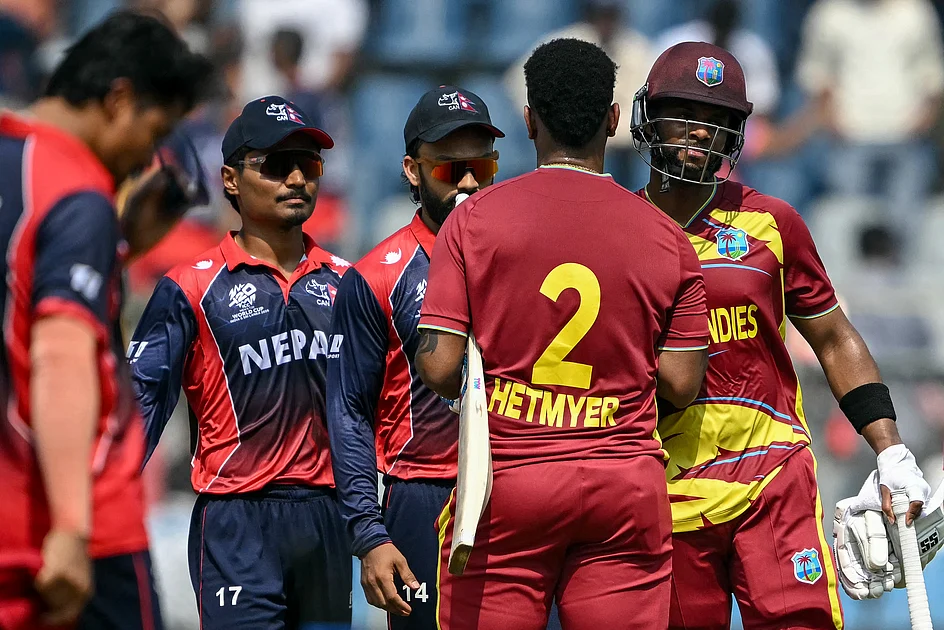
    The West Indies cricket team secured an emphatic nine-wicket victory over Nepal at Mumbai’s Wankhede Stadium on Sunday, cementing their place in the Super Eight phase of the ICC Twenty20 World Cup. This triumph marks their third consecutive win in the tournament, demonstrating their formidable form as two-time champions.

    Spearheading the Caribbean side’s dominant performance was pace bowler Jason Holder, whose devastating spell of 4-27 dismantled Nepal’s batting lineup. Holder’s precision bowling created early pressure that Nepal struggled to overcome throughout their innings.

    Despite a valiant effort from Nepal’s middle order, particularly Dipendra Singh Airee’s resilient 58 runs and Sompal Kami’s unbeaten 26, the Himalayan nation could only muster 133-8 in their allotted 20 overs. Their powerplay performance of 22-3 represented the lowest score in this phase during the current tournament edition.

    In response, West Indies’ run chase became a masterclass in controlled aggression. Wicketkeeper-batsman Shai Hope anchored the innings with an unbeaten 61, showcasing technical proficiency and strategic shot selection. He found able support in Shimron Hetmyer, who remained not out on 46, as the pair guided their team to victory with 28 balls to spare.

    Captain Hope expressed satisfaction with his team’s clinical performance, stating: ‘This is what we set out to do and we’ve achieved it. Crossing this hurdle represents just the first step as we now focus on the challenges ahead in the Super Eights.’

    The result eliminates Nepal from contention for the next stage, despite their confidence-boosting T20 series win against West Indies in Sharjah four months earlier. Nepal captain Rohit Paudel acknowledged his team’s batting deficiencies, noting: ‘Their bowlers utilized the conditions effectively in the powerplay. As a batting unit, we failed to deliver and must improve significantly.’