标签: Africa

非洲

  • South African police not yet able to defeat gangs, minister says

    South African police not yet able to defeat gangs, minister says

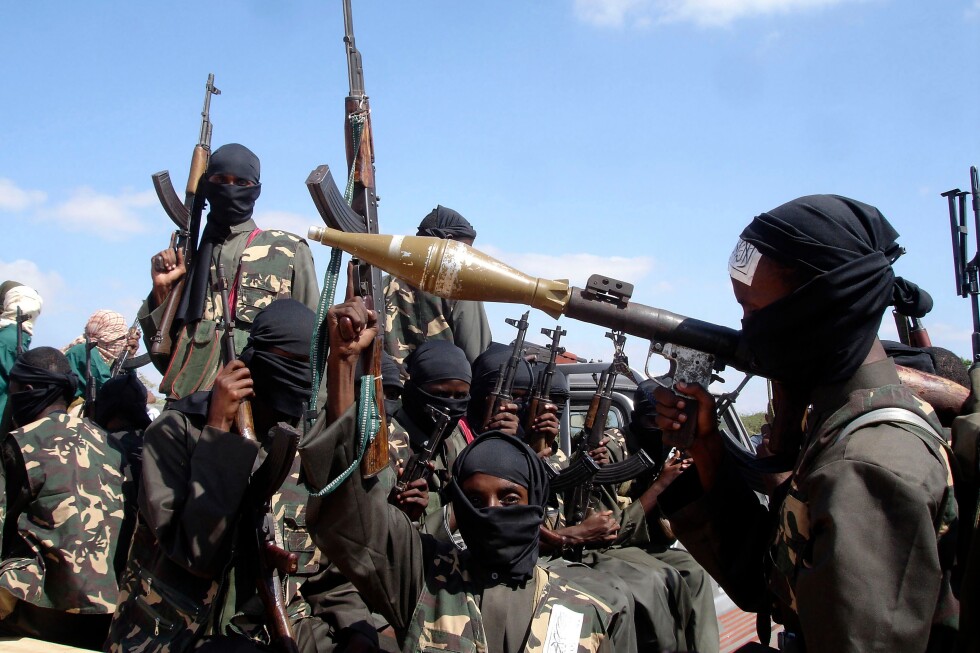
    South Africa’s Police Minister Firoz Cachalia has delivered a sobering assessment of the nation’s security capabilities, acknowledging that law enforcement lacks adequate resources to combat increasingly sophisticated criminal gangs. This admission comes amid escalating violence that has plagued multiple provinces, particularly the Eastern Cape and Western Cape regions.

    Minister Cachalia characterized gang violence as a ‘grave problem throughout the country’ during a press conference Wednesday, noting that criminal cartels ‘wield significant wealth and power’ that continues to undermine public safety. His comments followed a visit to Nelson Mandela Bay in Eastern Cape, where he described gangs as being on a ‘killing spree’ that has persisted into the new year.

    Statistical evidence underscores the severity of the crisis. Official police data reveals an average of 63 daily homicides between April and September last year, while local prevention groups documented 118 deaths in Nelson Mandela Bay alone from August to December. The violence has continued unabated in 2026, with approximately 40 fatalities reported across the region in January.

    The proliferation of illegal firearms exacerbates the situation. According to statistics cited by Gideon Joubert of the South African Gunowners’ Association, the country’s 63 million citizens possess approximately 3 million legally registered firearms—matched by an equal number of unlicensed weapons in circulation.

    Recent months have witnessed several high-profile incidents highlighting the crisis. These include a mass shooting near Johannesburg that claimed 11 lives in connection with illegal mining turf wars, a hostel attack in Pretoria that killed 11 people including a three-year-old child, and a tavern shooting in Durban that left eight patrons dead.

    Despite the establishment of a specialized anti-gang unit in 2019, Minister Cachalia indicated that traditional policing approaches have proven insufficient. He criticized ad hoc responses to the growing problem, emphasizing that ‘establishing gang units from time to time’ represents an inadequate solution to deeply entrenched organized crime.

    President Cyril Ramaphosa has pledged strengthened law enforcement measures and increased police deployments to address the violence. However, Minister Cachalia’s assessment suggests that without significant resource allocation and strategic overhaul, South Africa’s security forces remain outmatched by well-funded criminal networks.

  • Slashed incomes and gamers go cold turkey: the fallout from Uganda’s internet shutdown

    Slashed incomes and gamers go cold turkey: the fallout from Uganda’s internet shutdown

    Uganda’s recent general election triggered a nationwide internet shutdown with profound consequences for citizens, businesses, and democratic processes. The government-ordered blackout, officially implemented to ‘ensure peace and protect national stability’ during the electoral period, effectively paralyzed the digital economy and restricted information flow throughout the country.

    Mobile money agent Mirembe Tracy experienced immediate financial devastation when withdrawal systems disconnected. Her weekly earnings of approximately 450,000 Ugandan shillings (£130) vanished entirely, leaving her unable to pay rent. ‘That money is what I use to pay rent. Losing it was a total loss,’ she told the BBC. Like thousands of others dependent on digital transactions, she found herself with no income source beyond minimal prepaid airtime sales that provide no commission.

    The disruption extended throughout Kampala’s economy. SafeBoda, the popular ride-hailing platform for motorcycle taxis, saw its entire server infrastructure rendered inoperative. Co-founders reported that both riders and dependent businesses were forced offline indefinitely. Meanwhile, entrepreneur Namukwaya Olivia, who relies on Instagram, TikTok and WhatsApp to market traditional cultural clothing, described complete operational paralysis: ‘We could not send pictures, we could not receive orders, and we could not make deliveries.’

    Journalists faced particularly severe challenges in fulfilling their professional duties. Ngabo Amon described smartphones becoming ‘largely useless’ as research, communication, and content transmission capabilities disappeared. The blackout created an information vacuum that prevented accurate election coverage and real-time reporting of developing situations. Some journalists resorted to physically transporting footage by bus from rural areas to Kampala—a process that rendered news obsolete by arrival time.

    The African Union election observation mission noted that the shutdown ‘limited access to information, freedom of association and curtailed economic activities,’ while simultaneously ‘creating suspicion and mistrust’ in the electoral process. President Yoweri Museveni’s landslide victory extended his 40-year rule amid opposition allegations of ‘fake results’ and ‘ballot stuffing.’

    Beyond economic and professional impacts, the blackout created personal hardships. Kenyan journalist Caroline Mutai described the psychological toll: ‘The shutdown almost gave me depression.’ Students like Aaron Benitez lost educational connectivity as online learning platforms and communication channels failed. ‘We usually study online, sometimes on Zoom, but during that time everything just stopped,’ he reported.

    Even after partial restoration following President Museveni’s victory declaration, many social media platforms remain restricted or slow, driving widespread adoption of VPN services. The episode served as a stark demonstration of how deeply digital accessibility underpins modern life, economic stability, and democratic transparency in contemporary Uganda.

  • Sobha Realty sales jump 30% to Dh30 billion in FY2025

    Sobha Realty sales jump 30% to Dh30 billion in FY2025

    Dubai-based luxury property developer Sobha Realty has reported extraordinary financial performance for fiscal year 2025, achieving sales of Dh30 billion—representing a substantial 30 percent year-on-year growth that solidifies its position as a premier real estate developer in the Gulf region.

    The remarkable performance was fueled by multiple strategic factors including vigorous off-plan sales activity, the successful launch of new masterplanned communities, and surging interest from international investors. Notably, the emerging northern emirate of Umm Al Quwain contributed significantly to this growth, generating Dh8 billion in sales from developments such as Downtown UAQ | Sobha Realty and Sobha Siniya Island.

    Dubai’s luxury residential sector served as a powerful catalyst, with prime residential prices escalating over 15 percent throughout 2025 according to industry data from Knight Frank and ValuStrat. This appreciation was driven by substantial inflows of global capital, unprecedented population expansion, golden visa initiatives, and sustained demand from high-net-worth individuals relocating to the emirate. The premium segment exceeding Dh10 million per transaction reached unprecedented volumes, particularly for waterfront villas, branded residences, and comprehensive masterplanned communities—all areas where Sobha maintains significant development expertise.

    Chairman Ravi Menon characterized FY2025 as a landmark period for the group’s domestic expansion, highlighted by the introduction of four new masterplans: Sobha Solis, Downtown UAQ | Sobha Realty, Sobha Central, and Sobha SkyParks. These additions bring Sobha’s UAE portfolio to 14 developments, with 12 located in Dubai and two in Umm Al Quwain, demonstrating the company’s growing influence in shaping future urban landscapes.

    The company simultaneously accelerated its global expansion strategy with strategic entries into the United States and Australian markets. Sobha established regional offices and secured prime land parcels in Texas, Queensland, and Sydney, marking a significant evolution into an international real estate platform.

    Capital markets responded enthusiastically to Sobha’s financial strength, with the company’s sukuk issuances attracting massive institutional demand. Its debut offering was oversubscribed by approximately 300 percent, while its green sukuk achieved roughly 280 percent oversubscription—representing the largest green sukuk issuance by any real estate developer worldwide. Listed on both the London Stock Exchange and Nasdaq Dubai, these transactions enhanced funding flexibility and bolstered international investor confidence.

    Concurrently, Sobha reinforced its sustainability leadership through groundbreaking achievements. Sobha One became the first building outside Singapore to obtain the Green Mark Platinum Super Low Energy certification, while the company earned an exceptional score of 97 in the 2025 GRESB Real Estate Assessment, securing a four-star rating.

    Supported by robust sales momentum, expanding global operations, and sustained premium housing demand across the UAE, FY2025 emerged as one of the most transformative years in Sobha Realty’s five-decade history, establishing a solid foundation for continued growth in both regional and international markets.

  • Meta’s new AI team delivered first key models internally this month, CTO says

    Meta’s new AI team delivered first key models internally this month, CTO says

    Meta Platforms has achieved a significant milestone in its artificial intelligence development, with its newly established Meta Superintelligence Labs delivering its first high-profile AI models internally this month. Chief Technology Officer Andrew Bosworth confirmed the development during a press briefing at the World Economic Forum’s annual meeting in Davos on Wednesday.

    The technology executive revealed that the team, formed just six months ago as part of CEO Mark Zuckerberg’s strategic reorganization of Meta’s AI leadership structure, has already produced models demonstrating substantial promise. While Bosworth did not specify which particular models were delivered, previous media reports indicated Meta was developing a text-based AI system codenamed ‘Avocado’ scheduled for first-quarter release, alongside an image and video-focused model known as ‘Mango’.

    This development follows Zuckerberg’s aggressive moves to reposition Meta in the intensely competitive AI landscape, including leadership restructuring, establishing specialized labs, and recruiting top talent with exceptionally generous compensation packages. The initiatives represent Meta’s strategic response to criticism surrounding the performance of its Llama 4 model and the significant advancements made by competitors including Alphabet’s Google.

    Bosworth emphasized that while the initial models show impressive capability, the technology remains unfinished. He detailed the extensive post-training work required to refine AI systems before they become usable both internally and for consumer applications. Despite these ongoing development challenges, the CTO indicated that Meta’s substantial investments and strategic gambits initiated throughout 2025 are beginning to yield favorable returns, positioning the company more competitively in the race for transformative AI technology.

  • World order in ‘midst of a rupture’: Canada PM Carney tells Davos

    World order in ‘midst of a rupture’: Canada PM Carney tells Davos

    Canadian Prime Minister Mark Carney delivered a stark assessment of the international system during his address at the World Economic Forum in Davos, Switzerland, declaring that the world is experiencing a fundamental rupture rather than a transitional phase. Speaking before U.S. President Donald Trump’s scheduled appearance, Carney characterized the current global environment as one defined by intensifying great power competition and the deterioration of rules-based governance.

    The Prime Minister, who entered Canadian politics last year, reiterated his consistent warning that the world cannot return to the pre-Trump era of international relations. While not explicitly naming the American president, Carney’s analysis clearly addressed the transformative impact of Trump’s policies on global affairs.

    Carney acknowledged Canada’s historical benefits from American-led hegemony, which previously provided public goods including secure maritime routes, financial stability, collective security frameworks, and dispute resolution mechanisms. However, he emphasized that a new reality has emerged where powerful nations increasingly utilize economic integration as tools of coercion rather than cooperation.

    In a particularly striking metaphor, Carney warned that middle powers like Canada must collaborate effectively or risk becoming ‘on the menu’ in great power competitions. He challenged these nations to move beyond simply building defensive walls and instead pursue more ambitious collective strategies.

    The address gained additional significance following reports from Canada’s Globe and Mail newspaper revealing that Canadian military planners have developed contingency models for a potential U.S. invasion. According to anonymous senior officials, these plans involve insurgency-style tactics similar to those used against Soviet and American forces in Afghanistan.

    This military planning context follows concerning rhetoric from President Trump, who has repeatedly referred to Canada as a potential 51st state and recently shared a social media image depicting both Canada and Venezuela under the American flag. The Davos meeting has been further overshadowed by Trump’s threats to enforce U.S. control over Greenland, prompting Carney to affirm Canada’s support for Greenland and Denmark’s right to self-determination.

  • The sweet taste of wellness: How Maria Galabova is redefining luxury health

    The sweet taste of wellness: How Maria Galabova is redefining luxury health

    In a remarkable career transition from international diplomacy to artisanal patisserie, Maria Galabova has established Keto Kartel as a pioneering force in the luxury health food sector. The brand represents a fundamental shift in how consumers approach wellness, positioning health not as a restrictive practice but as an elevated lifestyle choice that combines gourmet indulgence with nutritional benefits.

    Galabova’s inspiration emerged from witnessing her husband’s transformative 25-kilogram weight loss through keto dietary practices, which sparked her curiosity about food’s emotional and physiological impact. This personal experience revealed a significant market gap: the absence of premium sugar-free, gluten-free products that delivered both exceptional taste and health benefits without compromise.

    Keto Kartel distinguishes itself through its meticulous ingredient selection and European craftsmanship standards adapted to Dubai’s dynamic market. The company utilizes scientifically-backed components including monk fruit as a natural sweetener that doesn’t affect blood sugar levels, xanthan gum for metabolic benefits, and psyllium husk for digestive and cardiovascular support. Each product undergoes approximately two years of development to achieve the perfect balance between health benefits and gourmet quality.

    Galabova’s background in law, sociology, and politics profoundly influences the brand’s operational philosophy. Her diplomatic experience informs the company’s emphasis on transparency, consistency, and long-term relationship building rather than short-term gains. This approach has enabled Keto Kartel to develop a trusted brand identity in a market saturated with quick-fix solutions.

    The company’s expansion strategy across GCC and European markets maintains several non-negotiable principles: unwavering commitment to premium ingredients, complete transparency about product composition, and preservation of artisanal craftsmanship standards regardless of scale. Each creation is treated as a culinary work of art, reflecting the brand’s core belief that health-conscious consumers deserve both optimal nutrition and sensory satisfaction.

    With plans to introduce a new lactose-free product range in 2026, Keto Kartel continues to redefine luxury consumption by demonstrating that wellness and indulgence can coexist harmoniously in modern dietary practices.

  • Trump’s Board of Peace: Which countries accepted, rejected invites?

    Trump’s Board of Peace: Which countries accepted, rejected invites?

    The international community is exhibiting starkly divergent responses to the Trump administration’s controversial proposal for a ‘Board of Peace,’ with numerous nations either embracing or rejecting the initiative based on its unprecedented financial requirements and potential implications for global governance.

    Initially conceived as part of a 20-point Gaza peace plan in September, the initiative has evolved into a comprehensive global conflict resolution mechanism according to charter documents distributed to over 60 nations in January 2026. The proposed organization aims to ‘promote stability, restore dependable and lawful governance, and secure enduring peace in areas affected or threatened by conflict’ while operating ‘in accordance with international law.’

    The most contentious aspect emerges from the membership structure: participating nations would receive three-year provisional terms unless they contribute $1 billion toward funding the board’s operations, thereby securing permanent membership status. This financial prerequisite has generated significant diplomatic apprehension regarding the initiative’s potential to undermine existing international institutions.

    Multiple Middle Eastern powers have demonstrated enthusiastic support. The UAE, Bahrain, and Morocco have formally accepted membership, citing commitment to implementing Trump’s Gaza peace framework. They join Israel, Hungary, Belarus, Canada, Kosovo, and several Central Asian nations in supporting the initiative. Notably, seven Muslim-majority nations—Saudi Arabia, Qatar, Egypt, Jordan, Turkey, Indonesia, and Pakistan—issued a joint statement with the UAE confirming their participation.

    Conversely, major European powers have expressed firm opposition. France declared it ‘does not intend to answer favourably’ to the invitation, citing concerns about the charter’s broad mandate potentially compromising United Nations principles. Germany, Norway, and Slovenia similarly rejected participation, with Slovenian Prime Minister Robert Golob warning the initiative could ‘dangerously undermine the international order based on the United Nations Charter.’

    Several significant global powers remain undecided. China confirmed receipt of the invitation but withheld commitment regarding participation. India acknowledged reviewing the proposal, while Ukraine’s President Zelensky expressed reservations about collaborating with Russia within the same organizational framework. The developing situation continues to evolve as nations weigh the strategic implications of this unconventional peacebuilding approach against traditional multilateral mechanisms.

  • As Trump talks tariffs, his Argentine ally welcomes a shipload of Chinese EVs for the first time

    As Trump talks tariffs, his Argentine ally welcomes a shipload of Chinese EVs for the first time

    ZÁRATE, Argentina — A monumental shift is underway in Argentina’s automotive landscape as thousands of Chinese electric and hybrid vehicles disembark at the port of Zárate, signaling a dramatic transformation in one of South America’s traditionally most protected economies. The arrival of BYD’s massive shipment represents both a symbolic and commercial breakthrough for Chinese automakers expanding their global footprint.

    This development comes amid President Javier Milei’s radical economic liberalization agenda that has dismantled decades of Peronist protectionism. Where previous governments imposed stiff tariffs and import restrictions to shield local industry, Milei has flung open Argentina’s doors to foreign goods, resulting in a record 30% surge in imports last year.

    Chinese manufacturers, particularly BYD, are positioned to capitalize on Milei’s new zero-tariff quota allowing 50,000 electric and hybrid vehicles into the country this year. The policy specifically benefits vehicles under $16,000—a price point where Chinese automakers hold significant competitive advantage over Western and Japanese rivals.

    The economic relationship between Argentina and China has deepened substantially, with Chinese imports surging 57% last year compared to a 9.6% increase from the United States. Chinese investment has simultaneously flowed into Argentina’s energy and mining sectors, creating comprehensive economic ties.

    While Western automakers express concern about unfair competition and opposition lawmakers warn of market disruption, industry analysts note that Chinese manufacturers possess both the technological capability and pricing structure to dominate this new market opening. The aging state of Argentina’s electrical infrastructure and lack of specialized repair networks for EVs present current limitations, but Chinese companies appear well-positioned for long-term dominance.

    The arrival of Chinese EVs also carries geopolitical significance, occurring simultaneously with the European Union’s hesitation to ratify a landmark free trade agreement with Mercosur nations. As European manufacturers struggle to compete with Chinese pricing, Argentina’s market becomes another front in the global EV competition.

  • Not just rain: How UAE researchers are spotting hail, snow, even insects inside a storm

    Not just rain: How UAE researchers are spotting hail, snow, even insects inside a storm

    The United Arab Emirates is transforming weather modification science through cutting-edge radar technology and artificial intelligence, moving beyond traditional cloud seeding methods to achieve unprecedented precision in rainfall enhancement. Spearheaded by Dr. Dixon Michael, a prominent atmospheric scientist working with the UAE’s Rain Enhancement Programme (UAEREP), this innovative approach utilizes dual-polarization radar systems capable of identifying specific particles within storms—including hail, snow, ice, and even insects—rather than merely measuring precipitation intensity.

    The research addresses a fundamental challenge in weather modification: determining whether cloud seeding operations actually produce measurable results. Traditional methods relied on radar reflectivity to estimate storm strength but provided limited insight into internal cloud microphysics. “It doesn’t tell you a lot about what’s going on inside the storm,” Dr. Michael noted during the announcement of the sixth cycle awardees of UAEREP. “It doesn’t give you clues about the microphysics.”

    The upgraded system integrates advanced dual-polarization radar with AI algorithms to analyze storm composition in real-time, enabling operators to distinguish between various hydrometeors (particles of water or ice in the atmosphere). This technological advancement represents a significant upgrade to the long-standing LROSE/TITAN storm tracking system, which has been utilized globally for over three decades.

    A critical component of this initiative involves developing local expertise at the National Center of Meteorology (NCM), creating what Dr. Michael describes as “a pipeline of qualified personnel who can operate this system into the future.” This capacity-building ensures the sustainability of the UAE’s investment in water security technologies.

    Unlike historical randomized experiments where scientists would “flip a coin and seed half the storms” for comparison, the UAE’s operational program requires more sophisticated evaluation methods. AI now enables researchers to analyze massive datasets to detect patterns indicating successful seeding operations—whether a storm persisted longer, expanded further, or generated more precipitation following intervention.

    The integration of real-time aircraft telemetry with advanced modeling establishes the UAE as possessing one of the world’s most sophisticated cloud seeding infrastructures. This comprehensive approach transforms each storm into a data-rich experiment in sustainability, ultimately working toward ensuring water security for future generations in the region.

  • UAE: Parkonic to revise on-street parking rules in Discovery Gardens for some tenants

    UAE: Parkonic to revise on-street parking rules in Discovery Gardens for some tenants

    Dubai’s parking management operator Parkonic has implemented significant revisions to on-street parking regulations specifically affecting residents of the Zen Cluster within Discovery Gardens. The adjustments come following initial confusion regarding eligibility for complimentary parking permits among studio apartment tenants in this distinctive residential zone.

    The Zen Cluster, alternatively referred to as Pink Buildings (Structures 1-20), maintains a unique parking configuration distinct from other Discovery Gardens sectors due to divergent building ownership patterns and architectural design considerations. These particular buildings fall under private ownership rather than Dubai Holding jurisdiction and feature independently managed basement parking facilities.

    Parkonic officials have clarified that the revised approach does not constitute an alteration of fundamental parking entitlements but rather represents an alignment strategy to accommodate capacity limitations. Each residential unit retains eligibility for one complimentary parking tenancy, consistent with the overarching policy framework applied throughout Discovery Gardens. However, due to basement parking capacity constraints that don’t perfectly correspond with unit numbers, Parkonic has coordinated with building management entities to allocate limited on-street parking spaces per structure.

    The allocation breakdown specifies: Buildings 1-6 and 8-10 receive 80 on-street spaces each; Buildings 13-20 obtain 68 spaces; while Building 7 (functioning as hotel apartments) and Buildings 11-12 remain excluded from the on-street allocation program. These supplementary spaces are intended to bridge capacity gaps during the transitional phase, with access governed through building-level registration protocols to ensure equitable distribution and prevent system exploitation.

    Residents who previously registered via PIN authentication will experience temporary disablement of digital parking cards effective January 24, 2026, to facilitate realignment with the new building-specific allocation framework. The operator has emphasized this procedural interruption does not imply rejection or penalty. Furthermore, tenants who purchased paid parking memberships during the transition may qualify for one-time refund consideration, subject to verification and management coordination, with all refund petitions requiring submission before January 30, 2026.

    Tenant responses reflect cautious optimism, with residents expressing relief tempered by practical concerns regarding implementation specifics. The resolution addresses financial anxieties for many tenants for whom the alternative monthly payment of Dh945 would have represented significant economic burden.