标签: Africa

非洲

  • Advancing healthcare resilience through innovation in the Middle East

    Advancing healthcare resilience through innovation in the Middle East

    The Middle East is fundamentally redefining healthcare resilience, moving beyond traditional supply chain security toward advanced biomedical innovation and regional scientific collaboration. Across GCC nations, governments are implementing ambitious long-term strategies that transform healthcare from reactive crisis management to proactive scientific leadership.

    The region’s shifting health demographics, marked by rising rates of diabetes, cancer, and neurodegenerative conditions, have catalyzed this strategic pivot. Rather than merely securing essential medicines, countries are now building sophisticated biomedical ecosystems with genomics, biotechnology, and advanced pharmaceutical manufacturing at their core.

    The UAE’s comprehensive genome program aims to map every Emirati’s DNA, creating the foundation for personalized medicine while supporting nascent biotechnology capabilities. Saudi Arabia’s Vision 2030 incorporates a National Biotechnology Strategy focused on achieving self-sufficiency in vaccines, biomanufacturing, and genomics. Qatar is developing university-industry innovation pathways, while Kuwait advances its healthcare digitalization and health technology assessment frameworks under Kuwait Vision 2035.

    This transformation extends to industrial policy, with sovereign investments creating substantial life sciences platforms. Abu Dhabi’s ADQ consolidated holdings across Swiss, Turkish, and Egyptian entities to form Arcera Life Sciences, now developing over 2,000 medicines across 60+ markets with 40% of its UAE portfolio produced locally. This model maintains global supply chain integration while ensuring predictable medicine access.

    The region’s capabilities are already yielding advanced therapies, including recent introductions of treatments addressing antibiotic resistance and an upcoming Alzheimer’s therapy commercialization across Middle Eastern markets. These developments demonstrate tangible progress in translating scientific innovation into patient access, particularly for areas with significant unmet medical needs.

    Building resilient healthcare systems requires sustained collaboration between governments, industry, academia, and regulators. Investments in talent development, advanced manufacturing, digital infrastructure, and AI-powered insights are proceeding at varying paces but with shared long-term vision across the region.

    The Middle East’s approach leverages complementary strengths across nations, combining robust domestic capabilities with global partnerships. This strategy not only prepares the region for future health challenges but actively shapes innovative solutions, creating opportunities for improved health outcomes for generations to come.

  • Looming Fed rate pause nudges bond investors back into risk

    Looming Fed rate pause nudges bond investors back into risk

    With the Federal Reserve poised to maintain its current benchmark interest rate at 3.50%-3.75% during Wednesday’s policy meeting, bond investors are strategically reallocating portfolios toward slightly riskier assets. This anticipated pause follows three consecutive quarter-point reductions in September, October, and December 2025, marking a significant shift in the central bank’s approach to monetary policy.

    Driving this strategic repositioning are two fundamental factors: a surprisingly resilient U.S. economy and newly proposed fiscal stimulus measures expected to bolster consumer spending throughout 2026. Rather than pursuing aggressive credit investments, portfolio managers are primarily extending duration exposure—purchasing longer-dated Treasury securities that demonstrate heightened sensitivity to interest rate fluctuations.

    Market indicators reveal substantially tempered expectations for monetary easing, with rate futures pricing in approximately 44 basis points of cuts for the year, notably reduced from the 53 basis points anticipated just two weeks prior. This recalibration reflects stabilizing labor market conditions, peaking inflation trends, and the federal funds rate approaching a theoretically neutral level that neither restricts nor stimulates economic activity.

    According to Tony Rodriguez, Nuveen’s head of fixed income strategy, ‘When incorporating anticipated policy implementations including new tax reductions and the delayed economic impact of previous Fed rate cuts, an extended pause represents a logically sound approach.’

    Despite this measured risk-taking, investment-grade credit spreads have tightened to historically minimal levels—currently approximately 73 basis points over Treasuries according to ICE BofA index data—creating valuation concerns that limit aggressive positioning. Insight Investment’s John Flahive cautions clients against excessive aggression within fixed income portfolios given current valuation constraints.

    Geopolitical considerations further complicate investment decisions, with Thornburg Investment Management’s Christian Hoffmann noting that central banks’ accelerating gold accumulation partially reflects ‘long-term concerns about our fiscal position’ and desire to diversify away from U.S. debt exposure.

    The duration-extension strategy finds support in yield curve dynamics, as Morgan Stanley’s Vishal Khanduja observes that steeper curves provide compensation for moving out along the maturity spectrum. Historical patterns additionally demonstrate that longer-dated debt typically outperforms shorter-term Treasuries during Fed easing cycles.

    However, DWS’s George Catrambone highlights fiscal limitations, noting that current deficit levels constrain additional stimulus effectiveness and make high-yield credit investments particularly precarious at this juncture.

  • India, EU wrap up talks for landmark trade deal amid strained US ties

    India, EU wrap up talks for landmark trade deal amid strained US ties

    India and the European Union have finalized negotiations on a comprehensive trade agreement described as historic by both parties, with formal announcement scheduled for Tuesday. The breakthrough concludes nearly two decades of intermittent discussions and creates a free trade pathway between the world’s largest democracy and the 27-nation bloc, collectively representing 25% of global GDP and approximately 2 billion consumers.

    Indian Trade Secretary Rajesh Agrawal characterized the agreement as “a balanced, forward-looking deal for better economic integration with the EU” that will significantly accelerate trade and investment flows between the signatories. Current bilateral trade stands at $136.5 billion for the fiscal year ending March 2025.

    The agreement emerges against a backdrop of strained relations with the United States, where President Donald Trump’s tariff policies—including 50% duties on Indian goods—have prompted trading nations to seek alternative partnerships. This strategic realignment follows the EU’s recent pact with Mercosur and India’s simultaneous agreements with Britain, New Zealand, and Oman.

    Final negotiations required delicate compromises on automotive and steel sectors. The EU secured reduced import duties on European vehicles, with India planning to slash car tariffs from 110% to 40%, while New Delhi obtained eased restrictions on its steel exports. Sensitive agricultural and dairy products were excluded from the agreement to protect India’s subsistence farmers.

    The formal signing will occur after a five-to-six month legal review process, with implementation expected within twelve months. The agreement marks India’s largest trade partnership and represents the EU’s most significant market opening in South Asia.

  • India offered full security to Bangladesh team: BCCI Vice President Shukla

    India offered full security to Bangladesh team: BCCI Vice President Shukla

    The International Cricket Council (ICC) has formally announced Scotland’s replacement of Bangladesh in the upcoming Men’s T20 World Cup 2026, concluding weeks of tense negotiations between cricket’s global governing body and the Bangladesh Cricket Board (BCB). This unprecedented roster change follows the Bangladeshi government’s refusal to clear its national team for travel to India despite comprehensive security assurances.

    Board of Control for Cricket in India (BCCI) Vice President Rajeev Shukla confirmed that Indian authorities had offered “full security” guarantees to the Bangladeshi delegation. “We wanted Bangladesh to play, and we also assured full security, but since they have made this decision, it is very difficult to change the entire schedule at the last moment. This is why Scotland was brought in,” Shukla stated.

    The diplomatic impasse intensified when the BCCI instructed the Kolkata Knight Riders franchise to release Bangladeshi pacer Mustafizur Rahman for the 2026 IPL season, citing unspecified “developments all around.” The BCB interpreted this move as indicating potential security concerns for Bangladeshi nationals in India.

    Throughout the three-week negotiation period, the ICC conducted multiple transparent dialogues with BCB officials through both virtual conferences and in-person meetings. The global cricket body commissioned independent security assessments from internal and external experts, reviewing detailed operational plans covering federal and state security arrangements alongside enhanced protective protocols for the tournament.

    ICC’s comprehensive evaluation concluded that no credible or verifiable security threat existed toward the Bangladeshi team, its officials, or supporters. The governing body emphasized the importance of maintaining tournament integrity, safeguarding all participating teams’ interests, and avoiding precedents that could compromise the neutrality of ICC events.

    Following a Wednesday meeting, the ICC Business Corporation Board issued a 24-hour ultimatum for Bangladesh to confirm participation. With no response received within the deadline, the ICC activated its established governance protocols, selecting Scotland—the highest-ranked T20 International team not originally qualified—as the replacement participant.

  • Thailand showcases halal food leadership at Gulfood 2026

    Thailand showcases halal food leadership at Gulfood 2026

    DUBAI – Thailand has strategically positioned itself as the dominant force in the global halal food market with its expansive national pavilion at Gulfood 2026. The event, a cornerstone of international food and beverage trade, serves as the platform for the ‘Kitchen of the World’ to deepen its commercial relationships and showcase its extensive range of certified export-ready products to a global audience.

    A high-level Thai delegation, led by Thanita Khomphatraporn, Advisor to the Minister of Commerce, officially inaugurated the pavilion at the Dubai Exhibition Centre (DEC). The ceremony underscored a concerted government effort to bolster economic diplomacy and trade expansion. Key figures including Surinthorn Sunthornsanan, Deputy Director General of the Department of International Trade Promotion, and Pitichai Ratananaka, Director of the Thai Trade Center Dubai, were present to guide national export initiatives and facilitate market entry for Thai businesses.

    The Thai presence is both substantial and meticulously organized. A cohort of 194 exhibitors is displaying a diverse portfolio of premium halal-certified goods. The offering spans from the world-renowned Thai jasmine rice and shelf-stable tropical juices to fresh produce like mangoes and dragon fruit, alongside a variety of ready-to-eat meals and curries. This strategic showcase is designed to convert visibility into tangible business opportunities, enabling direct engagement with international buyers and key decision-makers.

    To optimize the experience for trade professionals, the exhibition is logically segmented across two major venues. At the DEC, three dedicated halls feature World Food (ready-to-eat items, snacks, sauces), Rice, Pulses, and Grains, and Gulfood Fresh for fresh fruits and vegetables. Concurrently, at the Dubai World Trade Centre (DWTC), the Beverages Hall and the Meat and Poultry Hall highlight Thai drinks and halal-certified meats, respectively.

    Beyond mere display, the pavilion functions as an integrated trade platform. It emphasizes Thailand’s unwavering commitment to international standards, with all participating exporters compliant with ISO, HACCP, and Halal certifications. This adherence guarantees food safety, reduces audit timelines for buyers, and accelerates product shelf approvals. On-site support from staff and interpreters ensures seamless navigation and negotiation, with structured post-event follow-ups to cement the trade partnerships forged during the exhibition.

    Trade officials and importers are invited to explore the Thailand Pavilion at both the DEC and DWTC throughout Gulfood 2026 to engage with exporters and discover the breadth of Thailand’s halal culinary expertise.

  • SBI: A Trusted Global Banking Partner

    SBI: A Trusted Global Banking Partner

    State Bank of India (SBI) has solidified its position as a premier global banking institution, ranking among the world’s top five most trustworthy banks. With its extensive international network and technology-driven platforms, SBI serves as a crucial financial bridge connecting the Indian diaspora worldwide to their home country.

    The bank’s specialized NRI banking division demonstrates remarkable scale, serving over three million non-resident Indian customers with an immense deposit base. Through 434 specialized NRI branches across India and strategic partnerships with 45 exchange companies and five banks across the Gulf Cooperation Council (GCC) region, SBI has established a comprehensive remittance infrastructure.

    SBI’s digital transformation initiative has yielded sophisticated banking solutions including the YONO (You Only Need One) platform and Retail Internet Banking (RINB), providing 24/7 accessibility. Recent innovations include digital account opening through TAB devices, automated e-welcome letters, email-based OTP authentication, and integrated NEFT/RTGS transaction capabilities.

    The bank offers an extensive portfolio of tailored financial products for NRIs, encompassing Non-Resident External (NRE) accounts, NRO accounts, FCNR(B) deposits, RFC accounts, and specialized offerings like the NRE ‘Sukoon’ Current Accounts and SBI Capgains Plus Accounts. Additionally, NRIs can access various loan products including home loans, vehicle financing, and loans against existing deposits.

    Supporting this global operation are two dedicated Global NRI Centers located in Ernakulam (Kerala) and Patiala (Punjab), which function as comprehensive service hubs for overseas customers. These facilities reinforce SBI’s commitment to providing one-stop banking solutions for the Indian diaspora.

    In conjunction with Republic Day celebrations, SBI reaffirmed its dedication to maintaining the highest standards of safety, trust, and convenience through its continually evolving digital banking ecosystem, positioning itself as the definitive financial window to India for overseas citizens.

  • Dubai Clinic expands access to advanced plastic surgery through specialist-led consultations

    Dubai Clinic expands access to advanced plastic surgery through specialist-led consultations

    Dubai is consolidating its status as a premier regional destination for advanced aesthetic medicine, with growing demand for expertly guided plastic surgery consultations and comprehensive post-operative care. In response to this trend, Skin111 has significantly expanded its surgical offerings, providing patients throughout Dubai with structured access to board-certified plastic surgeons specializing in a wide array of facial and body enhancement procedures.

    The clinic operates under a medically governed framework that emphasizes thorough pre-surgical assessment, personalized treatment planning, and dedicated recovery support. Key procedures include rhinoplasty, breast augmentation, facial plastic surgery, abdominoplasty (tummy tuck), and advanced body contouring techniques. All surgical interventions are conducted exclusively at licensed and accredited partner hospitals in Dubai, ensuring full adherence to stringent UAE healthcare regulations and patient safety protocols.

    Industry analysts note a consistent rise in demand for facial plastic surgery, particularly procedures that deliver natural-looking results while maintaining long-term structural harmony. Rhinoplasty continues to rank among the most sought-after treatments, with patients increasingly prioritizing surgeons who blend technical precision with nuanced aesthetic judgment.

    Similarly, body contouring and breast augmentation procedures are experiencing sustained interest, driven by patients seeking individualized treatment plans rather than generic solutions. Multidisciplinary consultation models are gaining preference among clients who value transparency, safety, and continuity of care throughout their surgical journey.

    Skin111 distinguishes itself by functioning as a central coordination hub for assessment, imaging, surgical planning, and postoperative support—rather than as a surgical facility. This approach ensures patients receive expert guidance from initial consultation through full recovery.

    “Contemporary patients are exceptionally well-informed and discerning,” noted a senior Skin111 representative. “They expect clarity regarding surgical expertise, clinical settings, and the recovery process. Our model provides specialist-led planning with all surgeries performed in fully equipped hospital environments.”

    Advanced body contouring—particularly for patients seeking transformative results after significant weight loss—has emerged as a prominent service, requiring meticulous planning and sustained postoperative support. Dubai’s competitive healthcare landscape has also elevated expectations concerning patient experience, clinical governance, and ethical practices. Clinics promoting excellence in procedures such as breast augmentation or tummy tucks are now evaluated not only on outcomes but also on transparency, safety benchmarks, and professional accountability.

    As the UAE’s aesthetic medicine sector continues to evolve, care models emphasizing specialist collaboration, hospital-based surgery, and integrated follow-up are setting new benchmarks—aligning patient expectations with international clinical standards.

  • Pakistan delay final call on T20 World Cup participation

    Pakistan delay final call on T20 World Cup participation

    Pakistan’s cricket authorities have postponed their final decision regarding participation in the upcoming Twenty20 World Cup, maintaining uncertainty over a potential tournament boycott. Cricket Board Chairman Mohsin Naqvi announced the delay following a Monday meeting with Prime Minister Shahbaz Sharif, indicating a definitive resolution would emerge by Friday or next Monday.

    The situation stems from the International Cricket Council’s controversial decision to replace Bangladesh with Scotland in the tournament roster after rejecting Bangladesh’s security-based request to relocate their matches from India to Sri Lanka. Pakistan had supported Bangladesh’s position during recent ICC board discussions, citing precedent from last year’s Champions Trophy when India’s matches were moved to Dubai due to security concerns regarding Pakistan.

    Compounding the diplomatic complexities, local media reports suggest Pakistan might additionally boycott their highly anticipated February 15 match against arch-rivals India. This potential action reflects deepening political tensions between the neighboring nations, further complicated by Bangladesh’s recent political upheaval following the ousting of Prime Minister Sheikh Hasina.

    The cricketing impasse intensified when the Board of Control for Cricket in India directed IPL franchise Kolkata Knight Riders to drop Bangladeshi cricketer Mustafizur Rahman earlier this month, triggering Bangladesh’s refusal to compete in India. Despite the ICC’s rejection of venue relocation appeals, Pakistan maintains all options remain under consideration as they navigate the intersection of international sports diplomacy and geopolitical realities.

  • Water with gold flakes, frozen onions: 10 cool things to check out at Gulfood in Dubai

    Water with gold flakes, frozen onions: 10 cool things to check out at Gulfood in Dubai

    Dubai has become the epicenter of global food innovation as Gulfood 2026 launched across two major venues on Monday, attracting hundreds of industry professionals and food enthusiasts. The expanded event, spanning both the Dubai World Trade Center and Dubai Exhibition Center, has doubled in scale compared to last year’s edition, reflecting the growing significance of the Middle East’s food and beverage market.

    Among the most striking innovations presented was Ocard’s luxury mineral water containing authentic 24-karat gold flakes, produced at one of Europe’s oldest gold mining plants in Uzbekistan. Priced at approximately AED 360 per bottle in the US market, the product represents the premium segment of functional beverages.

    Health-conscious consumers found numerous alternatives, including Liife’s protein-enhanced sparkling waters containing 10 grams of clear whey protein, available in innovative flavors like blood orange ginseng and raspberry peach. Zerup from Singapore presented sugar-free caramel popcorn sweetened with monkfruit extract, alongside their zero-calorie beverage line.

    Practical culinary solutions emerged with Austria’s Holzmann introducing ready-to-use frozen caramelized onions that eliminate preparation time, with one kilogram replacing up to six kilograms of raw onions. Meanwhile, Wild Bee Honey showcased their Gulfood Innovation Award-nominated products featuring morel mushrooms, moringa, and saffron preserved in honey.

    Nutritional innovation took center stage with Co Nature’s sublingual collagen strips for instant nutrition delivery and nutritional yeast flakes fortified with 300% of daily Vitamin D requirements. Liviano’s chocolate hummus, combining premium cocoa with protein and fiber, offered versatility as dessert, dip, or spread.

    The event also featured artistic presentations including fruit bouquets arranged as the UAE flag and socially conscious initiatives from South Africa-based companies creating healthy spinach cookies while providing employment opportunities for women and youth.

  • Nigerian military says officers will be tried after a probe found they carried out a coup plot

    Nigerian military says officers will be tried after a probe found they carried out a coup plot

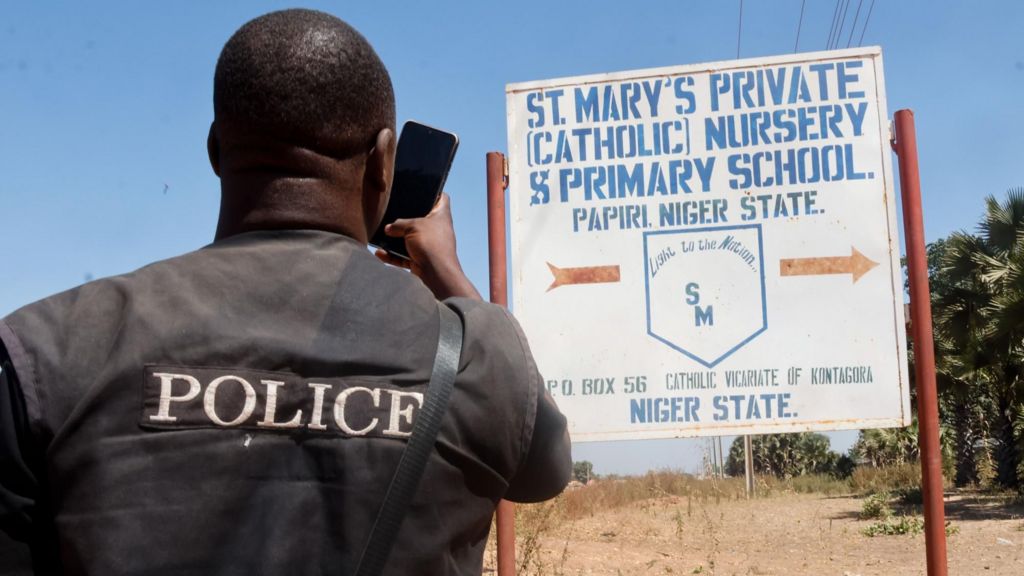
    ABUJA, Nigeria — The Nigerian Defense Headquarters announced Monday that multiple military officers will face court-martial proceedings for their alleged involvement in a plot to overthrow the democratically elected government of President Bola Tinubu. This development follows the conclusion of a comprehensive investigation into suspicious activities within the armed forces.

    Military spokesperson Samaila Uba revealed in an official statement that the investigative panel uncovered evidence of a coordinated conspiracy against the government that violated fundamental military principles. “The findings have identified a number of the officers with allegations of plotting to overthrow the government which is inconsistent with the ethics, values and professional standards required of members of the Armed Forces of Nigeria,” Uba stated.

    The case originated in October when at least 16 officers were detained on charges of “acts of indiscipline and breaches of service regulations.” While authorities have not disclosed how many of the originally arrested personnel will ultimately face trial, nor provided their identities, they confirmed that those found culpable will be arraigned before a military judicial panel in accordance with established procedures.

    This alleged conspiracy emerges against a troubling backdrop of increasing military interventions across West and Central Africa. The region has witnessed a surge in successful coups and attempted power grabs, with recent incidents reported in Benin and Guinea-Bissau. Political analysts attribute this pattern to multiple factors including contested elections, constitutional instability, security challenges, and widespread youth dissatisfaction.

    Nigeria itself has experienced significant political turbulence throughout its history, with multiple successful coups occurring between 1966 and 1993. Current economic difficulties, exacerbated by government austerity measures, have heightened social tensions and raised concerns about potential instability. The military spokesman emphasized that additional measures are being implemented to maintain order, discipline, and operational effectiveness within the armed forces.