标签: Africa

非洲

  • Nigeria’s president to make a state visit to the UK in March

    Nigeria’s president to make a state visit to the UK in March

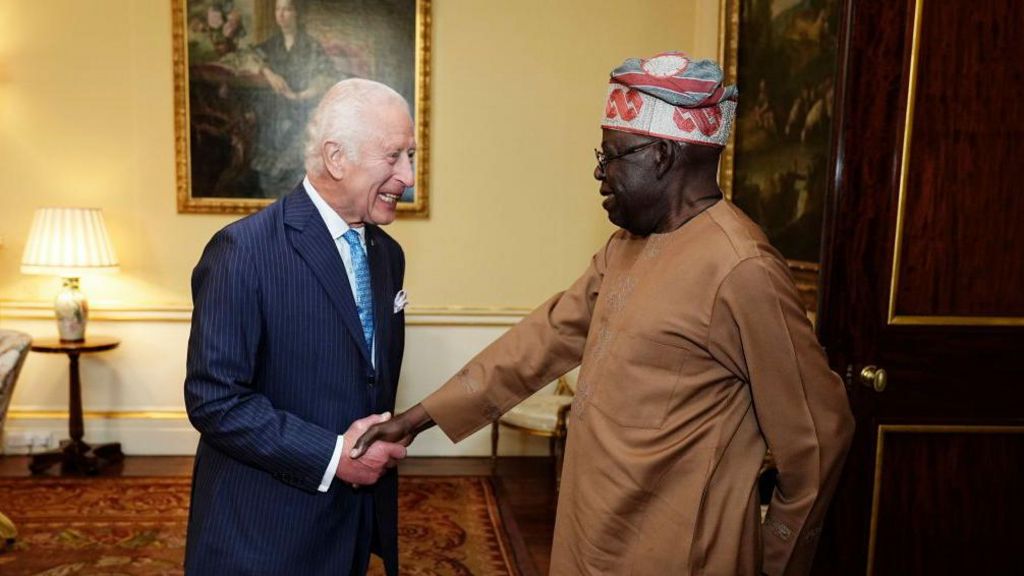
    Buckingham Palace announced on Sunday that Nigerian President Bola Tinubu will undertake an official state visit to the United Kingdom on March 18-19, 2025, marking the first such diplomatic engagement by a Nigerian head of state in nearly four decades. President Tinubu and First Lady Oluremi Tinubu will be formally hosted by King Charles III and Queen Camilla at Windsor Castle, with full itinerary details to be released subsequently.

    This visit represents a significant milestone in UK-Nigeria relations, as the last state visit by a Nigerian leader occurred in 1989. State visits typically feature ceremonial traditions including an official royal reception, carriage procession, and elaborate state banquet, symbolizing the highest level of diplomatic recognition.

    The upcoming engagement continues a longstanding relationship between the British monarchy and Nigeria, a Commonwealth member nation. King Charles has maintained consistent engagement with Nigeria, having visited four times between 1990 and 2018 during his tenure as Prince of Wales. Most recently, he received President Tinubu at Buckingham Palace in September 2024, establishing precedent for their upcoming Windsor Castle meeting.

    The visit places Nigeria among select nations honored with state visits during King Charles’s reign, following similar ceremonies for world leaders including U.S. President Donald Trump, French President Emmanuel Macron, and German President Frank-Walter Steinmeier in the past year.

  • A singer’s tragic death highlights Nigeria’s snakebite problem

    A singer’s tragic death highlights Nigeria’s snakebite problem

    The untimely death of 26-year-old Nigerian soprano Ifunanya Nwangene has ignited national outrage and exposed critical deficiencies in the country’s emergency medical response system. The promising vocalist, who gained fame on Nigeria’s version of The Voice, succumbed to a venomous snakebite in Abuja last Saturday under circumstances that reveal systemic failures in antivenom accessibility and emergency protocols.

    Ifunanya was awakened in her ground-floor apartment in Nigeria’s capital by intense pain as a forest cobra bit her wrist. Following established first-aid procedures, she applied a tourniquet before seeking hospital care—a decision that would later become controversial. Her father, Christopher Nwangene, recounted the frantic efforts to secure treatment as his daughter visited multiple medical facilities in search of antivenom.

    The Federal Medical Centre in Jabi, where Ifunanya eventually received treatment, has disputed claims of antivenom unavailability, though family accounts describe desperate searches for the life-saving medication at local pharmacies. Medical professionals removed her tourniquet upon admission, administering intravenous fluids instead. Witnesses reported her rapid deterioration, with the young singer losing speech function and struggling to breathe despite partial treatment.

    This tragedy highlights Nigeria’s persistent struggle with snakebite emergencies, classified by the WHO as a neglected tropical disease causing approximately 30,000 annual deaths across sub-Saharan Africa. The country records about 20,000 snakebite cases yearly, with antivenom costs ranging from $33 to $58 per vial—prohibitively expensive for many Nigerians.

    The crisis extends beyond urban centers like Abuja. In rural areas where electricity instability complicates antivenom refrigeration, traditional healers often become the primary treatment option. Hafiz Aminu from Kaduna State survived a cobra bite through herbal remedies after hospitals lacked antivenom, though experts caution that traditional methods remain ineffective against highly venomous species.

    In response to the public outcry, Nigeria’s Senate has urged health authorities to ensure nationwide availability of safe, effective, and affordable antivenoms. International researchers have proposed innovative solutions, including repurposing the blood thinner heparin as a cost-effective antidote. Yet for grieving families like the Nwangenes, these developments come too late, underscoring the urgent need for both medical infrastructure improvement and compassionate emergency care.

  • King Charles to host Nigeria’s first UK state visit in 37 years

    King Charles to host Nigeria’s first UK state visit in 37 years

    Buckingham Palace has confirmed a landmark diplomatic event: King Charles III and Queen Camilla will welcome Nigerian President Bola Tinubu and First Lady Oluremi Tinubu for an official state visit from March 18-19, 2025. This marks Nigeria’s first state visit to the United Kingdom since 1989, ending a 37-year hiatus in top-level ceremonial diplomacy between the Commonwealth nations.

    The upcoming visit represents a significant elevation in bilateral relations, utilizing the full spectacle of royal protocol to reinforce diplomatic ties. State visits serve as instruments of soft-power diplomacy, employing ceremonial grandeur to underscore the importance of international partnerships. While President Tinubu previously met the monarch at Buckingham Palace in September 2024 and during COP28 discussions in Dubai, this occasion will feature the complete ceremonial treatment reserved for the most valued allies.

    The context for this diplomatic milestone reveals substantially strengthened economic connections. Recent government statistics indicate UK-Nigeria trade exceeded £8 billion in the year ending October 2024, positioning Nigeria among Britain’s foremost economic partners in Africa. This commercial relationship received further institutional support through a new trade and investment partnership agreement signed in 2024, designed to expand business opportunities between the nations.

    Though the precise agenda remains undisclosed, traditional state visit elements typically include carriage processions, an elaborate state banquet, and parallel political discussions between government representatives. The event continues King Charles’s active diplomatic calendar, which featured three state visits in 2025 alone—hosting leaders from France, the United States, and Germany.

    The monarch maintains particularly strong connections with Nigeria, having visited four times as Prince of Wales in 1990, 1999, 2006, and 2018. His appreciation for Nigerian culture includes publicly expressed admiration for Pidgin English and Afrobeats music. These ties were further institutionalized in 2023 when The King’s Trust International launched operations in Nigeria, initiating programs to address youth unemployment in the nation.

  • West Indies beats Scotland in T20 World Cup match; Shepherd claims hat-trick wickets

    West Indies beats Scotland in T20 World Cup match; Shepherd claims hat-trick wickets

    In a stunning display of fast bowling prowess, Romario Shepherd delivered a match-winning performance for the West Indies cricket team during their Group C encounter against Scotland in the Twenty20 World Cup held in Kolkata on Saturday. The Caribbean speedster achieved the rare feat of claiming four wickets in just five deliveries, including a sensational hat-trick that dismantled Scotland’s lower batting order.

    The match began with West Indies setting a competitive target of 183 runs after being put into bat first. Shimron Hetmyer provided the foundation for their innings with a explosive 64 runs off just 36 balls, featuring six massive sixes that energized the Caribbean side’s total of 182-5.

    Scotland appeared to be building momentum in their chase, reaching 132-5 after 16 overs, before Shepherd’s extraordinary 17th over completely shifted the game’s dynamics. After conceding a single run with his first delivery, the fast bowler orchestrated a dramatic collapse by removing Matthew Cross (caught at point), Michael Leask (caught near long-on), and Oliver Davidson (clean bowled) with consecutive balls to complete his hat-trick.

    The carnage continued as Safyaan Sharif survived the next delivery but fell immediately afterward, offering a simple catch to Jason Holder at mid-off. Shepherd’s remarkable figures of 5-20, complemented by Holder’s 3-30, restricted Scotland to 147 all out in 18.5 overs, securing a 35-run victory for the two-time champions.

    Hetmyer, who received the player-of-the-match medal, expressed awe at his teammate’s performance: ‘That was phenomenal. I think he was going to get it to be honest. It’s not often you see a guy get five wickets and a hat-trick.’

    The victory strengthens West Indies’ position in Group C while Scotland, who entered the tournament under unusual circumstances after Bangladesh’s withdrawal citing safety concerns, face an uphill battle in their World Cup campaign.

  • UAE businessman to cover 70% of housing cost for Emirati youth planning to get married

    UAE businessman to cover 70% of housing cost for Emirati youth planning to get married

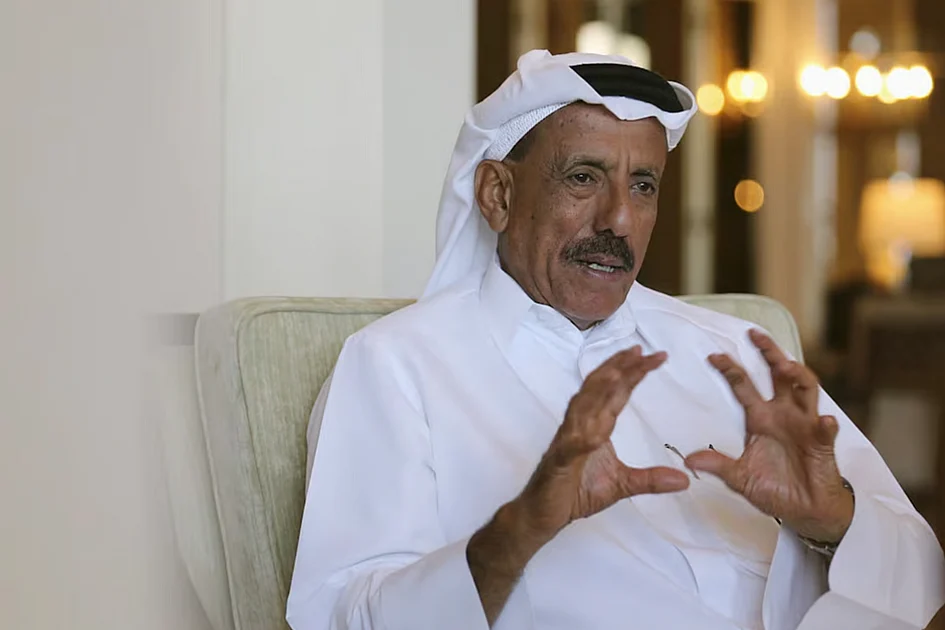
    In a significant move to address marital affordability challenges, prominent UAE businessman Khalaf Ahmad Al Habtoor has unveiled a comprehensive housing initiative specifically designed for Emirati youth contemplating marriage. The philanthropic program allocates 88 fully-equipped residential units within Dubai’s prestigious Al Habtoor Tower, offering one, two, and three-bedroom configurations to serve as starter homes for emerging families.

    The initiative substantially reduces financial barriers to homeownership by covering approximately 70% of each apartment’s total value, requiring beneficiaries to contribute only the remaining 30%. This balance can be settled through a structured payment plan extending over a five-year period, subject to standard terms and conditions. With an estimated total value exceeding 270 million UAE dirhams, the program represents one of the most substantial private-sector interventions in marital support within the region.

    This development aligns with the UAE Ministry of Family’s recently launched ‘Family First’ program, introduced during the World Government Summit, which seeks to enhance family-friendly infrastructure across public and urban spaces. The national effort has already implemented over 60 family-oriented policies through collaboration with more than 20 federal and local government entities, addressing critical gaps in housing, healthcare, education, employment, and social support systems.

    Al Habtoor emphasized that his initiative transcends commercial real estate objectives, representing instead a tangible humanitarian commitment to removing one of the most significant obstacles young Emiratis face when considering marriage. The businessman has established a consistent track record of community-focused programs supporting citizen empowerment and family stability, including financial assistance upon marriage, enhanced support following childbirth, and active participation in national dialogues regarding youth challenges.

    The philanthropist articulated his conviction that meaningful societal investment begins with supporting people directly, asserting that enabling young adults to form stable families generates profound long-term benefits for national social cohesion, economic vitality, and overall security. Al Habtoor concurrently issued a call to action for additional stakeholders to contribute practical initiatives that reinforce family stability and bolster the nation’s future.

  • UAE Swat Challenge kicks off in Dubai; how to watch elite forces compete live

    UAE Swat Challenge kicks off in Dubai; how to watch elite forces compete live

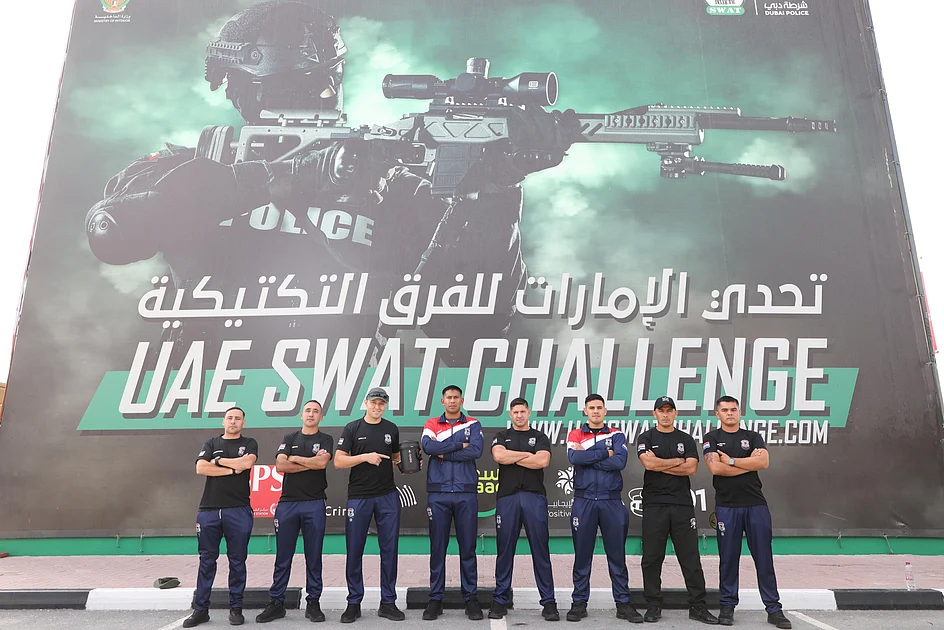
    Dubai has become the epicenter of elite tactical excellence as the seventh annual UAE SWAT Challenge commenced on February 7th, drawing special forces and tactical police units from across the globe to the Dubai SWAT Training Facility. This five-day international competition, organized by the Ministry of Interior and hosted by Dubai Police, represents a premier platform for testing operational readiness while fostering international cooperation among elite response teams.

    The event features teams from over 40 nations competing across five rigorous challenges designed to simulate real-world scenarios: assault operations, hostage rescue missions, officer extraction exercises, tower assaults, and obstacle course navigation. With a substantial prize pool of $260,000 at stake, the competition maintains exceptional intensity while promoting professional excellence through skill refinement in realistic tactical environments.

    First Lieutenant Yasser Al Zarouni, Manager of the Dubai Police SWAT Team, emphasized the event’s evolution into a global knowledge-sharing platform. ‘The UAE SWAT Challenge has transformed into a significant international forum for expertise exchange and direct engagement with elite tactical units worldwide,’ he stated.

    In an innovative community engagement initiative, Dubai Police has introduced the SWAT Clip Award, offering $10,000 (approximately Dh36,700) for the best resident-produced video coverage of the event. Open to all UAE residents with special encouragement for student participation, the competition recognizes creative documentation of the challenges while fostering public awareness of tactical operations.

    The event continues through February 11th, with live streaming available for global audiences to witness these elite units demonstrate their capabilities in high-stakes scenarios.

  • Dubai schools announce Ramadan 2026 timings, activity schedules

    Dubai schools announce Ramadan 2026 timings, activity schedules

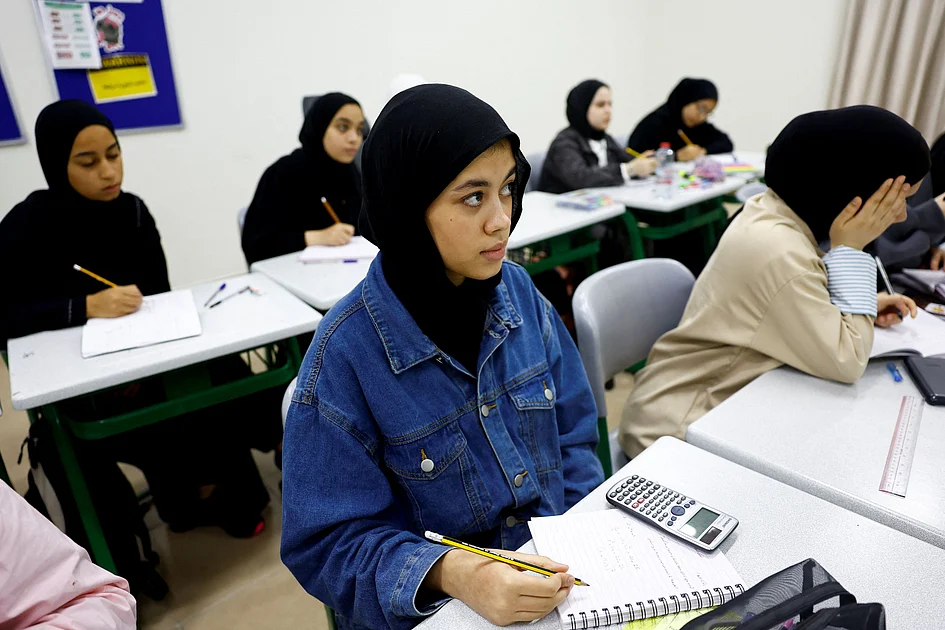
    Educational institutions across Dubai are proactively implementing strategic adjustments for Ramadan 2026, anticipated to commence approximately February 19 pending lunar confirmation. Schools throughout the emirate are currently distributing surveys and operational details to families, facilitating advanced preparation for the holy month’s modified academic schedules and activities.

    At Ambassador School, administrative leadership has established revised operational hours prioritizing community welfare. According to Principal Sheela Menon, the institution will transition to weekday sessions from 7:30 AM to 12:30 PM, with Fridays concluding at 11:30 AM. These temporal adjustments aim to support comfortable fasting observance while sustaining educational engagement. Beyond schedule modifications, the school emphasizes spiritual development through communal Iftar gatherings that foster collective reflection on Ramadan’s significance. Classroom pedagogy will integrate values-based learning focusing on compassion, empathy, and self-reflection, complemented by community service initiatives.

    Regent International School, operating under Fortes Education, demonstrates parallel considerations. Principal David Williams emphasized the institution’s thoughtful and respectful approach, implementing adapted start and finish times alongside pedagogically restructured lessons optimized for shortened days. The school annually solicits parental input regarding Ramadan scheduling through comprehensive surveys, ensuring arrangements align with community needs. Student programming incorporates age-appropriate activities emphasizing empathy, generosity, and service, frequently involving family and community participation.

    The American Academy for Girls embraces Ramadan as both operational adjustment and celebratory occasion. Principal Lisa Johnson characterized the period as fundamentally joyful and community-centered, referencing traditional activities including Hag Al Laila celebrations and the ‘Tahadou Tahabbou’ Secret Pal tradition that cultivate anticipatory excitement while reinforcing values of generosity and communal spirit.

    Across all institutions, academic planning occurs months in advance, with major assessments and events scheduled pre-Ramadan to minimize pressure during the holy month. Educational professionals receive support developing realistic lesson plans and balanced assessments emphasizing qualitative excellence over quantitative volume, creating optimally supportive learning environments throughout Ramadan’s spiritual observance.

  • Open Masters Games Abu Dhabi 2026: Meet couple who ‘never wins’ but travels world for sport

    Open Masters Games Abu Dhabi 2026: Meet couple who ‘never wins’ but travels world for sport

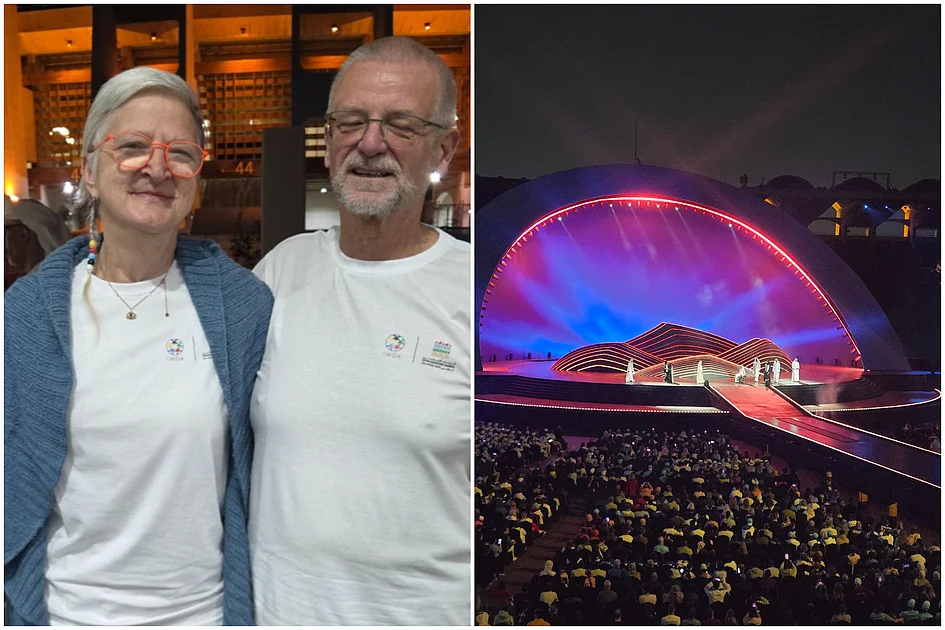
    ABU DHABI – While elite athletics often focus on podium finishes and medal counts, the Open Masters Games Abu Dhabi 2026 is showcasing a profoundly different competitive ethos: one where participation transcends victory and community outweighs conquest. This alternative sporting philosophy finds perfect embodiment in German archers Manfred and Maria Wirsing, whose global journey exemplifies the event’s core values.

    Since their inaugural Masters competition in Auckland (2017), the Wirsings have traversed continents not in pursuit of trophies but meaningful human connections. “We never win,” acknowledges 70-year-old Manfred with cheerful acceptance. “We try. We want to meet friends. Meeting people is what matters.” His wife Maria, a 62-year-old archery enthusiast for quarter-century, shares this perspective: “It’s a hobby. If you win, that’s good – but it’s not necessary.”

    Their story converged with thousands of other amateur athletes during Friday’s opening ceremony, where the couple experienced a novel honor – marching behind the archery flag despite their non-competitive status. For the Wirsings, this recognition symbolized something deeper than athletic achievement: validation of their decade-long commitment to global sporting fellowship.

    The ceremony itself marked a historic milestone as the first Open Masters Games hosted in the Middle East, featuring a spectacular fusion of visual effects, cultural storytelling, and live performances. Organizers introduced the concept of the “original athlete” – defined not by medals but by movement, resilience, and collective human endeavor. This narrative framework deliberately emphasized sport’s roots in daily life rather than elite performance.

    Among those embodying this spirit was Emirati athlete Azza Al Ghunaimi, selected to carry the International Masters Games flag. The 49-year-old runner from Abu Dhabi described her unexpected nomination as culminating years of dedication. “When I came for rehearsals and they called my name, I felt that all these years of hard work meant something,” she reflected, preparing for her upcoming half-marathon participation.

    Meanwhile, Lebanese swimmer Racha Kabbara (55) embraced both the honor and anxiety of marching before thousands. “They trained us how to walk, how to hold the flag,” she noted. “It’s not hard – but there is fear. Fear of being in front of all these people.” Kabbara’s ambitions extend far beyond these Games, with plans to attempt an Ironman triathlon at age 60.

    The scale of the event is monumental: over 21,000 participants from more than 100 nations, ranging from their 30s to 91 years old, competing across 38 sports until February 15. As UAE Minister of Sports Dr. Ahmad Belhoul Al Falasi emphasized, the Games represent a broader vision positioning sport as both lifestyle and unifying force.

    International Masters Games Association President Sergii Bubka highlighted the inspirational message sent by nonagenarian competitors: “The desire to move has no limits.”

    For the Wirsings – already planning future competitions in Kansai and New Zealand – the Abu Dhabi experience reinforces their enduring conviction. As Manfred observed while watching athletes from across the globe parade under stadium lights: “Abu Dhabi is new for us, but this community – it’s always the same spirit.” In an arena where simply participating constitutes victory, the Games continue redefining what it means to be an athlete at any age.


  • Will solar eclipse affect Ramadan crescent sighting? What Dubai expert says

    Will solar eclipse affect Ramadan crescent sighting? What Dubai expert says

    As Muslims worldwide anticipate the sighting of the crescent moon marking the commencement of Ramadan on February 17, 2026, astronomical experts in Dubai have addressed concerns regarding a coinciding solar eclipse. According to Khadijah Al Hariri of the Dubai Astronomy Group, the annular solar eclipse occurring that afternoon will have no effect on traditional moon-sighting practices for determining the holy month’s start.

    The celestial event, scheduled for approximately 4:00 PM UAE time, will feature the moon passing before the sun while leaving a distinctive ‘ring of fire’ visible. However, Ms. Al Hariri emphasized that eclipse phenomena will conclude before sunset, when lunar observation committees typically convene for official crescent verification.

    Islamic months alternate between 29 and 30 days based on visual confirmation of the new moon. Should the crescent be sighted on February 17, Ramadan will begin the following day. Otherwise, the current month of Shaban will complete its 30-day cycle, pushing Ramadan’s commencement to February 19.

    Engineer Muhammad Shawkat Odeh, Director of the Abu Dhabi-based International Astronomy Centre, provided technical analysis indicating challenging viewing conditions. The moon will set before the sun in eastern Islamic regions, simultaneously with sunset in central areas, and merely minutes after sunset in western territories—insufficient time for the crescent to become visibly distinct after the astronomical new moon.

    Despite astronomical predictions suggesting February 19 as the probable start date for Ramadan in the UAE and neighboring countries, the final determination rests with official moon-sighting committees who will make their announcement after sunset observation on February 17.

  • Zambian leader backs traditional Ghanaian outfit after online trolling

    Zambian leader backs traditional Ghanaian outfit after online trolling

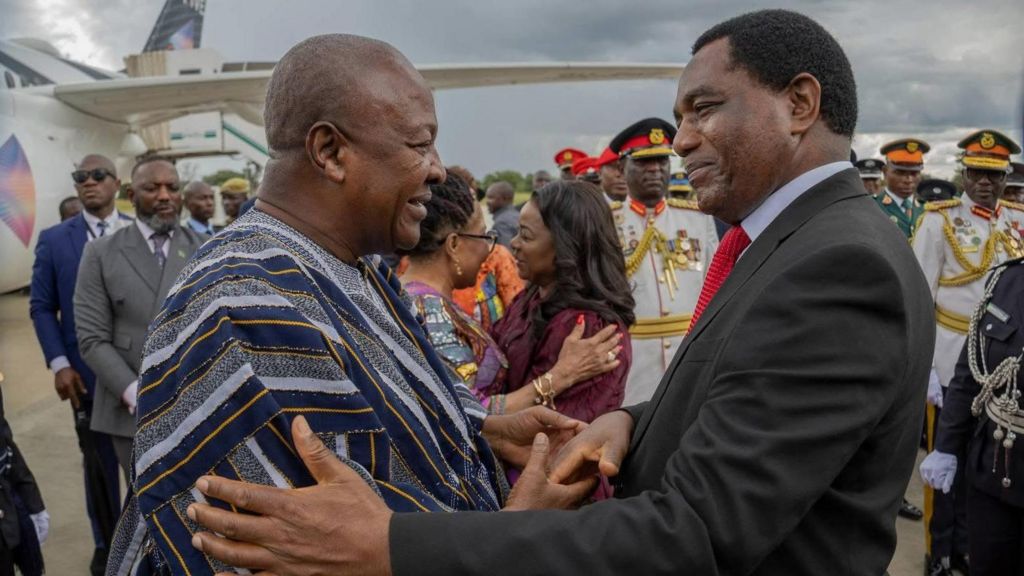
    A diplomatic visit between Ghana and Zambia has evolved into a continental conversation about cultural identity and heritage reclamation, sparked by sartorial choices at the highest levels of government. The discourse began when Ghana’s President John Dramani Mahama arrived in Lusaka for a three-day state visit adorned in a traditional northern Ghanaian fugu garment—a structured, poncho-style outfit crafted from hand-woven cotton strips. His Zambian counterpart, President Hakainde Hichilema, greeted him in conventional Western business attire, creating a visually striking contrast that immediately captured public attention. The sartorial juxtaposition ignited vigorous online debate, with some Zambian social media users initially mocking the Ghanaian president’s traditional garment as a ‘blouse’ or ‘maternity wear’ in various Facebook commentary threads. Rather than dismissing the criticism, President Hichilema strategically embraced the cultural significance of the fugu during the Ghana-Zambia Business Forum, announcing his intention to personally ‘order more of that stuff’ from Ghanaian artisans. This presidential endorsement transformed the conversation from mockery to meaningful dialogue about African cultural identity. Ghana’s Foreign Minister Samuel Okudzeto Ablakwa interpreted the viral discussion as evidence of a growing movement among young Africans to reconnect with their heritage, describing the phenomenon as a renaissance of the ‘African personality.’ The minister highlighted the historical significance of the fugu, noting that Ghana’s founding father Kwame Nkrumah wore similar traditional attire when declaring independence from British colonial rule in 1957. The conversation expanded beyond political circles when prominent Ghanaian YouTuber Wode Maya contributed to the discourse, defending the presidential fashion choice as a deliberate strategy to promote local garment industries and encourage cultural pride across Africa. This diplomatic sartorial incident has brought renewed attention to Ghana’s existing ‘Fugu Friday’ initiative, which encourages citizens to wear traditional African clothing at least once weekly. The exchange demonstrates how cultural diplomacy and social media engagement can combine to foster important conversations about post-colonial identity, economic development through cultural promotion, and pan-African solidarity in the digital age.