标签: Africa

非洲

  • South Africa to deploy troops to tackle crime gangs

    South Africa to deploy troops to tackle crime gangs

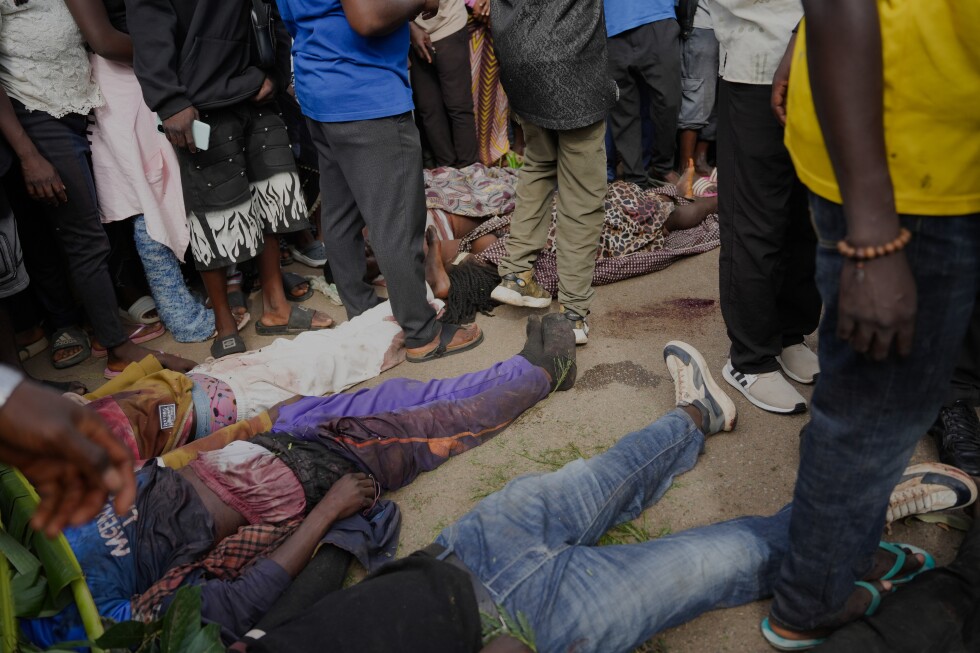
    In a decisive response to escalating criminal activities, South African President Cyril Ramaphosa has authorized the deployment of national defense forces to support police operations against organized crime syndicates. The announcement came during Thursday’s annual State of the Nation Address, where Ramaphosa identified organized crime as the most pressing threat to the nation’s democracy and economic stability.

    The military deployment will primarily focus on Western Cape and Gauteng provinces, regions experiencing intense gang warfare and rampant illegal mining operations. President Ramaphosa highlighted the severe human impact, noting that “children in the Western Cape are caught in the crossfire of gang wars” while “people are chased out of their homes by illegal miners in Gauteng.”

    The crisis reflects South Africa’s longstanding struggle with violent crime, with police data revealing an alarming average of 63 daily homicides between April and September last year. Authorities attribute much of the violence to armed, undocumented foreign nationals engaged in illegal mining operations, known locally as “zama zamas,” who frequently operate within sophisticated crime syndicates.

    Beyond military deployment, the government’s comprehensive security strategy includes recruiting 5,500 additional police officers, enhancing intelligence capabilities, and implementing targeted operations against criminal networks. This multifaceted approach acknowledges Police Minister Firoz Cachalia’s recent admission that conventional policing methods have proven insufficient against the country’s deeply entrenched organized crime problem.

    The decision to deploy military personnel represents a significant escalation in the government’s response to criminal violence, underscoring the severity of South Africa’s security challenges despite its status as Africa’s most industrialized nation.

  • Brilliant Muzarabani helps Zimbabwe stun Australia

    Brilliant Muzarabani helps Zimbabwe stun Australia

    In a stunning upset at the T20 World Cup, Zimbabwe delivered a masterclass in disciplined cricket to defeat tournament favorites Australia by 23 runs in Colombo. The Chevrons, led by an exceptional bowling performance from Blessing Muzarabani who claimed career-best figures of 4-17, defended a modest total of 169-2 with remarkable composure against the reigning champions.

    The match turned dramatically during Australia’s chase when Muzarabani and Brad Evans (3-23) dismantled the top order, reducing the Aussies to 29-4 within the powerplay. Despite a valiant 77-run partnership between Matthew Renshaw (65) and Glenn Maxwell (31) that briefly revived hopes, Zimbabwe’s bowlers maintained relentless pressure on a slow R. Premadasa Stadium pitch.

    The decisive moment arrived with eight balls remaining when the 6ft 8in pace bowler Muzarabani removed Renshaw, effectively sealing Australia’s fate. Zimbabwe’s fielding proved equally instrumental, with Clive Madande and Tony Munyonga producing spectacular boundary saves that conserved crucial runs.

    Zimbabwe’s batting approach, initially perceived as overly cautious, was vindicated by the result. Opener Brian Bennett anchored the innings with an unbeaten 64 from 56 balls, supported by aggressive cameos from Tadiwanashe Marumani (35 off 21) and Ryan Burl (30 off 30). Captain Sikandar Raza provided late impetus with 25 not out from just 13 deliveries.

    The victory marks Zimbabwe’s second T20 World Cup win against Australia, repeating their 2007 triumph at Newlands. The result leaves Group B delicately balanced after two matches, with Australia now trailing both Zimbabwe and Sri Lanka by two points ahead of their crucial encounter on Monday.

    Raza emphasized the team’s cultural foundation post-match: ‘The unity we’ve created makes me extremely proud. The boys really deserved this victory, but we must now focus on our next challenge.’

    For Australia, stand-in captain Travis Head remained philosophical: ‘We’ve found ourselves in this position before and will look to navigate this situation using our previous experiences.’

    The upset represents one of Zimbabwe’s most significant cricketing achievements in recent years, demonstrating their growing capability to compete with elite international sides.

  • China’s efforts in African infrastructure hailed

    China’s efforts in African infrastructure hailed

    ADDIS ABABA, Ethiopia – China has earned recognition as a pivotal infrastructure financing ally across Africa, with continental leaders advocating for deepened collaborations that align with domestic industrial expansion and increased mobilization of indigenous capital. The assessment emerged during high-level discussions preceding the 39th African Union Summit, scheduled for this weekend in the Ethiopian capital.

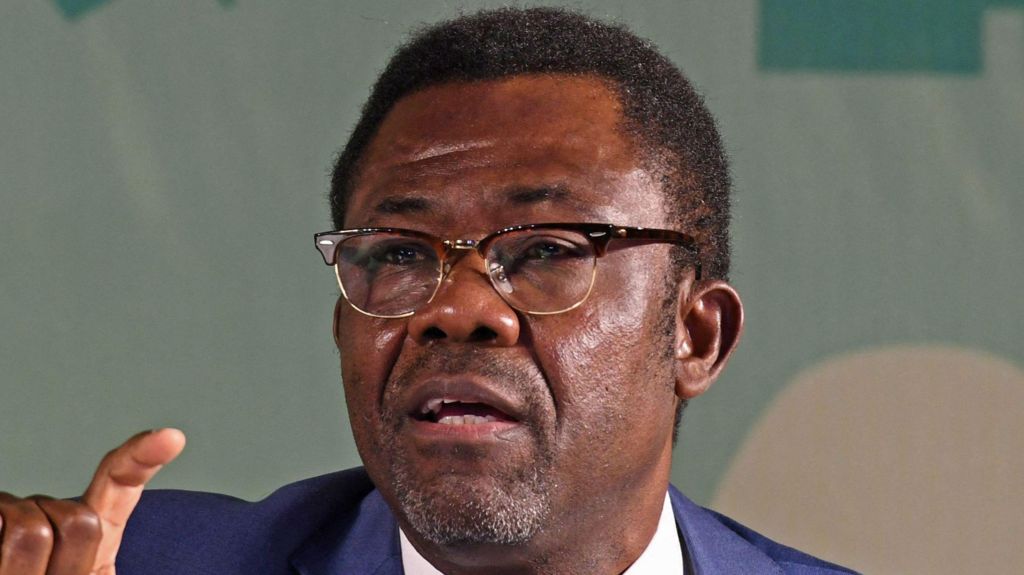
    Lerato Dorothy Mataboge, Commissioner for Infrastructure and Energy at the African Union Commission, emphasized China’s substantial contributions to Africa’s infrastructural advancement, describing it as fundamental to sustainable development. “This positions China as a strategic partner in efforts to bridge long-standing infrastructure gaps,” Mataboge stated in an exclusive interview with China Daily.

    The commissioner outlined a vision for future cooperation that transcends mere financing, focusing instead on alignment with Africa’s industrial ambitions through strengthened local content requirements, skills transfer, and domestic value addition. She revealed that African governments currently bear the majority of infrastructure expenditures, with private sector participation remaining constrained.

    Highlighting the continent’s substantial untapped financial resources, Mataboge cited an estimated $4.6 trillion in domestic capital that remains largely unexploited for infrastructure development. She urged African nations to leverage pension funds and other capital pools, typically invested in low-risk instruments, toward productive infrastructure sectors.

    Through initiatives like the Belt and Road Initiative, China has extensively invested in Africa’s transportation networks, energy systems, and port facilities, completing numerous landmark projects over the past decade. The upcoming AU Summit, themed “Assuring Sustainable Water Availability and Safe Sanitation Systems to Achieve the Goals of Agenda 2063,” will address infrastructure investments supporting long-term economic transformation.

    African Union Commission Chairperson Mahmoud Ali Youssouf reinforced the need for innovative financing mechanisms and strengthened partnerships with private entities and civil society. He reaffirmed that the African Continental Free Trade Area and AU institutions remain central to advancing regional integration, infrastructure expansion, and cross-border trade.

    United Nations Under-Secretary-General Claver Gatete underscored infrastructure’s critical role in promoting socioeconomic development, noting that water accessibility remains a severe challenge. Gatete revealed that over 300 million Africans lack access to safe drinking water, while nearly 780 million experience inadequate sanitation, resulting in waterborne diseases that claim lives and impair economic productivity.

    “Without reliable water infrastructure, industrial zones struggle to compete, logistics hubs cannot scale efficiently, and urban economies face limits to sustainable growth,” Gatete emphasized, advocating for integrated development approaches where infrastructure, finance, trade, and industrial policy operate cohesively.

    Mataboge concluded by urging member states to synchronize national infrastructure plans with continental priorities, ensuring policy continuity beyond electoral cycles and accelerating Africa’s industrial transformation.

  • Africa leads growth in solar energy as demand spreads beyond traditional markets, report says

    Africa leads growth in solar energy as demand spreads beyond traditional markets, report says

    NAIROBI, Kenya — Defying a worldwide deceleration in renewable energy expansion, Africa has astonishingly positioned itself as the planet’s most rapidly expanding solar market in 2025. This remarkable growth, meticulously documented in a recent industry analysis, signifies a pivotal shift in the global concentration of renewable energy momentum.

    The Africa Solar Industry Association’s comprehensive report reveals that the continent’s installed solar capacity witnessed a robust 17% surge last year. This acceleration was predominantly fueled by a substantial influx of competitively priced, Chinese-manufactured solar panels. While the global solar power capacity increased by 23% to 618 gigawatts (GW) in 2025, this represented a significant slowdown from the 44% growth rate recorded in 2024, making Africa’s performance particularly standout.

    Cynthia Angweya-Muhati, Acting CEO of the Kenya Renewable Energy Association, emphasized the crucial role of international partnership, stating, ‘Chinese enterprises are fundamentally propelling Africa’s green energy transformation. They are making assertive investments and establishing resilient supply chains within the continent’s burgeoning green ecosystem.’

    However, a notable implementation gap persists. Data indicates that although nearly 64 gigawatts peak (GWp) of solar equipment has been shipped to Africa since 2017, the operational capacity currently stands at only 23.4 GWp. A gigawatt peak denotes one billion watts of maximum potential power output under ideal conditions.

    John Van Zuylen, CEO of the Africa Solar Industry Association, attributed this sustained growth to strategic policy evolution. ‘Solar energy has transcended its status as a niche interest of a few early adopters to become a widespread continental priority,’ he commented during the Inter Solar Africa summit in Nairobi. ‘The current trajectory is not ephemeral; it is the result of policies successfully aligning with potent market dynamics.’

    The market landscape is also diversifying. Historically, South Africa was the dominant force, once accounting for approximately half of all solar panel imports. Its share has now receded to below one-third as demand skyrockets across the continent. In a striking demonstration of this broadening appeal, 20 African nations established new annual import records in 2025, with 25 countries each importing a minimum of 100 megawatts of capacity.

    Nigeria has now eclipsed Egypt to become Africa’s second-largest solar importer. The driving force behind this shift is the practical and cost-effective nature of solar energy coupled with battery storage, offering a reliable alternative to expensive diesel generators and an unstable national grid. Algeria experienced a meteoric rise with year-on-year imports soaring over thirty times, while Zambia and Botswana also recorded significant surges.

    The report further highlights that at least 23 African nations, including South Africa, Tunisia, Kenya, Chad, and the Central African Republic, now generate over 5% of their electricity from solar sources.

    A key enabler of this boom is the precipitous decline in costs. Prices for solar panels and, crucially, battery storage units—primarily sourced from China—have fallen dramatically. Battery storage costs in Africa dropped to $112 per kilowatt-hour in 2025, down from an average of $144 in 2023, thanks to technological advancements yielding more flexible and durable systems.

    Van Zuylen noted the profound impact of this trend: ‘This ever-decreasing price of storage carries game-changing implications for a continent with an acute need for stable, baseload power.’

    Policy reforms are also playing a critical role. In Nigeria, the phased removal of diesel subsidies over the past two years has made diesel progressively more expensive, effectively pushing businesses and households toward solar alternatives. This policy was implemented incrementally across sectors to mitigate economic shock. In a major development for regional manufacturing, Nigeria announced plans in September for a 1 GW solar panel factory, poised to be the largest in West Africa. Similar facilities are currently under construction in Egypt, South Africa, and Ethiopia.

    As Africa ambitiously moves to develop its indigenous manufacturing capabilities, the industry is looking towards China for knowledge transfer to mitigate the continent’s reliance on imported equipment and technology.

    The economic benefits extend far beyond manufacturing. Van Zuylen pointed to a parallel jobs boom, explaining, ‘The solar employment surge is occurring in service sectors such as installation, maintenance, distribution, and financing, where thousands of small and medium enterprises are emerging to cater to the escalating demand.’

    Despite the optimistic outlook, significant challenges remain. A primary obstacle is policy inconsistency. Unlike regions such as the Middle East, where governments publish clear, long-term energy roadmaps, many African markets lack stable policy signals. Solar firms operating across the continent cite unpredictable tax structures, fluctuating import duties, and ambiguous long-term energy strategies as factors that erode investor confidence.

    Amos Wemanya, Senior Analyst on Renewable Energy at Powershift Africa, succinctly captured the issue: ‘The problem is not the opportunity. It’s visibility. If a government announces a plan, companies need to have trust that it will remain in place.’

  • In Zimbabwe, cash bouquets and scrap metal gifts rival flowers as coveted Valentine’s tokens of love

    In Zimbabwe, cash bouquets and scrap metal gifts rival flowers as coveted Valentine’s tokens of love

    HARARE, Zimbabwe — In a nation where economic pragmatism intersects with romantic expression, Zimbabweans are redefining Valentine’s Day traditions through innovative gift-giving practices that reflect both financial realities and environmental consciousness.

    The emerging trend of money bouquets—carefully crafted arrangements of U.S. dollar bills woven with floral elements—has transformed from social media novelty to mainstream Valentine’s phenomenon. Across traditional markets and digital platforms like TikTok, artisans are meeting growing demand for these hybrid creations that combine financial utility with romantic symbolism.

    At Harare’s established flower market, veteran florist Tongai Mufandaedza demonstrates the intricate process of assembling money bouquets. “The market has significantly improved due to these creations,” noted Mufandaedza, who has three decades of industry experience. “For Valentine’s Day, we anticipate substantially increased customer traffic as everyone seeks to make impressive gestures.”

    The pricing structure reveals interesting market dynamics: a $10 monetary bouquet sells for $25, while traditional rose arrangements command $35-40. This cost-effectiveness, coupled with practical value, drives their appeal in an economy where liquidity often outweighs luxury.

    Generation Z consumers enthusiastically embrace this trend, with 23-year-old Kimberleigh Kawadza expressing full approval: “The innovator behind this concept deserves recognition. It represents perfect appreciation for partners.”

    Interestingly, the trend spans generations, with parents reportedly purchasing money bouquets for daughters to prevent them from seeking “sugar daddies” who might exploit financial incentives.

    The U.S. dollar’s dominance in Zimbabwean transactions—stemming from 2009’s hyperinflation crisis—creates unique logistical challenges. The scarcity of crisp bills has spawned secondary businesses supplying pristine notes for bouquets, as worn currency proves unsuitable for decorative purposes.

    Parallel to monetary expressions, environmental sustainability shapes another gifting innovation: recycled metal creations. At Harare’s Simpli Simbi boutique (“simbi” meaning metal in Shona), artisans transform discarded automotive parts and scrap metal into heartfelt keepsakes.

    Founder Stephanie Charlton explained the philosophy: “We revitalize previously unloved materials into beautiful, permanent treasures. Each piece carries meaningful narratives beyond temporary chocolates or flowers.”

    This environmentally conscious approach attracts growing local clientele, signaling shifting attitudes toward sustainable consumption despite economic pressures.

    Notably, Zimbabwe lacks the restrictive policies implemented elsewhere, such as Kenya’s recent warnings of severe penalties for currency manipulation in bouquets—a contrast highlighting different regulatory approaches to similar trends across Africa.

  • UAE clarifies age cutoff for school admission, ‘one-time measure’ for some pupils

    UAE clarifies age cutoff for school admission, ‘one-time measure’ for some pupils

    The UAE Ministry of Education has issued updated guidance regarding newly implemented age cutoff regulations for school admissions, addressing widespread concerns among parents. The clarification specifically addresses children born between September 1 and December 31, 2022, who are not currently enrolled in any educational system.

    For the 2026-2027 academic year only, these children will be subject to a special transitional measure. According to the ministry’s statement released Thursday, schools and parents will be permitted to collaboratively determine whether Foundation Stage 1 (FS1) or Foundation Stage 2 (FS2) represents the most appropriate educational placement for each child.

    The policy update directly responds to parental anxieties about children potentially needing to skip entire grade levels. The ministry further clarified that if a child demonstrates insufficient readiness for FS2, they may instead enroll in FS1 during the subsequent academic year. However, the authority emphasized a firm stipulation: once a student is formally enrolled in any grade level, subsequent transfers to alternative grades are prohibited.

    This development follows the ministry’s initial announcement in December 2025, which adjusted the kindergarten and Grade 1 admission age cutoff from August 31 to a new date. The updated regulation applies universally to all educational institutions commencing their academic years in August or September. Schools operating on an April start cycle will continue to utilize March 31 as their cutoff reference. Importantly, the policy exclusively governs new student admissions, ensuring current enrollees remain unaffected by the changes.

  • UN approves 40-member scientific panel on the impact of artificial intelligence over US objections

    UN approves 40-member scientific panel on the impact of artificial intelligence over US objections

    The United Nations General Assembly has overwhelmingly approved the creation of a 40-member global scientific panel dedicated to assessing the impacts and risks of artificial intelligence. The Thursday vote saw 117 nations in favor, with only the United States and Paraguay voting against the initiative, while Tunisia and Ukraine abstained.

    UN Secretary-General Antonio Guterres, who established the panel, hailed the decision as “a foundational step toward global scientific understanding of AI.” He emphasized that the fully independent scientific body would provide rigorous, independent insight enabling all member states to engage on equal footing regardless of technological capacity.

    The United States Mission strongly objected to the panel, with counselor Lauren Lovelace characterizing it as “a significant overreach of the UN’s mandate and competence.” Lovelace stated that AI governance should not be dictated by the UN and expressed concerns about authoritarian regimes potentially influencing international bodies to impose “controlled surveillance societies.”

    Panel members were selected from over 2,600 candidates through an independent review process involving the International Telecommunications Union, the UN Office for Digital and Emerging Technologies, and UNESCO. The diverse panel includes predominantly AI experts alongside professionals from other disciplines, including Nobel Peace Prize laureate Maria Ressa, a Filipino journalist.

    Notable appointments include two American experts: University of Minnesota professor Vipin Kumar and retired University of Colorado professor Martha Palmer. The panel also features two Chinese specialists: Shanghai Jiao Tong University dean Song Haitao and Chinese Academy of Engineering cloud-computing expert Wang Jian.

    Ukraine cited its objection to Russian AI regulation expert Andrei Neznamov’s inclusion as the reason for its abstention. Panel members will serve three-year terms focused on bridging knowledge gaps and assessing AI’s real-world economic and social impacts.

  • Oil prices tumble more than $1 as IEA cuts demand forecast

    Oil prices tumble more than $1 as IEA cuts demand forecast

    Global oil markets experienced significant downward pressure on Thursday following a sobering demand forecast revision from the International Energy Agency. The Paris-based organization substantially lowered its 2026 global oil consumption projections, triggering a swift market reaction that erased earlier geopolitical risk premiums.

    Benchmark crude indices registered pronounced declines throughout the trading session. Brent crude futures plummeted by $1.26, representing a 1.82% decrease to settle at $68.14 per barrel. Simultaneously, US West Texas Intermediate crude witnessed a $1.24 drop, equating to a 1.92% decline, closing at $63.39 per barrel.

    The IEA’s monthly market report indicated that demand growth would underperform previous estimates despite January supply disruptions. The agency projected a substantial market surplus would persist throughout the year, fundamentally altering trader sentiment. This revision prompted investors to reassess the balance between geopolitical tensions and fundamental supply-demand dynamics.

    Market analysts observed that the earlier price support derived from US-Iran tensions had rapidly dissipated. Phil Flynn, senior analyst at Price Futures Group, noted that the market ‘just ran out of steam’ as participants prioritized the weakened demand outlook over Middle Eastern geopolitical concerns.

    Concurrently, substantial US inventory data exacerbated the bearish sentiment. The Energy Information Administration reported an 8.5 million barrel crude stockpile increase, dramatically exceeding analyst expectations of a 793,000-barrel build. Refinery utilization rates concurrently declined by 1.1 percentage points to 89.4%, indicating reduced processing demand.

    On the supply front, Russian seaborne oil product exports climbed 0.7% month-over-month to 9.12 million metric tons in January, driven by elevated fuel production and seasonal domestic consumption patterns. This additional supply further contributed to the global surplus scenario outlined by the IEA.

  • A seat at the table or on the menu? Africa grapples with the new world order

    A seat at the table or on the menu? Africa grapples with the new world order

    African heads of state convened in Addis Ababa for their annual summit this weekend, facing a transformed global landscape where the continent’s strategic positioning requires urgent reassessment. The gathering occurs amidst a fundamental shift in international relations characterized by the decline of multilateralism and the ascendancy of great-power politics.

    This geopolitical transformation has been accelerated during President Donald Trump’s second term, marked by a distinct ‘America First’ approach that explicitly prioritizes Western hemisphere interests alongside Middle Eastern concerns, inevitably reducing Africa’s prominence in US foreign policy. The updated White House security strategy openly acknowledges that not every global region can receive equal attention, compelling African nations to reconsider their traditional reliance on international institutions like the UN, World Bank, and WTO.

    The policy contrast with the previous administration is stark. While President Joe Biden declared in 2024 that the United States was ‘all-in on Africa’s future,’ his actual engagement proved limited with just one brief presidential visit to sub-Saharan Africa during his final month in office. The current administration has adopted a more transactional, bilateral approach focused primarily on securing mineral resources critical for electronic manufacturing, as demonstrated by December’s agreement with the Democratic Republic of Congo.

    Peter Pham, former US special envoy to Africa, defends this realistic approach: ‘There’s no way any country, even a superpower, can be all things to everyone. We must steward our resources to achieve optimal outcomes for American citizens and our partners.’ However, critics like Georgetown University’s Ken Opalo warn that bilateral deals weaken Africa’s bargaining position, potentially leading to unfavorable terms that prioritize American corporate interests over comprehensive economic cooperation.

    The strategic vacuum extends beyond economic matters. Africa’s inability to resolve conflicts like Sudan’s civil war—now labeled the world’s worst humanitarian crisis—demonstrates limited continental agency. Various global powers including Russia, Turkey, UAE, and Iran have been accused of supplying weapons to warring factions, further complicating resolution efforts.

    Ghana’s President John Mahama has emerged as a vocal advocate for continental self-reliance, declaring at Davos that Africa has ‘lost its sovereignty and was caught in a dependency trap.’ His Accra Reset project promotes coordinated industrialization, skills development, and unified negotiation with external partners. Yet analysts note that implementation challenges persist, including the tension between national and regional interests and the domestic pressures facing potential continental leaders like Nigeria, Egypt, Ethiopia, Kenya, and South Africa.

    Despite existing frameworks like the African Continental Free Trade Area and Agenda 2063, progress toward unified action remains slow. As global power dynamics continue evolving, African nations face the pressing challenge of developing coherent strategies to ensure they secure a place at the international table rather than becoming part of the menu.

  • Emaar posts strongest-ever results as revenues climb 44%

    Emaar posts strongest-ever results as revenues climb 44%

    Dubai’s premier real estate developer Emaar Development has announced unprecedented financial achievements for the fiscal year 2025, marking its most successful performance since inception. The property giant, operating as a majority-controlled subsidiary of Emaar Properties, demonstrated remarkable growth across all key metrics amid soaring demand for residential properties throughout Dubai.

    The company’s annual property sales reached an extraordinary Dh71.1 billion, representing a 9% increase from the previous year and establishing a new benchmark in the company’s history. This exceptional performance has been attributed to strategic project expansions and sustained market confidence in Dubai’s real estate landscape, driven by demographic expansion, increased international investment, and supportive regulatory frameworks.

    Financial indicators revealed spectacular progress with revenues skyrocketing 44% to Dh27.5 billion, while pre-tax net profit experienced a substantial 52% leap to Dh15.5 billion. These figures reflect enhanced operational efficiency and favorable market conditions. The revenue backlog—representing future earnings from sold but undelivered properties—expanded significantly to Dh125.2 billion, ensuring strong financial visibility for forthcoming years.

    In a move rewarding investor confidence, the board has proposed a record dividend distribution of Dh4 billion, a 47% increase from the previous year, subject to shareholder ratification.

    Strategic expansion efforts in 2025 included the acquisition of 36 million square feet of land with an estimated development value of Dh120 billion. The company launched over 48 residential developments within its master-planned communities, featuring new phases in The Valley, Bristol at Emaar Beachfront, and the Grand Polo Club and Resort.

    A landmark announcement included Emaar Hills, an ambitious new district featuring Dubai Mansions—ultra-luxury residences targeting high-net-worth international buyers, signaling the company’s intensified focus on the premium property segment.

    Founder Mohamed Alabbar emphasized that these achievements demonstrate the robustness of Dubai’s development ecosystem and the UAE government’s forward-looking policies. “The stable regulatory environment, strategic long-term planning, and openness to global investment enable developers like Emaar to execute large-scale projects with confidence,” Alabbar stated, noting the company’s continued commitment to creating communities that elevate living standards.

    Since 2002, Emaar Development has delivered more than 80,500 residential units and currently maintains approximately 51,000 units under development across Dubai’s most prestigious communities, including Dubai Hills Estate, Arabian Ranches, Downtown Dubai, Dubai Marina, and Emaar Beachfront.