标签: Africa

非洲

  • Abu Dhabi’s IHC to launch new holding with $237 billion in assets under management

    Abu Dhabi’s IHC to launch new holding with $237 billion in assets under management

    Abu Dhabi’s International Holding Company (IHC) has announced the creation of a major financial services holding entity, Judan Financial, which will command an impressive $236.88 billion (Dh870 billion) in assets under management. The new conglomerate will consolidate financial assets from IHC, Alpha Dhabi, 2PointZero Group, and Sirius International Holding, spanning diverse sectors including banking and insurance.

    With an estimated valuation of approximately Dh100 billion, Judan Financial will oversee a portfolio of more than 20 operating financial services companies, including the prominent alternative investment firm Lunate. The entity will be chaired by Sheikh Tahnoun bin Zayed Al Nahyan, who serves as the UAE’s national security adviser and also chairs both the Abu Dhabi Investment Authority (ADIA) and IHC.

    Mohamed Hassan Alsuwaidi, the UAE’s investment minister, has been appointed as Chief Executive Officer of Judan Financial. His mandate includes scaling the platform over the next five years and attracting third-party institutional capital. This strategic move follows a significant reorganization last month that saw Abu Dhabi’s newest sovereign wealth fund, L’imad Holding, assume control of ADQ, creating an investment powerhouse chaired by the emirate’s Crown Prince Sheikh Khaled bin Mohamed bin Zayed Al Nahyan.

  • Who are new DP World leaders Essa Kazim, Yuvraj Narayan?

    Who are new DP World leaders Essa Kazim, Yuvraj Narayan?

    Dubai-based global logistics leader DP World has initiated a significant executive restructuring, naming financial sector veteran Essa Kazim as its new Chairman and promoting long-serving executive Yuvraj Narayan to Group Chief Executive Officer. The announcement, made on February 13, 2026, marks a strategic repositioning of one of the world’s largest port operators.

    Essa Kazim brings over three decades of distinguished financial expertise to his new role. The Emirati national currently maintains his position as Governor of the Dubai International Financial Centre, a role he has held since January 2014. His extensive career began at the UAE Central Bank in 1988 as a Senior Analyst in the Research and Statistics Department. Kazim’s transformative leadership was demonstrated during his tenure as Director-General of Dubai Financial Market from 1999 to 2006, followed by his chairmanship from 2007 to 2021, where he navigated the institution through both expansion periods and the challenges following the global financial crisis.

    Beyond his new appointment, Kazim retains several pivotal roles including Chairman of Borse Dubai, Deputy Chairman of Dubai’s Supreme Legislation Committee, and board positions at both Nasdaq and Nasdaq Dubai. His comprehensive understanding of financial markets and regulatory frameworks positions him uniquely to guide DP World’s global strategy.

    Yuvraj Narayan ascends to the Group CEO position after dedicating twenty-two years to DP World, having joined in 2004 during a critical expansion phase. The Indian expatriate was appointed Group Chief Financial Officer within his first year and most recently served as Deputy CEO and CFO, where his responsibilities encompassed financial strategy, corporate finance, and broader business operations.

    Prior to his tenure at DP World, Narayan cultivated substantial expertise in transportation infrastructure and finance. He served as Head of Corporate and Project Finance for South Asia at ANZ Group and held the CFO position at Salalah Port Services in Oman. His current directorships include positions at HDFC International Life and Re Company Limited and Dubai Financial Market.

    This leadership transition occurs as DP World continues to expand its global footprint in maritime logistics and supply chain solutions. The appointments signal a consolidation of financial acumen and operational expertise at the helm of the Dubai-based conglomerate, combining Kazim’s regulatory and market knowledge with Narayan’s deep institutional understanding and financial management capabilities.

  • African Union summit opens as youth anger grows over a ‘bloc of old leaders’

    African Union summit opens as youth anger grows over a ‘bloc of old leaders’

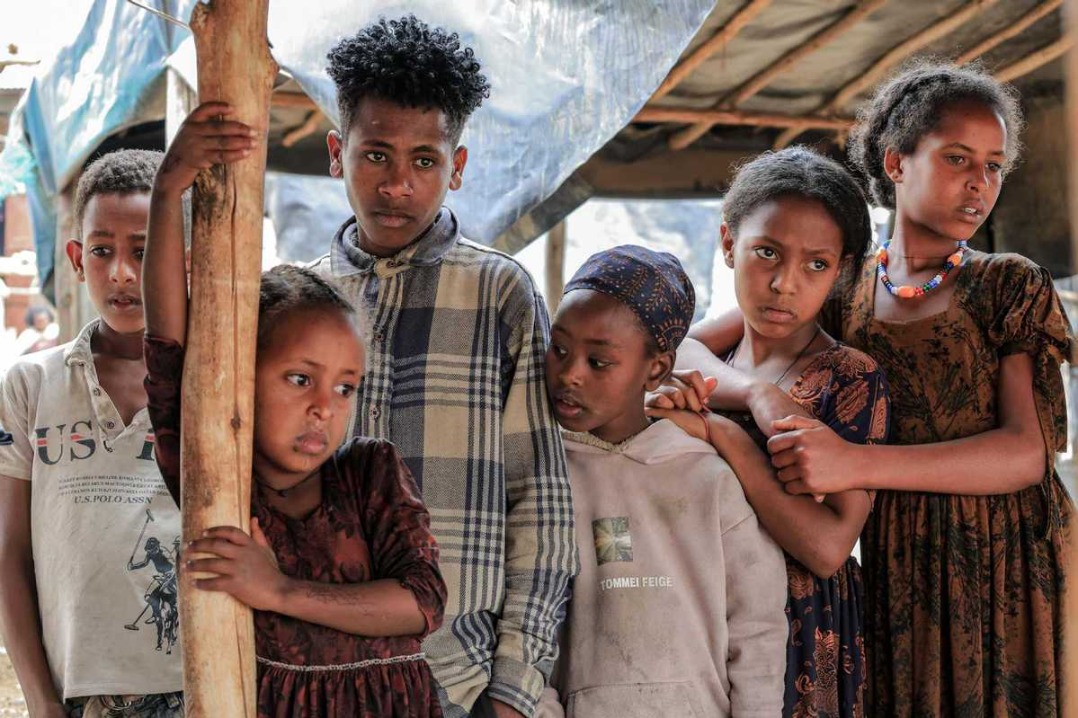
    ADDIS ABABA, Ethiopia — The African Union convenes its 39th annual summit this weekend amidst growing criticism from the continent’s youth population, who increasingly view the regional body as an ineffective organization dominated by aging leaders. Established to foster unity among African states, the AU now confronts a severe credibility challenge as military coups, contested elections, and economic protests sweep across numerous nations.

    Africa’s demographic paradox presents a central challenge: while boasting the world’s youngest population with over 400 million people aged 15-35, the continent simultaneously hosts some of the globe’s longest-serving leaders. This generational disconnect has fueled widespread disillusionment with the AU’s governance approach, which analysts say prioritizes governments over citizens.

    Liesl Louw-Vaudran, senior analyst with the Crisis Group, observes: ‘The fundamental frustration stems from the perception that this is not a citizen-driven African Union. The organization has consistently missed opportunities to center its operations around people rather than political leadership.’

    The AU’s election monitoring has drawn particular scrutiny. During recent presidential elections in Uganda, the Commission initially commended electoral conduct despite widespread reports of opposition suppression, internet shutdowns, and media intimidation. This response provoked fierce social media backlash, with one user decrying the AU as a ‘dictatorship club.’

    Enforcement mechanisms represent another critical weakness. Macharia Munene, professor of history at the United States International University in Nairobi, notes: ‘The AU struggles with implementation because not all members meet their dues or fully accept collectively decided measures.’

    This year’s summit, focused on water sanitation and climate response, occurs against a backdrop of shifting global alliances and reduced foreign aid. While the gathering offers opportunities for international coordination, critics urge the AU to address internal governance failures more urgently.

    In Nigeria’s capital Abuja, 32-year-old resident Chima Ekwueme expressed a common sentiment: ‘They exist for their own interests. Despite Nigeria’s mineral wealth, we face severe security and economic crises. Where is the AU’s accountability mechanism?’

    As the continent’s population projected to double by 2050, the pressure mounts for the AU to transform from a symbolic body into an effective institution capable of addressing Africa’s most pressing challenges.

  • Kenyans drop flowers for Valentine’s bouquets of cash. Not everyone is impressed

    Kenyans drop flowers for Valentine’s bouquets of cash. Not everyone is impressed

    Across Nairobi and other African capitals, a controversial Valentine’s Day tradition has drawn the ire of financial regulators. What began as a romantic gesture of gifting cash arranged in elaborate floral designs has evolved into a regional phenomenon that now faces official scrutiny.

    Multiple central banks across East and Southern Africa have issued coordinated warnings against the practice of creating monetary bouquets. The Central Bank of Kenya (CBK), alongside regulators in Uganda, Rwanda, Botswana and Namibia, has highlighted the damaging consequences of manipulating currency notes through stapling, gluing, or folding them into decorative arrangements.

    The core concern revolves around the mechanical integrity of banknotes. When currency is altered through these methods, automated banking equipment including ATMs and cash-sorting machines frequently reject them. This necessitates costly withdrawal from circulation, ultimately creating financial burdens for national economies and taxpayers.

    Despite potential penalties including imprisonment for up to seven years under Kenyan law, the trend continues to flourish. Angela Muthoni, a Nairobi florist, reports receiving 15-20 daily orders for money bouquets in the Valentine’s season. The arrangements range from modest 1,000 shilling ($8) designs to extravagant million-shilling creations, often incorporating both currency and traditional flowers.

    The practice has gained momentum through social media influencers and celebrities who showcase elaborate cash presentations. While initially associated with Valentine’s Day, the tradition has expanded to birthdays and other celebrations, creating year-round demand.

    Public opinion remains divided. Proponents argue that cash gifts eliminate the stress of selecting presents and provide practical value. Critics contend the trend promotes materialism and undermines genuine romantic expression. Economic analyst Odhiambo Ramogi suggests the phenomenon combines traditional African gifting practices with modern consumerism, noting that “the natural flower has been replaced with the currency flower.”

    Innovative alternatives are emerging in response to regulatory pressure. Some designers now create transparent pocket arrangements that preserve note integrity, while others explore digital bouquets or transition to U.S. dollars unaffected by local regulations. Despite official warnings, the deeply entrenched money bouquet culture appears likely to evolve rather than disappear entirely.

  • Sharjah retailer allocates Dh35 million to Ramadan discounts, cuts prices up to 75%

    Sharjah retailer allocates Dh35 million to Ramadan discounts, cuts prices up to 75%

    In preparation for the upcoming holy month of Ramadan, major UAE retailers have unveiled substantial discount programs totaling Dh35 million to alleviate consumer expenses. Sharjah Coop announced price reductions of up to 75% across more than 10,000 essential consumer products as part of its “Ramadan Togetherness” campaign.

    Salem Al Junaid, CEO of Sharjah Coop, emphasized that the initiative ensures competitive pricing for essential food, grocery, and consumer goods across more than 75 retail outlets throughout Sharjah, in addition to their online platform. The retailer has secured sufficient stock of promotional items to meet anticipated consumer demand throughout the month.

    Faisal Khalid Al Naboodah, Director of Marketing and Public Relations at Sharjah Cooperative, revealed that this year’s allocation represents a Dh5 million increase over previous years, extending beyond staple items like rice, oil, sugar, and flour to include diverse product categories.

    Simultaneously, Dubai-based Union Coop announced complementary measures including discounts up to 60% on over 3,000 food and non-food products. The retailer has frozen prices on more than 160 essential goods to ensure price stability throughout Ramadan. CEO Mohamed Al Hashemi confirmed the continuation of price reduction initiatives launched three years ago, with product lists reviewed monthly based on consumer demand patterns.

    Union Coop will also maintain its sustainability-focused “Your Iftar is Their Suhoor” initiative for the eighth consecutive year, aimed at reducing food waste. The retailer has strengthened its supply chain through partnerships with over 33 local farms and an international network to enhance food security while maintaining delivery services to reduce congestion.

    Both retailers emphasized their commitment to supporting community welfare during Ramadan through these comprehensive economic and social initiatives.

  • Ajman announces remote work for government employees on Fridays during Ramadan

    Ajman announces remote work for government employees on Fridays during Ramadan

    The Emirate of Ajman has instituted a comprehensive remote work policy for all government employees on Fridays during the upcoming Ramadan period. This strategic decision forms part of a broader initiative to honor the sanctity of the holy month while simultaneously promoting enhanced work-life balance for public sector workers.

    In alignment with the UAE’s designation of 2026 as the ‘Year of the Family,’ the remote work mandate seeks to create flexible working conditions that support employee welfare and maintain productivity standards. The policy specifically addresses the unique spiritual and practical considerations that arise during Ramadan, allowing government staff to observe religious obligations while fulfilling professional responsibilities.

    Complementing this Friday remote work arrangement, the UAE public sector will implement reduced working hours throughout Ramadan. From Monday to Thursday, official working hours will span from 9:00 AM to 2:30 PM, while Fridays will maintain a shortened schedule from 9:00 AM to 12:00 noon for those required to be physically present.

    Federal ministries and government entities across the Emirates retain flexibility in their implementation approaches. They may either adopt the pre-approved flexible work regulations for Ramadan weekdays or extend remote work privileges specifically for Fridays. However, federal guidelines stipulate that remote work participation must not exceed 70% of an entity’s total workforce at any given time, following established regulatory controls previously communicated by the Federal Authority for Government Human Resources.

    This coordinated approach demonstrates the UAE government’s commitment to harmonizing religious observance with modern workplace practices, setting a precedent for culturally responsive employment policies in the region.

  • The Embassy of India in the UAE and Symbiosis Dubai host the ‘Road to AI Impact Summit 2026’

    The Embassy of India in the UAE and Symbiosis Dubai host the ‘Road to AI Impact Summit 2026’

    Dubai has emerged as a pivotal hub for international artificial intelligence collaboration following the successful hosting of the Road to AI Impact Summit 2026. The event, jointly organized by the Embassy of India in the UAE and Symbiosis International University’s Dubai campus, convened on February 10-11 at the Dubai Knowledge Park, marking a significant milestone in bilateral technological cooperation.

    The summit represents a critical component of India’s global diplomatic outreach, with Indian missions worldwide conducting similar preparatory events building toward the flagship India AI Impact Summit scheduled for February 16-20, 2026 in New Delhi. This strategic initiative aligns with Prime Minister Narendra Modi’s vision for establishing an inclusive, ethical, and internationally collaborative AI ecosystem that prioritizes responsible innovation and practical implementation.

    Indian Ambassador to the UAE Dr. Deepak Mittal inaugurated the proceedings, emphasizing the transformative potential of AI in educational environments. “In a futuristic city like Dubai, AI is increasingly becoming a co-author in classrooms and institutions, not to replace human intelligence, but to expand human capability,” Dr. Mittal stated during his inaugural address. He highlighted the summit’s triple objective: to educate stakeholders, democratize access to AI tools, and responsibly harness technological advancements for workforce development.

    The two-day program assembled distinguished academicians, policy architects, and industry pioneers from both nations. Key participants included Dr. Vidya Yeravdekar, Pro-Chancellor of Symbiosis International University; Dr. Ramakrishnan Raman, Vice-Chancellor; Dr. Ashwin Fernandes, Executive Director for AMESA at QS; Dr. Rajiv Yeravdekar, Provost of Medical & Health Sciences; and Dr. Anita Patankar, Executive Director of Symbiosis Dubai.

    Dr. Vidya Yeravdekar expressed appreciation for the embassy’s selection of Symbiosis Dubai as host institution, noting the university’s existing commitment to AI integration through specialized centers like the Symbiosis Artificial Intelligence Institute and the Symbiosis Centre for Applied AI. “Education must evolve alongside technology, preparing our students not just to learn, but to lead and make an impact in a rapidly changing world,” she emphasized.

    The event underscores India’s expanding technological leadership and its diplomatic efforts to showcase capabilities in digital public infrastructure and ethical innovation. Simultaneously, it strengthens the growing partnership between India and the UAE—a relationship increasingly rooted in technological exchange, educational collaboration, and shared aspirations for a technology-driven future that benefits both nations and the global community.

  • UAE, Kuwait bust international drug ring, seize 14 million pills hidden in grain sacks

    UAE, Kuwait bust international drug ring, seize 14 million pills hidden in grain sacks

    In a landmark international law enforcement collaboration, Dubai Police and Kuwaiti anti-narcotics authorities have successfully dismantled a sophisticated drug trafficking network, intercepting one of the largest Captagon seizures in regional history. The coordinated operation resulted in the confiscation of 14,062,500 pills with an estimated weight of 2.25 tonnes.

    The criminal organization employed elaborate concealment methods, hiding the massive narcotics shipment within sacks of corn grains distributed across five shipping containers. This technique was specifically designed to bypass standard inspection protocols and avoid detection at port facilities.

    Through advanced intelligence sharing and continuous monitoring between Emirati and Kuwaiti agencies, authorities identified and tracked the movements of suspects connected to the shipment. Specialized teams conducted precise tactical operations, apprehending three Arab nationals during the unloading process at a storage facility.

    Sheikh Zayed bin Hamad Al Nahyan, Chairman of the National Anti-Narcotics Bureau, commended the exceptional professionalism and dedication demonstrated by the anti-narcotics officers from both nations. Their coordinated efforts effectively disrupted the network’s operations and prevented the substantial drug consignment from reaching its intended markets.

    Captagon, known chemically as fenethylline, represents a potent psychostimulant compound that combines amphetamine and theophylline. The substance remains prohibited in most countries worldwide due to its significant abuse potential and harmful effects.

    This operation marks the latest in a series of successful anti-narcotics interventions by Gulf Cooperation Council states, highlighting their strengthened collaborative approach against international drug trafficking organizations attempting to utilize regional trade routes for illicit activities.

  • Sudan war crimes saw 6,000 killed in three days, UN says

    Sudan war crimes saw 6,000 killed in three days, UN says

    A United Nations investigation has revealed harrowing details of mass violence during the paramilitary Rapid Support Forces’ (RSF) capture of el-Fasher, Sudan, with over 6,000 civilians reportedly killed within just three days last year. The comprehensive report, based on testimonies from more than 140 victims and witnesses gathered in Sudan’s Northern state and eastern Chad in late 2025, describes scenes of unprecedented brutality.

    According to eyewitness accounts, RSF fighters opened fire on approximately 1,000 people seeking refuge in a university building last October, with one survivor describing the incident as ‘a scene out of a horror movie’ with bodies thrown into the air from the impact of gunfire. The UN documentation provides evidence of systematic mass killings, summary executions, torture, abductions, and widespread sexual violence against civilians—atrocities that the report classifies as war crimes and potential crimes against humanity.

    The siege of el-Fasher, a strategically vital city in the Darfur region, lasted 18 months and has become emblematic of the nearly three-year power struggle between Sudan’s regular army and the RSF paramilitaries. The ongoing civil conflict has resulted in hundreds of thousands of deaths and displaced more than 13 million people from their homes, with sexual violence being systematically employed as a weapon of war against men, women, and children.

    While the RSF has not responded to the specific allegations in the UN report, the paramilitary group has consistently denied previous accusations of atrocities. Both the RSF and the Sudanese Armed Forces face international condemnation for human rights violations.

    The United States and Human Rights Watch have characterized the RSF’s campaign in Darfur as genocide targeting the Massalit people and other non-Arab communities, though recent UN reports have stopped short of using this terminology.

    UN Human Rights Chief Volker Türk has intensified calls for all conflict parties to cease violations perpetrated by forces under their command. Meanwhile, international pressure mounts on external backers of the conflict, with the United Arab Emirates denying widespread allegations that it serves as the primary arms supplier to RSF fighters.

    In response to the escalating crisis, the United Kingdom recently imposed sanctions on six key figures accused of fueling Sudan’s war, including senior commanders from both the army and RSF, plus three foreign nationals allegedly responsible for recruiting Colombian mercenaries for the paramilitary force. British lawmakers have also addressed concerns about UK-manufactured weapons being diverted to the RSF via the UAE.

    In a concerning political development, a coalition aligned with the RSF known as the Sudan Founding Alliance has announced plans to establish a rival government based in western Sudan—a move rejected by the African Union as threatening any prospect of national unity.

    Amid the humanitarian catastrophe, the BBC World Service has launched a new season of its educational program ‘Dars’ (Lesson) in Arabic to support children in Sudan and other Arabic-speaking countries who face restricted access to education due to the conflict.

  • Italy pledges deeper cooperation at second Italy-Africa Summit

    Italy pledges deeper cooperation at second Italy-Africa Summit

    ADDIS ABABA, Ethiopia — In a landmark gathering on African soil, Italy convened its second Italy-Africa summit on Friday, marking a significant shift from dialogue to actionable partnership under the Mattei Plan for Africa. Italian Prime Minister Giorgia Meloni addressed dozens of African leaders in Ethiopia’s capital, emphasizing investment-driven cooperation over traditional aid models.

    The summit served as a strategic platform to review approximately 100 projects initiated across 14 African nations since the plan’s 2024 launch. Critical sectors including energy infrastructure, climate transition, digital connectivity, agriculture, healthcare, and artificial intelligence development dominated the discussions.

    Prime Minister Meloni articulated Italy’s commitment to drawing from “African wisdom” to ensure relevance to local needs. “We want to build things together,” she declared, underscoring the philosophy of mutual construction rather than unilateral assistance.

    Ethiopian Prime Minister Abiy Ahmed characterized the partnership as Africa’s gateway to Europe, highlighting the complementary potential of Africa’s youthful demographic and Europe’s technological capital. “By combining Africa’s energetic and creative population with Europe’s experience, technology and capital,” he noted, “we can build solutions that deliver prosperity to our continents and beyond.”

    The gathering coincided with the upcoming African Union Summit, allowing for continued high-level engagement. However, Kenyan political analyst Nanjala Nyabola injected cautionary perspective, noting that African governments often prioritize “optics instead of actually making summits a meaningful engagement.” She advocated for more rigorous preparatory work, suggesting nations should present comprehensive needs assessments rather than reacting to external agendas.

    The Mattei Plan represents Italy’s strategic recalibration of Africa relations, focusing on sustainable development partnerships that address both continental priorities and Europe’s economic and migration interests.