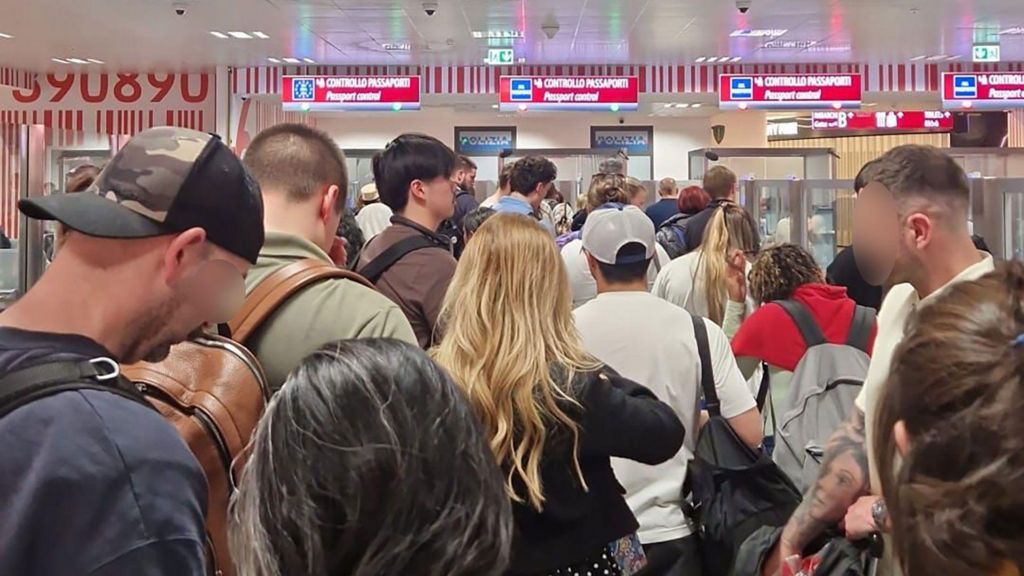
As the 2026 peak summer travel season approaches, Europe’s aviation sector is grappling with mounting disruption caused by the European Union’s newly launched digital Entry-Exit System (EES), with top industry leaders warning of escalating chaos that threatens to derail the region’s vital tourism economy.
Completed its full rollout earlier this year, the EES mandates that all non-European Economic Area (EEA) travelers entering the Schengen Area submit biometric data—including facial scans and fingerprints—during entry checks, with a verification step required when they exit the bloc. While the system has functioned smoothly in a handful of member states, widespread reports of crippling processing delays have emerged at airports across the continent, leaving hundreds of passengers stranded and forcing airlines to revise travel guidance.
In stark comments delivered at an aviation industry conference in Prague, Stefan Schulte, president of Airports Council International (ACI) Europe and chief of Frankfurt Airport’s operating company, called out EU policymakers for downplaying the scale of the crisis. “Politicians should stop pretending that EES is working just fine. It is not,” Schulte stated, noting that passengers already face multi-hour waits during peak travel windows. With summer passenger volumes projected to jump sharply in the coming weeks, Schulte admitted industry leaders have no clear plan to absorb the added strain, calling the growing backlog a problem that “keeps me and other industry bosses awake at night.”
Multiple high-profile disruptions have already been linked to the new border rules. Earlier this month, dozens of Ryanair passengers bound for London Luton were left stranded in Athens after their flight departed without them. While neither the airline nor Athens airport explicitly named the EES as the cause, Ryanair cited widespread border delays, and the airport acknowledged congestion driven by “additional processing requirements.” This incident followed a similar disruption in April, when passengers flying from two Milan airports—Bergamo and Linate—to Manchester missed their flights after hours-long passport control queues. Low-cost carrier Wizz Air has already taken the step of urging British leisure travelers to arrive at European airports a full three hours before outbound departure to account for extended wait times.
Schulte has laid out urgent demands for EU regulators to address the crisis, calling for full authority for border control agencies to suspend EES processing during peak demand periods to prevent further disruption, alongside a complete overhaul of the system’s operating procedures. “This is about showing respect and decency for those who chose to travel to the EU, and safeguarding our reputation as a welcoming and efficient destination,” he explained.
The rollout has already sparked political friction between member states and EU institutions. Earlier this year, Greek Tourism Minister Olga Kefalogianni pledged that British travelers would be exempt from biometric EES checks this summer to avoid burdening visitors with unnecessary red tape. However, the Greek Foreign Ministry later walked back the commitment, confirming no formal exemption had been approved. Unconfirmed reports also suggested Portugal and Italy were exploring similar exemptions for British nationals, but the European Commission has denied any such plans are under consideration.
The BBC has reached out to the European Commission, the body responsible for overseeing the EES, for comment on the growing criticism and disruption, but has not yet received a response.