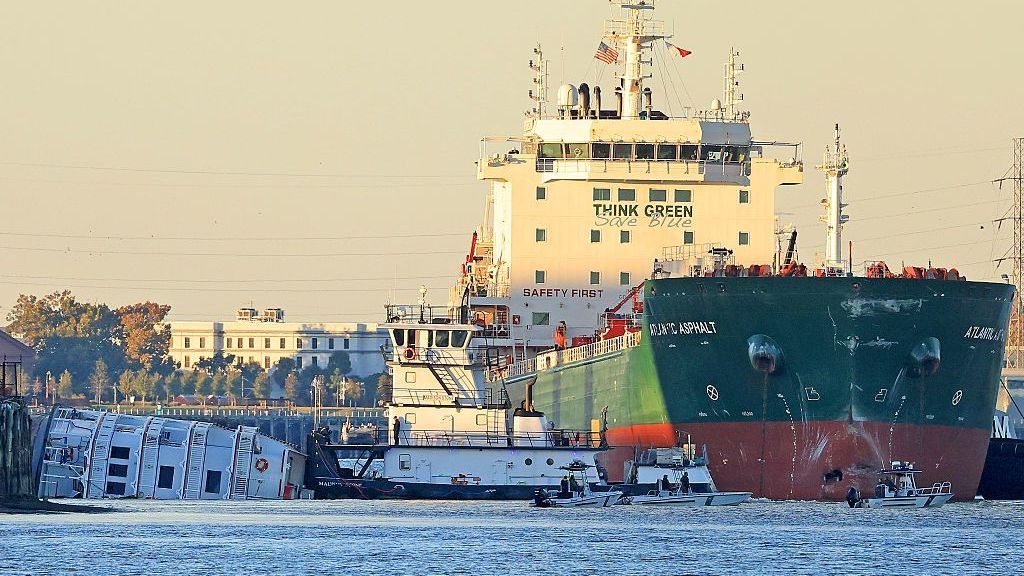
National Transportation Safety Board (NTSB) investigators revealed in a Sunday media briefing that the October Friday incident on the Lower Mississippi River, where a commercial asphalt tanker collided with a docked American Heritage river cruise vessel near New Orleans, was triggered by an unconfirmed “steering casualty” aboard the cargo ship Atlantic Asphalt. Initial data pulled from the tanker’s voyage data recorder shows the vessel was traveling northbound up the Mississippi when it unexpectedly drifted toward the river’s east bank moments before impact. Audio logs recovered from the ship confirm that onboard warning alarms activated shortly before the crash, with crew members issuing urgent commands to drop anchors and execute emergency maneuvering protocols in a last-ditch effort to avoid the collision. Lead NTSB investigator Bart Barnum confirmed that the steering malfunction locked the vessel’s rudder in a hard starboard position, sending the tanker veering off its intended course directly toward the moored paddlewheeler. At this stage, the exact root cause of the steering failure remains undetermined, as NTSB officials note that “steering casualty” covers a wide range of potential mechanical, electrical or operational faults, and the full investigative team is systematically examining every possible contributing factor. When the collision occurred at approximately 13:30 EST, the American Heritage riverboat was wrapping up an eight-day regional cruise that stopped at historic ports across Louisiana and Mississippi, carrying 129 passengers plus a full complement of American Cruise Lines crew. The impact left the paddlewheeler taking on water and rapidly listing before capsizing partially. Port of New Orleans chief Melanie Montroll recalled that emergency calls flooded in within seconds of the crash, as bystanders and crew began assisting panicked passengers to evacuate the tilting vessel. A massive multi-agency rescue response immediately deployed, including local tugboat operators, marine police, fire rescue teams and port authority personnel, who temporarily halted all commercial and recreational Mississippi River traffic in the collision zone to speed up rescue operations. All 32 people transported to local hospitals after the incident sustained non-life-threatening injuries, and no passengers or crew were reported missing in the aftermath. The NTSB has announced that a full preliminary public report detailing all verified initial findings will be released within 30 days, with a complete final investigation and formal safety recommendations expected to follow after the team finishes reviewing all mechanical records, crew statements and voyage data.