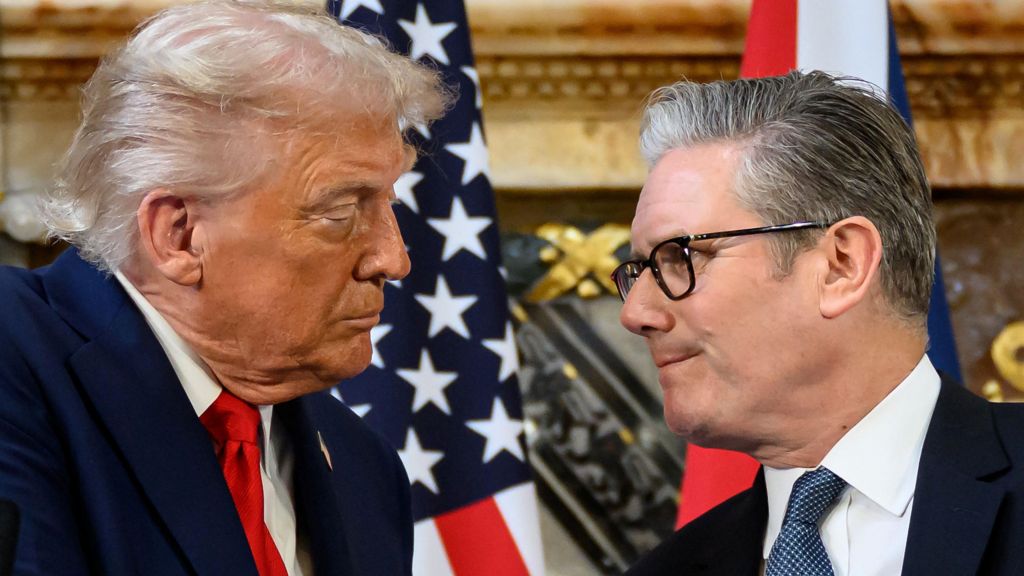
A carefully worded readout from Downing Street has revealed that British Prime Minister Sir Keir Starmer and U.S. President Donald Trump held their first direct conversation following a public diplomatic rift over military strategy toward Iran. The discussion, described as covering Middle Eastern stability and bilateral defense cooperation, aimed to smooth over tensions sparked by President Trump’s social media criticism of the UK’s cautious military stance.
The controversy emerged when President Trump publicly dismissed the potential deployment of British aircraft carriers to the Middle East, questioning their utility after initial combat operations and referring to Britain as ‘our once great ally.’ This remark came amid his expressed frustration with Prime Minister Starmer’s refusal to permit U.S. forces to utilize UK bases for offensive strikes against Iranian targets.
While the UK government has authorized the use of British installations exclusively for defensive operations—such as intercepting missiles targeting allied nations—it has maintained a firm position against participating in offensive campaigns. This distinction has become the central point of transatlantic disagreement, with Trump previously comparing Starmer unfavorably to Winston Churchill and stating his dissatisfaction with UK policy.
Foreign Secretary Yvette Cooper emerged as the primary defender of the government’s position, emphasizing that Britain must independently determine its national interests rather than automatically aligning with U.S. foreign policy. ‘It is our job as the UK government to decide what’s in the UK national interest,’ she stated during a television appearance, acknowledging that the two nations would not see eye-to-eye on every issue.
The diplomatic exchange occurred against a backdrop of heightened military preparedness. HMS Prince of Wales has been placed on advanced readiness status, though deployment remains unconfirmed. Meanwhile, HMS Dragon is scheduled to depart for the Mediterranean to enhance security around the RAF base in Akrotiri, Cyprus, where a recent drone strike caused minimal damage.
The political response has cut across party lines, with Reform UK’s Robert Jenrick criticizing the government’s hesitation as damaging to bilateral relations, while former Labour Prime Minister Tony Blair advocated for stronger alignment with U.S. strategy. Liberal Democrat leader Sir Ed Davey went so far as to recommend canceling King Charles’s scheduled state visit to the U.S., calling it an inappropriate diplomatic honor given current tensions.
As military assets are repositioned and diplomatic channels remain active, the UK government continues to walk a careful line between supporting allied defense efforts and maintaining its principled distinction between defensive and offensive operations in the region.