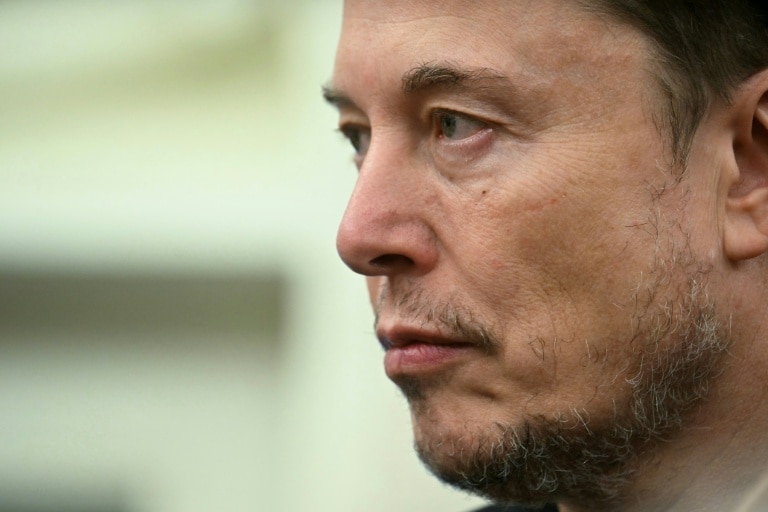
One of the most consequential legal battles in the rapidly evolving artificial intelligence industry is set to get underway Monday, as jury selection begins in a lawsuit brought by billionaire tech entrepreneur Elon Musk against OpenAI, one of the sector’s most high-profile and valuable players.
The courtroom clash, unfolding in Northern California just across the San Francisco Bay from OpenAI’s headquarters, pits the world’s wealthiest individual against a research laboratory he helped launch as an early backer and co-founder in 2015 — and now competes against directly in the crowded generative AI market. Today, OpenAI’s blockbuster ChatGPT stands as the top industry leader in consumer AI chatbots, while Musk launched his own competing generative AI model, Grok, under his xAI venture in 2023.
At its core, Musk’s legal challenge centers on claims that OpenAI betrayed its foundational non-profit mission, which was sold to him and other early supporters with the promise that all AI technology developed by the lab would ultimately belong to the public and benefit humanity as a whole. After being convinced by current OpenAI CEO Sam Altman to join the project in 2015, Musk invested tens of millions of dollars into the young research lab before stepping away from the organization several years later.
As OpenAI pursued increasingly large and computationally intensive AI models, however, the company pivoted to raise massive amounts of capital to build the massive data centers required to power cutting-edge generative AI systems. It established a commercial subsidiary, and tech giant Microsoft has since poured tens of billions of dollars into the company to fuel its growth. Both Microsoft CEO Satya Nadella and Sam Altman are expected to testify during the trial.
Musk maintains he was deliberately misled about OpenAI’s long-term commitment to an altruistic, public-focused non-profit mission. In his lawsuit, he is asking the court to force OpenAI to reverse its commercial transition and return to being a pure non-profit entity, as well as remove Altman and OpenAI president Greg Brockman from their leadership roles. Though Musk initially sought up to $134 billion in damages, he has since stated he would redirect any monetary award to OpenAI’s non-profit arm and seek no personal compensation.
OpenAI has pushed back aggressively against Musk’s claims, arguing that the rift between Musk and the company grew not from a broken mission promise, but from Musk’s own quest to seize full control of the startup shortly before he left the organization. In a recent post on X, the social media platform Musk owns, OpenAI framed the lawsuit as a personal attack driven by ego and competitive jealousy. “This case has always been about Elon generating more power and more money for what he wants,” the company wrote. “His lawsuit remains nothing more than a harassment campaign that’s driven by ego, jealousy and a desire to slow down a competitor.”
The company has also pointed to a contradiction in Musk’s position: just days after he launched his own xAI venture to compete in the advanced AI space in 2023, Musk publicly called for a six-month pause on advanced AI development, a move OpenAI frames as an attempt to hinder competitors while he caught up.
Beyond the personal feud between Musk and Altman, the trial has thrown a spotlight on a core industry-wide debate that continues to divide AI developers and observers: whether advanced artificial intelligence should be developed as a public good open to all, or as a commercial technology driven by private sector profit. OpenAI currently operates under a hybrid governance model, where a non-profit foundation retains oversight over a for-profit commercial operating arm.
Presiding judge Yvonne Gonzalez Rogers will make the final ruling on the case by mid-May, drawing input from an advisory jury’s findings. The judge has also reserved the right to determine any final remedies for the alleged breach independently, without input from the jury. For Musk, who drew widespread criticism after gutting the content trust and safety team at X (formerly Twitter) following his $44 billion acquisition of the platform, the central challenge will be convincing the court that OpenAI was built on a broken promise to its early supporters.