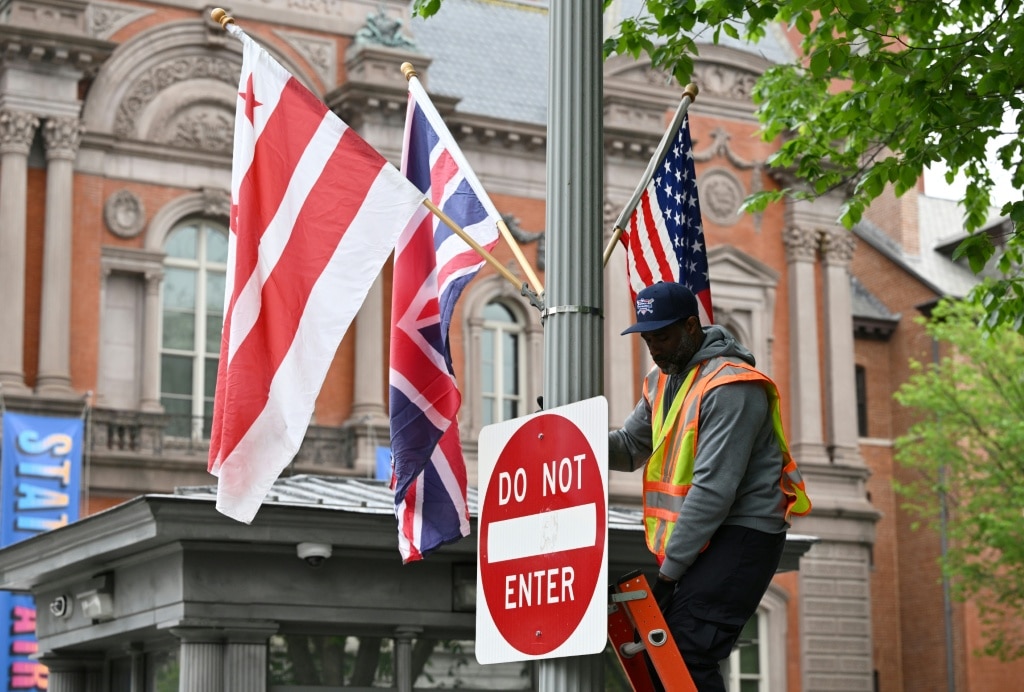
Britain’s King Charles III and Queen Camilla kicked off their high-stakes four-day state visit to the United States on Monday, proceeding as planned despite a recent shooting incident at an event attended by US President Donald Trump and simmering diplomatic rifts between London and Washington over the ongoing Iran conflict. The trip, scheduled to coincide with the United States’ 250th anniversary of independence, is framed by the British government as a celebration of the centuries-long special relationship tying the two nations together.
The itinerary for the royal tour carries significant symbolic weight: King Charles will become the first British monarch to address a joint session of the US Congress since his mother, Queen Elizabeth II, delivered remarks there in 1991. Beyond the address to lawmakers, the couple will meet with Trump and former First Lady Melania Trump for tea, attend a formal state dinner, travel to New York City on Wednesday to pay respects at the 9/11 Memorial Museum, and conclude the trip with a stop in Bermuda on Thursday – marking Charles’ first visit to a British Overseas Territory since ascending to the throne.
The visit moved forward just two days after a shooting at the annual White House Correspondents’ Association gala, where Trump was in attendance. In a statement released Sunday, Buckingham Palace confirmed the tour would proceed unchanged, noting that Charles was “greatly relieved” that Trump, Melania Trump, and the vast majority of attendees escaped unharmed. The lone alleged shooter was taken into custody shortly after the incident, which left one member of Trump’s security detail wounded. UK Ambassador to the US Christian Turner told reporters in Washington Sunday evening that after multiple security reviews, “we are all very confident that all appropriate security measures are in place” for the entirety of the royal visit.
While the trip is rooted in historic diplomatic tradition, it has sparked significant controversy on both sides of the Atlantic. The state visit was organized at the request of the UK government and President Trump, but deep divisions over the Iran war have opened a rare rift between the new UK Prime Minister Keir Starmer’s Labour government and the Trump administration. Trump has publicly lambasted Starmer for his opposition to the conflict, and has also criticized the UK government’s immigration and energy policies.
The two leaders spoke by phone on Sunday, where Starmer extended his well wishes after the “shocking scenes” at the WHCA gala. The call also covered shared priorities in the Strait of Hormuz, with Starmer’s office confirming the pair discussed the “urgent need to get shipping moving again” amid disruptions that threaten severe harm to the global economy and already strained cost of living for households in the UK and worldwide. Though Starmer has repeatedly criticized Trump’s approach to the Iran war, he has defended the decision to move forward with the state visit, arguing that the British monarchy’s unique cross-party, cross-generational connections can help steady relations during tense periods. A YouGov poll conducted in early April found that 48 percent of British respondents supported canceling the visit, compared to a smaller share in favor of proceeding. For his part, Trump has said he believes the visit will absolutely help repair strained transatlantic ties, calling Charles a long-time personal friend who “represents his nation like nobody else can do it.”
Observers note that Charles, 77, has a proven track record of deft diplomatic navigation: he earned widespread praise for his handling of Trump’s state visit to the UK in September 2024. Craig Prescott, a monarchy expert at Royal Holloway University of London, notes that Charles is “generally very good” at managing sensitive diplomatic occasions, but predicts he will address the transatlantic tensions over Iran – widely described as the “elephant in the room” – in coded language during his address to Congress on Tuesday.
Another lingering controversy also hangs over the meticulously choreographed tour: the ongoing scandal surrounding King Charles’ younger brother, Prince Andrew, and his long-standing ties to disgraced late sex offender Jeffrey Epstein. The controversy reignited in mid-February when Andrew was arrested following new revelations about his relationship with Epstein, who died in prison while awaiting trial in 2019. Charles stripped Andrew of all his royal titles and patronages in October 2024, and issued a rare personally signed statement after the arrest affirming that “the law must take its course.” Andrew remains under active police investigation, has not been charged with any crime, and has repeatedly denied all wrongdoing. Organizers have structured the visit to avoid unscripted encounters: only official pool photographers will be permitted to document Charles’ Tuesday meeting with Trump in the Oval Office, with no press availability scheduled.