The European Public Prosecutor’s Office (EPPO) has formally launched an investigation into potential fraudulent misappropriation of earmarked EU funds designated for safety, signalling and communications system upgrades on Spain’s Madrid-Seville high-speed railway, following two catastrophic crashes on the same line that claimed a combined 115 lives in 2024. Supported by a specialized unit of Spain’s Guardia Civil, prosecutors have already initiated on-site investigative actions at the headquarters of national rail infrastructure manager Adif and the national rail safety agency AESF.
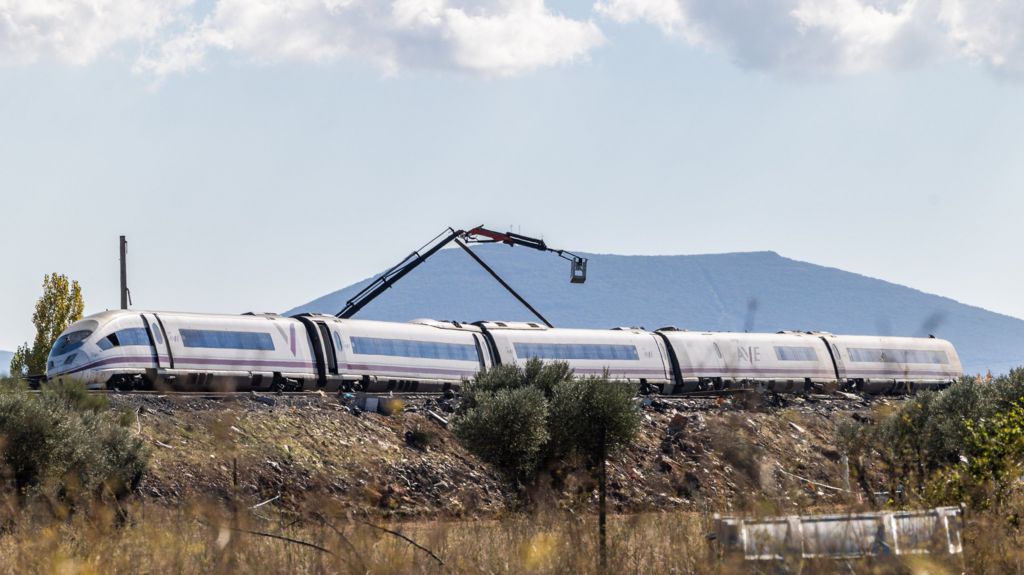
The most recent disaster unfolded on 28 October, roughly 130 kilometres south of Madrid near the village of Urda, when a state-owned Renfe high-speed train collided at speed with the rear of a stationary private Iryo train that had been unable to resume operation. Investigators have confirmed that the critical LZB train position monitoring communications system suffered an outage prior to the crash, and the Renfe service was incorrectly authorised to proceed at full operational speed despite the stalled Iryo train positioned ahead on the track. The 69 fatalities from the Urda incident make it one of the deadliest rail disasters in 21st century European history, coming just nine months after a January crash at Adamuz on the exact same line killed 46 people and left dozens of passengers severely injured. This marks the second EU-level fraud probe into Spanish rail operations opened this calendar year.
The EPPO noted that the case carries exceptional public interest across both Spain and the broader European Union, but has declined to release additional operational details to avoid compromising the integrity of the ongoing inquiry. A dedicated Spanish judicial magistrate assigned to oversee the proceedings will ensure all investigative steps adhere to national legal safeguards, with explicit judicial authorisation required for any measures including residential searches or telecommunication surveillance.
The twin disasters have triggered massive public backlash and dealt a severe political blow to Prime Minister Pedro Sánchez’s Socialist-led administration, just weeks ahead of scheduled 29 November national parliamentary elections. Recent opinion polling shows Sánchez’s party trailing far behind the opposition conservative People’s Party (PP), with the PP and far-right Vox party arguing that the resignation of long-serving Transport Minister Óscar Puente – a close Sánchez ally who stepped down earlier this week after presiding over both fatal crashes – does not go far enough, and publicly demanding the prime minister step down as well. Widespread public distrust of high-speed rail services has already emerged across Spain, with reports of mass voluntary service cancellations and largely empty station platforms as passengers avoid travel on the affected and connected high-speed networks.
A formal state funeral for the 69 victims of the Urda crash will be held on Tuesday at Toledo Cathedral, located in the same province where the collision occurred. Newly appointed Transport Minister Carlos Cuerpo has publicly pledged to implement every necessary regulatory and operational adjustment to restore public confidence in Spain’s high-speed rail network, and met directly with survivors of the January Adamuz disaster on Friday, who presented him with a formal 11-point list of targeted safety improvement demands to prevent future catastrophic incidents.
Spain’s rail authorities face European fraud probe after Urda rail disaster