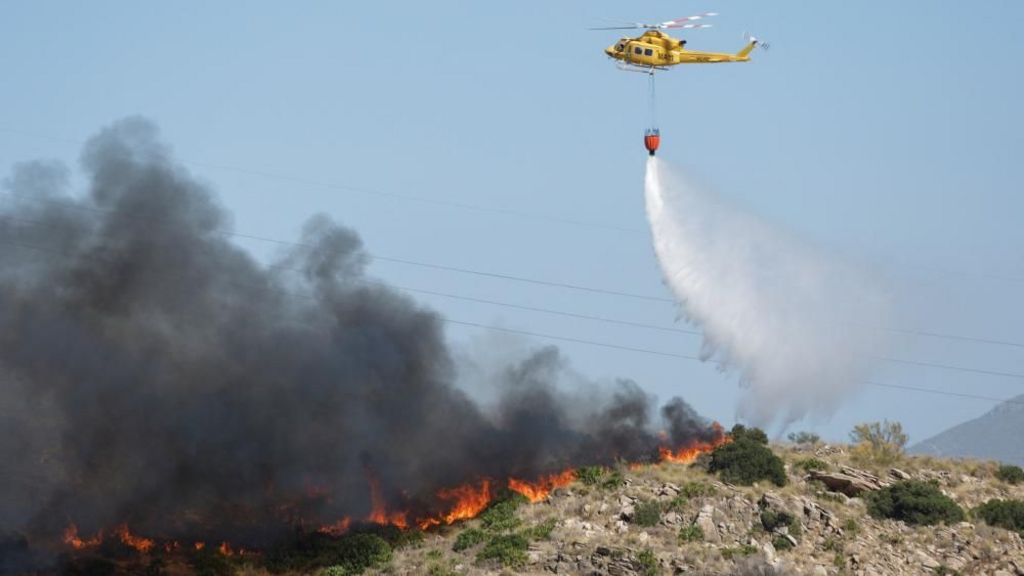
One of the deadliest wildfires in recorded Spanish history continues to burn across Almería province in southeastern Spain, leaving 12 people dead and 23 others unaccounted for, as emergency crews race to contain lingering flare-ups amid a region-wide heatwave amplified by human-caused climate change.
Spanish authorities confirmed four of the fatalities are British nationals, found dead inside a burned-out vehicle with a right-hand steering wheel, consistent with UK vehicle standards. Local officials in the Los Gallardos area, where the fire originated, have warned the death toll could climb further, with fears additional foreign nationals may be among the unaccounted for. Andalusia’s Health and Emergencies Minister Antonio Sanz noted that most — if not all — of the victims may come from the large expat community that owns homes and resides in the region.
Belgian Foreign Minister Maxime Prévot confirmed consular teams are working to contact dozens of Belgian citizens with second homes in the area who have not checked in with authorities. Neither Spanish officials nor the UK Foreign, Commonwealth & Development Office have released the identities of the deceased as of Saturday.
Eyewitnesses described a rapid, chaotic spread of the blaze that caught many off guard on Thursday afternoon. Lucinda Curtois, a British tourist who arrived in the area for a family holiday the same day the fire broke out, recounted her harrowing escape from the village of Bedar, the epicenter of the fire response. Curtois told the BBC the sky turned dark with a massive plume of smoke that resembled a nuclear mushroom cloud, saying “it was like a bomb had gone off.” She added she fears at least two more UK nationals who ignored evacuation warnings and left their rural homes on foot have been killed.
Local officials in Bedar confirmed some of the victims did not follow official recommended evacuation routes, though it remains unclear how effectively that guidance was communicated to residents and visitors. The fire spread with unusual speed thanks to a combination of extreme 40-degree Celsius (104 Fahrenheit) heat, months of parched dry vegetation, and gusty high winds that pushed flames across the landscape rapidly. While Spanish authorities have identified the cause as a fallen power line, local electricity providers have formally disputed this account, and no official final determination has been released.
As of Saturday, more than 300 firefighters and specialized fire suppression personnel have been deployed to the area, with helicopter crews conducting air drops of water to contain remaining pockets of fire. The Andalusian division of Spain’s national weather agency AEMET forecast slightly more favorable conditions for fire containment on Saturday, with cooler temperatures and moderate winds expected to slow the spread of flames.
This wildfire already ranks among the five deadliest in Spanish modern history. In 1979, 21 people including nine children died in a major blaze near Lloret de Mar in northeastern Spain, and a 1984 fire on the Canary Island of La Gomera killed 20 people.
The disaster comes amid a broader pattern of extreme wildfire risk across Southern Europe, where an extended summer heatwave has sparked major blazes in France, Portugal, and Spain. Data from the European Copernicus Climate Change Service confirms Europe is warming twice as fast as the global average, a trend driven by anthropogenic climate change. This rapid warming has led to more frequent, longer, and more intense summer heatwaves, increased strain on regional water supplies, and a dramatic rise in the frequency and severity of extreme wildfire events across the continent.