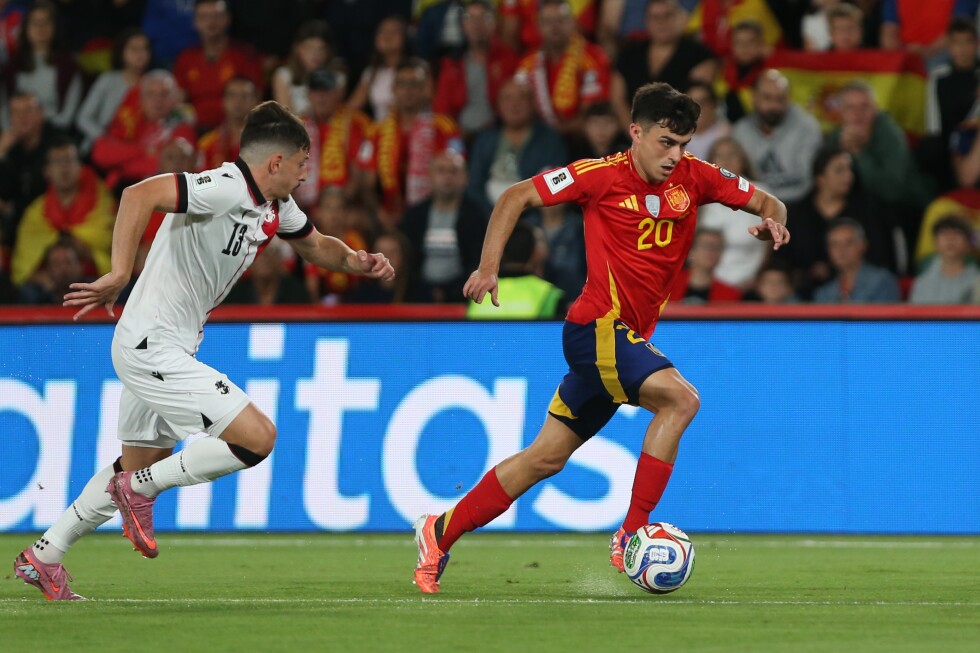
As the 2026 FIFA World Cup approaches, Group H has emerged as one of the tournament’s most intriguing early draws, pitting European titleholders Spain against two-time World Cup champions Uruguay, while also giving the stage to two dynamic underdog sides: Saudi Arabia, the giant-killers of the 2022 tournament, and first-time qualifier Cape Verde, one of the smallest nations ever to reach soccer’s biggest global stage.
Most of Group H’s fixtures will take place across the United States, with a single high-profile exception: the highly anticipated head-to-head between Spain and Uruguay, scheduled for June 26 in Guadalajara, Mexico. The two former World Cup winners have only faced off once before on the tournament’s global stage, with both meetings ending in draws back in 1950 and 1990, leaving fans hungry for a decisive result this time around. Spain will take the pitch for two of its group matches in Atlanta, while Uruguay will play two of its own fixtures in Miami. The only group-stage game hosted in Houston will see Cape Verde square off against Saudi Arabia in a clash of underdogs fighting to advance to the knockout round.
Heading into the tournament, Spain arrives as one of the continent’s hottest teams, riding a wave of momentum after a stunning string of recent international successes. The side bounced back from a shock 2022 World Cup round-of-16 exit at the hands of Morocco to claim the 2024 European Championship title in Germany, added the 2023 UEFA Nations League trophy to its cabinet, and finished as runners-up to Portugal in the 2025 edition of the same competition. Notably, despite winning its only World Cup title back in 2010, Spain has not advanced past the round of 16 in any World Cup tournament since that historic victory, leaving the side hungry to break that dry spell on the 2026 global stage.
Since Luis Enrique stepped down following the 2022 Qatar tournament, former Spain youth team manager Luis de la Fuente has led the senior side, and his young core has turned heads across global soccer. A trio of rising Barcelona stars are expected to anchor the squad: 18-year-old attacking phenom Lamine Yamal is set to make his World Cup debut, 19-year-old Pau Cubarsí is projected to lead the backline, and creative midfield star Pedri will anchor the center of the park. Manchester City’s Rodri, who recently returned from a lengthy knee injury layoff, is also expected to feature alongside Pedri in the midfield, giving Spain one of the most formidable center combinations in the entire tournament.
For first-time qualifiers Cape Verde, the 2026 World Cup marks a historic milestone for the tiny West African archipelago. Home to just 500,000 people, Cape Verde is the third smallest nation ever to qualify for the World Cup, trailing only Iceland and Curacao, which holds the record as the smallest qualifying nation. The side, nicknamed the Blue Sharks, secured one of Africa’s automatic qualification spots from a group that included continental powerhouse Cameroon and Angola, putting on a dominant defensive display during qualifying that saw the side win all five of its home matches without letting in a single goal.
Portuguese-born manager Pedro Leitao Brito, widely known by his nickname Bubista, has led the national side since 2020. A former captain and defender for Cape Verde’s national team, Bubista built his early playing career at lower-division clubs across Spain and Portugal, bringing intimate knowledge of European soccer to his role leading the underdog side.
Saudi Arabia, meanwhile, heads into its third consecutive World Cup appearance already with a reputation for World Cup upsets. The side captured global headlines at the 2022 Qatar World Cup when it opened its group stage campaign with a shocking 2-1 victory over eventual tournament champion Argentina, a result that remains one of the biggest upsets in modern World Cup history. In recent years, the Saudi Pro League has raised its global profile by luring top aging stars including Cristiano Ronaldo and Karim Benzema, a move that has boosted the domestic league’s quality and directly lifted the performance level of the Saudi national side.
French manager Hervé Renard, who led the 2022 Saudi side, stepped away after the tournament to lead France’s women’s national team before returning to take the reins of the Saudi men’s side in 2024. Saudi Arabia’s best ever World Cup finish came during its first qualification run in 1994, when it advanced to the round of 16 from a group that included the Netherlands, Belgium and Morocco. The side has failed to make it out of the group stage in its five subsequent World Cup appearances, a drought it will look to end in 2026, with the 2034 World Cup already set to be hosted on Saudi soil.
Rounding out the group’s heavyweight contenders is Uruguay, a two-time World Cup champion that secured its place in the 2026 tournament after finishing fourth in South American qualifying, behind Argentina, Ecuador and Colombia, and finishing ahead of five-time world champion Brazil in a shocking qualifying upset. Uruguay failed to advance out of the group stage at the 2022 World Cup, after reaching the quarterfinals in 2018 and the semifinals back in 2010.
Veteran Argentine manager Marcelo Bielsa took over as Uruguay’s head coach in 2023, but has faced growing criticism in recent months after a string of underwhelming friendly results, including a lopsided 5-1 defeat to the United States last November, with the side failing to win any of its last four matches heading into the tournament. Still, Uruguay boasts a core of top-tier global talent, including Real Madrid central midfielder Federico Valverde, Barcelona center back Ronald Araujo, and Manchester United defensive midfielder Manuel Ugarte, any of whom can turn the tide of a match on any given day.
As Group H prepares to kick off this June, the blend of elite title contenders and hungry underdogs makes it one of the most compelling groups to watch ahead of the 2026 World Cup.