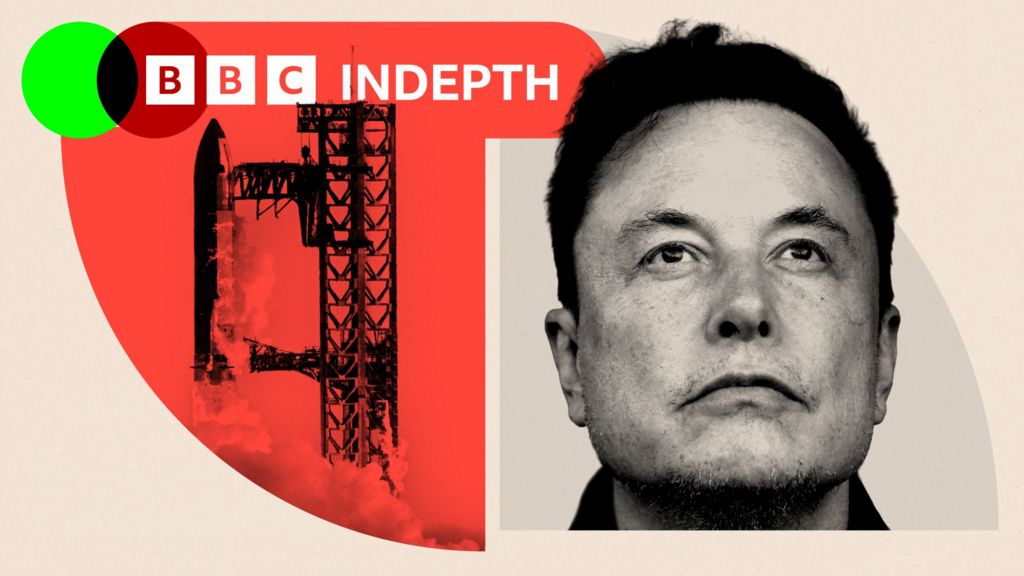
On a crisp October morning in 2024, engineers and executives at SpaceX’s Starbase facility along the U.S.-Mexico border watched as the largest rocket ever constructed lifted off from its launch pad over the Gulf of Mexico. What made this event a landmark for space exploration was not the launch itself, but the unprecedented precision of the booster’s return. Seven minutes after propelling the Starship craft toward orbit, the massive first stage reignited its engines mid-descent, slowed its fall, and locked into the mechanical ‘Mechazilla’ capture arms colloquially called ‘the chopsticks’ — a feat no aerospace operator had ever achieved before. Amid cheers and high-fives in the control room, CEO Elon Musk framed the success as a critical leap toward his decades-long goal of making human life multiplanetary, by delivering a fully reusable rocket system that will drastically cut the cost of accessing orbit, the Moon, and eventually Mars.
This technical breakthrough arrives just months before SpaceX opens its doors to public investors, in what is poised to become one of the most consequential initial public offerings (IPO) in modern stock market history. Starting June 12, a slice of SpaceX shares previously held exclusively by Musk and a small group of elite private investors will begin trading on public markets. UK stockbrokers have already reported a massive surge in retail investor interest, with leading investment platforms projecting the offering could draw a new generation of first-time investors into the market. Around £1.5 billion in shares are expected to be allocated to UK retail buyers alone, and even passive investors with standard pension funds will almost certainly hold a stake in the company through diversified funds, whether they have chosen to invest directly or not.
Underwriters have set a target valuation of $1.75 trillion for SpaceX, a figure that would place the company firmly among the top 10 most valuable public corporations on Earth. That staggering valuation comes despite the firm posting nearly $5 billion in losses last year, leading analysts and critics to question what exactly investors are buying when they purchase SpaceX stock.
SpaceX operates a sprawling portfolio of businesses far beyond its iconic rocket development program. It designs, builds, and launches both its own satellites and those owned by public and private entities around the globe, with launch capabilities that outpace those of any other private company or even sovereign nation. Its Starlink satellite internet network has already become a profitable core business, delivering critical communications infrastructure for Ukrainian defense efforts against Russia’s invasion and generating steady, significant revenue. Even the most bullish independent estimates, however, value Starlink and SpaceX’s core launch operations at only around $300 billion — less than one-fifth of the company’s targeted $1.75 trillion IPO valuation.
The real bet underpinning SpaceX’s public valuation is not rocketry, but artificial intelligence. Included in the public offering is Musk’s standalone AI firm xAI, alongside long-term plans to build solar-powered, space-cooled data centers in orbit that would deliver unprecedented computing capacity, paired with the development of crewed lunar and Mars bases. According to SpaceX’s own IPO prospectus, of the $28.5 trillion total addressable market the company projects for its services, $26.5 trillion comes from AI-related opportunities. For this valuation to hold, investors must believe the global AI industry will grow to match the size of the entire U.S. or European economy combined — a projection that has left many industry observers deeply skeptical.
“Most of the capital expenditure is actually on data centers and an AI company that seems to be more about social media than anything to do with space,” notes Sinead O’Sullivan, an economist and former NASA advisor. O’Sullivan argues that the IPO is less a bet on a coherent business and more a bet on the Musk brand itself: “When you buy a share at this valuation, you’re buying a stake in Elon Musk’s reputation more than any proven space or technology business.” Other critics echo concerns about the concentration of corporate and political power, pointing out that even though Musk holds only 42% of SpaceX’s equity, special voting rights give him effective control of 85% of the company. That level of unaccountable control, says financial journalist Robert Armstrong, means ordinary investors should demand a discount for surrendering all decision-making power: “What does ownership mean if you have no say over how the company is run?” As one large institutional investor put it to the BBC, the “cult of Elon Musk” requires followers to pay a premium for the privilege of having no control — and many are still willing to do so.
Critics also point to Musk’s controversial use of his wealth and power, including his nearly $300 million contribution to Donald Trump’s 2024 presidential campaign, his receipt of billions in U.S. government contracts, and his public interventions in the domestic politics of nations including the United Kingdom, to argue that SpaceX represents a dangerous fusion of private wealth, tech power, and geopolitical influence.
Still, history has shown that betting against Musk has rarely paid off for skeptics. Twenty years after founding Tesla, he upended the global auto industry, growing the electric car maker’s valuation to exceed the combined market capitalization of Toyota, Ford, General Motors, and Volkswagen. Since 2020 alone, SpaceX’s valuation has skyrocketed from $40 billion to $1.75 trillion — a more than 40-fold increase — while Tesla’s stock rose tenfold over the same period, even as vehicle production plateaued. Musk’s track record of defying expectations has created a powerful fear of missing out (FOMO) among investors, who watched early Tesla skeptics miss out on life-changing gains.
Some market watchers warn the SpaceX IPO could signal the start of a 21st-century repeat of the late 1990s dot-com boom and bust, as a wave of unprofitable, high-growth AI companies rush to go public. SpaceX is only selling 5% of its total equity in this first offering, but fellow AI leaders Anthropic and OpenAI are also expected to launch their own IPOs in the near future. Over the coming years, trillions of dollars in new tech stock could flood the market, creating a supply glut that demand may struggle to absorb, potentially dragging down valuations across the sector. Unlike the dot-com era, however, modern automatic index funds that buy all constituents of major market indices may absorb much of this new supply over time, softening any potential correction.
If the IPO succeeds, SpaceX will cement its place alongside other U.S. tech giants as one of the most powerful and influential companies in the world, with outsize influence over both the future of AI and the future of human space exploration. Just as the world watched Starship lift off from the Texas coast last October, all eyes on global financial markets are now fixed on this historic IPO — a test of both investor appetite for AI ambition and the cult of personality around one of the most controversial business leaders in modern history.