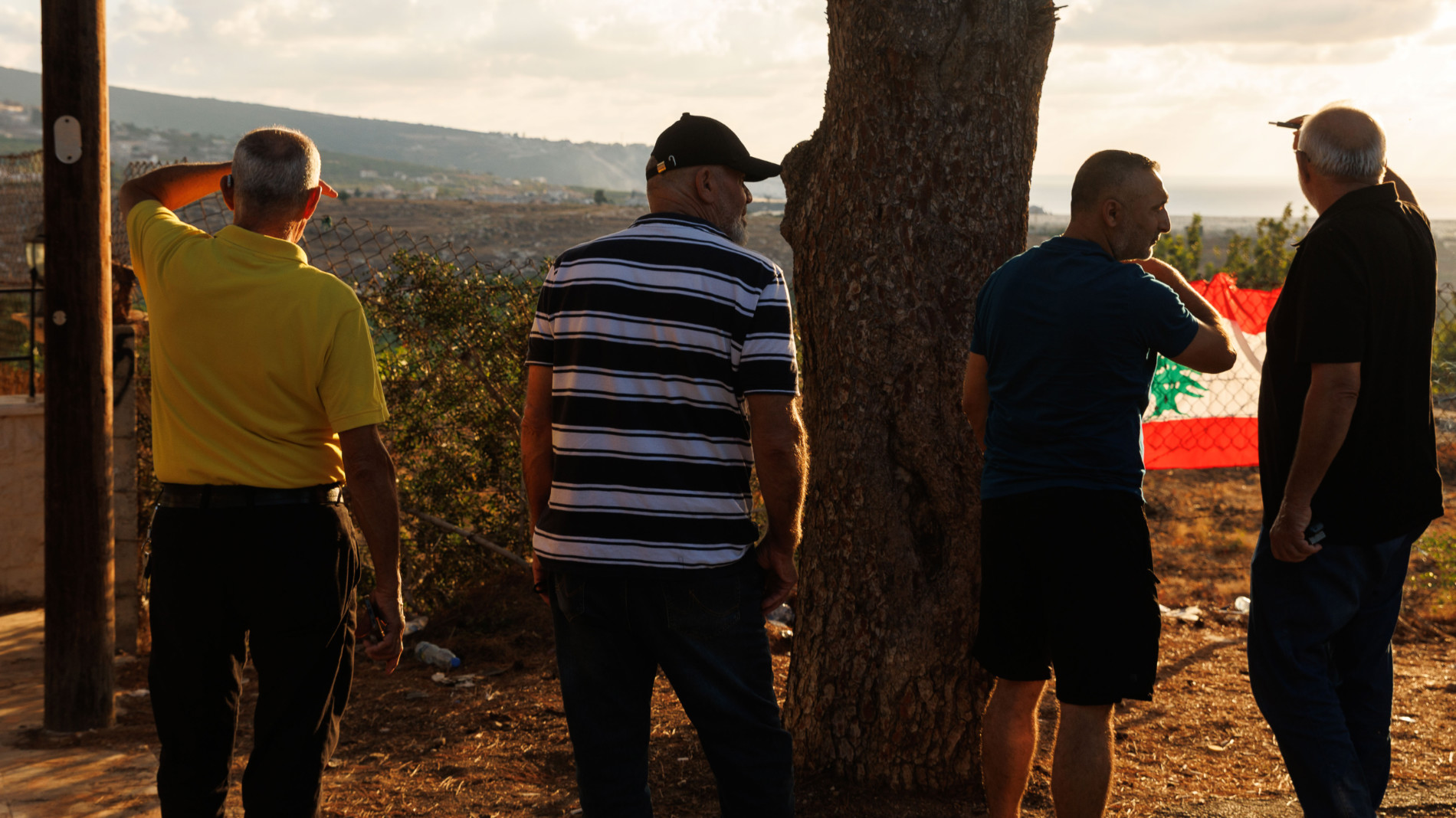
Perched on a sunbaked green hill just a few kilometers south of Lebanon’s coastal city of Tyre, the long Israeli-occupied village of Mansouri is slowly vanishing. Heavily scarred by months of cross-border conflict, the community is now being systematically wiped off the map in a grim, cynical turn that has unfolded entirely during a fragile ceasefire that was supposed to bring calm to southern Lebanon.
For weeks, the Israeli military has operated in Mansouri, labeling it a key operational stronghold for Hezbollah. In recent days, relentless waves of airstrikes and controlled explosive demolitions have reduced building after building to rubble, leaving the village’s roughly 5,000 displaced residents in despair.
Mansouri originally sat entirely outside the Yellow Line, a unilateral Israeli-imposed security demarcation carved into Lebanese territory shortly after the latest ceasefire took effect. Even then, residents interviewed by Middle East Eye after the ceasefire expressed fears that the new boundary would eventually swallow their community. That fear has now come to pass: the Yellow Line cuts directly through the center of Mansouri, and the entire village is now under full Israeli occupation. This summer, any residents who had dared return to their homes were forced to flee once again amid ongoing Israeli air operations.
The village mayor publicly denounced the violence in local media, detailing attacks on civilians that include artillery strikes, and the use of hand grenades and stun grenades deployed by Israeli drones. He survived an Israeli attack that left him wounded, a narrow escape shared by many in the community.
From the nearby village of Hanniyeh, a small hilltop community also outside the Yellow Line that remains accessible to Lebanese civilians by car, visitors can see Mansouri clearly across the valley. The winding green road leading up to Hanniyeh carries an unspoken weight of fear, and residents here live constantly within firing range of Israeli troops positioned on the opposite ridge.
Every day, dozens of displaced Mansouri residents pass through Hanniyeh, gathering at vantage points to watch as Israeli troops destroy their hometown. Most residents of Hanniyeh have fled further north to escape the violence, but the displaced Mansouri villagers remain as close as they can get to the land they call home.
Hidden behind a tree on the side of the road, 47-year-old Ahmad stands with a phone mounted on a tripod, livestreaming the destruction to a small audience on Facebook. “Look! That yellow house is mine. It’s the only one still standing; all the others around it have been destroyed,” he told Middle East Eye. The scene is chilling and dystopian: Ahmad describes the slow, unrelenting horror of watching his village be destroyed day by day, never knowing when his own home will be next. It is as if the ongoing war and chaos that Lebanon has endured at Israel’s hands has become a grim spectator sport for the displaced.
Ali, another Mansouri resident whose home was destroyed earlier in the conflict, stands beside Ahmad. “It is humiliating to watch this, but I want to stay here, as close to my village as possible. I don’t want to abandon it,” he says. Ali explains that the situation is unbearable: he has been out of work since he was displaced, and his farmland that sits below the village is now being burned by Israeli forces, as evidenced by the thick smoke rising from the field.
Around 100 meters from Ahmad and Ali, three dozen displaced neighbors and lifelong friends sit in chairs arranged at the vantage point, watching the unspeakable destruction unfold and discussing the events of each passing day. Unemployed and barred from returning to their homes, they structure their days around the rhythm of Israeli military operations.
One resident shares a disturbing video filmed just days earlier: an Israeli drone slowly lowers a explosive charge via cable, placing it precisely on a civilian rooftop before retreating. A few minutes after the drone leaves, the building explodes into rubble.
Suddenly, the group falls silent. A cloud of dust billows along one of Mansouri’s streets as Israeli vehicles move down the road. Peering through binoculars, one man makes out a tractor clearing the rubble of a destroyed home, leaving nothing but an empty plot of land where a family once lived. “We haven’t seen any Merkava tanks today. They must be resting,” a 60-something man jokes bitterly, a grim attempt to find dark humor in unrelenting crisis.
Ibtissem, a 38-year-old Mansouri resident, says the daily pattern of destruction is psychological torture. “Every day something happens. One day they bomb, the next they send bulldozers. Sometimes charges they have planted inside our homes explode. It’s torture, they are razing our lives before our eyes,” she says. But her resolve remains unbroken: “This land is everything to us. We will come back and rebuild, God willing.”
In every conversation among the displaced residents, the failure of outside actors to act emerges again and again. Neither the international community nor the Lebanese government has intervened to stop the destruction. The Lebanese army is nowhere to be found in the area, and Mansouri’s residents say they have been completely abandoned to fend for themselves. They share the fate of thousands of other Lebanese living in the 63 villages spread across 460 square kilometers of southern Lebanon that are now occupied by Israel south of the Yellow Line.
This summer, Mansouri residents held a peaceful sit-in outside a Lebanese army checkpoint in al-Amiriya, under the slogan “Mansouri is not occupied.” They called for an end to the bombardments and demanded the Lebanese army deploy to their village, saying they were ready to march alongside troops as soon as the army entered. The protest changed nothing. “Nothing happened. We and our village were abandoned. And since then, nobody has helped us, absolutely nobody, while we remain displaced and no one has work anymore,” one resident laments.
Even Hezbollah, which for years has supported affected Lebanese communities through successive conflicts, no longer has the capacity to offer meaningful support to Mansouri’s residents, one local resident quietly acknowledges.
Today, Mansouri, along with Tallouseh and Mais al-Jabal further east, is one of the main hubs of Israeli military activity in southern Lebanon. Many Lebanese observers see this campaign as a deliberate attempt to “finish the job”: to permanently destroy any possibility of residents returning to their land, allowing Israel to consolidate its long-term occupation of the area.
This ongoing aggression flies in the face of the 26 June framework agreement brokered to de-escalate the conflict, which was supposed to test a new security arrangement in southern Lebanon. Under the agreement, three “pilot zones” in Froun, Srifa, and Zawtar al-Gharbiyeh were supposed to see the Lebanese army gradually retake control of the ground, secure local villages, and prevent unauthorised armed presence. The deal was overseen by the US-led Military Coordination Group for Lebanon (MCG4L).
On the ground, the reality has diverged sharply from the agreement. In Zawtar al-Gharbiyeh, Israeli soldiers were recently accused of opening fire near deploying Lebanese troops. On 18 September, an Israeli force approached a Lebanese army position in Deir Mimas and threw stun grenades, triggering a confrontation that was only defused at the last minute by MCG4L mediation.
“We no longer trust anyone to come and help us,” says Abbas, a 26-year-old displaced resident from Hanniyeh, his voice breaking with tears. “My dream is to get my land back, my neighbours, to rebuild my house. I don’t have much hope left. To have any hope, the Lebanese army would need to be capable of holding the ground, and as long as the international community does not put pressure on Israel, we may never see our land again.”